Category: Districts / Areas

  • Co-operation to leverage the potential of the Silbern industrial estate

    Co-operation to leverage the potential of the Silbern industrial estate

    Today, Silbern is an important location for production, trade and shopping and contributes significantly to the economic strength of the region. At the same time, the area has hardly developed at all over the years in terms of urban development and urban space and lags behind the potential of other business locations in the region. This is precisely where the new alliance comes in. It wants to initiate qualitative further development instead of merely managing the existing utilisation.

    Integrative approach instead of individual interests
    In the Silbern Future Alliance, IG Silbern, Limeco, BirdLife, the city of Dietikon and the canton of Zurich are working together in a long-term, collaborative framework. The approach is clear: the economy, mobility, environment and nature are planned and managed together. The aim is to recognise conflicting objectives at an early stage and to develop solutions in a coordinated and transparent manner based on interests.

    Vision and charter as a binding framework
    The result of a two-year mediation process led by Joris Van Wezemael is a common vision, supplemented by a binding charter. Both create orientation, define guidelines and strengthen reliability in the cooperation. This gives companies and landowners a framework within which they can actively shape development. With more planning security and clear expectations regarding the compatibility of economic, ecological and social concerns.

    Sustainable economic and living space
    The alliance sees itself as a long-term cooperation with a clear ambition. Silbern is to develop into a location that offers attractive framework conditions for companies, improves accessibility and at the same time strengthens natural and living spaces. Infrastructure is seen as key, as part of the solution, for example by converting waste materials into energy and new resources.

    Common will as a success factor
    The next step requires concrete projects and the sustained will of all those involved to share responsibility. Entrepreneurs, property owners, the public sector, infrastructure operators and nature conservation organisations have already developed a better understanding of each other and mutual respect in the dialogue to date. This basis of trust is crucial if the shared vision is to be realised and Silbern is to make the leap from an underestimated working area to a future-oriented economic and living space.

  • From industrial heritage to innovation campus

    From industrial heritage to innovation campus

    Where textile machines and industrial production used to set the pace, a new focus for technology, trade and entrepreneurial development is now being created. The approximately 75,000 square meter site is not being conceived as an isolated business park, but as a networked innovation location with a direct link to the Töss district. Existing buildings, paths and spaces form the backbone of the transformation.

    Historical substance remains where it creates character and identity. At the same time, structures will be opened up, paths made more permeable and new places for encounters, collaboration and exchange created. The Vitus site will thus become a visible driver of Winterthur’s economic development.

    Mission statement and site strategy
    The guiding principle is both simple and ambitious. A tech and innovation cluster that brings together companies, start-ups, education and research in one place. The focus is on work, not living. Office and commercial space is planned for technology-oriented companies, research-related businesses, service providers and creative players. Co-working facilities, flexible spaces and space for young companies will also be added.

    At the same time, the site development focuses on atmosphere. Urban meeting zones, restaurants, cultural offerings and publicly accessible outdoor spaces are intended to ensure that the area also comes alive outside of traditional office hours. The planned Vitus Promenade connects the site with the Töss river and creates an identity-forming open space axis that enables movement, recreation and interaction.

    Development in stages
    The transformation is deliberately taking place in several stages. In the first phase, existing buildings will be activated, renovated or upgraded through targeted conversions. Interim uses, co-working, events and cultural formats will ensure that the area gains appeal even during the planning phase. The first companies from the fields of technology, sustainability and future mobility are already using the Vitus site as a place to work and develop.

    At the same time, structural foundations are being laid for the next steps, such as improved access, sharper utilization concepts, mobility and sustainability approaches. Individual construction projects, such as the new LANDI site, fit into this picture and strengthen the commercial character of the area. In a later stage, the eastern part of the site in particular will be redeveloped in greater depth. Additional, contemporary space for production, laboratories, offices and services will be created here – tailored to market needs and demand.

    Prospects for Töss and Winterthur
    The Vitus site will give Winterthur-Töss a strong economic anchor point. The site offers potential for several thousand jobs and thus strengthens the district’s role as a productive yet urban location. Open spaces, permeable paths and cooperation with local players should prevent the creation of an isolated commercial area.

  • Green living in Basel Dreispitz Nord

    Green living in Basel Dreispitz Nord

    Dreispitz Nord is transforming a formerly single-use area covering around eight football pitches into an inclusive district. Around 800 flats are being built, a third of which will be affordable and non-profit housing. Three striking round high-rise buildings will offer attractive flats as well as office space, a library and a fitness centre. The focus is on a neighbourhood where everything is within easy reach. Living, working, shopping and leisure activities merge into an urban whole. Pedestrians and cyclists have priority, and the public space is almost completely car-free. A total of 4,000 bicycle parking spaces are planned, and car parking facilities are bundled together and separated from the residential area to minimise traffic in the neighbourhood.

    A green place for urban climate and community
    Two newly planned city parks with large shade trees will transform the area into Basel’s green lungs and improve the microclimate in the long term. Permeable soils and planted roofs fulfil the principles of the sponge city and help to mitigate heat effects. The secondary school for around 600 pupils will be built on the roof of the modernised MParc, opening up new dimensions in terms of land use. The facilities will be complemented by basketball and sports fields, a triple gym and a youth club, which can also be used outside school hours. Direct access from Gundeldingen via a green ramp seamlessly connects Dreispitz Nord with the neighbouring district and creates public spaces that foster a sense of identity.

    Partnership-based planning with vision
    The Christoph Merian Foundation as the landowner, the Migros Basel cooperative as the building leaseholder and the canton of Basel-Stadt as the planning authority are jointly driving the project forward. After an intensive public consultation period with seven objections, all of which were rejected, the cantonal government confirmed the development plan on 14 October 2025 and forwarded it to the cantonal parliament for consideration. In addition to the development plan, adjustments to the zoning plan, noise sensitivity levels and building regulations are also planned. The environmental impact assessment confirms that all requirements have been met.

    Sustainability and social balance
    Dreispitz Nord is a prime example of sustainable neighbourhood development. Instead of grey parking spaces, green open spaces are being created, and the diversity of housing promotes social mixing. The existing building is being integrated into the new complex in a resource-efficient manner. Wide distances between the high-rise buildings ensure good ventilation, shade providers reduce heat stress and permeable surfaces strengthen climate adaptation. With 1,400 new residents, representing 7 per cent of the total population of Gundeldingen, and 1,600 jobs, the district will become a significant economic driver.

    Urban life and economy in harmony
    The new quarter integrates today’s modernised retail spaces, complemented by cafés, restaurants and small shops, which are also easily accessible via the extended tram stop. The interconnection of living, working, shopping and leisure creates an inspiring atmosphere and promotes sustainable mobility over short distances.

    Dreispitz Nord is characterised by its urban compactness, ecological sensitivity and social diversity. The project is a prime example of how comprehensive urban development can harmonise innovation, sustainability and quality of life, strengthening Basel as an attractive city for today and tomorrow.

  • From freight station to urban district

    From freight station to urban district

    The transformation will begin in 2027 with the first phase of development in the western part of the site. Around 600 flats will be built, a third of which will be affordable cooperative flats. The aim is to attract a diverse population and combine urban density with social diversity. The Urban Hub will become the lively centre of the neighbourhood. It will combine gastronomy, sport, culture and services and act as a link between residential buildings and commercial areas.

    The second phase of development will begin in the east of the site in 2031. Modern service and commercial buildings will create around 1,000 jobs and unlock the site’s potential for business, innovation and city logistics. Its central location at the railway station and its connection to the regional transport network reinforce its function as an urban hub in Basel.

    Focus on architecture, sustainability and flexible use
    The master plan consistently follows the principles of ecological and sustainable urban development. The new perimeter block development is based on the sponge city principle and integrates historic railway buildings into the courtyard concept. This ensures a pleasant microclimate, promotes biodiversity and improves rainwater management. Buildings such as Janus and Binaria impress with reused components, modular wood and metal elements, green and accessible roofs, and photovoltaic surfaces. The flexible construction guarantees reparability, ease of maintenance and subsequent conversion.

    Cultural and social start-up initiatives strengthen neighbourhood identity
    Even before construction begins, the area is being actively revitalised through innovative temporary uses. SBB is opening historic warehouses for culture, gastronomy and sport. One example is pickleball, which offers 2,000 square metres of space and attracts new players. Rental space for creative and social initiatives is also available. These pioneering uses create proximity to the neighbourhood population and promote creative participation. In particular, the broad participation process, in which the public, associations and organisations are involved from the outset, guarantees acceptance and innovation.

    Mobility, smart city and quality of life as a guiding principle
    People are at the centre, with technology and sustainability as the supporting pillars. A city logistics hub in the eastern area ensures resource-efficient goods distribution in Basel and the surrounding area. Modern mobility services and integration with public transport are an integral part of the neighbourhood strategy. The SBB’s scientifically supported quality of life model, developed in collaboration with the University of Basel, makes Wolf Basel a laboratory for innovative solutions in energy, circular economy and social cohesion.

    Wolf Basel is creating an inspiring neighbourhood that combines urban densification, sustainability, smart networking and social diversity. In this way, Basel is growing not only spatially, but also socially and technologically into the future.

  • Building lease flats create new living space in Altstätten

    Building lease flats create new living space in Altstätten

    Halter AG is implementingtheTresTerrä project in collaboration with the Catholic denomination of the canton of St. Gallen, owner of the project, andSchlieremerTend AG, partner for communication and marketing. As part of this, Halter will undertake the construction of ten residential buildings on the Guter Hirte site in Altstätten, which will provide affordable living space in the future, according to a press release. The ground-breaking ceremony and official start of construction for the project have now taken place.

    “Tres Terrae stands for a place where living, open space and neighbourhood come together,” says a statement from Halter. “The aim is to create lasting quality of life that offers people a home for the long term.”

    Three building complexes are planned, which will be located around a central communal square and connected by a network of paths. A total of 37 freehold flats will be built in the buildings, ranging from 2.5-room to 5.5-room flats. Central meeting areas will provide space for interaction and community, according to the project description.

    In order to reduce the equity requirement and facilitate financing, the flats will be sold under building law. The flats are expected to be ready for occupancy in 2028.

  • The Sursee hospital site – new prospects from 2034

    The Sursee hospital site – new prospects from 2034

    The new construction of the LUKS Sursee and the Seeblick care center on Schwyzermatt in Schenkon will free up an area of around 47,000 square meters on Spitalstrasse in Sursee. About seven football pitches, centrally located, well developed and with views as far as the Alps. Where hospital buildings still stand today, a new urban building block can be created from 2034 that will shape Sursee in the long term. The canton of Lucerne is the main owner of the site, while adjacent areas also belong to the canton and partly to the city and will be included in the planning.

    The almost 50-year-old LUKS Sursee no longer meets the requirements of a modern hospital operation. The government council’s decision to build a new hospital and care center in Schenkon by 2033 will shift the healthcare infrastructure and open up a rare urban development potential in Sursee.

    Living, living, meeting
    The canton of Lucerne and the city of Sursee are pursuing a common goal: a mixed-use, lively district that combines living, services and quality of life. A test plan from 2026 will examine which uses and development structures are possible and sensible on the site. The results will form the basis for rezoning, architectural competitions and the first construction phases, which are to start after the hospital and nursing home have moved away, with the aim of avoiding vacancies as far as possible.

    It is already clear that the area is particularly suitable for residential use, for families, couples, singles and senior citizens. In addition, services, shopping facilities and restaurants are conceivable to fill the district with life. The aim is to create a socially mixed environment with a mix of upmarket and affordable housing that strengthens Sursee as a place to live and at the same time creates new opportunities for different phases of life.

    Sursee is growing
    Sursee is growing dynamically and, with a vacancy rate of 0.26 percent, has an extremely tight housing market. The new offer on the hospital site should help to alleviate the pressure and create additional residential quality in a central location. Its proximity to the old town, the existing transport links and the view of the lake make the site a key location for future urban development.

    It is an opportunity to create a new, identity-forming district. The site can provide impetus for the economic development of the region, create new jobs in the service sector and further raise Sursee’s profile as a regional center.

    District development as a joint task
    The planning of the hospital site is deliberately designed as an open process. Workshops with the local population and various interest groups are planned from spring 2026. Needs, ideas and expectations are to be incorporated at an early stage so that a district is created that is not only convincing from a planning perspective, but is also supported by the population.

    The municipal assembly will decide on the necessary changes to the sub-zone plan. This makes it clear that the future of the hospital site will not be designed in secret, but in a transparent process that combines specialist planning and local perspectives.

    A new urban building block with a history and a future
    In the long term, a diverse residential and living space with green areas, play areas and recreational spaces could be created where a hospital still operates today. Outdoor meeting places, short distances and good connections to the existing urban structure should make the area an integral part of Sursee.

    The canton of Lucerne wants to make targeted use of the potential of the privileged location with its lake view and historical use. From 2034, there will be an opportunity to create a district that respects the history of the site and at the same time provides answers to the housing and living needs of the coming decades. A new chapter for the hospital site and for Sursee.

  • ABB cashes in and Oerlikon builds

    ABB cashes in and Oerlikon builds

    ABB is selling a site of around 7,000 square meters near Zurich-Oerlikon railroad station to real estate service provider Pensimo. The sale will result in an operating gain on disposal of around CHF 290 million before taxes in the first quarter of 2026. ABB no longer needs the site as a strategic land reserve and is taking this step to enable the further development of the Neu-Oerlikon district.

    Around 500 apartments, a high-rise building and commercial space are planned for the site. Over the next few years, the former industrial area is to be transformed into a mixed-use district with housing, services, workplaces and cultural and commercial facilities. Due to high land prices, rents are expected to be rather high. At best, individual apartments at cost rents are conceivable, for example as part of a densified site development.

    New ABB headquarters in Oerlikon
    ABB is expanding its presence in Oerlikon at the same time as selling the land. The Group is planning a new headquarters in the immediate vicinity, into which around 500 employees are expected to move in 2031. The project comprises a renovated, listed existing building and a new six-storey timber composite construction designed by Christ & Gantenbein.

    With a gross floor area of around 10,800 square meters, modern working environments including an auditorium, lounge and cafeteria, foyer and exhibition area as well as recreation and fitness areas will be created. The investment volume is around 80 million Swiss francs. ABB CEO Morten Wierod emphasizes the company’s commitment to Switzerland and the city of Zurich. Mayor Corine Mauch speaks of an even more “colorful and lively” district around Oerlikon station in the future.

    Strong final quarter of 2025
    ABB made significant operational gains in the final quarter of 2025. Comparable sales rose by 9 percent to 9.05 billion US dollars. Order intake developed particularly dynamically, increasing by 32 percent on a comparable basis to USD 10.32 billion, exceeding the USD 10 billion mark in a quarter for the first time.

    The operating EBITA margin improved from 16.6% to 17.6%, while adjusted net profit rose by 29% to USD 1.27 billion. For the full year 2025, net profit increased to USD 4.73 billion, around 20% more than in the previous year. The dividend is to be increased from CHF 0.90 to CHF 0.94 per share; at the same time, ABB is announcing a further share buyback program.

    Outlook and new buyback program
    For the first quarter of 2026, ABB expects comparable sales growth of 7 to 10 percent and a further increase in the margin. For the year as a whole, management expects growth of 6 to 9 percent and slightly higher profitability. Analysts see particularly strong drivers in the data center business and in the Electrification division, where orders increased by around a third.

    In addition, ABB is launching a new share buyback program with a volume of up to USD 2 billion, which is scheduled to run until January 27, 2027. A previous program of up to 1.5 billion US dollars has expired. This strengthens the attractiveness of the share and signals confidence in the company’s own earning power.

    ABB share at record level
    The figures and outlook were rewarded with price gains on the stock market. ABB shares rose by 8.46 percent to 66.38 Swiss francs, reaching a new all-time high of 67.22 Swiss francs. The strong order intake, the improved margin, the increased dividend and the larger share buyback program clearly exceeded the previously cautious expectations.

    For the Zurich-Oerlikon site, the combination of the sale of land, the construction of the new Group headquarters and the planned development of the district means a significant structural change. From an industrial site to a dense, urban residential and working district, with high investments, but also with the prospect of further rising rents.

  • Roche site development Basel

    Roche site development Basel

    The first development phase of the Roche site was completed at the end of 2023, and now a new stage follows. One of Europe’s most important research infrastructures will be built on the north site by 2030. The core project is Building 12, a 72-metre-high research and development building with space for around 450 researchers. The new building will replace the outdated infrastructure and create optimal conditions for developing novel active ingredients from basic research to production maturity. With an investment volume of around 500 million Swiss francs, Building 12 will become the central interface between research and clinical development.

    At the same time, the Institute of Human Biology in Building 92 will be expanded into a new center for biological model research. Around 100 million francs are being invested in the modernization and conversion. The aim is to link academic and industrial research in order to make complex human cell models usable for drug development.

    Production is also undergoing a fundamental overhaul. State-of-the-art facilities for the development and commercialization of synthetically produced active ingredients will be built in buildings 50 and 51 by 2028. A new era of pharmaceutical process innovation will be ushered in here with a modular design, digital control and high energy efficiency. The investment framework for these projects is around CHF 570 million.

    Sustainable urban development on the south site
    Parallel to the research on the north side, Roche is pursuing a long-term sustainable development strategy on the south site. The site on the Rhine is being redesigned in close consultation with Basel politicians. The revised development plan provides for generous green spaces, ecological networking along the banks of the Rhine and integration into Solitude Park. Old building structures will be gradually dismantled and building materials reused according to the principle of the circular economy.

    The Canton of Basel-Stadt is actively supporting this process. The cantonal government and the Grand Council support the approach of upgrading the southern area in terms of urban development without providing for public thoroughfares or expropriation. This means that the site will remain within the company’s own control, but will be opened up in the future through landscaping connections and new open space concepts.

    Signal for Switzerland as a business location
    Since 2015, Roche has invested around eight billion Swiss francs in its Swiss sites and over 33 billion in national research and development. In Basel alone, further facilities for research, production and infrastructure will be built by 2029, including a new underground heating and cooling center to ensure security of supply for the entire site. The construction work on the north and south sites is emblematic of sustainable, resource-conserving site development that combines business, the city and science.

    The next few years will be characterized by intensive construction phases, urban planning coordination and technological innovations. With the ongoing development of the site, Roche is not only strengthening Basel as a pharmaceutical location, but is also sending out a strong signal of its long-term commitment to Switzerland as a place for cutting-edge research, sustainable architecture and shaping the urban future.

  • New residential neighbourhood with a focus on families and community building

    New residential neighbourhood with a focus on families and community building

    According to a statement, the jury of the Canton of Basel-Stadt has decided that the design by the two Basel-based architectural firms Clauss Kahl Merz Atelier für Architektur Städtebau and Truwant Rodet will be implemented. The planned residential development at Riehenring 120 on the former site of Exhibition Hall 3 will comprise 170 affordable flats.

    Exhibition Hall 3 is currently used by Basler Verkehrs-Betriebe (BVB) as a garage for electric buses. This temporary use will end in 2028. After that, the canton plans to develop this centrally located area into a vibrant residential and living space by 2031. The plans primarily include large, family-friendly flats and a small number of small flats. In addition, a double kindergarten, a daycare centre and commercial premises are planned, as well as 200 parking spaces for tenants and other people from the neighbourhood.

    The winning project impressed the jury “with its high quality of living and its contribution to the surrounding neighbourhoods”. Part of the car park will be built above ground. This will create two additional outdoor areas on the roof for tenants, which can also be used as planting gardens.

    At the same time, according to the canton, this will make construction more resource-efficient: as less ground needs to be excavated, there will be “no energy-intensive excavation and less building material will be used. In addition, the project as a whole focuses on environmentally friendly construction by reusing various components from the existing Exhibition Hall 3 and the former BVB garage in Rank.”

  • Joint development for the Silbern working area

    Joint development for the Silbern working area

    According to a statement issued on 14 January 2026, representatives from politics, business, Regiowerk and nature conservation launched the Zukunft Silbern alliance. Together, the alliance aims to develop the Silbern area into a sustainable, easily accessible and ecologically responsible business location.

    The conceptual basis for this innovative cooperation was developed over two years by the interest groups Regiowerk fürs Limmattal (Limeco),Natur- und Vogelschutzverein Dietikon, IG Silbern, the city of Dietikon and the canton of Zurich in a mediation process led by private lecturer Dr Joris Van Wezemael. He is an architectural sociologist and teaches at the Institute for Spatial and Landscape Development at the Swiss Federal Institute of Technology Zurich. His scientific contributions have helped shape new concepts for collective decision-making in spatial planning and urban development.

    Before the alliance was founded, the various interest groups agreed in their analysis: the Silbern area is an important location for production, trade and shopping. However, in terms of urban development and urban space, it has hardly developed for many years and has fallen short of its potential. Now the alliance wants to develop the area in such a way that companies find attractive conditions, accessibility is improved and, at the same time, nature and living spaces are strengthened.

    According to the information provided, the partners developed a better understanding of each other and built mutual respect in the process of establishing the Zukunft Silbern alliance. “This,” the statement says, “has created an important foundation for successfully implementing projects and advancing Silbern as a whole.”

  • Nidwalden pools its blue light forces

    Nidwalden pools its blue light forces

    The 33,000 square meter site on Kreuzstrasse is now completely built over. Many of the buildings are in need of considerable renovation, including the cantonal police and prison buildings. In addition, there are operational deficiencies such as a lack of escape routes or inadequate separation between public and staff entrances.

    On the basis of a broad-based investigation, the cantonal government has decided to completely reorganize the site and build new replacement buildings. The aim is to create a modern security competence center that improves functional processes, increases security and is more economical in the long term than selective renovations.

    Bundled blue-light organizations
    The site is currently home to the police, prison, road safety center, road inspectorate, justice department and public prosecutor’s office. Due to the central location, the possibility of relocating additional emergency services, in particular the fire department and ambulance service, to Kreuzstrasse is being examined. The aim is to create a location with short distances, coordinated processes and clear responsibilities.

    Test planning has shown that this bundling on the existing site is realistic. It confirms that the spatial requirements of the current uses and additional organizations can be implemented on the site without obstructing the site’s development potential.

    Prison with a view to future needs
    The future direction of the cantonal prison was also analyzed in depth as part of the test planning. The demand for prison places in Switzerland is high, particularly for inmates in need of care in the penal system. Against this background, Nidwalden is examining how the new prison facilities should be dimensioned and functionally aligned in order to meet demand in the long term.

    Design plan and indicative project
    The District Council has approved a planning credit of CHF 1.63 million for the design plan and indicative project. The planning will be continued with a clearly defined group of users – the cantonal police, rescue service, fire department, justice department, public prosecutor’s office, prison, road inspectorate, road safety center and selected administrative units.

    The design plan is intended to create the legally binding framework for the next planning steps. It specifies which uses are permitted where, how development, open spaces and urban planning are to be designed and which stages are possible.

    Adjustments to the process and open sub-projects
    Several planning teams were initially involved in the study commission for the design plan and indicative project. In the course of 2025, however, it became apparent that the development with a moderate expansion of the existing traffic circle would not be sufficient in view of new traffic forecasts. At the same time, a new option for the road safety center came into play. Obwalden is planning a new building in Sarnen and synergies of a shared location with test halls and test tracks are being examined.

    In order to be able to react more flexibly to these changes, it was decided to terminate the study contract in its previous form and to continue working on the indicative project with just one planning team. In October 2025, the District Council also requested more planning certainty, particularly for the two sub-projects “Road Safety Center” and “Prison”, before the design plan and indicative project are definitively completed.

    Next steps and timetable
    The design plan will cover the three local municipalities of Stans, Buochs and Oberdorf. The corresponding municipal assemblies or ballots for decision-making are currently scheduled for 2027.

    The first loan applications for architectural competitions for individual buildings of the security competence center are expected from 2028 at the earliest. Until then, it will be a matter of clarifying the unresolved issues relating to development, the prison layout and the traffic safety center.

  • Klybeckquai and Westquai as a hinge between the city and the future

    Klybeckquai and Westquai as a hinge between the city and the future

    Klybeckquai and Westquai have been among the most vibrant places in Switzerland for over a hundred years. This is where the city meets the port, the Rhine, the river Wiese and three countries. The ongoing modernization of the port infrastructure, in particular the relocation of the port railroad to the Südquai, opens the door to the urban transformation of this striking urban area. This will create unique opportunities for the Klybeck and Kleinhüningen districts. They are gradually moving closer to the Rhine and the River Wiese and gaining in quality of life and amenity. Urban growth, social diversity and sustainable integration.

    At the heart of the new development concept is the consistent expansion of the Klybeck district towards the Rhine. The plans include a variety of affordable apartments, neighborhood-friendly uses and spacious perimeter block developments that strengthen the urban climate with green courtyards. The striking neighborhood park, which will develop from the Ackermätteli, and an extended, widened Rhine promenade will connect the neighborhood even more closely with the river and offer space for encounters, leisure, recreation and nature. The barrier of the former railroad tracks will disappear, but the traces of industrial history will be preserved as an identity. The focus on pedestrian and bicycle traffic as well as a new streetcar line promote sustainable, future-proof neighborhood mobility.

    Westquai space for the future
    Westquai will initially remain an industrial and commercial zone, but will gradually develop into a new urban hotspot from 2030. The innovation area between the port, the Rhine and the border triangle offers space for work, urban production, leisure, gastronomy, culture and a variety of green and open spaces. The future use should remain open in order to be able to react flexibly to social developments. Existing buildings will be preserved as far as possible in line with the net zero target for 2037.

    More greenery, more opportunities, more quality of life on the waterfront
    With the expansion of the natural and open spaces by 20,000 m², half of the site now comprises high-quality green areas. A substantial contribution to the biotope network and urban climate. The new district park and the two-kilometre-long Rhine promenade make the river a tangible experience for the city’s population. The strengthened open space fulfills central requirements of urban development and will become the social heart of Basel’s urban network.

    Klybeckquai and Westquai will create urban life on the waterfront. Basel is using the interface between past and future, industry and innovation to give the city a new face on the Rhine.

  • Cooperative housing for new Basel city district

    Cooperative housing for new Basel city district

    According to a press release, Basler Wohngenossenschaft (BWG)and Vivanta AG, a subsidiary of UTILITA Anlagestiftung für gemeinnützige Immobilien, will begin construction of two residential buildings on the Wolf site in Basel in 2028. They emerged as the winners of the competition in spring 2025 with a unanimous jury vote. Now, as the owner of the site at the former freight station, SBB has granted building rights for two construction plots. BWG plans to build around 150 cooperative apartments. Vivanta’s proposal envisages around 120 affordable residential units.

    SBB is developing a new urban quarter on around 160,000 square metres of the Wolf site. The first stage of development will begin in 2028 with the two aforementioned buildings in the western part of the site. The winning project, Janus, by the architectural firms M-AP from Lausanne and Experience from Paris, will be implemented for the new MF02 building. The new MF03 building, with the project name Binaria, is the work of Parabase GmbH from Basel and Confirm AG from Zurich.

    The jury reports for the two buildings on the MF02 and MF03 construction sites make it clear that, in addition to architectural, social and economic project requirements, recyclability and resource conservation were also key evaluation criteria. They state: “Repairability, maintenance and future dismantling (design for disassembly) must be ensured through the selection of suitable materials and their assembly.”

    According to the project description, a perimeter block development is intended to create urban living quality. Green spaces and open spaces will be designed according to the sponge city principle. They are intended to enable a pleasant microclimate and natural rainwater management. According to the tender, the renewable energy sources available on the construction site, such as heat recovery from wastewater, geothermal probes and photovoltaic systems, are to be “used to their full extent”.

  • Canton of Zurich presents design plan for Limmattal Energy Centre

    Canton of Zurich presents design plan for Limmattal Energy Centre

    According to a statement, the canton of Zurich will make the design plan documents for Limeco’s planned Limmattaler Energiezentrum (LEZ) available to the public from 20 January. Interested parties can view the documents for 60 days at the municipal office, the cantonal office for spatial development and online, and comment on the plan. Those responsible for the regional utility company and the canton will also be available to answer questions during a public information event on 21 January at Heimstrasse 46 in Dietikon.

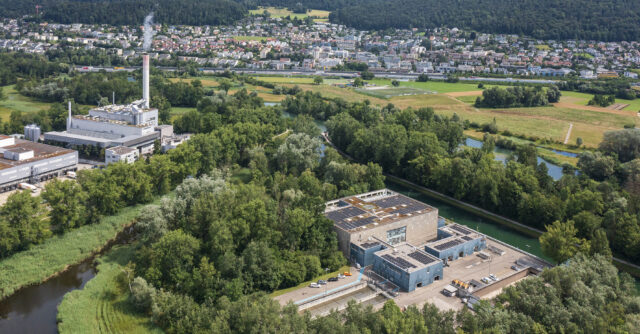
    Limeco will have to rebuild its waste incineration plant (KVA) and wastewater treatment plant (ARA) in the coming years. The regional utility company wants to combine both facilities in the new energy centre on the site of the current KVA. The LEZ will also produce energy in the form of electricity, district heating and gas. The current WWTP in Antoniloch must be decommissioned by 2050 because it is located in a nature and bird sanctuary of national importance.

    The Zurich-based architectural firmPenzel Valier was awarded the contract for the overall concept of the energy centre in January 2025.

  • Future model for life sciences, research and cluster power

    Future model for life sciences, research and cluster power

    The centrepiece of the campus is a kilometre-long, continuous park that physically and socially connects all the buildings. The striking buildings Main Campus HQ, HORTUS, ALL, HOPE, SCALE as well as Swiss TPH, ALBA Haus and many more are grouped around the green ribbon and create a space for dialogue, recreation and networking with more than five football pitches of park space. With over 5,000 workplaces on completion and more than 115,000 m² of usable space, the site will set new standards for infrastructure and collaboration in Switzerland and Europe.

    Architecture and sustainability as drivers
    The architecture by Herzog & de Meuron and Felippi Wyssen visibly conveys the idea of innovation to the outside world. The Main Campus HQ is practically fully let and, as a multifunctional research and communication centre, is a magnet for companies such as JNJ, SKAN, Basilea, the University of Basel and other players. Flexible multi-storey car parks and mobility services support the sustainable use of the site. SENN is acting as investor, developer and total contractor – from planning and realisation through to long-term marketing. The project is being developed in close collaboration with Basel Area Business & Innovation, the Canton of Basel-Landschaft and other partners from the worlds of science and business.

    HORTUS, an office building that amortises its production energy in 30 years, is outstanding. It was built from wood, clay and waste paper, generates energy via photovoltaics and fulfils the highest ESG criteria. Every component is part of the circular economy and prepared for future utilisation cycles. The inner courtyard garden by Piet Oudolf contributes to biodiversity and the indoor climate. HOPE and SCALE will offer further flexible spaces suitable for the public and production from 2028. Neighbours Swiss TPH and ALBA Haus strengthen the health science focus of the site, while the Holiday Inn Express complements the international business and network offering.

    Image: Switzerland Innovation Park Basel Area Main Campus

    Cluster, community and innovation
    More than 100 companies – from global players and spin-offs to young scale-ups – characterise the area and use programmes such as BaseLaunch and DayOne for start-ups, networking and knowledge transfer. Cluster events, community platforms and modern co-working infrastructures promote dialogue and the creation of joint projects. Educational facilities, childcare, catering, sports and conference facilities create a fully-fledged urban working ecosystem.

    The Botnar Institute of Immune Engineering as a beacon
    The Botnar Institute of Immune Engineering (BIIE), which will move into the ALL, a new, sustainable building on the campus in 2027, will provide a special boost. The decision in favour of this location underlines Basel’s importance as a research location. The institute, funded by the Fondation Botnar with around 1 billion dollars, brings together up to 300 top researchers from all over the world to develop innovative immune-based diagnostics and therapies. The aim is to close gaps in health technologies and improve quality of life worldwide. The BIIE community will have a significant impact on the cluster and the Basel region and will strengthen global networks with partners such as Oxford and ETH Zurich.

    Impact and perspective
    The Switzerland Innovation Park Basel Area Main Campus brings together knowledge, infrastructure and community in an internationally visible innovation centre. By integrating sustainability, empathy and excellence, a global hub for cutting-edge research, vibrant entrepreneurship and future-oriented urban development is being created in Allschwil. The model shows how site development, architecture and science clusters can pave the way for economic and social transformation today and tomorrow.

  • Wolf-Areal Basel affordable apartments

    Wolf-Areal Basel affordable apartments

    SBB is pressing ahead with the transformation of the former Wolf freight station into an urban living and working quarter. As with the Volta Nord project, former railroad areas are being opened up for living, working and leisure.

    from 2028, around 270 apartments will be built on two building plots in the heart of the site, specifically positioned in the affordable segment.

    low-cost rent and contemporary forms of housing
    The Basler Wohngenossenschaft is planning around 150 cooperative apartments, while Vivanta is planning around 120 additional affordable units. All apartments will be built according to the cost-rent principle, which allows for moderate rents in the long term.

    the concepts are based on contemporary forms of living for different phases of life, from families to singles to older people. Communal areas and meeting zones are intended to strengthen neighborhood life and promote social networking.

    Non-profit partners with a clear mission
    BWG and Vivanta pursue an explicitly non-profit mission. To secure affordable living space while maintaining high quality and sustainability standards. The projects should demonstrate that ecological construction methods are compatible with affordable rents.

    building rights as a development instrument
    Building plots are allocated on the basis of a partnership-based building rights agreement developed jointly by SBB, the Federal Office for Housing and the Swiss Housing Association. This model creates reliable conditions for non-profit developers and accelerates the realization of affordable housing in city centers.

    with the development of the Wolf site, SBB is continuing to pursue its strategy of opening up areas that are no longer required for operational purposes for modern urban use and making a substantial contribution to affordable housing.

  • Canton of Jura updates list of industrial sites suitable for redevelopment

    Canton of Jura updates list of industrial sites suitable for redevelopment

    The canton of Jura is committed to revitalising its industrial wastelands. As part of theSwissRenovproject, it has now updated the cantonal register of industrial wastelands suitable for redevelopment, according to a press release. This first step is intended to provide up-to-date and reliable information to companies and investors who are looking for commercial space or are interested in the redevelopment and modernisation of industrial facilities.

    In the first phase of the project in 2019, around 90 industrial brownfield sites were identified, of which around half have been redeveloped to date. Now, 30 more brownfield sites are being added. The updated map, which can be viewed online, currently lists 70 industrial sites. 60 per cent of these are located in the district of Porrentruy, 36 per cent in the district of Delèmont and the rest in the districts of Franches-Montagnes and Moutier. In the current phase, the SwissRenov project in Jura is scheduled for completion by 2028.

    The SwissRenov project is being led by Haute École Arc in collaboration with the cantonal spatial planning departmentand is being driven forward byCreapole SAin Delèmont. It is supported by the Swiss Confederation through theInnosuisse flagship programme and byCleantechAlps, the cleantech promoter for French-speaking Switzerland.

    According to the press release, this project, which is unique in Switzerland, aims to promote the renovation and refurbishment of industrial buildings in line with the principles of the circular economy.

  • New management accompanies establishment of multifunctional arena

    New management accompanies establishment of multifunctional arena

    According to a press release, since its opening in October 2025, the Pilatus Arena in the Mattenhof district of Kriens has already established itself as an efficient, multifunctional platform for indoor sports and events. At the end of the financial year, the two project initiators, Toni Bucher and Nick Christen, stepped down from their positions on the Board of Directors. Markus Mettler, Chairman of the Board of Directors of Schlieremer Halter AG and Pilatus Arena Sports & Events AG, replaced Bucher as the new Chairman of the Board of Directors of Pilatus Arena AG. Construction of the Pilatus Tower, located next to the arena, is also scheduled for completion in autumn 2026.

    “We would like to thank Toni Bucher and Nick Christen for their tremendous commitment to sport and Pilatus Arena AG,” Markus Mettler is quoted as saying in the announcement. “Both have been instrumental in driving the project forward since 2007.” The arena was developed and built by Halter and has been operated by Pilatus Arena Sports & Events AG since its opening. Halter AG is also the majority shareholder in Pilatus Arena AG, with a 70 per cent stake.

    Several sporting events have already taken place in the new arena in 2025. Highlights included the Swiss national handball team’s first international match, Swiss Central Basketball games in the National League B and the Final4 Mobiliar Handball Cup for men.

    “The anticipation for the first Final4 Cup in the new PILATUS ARENA was huge – and it was fulfilled in every respect,” said Andreas Campi, President of the Final4 Organising Committee. “The atmosphere was exhilarating, and the format was convincing.”

  • Investment contribution paves the way for national association centre

    Investment contribution paves the way for national association centre

    The city of Thun is planning to participate in the realisation of the Swiss Football Home, which is to be built as an SFV football campus in Thun South. According to a statementfrom the city, the investment contribution of CHF 4 million is part of a comprehensive financing concept that includes SFV’sown financing as well as funds from the federal government, the canton of Bern and third-party financing. The CHF 4 million non-repayable grant is to be used for building costs, outdoor facilities and project planning. The city council will decide on the loan at its meeting on 16 January. This financial contribution by the city is linked to various conditions, including ensuring the overall financing of the Swiss Football Home and determining the cantonal contributions.

    The Swiss Football Home will serve as the new headquarters of the Swiss Football Association and will comprise buildings and several football pitches. Around 150 employees will work on the campus, which is planned as part of the Thun South sports and leisure cluster. According to the press release, the Swiss Football Home will have a long-term positive impact on the city of Thun’s tax revenue and on economic development in the region. In particular, the creation of 150 jobs and the gathering of the national teams will be a unique opportunity for the location.

    Other private sports projects have already been initiated in the Thun South cluster, such as an indoor and outdoor racket sports centre, a climbing and bouldering facility and a ball sports hall. The wide range of sports facilities on the site, which is in the immediate vicinity of FC Thun’s Stockhorn Arena, will bring many synergies, explains the city. “The long-term economic benefits for the city of Thun from the establishment of the Swiss Football Home will exceed the one-off investment contribution many times over,” said Mayor Raphael Lanz.

  • Experimental field of cooperative city life

    Experimental field of cooperative city life

    As an innovation and learning platform, “mehr als wohnen” sees the Hobelwerk not only as a housing estate, but also as a real-life laboratory for new forms of housing, participation models and cooperative governance. For experts in planning, housing construction and urban development, the neighborhood offers illustrative material for central questions of future urban development. For example, the focus is on how much community everyday life can actually tolerate and how mixed uses can be organized in such a way that they function robustly in the long term. It also shows how a district can be designed to be socially open, ecologically ambitious and yet economically viable.

    The Hobelwerk is located on the former site of the Kälin & Co. carpentry factory right next to Oberwinterthur railroad station and thus in a well-developed, formerly commercial location. The client is the building cooperative mehr als wohnen, which has realized its second major project after the Hunziker Areal and developed the site in two stages between 2018 and 2023.

    five new buildings and several converted existing buildings have been built on an area of around 16,000 m², with a total of around 158 apartments plus commercial and communal areas. The development is considered a model for socially, ecologically and economically sustainable urban development and has won several architectural and energy awards.

    urban design, architecture and mix of uses
    The various structures, including long blocks along the tracks, a courtyard house, a rectangular building and a small residential tower, create a small-scale quarter with courtyards, alleyways, play areas and gardens. Several offices, including pool Architekten, Ramser Schmid, Pascal Flammer, Baubüro in situ and Studio Vulkan, ensure diversity in the details while maintaining a clear overall figure.

    the mix of uses ranges from classic 1.5- to 6.5-room apartments, cluster apartments and micro co-living to residential studios for cultural workers and commercial space of various sizes, some of which is affordable. The first floor includes a daycare center, bakery, co-working space, studios, laundromats, common rooms and communal areas that function as an extended “living room” for the development.

    living concepts and everyday organization
    The cooperative combines established and experimental forms of living such as micro-co-living for one to two people with shared kitchens and common areas, spacious cluster apartments for shared apartments, classic family apartments and inclusive housing projects, for example with partner organizations such as jawohn. The residential offering is complemented by guest rooms, guest apartments and rooms that can be flexibly rented.

    the commons play a central role with arcades, roof terraces, common rooms and the covered Hobelwerkplatz square, which facilitate informal encounters and shared use. Residents actively shape the neighborhood in neighborhood groups and participation formats, a core component of the “more than housing” DNA.

    existing buildings, open space and identity
    The old planing mill hall and the Z-Hall were preserved, gently converted and now form the center with a covered square for markets, festivals, cultural and neighborhood events. In this way, the industrial past remains present as a spatial and narrative layer and gives the area a clear identity.

    the open space design with vegetable gardens, gravel paths, play areas and the greening of courtyards and façades aims to ensure a high quality of stay, heat reduction and biodiversity. Low-car access and a mobility station with bikes and trailers make everyday life without a car easier.

    sustainability, governance and learning character
    The project focuses on energy-efficient construction, robust, durable materials and the targeted reuse of components, combined with low per capita consumption of resources and space. The Hobelwerk received several awards for this, including as one of the best new construction projects in Switzerland and for its energy-efficient, resource-conserving design.

  • Realignment of a former weapons range takes shape

    Realignment of a former weapons range takes shape

    With the signing of a letter of intent to cede the Moudon military base, the canton of Vaud can start its planning process for the future use of the site. As the Confederation confirmed in a press release, the army will vacate the site from the end of 2027 to make way for the Vaud Police Academy. The canton, armasuisse Real Estate as the real estate competence center of the Federal Department of Defence, Civil Protection and Sport(DDPS) and the State Secretariat for Migration(SEM) are involved in the declaration of intent. The basis for this step is the decision taken by the Vaud State Council in May 2022 to relocate the police academy from its current location in Savatan to Moudon.

    According to the press release, the area and infrastructure of the Moudon weapons range offers great potential for establishing an interdisciplinary training center. The canton is already examining whether the site could be used not only by the police academy, but also by other partners from the security sector. In particular, so-called blue light services, services in the area of environmental protection or in the area of the penal system are under discussion. A project planning loan should enable all options to be explored.

    It is already clear today that the area will be gradually redesigned after the withdrawal of the army. The 41 Hospital School Command stationed in Moudon will move to the Chamblon military base in stages from the second half of 2027. The emergency capacities of the SEM in Moudon will remain in place. This means that accommodation can be provided in the multi-purpose hall there in the event of an increase in asylum seekers. “If the project progresses according to plan, the first training courses could begin between 2030 and 2032,” says the federal government.

  • Strategic acquisition focuses on specialized commercial areas

    Strategic acquisition focuses on specialized commercial areas

    Swiss Life Asset Managers aims to strengthen its position in the life sciences sector with the acquisition of Schlieremer Gewerbe- und Handelszentrum AG(GHZ), as detailed in a press release. GHZ has developed the Wagi site that belongs to it. A total of around 250 companies and organizations from the life sciences sector are now based there on a rental area of 143,000 square meters, providing more than 2,400 jobs. The Bio-Technopark Schlieren is also located on the site.

    The GHZ site will be retained, the employees will be kept on and GHZ Managing Director Walter Krummenacher will continue to act as a contact person for the tenants and develop the site with his employees. “We are very happy to have found a reliable partner in Swiss Life Asset Managers that shares our values and our long-term commitment to real estate and life science as a contribution to society. In this way, the vision of our founder Leo Krummenacher will be carried into the future”, Walter Krummenacher is quoted as saying in the press release.

    With the acquisition of the “dynamic and fast-growing center with long-term value creation potential”, Swiss Life Asset Managers wants to underline its focus on investments in the Living, Logistics, Light Industrial and Life Science and Tech (“4L”) sectors. “We are delighted to continue the impressive development of the site with the experienced team at GHZ. Swiss Life Asset Managers is convinced of the attractiveness and future strength of life science real estate, as it is of great importance for our economy as well as for our society,” says Paolo Di Stefano, Head of Real Estate Switzerland at Swiss Life Asset Managers.