Category: Global

  • Takeover of construction company in Peru

    Takeover of construction company in Peru

    Holcim has finalised the acquisition of Compañía Minera Luren, according to a company press release. With the Lima-based company for specialised construction solutions, the Zug-based building materials group believes it is well positioned to expand its business in Peru and accelerate growth in Latin America. Holcim believes that this acquisition will create “significant synergies” in Peru and Latin America. This is because the product portfolio complements Holcim’s existing business in Peru “to a high degree”.

    Founded in 1956, the family-owned company Compañía Minera Luren manufactures masonry systems and other specialised building materials, including minerals for industrial applications, under its La Casa brand. The company specialises in wall systems that combine energy-efficient insulation and special mortar.

    “The acquisition of Compañía Minera Luren will expand Holcim’s product portfolio,” says Oliver Osswald, Head of Region Latin America. Their wall systems would enable Holcim to “offer customers fully integrated complete solutions, from foundations and flooring to walls and roofs”.

  • Milestone for modern clay construction

    Milestone for modern clay construction

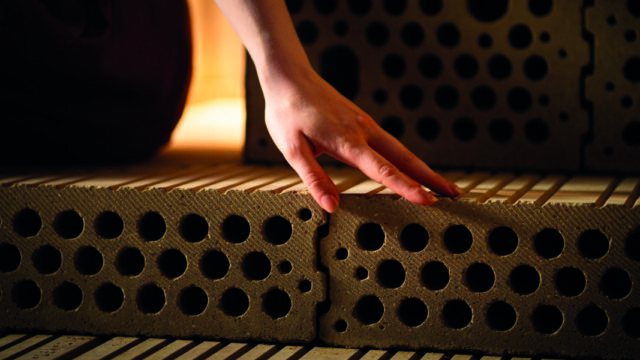
    This is based on the new DIN 18940 standard, which regulates load-bearing clay block masonry comprehensively for the first time. The thin-bed method saves over a third of the working time compared to the thick-bed method and reduces material consumption. In addition to the processing, clay also scores points ecologically. It is not burnt, is fully recyclable and ensures a healthy indoor climate thanks to its moisture-regulating properties.

    CO₂-neutral production and circular building system
    The production of clay bricks at GIMA is CO₂-neutral. Dried with solar power and waste heat. The wall structure can be completely dismantled. A double-skin construction is recommended for exterior walls: Clay bricks as the load-bearing layer, clay plaster on the inside and a curtain wall on the outside. All materials can be separated by type and recycled.

    Formats and possible applications
    The GIMA bricks achieve compressive strength class 5 and are available in widths from 115 to 365 mm, adapted to common brick formats. They can be processed using conventional tools and known methods.

    Pilot project “GreenConceptLehm
    The first project with the new system has already been realized in Meißen. Building contractors and scientists praise the healthy indoor climate and recyclability. This shows that earth building is ready for widespread use in the modern construction industry.

  • Construction group focuses on growth through sustainable solutions

    Construction group focuses on growth through sustainable solutions

    Holcim sees sustainability as a driver of profitable growth. According to an ad hoc announcement about its new NextGen Growth 2030 strategy, the building materials group aims to increase the share of sales generated by the sustainable construction solutions division to 50 percent. On average, turnover is set to grow by 3 to 5 percent annually and the operating result by between 6 and 10 percent. In 2024, the company generated sales of CHF 16.3 billion and an EBIT margin of 17.4 percent, excluding the North American business.

    According to its CEO Miljan Gutovic, Holcim believes it is “ideally positioned to benefit from the major megatrends shaping the future of construction – from urbanization to energy-efficient refurbishment. The expansion of the high-value-added Building Solutions business is a central component of Holcim’s transformation. With the new strategy, we are tapping into significant growth potential to increase added value for shareholders.”

    In Europe, Australia and North Africa, the construction group aims to benefit from the increasing demand for its sustainable products and solutions. In Europe, the focus will be on the recycling of construction and demolition materials. Holcim aims to reach 20 million tons by 2030. In Latin America, the company aims to benefit from industrialization trends and demand for mega construction projects, while in the Asia, Middle East and Africa region it intends to benefit from the generally strong growth in its markets.

    The North American business, known as Amrize, which generated 11.7 billion dollars last year, is to be listed on the stock exchange in the USA and Switzerland by the middle of the year. Following the spin-off, Holcim intends to make a number of smaller acquisitions from an estimated total capital allocation capacity of 18 to 22 billion Swiss francs by 2030. Surplus capital is to be used for major strategic acquisitions and share buybacks.

  • Modular access system for demanding infrastructures

    Modular access system for demanding infrastructures

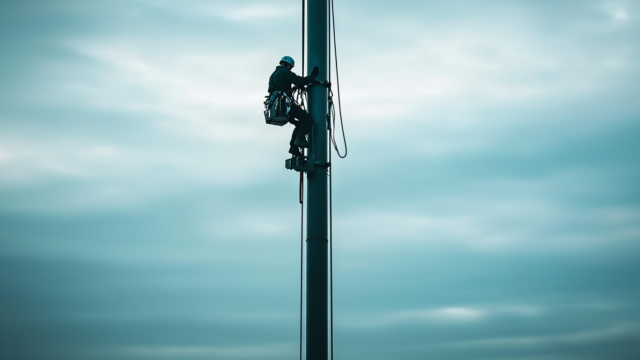
    A team of experts from HighStep Systems AG accompanied the installation of a HighStep climbing protection system on a flagpole in Baku. This is the highest flagpole in Europe with a height of 162 meters, according to a project description from the company based in Dietikon ZH. A HighStep lift now enables a safe and comfortable ascent, even in difficult environmental conditions such as strong winds. This project marks another chapter in the company’s mission to make vertical infrastructures safer – regardless of location, weather or height.

    “The forces acting on such a structure are enormous,” he explains. “Strong winds at high altitudes, material stresses, temperature differences and the enormous mass of the flag itself – all this makes the mast one of the most challenging locations for any type of vertical access.” Unlike traditional ladder systems, however, employees are always safe and mobile with the help of a HighStep system.

    The HighStep system has a modular design and consists of two components: an aluminum rail as a system carrier and a climbing device in the HighStep Easy and HighStep Lift versions. The latter is portable and is used in Baku.

    According to the company, several thousand of its systems are in operation around the world, primarily in Europe, but also in Asian countries such as China and India. In terms of applications, the focus is on electricity pylons, wind turbines, transmission towers and industrial plants.

  • New railway line in Sweden takes shape

    New railway line in Sweden takes shape

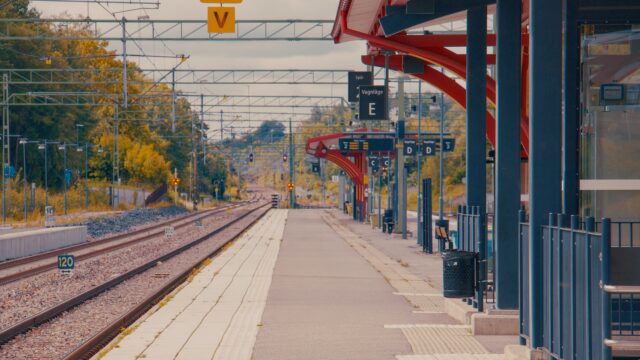
    Construction services provider Implenia has been awarded the contract for the first construction phase of the new East Link railway line by the Swedish Transport Infrastructure Agency (Trafikverket). According to a press release, the project is worth CHF 130 million. Implenia will build the 8-kilometre section of the Bibana Nyköping line by 2031.

    This is a section that connects the centres of Skavsta and Nyköping with the main route of East Link. East Link connects several coastal towns in eastern Sweden with Stockholm. Implenia’s contract includes bridges, railway tracks, refurbishment of existing buildings and other work.

    According to Erwin Scherer, Head Division Civil Engineering, Implenia is helping to “take the mobility infrastructure in eastern Sweden to a new level”.

  • Direct investment as a driver of growth

    Direct investment as a driver of growth

    Direct investments are a central component of the global economy. They comprise equity investments in foreign companies with the aim of permanently influencing their business activities. The focus is on strategic control, market access and securing resources. In contrast to portfolio investments, which are primarily aimed at capital gains, direct investments have far-reaching economic effects for the countries of origin and recipient countries.

    Switzerland’s locational advantages
    Switzerland is one of the most attractive investment locations in the world. Factors such as legal certainty, a stable economy, highly qualified skilled labour and a well-developed infrastructure make the country particularly attractive for multinational companies. Many international corporations such as ABB and Novartis have their headquarters here, while global companies such as Google and Liebherr have branches in Switzerland.

    Global networking and economic effects
    As an investor and investment location, Switzerland benefits from international capital flows. Swiss companies expand abroad through direct investment, while foreign investors invest in Swiss companies. This not only promotes the exchange of expertise and technologies, but also strengthens economic dynamism. The pharmaceutical sector in particular plays a key role in bilateral investment flows, especially between Switzerland and the USA.

    Direct investments and their influence on growth
    Direct investments have a measurable influence on economic performance. Capital gains from Swiss investments abroad flow back into the domestic economy and have a positive impact on consumption and investment. At the same time, foreign direct investment in Switzerland creates employment and increases productivity. in 2022, foreign-controlled companies accounted for around 24 per cent of total gross value added, while 11 per cent of jobs were directly dependent on them.

    Increasing regulation as a challenge
    In recent years, direct investments have been subject to increasing political regulation. Tax adjustments and investment controls are intended to create transparency and prevent tax avoidance. At the same time, there is a growing debate about tighter controls on takeovers by foreign investors, particularly with regard to national security interests. These developments could impair the growth potential of future direct investments.

    Direct investment as a stabiliser and growth factor
    Switzerland benefits greatly from direct investment, both as a country of origin and as a recipient country. It promotes innovation, strengthens economic power and secures prosperity. However, increasing regulatory intervention could pose long-term challenges for the global flow of investment and economic growth.

  • Successful financing round enables expansion of concrete sensor technology

    Successful financing round enables expansion of concrete sensor technology

    Dietikon-based DuraMon AG successfully completed a financing round totalling 1.6 million Swiss francs for the seed extension in February, according to a press release. The round was led by venture capital and private equity investor QBIT Capital in Zurich, which had already led DuraMon’s seed financing round in June 2023. Sika in Baar, a key investor since June 2023, has extended its commitment by rejoining as a strategic partner alongside Helbling Equities and others, it added. The fresh capital creates the conditions for scaling and expansion beyond the DACH region.

    DuraMon is a spin-off of the Swiss Federal Institute of Technology in Zurich(ETH) that specialises in a new type of sensor technology that ensures long-term stable corrosion monitoring of concrete infrastructure such as bridges, tunnels, multi-storey car parks and parking garages. This enables the early detection and understanding of deterioration processes in concrete structures, according to the press release. This means that the right type of repair can be determined at the right time and in the right place in the structure, allowing building owners to optimise their maintenance strategies and reduce repair costs.

    The newly secured funding will enable DuraMon to automate and optimise key internal processes, namely automated data analysis and sensor installation, according to the press release. There will also be a strong focus on customer development and expanding DuraMon’s market reach beyond the DACH region into other European countries.

  • Acquisition of American provider for building finishing

    Acquisition of American provider for building finishing

    Sika is continuing its expansion plans in the USA and has acquired HPS North America, Inc. from Florence in the US state of Alabama. According to a press release, the supplier of products including self-levelling and waterproofing solutions has successfully developed in the American market.

    The products are reportedly sold through an established distribution network and are designed for use on floors. These include products of the Schönox brand, which Sika Germany manufactures. Sika had already held a minority stake in HPS North America.

    The takeover provides the Baar-based company, which specialises in speciality chemicals, with a “strong platform for further expansion in the growing Building Finishing segment” and expects significant efficiency gains.

    “With the integration of the HPS business into our US organisation, we will be able to drive forward the expansion of our business relationships and distribution networks in the building finishing market at full speed,” said Mike Campion, Regional Head Americas at Sika, in the press release.

  • New technology permanently stores CO₂ in recycled concrete

    New technology permanently stores CO₂ in recycled concrete

    Neustark and the joint venture RECULAR of the Oettinger Group and peterbeton are joining forces for the permanent storage of CO2 in recycled concrete. RECULAR, based in Baden-Baden, has tested Neustark’s technology for binding CO2 in granulate from demolition concrete in a pilot plant in the Karlsruhe region over the past few months, Neustark announced in a press release. On 26 February, the partners presented the technology and the initial results from the pilot plant at an event.

    The pilot project forms the basis for further collaboration between Neustark, the Oettinger Group and peterbeton. “We can store an average of 10 kilograms of CO2 per tonne of demolition material, making it a CO2 sink,” Thomas Karcher, Managing Director of peterbeton, is quoted as saying in the press release. His company is responsible for processing and distributing the CO2-enriched recycled concrete in the project. The Oettinger Group is responsible for procuring and processing the demolition concrete.

    “We are delighted to be working with our partners Oettinger and peterbeton to open the first CO2 storage facility of its kind in Karlsruhe and the third in Germany,” explains Valentin Gutknecht, co-founder and co-CEO of Neustark. “This project shows how innovative technologies and local collaboration can shape the future.” There are currently 29 systems with Neustark technology in operation in Europe. Neustark is also involved in the planning or construction of a further 30 plants.

  • Solar shading for historical architecture in Spain

    Solar shading for historical architecture in Spain

    Aadorf-based sun shading manufacturer Griesser is involved in the reconstruction and remodelling of the listed former San Agustín monastery in Badajoz, south-west Spain. This is being remodelled into a school of arts and crafts. According to a press release, the straight-lined building offers good conditions for an educational institution. In the past, the former monastery has been used as barracks, a courthouse and a school.

    The cloisters are also to be incorporated into the school during the current remodelling. Their arcades will be extensively glazed and require solar shading. Griesser is supplying its Solomatic 80 system for this purpose: the customised louvre blinds provide good shading on the one hand and a good supply of natural light on the other. Both the classic design of the slats and their colour scheme in RAL 7022, an almost anthracite grey shade, fit in with the historic appearance of the building.

    In addition, the incidence of daylight is controlled automatically. The resulting “harmonious atmosphere” is intended to increase “the students’ ability to concentrate and their sense of well-being”.

  • Robot platform ensures safety and efficiency on construction sites

    Robot platform ensures safety and efficiency on construction sites

    Work such as drilling, sanding, spraying insulation or lifting heavy materials harbours high risks. According to recent figures, in 2024 there were 30 fatalities on construction sites in Europe alone within four months.

    With the support of the EU-funded CONCERT project, IIT has developed an innovative, modular robot platform. “Our aim was to create a flexible and adaptable solution that optimises construction processes, reduces the workload on people and improves safety,” explains Nikolaos Tsagarakis, project coordinator at IIT.

    Robot as a support – not a replacement
    Although the CONCERT robot can work autonomously, it was primarily designed as an assistance system for construction workers. While the machine takes over repetitive or dangerous tasks, skilled workers can concentrate on more complex activities. This not only increases work safety, but also efficiency on construction sites.

    “Instead of using a separate robot for each task, we have developed a fully reconfigurable solution that can be customised directly on the construction site,” continues Tsagarakis.

    Seamless integration into the digital construction site
    The robot was successfully tested under real construction site conditions. It not only demonstrated its performance, but also its flexibility by being able to adapt to the spontaneous requirements of the construction team.

    One major advantage is the link to digital building information models (BIM). This allows the robot to be controlled directly via a tablet without workers having to operate heavy power tools.

    A breakthrough for construction robotics
    CONCERT has ushered in a new era in digital construction site automation with the first reconfigurable multi-purpose construction robot platform.

    The solution not only has the potential for broad industrial application, but also exceeds the usual technology maturity level in research projects. “The flexibility of the platform makes it usable for many other construction tasks,” says Tsagarakis. Future developments will expand the areas of application even further.

  • Vaud economy between recovery and uncertainty

    Vaud economy between recovery and uncertainty

    Global economic tensions have increased in recent months. The OECD and the Swiss State Secretariat for Economic Affairs (SECO) point to risks, particularly from the new US administration and the unclear relations between Switzerland and the EU. While the US economy is growing more strongly than expected, the European economy remains weakened by structural challenges. The strong Swiss franc is slowing down export-orientated sectors, while domestic demand remains a stable pillar of the economy.

    Construction industry benefits from interest rate cuts
    The Swiss National Bank (SNB) has eased its monetary policy and lowered the key interest rate from 1.75% to 0.5%. This measure is creating a favourable investment climate, particularly in the construction industry, which is benefiting from falling financing costs. Forecasts for Switzerland as a whole predict growth of 1.5% this year and an acceleration to 1.7% next year.

    Sector development mixed picture
    While the industrial economy continues to be challenged, other sectors are showing mixed developments. The retail and hospitality sectors are struggling with a weak business climate, while the service sector is showing positive momentum. Particularly strong growth is forecast for the chemical and pharmaceutical industries, business services and the financial sector. The machinery and watchmaking industry could also benefit from the economic recovery in the medium term.

    Stabilisation with uncertainties
    The Vaud economy is looking forward to a year of opportunities, but also challenges. While key sectors are likely to benefit from a sustained recovery, geopolitical and currency policy uncertainties remain risk factors. The decisive factors will be how international trade relations and the domestic economy develop and the extent to which companies are able to react flexibly to changes.

  • The increasing billion-euro burden for reinsurers

    The increasing billion-euro burden for reinsurers

    The economic consequences of natural disasters reached alarming dimensions in 2024. Munich Re puts the total global losses at 320 billion dollars, of which 140 billion dollars were covered by insurance. This makes last year one of the most expensive since records began. Hurricanes, floods and forest fires in particular caused high costs and highlight the growing risks posed by climate change.

    The most expensive disasters of the year
    Hurricane Helene caused the most damage at USD 56 billion, of which only USD 16 billion was insured. Hurricane Milton caused damage totalling 38 billion dollars, with insurance cover of 25 billion dollars.

    The earthquake in Japan on New Year’s Day 2024 also caused considerable devastation, with damage totalling 15 billion dollars. Floods in Brazil, Valencia and Dubai exacerbated the global challenges.

    Climate change as a driver of extreme weather events
    Studies show that climate change is increasing the frequency and intensity of extreme weather phenomena. Although the number of tropical storms is not increasing, their destructive power is growing. 93 per cent of total global losses and 97 per cent of insured losses were caused by weather catastrophes.

    The increasing risks lead to higher insurance premiums. Particularly vulnerable regions with weak insurance cover are facing enormous challenges. Natural disasters claimed around 11,000 lives in 2024. Fewer than in previous years, but still significant.

    Insurance industry under pressure
    The costs of natural disasters are well above the average values of recent decades. The 30-year average of total losses is 181 billion dollars, the 10-year average 236 billion dollars. The loss amount of 320 billion dollars in 2024 shows the increasing threat.

    Rising insurance claims increase premiums and risk assessments. Regions with a high catastrophe risk could become more difficult to insure in future. At the same time, government protection measures are needed to protect private individuals and companies from the financial consequences of extreme weather events.

    Prevention is the key

    The rising costs of extreme weather events require investment in climate-resilient infrastructure. Tobias Grimm, Chief Climatologist at Munich Re, emphasises: “Everyone pays the price for worse weather extremes, but especially people in less insured countries with little financial strength for reconstruction.” The insurance industry and politicians are called upon to develop sustainable strategies to strengthen resilience. Only with preventive measures can the burden of climate disasters be reduced in the long term.

  • Revolution in materials technology

    Revolution in materials technology

    Epoxy resins are indispensable for numerous industrial applications, from adhesives to coatings and composites. While conventional two-component epoxy resins require precise mixing and fast processing, one-component epoxy resins offer simplified handling and consistent quality.

    However, previous solutions had weaknesses. They could often only be stored at low temperatures and had insufficient flame-retardant properties. This limited their potential applications in safety-critical areas such as the construction, electronics and telecommunications industries.

    Breakthrough from Korea
    A research team from the Korea Institute of Science and Technology in collaboration with Sungkyunkwan University has overcome these hurdles. Under the leadership of Dr Jaewoo Kim and Professor Chongmin Koo, they developed the “Epoxy/MXene One-Component Solution”, a combination of epoxy resin, a new type of latent hardener and the two-dimensional nanomaterial MXene.

    This innovation enables a storage stability of over 180 days at 60 °C, a significant advance compared to previous products, which lose their properties within 40 days at room temperature of 25 °C.

    MXene as the key to stability and safety
    MXene, a state-of-the-art nanomaterial, not only improves the thermal and mechanical resistance, but also makes a decisive contribution to the flame retardancy (V0 class) and electrical conductivity of the new epoxy resin. This opens up a wide range of applications in the high-performance industry, particularly for electromagnetic shielding materials, industrial coatings and adhesives.

    Industrial applications and future potential
    The combination of extended durability, improved safety features and easy handling makes the new 1-component epoxy resin particularly attractive for industries with high demands on material stability and fire protection.

    Possible areas of application

    • Electronics: Protective coatings for components and printed circuit boards
    • Construction industry: flame-retardant adhesives for safety applications
    • Telecommunications: high-performance materials for antennas and shielding housings

    With this innovation, the South Korean research team could have a lasting impact on materials technology and set new standards for single-component epoxy resins.

  • Strengthening Europe’s innovation financing

    Strengthening Europe’s innovation financing

    Technology start-ups are crucial for the progress of disruptive innovations. However, financial hurdles are hampering their growth, as a new study by the EPO makes clear. A comparison with the USA shows that there is a lack of private capital in Europe, particularly in the later financing phases. This forces many innovative companies to look outside Europe for investors.

    A new evaluation system
    With the TIS, the EPO has developed a precise indicator to evaluate the specialisation of investors in patented technologies. The TIS is based on over 1000 individual values and indicates the proportion of patent-active companies in an investor’s portfolio. This enables start-ups to search specifically for investors who are particularly innovation-friendly.

    Public investors as a central pillar
    The study shows that public institutions play a key role in promoting innovation. Programmes such as the European Innovation Council, national funding agencies such as Innosuisse or Bpifrance and the European Investment Bank offer essential support in the early financing phases. However, there is a lack of seamless follow-up financing from private investors, which makes it difficult to scale up innovative technologies.

    A comparison of European and US financing models
    While 62% of private investors in Europe focus on early-stage financing, the proportion is significantly higher among the 100 largest US investors with a later-stage financing focus. 98 of the top 100 investors in the US are private, over half of whom specialise in growth financing. These differences illustrate the gap in the European capital structure.

    New digital tools for finding investors
    The EPO is expanding its digital tools to make it easier for start-ups to access capital. A filter has been added to the Deep Tech Finder that allows investors to be found specifically according to financing phase, location and technology field. This enables start-ups to efficiently identify suitable investors and improve their financing opportunities.

    Paths to a stronger innovation ecosystem
    The study emphasises the need for action to improve the networking of public and private innovation financing in Europe. With new digital tools such as the TIS and the Deep Tech Finder, the EPO is providing decisive impetus to close the financing gap and keep start-ups in the European market in the long term.

  • Revolutionary technology for the computer world

    Revolutionary technology for the computer world

    The increasing complexity of neural networks poses enormous challenges for conventional computer technologies. Electronic hardware is increasingly reaching its limits. This is where MIT’s revolutionary development comes in. A photonic processor that uses light instead of electrons for calculations and heralds a new era of high-speed processing.

    At the heart of the system is a fully integrated optical neural network that combines linear and non-linear operations. While linear calculations are performed using light-based matrix multiplications, the new technology overcomes the previous hurdle of non-linear operations. This was solved by special non-linear optical functional units that efficiently combine optics and electronics.

    Speed and efficiency in the nanosecond range
    The photonic processor processes classification tasks in less than half a nanosecond. A speed that sets new standards. The technology significantly reduces latency times and is extremely energy-efficient. The optical signals are not converted into electrical currents until the final output. This combination enables impressive accuracy values of over 96 per cent during training and more than 92 per cent during inference.

    Scalable integration for practical applications
    A key advantage of photonic chips is their scalability. They can be integrated into existing systems using commercial manufacturing processes. MIT is thus not only opening up new perspectives for AI applications, but also for energy-intensive areas such as big data and data centres. MIT’s photonic AI chips mark a technological breakthrough in the world of computing. Using light as a computing medium enables ultra-fast, energy-efficient and scalable AI calculations – a step into a new future of data processing.

  • Partners Group acquires Empira Group

    Partners Group acquires Empira Group

    The acquisition strengthens Partners Group’s position as a global property investor. Founded in 2014, Empira Group has a portfolio in the residential sector with a gross development value of around 14 billion euros. Its expertise ranges from project development and fund management to sustainable investment strategies aimed at decarbonisation and affordable housing. Following completion of the transaction, Empira will operate under its brand as a pan-European platform within Partners Group.

    Focus on transformative investing
    The acquisition comes at a pivotal time in the real estate industry, which is increasingly focused on operational excellence and transformative investing. With this acquisition, Partners Group continues its strategy to expand its vertical depth in key areas such as residential and logistics. The aim is to provide innovative solutions to the growing demand for sustainable and affordable rental housing.

    Together for a new era
    The partnership combines the expertise with the global platform of Partners Group. Karim Habra, Global Co-Head Real Estate at Partners Group, emphasises: “The operational capabilities enable us to go beyond traditional approaches and usher in a new era of asset transformation.” Lahcen Knapp, founder of Empira Group, adds: “Our shared vision will enable us to efficiently develop and manage residential property for a new era.”

    Sector-specific synergies
    The acquisition builds on the Group’s recent strategic investments in companies such as Trinity Investments and Citivale. Its property portfolio now has a gross asset value of USD 43 billion, supported by assets under management of USD 15.9 billion.

  • Global competition for sustainable design launched

    Global competition for sustainable design launched

    Since 1 October 2024, projects can be submitted for the Holcim Foundation Award 2025. This competition honours sustainable design projects that are in the late planning phase or already under construction. One condition: construction must not be completed before 11 February 2025. Prize money totalling USD 1 million is available, which will be divided among 20 winning projects worldwide.

    Evaluation criteria and regions
    The submissions will be evaluated by renowned expert juries consisting of architects, engineers and urban planners. Projects will be judged against the Holcim Foundation’s four key objectives for sustainable construction: creating liveable places, protecting the planet, supporting communities and ensuring economic sustainability. The juries operate in five regions: Asia Pacific, Europe, Latin America, Middle East & Africa and North America. Leading personalities such as Sou Fujimoto (Asia-Pacific) and Jeanne Gang (North America) chair the juries.

    Awards and recognition
    Four projects per region will be awarded USD 40,000 each, with one project also receiving a special prize of USD 40,000. The winners will be invited to the award ceremony in Venice on 20 November 2025, with travel expenses covered by the Holcim Foundation.

    Enter now!
    Entry is free of charge and the deadline for submissions is 11 February 2025. For detailed information and to enter, visit the official website – awards.holcimfoundation.org. Take this opportunity to become a part of the change and promote sustainable projects!

  • Sustainable construction projects launched in Germany and abroad

    Sustainable construction projects launched in Germany and abroad

    Implenia, the construction and property company based in the Glattpark district of Opfikon, has won several tenders for building construction contracts. According to a press release, the contracts have a total volume of 160 million Swiss francs.

    The company will construct the new office building of the Swiss National Science Foundation(SNSF) in Bern. The sustainable building will be constructed using local timber and recycled concrete in accordance with the Swiss Sustainable Building Standard (SNBS). Implenia has also been awarded several contracts in Germany.

    In Mainz, Implenia, together with its partners Gemünden and Apleona, was awarded the contract to construct a new 10,000 square metre research building for TRON. The research institute develops new diagnostics and active ingredients for immunotherapeutic treatments.

    In Leipzig, Implenia and its partner GP Günter Papenburg AG are building a seven- to eight-storey residential development on nine connected properties. In addition to 202 residential units, many commercial and ancillary premises are to be built. The buildings will be constructed as low-energy buildings in accordance with the Efficiency House 55 standard and the entire complex will be handed over on a turnkey basis.

    Three residential buildings with 101 units are being built in Munich, which should be ready for handover by 2026. Implenia will also realise a further stage of an ongoing project in Heilbronn and has been commissioned with a pre-construction phase in Siegburg.

  • Blockchain platform strengthens property trading in Spain

    Blockchain platform strengthens property trading in Spain

    The Spanish stock exchange Bolsas y Mercados Españoles(BME), a SIX Group company, has become one of the main shareholders of OpenBrick, according to a press release. The Madrid-based company founded by Grupo Lar, Renta 4 Banco and ioBuilders is developing a platform using blockchain technology. This connects issuers, investors and financial intermediaries with a large number of property projects whose tradable securities can be purchased on a primary market and then traded on a secondary market. In addition to BME, Garrigues and Teras Capital are also new strategic partners.

    The market will act as a financing channel outside of banks. The aim is to enable property players to obtain funds for the development of their projects more quickly and cost-effectively. BME will assume the role of platform operator via the Spanish central securities depository Iberclear and will be responsible for managing the trading and settlement system under the DLT (Distributed Ledger Technology) Pilot Regime of the European Securities and Markets Authority.

    OpenBrick received authorisation to sandbox from the Spanish Securities and Exchange Commission(CNMV) in February 2023 with a positive preliminary assessment. The company reportedly expects to receive the EU licence for operations via BME 2025. The first project will start with the Madrid-based property manager Alquiler Seguro.

    “With this investment, SIX is positioning itself as a key player in the EU’s digital agenda and in the further development of the financial markets,” said Javier Hernani, Head Securities Services and member of the Executive Board of SIX. SIX is convinced “that this is the first step on a long and successful journey”.

  • Launch of the EU research project TIMBERHAUS to promote timber construction

    Launch of the EU research project TIMBERHAUS to promote timber construction

    The European research project TIMBERHAUS was launched in Copenhagen at the beginning of November, Empa announced in a press release. It is one of 19 partners from a total of ten countries taking part in the project, which is funded by the EU and the State Secretariat for Education, Research and Innovation and aims to promote timber construction in Europe. Within four years, innovative timber construction technologies and structures are to be developed with which CO2 emissions in the construction sector can be significantly reduced.

    According to Empa, the construction sector is responsible for 40 per cent of global CO2 emissions. The use of wood could help here. Currently, however, European forest resources, half of which consist of hardwood, are only utilised “very inefficiently” and limited to a few types of softwood for construction, explains project coordinator Anders Kjellow from the Danish Technological Institute. “With TIMBERHAUS, we are trying to overcome this challenge in order to increase the sustainable use of wood in construction.”

    Empa is contributing to the project with innovative prototypes created using digital tools such as machine learning and artificial intelligence. “The prototypes will serve as practical examples of how we can effectively utilise a wider range of wood resources,” Empa researcher Mark Schubert is quoted as saying in the press release. “Our goal is to provide the construction sector with viable and efficient products that meet current building standards while promoting the principles of the circular economy and supporting European climate goals.”

  • 62. Meeting of the EEA in the European Economic Area

    62. Meeting of the EEA in the European Economic Area

    The EEA Joint Parliamentary Committee serves as a platform for dialogue between the parliaments of the EEA/EFTA states (Norway, Iceland and Liechtenstein) and the EU. Switzerland, a member of EFTA but not of the EEA, plays an observer role on this committee. This enables the Swiss delegation to follow important developments in the EEA and actively participate in debates on foreign and economic policy issues.

    Focus of the talks
    The meeting will centre on current developments in the European Economic Area. In particular, it will focus on the functioning of the EEA Agreement, European security and competitiveness, as well as the priorities for EEA and Norwegian grants to reduce social and economic disparities. Another focus will be on relations between Switzerland and the European Union, on which the Swiss delegation will inform the Committee.

    Swiss delegation
    The EFTA/EU delegation is represented by National Councillor Thomas Aeschi (SVP, ZG) as Chairman, Councillor of States Damian Müller (FDP, LU) as Vice-Chairman and National Councillors Hans-Peter Portmann (FDP, ZH) and Nicolas Walder (Greens, GE).

    Significance for Switzerland
    Participation in the Committee enables Switzerland to keep abreast of European developments and maintain important contacts. Particularly in the areas of competitiveness and international cooperation, the observer role offers a valuable insight into topics that are also of central importance to Switzerland.

    The meeting in Oslo strengthens networking between Switzerland and the EEA states and the EU. Switzerland’s observer role emphasises the importance of the EEA for Swiss foreign and economic policy and enables it to participate in relevant debates.

  • New plant for the mineralisation of CO2 in Germany

    New plant for the mineralisation of CO2 in Germany

    Together with its partner Heinrich Feess GmbH & Co. KG,Neustark has commissioned a plant for the permanent storage of CO2 in demolition concrete in Kirchheim unter Teck. The plant at the construction waste recycler in Baden-Württemberg is already the second plant realised by neustark in Germany, ClimateTech from Bern announced in a press release. Around 1000 tonnes of CO2 can be bound in demolition concrete here every year.

    Neustark’s technology works with CO2 generated during local biomethane production. It is captured directly and liquefied for transport. At the plant near Stuttgart, the CO2 is fed into the demolition concrete in an airtight silo. In a short time, it combines there in the form of limestone in the aggregate, writes neustark. The technology shortens the mineralisation process, which takes several decades in nature, to just a few hours.

    “We decided in favour of this innovative technology because it integrates perfectly into our concrete recycling and production process on site,” Walter Feess, Senior Director of the construction waste recycler, is quoted as saying in the press release. For Valentin Gutknecht, co-founder and co-CEO of neustark, the new plant is a further step towards ClimateTech’s goal of being able to permanently bind around 1 million tonnes of CO2 per year by 2030. “What we urgently need now is demand from the public sector for carbonated construction materials in building and road construction and corresponding legal regulations to support efforts towards greater sustainability,” says Gutknecht.

  • Underwater power plants on the seabed

    Underwater power plants on the seabed

    Pumped storage power plants are a proven method of storing energy, but have their limits on land. The StEnSea project transfers this principle to the seabed, where space and conditions are ideal for this technology. The prototype consists of a hollow concrete sphere that stores or generates electricity through water inflow and outflow.

    Field test and mode of operation
    A three-metre sphere was successfully tested in Lake Constance. Now a 400-tonne concrete sphere with a diameter of nine metres is to be anchored off Long Beach, California. The sphere is pumped empty to store energy and generates electricity by returning water to drive a pump turbine.

    The prototype has an output of 0.5 MW and a capacity of 0.4 MWh. The Fraunhofer team plans to scale up the system to spheres with a diameter of 30 metres, which can achieve an output of 30 MW and a capacity of 120 MWh.

    Advantages and potential applications
    Water depths of 600 to 800 metres are ideal for this storage technology. The pressure and wall thickness allow for cost-efficient constructions. There are possible locations worldwide, for example off Norway, Portugal or the US coast. The technology is also suitable for deep lakes or flooded open-cast mines.

    The global storage potential is estimated at 817,000 GWh, which is significantly higher than the capacity of conventional pumped storage power plants. Applications range from arbitrage transactions to the stabilisation of power grids through control reserve.

    Cost-effectiveness and scaling
    With storage costs of around 4.6 cents per kilowatt hour and a service life of the concrete sphere of up to 60 years, the technology is cost-effective. The efficiency per storage cycle is 75 to 80 per cent. A pilot park with six spheres could achieve 520 storage cycles per year.

    Prospects for the energy transition
    Bernhard Ernst, project manager at the Fraunhofer IEE, emphasises the importance of the StEnSea technology: “The global energy transition is increasing the need for storage enormously. Our underwater spherical storage systems are a cost-effective solution for short to medium storage periods.”

    The StEnSea spherical storage tanks offer a pioneering technology for energy storage. With the test run off the Californian coast, the Fraunhofer team is taking an important step towards scaling up and commercialisation. The technology has the potential to revolutionise energy storage worldwide in the long term.

  • Barrier-free architecture

    Barrier-free architecture

    “Architecture can be brutal,” says Anna Puigjaner, professor at ETH Zurich. Stairs, narrow corridors and standardised living concepts exclude many people. They separate those who can from those who can’t. The standards of architecture, which are often adapted to the classic nuclear family, hardly take into account the diversity of lifestyles. In Switzerland, however, only a quarter of people live in a nuclear family, while alternative living arrangements such as single parents, patchwork families or childless couples are largely ignored.

    Making care work visible
    One of Puigjaner’s central approaches is to integrate care work from the private sphere into the public infrastructure. Current architecture makes caring, housework and everyday activities a challenge for many people, especially the elderly or those with health problems. Puigjaner calls for care work such as cooking, washing or childcare to be made more accessible to the public in order to reduce dependencies.

    Examples such as the “Manzanas del Cuidado” in Bogotá show how libraries have been transformed into multifunctional care centres. Here, kitchens, childcare and laundry services can be found under one roof. In Tokyo and Singapore, public kitchens promote social interaction and reduce care costs.

    Architecture that connects
    Puigjaner advocates architecture that promotes encounters and integrates habits that normalise support. An environment in which people can cook together or help each other creates interdependencies instead of reinforcing dependencies. Such a concept not only helps older people, but also everyone else in different life situations.

    The future of inclusive architecture
    “Our built environment should not create barriers, but open up opportunities,” says Puigjaner. This requires a rethink in the planning of cities and buildings. Public infrastructure such as community centres, inclusive housing and multifunctional urban districts could not only reduce social isolation, but also break down existing power structures.

    Architecture has the power to remove barriers and promote social participation. By integrating care work into public infrastructure and creating inclusive spaces, a new, unifying architecture can emerge that enables all people to lead more independent and fulfilling lives.

  • Expansion in the mortar market through takeover in Peru

    Expansion in the mortar market through takeover in Peru

    Sika has acquired Chema in Peru, a manufacturer of products for tile laying. With this acquisition, the Baar-based speciality chemicals company is expanding its distribution channels in the Peruvian mortar market and expanding its production in the area of building finishing, according to a press release.

    The acquisition opens up additional distribution channels and complementary production sites for Sika. This is associated with important opportunities for cross-selling with complementary products such as sealants, adhesives and liquid membranes. “The expanded product offering and geographic footprint will allow us to better serve new and existing customers across the country with complete solutions,” said Mike Campion, Regional Head Americas.

    Chema has been in the business of distributing high-quality, easy-to-use tile installation products for more than 50 years with four modern manufacturing plants and seven warehouses worldwide. “The broad customer base appreciates the efficient logistics organisation and delivery reliability in combination with a top range of products and solutions,” it says.

  • ESA strengthens new innovation centre at the Paul Scherrer Institute

    ESA strengthens new innovation centre at the Paul Scherrer Institute

    With the opening of the ESDI, the ESA has taken a decisive step towards strengthening Swiss space research and development. Located in the immediate vicinity of the PSI in Park Innovaare, the ESDI will serve as a hub for new, ground-breaking technologies that are important for both space research and industrial applications in Switzerland and Europe.

    Focus on quantum and materials research in the Phi-Lab
    A central element of the ESDI is the Phi-Lab, which is headed by Jennifer Wadsworth and specialises in promoting innovative research projects. From 2025, targeted programmes in quantum and materials research will be financially supported here. Wadsworth emphasises the possibility that Phi-Lab brings together diverse teams from industry, start-ups and research to solve complex technological challenges that are almost impossible to implement with conventional funding measures.

    Location advantages through Park Innovaare and PSI
    The ESDI’s location in Park Innovaare, a new hub for high-tech innovation, provides access to advanced manufacturing facilities. In addition, the neighbouring PSI brings expertise in areas such as vacuum technology and radiation protection, which are already adapted to space conditions through the use of PSI particle accelerators. This synergy provides the ESDI and its partners with an infrastructure for prototype development and testing under realistic space conditions.

    Strengthening the Swiss innovation landscape
    With the ESDI, the ESA will further intensify its collaboration with Swiss innovation players. The support of the Swiss State Secretariat for Education, Research and Innovation (SERI) and the ETH Domain guarantees the sustainable development of this project. The planned opening ceremony in spring 2025 marks the official starting point for an era of closer ties between ESA, Swiss research and industry that could extend far beyond the space sector.

    Long-standing partnership between ESA and PSI
    The connection between ESA and PSI has a long tradition. PSI has been carrying out material tests as part of space research for many years. One example of this is the JUICE mission, in which the RADEM detector developed by PSI is used to analyse radiation conditions in the Jupiter system. Thierry Strässle, Chief of Staff at PSI, sees the ESDI as playing a crucial role for Switzerland: “The ESDI will be a central hub for space research and Switzerland’s high-tech ecosystem.”

  • New partnership strengthens construction technology in Mexico

    New partnership strengthens construction technology in Mexico

    Leica Geosystems, part of Hexagon, and Dimanor have announced their new partnership. The two companies have agreed that Dimanor, a provider of machinery solutions in agriculture, mining and construction based in Mexico City, will expand its portfolio to include Leica Geosystems’ machine control solutions. Dimanor’s presence in Mexico spans the states of Baja California North and South, Sonora, Sinaloa, Chihuahua, Nayarit, Jalisco, Michoacán, Guerrero, Estado de México, Hidalgo and Mexico City. In these regions, heavy industry customers will have access to Leica Geosystems’ construction technologies.

    “Adding Leica Geosystems’ advanced machine control solutions to our offering is a strategic step to further increase the efficiency and productivity of our customers’ projects,” said Product Manager Ricardo Ortega, explaining his company’s motivation for partnering with Leica Geosystems.

    Evandro Manffra, head of Leica Geosystems’ heavy construction segment in Latin America, describes Dimanor as an ideal partner: “Together, we look forward to bringing our state-of-the-art machine control solutions to a wider audience in Mexico and improving the efficiency and precision of construction projects throughout the region.”

  • Investments in the circular economy and decarbonisation strengthen CO2 strategy

    Investments in the circular economy and decarbonisation strengthen CO2 strategy

    Holcim receives a grant from the EU Innovation Fund for another major cleantech project. This brings the number of Holcim’s EU-funded CCUS projects to seven. According to a press release from the building materials manufacturer, this new carbon capture and storage (CCUS) project at its site in Martres-Tolosane in south-west France is a highly scalable plant based on mature technologies and close partnerships.

    Holcim had already announced an investment of 100 million euros in the sustainability of this cement plant in 2017. Between 2021 and 2023, Holcim invested a further 200 million euros in the decarbonisation of its French industrial facilities and made a further 60 million euros available for its continuation in May of this year.

    According to Holcim, these investments will have a leverage effect on the development of new sectors and jobs in the field of the circular economy on the one hand, and in the medium term in the field of carbon capture, storage and utilisation on the other. To this end, a new pilot platform, a real industrial test centre for open innovation, will be built at the Martres-Tolosane factory. It will be dedicated to improving new CO2 capture technologies.

    “Holcim is well on its way to making net-zero cement and concrete a reality on a large scale in this decade,” CEO Miljan Gutovic is quoted as saying in the press release. “This support from the EU Innovation Fund is a testament to the strength of our engineering teams, the maturity of our technologies and progressive partnerships across the value chain.”

  • Construction of the world’s largest building

    Construction of the world’s largest building

    With a height and width of 400 metres each, the Mukaab will surpass the Empire State Building in New York almost twenty times over. Construction work has now begun in the desert state and the megaproject is due to be completed by 2030. The cube will offer a variety of flats, shops and leisure facilities, strengthening Riyadh’s position as an up-and-coming tourist metropolis. Saudi Arabia is investing 50 billion dollars in the north-west of the capital to create a new urban landscape.

    Virtual reality and artificial intelligence
    The outside of the Mukaab is to be equipped with virtual reality technology to transport visitors to fascinating landscapes. Inside, artificial intelligence will create holograms and simulations that project different places and times at breathtaking scale. The building will thus become a kind of digital adventure park that will attract visitors from all over the world.

    Prestigious projects with challenges
    Mukaab is part of Crown Prince Mohammed bin Salman’s “Vision 2030”, which aims to turn Saudi Arabia into a global tourist destination and business centre. The city of Neom and the linear megaproject “The Line” are also part of this ambitious plan. However, the plans for “The Line” have already been scaled back considerably due to logistical and financial hurdles. Instead of 170 kilometres, the structure will only be 2.4 kilometres long by 2030. It is uncertain whether it will ever reach the planned capacity for 9 million people.

    The Jeddah Tower – a long construction history
    Another mega project, the Jeddah Tower, was originally planned to be the tallest building in the world. After years of delays, the height was reduced from 1600 metres to 1007 metres. Construction began in 2013, but after a five-year break, the project is progressing slowly. The Jeddah Tower could be completed in 2029 at the earliest and become the new record holder.

    Criticism and controversy
    The Mukaab has already caused controversy. The design of the giant cube reminds many of the Kaaba in Mecca, the central shrine of Islam. This similarity is causing criticism in the conservative kingdom, as some citizens consider the construction to be disrespectful.

    It remains to be seen whether the Mukaab project will be realised on time or, like other Saudi megaprojects, run into difficulties. However, the size and ambition of these construction projects show the transformation that Saudi Arabia is undergoing. A transformation that is set to turn the country into a global tourism and business centre and will extend far beyond the oil era.