Category: International

  • No complex thinking skills with ChatGPT & Co.

    No complex thinking skills with ChatGPT & Co.

    The research, which will be presented at the annual meeting of the Association for Computational Linguistics in Bangkok, concludes that large language models such as ChatGPT show no evidence of the development of sophisticated or planned thinking. Instead, these models only demonstrate the ability to respond to simple instructions. This disproves the widespread assumption that AI models could exhibit increasingly intelligent behaviour through scaling.

    Background to the study
    The study, led by Prof Dr Iryna Gurevych from TU Darmstadt and Dr Harish Tayyar Madabushi from the University of Bath, investigated so-called “emergent capabilities” of AI models. These capabilities, which were observed with increasing model size and data volume, raised both hopes and fears regarding the future development of artificial intelligence. However, current research shows that these abilities are due to simple learning effects rather than complex, independent thinking.

    Implications for the future of AI use
    The results of the study have significant implications for the use of AI systems. Prof Gurevych warns against relying on the models to solve complex tasks without human support. She emphasises that users should provide explicit instructions and examples in order to use the systems effectively. In addition, the tendency of models to produce plausible-sounding but incorrect results remains a challenge.

    Focus on future risks
    Although the study shows that LLMs do not develop complex thinking skills, this does not mean that AI does not pose a threat. Prof Gurevych calls for research to focus on the real risks of AI models, particularly their potential to generate fake news. The findings of the study provide a valuable basis for better understanding the actual capabilities of AI models and making their use safer in practice.

  • Largest 3D-printed housing estate being built in Texas

    Largest 3D-printed housing estate being built in Texas

    In the Wolf Ranch community in Georgetown, Texas, 100 single-storey houses are being built using the Vulcan printer from ICON. This 3D printer builds the houses layer by layer from a special concrete mix that is robust and weather-resistant. The construction process saves time and labour while creating walls that can withstand extreme weather conditions.

    Resilience and modern challenges
    The solid concrete walls of the houses not only offer excellent protection against extreme weather conditions, but also provide excellent insulation. This construction proves particularly useful in hot summer months, as the interiors remain cool and the air conditioning systems are relieved. However, the thick walls also pose challenges: the signal strength of wireless networks is impaired, which is why many residents rely on meshed routers.

    Building revolution
    The Wolf Ranch homes, known as the “Genesis Collection”, are available for between 450,000 and 600,000 dollars, and a quarter of the units have already been sold. The project demonstrates the potential of 3D printing to change the construction industry for good. ICON already built its first 3D-printed house in Austin in 2018 and is even planning to use the technology on the moon as part of NASA’s Artemis programme in the future.

    3D printing on the upswing worldwide
    3D printing in the construction industry is also picking up speed in Germany. the first 3D-printed detached house was opened in Beckum in 2021, and further projects, such as the publicly subsidised apartment block in Lünen, are in the pipeline. These developments show that 3D printing is becoming increasingly important worldwide and will potentially shape the future of construction.

  • A cost-effective alternative to conventional power plants

    A cost-effective alternative to conventional power plants

    According to the Fraunhofer ISE study, ground-mounted PV systems and onshore wind turbines are currently the most cost-effective technologies for generating electricity in Germany. The electricity generation costs for these systems are between 4.1 and 9.2 cents per kilowatt hour, undercutting not only other renewable energies but also all conventional power plant types.

    Battery storage as a valuable addition
    Photovoltaic battery systems have electricity production costs that vary between 6.0 and 22.5 cents per kilowatt hour, depending on the location and battery system. This shows the enormous potential of this technology, especially in combination with ground-mounted PV systems and wind farms. Dr Christoph Kost from Fraunhofer ISE emphasises the advantages of such combinations: “The combination allows grid capacities to be better utilised.”

    Cost reductions expected by 2045
    The study also provides a forecast for cost developments up to 2045. Small rooftop PV systems could then supply electricity for 4.9 to 10.4 cents per kilowatt hour, while ground-mounted PV systems could reach 3.1 to 5.0 cents per kilowatt hour. Significant cost reductions to between 7 and 19 cents per kilowatt hour are also expected for small PV battery systems, provided that storage prices fall as forecast.

    Flexible power plants remain necessary
    Despite the positive developments in renewable energies, flexibly controllable power plants remain indispensable as a back-up. Biogas and biomass power plants could take on this role to some extent, but at significantly higher costs. For example, the electricity generation costs for biogas are between 20.2 and 32.5 cents per kilowatt hour and for biomass plants between 11.5 and 23.5 cents per kilowatt hour.

    Hydrogen power plants as a supplement
    The study also shows the costs for hydrogen-fuelled gas and steam turbine power plants in 2030: they amount to between 23.6 and 43.3 cents per kilowatt hour. These costs result from the high expenses for CO2 and hydrogen procurement. Paul Müller from Fraunhofer ISE emphasises the necessity of these technologies as a supplement: “We need them as an important addition. However, their operation will be limited to the bare minimum.”

    The results of the Fraunhofer study make it clear that photovoltaic systems with battery storage are not only a cost-efficient alternative to conventional power plants, but also a future-proof one. The expected cost reductions by 2045 make renewable energies an increasingly attractive option for power generation.

  • First station of India’s first urban cable car completed

    First station of India’s first urban cable car completed

    “Construction work on Varanasi’s first urban cable car is progressing rapidly,” announced Bartholet Maschinenbau AG in a press release. According to the company, the installation of the first station was recently completed. In addition, six supports have already been erected and further supports are under construction. The foundations for the third station have also been completed.

    The first urban cable car in India is being realised by Bartholet in collaboration with Vishwa Samudra Engineering on behalf of National Highways Logistics Management Ltd. It runs at a height of up to 40 metres from the main railway station to Godowalia Chowk station. It will connect five stations over a distance of around 3.7 kilometres. After completion, which is expected in 2025, it will be possible to transport up to 3,000 passengers per hour and direction. A total of 150 panoramic gondolas will be used for this purpose.

  • KOF Economic Barometer falls in July

    KOF Economic Barometer falls in July

    Manufacturing industry under pressure
    In the manufacturing industry, the order situation, capacity utilization and production activity are having a particularly negative impact on development. On the other hand, inventories and orders for preliminary products and the competitive situation are having a positive effect. Within the manufacturing industry, the outlook for the electrical sector, wood, glass, stone and earth and mechanical engineering is less favorable. The outlook for the metal sector, the textile and clothing industry and the paper and printing products sector has improved.

  • Canadian researchers discover super-black wood

    Canadian researchers discover super-black wood

    A team led by Professor Philip Evans and doctoral student Kenny Cheng from the University of British Columbia made an astonishing discovery during an experiment to produce water-repellent wood: super-black wood. This material absorbs almost all of the light that strikes it, significantly outperforming the light absorption of normal black paint.

    “Ultra-black or super-black material can absorb more than 99 percent of the light that hits it – significantly more than normal black paint, which absorbs about 97.5 percent of the light,” explains Professor Evans. In collaboration with Texas A&M University, they confirmed that the new material, which they named Nxylon, reflects less than one percent of visible light.

    The properties of Nxylon
    Nxylon, named after the Greek goddess of the night Nyx and the Greek word for wood, Xylon, is made from North American linden wood and can also be made from European linden wood. The material does not require pigments to create its deep black color, but uses its unique structure to capture light and prevent reflections. This property makes it an ideal candidate for various applications that require high light absorption.

    Potential applications in various industries
    The exceptional ability to absorb light opens up numerous application possibilities. Nxylon could increase the efficiency of solar cells by absorbing more sunlight. In astronomy, super-black materials could improve image sharpness by minimizing scattered light. The discovery offers a sustainable and luxurious alternative to expensive and rare black woods such as ebony. It could also serve as a substitute for the black gemstone onyx in jewelry.

    Commercialization and future plans
    Dr. Evans and his team plan to establish a start-up company, Nxylon Corporation of Canada, to commercialize the material. They would like to work with jewelers, artists and designers to develop various products. There are also plans to build a commercial plasma reactor to produce larger quantities of the material.

    “Nxylon can be made from sustainable and renewable materials that are widely available in North America and Europe, leading to new applications for wood. The wood industry in British Columbia is often seen as a declining industry that focuses on standard products – our research shows its great untapped potential,” emphasizes Dr. Evans.

    The discovery could therefore not only revolutionize the solar energy and luxury goods industries, but also provide new impetus for the wood industry.

  • Bosch strengthens Home Comfort through mega-acquisition

    Bosch strengthens Home Comfort through mega-acquisition

    The Bosch Group has taken a significant step towards implementing its 2030 corporate strategy with the acquisition of Johnson Controls’ global heating, ventilation and air conditioning solutions business and the Johnson Controls-Hitachi Air Conditioning joint venture. The acquisition, which is expected to close in twelve months, includes 16 production and 12 development sites in over 30 countries. The purchase price is eight billion US dollars.

    Strengthening the Home Comfort Group
    With the acquisition, the Bosch Home Comfort Group will increase its turnover from around five billion euros to nine billion euros and increase the number of employees to over 26,000. This expansion will enable Bosch to benefit significantly from economies of scale and a complementary portfolio at the interface of heating and cooling. “The new units will become part of Bosch’s core business and strengthen our position in the heating, ventilation and air-conditioning market worldwide,” emphasizes Christian Fischer, Deputy Chairman of the Board of Management of Robert Bosch GmbH.

    Innovative and energy-efficient solutions
    The acquisition supports Bosch in its mission to provide innovative and energy-efficient solutions for climate protection and the energy transition. The focus on heat pumps and air conditioning technology fits perfectly with the company’s strategic focus on sustainability and energy efficiency. Frank Meyer, Member of the Board of Management for the Energy and Building Technology business sector at Bosch, explains: “Our aim is to actively shape the market for energy and building technology and take a leading global position.”

    Expanding global market presence
    The acquisition significantly strengthens Bosch’s presence in the USA and Asia. In the USA, the focus is on Ducted solutions, which enable centralized air distribution, while in Asia, Ductless solutions and VRF systems are preferred. These technologies offer flexible and efficient heating and cooling options for different types of buildings, from small commercial spaces to large projects such as hotels or hospitals.

    Future prospects and strategic integration
    With this acquisition, Bosch is ideally positioned to benefit from the projected growth opportunities in the global market for heating, ventilation and air conditioning solutions. Jan Brockmann, President of the Bosch Home Comfort Group, sees a bright future: “The demand for climate control solutions is growing rapidly. We look forward to shaping the future of the Bosch Home Comfort Group together with our new colleagues.”

    Focus on sustainability and comfort
    Bosch is sending a clear signal for the future with this strategic acquisition. By integrating energy-efficient technologies and expanding its product portfolio, the company will be able to provide even better support to its customers worldwide. The investment in innovative solutions and the strong market position should not only contribute to the energy transition, but also improve the comfort and quality of life of many people.

  • Aerogel Architecture Award 2024 honors innovative projects

    Aerogel Architecture Award 2024 honors innovative projects

    This year’s “Aerogel Architecture Award” was looking for projects that demonstrate the potential of the high-performance insulating material aerogel in architecture and construction. The “Stringi-Stringi” renovation project from Livorno, Italy, came out on top in the “Realized Projects” category. The project, supervised by the architecture firm SB Ingegneria, optimized a poorly insulated building from 1939 by implementing five decisive measures: Roof insulation, façade renovation, conversion of the heating system to a heat pump, installation of a photovoltaic system and replacement of the windows with aerogel seals. The flexible use of aerogel made it possible to upgrade the energy efficiency of the façade without altering the historic appearance.

    Innovative renovation concepts
    Second place went to the Eversbuschstrasse kindergarten in Munich, whose 120-year-old building was converted into an integrated kindergarten using simple means and aerogel materials. The project focused on the reuse of existing structures and materials, with aerogel offering maximum thermal insulation and design freedom. Third place went to the Andreas Schubert building at the Technical University of Dresden. The listed building was fitted with 50 mm thick aerogel insulation and optimized for energy efficiency while retaining its characteristic façade.

    Visionary student projects
    In the “Student Projects” category, the Brazilian duo Amanda Sayuri Hashimoto and Guilherme Pinheiro e Silva won with their “Tassi Museum” project. They are planning to renovate the “Hotel Tassi” in Curitiba, which was damaged by fire, and turn it into a museum. Aerogel insulation on the façade and a roofing of the inner courtyard made of aerogel layers within glass panes improve energy efficiency without affecting the historical substance.

    Creative approaches to social architecture
    Patricia Malota from Poland took second place with her design for an urban mental health center in Krakow. Her concept uses translucent aerogel façades to create a bright, inviting atmosphere. Third place went to Michael Chang and Adrian Corbey from Harvard University with their “Aeroblock” project. They proposed a contemporary insulation for the glass façade of the Carpenter Center for Visual Arts without compromising the iconic look of the building.

    Further information on all submitted projects is available on the Empa website.

  • Nüssli builds a theater in Kassel

    Nüssli builds a theater in Kassel

    Kassel is one of the cities in Germany that has had a permanent theater building for some time. Now the Staatstheater’s main building needs to be renovated from the 2025/26 season. The state of Hesse and the city of Kassel have commissioned the Hüttwilen-based event and construction services provider Nüssli to build an interim venue for the theater. According to a press release, a versatile multifunctional building is to be constructed that can be adapted to different types of events. Nüssli will contribute its extensive experience to integrate state-of-the-art stage technology, acoustics and technical building equipment into the building, according to the press release.

    The client and investor of the project is the Gemeinnützige Wohnungsbaugesellschaft der Stadt Kassel mbH(GWG). GWG has commissioned NUSSLI as general contractor to build the interim venue. The outer shells and the supporting steel structures should be completed by the end of the year. Work on the interior will begin in January 2025. It is planned that the Staatstheater will be able to move into its new home in the fall of the 2025/26 season. The use of the temporary theater depends on the refurbishment of the main theater; a period of five years is currently planned.

  • Revizto acquires investment from Summit Partners

    Revizto acquires investment from Summit Partners

    Revizto has secured a minority stake from global investor Summit Partners, based in Boston. According to a statement from the software provider for the construction industry, the fresh capital will be invested in expanding the team of employees, in product development and in the international growth of the company. Revizto offers cloud-based software for architects and civil engineers, in which projects are available in both 3D models and 2D plans and can be processed simultaneously. The company uses an app, virtual reality, construction plans supported by QR codes and other technological advances in the so-called AECO area (Architecture, Engineering, Construction, Operations). In June, the company received the Switzerland’s Best Managed Companies Award for its business ideas and management practices.

    “With Summit, we have found a partner that shares our commitment and enthusiasm for the digitalization of the AECO industry and aligns with our team’s DNA and people-oriented corporate culture,” said Arman Gukasyan, founder and CEO of Revizto, in the press release. “We are confident that this partnership will propel Revizto forward by providing us with perspectives and resources that will allow us to accelerate development and market expansion.”

    “With its innovative platform, Revizto has achieved enthusiastic user adoption across 80,000 projects worldwide and has achieved impressive, profitable growth,” said Antony Clavel, Managing Director of Summit Partners.

  • Recycled cement is best suited for CO2 mineralization

    Recycled cement is best suited for CO2 mineralization

    Cement recycling is a cheap and efficient way to reduce emissions if the cement is permanently mineralized with emitted and atmospheric CO2. Of the ten technologies examined in a study, the one that uses recycled cement paste from demolished concrete from infrastructure and buildings is the most effective and economical. It has the potential to reduce emissions from cement production by around 15 percent. This would have corresponded to a total of 0.8 percent of global greenhouse gas emissions in 2020.

    This is the conclusion of a study led by researchers from Imperial College London, in which scientists from the Swiss Federal Laboratories for Materials Science and Technology(Empa) and the Swiss Federal Institute of Technology Lausanne(EPFL) are also involved.

    According to a report by Empa, building materials are responsible for around 13 percent of global greenhouse gas emissions. Most of this comes from the production of concrete and steel. “Our findings suggest that CO2-mineralized cement could be a leading technology to help us decarbonize the sector,” lead author Rupert J. Myers is quoted as saying in the report.

    According to co-author Ellina Bernard from the Empa Laboratory for Concrete and Asphalt, a broader application of CO2 mineralization using old concrete or other calcium-based industrial waste is limited by the amount of material to be carbonated. “However, CO2 savings of 15 percent in the production of building materials are not negligible.” Further work must now be done to optimize CO2 capture and recycling technologies and to reduce costs.

  • Implenia wins major contract in Sweden

    Implenia wins major contract in Sweden

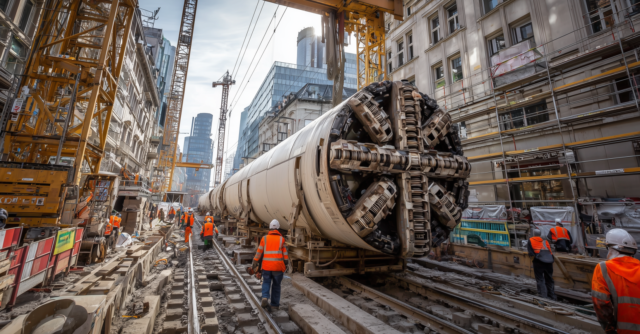
    Trafikverket has awarded a major contract to Implenia. Specifically, the construction and real estate company based in the Glattpark district of Opfikon is to build a section of the Haga project, including a railroad tunnel and station, for the Swedish Infrastructure Agency. The contract is worth more than CHF 100 million, Implenia announced in a press release.

    The Haga project is part of the new West Link connection, which will link Gothenburg’s local transport system to the lines running through the city. Implenia will build the new underground Haga station with platforms and three entrances under the Vasastan district of Gothenburg. There will also be a railroad tunnel with parallel service and emergency tunnels as well as ventilation and fire protection tunnels.

    Construction work is scheduled to start in the fall of this year and the project should be completed in 2029. “Implenia will use its many years of extensive experience to implement the project and realize the new important transport infrastructure in logistically challenging, extremely tight inner-city spaces,” said Christian Späth, Head Division Civil Engineering at Implenia, in the press release. “We would like to thank Trafikverket for once again placing its trust in Implenia as an expert in large, complex tunnel and civil engineering projects.”

  • Holcim acquires Belgian construction waste recycler

    Holcim acquires Belgian construction waste recycler

    Holcim is further expanding circular construction as a driver of profitable growth. Following the Cand-Landi Group in Switzerland, Land Recovery in the UK and Mendiger Basalt in Germany, the building materials producer has made its fourth acquisition this year with the family business Mark Desmedt, founded in 1989 and, according to Holcim, the leading recycler of construction demolition materials in Belgium.

    According to a Holcim statement, Mark Desmedt recycles more than 500,000 tonnes annually. In addition, the company is strategically located between Brussels and Antwerp and can therefore serve the country’s two largest conurbations. This will enable Holcim to expand its ECOCycle product range for circular construction solutions in Belgium and boost its profitable growth.

    This acquisition brings Holcim closer to its goal of recycling 10 million tonnes of construction waste per year. “With Mark Desmedt’s team, we are accelerating our vision to drive circular construction in the key metropolitan regions where we operate to build cities out of cities,” Holcim CEO Miljan Gutovic is quoted as saying.

  • Zehnder strengthens ventilation business in Spain and Portugal

    Zehnder strengthens ventilation business in Spain and Portugal

    The Zehnder Group is expanding its residential ventilation business in Spain and Portugal. The international indoor climate expert is gaining broader access to these two markets by acquiring the Spanish company Siber. Its administration, factory and innovation centre are located in Les Franqueses del Vallès near Barcelona, while the logistics centre is in Madrid.

    According to an ad hoc announcement, the transaction was financed with existing credit lines and liquid funds. Closing is expected in the coming weeks. Siber expects sales of around EUR 37 million for the 2024 financial year with an EBIT margin on a par with the Zehnder Group’s ventilation segment.

    According to the Zehnder Group, this is a “unique opportunity”. This is because Siber’s attractive product portfolio is ideally tailored to southern European customer needs and covers the mid-price segment. “This will help the Zehnder Group to sustainably strengthen its growth, particularly in Spain and Portugal as well as other southern European countries.”

    Zehnder Group CEO Matthias Huenerwadel describes the acquisition of Siber as “another milestone in the targeted expansion of our residential ventilation business. The complementarity of customers and products, combined with regional strength and a pronounced capacity for innovation, make Zehnder and Siber a perfectly complementary combination.”

  • New mortar plant opens in Liaoning

    New mortar plant opens in Liaoning

    Sika has commissioned a state-of-the-art mortar plant in Liaoning, China. The globally active speciality chemicals company for construction and industry announced in a press release that this is its 34th production site in China. Mortar, tile adhesives and waterproofing solutions are to be produced there and supplied to customers in three provinces in the north-east of the country and in east-central Mongolia. The aim is to shorten delivery times and optimise service.

    According to the press release, the product range includes mortar products that contain up to 20 per cent recycled raw materials during production, such as waste dust and mineral residues. At the same time, the plant opening marks the start of an initiative for Sika to switch from natural to alternative sands. Sika aims to cover half of its sand requirements with alternative materials by 2028.

    The new building houses production facilities, offices, laboratories and infrastructure for warehousing and logistics. “The expansion underlines our commitment to quality and excellence and is also aligned with global sustainability goals,” said Philippe Jost, Regional Head Asia and Pacific.

  • Insolight launches first agrivoltaic plant in France

    Insolight launches first agrivoltaic plant in France

    Insolight, a Lausanne-based company specialising in agrivoltaic solutions, has put its first agrivoltaic system into operation in France. According to a press release, the photovoltaic greenhouse for strawberry production is located on the agricultural estate La ferme Etchélécu in Sames in the French department of Pyrénées-Atlantiques.

    The facility with 15,000 strawberry plants covers 3,000 square metres with semi-transparent photovoltaic panels and dynamic shading screens. This regulates the light transmission: if the light is channelled past the solar cells, it benefits the growth of the plants. When the light rays are optically focussed on the solar cells, on the other hand, electricity is generated.

    With an installed capacity of 190 kilowatts, around 260 megawatt hours of clean energy can be generated, which is enough to supply around 50 households, according to the press release. “By combining solar technology and agriculture, we enable producers to contribute to the energy transition and sustainable agriculture while meeting their energy needs,” Mathieu Ackermann, Technical Director of Insolight, is quoted as saying.

    According to the owners of the farm, Jacques and Nathalie Etchélécu, the Insolight solution makes it possible to have shading screens that allow two additional months per year for strawberry production.

    In addition to the construction of renewable energy production facilities and a catalogue of crop protection options, Insolight offers complete solutions, from project development and administrative support to water recovery systems, ad hoc business models and fruit recovery, according to the company press release.

  • Marktexpansion in Europa: Unternehmen stärkt Position durch Akquisitionen

    Marktexpansion in Europa: Unternehmen stärkt Position durch Akquisitionen

    Der Gebäudezulieferer Arbonia will laut einer Mitteilung die europäische Wettbewerbslandschaft im Bereich Innen- und Spezialtüren konsolidieren. Dazu hat das Unternehmen mit Sitz in Arbon sowohl die spanische Dimoldura, Marktführer für Innentüren in Südwesteuropa, sowie das tschechische Unternehmen Lignis für Spezialtüren akquiriert. Mit den Übernahmen erweitere Arbonia seine Marktpräsenz nach Südwest- und Osteuropa und komme dem eigenen Anspruch der Marktführerschaft in Europa einen grossen Schritt näher, heisst es weiter.

    «Durch die Diversifikation unserer Märkte Richtung Ost- und Südwesteuropa machen wir mit Dimoldura und Lignis einen grossen Schritt in der Weiterentwicklung und Umsetzung der Strategie von Arbonia Doors, von einem primär zentraleuropäischen, hin zu einem marktführenden europäischen Vollsortimenter», wird Claudius Moor zitiert, CEO der Division Türen bei Arbonia.

    Dimoldura in Quintanar de la Orden in der Provinz Toledo erwirtschaftete laut der Firmenmitteilung 2023 einen Umsatz von rund 120 Millionen Euro. Das organische Umsatzwachstum in den vergangenen drei Jahren betrug über 13 Prozent pro Jahr. Die Gruppe hat Produktionswerke in Spanien, Portugal und Frankreich. Das tschechische Unternehmen Lignis in Koritschan (Koryčany) ist Spezialist für Funktionstüren. Wie Dimoldura verfügt auch Lignis über eine kosteneffiziente Produktion. Lignis erwirtschaftete 2023 einen Umsatz von rund 14 Millionen Euro. Das organische Umsatzwachstum in den vergangenen drei Jahren betrug über 25 Prozent pro Jahr.

    Arbonia übernimmt alle Aktivitäten von Dimoldura und Lignis inklusive der rund 600 Mitarbeitenden. Die beiden Akquisitionen werden hauptsächlich durch einen Überbrückungskredit in Höhe von 100 Millionen Euro sowie durch vorhandene Kreditlinien finanziert.

  • Market expansion in Europe: company strengthens position through acquisitions

    Market expansion in Europe: company strengthens position through acquisitions

    According to an article in the “Impulse” magazine published by the Aargau Chamber of Commerce and Industry (AIHK), the new building project of the Aargau Chamber of Commerce and Industry(AIHK) has reached an important milestone with the submission of the building application to the city of Aarau at the end of September. Depending on the building permit, construction work is expected to start at the beginning of 2025, the article continues. The building application for the new Haus der Wirtschaft was handed over by AIHK President Beat Bechtold to City President Hanspeter Hilfiker and City Clerk Fabian Humbel in front of Aarau City Hall, according to the report.

    The AIHK project team had already been in contact with various contacts in the city beforehand, the report continues. For example, the city architect and the city planning commission were consulted when it came to realising a construction project with the broadest possible support.

    The planning application marks the start of the approval process. Demolition is planned for the end of 2024. The new building is then expected to be occupied in the third quarter of 2026.

    On the one hand, the new Haus der Wirtschaft will be able to host more professional courses and events thanks to the new facilities, the report in “Impulse” continues. On the other hand, the new building stands for the ongoing digitalisation and modernisation that has been taking place at the association for several years.

  • Trinational S-Bahn: 33 new Flirt Evo France trains for the Basel area

    Trinational S-Bahn: 33 new Flirt Evo France trains for the Basel area

    New S-Bahn connections for the Basel area
    Every day, 60,000 people commute in the border triangle of Switzerland, France and Germany – including 30,000 commuters between Alsace and north-west Switzerland. Around 90 per cent of them currently use the car. This is set to change: From the end of 2030, a direct S-Bahn connection will be introduced between north-west Switzerland and Alsace. The aim is to get as many commuters as possible onto the railway, including the more than 6,000 employees in the EuroAirport catchment area and the approximately eight million air passengers a year.

    Introduction in stages
    The new cross-border S-Bahn lines will be introduced in stages:

    • From December 2030: Commissioning of the S2 (Olten-Basel-Mulhouse) and S4 (Laufen-Basel-St. Louis) lines every 30 minutes.
    • From 2034/35: Connection of EuroAirport to both lines, together with the French regional express line Strasbourg-Mulhouse-Basel (TER200) every 10 minutes between EuroAirport and Basel SBB.

    Procurement of the new trains
    SBB is procuring 33 Flirt Evo France trains from Stadler to operate the new railway service. These vehicles are characterised by two special features:

    • A standardised fleet:
      The trains can be used in both countries, which reduces complexity and increases operational flexibility. The vehicles can be efficiently coupled as single or multiple traction and replace the previous vehicles on the Mulhouse-Basel line (TEROmnibus).
    • Two systems:
      The trains are technically equipped to be authorised in Switzerland and France. They have two integrated traction current and railway safety systems to ensure smooth cross-border operation.

    Investment and project management
    The investment for the procurement of the 33 trains amounts to around 320 million Swiss francs. SBB and SNCF Voyageurs jointly founded EuroBasilea AG in July 2023 to ensure efficient preparation and timely commissioning of the new service. Further information is available at www.eurobasilea.com

  • The path to sustainable metropolises

    The path to sustainable metropolises

    The discussion paper by ULI and BNP Paribas REIM presents outstanding international examples of urban transformations that have been implemented in metropolises such as Hamburg, Paris, Copenhagen and Bogotá. These cities have developed innovative concepts for transport networks, sustainable urban development and city networks to make their urban spaces more sustainable. The paper emphasises how these approaches contribute to greater urban resilience by integrating environmental, social and economic aspects.

    Strategies to promote urban resilience
    The ten paths to a resilient city described in the discussion paper offer concrete recommendations for action for public and private stakeholders. These range from the formulation of adaptation strategies and building awareness of crises to the integration of urban risk management into urban planning. Particular importance is attached to the creation of sufficient housing and social infrastructure in order to provide inclusive and sustainable social services that enable the broad participation of urban society.

    The role of the public and private sector
    The discussion paper emphasises that the transformation to resilient cities is a joint task that is not the sole responsibility of the public sector. Isabella Chacón Troidl and Honoré Achille Simo explain that property investors also play a decisive role in the development of resilient urban spaces. They help to integrate social, ecological and economic aspects into urban development and thus promote a comprehensive renewal of the housing sector.

    Conclusion and outlook
    The discussion paper “Urban transformation versus urban resilience” serves as a catalyst for a new era of urban planning. It calls on decision-makers and stakeholders to take innovative and sustainable measures that not only strengthen the resilience of cities, but also improve their quality of life. Sabine Georgi emphasises that the future development of urban spaces is a social issue that requires active and joint action in order to meet the challenges of the 21st century.

  • Council of Europe and Switzerland set standards for AI

    Council of Europe and Switzerland set standards for AI

    The new Convention on Artificial Intelligence was officially adopted at the 133rd session of the Committee of Ministers of the Council of Europe, which took place in Biel/Bienne. Swiss Federal Councillor Ignazio Cassis, Head of the Federal Department of Foreign Affairs, was present at this historic moment. Switzerland, known for its precise and prudent approach in international negotiations, played a decisive role in the one and a half years of intensive discussions and development work.

    The agreement not only emphasises the importance of AI in our future society, but also establishes a solid, legally binding framework to ensure that AI systems are developed according to the highest ethical standards. The core principles include transparency, robustness, non-discrimination and the protection of privacy. These measures are crucial to strengthening public trust in the new technology while safeguarding the rights of every individual.

    Promoting international cooperation
    The timing of the adoption coincides with the 75th anniversary of the Council of Europe, which further emphasises the importance of this convention. From September 2024, the document will be submitted to all member states for signature. Once ratified by Switzerland, which requires its transposition into national law, it will serve as a key component of international AI governance.

    In practice, the Convention will serve as a guide that promotes a harmonised approach to the responsible development and use of AI systems not only in Europe, but also worldwide. By creating this framework, the Council of Europe is making a significant contribution to ensuring that AI is used as a force for good, strengthening and advancing the foundations of our democratic societies.

  • Reaction of the Swiss interest rate markets to global and local inflation trends

    Reaction of the Swiss interest rate markets to global and local inflation trends

    In April of this year, the inflation rate in Switzerland surprisingly rose from 1.04% to 1.37%. This increase, which is reflected in almost all sub-indices, nevertheless remains below the critical level of 2.00%. This development indicates that inflation remains manageable and does not require any drastic measures. The Swiss National Bank had already expected a moderate rise in inflation and now appears to have been confirmed that this rise will not be permanent.

    Influence of global interest rate policy on Switzerland
    The latest US inflation data has brought calm not only to international markets, but also to the Swiss interest rate markets. The positive reaction to the US data has lowered interest rate swap rates in Switzerland and indicates that a rate cut in June is almost certain. The SNB’s monetary policy decisions depend heavily on how the European Central Bank (ECB) and the Federal Reserve (Fed) adjust their interest rates. Current developments show a synchronisation of interest rate policy at a global level, which influences the Swiss franc and inflation forecasts.

    Future expectations and monetary policy forecasts
    The SNB remains committed to the possibility of lowering the key interest rate by 25 basis points, with a potential further reduction by the end of the year, depending on the actions of the ECB and the Fed. These adjustments are essential to stabilise the Swiss franc in the context of global currency dynamics and prevent excessive appreciation, which could weigh on the export economy. Despite the current inflation expectations and the weaker position of the franc, the SNB remains proactive and adaptable in its monetary policy strategy.

  • New partnership in the pipe system market: Brugg Pipes and Rovanco in the USA

    New partnership in the pipe system market: Brugg Pipes and Rovanco in the USA

    Brugg Rohrsystem AG in Kleindöttingen AG, trading as Brugg Pipes and part of the Brugg Group, has concluded a joint venture agreement with its long-standing sales partner Rovanco Piping Systems in the USA. According to a press release, production at Rovanco’s headquarters in the Chicago metropolitan region in the US state of Illinois will eliminate the long lead times for pipes from Europe.

    Both companies are combining their strengths and expertise to launch the first continuous production of flexible, polyurethane-insulated piping systems for the district heating and cooling sector in North America, the press release adds. The investment includes the construction of production facilities at the Rovanco site.

    “As the leading supplier of pre-insulated piping systems in North America and our exclusive partner in this market for many years, Rovanco plays a key role in this partnership,” said Geri Wirz, Head of International Business at Brugg Pipes. The collaboration will make it possible to supply customers in North America with high-quality, flexible piping systems more quickly.

    “With Brugg Pipes’ market expertise and in-depth knowledge of PUR insulation foams for flexible pipes, we will be able to further expand our market share in North America,” said Chad Godeaux, President of Rovanco Piping Systems. PUR stands for polyurethane plastics.

    According to the Brugg Group, it employs around 1700 people at 24 production sites and more than 30 sales organisations in key industrial countries.

  • Company opens macrofibre plant in Peru

    Company opens macrofibre plant in Peru

    Sika has opened a new hub for synthetic macro-plastic fibres in Lima. This will enable the Zug-based company to expand its product range with a product series that has enormous growth potential, according to a press release. Sika says that a quarter of the growing global demand for macrofibre reinforcement is generated in Latin America and expects annual growth of 25 percent over the next five years. Sika expects the largest volume growth in the region to be in Peru, the country with the largest mining industry in Latin America.

    Macro-plastic fibres are based on a new technology for the structural and static reinforcement of concrete components. They replace steel reinforcements and improve the properties of hardened concrete. According to the information provided, this significantly extends the service life of concrete components. All of this also has a positive effect on the classification of sustainable buildings within the framework of international certification systems such as LEED (Leadership in Energy and Environmental Design).

    Increasing mobility in urban centres calls for new, efficient transport infrastructure such as road tunnels and underground railway systems, explains Sika’s Regional Manager Americas, Mike Campion. At the same time, the demand for macrofibre reinforcement systems for mining projects is increasing: “With the new, state-of-the-art plant in Peru, we are able to offer our customers throughout Latin America all of Sika’s concrete technologies while meeting the highest sustainable construction requirements.”

  • Zurich once again the smartest city in the global IMD Smart City Index

    Zurich once again the smartest city in the global IMD Smart City Index

    The IMD Smart City Index has once again placed Zurich in first place in a global comparison. Geneva improved from 9th to 4th place, while Lausanne slipped to 7th place. For this year’s survey, interviews were conducted in 142 cities worldwide to measure the intelligence and perception of the inhabitants of their city. The World Competitiveness Centre of the IMD Business School in Lausanne and Singapore is responsible for compiling the index each year.

    Zurich received a AAA Smart City rating, both overall and in the areas of structures and technologies, with Geneva achieving similar scores. Citizens in Zurich prioritise affordable housing, traffic density and air pollution among the 15 important criteria, while Geneva and Lausanne have similar priorities.

    Geneva and Lausanne also received high ratings for their smart city initiatives, with Lausanne placing particular emphasis on safety. The municipalities of Riga, Luxembourg and Vilnius saw significant progress in the index, while cities such as Bologna, Los Angeles and Rome saw significant declines. These findings could be of great interest to property and location development professionals.

  • Urgent fight against subsidence; major cities are sinking

    Urgent fight against subsidence; major cities are sinking

    China has experienced an unprecedented construction boom in recent decades, which is now having serious consequences. Together with the sharp increase in groundwater use, this is causing the country’s cities, particularly the metropolises of Shanghai and Beijing, to sink noticeably. Experts warn that without appropriate measures, the situation could take on catastrophic proportions, similar to what has already been observed in Tokyo, where countermeasures were successfully taken.

    The phenomenon of sinking cities can be observed globally and affects metropolises such as Venice, Jakarta, Bangkok and New Orleans. These cities are particularly at risk due to rising sea levels and simultaneously sinking soil. Without intervention, there is a risk of serious flooding. The cost of damage to infrastructure such as buildings, roads and supply lines is immense. In China alone, the annual damage costs amount to an estimated 1.5 billion dollars.

    The causes of subsidence are manifold and include excessive groundwater abstraction, heavy construction and the draining of wet soils. A Chinese research team has analysed the effects of these developments in detail and presented alarming data: Almost half of China’s urban areas are sinking by more than three millimetres a year, and 16 per cent by more than ten millimetres. The problem is particularly acute in the megacity of Beijing.

    The research carried out by Zurui Ao and his team at South China Normal University in Foshan is based on satellite measurements of 82 major Chinese cities. These show that around 29 per cent of China’s urban population lives on increasingly sinking ground, which equated to around 270 million people in 2020.

    Massive groundwater extraction is a global problem. When water is replaced by air between sediment particles, these particles become more compacted, causing the ground to sink. This phenomenon is particularly pronounced in Jakarta, where the ground is sinking by up to 25 centimetres a year in some parts of the city. The consequences are serious: saltwater intrusion, destroyed infrastructure and considerable water losses are forcing the city to continuously pump affected areas dry.

    This example shows the urgent need to develop and implement effective strategies to tackle this global problem in order to minimise long-term damage and risks.

  • High-temperature heat storage could make the industry more sustainable

    High-temperature heat storage could make the industry more sustainable

    Industrial sectors such as steel and cement production require continuously high temperatures, which are currently largely generated by fossil fuels. This practice is responsible for around a fifth of total energy consumption in Germany and is increasingly being criticised due to its environmental impact.

    To meet this challenge, work is being carried out worldwide on the development and implementation of technologies that can integrate renewable energies more efficiently into existing industrial processes. One promising approach is the use of high-temperature heat storage systems, which store energy in the form of heat so that it can be made available on demand without any loss of quality.

    KIT is currently researching an innovative heat storage system based on a liquid metal mixture of lead and bismuth. This mixture is characterised by its outstanding thermal conductivity, which is up to 100 times higher than that of conventionally used materials. In the KIT laboratory, this metal mixture is heated in a circulation system and passed through a layer of small ceramic beads that can absorb and store the heat.

    This system enables flexible and efficient utilisation of the stored energy by releasing the heat as required. The use of renewable energy to generate the initial heat could thus reduce dependence on fossil fuels and significantly reduce CO2 emissions in energy-intensive industries.

    This technological innovation represents a significant step forward in the endeavour to make industrial processes more environmentally friendly and could lead to more sustainable industrial production in the long term.

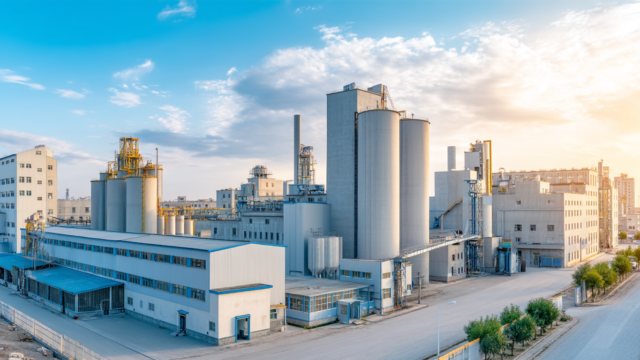
  • The construction of a CO2-neutral cement plant in Lägerdorf

    The construction of a CO2-neutral cement plant in Lägerdorf

    The construction of the new Holcim cement plant in Lägerdorf marks a decisive step in the global endeavour to reduce the cement industry’s CO2 emissions. With a planned commissioning in 2028, the plant will be one of the first of its kind to operate completely CO2-neutral. The participation of high-ranking political and business leaders, including Dr Robert Habeck, Vice-Chancellor and Federal Minister for Economic Affairs and Climate Protection, and Daniel Günther, Minister-President of Schleswig-Holstein, underlines the importance of this project for German industry and global environmental policy.

    The “pure oxyfuel” technology is the centrepiece of the project. It makes it possible to capture almost all of the CO2 generated during cement production from the exhaust gases. Instead of conventional air, pure oxygen is used in the combustion process, which drastically reduces emissions. The captured CO2 is then processed and can either be reused in other industries or stored safely. This process represents significant progress in the endeavour to make cement production more sustainable.

    Dr Cetin Nazikkol, Member of the Executive Board of thyssenkrupp Decarbon Technologies, emphasises that cement is a fundamental building material, but its production releases significant amounts of CO2. The innovative technology from thyssenkrupp offers a sustainable solution to meet these challenges. The plant in Lägerdorf will be a model of how the cement industry can be transformed to minimise its environmental footprint while maintaining industrial production.

    The commitment to a climate-neutral future is also shared by local government representatives. Minister President Günther emphasises that Schleswig-Holstein is at the forefront of the energy transition and that the project in Lägerdorf is another milestone on this path. This development will not only protect the environment, but also promote new technologies and stimulate sustainable economic growth in the region and beyond.

  • Holcim takes over Argentinian company Tensolite

    Holcim takes over Argentinian company Tensolite

    Zug-based building materials producer Holcim has signed an agreement to acquire Tensolite, an Argentinian manufacturer of innovative concrete construction systems, according to a press release. The company, which has plants and a distribution network in Argentina, Paraguay and Uruguay, had net sales of USD 22 million in 2023. Tensolite employs 155 people. All are to be taken over. The transaction is expected to be completed in the second quarter of 2024.

    “With the acquisition of Tensolite, we are further expanding our Solutions & Products portfolio in Latin America and worldwide,” Holcim’s Latin America CEO Oliver Osswald is quoted as saying. “Due to its leading position in innovative precast and prestressed concrete construction systems, Tensolite will be an important part of our further expansion into the most attractive markets while offering synergies with other business units such as our network of Disensa construction markets.” Holcim’s Disensa brand is the largest franchise network for building materials in Latin America.

    Tensolite was founded in 1979. Its concrete construction systems range from beams and roof tiles to customised products for large construction projects such as bridge girders, grandstands and pavements. Other innovations include cost-efficient, interlocking precast walls. They can be assembled by four people without the use of cranes or other machinery.

  • Schréder acquires 49 per cent of Photinus

    Schréder acquires 49 per cent of Photinus

    Schréder from Brussels acquires a 49 per cent stake in Photinus from Dornbirn. The two companies, both active in the solar lighting market, want to join forces in order to establish sustainable lighting solutions in outdoor areas more strongly worldwide. Phontinus has already gained extensive experience in this area with energy self-sufficient solar lighting for customers in a number of European countries and the Middle East.

    “At Schréder, we firmly believe that solar lighting solutions can help cities and municipalities improve their carbon footprint,” Schréder CEO Werner De Wolf is quoted as saying in a joint press release issued by the two companies. For Photinus CEO Martin Kessler, the merger with Schréder represents “a unique opportunity to expand our international sales network and achieve our goal of becoming the world’s leading provider of solar lighting solutions”. Together, the partner companies want to offer a comprehensive portfolio that can fulfil different requirements in terms of size and performance.

    “Photinus is pursuing a very interesting strategy in the development of solar lighting products in terms of innovation, modularity and flexibility,” explains Philippe Felten, Chief Commercial Officer of Schréder. Specifically, the Austrian company is focussing closely on customers, with customised solutions taking centre stage. “Photinus’ sales strategy harmonises perfectly with Schréder’s sales culture,” says Felten.