Category: Regions

  • Beer, concrete and living – Baden builds on its history

    Beer, concrete and living – Baden builds on its history

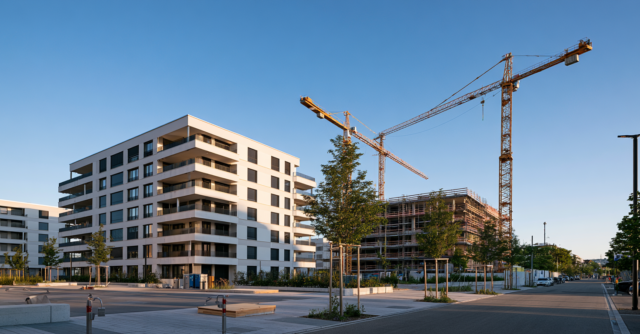
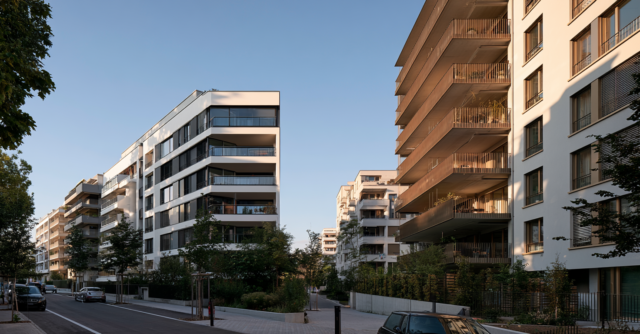
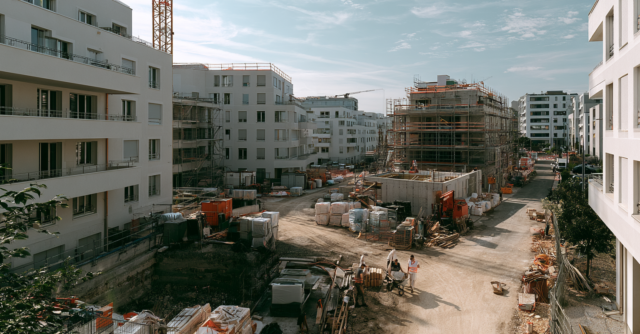
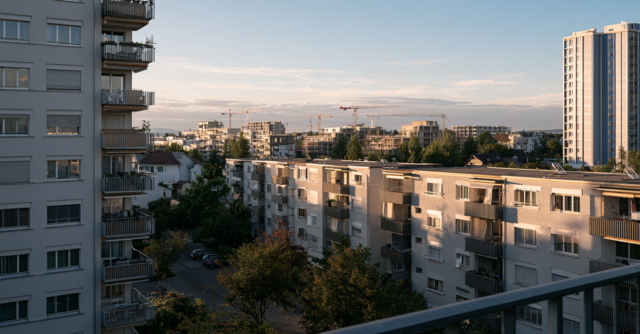
    Four new buildings are being constructed on around 8,000 square meters directly next to Baden train station, divided into two construction sites. Building site A is the responsibility of Frei Architekten AG from Aarau, building site B is the responsibility of the renowned Harry Gugger Studio from Basel. The volume is considerable: 81,888 cubic meters of enclosed space, 22,914 square meters of floor space and an investment of around 64.5 million Swiss francs. The general contractor is Gross AG from Brugg.

    Living where malt used to steam
    136 rental apartments with 1.5 to 4.5 rooms are being built in the heart of the city. On the first floor, a total of 2268 square meters of retail and restaurant space will characterize the quarter. In the inner courtyard, a 900 square meter beer garden invites you to linger. The motto of the building owner, the fourth-generation brewery H. Müller AG, sums it up: “brew – live – enjoy”.

    History remains visible
    Not everything makes way for the new building. The boiler house, brewhouse and malt silo remain as architectural witnesses to a brewing history that began in 1897. The Müllerbräu beer itself is now produced by the Falken brewery in Schaffhausen. However, there is still a specialty brewery on the site. The site’s past thus not only remains visible, it can still be experienced.

    Timetable and marketing
    The building permit dates from October 2023, with demolition starting in April 2024. The facades of the new high-rise buildings have been visible for the first time for a few days now. A milestone for the project. Marketing of the apartments is scheduled to start in summer 2026, with first occupancy planned for June 2027.

  • Laufenburg builds windmills at the train station

    Laufenburg builds windmills at the train station

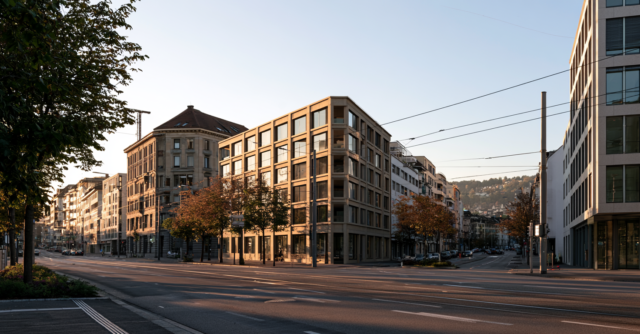
    The Schützegärte site is located in a sensitive urban location. Three streets surround it, and building typologies from different decades clash all around. It is precisely this chaos that is the theme. AWW Architekten AG makes the “contrasting and bilateral” the basis of the concept. The architecture emerges from the tension of the location, not against it.

    Offset, rotated, anchored
    Two identical, four-storey buildings form the ensemble. They are not parallel, but offset and rotated in relation to each other on the slightly sloping terrain. This positioning is not an aesthetic conceit, but a precise reaction to the formation of edges and the flow of space in relation to the neighboring buildings. An ensemble that blends in while remaining independent. The total floor area is around 4,600 square meters, the building volume around 13,800 cubic meters.

    Windmill as a residential model
    The architectural concept is based on a compact four-span “windmill” building shape with a central staircase core. The projecting wings characterize the façade and make reference to typical bay window shapes in the district. Each apartment is oriented on three sides. At the heart of the building are the “four-season rooms” with spacious rooms that can be used as conservatories, studios or living and dining areas. Together with loggias, this creates a flexible range of spaces for a wide variety of lifestyles.

    Green, communal, grounded
    The open space between the houses is deliberately kept low-threshold. Accessible from inside and from the street. A green layer of native shrubs and perennials protects the first floor apartments and gives the development character. At one corner, the area opens up to a meadow-like situation with fruit trees, a reference to the local tradition of orchards close to settlements. The project considers housing and community as a unit.

    Next steps open
    The town of Laufenburg was not involved in the planning process. Town clerk Marco Waser confirms that the building authorities only clarified the building regulations in advance. The town has not yet made an assessment. The landowner Erne Immo AG has not yet commented on the time horizon for implementation.

  • DGNB certificate for deconstruction in Switzerland

    DGNB certificate for deconstruction in Switzerland

    The grain silo tower from 1939 was demolished, but its concrete was not disposed of. In the nearby concrete plant, the material was processed according to a specially developed formula and 75 to 95 percent of it was reused as recycled material in the new building. Around 60 percent of the new building consists of the old tower. The client is Gutgrün AG from Chur, which deliberately refrained from making short-term profits in order to consistently implement the sustainability concept.

    52 apartments, three certificates
    The project comprises 37 rental apartments on eleven floors in the new residential tower and 15 loft apartments in the renovated historic mill building. The architects from Ritter Schumacher have recorded all the materials used in a building resource passport. A forward-looking approach that makes future life cycles transparent today. The project was awarded three DGNB certificates for this achievement. DGNB Platinum for the demolition, DGNB Gold for the new tower and DGNB Gold for the refurbishment of the old building.

    Fire protection reinvented
    The 30-metre-high photovoltaic façade poses a problem for conventional fire protection regulations. They require partitions on every floor to prevent fire from spreading from floor to floor. This would have interrupted the façade and significantly reduced its efficiency.

    The PV surface is not interrupted anywhere by windows and is continuous from the floor to the roof. Specialist planners, contractors and the insurance company worked together to develop a tailor-made solution. Fire cannot reach the façade from the inside and the façade cannot reach the apartments.

    Alliance instead of conflict
    The project was built using the alliance model. The client, planners and contractors sat around the table together right from the start. Problems from construction practice were thus incorporated directly into the planning. The basic attitude was one of trust and fairness rather than pure risk hedging. One detail also testifies to the unconventional spirit: the graffiti that adorned the vacant building was retained as decorative elements in the stairwell.

    A signal for the industry
    There was not a single objection to the conversion project. This is unusual for a construction project of this size. Grüsch Mill shows that circular construction also works in a peripheral region and that sustainability is not a contradiction to economic viability.

  • Consumer confidence collapses

    Consumer confidence collapses

    The decline is abrupt. In January and February 2026, the index was still at around – 30 points, slightly above the previous year’s level. The slump in March to – 43 points is therefore one of the sharpest monthly declines in recent years. The turnaround came quickly and affected several areas simultaneously.

    Where sentiment has tipped the most
    Three of the four SECO sub-indices are clearly below the level of March 2025. Expectations regarding economic development have slumped the most. The expected financial situation of households and the willingness to make major purchases have also fallen significantly. Only the view of the past financial situation remained stable compared to the previous year.

    Geopolitics as a mood killer
    The war in Iran and the associated rise in oil prices are seen as the main triggers. Inflation expectations jumped sharply in March: from 98.3 to 121.4 points. At the same time, unemployment expectations rose. Both are having a direct and noticeable impact on household confidence.

    What this means for consumption
    Falling consumer sentiment is not just a statistical signal. It shows that households are postponing major expenditure and opting for security. For the retail trade, real estate market and construction industry, this means less stimulus from domestic consumption, at least in the short term. Trading Economics expects a gradual recovery to around – 34 points by mid-2026 and – 26 points by 2028.

    Whether sentiment recovers depends heavily on the geopolitical situation and price trends. The Swiss economy has been robust so far, but consumer confidence is a leading indicator. If the buying mood remains subdued, the growth figures usually follow with a delay.

  • The wood that protects itself

    The wood that protects itself

    Millions of tons of sawdust are produced worldwide every year. Most of it is burned, and the CO2 bound in the wood is released back into the atmosphere. This is precisely where the research team led by doctoral student Ronny Kürsteiner, under the direction of Ingo Bungert, Professor of Wood-based Materials at ETH Zurich, comes in. The aim is to keep the sawdust in the material cycle for longer.

    The trick with the watermelon seed
    The binding agent is struvite, a crystalline ammonium magnesium phosphate with known fire protection properties. The problem until now was that struvite was difficult to combine with sawdust due to its crystallization behaviour. The researchers found the solution in an enzyme from watermelon seeds. It controls crystallization in such a way that large struvite crystals are formed, which fill the cavities between the sawdust particles and bind them firmly together. The compressed material is then dried at room temperature.

    Three times longer than spruce
    The fire tests at the Turin Polytechnic speak for themselves. In a cone calorimeter, a standardized test method for heat exposure, untreated spruce wood caught fire after around 15 seconds. The struvite-sawdust composite took more than three times as long. Once burning, the material quickly forms a protective layer of inorganic material and carbon, which slows down the further spread of the fire. In addition, the struvite releases water vapor and ammonia under heat, which has a cooling effect and deprives the fire of oxygen.

    Lighter than cement, better for the climate
    Conventional cement-bonded chipboard, which is widely used in interior design today, consists of 60 to 70 percent cement by weight. They are heavy and climate-damaging to produce. The new struvite sawdust boards only require 40 percent binder. They are lighter, have a significantly better carbon footprint and do not end up in hazardous waste landfill after demolition.

    Recyclable and suitable for fertilizers
    The composite can be broken down into its components. Mechanically in the mill, then heated to just over 100 degrees, whereupon ammonia is released and the sawdust is sieved off. The mineral source material newberyite precipitates as a solid and can be reprocessed into struvite. If the material is not reused, it can be used as a long-term fertilizer. Struvite releases phosphorus, nitrogen and magnesium slowly and in a controlled manner into the soil.

    Sewage treatment plant as a source of raw materials
    Another cycle is emerging. Struvite is produced in large quantities as an unwanted by-product in sewage treatment plants, where it clogs pipes and is expensive to dispose of. “We could use these deposits as a base material for our building material,” says Kürsteiner. Whether the material will establish itself on the market depends primarily on the cost of the binder. A problem that could be solved with this source.

  • The construction site also wants flexibility

    The construction site also wants flexibility

    Adrian Dinkelmann, Managing Director of Infra Suisse, put it in a nutshell. Compatibility is not achieved through individual measures, but through a fundamental anchoring in the corporate culture. Two projects funded by the federal government highlight specific areas for action. The framework must be designed in such a way that it accommodates the different realities of employees’ lives.

    Not everyone wants the same
    Jan Malmström, CEO of the JMS Group, asked around in his company. The result is surprising. The desire for part-time work is strong in the office, but much less so on the construction site. But even there, there is a clear need for more flexibility in everyday life. Standard models fall short. Anyone who treats all employees the same is missing the point.

    Co-CEO as a reality check
    Sandra Werneyer and Lea Ott at werneyer ott architektur gmbh demonstrate what is possible: shared leadership in the co-CEO model. This works with high organizational and communicative requirements. Their presentation made it clear that new forms of work are not a sure-fire success. They require clarity about which responsibilities can really be shared.

    Stereotypes slow down the industry
    Dörte Resch, Professor of Applied Psychology at the FHNW, made it clear that image campaigns alone do not change anything. Stereotypes that no longer correspond to the reality of the construction professions must be actively addressed. Authentic career marketing is needed that makes the attractive aspects of the industry visible to everyone. Caroline Farberger, Swedish entrepreneur, added a personal perspective. Inclusion begins with questioning existing thought patterns.

    Culture beats concept
    The panel made it clear what makes the difference. Olivier Imboden, CEO of Ulrich Imboden AG, describes it like this. When employees share a company’s values, this has a direct impact on its attractiveness as an employer. Sven Stingelin from Frutiger AG added to the construction site perspective and addressed the framework conditions, which are different to those in the office. Thomas Weber from Walo Bertschinger pointed out that project processes have a significant impact on the scope for action. Cornel Müller, founder of Work-ID AG, showed how targeted career marketing opens up new target groups, including through early career guidance.

  • No longer a bonus, but mandatory

    No longer a bonus, but mandatory

    From ESG label to strategic reality
    Sustainability in the real estate industry has had its noisy years behind it. After gaining a certain reputation as a differentiating feature, it has now taken its place as a strategic core issue in the form of ESG criteria. However, this is precisely why the topic is in danger of becoming quiet between reporting obligations and day-to-day business. What becomes the norm disappears from the limelight. But routine is no protective shield. Especially not in an industry that thinks in decades but often makes decisions in years.

    Because while sustainability is being discarded as a done deal in many places, the structural challenges remain. Real estate thinks in cycles of 30, 40 or more years. Net zero by 2050 is therefore not a distant vision, but a real planning horizon. This also means that a large proportion of today’s existing properties can only be properly renovated or completely refurbished once.

    Uncertainty as the new planning reality
    The current geopolitical situation, volatile markets and unclear framework conditions are currently making it difficult to draw up reliable climate reduction paths. In practice, this often leads to decisions being postponed or reduced to the most favorable short-term solution. However, those who persist in linear thinking are limiting themselves in the long term. Climate protection roadmaps, gray energy, life cycle costs and climate risks must be an integral part of every decision in order to achieve climate neutrality in an economically viable way. And not at some point, but now.

    In practice, it is becoming clear that portfolio holders are taking an increasingly differentiated approach to sustainability. In addition to traditional CSR approaches, a clearly risk-oriented approach is becoming established. The focus is on reliable data on condition, consumption and emissions as well as building-specific risk profiles, which are incorporated into the portfolio strategy as control parameters. This makes sustainability a strategic decision-making factor that goes beyond reporting. The location in particular is taking center stage: Real estate must not only be efficient, but also resilient to heat, water, extreme events and social tensions. Those who systematically assess these risks can take targeted action. Everyone else reacts to the consequences later.

  • When cantons go from being a drag to a location factor

    When cantons go from being a drag to a location factor

    In several cantons, digital building permits are no longer a vision of the future, but part of everyday life. Building applications are submitted via central platforms, distributed digitally and reviewed in standardized processes. This relieves the burden on administrations, planners and building owners and makes procedures more transparent for all parties involved.

    Pioneers rely on clear cantonal solutions and cooperation. Shared platforms reduce costs, pool expertise and prevent isolated solutions. At the same time, digitalization is only effective if it is not thought of as an IT project, but as a change to the entire process, from submission to decision.

    Who already approves digitally
    Several cantons use canton-wide platforms to submit and process building applications electronically. Bern with “eBau”, Zurich with “eBaugesucheZH”, Graubünden with ebau.gr.ch or Valais with “eConstruction” show what a digitally managed procedure looks like, in some cases obligatory or with transitional periods. Other cantons such as Solothurn or Aargau rely on the common open source solution Inosca and are introducing their systems in stages.

    However, the degree of digitization differs significantly. In some cantons, digital submission is mandatory; in others, analog and digital channels run in parallel or there are only pilot municipalities. There is no complete, up-to-date overview across Switzerland, and not every platform already maps the process fully digitally end-to-end.

    Politics between speed and legal protection
    Politically, the building permit process is caught in the crossfire. On the one hand, there is the housing shortage, energy and climate targets, and on the other, federalism, appeal rights and complex technical specifications. Business associations are calling for shorter deadlines and more binding regulations, while municipalities and cantons are insisting on their own responsibilities and limited resources.

    Digitalization reveals these tensions. It makes it clear how many places a dossier affects, where there are snags and how different practices are between the cantons. However, it does not replace political decisions. Whether objections are restricted, procedures harmonized or deadlines shortened remains a question of power, not software.

    Costs, benefits and risks
    For administrations, the switch to digital procedures is a tour de force. New specialist applications, interfaces, training and change management cost time and money. Smaller municipalities in particular are reliant on cantonal platforms and joint solutions to carry the burden.

    On the other hand, there are tangible effects. Fewer interruptions to a process, fewer multiple entries, faster workflows. Even more important are the indirect effects. Every shortened approval week reduces project and financing costs, increases the ability to plan and makes a location more attractive. At the same time, the handling of data remains sensitive. Transparency, data protection and acceptance must be carefully balanced.

    From e-dossier to intelligent inspection
    The digitalization of building permits is only just beginning. In the short term, the aim is to introduce cantonal platforms across the board, eliminate media disruptions and manage building applications digitally throughout. At the same time, expectations are growing. Planners want digital interfaces, investors want reliable deadlines and municipalities want more control options.

    In the medium term, the focus will shift to automated plausibility and rule checks, the integration of planning and construction data and AI-supported assistance. They can speed up procedures, enforce standardization and direct resources to those cases where political or technical decisions really need to be made. Whether building permits in Switzerland go from being a drag to a strategic locational advantage will depend on how consistently politicians and administrators manage this change and whether they are prepared to shake up rules, roles and routines.

  • From data to AI in the real estate world

    From data to AI in the real estate world

    This is precisely why it is worth looking back. Because the way in which real estate is planned, operated and managed has changed fundamentally over the last 30 years.

    Thirty years ago, many processes were still surprisingly analog. Data was stored in folders and paper documents, decisions were based heavily on experience and less on systematic analysis. A phase soon began in which the industry developed step by step: processes became more digital, data more important, buildings and companies increasingly networked.

    It was in this environment that pom was founded in the mid-1990s as a spin-off from ETH Zurich – with the idea of integrating tasks, data and processes in the construction and real estate sector more closely. Thirty years later, pom is celebrating its anniversary and the basic question is still very topical: How can real estate, organization and technology be meaningfully combined?

    In terms of technology, we are now at a new turning point. The digitalization of real estate continues to advance: cloud technologies, IoT and digital models are enabling ever more precise mapping of buildings. The so-called digital twin is increasingly becoming a reality and creating new opportunities for automating processes.

    At the same time, the way companies work is changing. Artificial intelligence will change many processes in the coming years – especially where large amounts of information have to be processed and decisions still have to be made manually. Different data can be analyzed more easily, finished results can be generated automatically and decisions can be massively accelerated, even with the involvement of humans. Assistance systems, known as agents, are becoming part of everyday working life.

    At the same time, a look at the industry reveals an interesting area of tension: technological development is progressing rapidly, while implementation in companies is much slower.

    Every year since 2016, pom Consulting AG has measured the digital maturity of the construction and real estate industry as part of the Digital Real Estate & Construction Study. The Digital Real Estate Index currently stands at 4.3 out of 10 points – a slight recovery compared to the previous year, but definitely not a quantum leap.

    Unsurprisingly, artificial intelligence is increasingly coming into focus. According to the latest study, Artificial Intelligence & Machine Learning is once again one of the most frequently used technologies, alongside Platforms & Portals and Data Analytics. However, the assessment of AI is much more differentiated than in previous years: Around two thirds of respondents see a high benefit in it. In last year’s survey, the figure was 75%. With more frequent use of AI, the possibilities of the technology, but also its limitations, are becoming much more visible, making expectations more realistic.

    Technology alone therefore does not determine success. The decisive factor remains the organization: data quality, implementation strength, clear responsibilities – and the willingness to question existing ways of working.

    Perhaps this is the real parallel to the last 30 years.

    Back then, too, it wasn’t just about new technologies, but about new ways of thinking. Artificial intelligence could therefore become the next big development step in the industry – not because it changes everything, but because it helps to better manage the growing complexity of real estate and organizations.

  • The City of Biel believes it is on track to meet its climate targets despite the obstacles

    The City of Biel believes it is on track to meet its climate targets despite the obstacles

    In light of ongoing global warming, the City of Biel has been pursuing a comprehensive climate strategy since 2020. At that time, the City Council adopted the relevant climate regulations. Now, for the first time, the city has published a report taking stock of developments to date – with data-related delays of around two years.

    The key finding from the Department of Construction, Energy and the Environment is that Biel is essentially on track to meet its targets. Greenhouse gas emissions have fallen steadily in recent years and are currently slightly below the reduction pathway set out in the climate regulations. According to emissions monitoring, emissions in 2023 amounted to around 174,000 tonnes of CO2 equivalents – a decrease of approximately 34 per cent compared to 2010. At the same time, the share of renewable energy in total energy consumption rose to 39 per cent.

    Looking to the future, however, it is emphasised that further reductions will be more challenging. Particular challenges exist in urban buildings as well as in the transport and heating sectors.

    Furthermore, emissions from transport and heating are falling only slowly. The share of electric vehicles, currently at 13 per cent, is set to rise. Moreover, many fossil fuel heating systems are still being installed, which, due to their long service life, jeopardise the achievement of climate neutrality by 2050.

    Against this backdrop, the city emphasises the central role of the public: the general consensus is that climate targets can only be achieved through their active engagement and the use of existing funding and advisory services.

  • New foundation to bring SMEs forward

    New foundation to bring SMEs forward

    Lucerne performs solidly in national competitiveness rankings. In terms of innovative strength, however, the canton ranks at the bottom. Those who fail to address this shortfall risk losing out in the competition between locations in the long term. This finding is the starting point for the planned Lucerne Innovation Foundation and for the special credit that the cantonal government is now applying for.

    The foundation as the linchpin
    The new foundation is not intended to create a parallel structure, but rather to coordinate existing partner organizations and better network their offerings. The focus is on companies in the early stages of development. In other words, where the need is greatest and resources are scarcest. In addition to coordination, the foundation can also co-finance specific implementation projects such as feasibility studies. The foundation board should consist of at least five members, and a four-year performance agreement ensures planning security.

    24 million with a clear earmarking
    One million of the requested 24 million francs will flow into the foundation’s capital. The remaining CHF 23 million is earmarked for the foundation’s services in the years 2026 to 2029. Lucerne is thus positioning itself as a canton that does not wait for federal funding, but acts itself. In addition to national programs such as those of Innosuisse, which support SME innovation throughout Switzerland.

    Part of a larger reorganization
    The foundation is embedded in the canton’s broader location promotion package. In January 2026, the cantonal council approved a package of measures worth around CHF 300 million per year. This was in response to the OECD minimum taxation, which reduces previous tax advantages. The Lucerne innovation contribution alone comprises CHF 110 to 160 million per year for companies that invest in research and development. The Lucerne Innovation Foundation is therefore not an individual measure, but part of a coordinated offensive.

    Referendum in September
    The Cantonal Council has already approved the overarching Location Promotion Act. However, the voters have the final say. The vote is scheduled for September 2026, with entry into force in October 2026. However, the foundation can already be established on the basis of the current legal foundations. The go-ahead does not have to wait for the referendum.

  • PropTech remains invisible and indispensable

    PropTech remains invisible and indispensable

    Mr. Schwyter, you are one of the pioneers of the Swiss PropTech scene. How did your journey in the digital real estate market begin?
    After my time at Homegate, I asked myself how I wanted to use my knowledge further. The digitalization of the real estate industry was an obvious choice. Before the pandemic, however, hardly anyone was interested in this topic. It was Covid-19 that gave it a huge boost. From then on, digitalization was widely accepted and I found my place in the PropTech scene.

    What early experiences at Homegate still shape your view of PropTech today?
    Above all, the joy of experimenting and developing new approaches together. We wanted to create solutions that would advance the industry as a whole. This attitude is still with me today. Being open, working in an interdisciplinary way and testing boldly.

    How digital is the Swiss real estate industry really, if you leave out the marketing jargon?
    Pom’s Digital Real Estate Index has been below five on a scale of zero to ten for years. This clearly shows that the sector has a lot of potential for improvement. There is progress, but not a continuous digitalization push. Overall, we are more at the beginning of a professional digital transformation.

    Where does Switzerland stand in an international comparison? Pioneer or laggard?
    Switzerland has around 480 PropTech companies, which are small but qualitatively strong and diverse. Germany is significantly higher with more than 1,200 companies. We have areas where we are very good and others where there is potential for expansion. Overall, I would describe us as a solid, well-developed ecosystem.

    In your opinion, which PropTech segments are the most advanced?
    Platform solutions in the broad sense, i.e. not just marketplaces such as data platforms, service platforms and ecosystems. This is where we see the greatest professionalization and maturity.

    What kind of startups do you think will be the first to disappear and why?
    Startups that only cover one isolated process step and cannot be integrated. Real estate companies need solutions that combine several process steps or can be easily integrated into existing systems. Silo products will hardly be viable in the future, neither technically nor economically.

    Where do you see obstacles to digitalization in Swiss real estate companies?
    The industry is highly fragmented. A company with 20 or 30 employees is already considered large. Many have neither internal IT skills nor a budget for larger digitalization projects. This also means a lot of work for providers. Instead of five major customers, you have hundreds of small ones. This structure slows down digitalization.

    Which three megatrends will shape the PropTech landscape in the coming years and why?
    Clearly data, sustainability and artificial intelligence. Data is the basis for every well-founded decision. Sustainability is not possible without data, especially with ESG, and AI is a trend that is highly polarizing. However, the impact only comes when the data quality and organization are right.

    Are there technologies that have long been ready for the international market but have not yet arrived in Switzerland?
    No. Everything that is internationally relevant is generally available in Switzerland in high quality. The challenge lies not in the technology, but in its consistent application and integration.

    What does it take for administrations to become more open to technology and more courageous?
    A clear digitalization strategy, because without a target image, any tool introduction is pure actionism. Companies need to understand that digitalization is a cultural and transformation process and not an IT project. Employees need to be supported and motivated, especially in an environment with high staff turnover.

    How can you recognize the quality of a PropTech company?
    The team. The key question is: do the people have the skills, perseverance and openness to really implement an idea? Markets change, products change and only a strong team can support this change. The team is therefore more important than the idea.

    Which approaches manage to map the entire life cycle?
    Not individual all-in-one products, but integrated cycles. When condition analysis, refurbishment planning and facility management are linked via clean data flows, for example, a genuine life cycle is created. Integration is the key.

    In which phases do you see the greatest untapped potential?
    Clearly in the area of construction technology. How we build, what materials we use, how planning and construction processes work – major changes are imminent here. We are already much further ahead in terms of operations and marketing.

    Are the regulatory framework conditions more of a driver or a brake?
    Startups want fewer hurdles and some things have been improved. However, issues such as the tax treatment of founder shares remain complex. Overall, we should reduce regulation. Innovation does not come from new regulations, but from entrepreneurial freedom.

    What political steps would be necessary for the sector to digitalize faster?
    I am clearly in favour of less government. The real estate industry will digitize itself for economic reasons. If companies can win more mandates and improve quality with the same employees, they will use digital solutions. Without any new political requirements.

    What cultural and organizational stumbling blocks do you encounter most often?
    The misconception that digitalization is a tool issue. In reality, it’s about processes, collaboration and roles. Many underestimate the cultural change. High staff turnover also makes it difficult to establish a digital culture.

    Which developments will irreversibly change the industry?
    Anything that simplifies or automates repetitive tasks and thus creates productivity gains. Whether you call this digitalization or efficiency enhancement is irrelevant. AI is one component, but not the only one.

    If you had to found a new PropTech today, in which area would it be?
    Probably in the area of marketing, because there is a lot of creative potential there. At the same time, I would like to see existing solutions grow more strongly. We have enough good providers, we don’t necessarily need any more.

    Where will PropTech Switzerland be in 2030?
    PropTech will be indispensable, but not in the spotlight. It’s not “sexy” like climate or energy issues. PropTech doesn’t make the headlines, but it ensures that the industry functions digitally, data-based and efficiently. This is precisely why PropTech will play a central role in the long term.

  • How digital systems are reorganizing urban development

    How digital systems are reorganizing urban development

    Modern cities must simultaneously manage transportation, energy supply, housing, infrastructure, administration and climate adaptation. This is despite a growing population and increasingly scarce resources. Smart city approaches see the city as an ecosystem in which mobility, energy, buildings, climate and governance are interlinked. Sensors, data rooms and digital platforms create transparency, provide real-time information and improve the basis for long-term decisions. The decisive factor is not the digitalization of individual silos, but the interaction of systems.

    Switzerland in the top international group
    Zurich has held a top position in the IMD Smart City Index for years and once again leads the global rankings in 2025. Geneva and Lausanne are also in the top 10, underlining the strength of the Swiss approach with high data quality, well-developed infrastructure and a strong research landscape. At the same time, medium-sized cities such as St. Gallen, Winterthur and Lugano are developing their own smart city strategies, data platforms and pilot projects. Often with a focus on mobility, administration and energy.

    International role models and different approaches
    Singapore is regarded as a reference for integrated national digital strategies in which mobility, energy, administration and health are linked via data and platforms. Copenhagen combines smart city technologies with a consistent sustainability policy and low-emission mobility, while Helsinki scores with extensive open data approaches and digital administration. Cities such as Dubai, London and Amsterdam have different priorities. From large infrastructure programs to data-driven mobility and data-ethical governance. What they have in common, however, is a clear political will and long-term strategies.

    Governance, data and federal reality
    Smart city is only partly a question of technology. Without resilient data spaces, clarified responsibilities, data protection rules and transparent decision-making processes, projects remain piecemeal. In federal Switzerland, municipalities, cities, cantons and the federal government also have to coordinate their roles. For many municipalities, Smart City therefore primarily means process modernization, cross-departmental cooperation and a new understanding of urban development. UrbanTech and PropTech combine administration, real estate management, energy and mobility systems. The closer these systems are linked, the greater the leverage for sustainable urban development.

    Technology as a means, not an end
    The most successful smart cities in the world are not characterized by the number of sensors they have, but by the way they deal with complexity. They use technology in a targeted way to improve quality of life, resilience and efficiency. They embed digital solutions in social and ecological goals. Smart City is therefore less an IT project than an urban development project in which technology remains a tool. The decisive factor is how cities use data and digital systems to make smarter, more inclusive and more sustainable decisions.

    What exactly is a smart city?
    Smart city – precisely defined:

    A smart city is a city that uses digital technologies, data and networked systems to improve quality of life, sustainability, efficiency and participation. It integrates energy, mobility, buildings, administration and the environment into a common data and organizational model and uses this information to intelligently manage services, infrastructure and urban planning.
    The decisive factor is not the technology itself, but the ability to use it responsibly, safely and purposefully in the interests of the entire population.

    Smart cities promise efficiency, sustainability and better urban services. At the same time, they harbor risks that need to be carefully addressed. The following areas are particularly critical:
    Data protection and surveillance

    Sensors, cameras, mobility data and networked infrastructures generate huge amounts of data about the population’s behavior, movements and usage. Without clear rules, this can lead to a risk of surveillance, whether by the state or the private sector.

    The power of algorithms
    When data-based systems control decisions, for example in transport, administration or energy use, there is a risk of non-transparent or difficult-to-understand processes. A lack of explainability or unverifiable models can weaken public trust.

    Democratic control
    Smart city decisions are often made at the interface between the administration, technology providers and infrastructure operators. Critics warn that important urban development decisions could increasingly be influenced by technical systems or private companies.

    Social inequality
    Digitalization is expensive. Cities with fewer resources run the risk of falling behind. A “digital divide” can also emerge within a city. Between those who can use all services and those who remain excluded. Be it for financial, technical or social reasons.

    Complexity and dependency
    The smarter a city, the more dependent it is on digital systems, platforms and external technology partners. Outages, cyberattacks or technical disruptions can have significant consequences for infrastructure, security or supply.

    Lack of standards and governance
    Without clear governance models, isolated solutions, incompatible systems and unclear responsibilities arise. This can negate efficiency gains and make long-term investments more difficult.

    International smart city gadgets that have made headlines
    Smart lamp posts, networked street lamps (Barcelona, Los Angeles, London)
    Smart lanterns with sensors for traffic, noise, weather, air quality and parking lot detection.
    They caused a stir because they are disguised as harmless infrastructure but collect large amounts of data.
    – Symbol for “visible invisible” smart city technology.

    “Quayside Project” Sidewalk Labs sensor masts (Toronto)
    Alphabet/Google planned a district with a fully sensorized environment.
    Temperature, movement, mobility, waste, energy – everything was to be measured in real time.
    – Stopped after criticism of data protection. Discussed worldwide.

    “Lampposts-as-a-Platform” (Singapore)
    Singapore equipped lampposts with cameras, microphones and IoT modules as infrastructure for autonomous driving and safety systems.
    – Internationally renowned for AI-based monitoring and efficiency.

    Smart waste bins, solar-powered waste containers (Bigbelly, New York, Berlin, Vienna)
    Compact waste, report fill levels and sometimes serve as Wi-Fi hotspots.
    – Was in the headlines because some models were able to secretly collect data (“WLAN tracking”).

    Intelligent parking spaces, sensor parking spaces (San Francisco, Amsterdam)
    Ground sensors report free parking spaces in real time.
    – Known for the SFpark project, which measurably reduced traffic.

    Autonomous delivery robots (London, Tallinn, San Francisco)
    Robots that transport food and parcels.
    – Media excitement because they are considered “new road users” on the sidewalks.

    AI-based traffic lights (Hangzhou, Tel Aviv, Los Angeles)
    Cameras and AI control traffic lights dynamically, reducing congestion times by up to 30 %.
    – The “City Brain” system from Alibaba in Hangzhou has become particularly well known.

    Drone programs for rescue and logistics (Rwanda, Dubai, Zurich)
    Drones deliver medicines, defibrillators and medical supplies.
    – Known for Zipline (Rwanda) and medical drone logistics in Switzerland.

    Smart benches with charging function and sensors (Prague, New York, Dubai)
    Solar modules charge smartphones, integrated sensors measure environmental values.
    – Viral because they combine design, energy and technology.

    Holographic citizen information and AR maps (Seoul, Tokyo, Shanghai)
    Interactive AR displays for navigation, participation or administration.
    – The first prototypes were celebrated at trade fairs and shared globally.

    Sound Traffic Light, noise radar systems (Paris)
    Cameras and microphones measure vehicles that are too loud and automatically trigger fines.
    – Great media coverage due to privacy vs. noise abatement.

    Robot police and autonomous security vehicles (Dubai)
    Dubai was one of the first cities to present “Robocop”-like surveillance robots.
    – Global media topic, futuristic and controversial at the same time.

    Top 20 Smart Cities 2025 – International ranking

    1.Zurich (Switzerland)
    Outstanding combination of quality of life, digital administration, mobility and energy efficiency.

    2.Oslo (Norway)
    Leading in climate protection, autonomous mobility solutions and digital governance.

    3.Singapore (Singapore)
    Smart nation as a guiding principle of the state, fully integrated mobility & administration.

    4.Geneva (Switzerland)
    International governance, smart mobility management, high urban service quality.

    5.Copenhagen (Denmark)
    World leader in sustainable urban development and networked mobility planning.

    6.Lausanne (Switzerland)
    Strong research (EPFL), innovative urban planning, mobility and energy data spaces.

    7.Helsinki (Finland)
    Open data, digital administration and one of the highest transparency standards in the world.

    8.London (United Kingdom)
    Mobility data, AI pilot zones, sharing economy and world-leading GovTech scene.

    9.Abu Dhabi (UAE)
    Massive digitization of administration, smart mobility & automated infrastructure.

    10.Amsterdam (Netherlands)
    Pioneer in data ethics, circular economy and citizen-oriented smart city projects.

    11.Stockholm (Sweden)
    Strong IoT infrastructure, energy efficiency, digital access to public services.

    12.Seoul (South Korea)
    Smart governance, AI traffic light systems, highly connected city infrastructure.

    13.Dubai (UAE)
    One of the most technology-driven cities in the world: autonomous transportation, 3D printing, GovTech.

    14.Vienna (Austria)
    Excellent administration, smart living, social innovation and urban resilience.

    15.Barcelona (Spain)
    Urban sensor technology, mobility platforms, open data movement and civic tech.

    16.Prague (Czech Republic)
    Rise in Europe: smart mobility, digital administration, open data initiatives.

    17.Tokyo (Japan)
    Autonomous mobility, robotics, smart infrastructure on a megacity scale.

    18.Tallinn (Estonia)
    E-government world champion, blockchain-based administration, digital identity.

    19.Canberra (Australia)
    Digital administration and mobility systems at a very high level.

    20.Vancouver (Canada)
    Sustainable urban planning, smart mobility, strong tech and innovation scene.

  • Hydrogen can do a lot, but not everything

    Hydrogen can do a lot, but not everything

    The Fraunhofer ISI analyzed 774 individual statements as part of a meta-fact check and condensed them into 77 core statements. The result was not a new opinion paper, but a synthesis of the current state of knowledge. The result is nuanced, but the key points are unambiguous. Lead author Nils Bittner puts it in a nutshell: hydrogen can have an enormous impact where there are no equivalent alternatives. Where such alternatives do exist, its use costs valuable resources and time.

    The efficiency bottleneck
    The basic problem lies in physics. Green hydrogen is produced by electrolysis. Depending on the process, this requires around 50 to 60 kWh of electricity per kilogram. Compression, transportation and reconversion swallow up further energy. In the end, often only a fraction of the kilowatt hours originally used remain. Heat pumps and battery-powered vehicles therefore use the same electricity many times more efficiently.

    Where H₂ remains indispensable
    Nevertheless, there are areas in which hydrogen has no viable alternative. The steel industry needs it to reduce iron ore, the chemical industry as a raw material for ammonia and methanol. Aviation, shipping and heavy goods transport can hardly be directly electrified. Hydrogen is the fuel of choice here. There is also currently no comparable alternative for the seasonal long-term storage of energy over weeks and months. In Switzerland, this assessment is in line with the federal government’s hydrogen strategy, which envisages H₂ primarily for high-temperature process heat and transport sectors that are difficult to decarbonize.

    The chicken-and-egg problem is slowing down the ramp-up
    A functioning hydrogen economy requires infrastructure such as pipelines, cavern storage facilities and electrolysis plants. However, companies only invest when the supply is secured and network operators only build when there is sufficient demand. This chicken-and-egg problem is slowing down the market ramp-up considerably. The Fraunhofer ISI therefore recommends concentrating on industrial clusters instead of a nationwide network extending into residential areas.

    Imports only solve half the problem
    Germany will have to import up to 80 percent of its hydrogen requirements. Transportation over long distances usually requires conversion into ammonia or liquid hydrogen, with further energy losses. This creates new global supply chains instead of fossil dependencies. Switzerland will not become self-sufficient in hydrogen either. The cantons of Basel-Stadt and Basel-Landschaft adopted a joint hydrogen strategy for the first time in February 2026 and calculate a demand of 0.4 to 3.4 percent of total energy requirements for 2050, concentrated on industry and heavy goods vehicles.

  • Three exceptions to planning security for Bremgarten

    Three exceptions to planning security for Bremgarten

    Bremgarten began the overall revision of its land use planning over seven years ago. Regulations and documents were revised in several stages, always with the involvement of the population. In October 2024, the municipal assembly approved the revision, followed by approval from the cantonal government in December 2025. Two appeals lodged against this were both rejected.

    Rezoning as the centerpiece
    The most important measure in the settlement area is the rezoning of the Oberebene area from a pure work zone to a new residential and work zone. At the same time, a core zone for the development of the station area will be established and the Oberebene work zone will be strengthened as an economic focus of regional importance. This creates scope for investment and urban development.

    New regulations for cultural land and the old town
    The cultural land plan establishes binding overarching open spaces and water areas. This includes the water and migratory bird reserve of national importance. The regulations for building in the old town were also reviewed and clarified. An important signal for property owners and investors who need planning security.

    Three points still open
    The government council sent back three amendments. The non-protection of two properties at Birrenbergstrasse 10 and Glärnischweg 5/7 and the proposed deletion without replacement of a paragraph on roof breakthroughs in the building and usage regulations. In November 2025, the city council had already secured a loan of 200,000 francs for the reprocessing.

    Municipality to decide in June
    The municipal assembly will meet again on June 11, 2026. This is when the three rejected items are to be finally resolved. Bremgarten is nearing the end of a long planning process and the start of a new phase of urban development.

  • 80 centimeters slow down 63 million project

    80 centimeters slow down 63 million project

    The secondary school community of Arbon applied for an exemption permit for the planned Lärche school center. Specifically, this concerns the attic storey, which is 4 meters high instead of the 3.2 meters stipulated in the building regulations. The maximum permissible overall height of 16 meters is nevertheless undercut at 15.5 meters. A technical borderline case, not a fundamental problem.

    One man, one objection
    Architect Gustav Maurer has lodged an objection to the application for exemption. He describes the project, which emerged from a competition, as a “proven planning error” and considers it irresponsible in view of the global economic situation. Maurer claims that the required construction volume could be realized for CHF 43 million. This is around 20 million less than the credit of 62.9 million francs approved by the people.

    Timetable is faltering
    The secondary school authorities wanted to submit the building application in November. Due to the objection and the resulting legal uncertainty, this deadline is beginning to waver. If the process is delayed, there is a risk of follow-up costs in the millions due to rising construction prices, longer planning times and postponed building approvals.

    Clear words from the school president
    Secondary school president Robert Schwarzer finds clear words. Maurer has been opposing almost everything that is to be built in Arbon for years. The right to object is undisputed as a fundamental right, but what is being practiced here is an “expression of harassment and arbitrariness”. The objector seemed to be indifferent to the potential multi-million euro follow-up costs.

    Support from the population
    The project has democratic legitimacy. Almost 60 percent of voters were in favor of the 62.9 million loan in September 2025. The ground-breaking ceremony was planned for September 2026, with occupancy scheduled for the 2028/29 school year. Whether this timetable holds will now be decided by the Legal Service. Not at the ballot box.

  • What was considered a bargain becomes a billion-euro project

    What was considered a bargain becomes a billion-euro project

    When the city of Zurich announced the renovation of the armory on the barracks site in Zurich-Aussersihl, it still sounded like a manageable project. The initial cost estimate was around 55 million francs. Today, a figure of just under 200 million francs is on the table that makes even experienced city parliamentarians sit up and take notice. A multiplication that needs to be explained.

    Dilapidated fabric drives up costs
    The main driver is the fabric of the building itself. The historic arsenals are in a far worse condition than originally assumed. Pollutant remediation, structural interventions and monument conservation requirements add up to a cost that was simply underestimated in advance. Added to this are increased construction costs and an expanded usage concept that requires higher technical standards.

    Culture, commerce and community
    What is to be created after the renovation has substance. The city council is planning a mixture of cultural use, small businesses and publicly accessible spaces. A lively meeting place in the middle of Zurich-Aussersihl. The social mix is an explicit part of the concept. The aim is to enhance the barracks area as a whole, not just the arsenals themselves.

    Long road to opening
    The timetable is ambitious and the history of the project calls for caution. The renovated arsenals should be ready for occupation in 2034 at the earliest. Until then, the municipal council will need to approve a loan, an approved construction project and a smooth construction process. In Zurich, experience shows that these three factors rarely all work smoothly at the same time.

    Monument obliges
    The arsenals are part of the protected barracks area. An ensemble that makes the city’s history visible. Demolition is out of the question. If you want to preserve historic buildings, you have to be prepared to pay for them. The question is not whether, but how the city finances this task and communicates it transparently, comprehensibly and with clear added value for all Zurich residents.

  • Owner-occupied rental value not until 2029

    Owner-occupied rental value not until 2029

    In the fall of 2025, the Swiss population voted clearly in favor of abolishing the imputed rental value. The fictitious rental income that homeowners have had to declare as taxable income for decades, even though not a single franc flows in, has thus become politically obsolete. However, it took the Federal Council until the end of March 2026 to set a date for its entry into force and it ended up in 2029.

    Mountain cantons put the brakes on
    After the vote, Federal Councillor and Finance Minister Karin Keller-Sutter still mentioned 2028 as the earliest possible date. The mountain cantons, including Valais, pushed for 2030, as they need time to introduce a new tax on second homes to compensate for their tax losses. The year 2029 is the result of this trial of strength.

    70 million franc hole
    The canton of Valais alone is expecting tax losses of over 70 million francs as a result of the reform. The new property tax for second homes is intended to close this gap. But its implementation is complex. Cadastral values are outdated and the definition of second homes for private use is unclear. The question of whether the municipalities or the canton will levy the new tax is still open.

    Homeowners are outraged
    The Valais homeowners’ association campaigned strongly for the abolition of the tax during the referendum campaign. Association director Reinhard Meichtry commented on the Federal Council’s decision, saying that he initially believed it was an April Fool’s joke and that the decision was “absolutely unacceptable”. Meichtry announced that he would apply to the Federal Council for a rejection and also doubted the seriousness of the communicated tax loss figures.

    What applies now
    The current system will remain unchanged until the end of 2028. Owners continue to declare the imputed rental value and can deduct mortgage interest and maintenance costs. Anyone planning major renovations or mortgage adjustments should make strategic use of this transition phase, as most of these deductions will no longer apply when the system changes in 2029.

  • Five stones, 220 apartments, one future

    Five stones, 220 apartments, one future

    The Brisgi has roots. In the 1940s, the site was home to a shanty town for up to 1500 employees of the former BBC industrial group. Many of them were guest workers with their families. In the 1960s, a high-rise building and two apartment blocks followed, which still stand today and are carefully embedded in the new development. What was once a workers’ housing estate is now becoming a modern urban building block.

    Three sponsors, one goal
    The project is backed by three non-profit organizations that are jointly developing the 6.5-hectare site: Wohnbaustiftung Baden, Logis Suisse AG and Graphis Bau- und Wohngenossenschaft. Each will take over one of the three buildings and design them independently. The rents are calculated to cover costs. Profit is not the goal, but affordable living is.

    Wood, concrete and sun
    Nine five- to six-storey buildings, pergolas, green inner courtyards and a central square will characterize the future Brisgi. The hybrid construction method combines wood and concrete. Concrete only where it is really needed. Solar panels will produce electricity on around half of the roofs and the site will be connected to the district heating network of Regionalwerke Baden. The aim is to achieve the gold certificate of the Swiss Sustainable Building Standard.

    Values carved in stone
    Five stones, found during the excavation of the building pit and engraved by a stonemason, represent the self-image of the development. Common ground, the future, sustainability, affordability and living. City President Markus Schneider, who carried the stone with the inscription “Future”, summed up the 14 years of planning work: “Now the lively Kappi is becoming even livelier. A neighborhood within a neighborhood is being created here.” The five stones will be clearly visible in the development in future.

    Milestones on schedule
    After years of objections and a planning process since 2012, things are now picking up speed. The building permit for all three courtyard buildings was granted in April 2025 and construction started on schedule in the fall of 2025. Letting will start in the second half of 2027, with occupancy scheduled for the first half of 2028. The design architects are the Baden-based firm Meier Leder Architekten together with the Zurich firm Müller Sigrist, whose “Kandalama” project was chosen as the winning project in 2016.

  • Horw is growing upwards, 14 storeys at the railway station

    Horw is growing upwards, 14 storeys at the railway station

    Three striking new buildings with inner courtyards are being built between the railway station and Ebenaustrasse. The municipality is planning an eight-storey building at the roundabout, a 14-storey high-rise to the south of it as a vertical accent and an eight-storey longitudinal building facing Ebenaustrasse. The new bus station will be located in between, closer to the railway line than today and much more convenient for all those who change buses every day.

    “Janus” favours greenery and glass
    Further east, along Ebenaustrasse and Ringstrasse, the municipality has held an architectural competition. The winning project is called “Janus” and envisages five largely glazed, six- to seven-storey apartment blocks, surrounded by trees and connected by a shared forecourt. The buildings appear bright and open, the ensemble creates urban quality without anonymity.

    Commercial yes, but how much?
    At least 20 per cent of the space in the new buildings is to be used for commercial purposes. This is envisaged by the municipality, and not just on the ground floor, but up to the third or fourth floor. The property owners take a critical view of this. They point to a lack of demand and draw on their experience with the previous “Horw centre” open space concept. The municipal council is willing to talk, but reserves the right to add further storeys if necessary.

    Part of a big picture
    The railway station project is embedded in the overall “Horw Mitte” project, which covers around 12 hectares and plans 1,000 new flats and 800 new jobs in the long term. A large part has already been realised to the west of the tracks, while the eastern part is now catching up. Over two decades, the municipality is thus developing a former peripheral area into a compact, well-developed centre.

    Residents’ Council has the floor
    The bus station was already approved by the Residents’ Council on 27 March 2026, with construction not due to start until 2028 at the earliest. The vote is still pending for the Part East development plan. This requires the approval of the cantonal government of Lucerne and a referendum-free conclusion. It is also still unclear who will bear the planning costs. So there is still a lot to be clarified before the construction cranes move in.

  • Zurich is still going strong, but for how much longer?

    Zurich is still going strong, but for how much longer?

    The Zurich financial centre employs over 102,000 full-time positions at the end of 2024, 44,000 of which are in the banks alone. With a gross value added of CHF 32.8 billion, the sector generates more than one sixth of Zurich’s total economic output. The banks also cover around 30 per cent of the financing requirements of companies and households throughout Switzerland. These are not just abstract figures, they are the economic basis of an entire metropolitan region.

    Half the city’s coffers from one sector
    The study conducted by management consultants Oliver Wyman on behalf of the Zurich Banking Association makes one figure particularly clear. Around half of corporate taxes in the city of Zurich come from banks and insurance companies. With 10 per cent of jobs, they generate 16 per cent of value added, which is far above average productivity. Zürcher Kantonalbank also distributed a record amount to the canton and municipalities for 2025.

    Fewer banks, more jobs
    The number of banks operating in the Zurich region has fallen from 94 to 78 since 2015. Despite this, employment has risen steadily, with above-average growth since 2017. Bank-related service providers such as fintechs, asset managers and consulting firms have created jobs where traditional institutional structures have been dismantled. The sector is consolidating, but not shrinking.

    Regulation as a sticking point
    CBA Managing Director Christian Bretscher poses the crucial question. What happens if the framework conditions gradually deteriorate? He calls the planned increased capital requirements for UBS “incomprehensible”. The association is calling for targeted banking regulation with a sense of proportion, not blanket tightening that could force internationally active institutions out of Zurich. Swiss banks already contribute 5 per cent to national GDP and directly employ around 158,000 people.

    What is at stake
    The Zurich financial centre is in direct competition with London, Singapore and Frankfurt. Special regulatory burdens or tax deteriorations affect not only the banks, but the entire city economy. Anyone who draws 50 per cent of corporate taxes from a single sector has an interest in ensuring that this sector remains, grows and invests. This is not a lobby statement, this is arithmetic.

  • 47 million for a new heart in the Bernese Oberland

    47 million for a new heart in the Bernese Oberland

    The overall project will cost 47 million francs. Financing is being provided by a newly established site development company in which four partners are participating. The city of Thun is granting a mortgage-backed, interest-free loan of 16 million francs and is also guaranteeing a cantonal loan of 10 million francs as part of the new regional policy. Empa itself is investing CHF 16 million in laboratories and a technical center, while Halter AG is contributing CHF 5 million as a development partner. Once the project is completed, the company will be transferred to investors.

    Building permit is available
    The way was not clear. Objections delayed the process by around a year. The building permit for construction site B5 in Thun North has now been granted, with construction set to begin in spring 2027 and completion scheduled for the end of 2029. The city parliament will decide on the loan on 30 April 2026. A clear yes is needed to keep to the schedule.

    Empa in Thun since 1994
    The Swiss Federal Laboratories for Materials Science and Technology has been conducting research in the field of high technology and materials in Thun since 1994. The new building is not a relocation, but an expansion. Mayor Raphael Lanz puts it in a nutshell. Empa secures highly qualified jobs in research and development in the long term, generates regional added value and strengthens Thun as a location for technology and innovation in the Canton of Bern.

    From barracks site to urban quarter
    Thun North is the largest urban development project in the Bernese Oberland. On the 60-hectare site, research companies, businesses and housing are replacing military use. in the long term, 6,500 jobs are to be created; around 2,300 are already located there today. A new Thun Nord S-Bahn stop is included in the federal parliament’s 2035 expansion plan and will connect the district directly to long-distance transport.

    Halter as a lever
    It is no coincidence that Halter AG is contributing CHF 5 million to the project as a development partner for construction site B5. The company won the project competition in 2022 together with Bauart Architekten and Balliana Schubert Landschaftsarchitekten. The composition shows the concept. Private capital and the public sector are pulling together, and the location is sharing the risk because it is thinking about the return.

    What counts now
    April 30 is the date that decides everything. If the city parliament approves the loan, planning gets underway. If the loan fails, the entire timetable is thrown into disarray. This would be a setback for Thun North and a location issue for Empa. The city has already paid its share of the bill. Now it’s up to parliament.

  • Graubünden builds bigger, more expensive, longer

    Graubünden builds bigger, more expensive, longer

    128 construction sites do not mean relief, but concentration. Instead of many small interventions, the focus in 2026 will be on complex infrastructure projects that require more manpower, longer construction times and higher budgets. Traffic light systems will be used at 67 of the 128 construction sites to guide traffic through in an orderly fashion. The Graubünden Civil Engineering Office has set clear priorities.

    La Punt freed from through traffic
    The largest project is the La Punt bypass in the Engadin. In future, a 584-metre-long tunnel will run under the village center and a 55-metre-long bridge will cross the Inn. The total costs amount to 80 million Swiss francs and the construction period is eight years until 2033. After the ground-breaking ceremony in September 2025, the preliminary cuts in the Arvins area will be made in 2026. It is a relief for La Punt and a leap in quality for the Engadin.

    New tunnel for the Surselva
    Between Disentis and Curaglia, a new 500-metre-long tunnel will replace the dilapidated Las Ruinas tunnel and its two galleries. The work will take three years and traffic will remain in operation throughout the construction period. As the new tunnel runs directly next to the existing one in some places, night-time closures are unavoidable. An intervention that requires consideration, but is necessary.

    malix five years of work before completion
    On the Julierstrasse between Chur and Malix, the signs are pointing to the finale. The section lies in a landslide area and has been stabilized, widened and straightened over five years. The final work should be completed by July. As a visible sign of the new start, the section will be given a cycle lane. A project that was born out of necessity and ends up as a modern stretch of road.

    infrastructure as an investment
    Graubünden’s 2026 construction season shows that infrastructure is not a matter of course. Operating 1360 kilometers of cantonal roads through alpine terrain, landslide areas and flood zones requires continuous investment. Fewer construction sites, larger projects – this is not a cost-cutting exercise, but a strategic decision for sustainable quality.

  • Rent cap eats its own children

    Rent cap eats its own children

    Since the Housing Protection Ordinance came into force in Basel-Stadt in May 2022, planning applications for rental apartments have plummeted by 76 percent. in 2024, only 151 new-build apartments were completed in the city canton, less than a quarter of the long-term average. While Zurich recorded a 20 percent increase in building applications in the same period, construction activity in Basel effectively came to a standstill.

    No renovation, buildings fall into disrepair
    Regulation not only slows down new construction, it also paralyzes the renewal of existing buildings. Craft businesses are complaining about a lack of orders; individual companies are looking for work 40 kilometers away in Fricktal. Necessary energy-efficient renovations are not being carried out and properties are falling into disrepair. This ultimately affects the tenants themselves and thwarts any claim to climate protection.

    Geneva 40 years of regulation, 40 years behind
    Geneva has had one of the strictest tenant protection laws in Switzerland since 1983. The result is sobering. 83.5 percent of residential buildings over 40 years old have never been comprehensively modernized, compared to 47.6 percent in Basel and 41.3 percent in Zurich. New tenants in Geneva pay an average of 30 percent more per square meter than existing tenants. Strict tenant protection therefore primarily protects those who already have an affordable apartment. Not those who are looking for one.

    The real problem, too little supply
    If you want to reduce rents, you have to increase supply. This means faster approval procedures, more densification, more replacement new builds and extensions and fewer objections. The Zurich Cantonal Council has already drawn up two counter-proposals that focus on better framework conditions rather than bans. This is the right direction.

    What Zurich needs to decide
    The housing market in the canton of Zurich is under pressure, that is real. But a rent cap does not solve the problem, it exacerbates it. Basel and Geneva are not a theory, but a living warning. On June 14, Zurich has the choice of learning from its mistakes or repeating them.

  • Who pays, who lives, who benefits?

    Who pays, who lives, who benefits?

    The SOSDA framework developed by Zimraum and Stratcraft records the social performance of residential real estate along nine key figures in three scopes: tenants, neighborhood and society. The data pool comprises 30 portfolios with around 68,500 apartments from 17 owners. These include pension funds, investment foundations, listed funds and non-profit housing developers. A database that allows comparisons to be made for the first time.

    Affordability is holding up better than expected
    78 percent of the apartments in the data pool are considered affordable according to the SOSDA definition. The net rent accounts for less than a third of the monthly taxable median income in the respective municipality. Even in the new-build segment, this figure is 58 percent. In institutional portfolios, 48 percent of new-build apartments reach this threshold. This contradicts the widespread view that new construction and affordability are fundamentally mutually exclusive.

    High satisfaction, solid management quality
    Tenant satisfaction is remarkably high. 90 percent of respondents are somewhat to very satisfied with their apartment. 83 percent also give their property management good marks. The residential environment is also impressive. 85 percent are satisfied with their neighborhood, 77 percent rate the neighborhood conditions positively. Quality is obviously not a product of chance in the Swiss housing market.

    Family apartments remain under-occupied
    When it comes to occupancy efficiency, the benchmark reveals a structural weakness. Only 58 percent of apartments fulfill the “room minus 1” rule. For family apartments with four or more rooms, this proportion drops to 41 percent. Although non-profit portfolios perform slightly better than institutional portfolios when it comes to family apartments, the difference remains small. This is a clear area for optimization for all market participants.

    Letting practice under the magnifying glass
    For the first time, the benchmark also documents to whom apartments are actually let. The range is considerable. Depending on the portfolio, between 46 and 100 percent of family apartments went to households with children. Only 9 percent of apartments were rented to senior citizens. The proportion of affordable apartments that went to low-income households varied between 30 and 50 percent. The database is still limited, but the direction is clear. Social performance can no longer be ignored in the future.

  • Successful job coaching from SVIT Zurich!

    Successful job coaching from SVIT Zurich!

    SVIT Zurich actively supports job searches in the real estate sector. Applicants are not left to their own devices: On request, they can receive targeted support when entering the real estate industry. An experienced real estate professional accompanies them as a personal coach, analyzes their initial situation together and defines effective measures for a successful job search. In this way, participants acquire additional skills that improve their application chances in the long term.

    The job placement service is free of charge for members and non-members alike, provided they have completed or are currently attending the “Career changer assistant in real estate management and marketing” or “Real estate management clerk” course at SVIT Zurich in Oerlikon. With this offer, the association is making an active contribution to combating the shortage of skilled workers and at the same time ensuring that the candidates placed have a sound basic education in the industry at SVIT Zurich.

    More and more members are making use of this qualified specialist resource – with consistently positive feedback. They benefit from the opportunity to build up new team members according to their needs and deploy them in the long term. In addition, many candidates bring valuable additional skills from their previous professional life.

    Interested parties can register by sending an e-mail to diana.waly@svit.ch. SVIT Zurich has an official permit from the Canton of Zurich for private employment agencies.

    Further information on the process and application videos of current candidates can be found at the following link:

    https://www.svit.ch/de/svit-zuerich/themen-services/einstieg-die-immobilienbranche-bewerbungsvideos-quereinsteiger

  • That’s what it’s all about: usage and operating concepts as the key to needs-based sports facilities

    That’s what it’s all about: usage and operating concepts as the key to needs-based sports facilities

    From a competition venue to a facility for leisure and exercise
    Over the last five decades, the sporting behaviour of the population – whether on an individual basis or in organized sport – has changed dramatically. New training habits, a significant rise in population figures, increasing professionalization in club sport and changing social needs have led to facilities having to perform significantly better today than they did 50 years ago. This also includes aspects such as gender and age equality, which are now taken for granted.

    Accordingly, at the beginning of every infrastructure project, the focus should not be on the structural solution, but on the question of a suitable utilization and operating concept (including a profitability analysis). All too often, however, a planner is hastily commissioned before the project fundamentals and dependencies on other institutions and projects have been identified. The result is then the development of volumetric options, but not strategic options for the communities concerned. As a specialist in strategic utilization and operational concepts, BPM Sports has more than 20 years of experience in this field.

    So what characterizes a good utilization and operating concept? In principle, it comprises three key levels:

    • Strategic-conceptual: purpose, target groups, offer, business case, strategy, sponsorship
    • Operational-conceptual: Maximum utilization and use with added value
    • Operational: staffing requirements, maintenance, visitor management, self-financing of maintenance

    At the strategic level, the question of the raison d’être – the purpose of the facility – must be answered. This needs to be sharpened and clearly defined for all stakeholders. The better this is done, the easier it will be to communicate with taxpayers and the parties ultimately involved in the planning.

    The key elements include

    Political leadership: sports facility projects require broad support. Perceptible, continuous and strong political leadership is therefore essential.

    Addressed target groups: The user groups and their needs must be identified. This includes recording routines and expectations, but also future developments. Frequencies and capacities derived from this are key to optimally utilizing the facility for both users and operators.

    Sharpened offer: The available space and functionalities are formulated in a targeted manner, with a focus on energy and personnel costs. These are based on the formulated needs, with a direct impact on the follow-up costs of a facility.

    Construction costs vs. follow-up costs: The latter are (too) often overshadowed and only tend to come into focus in a later project phase. An early consideration of the follow-up costs is helpful to ensure the financial viability of a system.

    System strategy: An effective lever for predicting operating costs and earnings potential. Particularly in the case of seasonal facilities such as outdoor pools or ice sports facilities, complementary or supplementary offers can increase income and influence resource requirements.

    Operator model: There is a wide variety of models here. Different organizational forms (administrations, public limited companies, private-public partnerships) offer different advantages, whereby PPPs have become increasingly established in recent years and offer new opportunities, especially for less profitable club and popular sports.

    Other success factors at operational and conceptual level are

    Utilization: Generating high utilization is a challenge. This is because it does not always go hand in hand with profitability due to the different purchasing power of the target groups and unavoidable wear and tear. Checkrooms and loading areas are also a decisive factor. If they were neglected during construction to save money, this has a negative impact on capacity and therefore on maximum utilization.

    Staff: Employees of sports facilities are identification factors. In order to optimally promote this potential, it is important to keep operating routes short and clear and to design efficient work processes. This can be ensured with the appropriate layout of the facility and the individual rooms.

    Conclusion: A utilization and operating concept for sports facilities is a complex interplay of strategic, operational and economic factors. Correctly compiled and applied, it forms the basis for the long-term success and profitability of a facility.

    BPM Sports is a specialist for public sports infrastructures operating throughout Switzerland and based in Bern. With over 20 years of experience in consulting, monitoring and supporting a wide range of sports facility projects and operations, the company, founded in 2006 by owner Rainer Gilg, is one of the leading service providers in this field.

  • New production facility strengthens international industrial location

    New production facility strengthens international industrial location

    The new global Toblerone competence center in Bern now covers 90 percent of global demand for the iconic triangular chocolate. Guy Parmelin officially inaugurated the expanded plant on March 10. “We are incredibly proud of the new Toblerone production line and the modernization of logistics and infrastructure,” said plant manager Thomas Kauffmann in a press release.

    Mondelēz International, the Chicago-based parent company of Bern-based Mondelez Schweiz Production GmbH and Mondelez Schweiz GmbH in Opfikon, has invested 65 million Swiss francs in the installation of this new, state-of-the-art production line. This is one of the largest investments in the company’s chocolate production network in the past ten years.

    “If there is one product that represents Switzerland worldwide, it is chocolate,” said Parmelin in his speech, according to the press release. “And Toblerone has a very special place among Swiss chocolates.” It is “a symbol of Swiss identity and quality par excellence. Identity and quality. As President of the Swiss Confederation and Minister of Economic Affairs, I am therefore particularly pleased that around 90 percent of Toblerone production will continue to be made here in Bern on this new production line.”

    Toblerone is exported from Switzerland to more than 120 countries around the world. As Mondelēz emphasizes, the iconic 118-year-old brand is well positioned to grow globally in the premium segment, benefiting from its high brand awareness and leadership position in the World Travel Retail business. “We have always been proud to manufacture here in Switzerland,” said Iain Livingston, President for Toblerone and World Travel Retail. “The investment underlines our strong commitment to the site and is a key milestone on our journey to lead global growth in the premium chocolate segment.”

  • Historic Spa District gets a new perspective for use

    Historic Spa District gets a new perspective for use

    Verenahof AG, based in Baden, wants to revitalize the building complex in Baden’s Spa District. To this end, it concluded a contract with the city on February 5. According to a press release, this forms the basis for the development and use of the complex and is intended to provide planning security.

    Verenahof AG has developed a utilization concept in collaboration with the city and the cantonal monument preservation authorities. This envisages combining assisted living for older people with cultural offerings and publicly accessible uses. The technical feasibility has already been examined. Now a building application and a cost estimate are to be drawn up within twelve months under the management of Verenahof AG.

    “The concept for services in the areas of prevention, rehabilitation and healthy ageing is a perfect fit for this historically valuable location for Baden,” said Markus Schneider, Mayor of Baden, in the press release. “The Spa District has been investing in health since Roman times – it is important for Baden and the region that this offering continues to be expanded in the future.”

    The complex has been vacant since the closure of the Verenahof, Bären and Ochsen hotels in 1987 and 2004. It has been under national protection since 2019. As the owner of Verenahof AG, the Bad Zurzach Baden Health Promotion Foundation has examined several uses, including for a rehabilitation clinic. These possible uses came up against the economic and structural framework conditions as well as the requirements for the preservation of historical monuments.

  • How researchers are turning concrete into a climate saver

    How researchers are turning concrete into a climate saver

    The EU project CARBCOMN, launched in 2024 and funded by Horizon Europe with around six million euros, is taking a radical approach. Instead of using more material, the researchers are optimizing the shape. The principle is called “compression dominant structures”: concrete components are designed in such a way that they are almost exclusively subjected to compression, similar to the arches of historic stone bridges. Concrete can withstand compression well, but hardly any tensile forces. If you make consistent use of this, you need less material and less reinforcement.

    Printed, not poured
    Digital production makes shapes possible that would be unthinkable with traditional formwork. The robot prints the concrete layer by layer and leaves cavities where no reinforcement is required, directly controlled by the digital model. This not only saves material, but also reduces the seismic load in proportion to the weight loss. This is a decisive advantage in earthquake-prone regions.

    No cement, no problem
    The concrete used in the CARBCOMN project contains no cement. Steel slag, a by-product of the steel industry, is used as a binding agent. After printing, the components are placed in a chamber in which CO₂ is injected. The reaction with the slag mixture hardens the concrete and permanently binds the greenhouse gas. The result is a building material with a negative CO₂ balance that is made exclusively from industrial waste.

    Metal with memory
    This concrete does not manage entirely without reinforcement, but with a specialty that Empa has been using for around 20 years: iron-based shape memory alloys (Fe-SMA). These pre-stretched metal rods contract during heating instead of expanding, thus subsequently pre-stressing the component. They are only inserted after printing, do not interfere with the automated process and can be separated from the concrete later. The Empa spin-off re-fer contributes this technology directly to the consortium.

    Built for dismantling
    What is built should also be able to be dismantled again. The individual concrete modules are designed as discrete blocks that can be detached, transported and reassembled elsewhere. Zaha Hadid Architects and Mario Cucinella Architects are working with the engineering teams to develop free-form structures that express this circular principle architecturally. By 2028, a real prototype will prove that concrete construction can also look like this.