Category: Eastern Switzerland

  • Start of construction for alpine solar plant in Klosters

    Start of construction for alpine solar plant in Klosters

    The Madrisa Solar alpine solar power plant can be built. According to a press release, Madrisa Solar AG, the client, has decided to go ahead with the construction. The plant will be built near the Klosters-Madrisa mountain railway at an altitude of 2,000 metres above sea level.

    The south-facing plant will have an output of 12 megawatts and is expected to generate 17 gigawatt hours per year, enough to supply 3500 households. The electricity will be purchased by EKZ, based in Dietikon ZH, and the Klosters-Madrisa mountain railway company. In addition to the cantonal energy supplier from Zurich, the Graubünden-based energy supplier Repower and the municipality of Klosters each hold a one-third stake in Madrisa Solar AG.

    “For us, Madrisa Solar is a further commitment to the energy transition,” said Paul Sidler, Head of Renewable Energies at EKZ, in the press release. “As a pioneering project, the Alpine solar plant will strengthen security of supply in winter in the future.”

    “The decisive factors for the positive decision were the ideal location, the great support of the municipality of Klosters, the partnership with EKZ and the good cooperation with the cantonal authorities and environmental protection organisations,” adds Repower CEO Roland Leuenberger.

    According to municipal president Hansueli Roth, Klosters is building on its previous commitment: “As an energy town, Klosters wants to make a contribution to the expansion of renewable energies with its participation in Madrisa Solar in addition to its existing use of hydropower (for over 100 years) and thus fulfil its shared responsibility as a tourist municipality with high winter energy consumption.”

  • Planning started for new high-rise building in St.Gallen

    Planning started for new high-rise building in St.Gallen

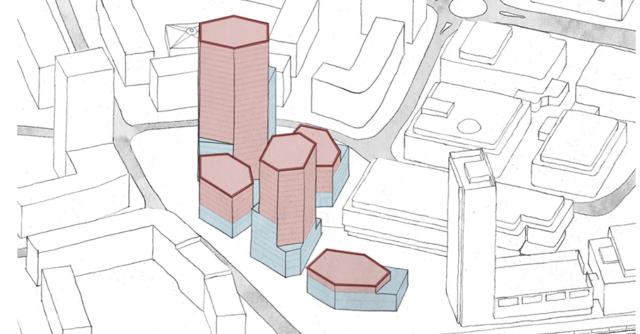
    Schlieren-based property developer Halter AG has announced that it can begin concrete planning for a construction project with a high-rise building on Bogenstrasse in St. Gallen. The transformed site is set to offer a broad mix of residential, commercial and catering uses in the immediate vicinity of the railway station.

    The Expert Council for Urban Development and Architecture of the City of St. Gallen has approved the project draft drawn up by Halter AG in collaboration with architects Herzog & de Meuron and landscape architects Westpol for implementation in a special utilisation plan under planning law.

    According to Halter AG, there is now an indicative project ready for realisation that will serve as the basis for the upcoming parallel procedures such as the special land use plan procedure and the zoning plan amendment procedure. These are expected to take around 18 months.

    As the project progresses, the detailed design of the facades of the new high-rise building with around 80 flats will also be determined. Once the two procedures have been finalised, a planning application will be drawn up and the building permit process will begin. Construction is expected to start in 2027 if the project runs smoothly.

  • New indoor swimming pool for theKSS approved

    New indoor swimming pool for theKSS approved

    The decision of the Schaffhausen electorate paves the way for the construction of a new, modern indoor swimming pool on the KSS site. With an investment volume of CHF 80 million, this project represents an important milestone in the further development of the city’s infrastructure. The new building is not only a response to the ageing existing facility, but also a commitment to sustainable and future-oriented urban development.

    The new building will replace the existing indoor swimming pool from 1972, which is no longer up to modern-day standards due to its poor condition and outdated technology. The last refurbishment measures were carried out more than 30 years ago and the facility suffers from serious deficiencies such as water and heat losses, a lack of accessibility and outdated safety equipment. In addition, the current indoor pool can no longer cope with the increasing number of visitors, which leads to considerable conflicts of use.

    An indoor pool for all generations
    The planned new building will not only exceed the previous standard, but will also set new benchmarks. With a swimming pool comprising eight lanes of 25 metres each, as well as a teaching pool, a course pool with a lifting floor, a separate diving pool and a children’s paddling area, the range of facilities will be significantly expanded. There will also be an outdoor warm water pool and a state-of-the-art wellness centre with various saunas, a steam bath and a sauna garden. This facility will not only meet the sporting needs, but also the increasing demands of the population for wellness and relaxation.

    A central element of the new concept is the separation of the pools according to their main uses in order to avoid the current conflicts of use. The new structure makes it possible to use the various facilities simultaneously and without restrictions. The central entrance to the new building will ensure efficient access to all facilities and optimise operations.

    Sustainability as a guiding principle
    The new indoor swimming pool will be built to the “Minergie-P-ECO Standard”, one of the highest standards for energy-efficient and sustainable construction in Switzerland. The project’s energy concept provides for the extensive use of waste heat, in particular from the neighbouring ice rink, as well as a connection to a local heating network. These measures will help to significantly reduce the ecological footprint of the new building and position Schaffhausen as a pioneer in sustainable construction.

    New synergies and sources of income
    The new indoor pool will not only offer sports and health facilities, but will also be of economic importance. A publicly accessible restaurant with 130 indoor and 150 outdoor seats will generate additional income and establish the KSS facility as a meeting place for the entire population. In addition, an underground car park with 150 parking spaces will improve accessibility.
    Additional rental space for health and fitness facilities will round off the concept and contribute to the attractiveness and profitability of the overall project. These synergies between the various uses will strengthen the KSS site as a central focal point for sport, leisure and recreation in Schaffhausen.

    Competition and project management
    Following the approval of the population, the project competition will now begin with the aim of finding an innovative design for the new building that fulfils the high standards of architecture, functionality and sustainability. Twelve qualified teams will develop their proposals by summer 2025 and the winning project will be presented to the public. Construction is scheduled to start in 2027, with the new indoor pool opening in 2029/2030.

    The construction of the new indoor pool in Schaffhausen is more than just a building project – it is a strong signal of the city’s future viability and innovative strength. With state-of-the-art infrastructure, sustainable construction and an expanded range of facilities, the new indoor pool will make the KSS complex an even more attractive and contemporary leisure centre.

  • The Steig school complex is extended and modernised

    The Steig school complex is extended and modernised

    The Steig school complex, the oldest primary school in Schaffhausen, is located in the north-western part of the city, not far from the old town, and comprises several buildings of different ages. The need for renovation is considerable, as the existing infrastructure no longer meets modern requirements. The gymnasium from 1892 and the room capacities for the growing number of pupils no longer meet today’s requirements.

    In order to meet future needs, the city is planning a new building on the existing site. This will include a new single sports hall, additional classrooms and facilities for after-school care. The extension is part of a comprehensive development concept for Schaffhausen’s primary schools.

    The winning project and its elements
    A project competition crowned the “cinque pi” project by Soppelsa Architekten GmbH and Rosenmayr Landschaftsarchitektur GmbH as the winner. This cleverly divides the required programme into five building blocks, which create a harmonious overall impression as an ensemble. A new three-storey building with a gymnasium and classrooms forms the core of the project. The old observatory will be retained as a free-standing building.

    The existing gymnasium will be restored to its historical structure to create space for a new pavilion for the day centre and library. This will become the central hub of the entire complex. Conversions are also planned. The Trotte will now house storage rooms and a public toilet on the ground floor and therapy rooms on the upper floor.

    Redesign of the outdoor facilities
    Not only the buildings, but also the outdoor facilities will be redesigned. Existing qualities are to be further developed with moderate interventions. The observatory and the group of trees by the playground will be retained. The play and sports areas will be rearranged to create space for an all-weather playing field and a hard court.

    Financing and political approval
    The total cost of the project is estimated at CHF 21.7 million. This sum already includes the planning costs approved by the city council. Following the deliberations in the city council, the electorate will make the final decision on the extension of the Steig school complex.

    The “cinque pi” project is a forward-looking response to the growing demands and challenges of the education sector in Schaffhausen. It combines modernity and tradition in a progressive and resource-conserving construction method and the creation of lively learning and living spaces.

  • Forward-looking settlement development strategy for Hofen

    Forward-looking settlement development strategy for Hofen

    The settlement development strategy for the Hofen district of the municipality of Thayngen is a milestone in spatial planning in the canton of Schaffhausen. It forms the first building block of a large-scale local planning revision that serves as a pilot project for the development of the entire municipality of Thayngen and its neighbourhoods. The focus is not only on local structures, but also on the integration of regional requirements and cantonal guidelines.

    The SES was developed in close collaboration with Dost Architektur GmbH, representatives of the municipality of Thayngen, the canton of Schaffhausen and local associations. With an interdisciplinary approach and the involvement of the public, the settlement development of Hofen is to be future-proofed in order to meet the requirements of the predicted growth. Particular attention is being paid to “inward settlement development”, which optimises the use of existing resources and at the same time improves the local quality of life.

    A roadmap for Hof’s future
    The SES is based on four central strategic paths that should characterise the spatial and structural future of Hof.

    1. Preserve historic substance, create new living spaces
      The preservation of the historic building structure is a central element of the SES. Particular emphasis is placed on the spatial and design integration of new construction projects. New living space is to be created, particularly in the areas of the former market garden, in order to meet the growing demand for housing.
    2. Improving the design of the town centre
      The quality of life in Hofen is to be enhanced by upgrading the design of central meeting spaces. The village square will be redefined as a meeting place for the village community, with seating and playground facilities created and traffic-calming measures implemented.
    3. Safety and traffic calming
      One focus of the SES is on improving road safety. Pedestrians and cyclists should benefit from traffic-calming measures and the route to school in particular should be decoupled from the main road to ensure the safety of schoolchildren.
    4. Strengthening Hofen’s identity
      Hofen wants to present itself confidently and emphasise its unique qualities. The SES envisages an increased digital presence and the staging of key historical buildings to make the town more attractive for both residents and visitors.
      These overarching strategy paths include eight specific indicative projects that are to be implemented in the short, medium and long term. These projects range from the creation of new residential areas and the upgrading of the village square to the renaturalisation of the Beaver, which will make a significant contribution to the ecological balance of the region.

    Landscape and nature as a central component
    The Lower Reiat region is characterised by a diverse landscape of hills and agricultural land. This landscape is not only ecologically valuable, but is also listed in the cantonal structure plan as a “landscape worthy of protection”. The dry meadows, pastures and orchards that surround Hofen are striking landscape elements that characterise the townscape and should be preserved.

    The beaver, which flows through Hofen and is used for agricultural purposes in parts, is of particular importance. The planned renaturalisation of the canalised sections is intended to increase ecological diversity and further enhance the attractiveness of the natural environment for residents.

    Buildings worthy of protection and building land reserves
    Hofen has a historic building stock that should not only be protected as part of the SES, but also integrated into the future development of the settlement. In particular, the baroque “Holländer district” with the residence of Tobias Holländer and the striking Schweizerbund inn contribute to the unique identity of the village.

    The SES also envisages strategic utilisation of the existing building land reserves. There is long-term upzoning potential, particularly in the area of the former market garden and on the outskirts of the village, to meet future demand for residential and work space.

    Communication and public involvement
    Transparent communication with the residents of Hofen is a central component of the SES. The planning steps were accompanied by a working group of community representatives, local associations and planners and presented at public events. In particular, the development of the former market garden as a new residential area met with great interest from the population.

    The settlement development strategy drawn up for Hofen not only sets new standards for local planning, but also for cooperation between the administration and local residents. The participatory approach ensures that the future development of the municipality meets the needs of the residents.

    A model for the entire region
    The Hofen SES not only serves the further development of the district itself, but also as a model for the other districts in the municipality of Thayngen. The findings and guidelines developed in Hofen are to be transferred to Altdorf, Bibern, Barzheim, Opfertshofen and Thayngen. In this way, SES is making a significant contribution to safeguarding the quality of life and economic potential of the entire region in the long term.

  • “Vision 2040 “AROVA HALLEN in Flurlingen

    “Vision 2040 “AROVA HALLEN in Flurlingen

    One step on a long journey has been taken: all those involved in the consultation process have signed the utilisation and development concept (NEK) for the AROVA HALLEN site. The Cantonal Office for Spatial Development ARE accompanied the upstream informal process in an advisory capacity without a signature. This means that the planning realisation can be addressed and discussed.

    Culturally unique and economically viable
    The AROVA HALLEN site is currently registered in the regional structure plan as a workplace area and is clearly differentiated from others by its historic building fabric. This represents both an obligation and an opportunity. The aim of the NEK is to put the site on a sustainable and economically viable footing and thus provide a forward-looking response to the challenges of spatial development in the Weinland region.

    Goals and visions for a mixed neighbourhood
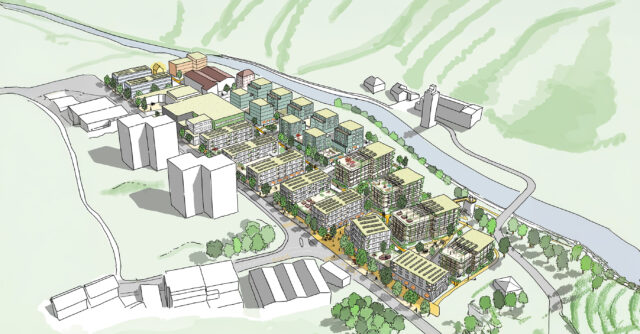
    The main objective of the NEK is to maintain and strengthen the location as a place to work and to value the architectural heritage. The plan is for high-quality internal development that brings living and working closer together. “Vision 2040” envisages the creation of around 250 new flats by 2040 without reducing the existing 400 jobs. The focus is on modern forms of living and working as well as a lively neighbourhood with moderate traffic, complementary specialist shops and restaurants.

    Working and living in harmony
    The NEK thus follows the idea of mixed utilisation – living and working are moving closer together. Due to the historic building fabric, the site is particularly suitable for moderately disruptive businesses and services. The “Vision 2040” target image shows how the site can be developed into a modern business park that reduces mutual emissions and creates a lively neighbourhood.

    Current developments and plans
    In addition to the long-term goals, there are numerous current measures to strengthen the image and identity of the site. By focussing on the preferences of potential tenants, additional space has already been let. Interim uses and temporary events are also planned for the future. Following the fire in the beautiful WERKHALLE, the damage was repaired and a meeting point for tenants and their customers is to be created on the ground floor.

    Coordination and information
    The AROVA HALLEN utilisation and development concept is closely coordinated with the settlement development strategy of the municipality of Flurlingen. Further information and the final report can be downloaded at www.arovahallen.ch.

  • Schaffhausen renews its Bahnhofstrasse

    Schaffhausen renews its Bahnhofstrasse

    Bahnhofstrasse in Schaffhausen is being modernised as part of a one-year construction project. The aim is to create a spacious and clearly laid out street that optimises traffic flow and increases safety for all road users.

    Optimisation of the traffic infrastructure
    Bahnhofstrasse is a central traffic junction in Schaffhausen. The renovation measures will renew the road surface in order to improve road safety and utilise public spaces more efficiently. At the same time, the space for pedestrians and passengers will be increased, making it easier to get on and off the train.

    Charging stations for electric buses have already been installed in advance of the refurbishment in order to make public transport in Schaffhausen more sustainable. The current work will not only upgrade the functionality of Bahnhofstrasse, but also reposition it as an inviting arrival and meeting point.

    Accessibility and adaptations
    Accessibility is a key concern for the city. The bus stops will be equipped with higher kerbs to ensure barrier-free access for people with disabilities. These measures were developed in close consultation with disability organisations and ensure that Bahnhofstrasse complies with current legal requirements.

  • “Smetterling”: a co-operative project by HGW for the Alpenblick site

    “Smetterling”: a co-operative project by HGW for the Alpenblick site

    The Alpenblick site in Schaffhausen, adjacent to the historic Niklausen neighbourhood, will be redesigned by the end of 2027 with the winning project “Smetterling”. The jury, consisting of representatives from the city of Schaffhausen, HGW, the neighbourhood and neighbourhood meeting place nik. as well as independent experts, praised the project in particular for its precise urban design and the clear zoning of the open spaces. The compact design of the building and its harmonious appearance fit in perfectly with the surroundings and create a link between the listed Niklausen single-family house estate and the neighbouring high-rise building.

    A concept that promotes community
    The “Smetterling” project envisages a tall point building that takes up very little of the surrounding area and marks the transition to the taller houses on the opposite side of the street. The positioning creates two different open spaces. A garden space to the west and an urban space to the east. This arrangement encourages social interaction while at the same time preserving the residents’ privacy.

    The project reflects HGW’s co-operative values by creating communal spaces in addition to living space, thus promoting a lively community life.

    The ground floor of the building will house communal areas such as a laundry room, a co-working space and a commercial space. The upper floors offer 20 flats of different sizes, while the top floor comprises five one-bedroom flats with direct access to the roof garden. The spacious communal areas and the roof garden offer many places of retreat, but also opportunities for neighbourly interaction and the creation of social interaction.

    Wood and recycled concrete
    The winning project favours an ecologically sustainable construction method. The clear, simple geometry of the building also contributes to energy efficiency and makes the project a role model for ecological construction.

    HGW Heimstätten-Genossenschaft Winterthur has been creating affordable living space since 1923 and promotes lively community life and innovative solutions. With over 2,250 flats and more than 5,000 residents, it is the largest independent housing co-operative in the region.

  • A new landmark at the Rhine Falls with great potential

    A new landmark at the Rhine Falls with great potential

    The goal was clearly defined. A third of the 900,000 annual Rhine Falls tourists were to be lured to the other side of the river and attracted to the “Rhyfall Village” area. “Rhyfall Village”, or “RIVI” for short, is the name of the new neighbourhood. With a mix of gastronomy, art and shopping, the area will become a centre of attraction – not only for tourists, but also for the local population.

    The site and its future
    The “RIVI”, once the site of industrial production, is undergoing a reorganisation. The neighbourhood is characterised by two striking high-rise buildings, one of which was acquired by Helvetia. These offer living space with impressive views and space for catering, office and retail areas.

    Potential and challenges
    The visionary project met with broad approval in the region. Beat Hedinger, Managing Director of Schaffhauserland Tourismus, saw the village at the time as a “colourful mosaic piece” in the overall tourism picture. The rooftop restaurant with a view of the Alps in particular promised to be a special highlight. Hedinger also recognised the challenge of skilfully bridging the distance between the Rhine Falls basin and the site.

    Felix Tenger, Mayor of Neuhausen, is optimistic that the “RIVI” will revitalise the centre of Neuhausen and also strengthen the retail trade. Building director Martin Kessler also saw great potential to turn the site into a meeting place that creates synergies with existing facilities and increases the attractiveness of the entire region.

    Good connections and creative solutions
    The site’s location scored highly thanks to its proximity to the Rhine Falls and good public transport connections. The Badische Bahnhof Neuhausen railway station is located directly next to the site and numerous bus connections and over 200 parking spaces are available to visitors. Visitors can travel in comfort between the Rhine Falls basin and the Rhyfall Village on the Rhyfall Express tourist train.

    A project with vision
    Rhyfall Village is more than just another residential neighbourhood in Neuhausen. Whether rooftop restaurant, promenade or art gallery – the RhyTech site stands for a modern, versatile and vibrant future in the immediate vicinity of one of Switzerland’s most impressive natural wonders.

  • The Kammgarn area in the south

    The Kammgarn area in the south

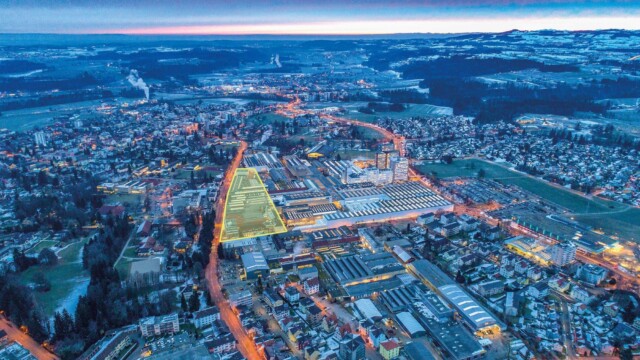
    As part of a comprehensive vision for the city of Schaffhausen, the Kammgarnareal is to be further developed with new access points and better connections to the urban fabric. In addition to the existing access points from Baumgartenstrasse, Rheinuferstrasse and Rheinstrasse, a new passageway will be created along Klosterstrasse to improve accessibility. This will integrate the site even more closely into the urban infrastructure and enable new utilisation options.

    The Kammgarn area will become part of a “string of pearls” of meeting places along the banks of the Rhine, which will play an important role in the further upgrading of this area. With the start of construction in September, the approximately two-year construction phase will begin, with which Schaffhausen will gain a modern, attractive district that will significantly improve the urban quality of life as a meeting place and cultural centre.

    Upgrading the areas and increasing the quality of stay
    The areas are also to be upgraded as part of the planned redesign. The creation of spacious green areas, seating and a water feature in the inner courtyard of the former worsted spinning mill will increase the quality of stay. These measures aim to transform the Kammgarnhof into an attractive place to meet and relax, which can be used for events and everyday activities.

    New uses and modern infrastructure
    A central element of the redesign is the construction of a single-storey underground car park with around 90 parking spaces, which is to be built under the Kammgarnhof. This will make the inner courtyard car-free and provide more space for events and recreation. A pergola is planned in front of the west wing, while a large terrace will be created in front of the north wing.

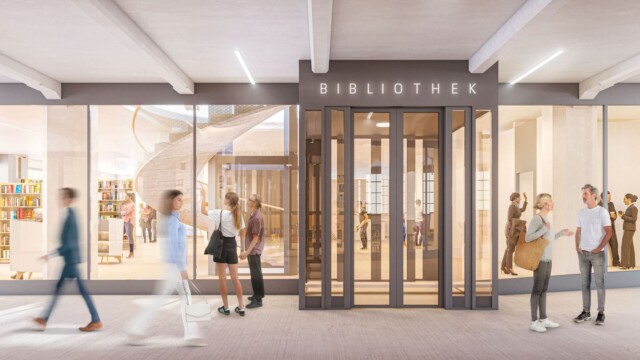
    The historic west wing of the Kammgarn site will be prepared for new uses as part of the refurbishment. The ground floor, along a new passageway to the inner courtyard, will house the library and the toy library. The glazed façades will give passers-by an attractive insight into the world of books and games.

    Half of the first floor will be used by the library, while the remaining space will be rented out in small to medium-sized units. The Schaffhausen University of Teacher Education will move into the upper floors, while the remaining space will be available for flexible use by other tenants.

    This comprehensive remodelling of the Kammgarn site strengthens the connection to the old town and the Rhine and gives the area a new significance in the urban fabric. The planned measures will contribute to long-term urban development and create a modern, vibrant neighbourhood that will significantly improve the quality of life in Schaffhausen.

  • Properties in the ISOS inventory area – What does this mean?

    Properties in the ISOS inventory area – What does this mean?

    Voser Rechtsanwälte KlG is a full-service law, notarial and tax firm with over 100 years of experience. Our construction and property law department advises investors, entrepreneurs, the public sector and private individuals in all areas of construction and property law throughout the entire life cycle of a property. Together with our other specialist areas, we offer comprehensive support in all legal matters, be it transactions, tax issues or estate planning.

    ISOS as a basic instrument
    The Federal Inventory of Swiss Sites of National Importance, better known as ISOS, is a basic instrument that helps the authorities to recognise and safeguard architectural values in the long term. Cantons and municipalities take the inventory into account when drawing up their corresponding plans (structure planning, utilisation planning). The ISOS was created in the 1970s and comprises around 1,200 objects.

    Binding nature of the ISOS for property owners
    If a property is located in an area covered by the ISOS, this does not mean much, as the ISOS is generally not binding for landowners. However, the municipalities are obliged to take the ISOS into account in land-use planning as part of the comprehensive weighing up of interests under spatial planning law. The building project must be compatible with the applicable land-use planning and comply with the specific requirements of the zone (e.g. a village or core zone). Only where the municipal council, as the building permit authority, has discretionary powers when assessing your planning application must it directly take into account the conservation objectives of the ISOS.

    Direct applicability due to federal tasks
    If the building project affects a federal task, the listed property must be preserved undiminished, or at least protected as far as possible (Art. 6 NHG). However, this only applies in the case of serious encroachment on the ISOS object. According to case law, serious encroachment exists if a construction project causes extensive and irreversible damage. In such a case, an expert opinion must be obtained from the Swiss Federal Commission for the Protection of Nature and Cultural Heritage (ENHK) and / or the Swiss Federal Commission for Monument Preservation (EKD). Planning permission may only be granted if the building project is of national importance. The national nature and heritage conservation organisations are then entitled to appeal against the building project.

    Typical cases of application
    Federal tasks are affected if the building permit relates to a legal matter that falls under federal jurisdiction, is regulated by federal law and is related to nature, landscape and cultural heritage protection. In practice, frequent cases that fall under a federal task according to federal court rulings are when a PV system (Art. 18a RPG) or a mobile phone system (Art. 14 FMG) is authorised or a permit is required under water protection law (Art. 19 para. 2 GSchG).
    To summarise, although the ISOS is not directly applicable to landowners, there are practical exceptions that can often lead to the direct applicability of the ISOS. In this case, further complicated clarifications may be necessary for the construction project, which gives third parties leverage to delay a project.

  • Takeover strengthens expertise in building technology

    Takeover strengthens expertise in building technology

    The Hälg Group, based in the St.GallenBodenseeArea, is taking over Oberhänsli AG Gebäudetechnik from Bütschwil, which specializes in construction planning and execution. According to a press release, the St.Gallen-based company intends to expand its market position in Toggenburg. In addition to opening up new markets, Hälg & Co. AG intends to expand its expertise in the area of air conditioning and ventilation by exchanging specialists.

    The current owners of Oberhänsli AG, Marianne and Peter Oberhänsli, will continue to run their company under the current name until the complete handover on January 1, 2026. Hälg will operate Bütschwil as an additional location. The Hälg Group will take on all 28 employees, including six apprentices, and continue to employ them.

    “We are delighted to have found a strong and future-oriented succession solution in the Hälg Group,” Marianne and Peter Oberhänsli are quoted as saying in the press release. “We particularly appreciate the fact that our values and those of the Hälg Group are very much in line, which gives us the certainty that our company will continue to be managed in the best hands. We are confident that our employees will have optimal development opportunities and will continue to work in an environment that values their dedication and commitment.”

  • A new landmark at the Rhine Falls with great potential

    A new landmark at the Rhine Falls with great potential

    The goal was clearly defined. A third of the 900,000 annual Rhine Falls tourists were to be lured to the other side of the river and attracted to the “Rhyfall Village” area. “Rhyfall Village”, or “RIVI” for short, is the name of the new neighbourhood. With a mix of gastronomy, art and shopping, the area will become a centre of attraction – not only for tourists, but also for the local population.

    The site and its future
    The “RIVI”, once the site of industrial production, is undergoing a reorganisation. The neighbourhood is characterised by two striking high-rise buildings, one of which was acquired by Helvetia. These offer living space with impressive views and space for catering, office and retail areas.

    Potential and challenges
    The visionary project met with broad approval in the region. Beat Hedinger, Managing Director of Schaffhauserland Tourismus, saw the village at the time as a “colourful mosaic piece” in the overall tourism picture. The rooftop restaurant with a view of the Alps in particular promised to be a special highlight. Hedinger also recognised the challenge of skilfully bridging the distance between the Rhine Falls basin and the site.

    Felix Tenger, Mayor of Neuhausen, is optimistic that the “RIVI” will revitalise the centre of Neuhausen and also strengthen the retail trade. Building director Martin Kessler also saw great potential to turn the site into a meeting place that creates synergies with existing facilities and increases the attractiveness of the entire region.

    Good connections and creative solutions
    The site’s location scored highly thanks to its proximity to the Rhine Falls and good public transport connections. The Badische Bahnhof Neuhausen railway station is located directly next to the site and numerous bus connections and over 200 parking spaces are available to visitors. Visitors can travel in comfort between the Rhine Falls basin and the Rhyfall Village on the Rhyfall Express tourist train.

    A project with vision
    Rhyfall Village is more than just another residential neighbourhood in Neuhausen. Whether rooftop restaurant, promenade or art gallery – the RhyTech site stands for a modern, versatile and vibrant future in the immediate vicinity of one of Switzerland’s most impressive natural wonders.

  • A double kindergarten that sets standards

    A double kindergarten that sets standards

    The concept of the new kindergarten is impressive. In addition to a kitchen and a therapy room, the basement houses all the necessary areas for building services, storage, cleaning and outdoor equipment. Thanks to the recessed design, the plinth level is discreet and creates outdoor areas that can be used in a variety of ways and are protected from the weather. Barrier-free access is ensured by a new route from the main entrance on Charlottenweg.

    The kindergarten floor rises from this solid base and is divided into three “houses” with tent roofs. Each of these “houses” serves specific purposes and offers the children individual main and group rooms. The architectural design with the tent roofs, which are also visible in the interior, creates a special atmosphere that allows for a multi-layered spatial experience thanks to the combination of floor and “ceiling sky” as an additional room boundary. A gallery in the main rooms complements the space and offers the children places to retreat and observe.

    The new building will cost almost CHF 3 million, with the building itself costing around CHF 2.2 million. Additional costs will be incurred for furniture, landscaping, the connection to district heating and unforeseen expenses.

    A project with vision
    The architectural firms Berger Hammann Architekten AG and BRH-Architekten AG impressed the jury with their design. The timber construction and well thought-out room layout were decisive factors in the decision. The project, which is reminiscent of a “forest hut ensemble”, blends in perfectly with the natural surroundings of Charlottenfels.

    Completion of the new double kindergarten is planned for late summer 2025.

    Neuhausen invests in the future
    The population of Neuhausen is constantly growing due to the construction of new residential complexes. In addition to the Charlottenfels double kindergarten, which will open in autumn 2025, further school space expansions are planned.

    These investments in education and infrastructure are clear signals for the future of Neuhausen. The municipality is focussing on qualitative growth and sustainability in order to meet the requirements of dynamic population development.

  • The Kammgarn area in the south

    The Kammgarn area in the south

    As part of a comprehensive vision for the city of Schaffhausen, the Kammgarnareal is to be further developed with new access points and better connections to the urban fabric. In addition to the existing access points from Baumgartenstrasse, Rheinuferstrasse and Rheinstrasse, a new passageway will be created along Klosterstrasse to improve accessibility. This will integrate the site even more closely into the urban infrastructure and enable new utilisation options.

    The Kammgarn area will become part of a “string of pearls” of meeting places along the banks of the Rhine, which will play an important role in the further upgrading of this area. With the start of construction in September, the approximately two-year construction phase will begin, with which Schaffhausen will gain a modern, attractive district that will significantly improve the urban quality of life as a meeting place and cultural centre.

    Upgrading the areas and increasing the quality of stay
    The areas are also to be upgraded as part of the planned redesign. The creation of spacious green areas, seating and a water feature in the inner courtyard of the former worsted spinning mill will increase the quality of stay. These measures aim to transform the Kammgarnhof into an attractive place to meet and relax, which can be used for events and everyday activities.

    New uses and modern infrastructure
    A central element of the redesign is the construction of a single-storey underground car park with around 90 parking spaces, which is to be built under the Kammgarnhof. This will make the inner courtyard car-free and provide more space for events and recreation. A pergola is planned in front of the west wing, while a large terrace will be created in front of the north wing.

    The historic west wing of the Kammgarn site will be prepared for new uses as part of the refurbishment. The ground floor, along a new passageway to the inner courtyard, will house the library and the toy library. The glazed façades will give passers-by an attractive insight into the world of books and games.

    Half of the first floor will be used by the library, while the remaining space will be rented out in small to medium-sized units. The Schaffhausen University of Teacher Education will move into the upper floors, while the remaining space will be available for flexible use by other tenants.

    This comprehensive remodelling of the Kammgarn site strengthens the connection to the old town and the Rhine and gives the area a new significance in the urban fabric. The planned measures will contribute to long-term urban development and create a modern, vibrant neighbourhood that will significantly improve the quality of life in Schaffhausen.

  • Properties in the ISOS inventory area – What does this mean?

    Properties in the ISOS inventory area – What does this mean?

    ISOS as a basic instrument
    The Federal Inventory of Swiss Sites of National Importance, better known as ISOS, is a basic instrument that helps the authorities to recognise architectural values and safeguard them in the long term. Cantons and municipalities take the inventory into account when drawing up their corresponding plans (structure planning, utilisation planning). The ISOS was created in the 1970s and comprises around 1,200 objects.

    Binding nature of the ISOS for property owners
    If a property is located in an area covered by the ISOS, this does not mean much, as the ISOS is generally not binding for landowners. However, the municipalities are obliged to take the ISOS into account in land-use planning as part of the comprehensive weighing up of interests under spatial planning law. The building project must be compatible with the applicable land-use planning and comply with the specific requirements of the zone (e.g. a village or core zone). Only where the municipal council, as the building permit authority, has discretionary powers when assessing your planning application must it directly take into account the conservation objectives of the ISOS.

    Direct applicability due to federal tasks
    If the building project affects a federal task, the listed property must be preserved undiminished, or at least protected as far as possible (Art. 6 NHG). However, this only applies in the case of serious encroachment on the ISOS object. According to case law, serious encroachment exists if a construction project causes extensive and irreversible damage. In such a case, an expert opinion must be obtained from the Swiss Federal Commission for the Protection of Nature and Cultural Heritage (ENHK) and / or the Swiss Federal Commission for Monument Preservation (EKD). Planning permission may only be granted if the building project is of national importance. The national nature and heritage conservation organisations are then entitled to appeal against the building project.

    Typical cases of application
    Federal tasks are affected if the building permit relates to a legal matter that falls under federal jurisdiction, is regulated by federal law and is related to nature, landscape and cultural heritage protection. In practice, frequent cases that fall under a federal task according to federal court rulings are when a PV system (Art. 18a RPG) or a mobile phone system (Art. 14 FMG) is authorised or a permit is required under water protection law (Art. 19 para. 2 GSchG).

    To summarise, although the ISOS is not directly applicable to landowners, there are practical exceptions that can often lead to the direct applicability of the ISOS. In this case, further complicated clarifications may be necessary for the construction project, which gives third parties leverage to delay a project.

  • Schallhausen brings sound diversity into the digital age

    Schallhausen brings sound diversity into the digital age

    Peter Neukomm emphasises that the continuous adaptation and implementation of the Smart City strategy enables Schaffhausen to respond to technological progress and thus create a more liveable city. With innovative projects, the city is ensuring future-oriented development with a focus on digitalisation and sustainability.

    One example of this constant striving for innovation is the new “Schallhausen” platform, which combines the city’s rich musical heritage with modern digital solutions. The platform is part of the Smart City urban development concept and aims to make the diversity of Schaffhausen’s music scene visible and audible.

    Musical history meets digital innovation
    Schaffhausen has always been a city of music with an impressive diversity in a very small area. With “Schallhausen”, this diversity can now also be experienced digitally. The platform offers both an online platform for musicians and an audio walk through the city’s musical history. From Bach to jazz, from punk to dialect – the musical diversity can be experienced through an innovative digital map that combines the geography of the city with its musical identity.

    Music venues and music trail
    Schallhausen is divided into two sub-projects: “Musikorte” and “Musiktrail”. The “music venues” enable musicians to present their works at various locations in the city. The endlessly expandable map is freely available to all artists with the associated anecdotes and memories. In this way, the city merges into a musical whole.

    The “Musiktrail” will be presented as part of the Schaffhausen Culture Days 2025 and offers a musical tour of the city that connects important places and personalities of Schaffhausen’s music scene. Original recordings, interviews and sound design create a unique musical experience that shows Schaffhausen as a city of music in a new light.

    Projects such as “Schallhausen” position Schaffhausen not only as an innovative city, but also as a culturally rich city worth living in.

  • Expansion of the production site in Oberriet

    Expansion of the production site in Oberriet

    Jansen, the steel systems supplier based in the St.GallenBodenseeArea, is planning to significantly expand the production site at its headquarters in Oberriet. According to the company, several million Swiss francs are to be invested in this. According to Jansen, this investment is a “clear commitment to the Oberriet site”. It is also intended to strengthen the company’s competitiveness.

    Jansen is planning to expand and rebuild several production halls in which window, door and façade elements will be manufactured. Their production had previously been carried out in the buildings of the acquired Rino Weder AG, but these have now become too small. Jansen will give up the former Rino Weder site in 2026. Instead, “ideal and state-of-the-art production conditions will be created” in the company’s own buildings.

    In addition, work will begin in mid-2025 on the installation of a modern powder coating facility, which is scheduled to go into operation in early 2026. This new production facility will replace the previous Rino Weder AG site. It is expected that the new facility will be able to coat up to 1600 square meters of surface every day. In addition to coating its own products, Jansen will also offer contract coating for external orders.

    In addition to the expansion of the production facilities, Jansen also intends to expand the company’s logistics area, according to the press release. In this context, the company plans to set up a pallet and small parts center with modern conveyor technology, self-propelled transport systems and modern workstations.

  • New innovation center for grain processing opened

    New innovation center for grain processing opened

    Bühler’s network of application and training centers in Uzwil has been expanded to include the new Grain Innovation Center(GIC). The technology group’s five-storey building covers 2000 square meters with state-of-the-art infrastructure and 70 machines from Bühler and partners for processing grain and pulses.

    The GIC serves as an innovation incubator for Bühler’s customers from the milling industry, where they can experiment and innovate. “At the GIC, customers will find a unique environment in which they can develop customized processes and experience first-hand the extensive possibilities of Bühler’s diverse portfolio,” said Stefan Birrer, Head of Business Area Milling Solutions, in a press release.

    In addition to a wide variety of grains and pulses, the food trials possible there also include herbs, spices, coffee, nuts and insects, at up to 5 tons per hour. “One of the main advantages of the GIC is that it can not only provide detailed data that enables continuous and precise monitoring of the process, but also track the physical and chemical properties of the product at every stage of production and under different process conditions,” says Lothar Driller, Department Manager Feed Application Center and Training.

    The GIC is part of Bühler’s Application and Training Center(ATC) landscape. This includes the four recently opened ATCs – the Centers for Flavor Creation, for Food Creation, for Protein Application and the Energy Recovery Center – as well as other centers that have already been in operation for several years, such as the Extrusion Application Center and the Pasta Application Center.

  • Customised processes support bridge renovation in Chur

    Customised processes support bridge renovation in Chur

    The AS Chur Süd consortium, consisting of METTLER PRADER AG and Cellere Bau AG, has commissioned STRABAG to replace the bridge edge beams as part of the renovation of the Sommerau subway in Chur. The timber construction department of the Schlieren-based construction company was tasked with developing a customised method for the formwork, explained STRABAG in a press release. “With our experience, we found the right solution,” Dominic Graf, timber construction foreman at STRABAG AG, is quoted as saying.

    Specifically, the work was made more difficult by the limited space available, which, among other things, did not allow for a conventional substructure for the formwork. The STRABAG timber construction team solved this problem by reinforcing the formwork panels with flat steel. Fire hoses were inserted into the gaps. The hoses, filled with compressed air, hold the panels in a stable position during concreting.

    According to the press release, the first bridge edges have now been completed to the complete satisfaction of the master builders on site. According to STRABAG, the other construction phases are currently being realised according to plan with the help of this technically demanding but ideally suited solution.

  • Former monastery in Davos reopens as a hotel

    Former monastery in Davos reopens as a hotel

    Davos Klosters Mountains completes the refurbishment of Joseph’s House. The former nunnery and sanatorium has been converted into a three-star superior hotel over the past 18 months. On 26 December, Joseph’s House will reopen in its new use as a hotel. The renovated rooms and suites as well as the rooms for events can already be booked, the owner, which belongs to Davos Klosters Bergbahnen AG, announced in a press release.

    Davos Klosters Mountains took over Joseph’s House, which had previously been used by nuns of the Dominican order, in 2007. During the remodelling into a hotel, the bathrooms on each floor were replaced by wet rooms in the individual rooms. The external appearance of the early 20th century building, on the other hand, was “only subtly refreshed”, writes Davos Klosters Mountain. In addition to 71 rooms, four suites and a flat, the hotel also has a wellness area, a fitness room and rooms for seminars and events. A total of CHF 20 million was invested in the renovations.

  • OST graduates predict solar yield

    OST graduates predict solar yield

    Two graduates of the CAS Energy Digital at the OST – Eastern Switzerland University of Applied Sciences have developed a new tool that can accurately predict the energy yields of photovoltaic (PV) systems. In addition, the data from the systems can be easily and intuitively managed and clearly visualized, according to a press release from OST. This would enable both companies and private individuals to increase the efficiency and profitability of their systems.

    One of the two, Lukas Loser, is quoted as saying that it is “extremely important” for energy suppliers in particular to know when which system is producing how much. This has an influence on the use of power plants and electricity schedules, among other things. This knowledge therefore serves to ensure grid stability and as an important basis for trading activities. “The more accurately you can forecast the portfolio of a PV system, the more optimally the aforementioned processes can be carried out. A good forecast therefore helps both electricity producers and end customers financially.”

    The same applies to private individuals, adds Dimitri Gysin. He developed this tool together with Loser as part of a project. “Precise forecasts can be used to plan the use of appliances with increased energy consumption or to charge an electric car when a lot of energy is available.”

    Both see room for improvement in the accuracy and variety of the meteorological data used. According to the OST, it is quite possible that the forecasting tool will soon be further developed by other students as part of a Bachelor’s or Master’s thesis.

  • Rents and prices for residential property in the canton of Glarus remain on an upward trend

    Rents and prices for residential property in the canton of Glarus remain on an upward trend

    “Canton Glarus remains a popular residential region”, writes Glarner Kantonalbank in a press release on the 2024 property market report for the canton of Glarus. It was compiled by the cantonal bank in collaboration with Wüest Partner AG from Zurich. The report shows the current trends and forecasts how rents and prices for residential property will develop in the canton.

    The housing market in the canton of Glarus is currently characterised by stable demand and a short supply. As a result, prices for condominiums have continued to rise. Specifically, they were up 2.1 per cent year-on-year in the second quarter of 2024. At the same time, prices for single-family homes fell slightly year-on-year. However, according to the experts at Kantonalbank and the real estate service provider, the recent fall in interest rates will continue to stimulate demand for residential property. They therefore expect the slight upward trend to continue.

    The experts have observed a 4.5 per cent increase in rents over the past year. However, they should “remain stable for the time being” following the latest increases in April, according to the report. The full report can be viewed on the Kantonalbank website.

  • New height-adjustable desk brings more flexibility to everyday school life

    New height-adjustable desk brings more flexibility to everyday school life

    Lista Office LO, based in Degersheim, has expanded its LO Education system to include a version of the LO Solo table. The table is mobile and infinitely height-adjustable and is now also available with a lower adjustment range, according to a press release from the internationally active manufacturer of office furniture. This means that the LO Solo table can also redefine teaching methods in primary schools. LO Education is a convertible table system for individual or group workstations.

    According to Lista Office LO, the furnishing system fulfils the requirements of modern school life by being quiet, quick and flexible to reconfigure. This has become necessary as the traditional form of frontal teaching has given way to independent thinking, creativity and communication. “The new diverse forms of teaching are only possible with a flexible set-up,” it says.

    Other elements of LO Education include tables and movable walls that can be grouped into different shapes thanks to castors. With the help of a magnetic solution, these can be connected to each other without tools and with little noise. According to the company, the LO Solo tables are equipped with holders for material boxes.

  • Working together for attractive management

    Working together for attractive management

    Malicious tongues (and long-standing market observers) claim that the property business in Switzerland runs smoothly, in good times and bad, and without much help from the property sector. However, the example of property management shows that not everything always goes well. The favourite scapegoat of tenants and the media has to take the rap when the reference interest rate rises and interest-related rent reductions are reversed. Or when service charges rise because energy costs explode. Or when arguments between neighbours escalate because the barbecue season has started. Or when rents rise because supply cannot keep up with demand.

    Property managers – or more precisely, the majority of them – have an exciting and demanding task: they have to satisfy two very different categories of customers: their clients, usually private owners and asset managers, for whom they are responsible for maintaining property portfolios and optimising property income, and their tenants, who expect their concerns to be met unbureaucratically, defects and damage to be rectified quickly, annoying neighbours to be dealt with and service charges to be minimised.

    This challenging task becomes a burden when clients demand more and more services for less and less money in order to support their returns, and when tenants make ever higher demands because they assume that rising housing costs go hand in hand with a higher level of service and that “no” is not an answer.

    The burden has consequences. On behalf of SVIT Zurich, we conducted an online survey of active and former property managers between October 2023 and January 2024 to find out how active managers view the profession, where former managers have moved to and under what conditions they would return to property management.

    The answers are sobering. Although 80% of active farmers identify with their work, a majority are considering changing jobs (Figure 1). It is particularly worrying that two thirds of the “seniors” are considering whether they should turn their backs on farming, and that one in nine team leaders has applied for a job outside of farming in the past six months. The sector risks losing its most experienced top performers.

    We do not believe that the property industry can afford to lose experienced managers. Owners and asset managers are already complaining that knowledge is lost with every turnover and tasks are left undone. The attempt to ensure continuity in property management with asset managers who have previously worked in property management themselves is understandable – but counterproductive. A blurred division of roles and responsibilities almost always leads to friction, and micromanagement contributes to managers looking for other areas of responsibility.

    Tenants also have a lot to lose. It is already being criticised that it is becoming increasingly difficult to find personal contacts behind apps and web forms, and that staff changes are causing concerns to fizzle out. Even the tenants’ association, which likes to portray landlords as “rip-off artists” and urges tenants to challenge rent increases and service charge bills “rather once too often”, should actually know that Switzerland as a tenant country cannot function without knowledgeable landlords.

    As difficult as it may sometimes seem, it is possible to make property management more attractive again. We believe that property management companies, clients and industry associations can achieve a great deal with a concerted effort.

    Property management companies can do more to relieve the burden on property managers in their day-to-day business and in dealing with large portfolios. In many administrations, work processes could be formalised, simplified, standardised and properly digitalised. Digitalisation zombies could be disposed of more quickly and management deficits could be addressed more actively. Services offered could often be defined more clearly in order to manage expectations and avoid conflicts; if conflicts escalate, managers could often be better protected from hostility.

    Clients could become more aware that quality has a price and that property management companies do not have a patent remedy for reducing operating costs with the often elusive – and sometimes deceptive – digitalisation dividends. The fact is that property management has become more demanding and complex, and that maintaining and renewing the building stock requires more people and expertise. Control is undoubtedly necessary in this context, but constructive cooperation is also required. Investing in asset micro-managers is of little use if it creates additional work for the management and takes away necessary resources.

    Finally, service providers and industry associations can expand the training and further education programmes on offer to better prepare managers for changing tasks and working methods.

    The traditional training path from clerk to property manager assumes that property managers can do everything that could contribute to maintaining the value and optimising the income of the building stock, from handing over rental properties and property accounting to developing maintenance strategies and supporting tenant improvements and renovations, and that three years of professional experience and a specialist certificate are enough to lead a management team.

    In addition to traditional all-rounders, the real estate industry also needs specialists who know how the energy and emission intensity of existing properties can be reduced at a reasonable cost, how redensification projects can be implemented without a lot of background noise or how shopping centres can be revitalised. This requires training and further education paths that give lateral entrants and newcomers the opportunity to play to their strengths without having to internalise all of their management knowledge. And there needs to be an awareness that value creation in the portfolio increasingly requires a team effort, in which other experts make a significant contribution alongside traditional property managers.

    It is up to the players in the property industry to reward this contribution appropriately.

  • Smart buildings for the future

    Smart buildings for the future

    The city of Schaffhausen has a comprehensive innovation programme with its Smart City strategy. As part of the “Smart building management” project, it has been working with partners such as VIBOO to find solutions to optimise the management of its buildings. The predictive control technology from VIBOO, an Empa spin-off, offers a future-oriented answer to this challenge. By utilising weather and occupancy data, the heating system can be automatically set to the optimal conditions to both save energy and increase comfort for users.

    The spin-off uses a combination of machine learning and building physics to create thermal building models based on measurement data. These models are integrated into a predictive control system that predicts the thermal behaviour of the building, taking into account the weather forecast and user preferences. In this way, energy use is optimised every few minutes and adapted to the building.

    Saving energy in historic buildings
    A pilot project in the listed Bach school building demonstrates the potential of this technology. The aim is to reduce heating energy consumption by at least 20% while increasing thermal comfort. The school building, which has energy deficits due to its age, is ideally suited to this type of smart building management. Initial results are already available and indicate a significant reduction in energy consumption. If the success is confirmed in the further course of the project, a rollout to other buildings is planned.

    Integration into the energy sector of the future
    Predictive heating systems not only offer advantages in terms of energy savings and comfort, but are also ideally prepared for the future requirements of the energy market. The technology is able to use time-dependent energy prices and can adapt to demand response programmes, which are becoming increasingly important in an increasingly decentralised energy supply with renewable energies.

    The system aims to fully integrate buildings into the energy sector to reduce peak loads and maximise the use of renewable energy. The vision goes far beyond energy efficiency – buildings should actively participate in the energy market in the future and make an important contribution to stabilising the electricity grid through intelligent networking.

    Validated savings in different building types
    The technology has already been successfully tested in residential and commercial buildings, schools and public buildings for heating and cooling. Energy savings of between 20% and 40% have been achieved compared to conventional control systems. These savings are accompanied by improved responsiveness to weather changes, which further increases comfort for building users.

    With this project, the city of Schaffhausen is setting an example for the use of forward-looking technologies to improve energy efficiency. If the positive results in the Bach school building are confirmed, this could pave the way for the widespread use of this forward-looking technology in other buildings in the city. Predictive heating systems offer a promising solution for significantly reducing energy consumption in existing buildings while increasing comfort – a decisive step towards a sustainable future.

  • Schaffhausen on the way to becoming a swarm and nest region

    Schaffhausen on the way to becoming a swarm and nest region

    How can Schaffhausen remain an attractive location for business and quality of life in the future? This question was the starting point for the “Development Strategy 2030”, which the Government Council of the Canton of Schaffhausen launched together with the business community in summer 2020. The aim – to develop a clear vision for the future of the region that meets the requirements of the next ten years.

    In this context, the renowned Gottlieb Duttweiler Institute developed the future vision of the “swarm and nest region”. Schaffhausen is to develop into a “power station for social energy” – a region where people actively network, where creative ideas emerge and where a safe, stable place for community and identity is created at the same time.

    Participatory process: the region shapes its own future
    The basis for the “Development Strategy 2030” was a comprehensive participatory process in which the people of Schaffhausen were involved in the development over a period of several months. In four cross-generational thematic groups, over 70 participants developed more than 400 ideas and visions for the future of the region.

    These ideas were used as guidelines for the further process. In order to discuss the selected project ideas, all participants came together again to finalise their ideas. The participatory approach proved to be a valuable tool for actively involving the local population in shaping the future of their region and thus creating broad acceptance for the measures developed.

    Consolidation of the fields of action: A compass for Schaffhausen’s quality of life
    From the more than 400 ideas and wishes, 12 central fields of action were defined that Schaffhausen must tackle in the coming years. These fields of action cover all areas that are crucial for the future viability of the region. From the economy and innovation to education and mobility through to social and ecological aspects.

    For each field of action, a target image was developed that outlines the desired development. These target images act as a strategic compass for the subsequent project work and set clear priorities in order to sustainably strengthen the quality of life in Schaffhausen.

    Focus groups develop specific projects
    The development strategy is implemented by specialised focus groups made up of experts from business, politics and society. Each focus group works on one of the 12 fields of action and develops specific project ideas and measures based on the objectives.

    From the 128 project outlines, 63 final project ideas crystallised, which now serve as a roadmap for implementation. These projects range from innovative education initiatives and sustainable mobility solutions to urban development measures to improve the quality of life in the region.

    Seven regions, one goal
    The 63 projects have been divided into seven geographical regions within Schaffhausen in order to realise the vision of the swarm and nest region in a targeted manner. This regional structuring ensures that the measures developed meet the specific needs of the different parts of the canton and at the same time support the overarching strategy.

    The 2030 development strategy as the basis for Schaffhausen’s future
    The final report of the Development Strategy 2030 was officially acknowledged and recognised by the Government Council of the Canton of Schaffhausen. This lays the foundation for a future-oriented and sustainable development of the region.

    The “Development Strategy 2030” impressively demonstrates how new potential can be tapped and innovative solutions developed for the challenges of tomorrow through close cooperation between politics, business and the population. Schaffhausen is on its way to becoming a swarm and nest region – a place where economic dynamism and social security go hand in hand.

  • Progress and outlook for the cantonal climate strategy

    Progress and outlook for the cantonal climate strategy

    Successes include the introduction of a procurement guideline for CO2-free vehicles in the cantonal administration and the creation of a legal basis for financial support for flood protection measures. Two measures that have been finalised, while a further 47 are currently being implemented. New administration vehicles must now have a CO2-free drive system, which represents an important step towards a more climate-friendly administration. In addition, the Water Management Act has created the basis for promoting flood protection projects, which are essential for adapting to climate change.

    Public relations work as the key to raising awareness
    Another key aspect of the climate strategy is raising public awareness. Every year, a “climate walk” is organised on a climate-related topic to present projects to citizens. This year’s focus was on the energy-efficient refurbishment of an apartment block, which was upgraded from efficiency class G to class B. This shows how effective refurbishment measures can help to reduce energy consumption and CO2 emissions.

    Challenges in the area of fossil fuels and renewable energies
    The latest climate figures show that the proportion of oil heating systems in residential and service buildings has fallen by 5 per cent, while the proportion of heat pumps has risen by the same amount over the same period. Nevertheless, the proportion of natural gas heating systems remains unchanged, which contradicts the climate policy goals. In order to achieve the goal of a climate-friendly energy supply, the transition from fossil fuels to renewable energies must be accelerated.
    On a positive note, electricity production from photovoltaic systems in the canton has more than doubled since 2015. This shows that the use of renewable energies is progressing, even if considerable efforts are still required to achieve the climate targets that have been set.

    Potential for improvement in the cantonal administration
    The cantonal administration has set itself the goal of acting as a role model in climate protection. Despite initial progress, it is clear that energy consumption for heating and hot water in cantonal buildings has only been reduced by 2 per cent. More than half of the heating energy is still obtained from fossil fuels. CO2 emissions from the combustion of these fuels have remained virtually unchanged since 2016, indicating a need for additional action.

    Adjustments to energy requirements and future steps
    The Government Council has submitted measures that can be implemented quickly for consultation in order to increase the use of renewable energies. Among other things, these relate to the replacement of heating systems and the generation of self-generated electricity in new buildings. One example is the requirement that a renewable energy system should always be used in future when replacing heating systems in canton-owned buildings.
    Overall, it is clear that the canton of Schaffhausen is on the right track, but that targeted measures are still required to accelerate the transition to a climate-neutral future.

  • Schaffhausen 4th generation agglomeration programme

    Schaffhausen 4th generation agglomeration programme

    The submitted “4th generation agglomeration programme” for the Schaffhausen region was evaluated by the Federal Office for Spatial Development. According to the final assessment report, the overall transport system will be significantly improved, primarily through the modernisation of public transport. The Federal Office also confirms the positive impact of the measures on settlement development and the reduction of environmental pollution. The programme aims to optimise transport and settlement development, in particular by upgrading local thoroughfares and urban roads and expanding electromobility in public transport. In particular, the switch to e-buses in urban transport is a central element of the programme, which alone receives CHF 6.59 million in federal funding.

    Funding quota and distribution of funds
    With a funding rate of 35%, Schaffhausen has secured CHF 27 million from the “National Roads and Agglomeration Transport Fund”. While this rate is slightly below the average of the programmes submitted, the Schaffhausen agglomeration achieves the highest funding rate per capita among the medium-small agglomerations. The most important subsidised projects include the through roads in Löhningen and Siblingen as well as Rosenbergstrasse in Schaffhausen and Neuhausen am Rheinfall. These measures not only contribute to road safety, but also support the settlement-compatible handling of traffic and the further development of the urban structure.

    Future prospects and further development
    The funds were approved by parliament at federal level so that the measures could be started at the beginning of 2024. At the same time, outstanding projects from the first and second generation of the programme will be completed. For the future, the Schaffhausen Agglomeration Association is already planning to draw up the 5th generation programme in order to ensure the continuous further development of the region. The audit report also recommends that the programme of measures for future generations be made even more precise in order to define the need for action and the objectives more clearly and to specifically address transport and settlement-related challenges.

  • Schaffhausen economic area – an area for makers

    Schaffhausen economic area – an area for makers

    Schaffhausen has developed very successfully as a business location in recent years. Thanks to the canton’s reliable and targeted location strategy, numerous companies have set up headquarters and expanded their activities in Schaffhausen over the past 25 years. Today, the many companies with internationally oriented headquarters functions are just as much a part of Schaffhausen’s corporate landscape as the innovative manufacturing companies that continue the canton’s industrial tradition. Schaffhausen companies are particularly successful in the pharmaceutical and chemical industries, in mechanical engineering and in the plastics industry. The life science cluster in Schaffhausen is one of the largest in Switzerland and makes up a significant part of the regional economy. Thanks to the traditionally strong manufacturing industry with its focus on exports and the high density of internationally orientated company headquarters, Schaffhausen today has the fifth highest gross domestic product GDP per capita of all cantons. A success for the canton, which accounts for around one per cent of Switzerland’s population.

    With its industrial expertise, Schaffhausen is also successfully positioning itself as a leading region in the development and application of pioneering technologies at the interface of industry and digitalisation. These include smart mobility, food tech and advanced materials. This is why Schaffhausen is investing in the development of expertise networks – with a pioneering spirit and innovative strength.

    Recipe for success for the location
    The targeted investments in the framework conditions are Schaffhausen’s recipe for success. Today, the business location impresses with the best conditions for healthy growth. With moderate taxes, real estate at attractive prices and low labour costs, companies have more to invest in. Thanks to excellent road and rail connections to the nearby Zurich international airport, Schaffhausen is quick and easy to reach. As part of the Zurich metropolitan area and closely networked with the economic region of southern Germany, Schaffhausen companies also benefit from well-trained specialists and the proximity to numerous universities. The quality of life in Schaffhausen with its many attractive residential options attracts companies and new workers, who become new residents. Short distances to authorities and network partners help to find the right contacts. Decisions are made quickly. Schaffhausen as a business location is proud of its pioneering spirit and doer mentality.

    Testimonials

    Christos Asimakopoulos

    CFO EMEA, ASPAdvanced Sterilisation Products

    “The business-friendly attitude, the short distances and the openness of the authorities and the business development organisation – that’s what convinces me about Schaffhausen.”

    Dr Stephanie Striegler

    General Manager Janssen Supply Chain Schaffhausen

    “One of the location’s main strengths is its well-trained, highly qualified specialists”