Category: St. Gallen

  • The way is clear for Wil West

    The way is clear for Wil West

    At the second attempt, the voters of St. Gallen say yes to Wil West. The decision is close, but clear enough to create planning security. The vote shows that the region wants to grow. Bundled, plannable and coordinated across cantonal borders.

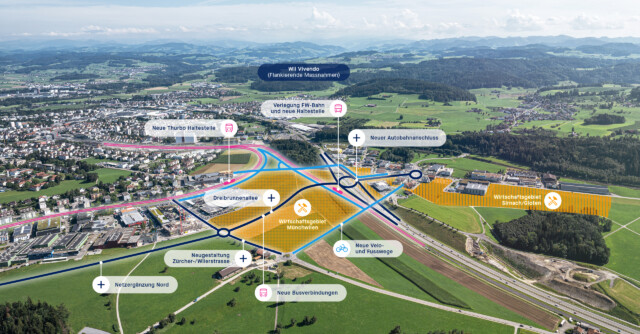
    With the sale of the land, St. Gallen is handing over a former estate of the Wil psychiatric clinic to the canton of Thurgau. In future, the economic area will be located entirely on Thurgau soil, but will remain within the immediate sphere of influence of the Will region. This creates a clearer starting position for investments, infrastructure and long-term settlement strategies.

    Concentration instead of urban sprawl
    Wil West stands for a model that keeps many regions busy, enabling economic growth without further urban sprawl. Instead of constantly scattering new commercial zones on the outskirts of towns, the location will in future concentrate companies, services and productive jobs in a location with good transport links.

    The plan is not just any old industrial area, but a modern work location. The aim is to create high-quality businesses that generate added value and skilled jobs without taking up an excessive amount of space. The development potential of the region will thus be utilized. For spatial planning, the project is therefore also an instrument for channeling growth instead of leaving it to chance.

    Infrastructure as a driver of development
    Wil West has a particularly strong impact through its infrastructure. With the project, the federal government, cantons and region are linking the expansion of the highway, public transport and pedestrian and bicycle connections. The planned freeway link to the A1 and better rail and bus connections will make the area attractive for companies and at the same time relieve pressure on the existing town centers.

    Sustainability as a location factor
    The first version of Wil West failed due to concerns such as loss of cultural land, traffic and ecological impact. In the revised version, sustainability plays a much more visible role. More compact construction methods, more careful land use and more green and open spaces are intended to reduce the ecological footprint.
    This is precisely what is becoming a location factor for companies looking to relocate. When choosing a location, more and more companies are looking at energy and land consumption, accessibility without a car and an attractive environment for employees.
    Wil West has the opportunity to set a new standard for work zones if quality assurance, phasing and criteria for settlements are consistently implemented.

    Seize opportunities, manage expectations
    With the yes vote for the proposal, expectations are now also rising. Politics and administration must pick up the pace without falling into a hectic pace. The region needs clear guidelines: which sectors should come? What density is desired? How can development be managed over decades without having to change strategy every time the economy changes?

  • New sales concept focuses on experience and encounters

    New sales concept focuses on experience and encounters

    Rohner is redesigning its sales area in Balgach. According to a statement from CEO Hermann Lion, the site will be expanded to include a new sales area and is set to open in September 2026. The aim is “a space that connects brands and people. A space that inspires, surprises and shows that modern retail is far more than just sales.”

    The traditional company, founded in 1873, is thus responding to its perception that “people are once again shopping more consciously and looking for real contact – after years in which much has become digital,” says Lion on request. “Brick-and-mortar retail has a future if it offers more than just a transaction.” This is why the textile company is “investing specifically in a concept that combines experience, quality and encounters. It is a statement for the strength of physical retail – and for our region”.

    The new sales area is being designed by Zurich-based Susanne Fritz Architekten: “Clear lines. Natural materials. Light that tells stories,” says Lion. Susanne Fritz has already renovated and extended the entire building complex in Balgach and put it to a new use. The entire brand identity of Rohner AG was modernized and also architecturally redesigned, including the existing store space. “Despite a lower density of racks, it was possible to increase sales per square meter,” according to a presentation of the work.

    According to Lion, something is now being created in the new sales area “that we have never seen before in our region”. Various brands are to be visible together at this location. Shop-in-shop concepts for other textile brands are planned, as well as for accessories, lifestyle products, outdoor and design brands. “It is important to us that the partners can tell a story and fit into the overall experience, whether they are local manufacturers or international brands with a clear attitude.”

  • St.Gallen prevents planning standstill in municipalities

    St.Gallen prevents planning standstill in municipalities

    In many St.Gallen municipalities, comprehensive revisions of structure and framework land use planning are currently underway, while in some cases the 1972 Building Act is still in force. As a result, no new planning principles could be implemented for years between the publication and approval of new land use plans, and important projects remained blocked. The IV. Amendment to the Planning and Building Act closes this gap and implements the motion to avoid a planning standstill. The aim is to ensure the municipalities’ ability to develop and at the same time create legal clarity.

    Two approaches for greater planning certainty
    The government is pursuing two approaches to achieve this. On the one hand, special land use plans that are still materially based on the old law can continue to be approved until the new framework land use plan has been approved by the Office for Spatial Development and Geoinformation. If such a plan is compatible with the future regulations, it can be converted into a PBG-compliant special use plan without having to restart the procedure. On the other hand, under the new law, special land-use plans may be published and approved as soon as the revised framework land-use plan has been published. Depending on their compatibility with the old law, they enter into force either immediately or only when the new plan comes into force.

    Extended deadline for local planning revisions
    In addition, the government is proposing to extend the deadline for adapting the municipal framework land use plan to the new Planning and Building Act from 2027 to 2030 across the board. Experience to date has shown that many municipalities are unable to complete their extensive planning work within ten years. The deadline can also be extended further on an individual basis upon justified request. The new provisions combine legal certainty with flexibility and thus form an important basis for orderly settlement development, reliable investment decisions and the implementation of the canton’s spatial planning objectives.

  • New court building for St.Gallen district court

    New court building for St.Gallen district court

    Since 1996, the district court of St. Gallen has been split between two locations. A solution that was never intended to last. While the offices are housed in the Bohl 1 property, the court sessions are held at Neugasse 3/5. This division not only makes work processes more difficult, but also no longer meets today’s requirements in terms of security and functionality. With the planned move to the Schützengasse 1 property, the court will finally have a modern and coherent home.

    A building for the future
    Schützengasse 1 is owned by the Canton of St. Gallen and will be extensively renovated and modernised for its new purpose. The feasibility study has confirmed that the building is ideally suited to the needs of modern court operations. By bringing all services together at one location, not only can work processes be simplified, but security requirements can also be implemented in line with the times. The current rental solution at Neugasse 3/5 will therefore become obsolete, which will bring long-term financial benefits for the canton.

    Financing and costs at a glance
    The total costs for the project amount to around CHF 27 million. This amount includes CHF 8.5 million for the transfer of the property from financial to administrative assets. The actual costs for the renovation and conversion of the building amount to CHF 19.5 million according to a rough cost estimate. This investment is supplemented by a one-off compensation payment of CHF 780,000 from the City of St. Gallen. The elimination of the rental costs for Neugasse 3/5 will also provide long-term relief for the canton’s finances.

    Start of construction and schedule
    The construction project is scheduled to start in 2027. Completion and occupation are planned for the end of 2028. In the foreseeable future, the District Court of St. Gallen will therefore have a building that not only meets current requirements, but also takes future developments in the justice sector into account.

    The largest district court in the canton
    With around 3,300 court cases a year, the district court of St. Gallen is the most important of the canton’s seven district courts. It deals with cases in the areas of civil and criminal law and has a well-established team of currently 43 permanent employees. These include district court judges, court clerks, clerical staff and auditors. In addition, 14 part-time district judges are involved in handling the cases. These extensive tasks require an infrastructure that fulfils today’s requirements for efficiency, security and flexibility.

    Security as an integral part
    In addition to merging the locations, the security system is a central element of the project. Court operations today must meet high standards in order to ensure the integrity of proceedings and the protection of all parties involved. The new property will be remodelled in such a way that these requirements are met and all security-relevant aspects can be taken into account.

    A win-win situation for everyone involved
    The planned relocation of the St. Gallen district court not only represents an upgrade for the judicial centre, but also a sustainable investment in the quality and future viability of the cantonal court system. The optimisation of processes, the modernisation of the infrastructure and the energy-efficient refurbishment are steps towards efficient and resource-saving operations. At the same time, the parties to the proceedings benefit from a modern environment that facilitates negotiations and processes within an appropriate framework.

  • New start-up centre promotes entrepreneurship in Uzwil

    New start-up centre promotes entrepreneurship in Uzwil

    A second startup space of the IFJ Institute for Young Entrepreneurs will be built on the site of the Uzwil grinding plant, which is located on the Bühler Group premises. Uze AG, the Bühler Group’s property and family office, is working with the IFJ to develop this part of the site on the Spickel between Bahnhofstrasse and Fabrikstrasse into an innovation hub. The IFJ has already been operating its first centre of this kind in Schlieren for ten years.

    According to Uze AG, the Mahlwerk in Uzwil will be a “lively place for start-ups, entrepreneurs and creative minds” from 2027, “with modern office & engineer spaces, events & meetings and plenty of room for innovation”. According to a statement from the IFJ, construction will begin on 12 June 2025.

    As part of the densification and renovation of properties, the Bühler Group relocated the space it used to the neighbouring main site. This freed up 18,680 square metres for something new. “Uze AG is opening a new chapter here with the Mahlwerk and continuing the industrial tradition with entrepreneurial vision, innovative strength and international networking,” says the IFJ.

    The Mahlwerk creates “space for growth, encounters and movement – and above all for visibility and strong connections to companies, experts, organisations and investors”. In addition to the space for start-ups and SMEs, there will also be premises for industrial and commercial enterprises.

  • Opening of the sound house at Schwendisee

    Opening of the sound house at Schwendisee

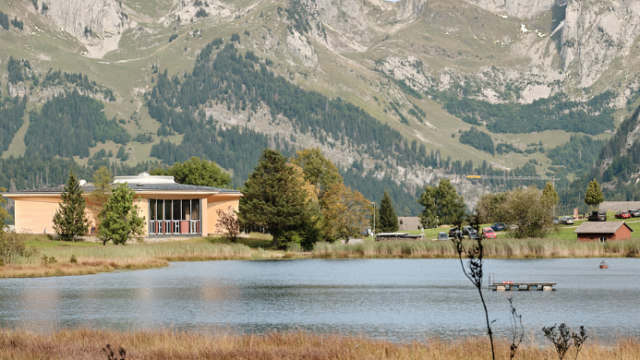
    With the Klanghaus, Toggenburg has gained a cultural landmark that radiates far beyond the region. Built from wood and embedded in the pre-Alpine landscape, the Klanghaus is not only an acoustic space, but also a platform for encounters, creativity and sound research. Four specially designed sound rooms and two outdoor stages offer space for rehearsals, concerts, workshops and sound experiments, open to professionals and amateurs alike.

    From idea to reality
    The vision of a building that makes sounds audible and tangible was sealed in 2019 with a referendum. After intensive political and social preparatory work, construction work began in 2022. With investments of 23.3 million Swiss francs, a project was realized that embodies progress in rural areas in an exemplary manner. The Klanghaus is an expression of courage and appreciation for the cultural heritage and innovative spirit of Klangwelt Toggenburg.

    More than just a building – an impulse for the region
    The Klanghaus has an impact beyond the artistic sphere. It strengthens cultural tourism, creates resonating spaces for new guests, revitalizes local businesses and inspires people to engage with sound, space and identity. As a bridge between tradition and modernity, it promotes social dialog in the heart of nature.

    Opening with a variety of sounds and encounters
    The public is invited to the grand opening weekend on May 24 and 25, 2025. The highlight is a music marathon with twelve hours of live concerts, from yodeling and gospel to youth music and indie rock. Admission is largely free and the Klanghaus will be an experience for everyone.

  • International platform for spatial planning

    International platform for spatial planning

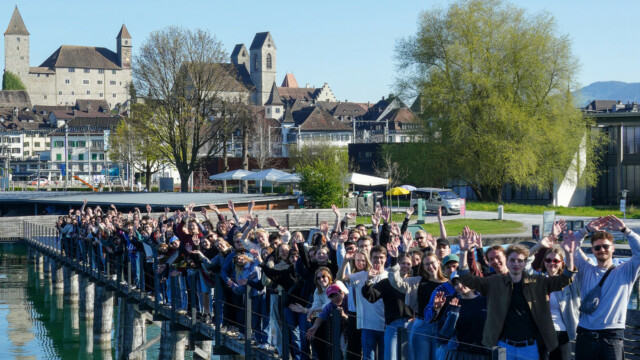
    Under the motto “P:ITte all change ‘Space & Mobility’ integrated”, the Eastern Switzerland University of Applied Sciences hosted its 76th meeting from April 9 to 13, 2025. Around 150 students of urban, transport and spatial planning accepted the invitation to Rapperswil-Jona. The meeting, organized by dedicated Bachelor students, offered a platform for international exchange, networking and professional discussions about the future of spatial and transport planning.

    Professional impetus for the transport turnaround
    The focus was on the question of how mobility can be designed sustainably and dovetailed with urban development in a meaningful way. Using specific examples from the region, the participants examined the Bahnhofstrasse in Rapperswil and the function of transport hubs such as Jona railroad station. The interactive workshops and excursions made it clear that successful spatial planning requires integrated solutions that consider settlement and transportation as a unit.

    Networking across national borders
    The Planners’ Meeting is the most important conference for students of urban and spatial planning in German-speaking countries. Organized on a rotating basis by the student councils, the meeting offers further professional training and valuable international networking. The next meeting will take place at the TH Lübeck and the HCU Hamburg and will continue the discussion on sustainable spatial concepts.

  • Renovation of Grütstrasse in Gossau for greater safety and noise protection

    Renovation of Grütstrasse in Gossau for greater safety and noise protection

    The Schlieren-based construction company STRABAG is renovating Grütstrasse in Gossau, according to a press release. The road, which is described as an important transport link, shows signs of damage to the carriageway. The road is now being renovated in order to modernise the infrastructure and improve road safety. “A central component of the measures is the structural redesign to increase safety for cyclists and pedestrians,” it continues. In addition, traffic noise is to be reduced with new 30 km/h zones. Completion is planned for the end of 2026.

    In addition to the renovation of the road surface, the project also includes other extensive work. The Gossauerbach stream, which runs under the greenway, will be upgraded to make it flood-proof. STRABAG is also renewing combined water pipes and drinking water pipes. Energy and shaft systems are being modernised and the infrastructure required for telecommunications is being expanded.

    “The renovation will provide the people of Gossau and all road users with greater road safety, modern infrastructure and improved flood protection,” says Remo Hürlimann, head of the construction department of the municipality of Gossau.

  • Photovoltaic system on the roof of the kybunpark stadium to be enlarged

    Photovoltaic system on the roof of the kybunpark stadium to be enlarged

    St.Galler Stadtwerke (SGSW) has expanded its photovoltaic system on the roof of the kybunpark football stadium, home to FC Gallen 1879, as detailed in a press release. A large proportion of the locally generated solar energy – around 440,000 kilowatt hours – will be used for events at the stadium. The symbolic inauguration of the system took place at FC St.Gallen 1879’s home match against FC Lausanne-Sport on 26 January.

    The roof is now completely covered with solar modules. The additional capacity of 572 kilowatts of peak power will enable 560,000 kilowatt hours more electricity to be generated. The total output of the system is now 1,205 kilowatts at peak times, increasing annual electricity production to more than 1 million kilowatt hours. This could cover the annual electricity needs of 288 four-person households.

    This increase in capacity, which will be implemented jointly by SGSW, Stadion St.Gallen AG and FC St.Gallen Event AG between September 2024 and January 2025, means that the system will retain its status as the “largest solar installation on a roof” in the city. The previous photovoltaic system was considered the largest when it was commissioned in 2015, with a peak output of 633 kilowatts and a production of 520,000 kilowatt hours per year.

  • St.Gallen freight station site underestimated development area

    St.Gallen freight station site underestimated development area

    Urban areas are under increasing pressure. Rising population figures and limited space call for innovative solutions. Areas behind railway stations in particular often remain unused, although they offer valuable potential for urban development. One example of a successful conversion is Europaallee in Zurich. However, while new urban neighbourhoods are already being created in many places, the future of the St.Gallen freight station site is still open.

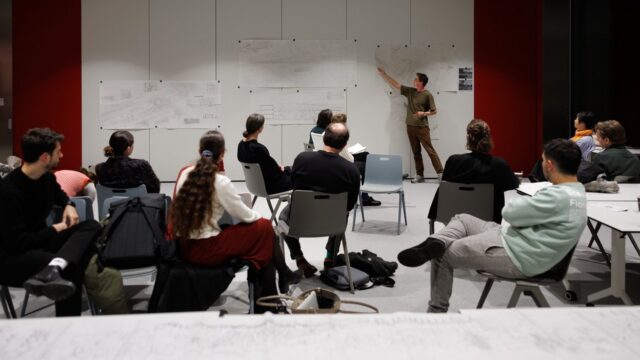
    Its development has been discussed for years, but different interests and perspectives have so far prevented a concrete realisation. This was the starting point for the course “Building the future – the importance of sectors for urban development”, which brought together architecture students from ETH Zurich with economics and sociology students from the University of St.Gallen.

    Interdisciplinary collaboration as the key to success
    The course combined architecture, urban sociology and economics to create a new approach to urban planning. “Architects of the 21st century learn from the building methods of the 20th century in order to develop sustainable models for the future,” explains Prof Momoyo Kaijima from ETH Zurich.

    The collaboration with sociologists and economists resulted in practice-oriented research that took into account not only urban planning concepts, but also social and economic aspects.

    Experiencing urban planning from new perspectives
    The students began their investigation with guided walks through the freight depot area, inspired by the sociologist Lucius Burckhardt’s “Spaziergangswissenschaften”. This method enabled them to experience the space not just as a planning object, but as a lived social place.

    “The study made it clear that even inconspicuous or derelict areas can play a decisive role in urban dynamics,” reports HSG student Livius Schönle.

    From observation to concept
    Based on interviews, observations and data analyses, the participants developed so-called “actor network drawings”, which they used to visualise complex relationships between the use of space, social groups and economic interests. Art painter Walter Dick also played a role in this, introducing the students to the basics of hand-drawing in order to visually represent their analyses.

    “The concrete experiences from the interdisciplinary collaboration show how important it is to be aware of the different ways of thinking,” emphasises Dr Niklaus Reichle from the University of St.Gallen. “Only if we think outside the disciplinary box can social challenges in dealing with space be tackled in a meaningful way.”

    Visions for sustainable urban development
    The students’ concepts ranged from multifunctional residential and working neighbourhoods to sustainable green spaces that integrate new recreational areas into the city. Some teams developed ideas for mixed-use buildings that combine social housing with commercial space, while others developed strategies for careful densification through innovative construction methods.

    A central theme was social integration: how can the freight depot area serve as a connecting element between existing neighbourhoods? How can open spaces be created that are both ecologically and socially valuable?

    Urban development as a joint task
    The research results emphasise that successful urban development requires more than just structural measures. Economic, social and ecological aspects must be considered together. The collaboration between ETH and HSG shows how different disciplines can learn from each other in order to make urban spaces sustainable and fit for the future.

    The city of St.Gallen could benefit from these findings: The freight yard site offers enormous potential for innovative neighbourhood development if the right course is set.

  • New facility management branch opened in St.Gallen

    New facility management branch opened in St.Gallen

    Hälg Facility Management AG will also have a presence in St.Gallen from the new year. The Zurich-based company, which was founded in 2000, is thus expanding its network to eastern Switzerland. It already has branches in Zurich, Bern, Münchenstein BL and Rotkreuz ZG. The company is part of Hälg Holding AG, based in St.Gallen. With 1144 employees at 27 locations in Switzerland, the group is active in building technology and property management.

    Markus Haldimann, the long-standing Managing Director of Hälg Facility Management AG, will take over the strategic management of the new branch, according to a company press release. Daniel Weber will be responsible for operational management as site manager. After training as a polymechanic, Weber completed a degree in facility management and continued his training in new energies. He will be responsible for providing services on site and further developing the St.Gallen team.

    “The expansion of our range of services here in St.Gallen not only strengthens our regional presence, it also offers our customers real added value,” Marcel Baumer, co-owner of the Hälg Group, is quoted as saying. “In addition to services in the area of building technology, we can now also offer our high service quality and expertise in the area of facility management.”

  • Using living space more efficiently through innovative collaboration

    Using living space more efficiently through innovative collaboration

    (CONNECT) Researchers at OST – Ostschweizer Fachhochschule want to optimize the use of living space through better collaboration. Their project WOGE – Wohnzukunft gestalten supports people who want to downsize their living space with local offers for moving, renovating or finding new flatmates, explains OST in a press release. For WOGE, the OST researchers are working together with the spatial development office Planteam S(plan:team) from Lucerne. The project is also supported by the Swiss Innovation Promotion Agency(Innosuisse) and the Federal Office for Housing.

    WOGE is to be implemented as a pilot project in Aarau, Köniz BE and St.Gallen. The project will kick off next year in the cantonal capital of Aargau. The results from Aarau will then be evaluated and optimized in the Bernese municipalities of Köniz and St.Gallen. Plan:team intends to offer the experience gained from the pilot municipalities to other municipalities as part of its consulting activities.

  • Planning started for new high-rise building in St.Gallen

    Planning started for new high-rise building in St.Gallen

    Schlieren-based property developer Halter AG has announced that it can begin concrete planning for a construction project with a high-rise building on Bogenstrasse in St. Gallen. The transformed site is set to offer a broad mix of residential, commercial and catering uses in the immediate vicinity of the railway station.

    The Expert Council for Urban Development and Architecture of the City of St. Gallen has approved the project draft drawn up by Halter AG in collaboration with architects Herzog & de Meuron and landscape architects Westpol for implementation in a special utilisation plan under planning law.

    According to Halter AG, there is now an indicative project ready for realisation that will serve as the basis for the upcoming parallel procedures such as the special land use plan procedure and the zoning plan amendment procedure. These are expected to take around 18 months.

    As the project progresses, the detailed design of the facades of the new high-rise building with around 80 flats will also be determined. Once the two procedures have been finalised, a planning application will be drawn up and the building permit process will begin. Construction is expected to start in 2027 if the project runs smoothly.

  • Takeover strengthens expertise in building technology

    Takeover strengthens expertise in building technology

    The Hälg Group, based in the St.GallenBodenseeArea, is taking over Oberhänsli AG Gebäudetechnik from Bütschwil, which specializes in construction planning and execution. According to a press release, the St.Gallen-based company intends to expand its market position in Toggenburg. In addition to opening up new markets, Hälg & Co. AG intends to expand its expertise in the area of air conditioning and ventilation by exchanging specialists.

    The current owners of Oberhänsli AG, Marianne and Peter Oberhänsli, will continue to run their company under the current name until the complete handover on January 1, 2026. Hälg will operate Bütschwil as an additional location. The Hälg Group will take on all 28 employees, including six apprentices, and continue to employ them.

    “We are delighted to have found a strong and future-oriented succession solution in the Hälg Group,” Marianne and Peter Oberhänsli are quoted as saying in the press release. “We particularly appreciate the fact that our values and those of the Hälg Group are very much in line, which gives us the certainty that our company will continue to be managed in the best hands. We are confident that our employees will have optimal development opportunities and will continue to work in an environment that values their dedication and commitment.”

  • Expansion of the production site in Oberriet

    Expansion of the production site in Oberriet

    Jansen, the steel systems supplier based in the St.GallenBodenseeArea, is planning to significantly expand the production site at its headquarters in Oberriet. According to the company, several million Swiss francs are to be invested in this. According to Jansen, this investment is a “clear commitment to the Oberriet site”. It is also intended to strengthen the company’s competitiveness.

    Jansen is planning to expand and rebuild several production halls in which window, door and façade elements will be manufactured. Their production had previously been carried out in the buildings of the acquired Rino Weder AG, but these have now become too small. Jansen will give up the former Rino Weder site in 2026. Instead, “ideal and state-of-the-art production conditions will be created” in the company’s own buildings.

    In addition, work will begin in mid-2025 on the installation of a modern powder coating facility, which is scheduled to go into operation in early 2026. This new production facility will replace the previous Rino Weder AG site. It is expected that the new facility will be able to coat up to 1600 square meters of surface every day. In addition to coating its own products, Jansen will also offer contract coating for external orders.

    In addition to the expansion of the production facilities, Jansen also intends to expand the company’s logistics area, according to the press release. In this context, the company plans to set up a pallet and small parts center with modern conveyor technology, self-propelled transport systems and modern workstations.

  • New innovation center for grain processing opened

    New innovation center for grain processing opened

    Bühler’s network of application and training centers in Uzwil has been expanded to include the new Grain Innovation Center(GIC). The technology group’s five-storey building covers 2000 square meters with state-of-the-art infrastructure and 70 machines from Bühler and partners for processing grain and pulses.

    The GIC serves as an innovation incubator for Bühler’s customers from the milling industry, where they can experiment and innovate. “At the GIC, customers will find a unique environment in which they can develop customized processes and experience first-hand the extensive possibilities of Bühler’s diverse portfolio,” said Stefan Birrer, Head of Business Area Milling Solutions, in a press release.

    In addition to a wide variety of grains and pulses, the food trials possible there also include herbs, spices, coffee, nuts and insects, at up to 5 tons per hour. “One of the main advantages of the GIC is that it can not only provide detailed data that enables continuous and precise monitoring of the process, but also track the physical and chemical properties of the product at every stage of production and under different process conditions,” says Lothar Driller, Department Manager Feed Application Center and Training.

    The GIC is part of Bühler’s Application and Training Center(ATC) landscape. This includes the four recently opened ATCs – the Centers for Flavor Creation, for Food Creation, for Protein Application and the Energy Recovery Center – as well as other centers that have already been in operation for several years, such as the Extrusion Application Center and the Pasta Application Center.

  • OST graduates predict solar yield

    OST graduates predict solar yield

    Two graduates of the CAS Energy Digital at the OST – Eastern Switzerland University of Applied Sciences have developed a new tool that can accurately predict the energy yields of photovoltaic (PV) systems. In addition, the data from the systems can be easily and intuitively managed and clearly visualized, according to a press release from OST. This would enable both companies and private individuals to increase the efficiency and profitability of their systems.

    One of the two, Lukas Loser, is quoted as saying that it is “extremely important” for energy suppliers in particular to know when which system is producing how much. This has an influence on the use of power plants and electricity schedules, among other things. This knowledge therefore serves to ensure grid stability and as an important basis for trading activities. “The more accurately you can forecast the portfolio of a PV system, the more optimally the aforementioned processes can be carried out. A good forecast therefore helps both electricity producers and end customers financially.”

    The same applies to private individuals, adds Dimitri Gysin. He developed this tool together with Loser as part of a project. “Precise forecasts can be used to plan the use of appliances with increased energy consumption or to charge an electric car when a lot of energy is available.”

    Both see room for improvement in the accuracy and variety of the meteorological data used. According to the OST, it is quite possible that the forecasting tool will soon be further developed by other students as part of a Bachelor’s or Master’s thesis.

  • New height-adjustable desk brings more flexibility to everyday school life

    New height-adjustable desk brings more flexibility to everyday school life

    Lista Office LO, based in Degersheim, has expanded its LO Education system to include a version of the LO Solo table. The table is mobile and infinitely height-adjustable and is now also available with a lower adjustment range, according to a press release from the internationally active manufacturer of office furniture. This means that the LO Solo table can also redefine teaching methods in primary schools. LO Education is a convertible table system for individual or group workstations.

    According to Lista Office LO, the furnishing system fulfils the requirements of modern school life by being quiet, quick and flexible to reconfigure. This has become necessary as the traditional form of frontal teaching has given way to independent thinking, creativity and communication. “The new diverse forms of teaching are only possible with a flexible set-up,” it says.

    Other elements of LO Education include tables and movable walls that can be grouped into different shapes thanks to castors. With the help of a magnetic solution, these can be connected to each other without tools and with little noise. According to the company, the LO Solo tables are equipped with holders for material boxes.

  • Modernised lounge opened at St.Gallen-Altenrhein Airport

    Modernised lounge opened at St.Gallen-Altenrhein Airport

    The People’s Passenger and Crew Lounge at St.Gallen-Altenrhein Airport has been extensively renovated, according to a statement from the operating company People’s Air Group. The focus was on giving the space a fresher and more modern look and substantially raising the quality standard, the statement continues. A new design concept was developed together with the interior design firm Jürgen Krämer from Lustenau in Vorarlberg, Austria. The work was completed in three weeks.

    According to the press release, the entire interior was redesigned, from the choice of colours to the furnishings and fittings through to the technology. There are armchairs and sofas for relaxing. A work area has also been set up with a high table, bar stools and plenty of power sockets. It should enable customers and guests to work productively during their stay at St.Gallen-Altenrhein Airport.

    Access to the People’s Lounge is included in the People’s and Full Flex fares or can be purchased directly at check-in. A large selection of hot and cold drinks is available free of charge, supplemented by various snacks, according to the press release.

    There is a direct connection from St.Gallen-Altenrhein to Vienna as well as flights to more than a dozen holiday destinations in the Mediterranean region.

  • Precision and efficiency: new software for interior fittings

    Precision and efficiency: new software for interior fittings

    Leica Geosystems, the precision equipment manufacturer based in the St.GallenBodenseeArea, has introduced new software for measuring and constructing objects. The Leica iCON trades software, which is supported by artificial intelligence, can be used to accurately measure rooms and objects, as well as create 2D or 3D models as digital templates, according to a statement from the Swedish Hexagon company. The programs cover the entire measuring and marking out process in interior design. Leica iCON trades is suitable for carpenters, kitchen and stair builders, metalworkers, stonemasons and glaziers. The developed solutions allow high-precision measurements even on polished surfaces and glass. Thanks to the flexible laser distance measurement and efficient line and surface scans and the use of six degrees of freedom (6DoF) technology, which was previously only used in industrial metrology, users can carry out precise measurements and constructions.

    Precise measurements can be taken in interior construction and construction diagrams can then be processed using CAD software. In template manufacturing, accurate templates can be created from 2D or 3D measurements and then sent to CNC machines for production. “Both workflows eliminate manual and error-prone measurements, reduce waste and rework and improve efficiency on site,” Agata Fischer, Head of Building Field Solutions at Hexagon Geosystems, is quoted as saying in the press release. “Leica iCON trades speeds up interior construction and digital template production while providing a highly accurate fit that meets professional requirements. With this groundbreaking solution, we are bringing innovation and added value to our customers and replacing traditional and analog measurement methods.”

  • New wind turbine planned for Flumserberg

    New wind turbine planned for Flumserberg

    Axpo, headquartered in Baden, is starting initial investigations into a possible wind farm on the Flumserberg in the canton of St. Gallen. It could comprise up to six wind turbines. According to a press release, the energy company will install a wind measuring mast this week. This will be used to collect wind and bat data over the course of a year.

    The data collected will serve as the basis for the next project steps and detailed planning. The local community of Flums-Dorf and the Alpkorporation Mols have given their consent for the erection of the wind measuring mast. The 120 metre high mast will be erected on the Grappenchöpf site, a location that Axpo believes offers promising wind potential.

    The electricity produced from the wind farm would be equivalent to the consumption of over 10,000 households. According to the information provided, it could fill the winter gap, as two thirds of electricity production takes place in winter. As Axpo goes on to explain, a wind farm on the Flumserberg would not only help to reduce CO2 emissions and utilise a sustainable, renewable energy source, but would also provide an economic boost for the region.

  • Degersheim elementary school relies on Lista Office LO

    Degersheim elementary school relies on Lista Office LO

    Lista Office LO has refurnished four classrooms at the elementary school in Degersheim in time for the start of school in mid-August, the internationally active office outfitter based in the same town announced in a press release. The agile furnishings in the Steinegg school building are intended to enable new ways of creative teaching and motivated learning, Lista Office LO explains in the project description. “Modern teaching is based on a variety of didactic methods,” says principal Stefan Gübeli. “With the new furniture, this diversity can simply be lived.”

    For class teacher Madlene Keller, it is important to be able to implement different forms of learning without major alterations. “It is important not to disturb the other children while setting up learning settings,” Keller is quoted as saying in the press release. “The ideal furniture must therefore be able to be moved and rearranged quickly, quietly and easily by both teachers and pupils.”

    For the new furnishings in Degersheim, the elementary school was able to test various pieces of furniture extensively before purchasing them. “This gave us the certainty that our pupils would be able to work well with the new furniture and would enjoy working with it,” explains Keller. “My perception of the new furniture is that the classrooms have a noticeably different atmosphere.” Specifically, the class teacher notices an airier and lighter overall design with lots of open spaces. In her opinion, this has “noticeable positive effects on the thinking and motivation of the learners”.

  • New battery storage system for Gossau ensures grid stability

    New battery storage system for Gossau ensures grid stability

    Axpo has installed and commissioned a battery storage facility with a capacity of 2.5 megawatts on the site of the Gossau municipal utility. The municipal utility now has the largest battery storage facility in the region, explained the Aargau-based energy company in a press release. According to the press release, the storage facility is tailored to the specific needs of the municipality of Gossau and the region’s grid topography. The press release does not provide any information on the financial scope of the project.

    Stadtwerke Gossau intends to use the battery storage system to compensate for fluctuations in demand and power peaks. It will also process reactive power and contribute to maintaining the grid voltage in the region. It will also help to stabilise the grid in the region by providing system services for the national grid company Swissgrid.

    The new battery storage system is capable of stand-alone operation and black start. This means that in the event of a power outage, it can autonomously restore the power supply for units connected to island operation. Relevant companies for maintaining the supply to Gossau can take advantage of this. “What was initiated in 2019 with a parliamentary initiative can be demonstrated five years later,” says Claudia Martin, City Councillor and Head of the Supply Security Department of the City of Gossau, in the press release. “An energy storage facility that guarantees Gossau’s security of supply.”

  • Purchasing organisation generates its own electricity in St.Gallen

    Purchasing organisation generates its own electricity in St.Gallen

    The purchasing organisation of the Swiss automotive and motor vehicle industry(ESA) has completed its own power supply network with a third system, according to a press release. On Thursday, 15 August, a photovoltaic system was put into operation at the ESA site in St.Gallen. ESA launched the first two systems at its headquarters in Burgdorf four months ago and in Giubiasco a month ago.

    With around 1,800 modules and around 3,500 square metres, the photovoltaic system in St.Gallen is currently ESA’s second-largest system. The amount of electricity generated in future will roughly cover the annual consumption of 150 households. The plant in Burgdorf covers 200 households, the one in Giubiasco around 25 households.

    The ESA purchasing organisation was founded in 1930. As a co-operative, it is owned by around 7000 co-owners from the automotive and motor vehicle industry. Around 670 employees, including around 60 apprentices, work at eleven locations throughout Switzerland.

  • Demand for residential property picks up

    Demand for residential property picks up

    Raiffeisen Switzerland sees a turnaround in the residential property market. The banking group examined developments on the property market in its study “Real Estate Switzerland – 3Q 2024″. “Demand for residential property has largely recovered following its slump in the wake of the sharp rise in interest rates,” Fredy Hasenmaile, Chief Economist at Raiffeisen Switzerland, is quoted as saying in a Raiffeisen press release on the study. “In addition to the return of the housing cost advantage over renting as interest rates fall again, excess demand is now also spilling over from the rental property market into the owner-occupied property market.”

    However, according to the experts at Raiffeisen Switzerland, the resulting increase in supply will not be met by construction activity, but only from existing properties. They therefore expect that the shortage on the residential property market will only be alleviated in the short term. “The more liquid supply and more confident buyers are beginning to be reflected in a higher number of property changes,” explains Hasenmaile. The majority of properties are being sold at the prices desired by the sellers. In the medium term, the chief economist at Raiffeisen Switzerland therefore expects prices to rise more strongly again.

    According to the experts, an increasing supply of new buildings is being countered by the densification process, in which new residential buildings are primarily being built in place of old properties. Hasenmaile believes that the vacancy rate on the rental flat market will soon fall below 1 per cent. The increase in annual growth in asking rents to 6.4 per cent in the second quarter of 2024 is also evidence of excess demand.

  • New partnership promotes regional networking in Eastern Switzerland

    New partnership promotes regional networking in Eastern Switzerland

    The St.Gallen-based association IT rockt! and collektiv AG will be working together in future. According to a press release, IT rockt! Will move into premises in the coworking space collektiv (st.gallen). This means that IT rockt! will be “at the centre of events”, which will also enable the Eastern Switzerland IT cluster to expand its offering for members and employees. From September, IT rockt! will also be more flexible than before when organising events at collektiv (st.gallen).

    According to the press release, the collaboration between the two organisations will promote local exchange. This will promote regional networking. “We are very much looking forward to working with collektiv (st.gallen)”, Eva De Salvatore, Managing Director of IT rockt!, is quoted as saying in the press release. “The stimulating atmosphere creates ideal conditions for our IT community, and the region will benefit from such an enriching programme.”

    “It’s great to have a partner like IT rockt! at our side,” adds Majid Parente, founder and CEO of collektiv AG.

  • University of St.Gallen installs new photovoltaic system

    University of St.Gallen installs new photovoltaic system

    The University of St.Gallen(HSG ) will be installing another photovoltaic system this summer. According to a press release, the new system will be installed on the roofs of the Alumni House and the Hans Ulrich Auditorium on the grounds of the Holzweid Continuing Education Center(WBZ). With this new installation, the HSG is underlining its efforts to achieve net-zero climate neutrality by 2030, according to the press release.

    The plant will be financed, built and operated by St.Galler Stadtwerke (sgsw). It is expected to generate an annual output of 83,000 kilowatt hours, which, according to HSG, corresponds to the annual requirements of 20 single-family homes. The roof areas used were determined by HSG students in a Master’s project and examined for their suitability.

    “We are delighted that the plant can be realized after a long period of planning,” Michael Domeisen, Managing Director of the HSG Foundation, one of the owners of the WBZ buildings, is quoted as saying in the press release. “It is important that as many of us as possible make a contribution to sustainable electricity production. The roofs are ideally suited for the construction and operation of a photovoltaic system.”

  • Four eastern Swiss cantons strengthen cooperation for a networked future

    Four eastern Swiss cantons strengthen cooperation for a networked future

    On July 4, 2024, the governments of the cantons of St.Gallen, Appenzell Ausserrhoden, Appenzell Innerrhoden and Thurgau signed a declaration on closer strategic cooperation. This step marks the start of an intensive cooperation process aimed at strengthening and networking Eastern Switzerland. The joint declaration underlines the commitment of the four cantons to work together to find and implement solutions to common challenges.

    Joint commitment to the Lake Constance region
    The four cantons had previously announced that they would work together to establish the international Lake Constance region at a national level as part of the Swiss Spatial Concept. This project was positively received by the economy and the public and highlighted the potential of closer cooperation to strengthen Eastern Switzerland as a whole.

    Strategic fields of action and annual discussions
    The declaration raises cooperation to a strategic level. The governments of the four cantons will discuss fields of action for cooperation on an annual basis and evaluate the potential for cooperation. Employees of the administrations are invited to submit proposals and participate in the selection of areas for action.

    Possible strategic fields of action include spatial development, transport, education and culture, innovation and digitalization, natural hazard prevention, crisis management and security. The cantons hope that strategic cooperation will lead to more efficient and effective solutions in these areas.

    Flexible cooperation models
    Cooperation can take different forms depending on the needs and situation. Solutions can either be implemented jointly by all four cantons or by two or three cantons. Other cantons, particularly from Eastern Switzerland, can also participate in projects. Each canton decides individually whether a joint solution makes sense for it and offers added value.

    Institutionalization of cooperation
    A central concern of the governments is to start the process of strategic cooperation and then institutionalize it. By taking this step, the four cantons are sending out a strong signal for closer cooperation and a networked future for Eastern Switzerland.

    The signing of the declaration on closer cooperation marks an important milestone on the way to a stronger and more efficient Eastern Switzerland. Together, the cantons want to overcome challenges and develop the region sustainably.

  • Stefan Kölliker, President of the Government of St. Gallen, is a strategic new member of the Board of Directors

    Stefan Kölliker, President of the Government of St. Gallen, is a strategic new member of the Board of Directors

    As part of the reorganisation, which is accompanied by a focus on construction, capital and pensions, Hans Klaus, a long-standing member of the Board of Directors, has announced his retirement. This step follows the successful implementation of the company’s strategic realignment, which Klaus has played a key role in shaping since 2021. His departure marks the end of an era in which he made significant contributions to the development and positioning of Admicasa.

    New impetus from Stefan Kölliker
    With the appointment of Stefan Kölliker, who has in-depth knowledge of politics and business, Admicasa is focusing on a continued innovative and interdisciplinary strategy. Kölliker’s experience from his time as Head of the Department of Education and President of the Government of St. Gallen is particularly valuable for future projects and challenges, such as combating the housing shortage.

    Kölliker himself emphasises the innovative potential of the company and the opportunity to actively contribute his broad knowledge. His vision of tackling cross-industry problems with new approaches is highly valued by Serge Aerne. Aerne sees Kölliker not only as a successor, but also as a driving force who will enrich the company with his extensive network and his political and economic expertise.

    Outlook and strategic goals
    With the integration of Stefan Kölliker into the Board of Directors, Admicasa is pursuing the goal of further expanding its market-leading position. Kölliker’s background and strategic mindset are key to setting the course for a successful future and leading Admicasa into a new phase of growth and innovation.

  • Market presence expanded through takeover of a competitor

    Market presence expanded through takeover of a competitor

    SFS, a manufacturer of precision and fastening components based in the St.GallenLake Constance area, has acquired the Madridbased company Etanco effective May 1, 2024. According to a press release issued by the Group, SFS is thus expanding its market position in Spain and Portugal.

    Etanco, founded in 1984, is a specialist distributor of fasteners, fixings and other products for the building envelope. The company also offers services such as consulting, design and planning. The acquisition of the company with its ten employees strengthens the position of SFS’s Construction division and enhances its competitiveness by expanding its portfolio, according to the press release.

    Etanco generated sales of 4 million euros in 2023.