Category: Freiburg

  • Rethinking building, Freiburg is looking for pioneers

    Rethinking building, Freiburg is looking for pioneers

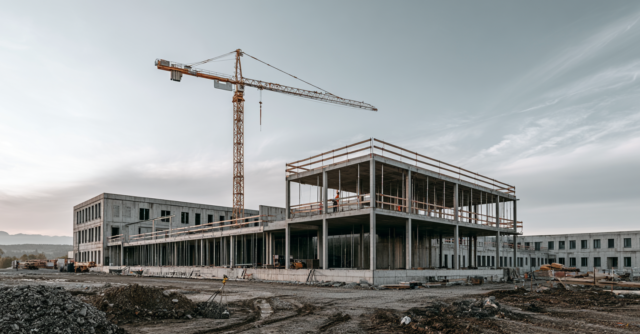
    From 2029, new limits for greenhouse gas emissions and requirements for gray energy in the construction industry will apply in Switzerland. Defined by the revision of the cantons’ model regulations in the energy sector. The pressure on the construction industry is growing. Those who do not invest in new processes and materials today risk expensive adjustments under time pressure tomorrow. The canton of Fribourg has recognized this and is acting with foresight. As early as 2023, it adopted a roadmap for the circular economy that prioritizes structural changes in the construction industry.

    Innovation along the entire value chain
    The theme of this year’s call is “Rethinking construction, towards circular and environmentally friendly systems”. We are looking for projects that reduce the ecological footprint of buildings right from the planning phase, through local bio-based materials, deconstructable construction systems or digital tools for material tracking. The Swiss Charter for Circular Construction, which is supported by twelve leading organizations from the construction and real estate industry, clearly formulates the goal: “By 2030, the proportion of non-renewable primary raw materials should fall to 50 percent of the total mass.”

    Collaboration as a prerequisite
    Lone wolves have no chance here. Each project submitted must involve at least three companies, the majority of which must be based in the canton of Fribourg. Academic partners such as the School of Engineering and Architecture HTA-FR can be involved to ensure knowledge transfer and reproducibility of the solutions. Nicolas Huet from INNOSQUARE emphasizes that the challenges of circularity must be overcome and that innovation must take place jointly.

    Funding with personal responsibility
    The NRP funding covers a maximum of 65% of the total budget, the rest is covered by the participating companies, 10% in cash and 25% as personal contributions. This structure is not an obstacle, it is the program. It ensures that only projects that the companies really support are submitted. Alain Lunghi, Deputy Director of the WIF, sees foresight as the key to the competitiveness of Fribourg companies.

    Submit now
    Projects can be submitted individually or as part of a consortium via www.promfr.ch/de/nrp. The call is supported by the Economic Development Agency WIF, the Fribourg Chamber of Commerce and Industry, the HTA-FR and the INNOSQUARE innovation platform. The deadline is September 9, 2026. Anyone who sees the construction turnaround as an opportunity still has time to act.

  • Tour Invictus new face for Fribourg

    Tour Invictus new face for Fribourg

    The Tour Invictus marks a turning point in Fribourg’s urban development. It increases the density of living space upwards instead of continuing to grow outwards. The project is a response to scarce land, changing household structures and an ageing population.

    At the same time, the tower raises the question of identity. How much “high-rise” can a medium-sized Swiss city tolerate? The building will be visible from the city and from afar. It will thus become a symbol of a new phase of urban development that rebalances density, mobility and quality of life.

    New forms of housing instead of classic perimeter blocks
    The mix of uses is clearly geared towards housing, but is finely graduated internally. On the lower floors, there will be apartments suitable for the elderly with assisted living facilities. On the upper floors are privately financed condominiums with expansive views and a high quality of living.

    This vertical mix replaces the classic perimeter block with separate buildings for different target groups. It brings people with different lifestyles together in the same building. For operators, owners and urban planners, this opens up new options for services, neighborhood connections and community building.

    Creating quality of stay
    A tower of this height always provokes the same question. Will density become a burden or a quality? The decisive factor is the design of the transitions. The street level, first floor and surroundings must maintain the scale for pedestrians. Green outdoor spaces, a clear address and legible entrances determine whether the tower is perceived as a foreign body or as a natural part of the neighborhood.

    What counts inside is the sense of spaciousness. Daylight, room heights, private outdoor spaces and views are the counterbalance to the large number of units. Where open spaces are deliberately moved indoors, for example with communal rooms, roof terraces or usable arcades, identification is created instead of anonymity.

    Opportunities for the city
    For the city of Fribourg, the Tour Invictus is both an opportunity and a test case. It shows how investors, planners and authorities deal with densification targets. The handling of traffic, development, shading and the neighborhood will be closely monitored. If the project is successful, it will strengthen the acceptance of further vertical densification.

    At the same time, the area of tension remains visible. A high-rise triggers discussions about the skyline, character and social mix. Managers in administration and the real estate industry are called upon to actively moderate this debate. Clear narratives are needed as to why density does not mean sacrifice, but rather enables new forms of urbanity.

  • Fribourg.swiss brand strengthens international position

    Fribourg.swiss brand strengthens international position

    The canton of Fribourg is sharpening its profile in global competition. With fribourg.swiss, the economic development agency is focusing on a clearer and internationally recognisable brand. The new platform is aimed specifically at companies, investors and innovation players in Switzerland and abroad. Thanks to the official domain extension “.swiss”, the affiliation to Swiss quality standards is emphasised in a compact, accessible and strong brand.

    Making excellence visible
    “fribourg.swiss is our strategic showcase to the outside world,” says WIF Director Jerry Krattiger. The focus is on companies, educational and research institutions as well as centres of excellence that shape the economy of the canton of Fribourg. Topics such as the bioeconomy, Industry 4.0, life sciences and technology transfer demonstrate the diversity and future viability of the location.

    Multi-channel communication for maximum reach
    The new brand is already active on all external channels, from the website to newsletters and international LinkedIn activities. The content is distributed worldwide via embassies, consulates and specialist networks. At the same time, the new brand identity also strengthens the internal perception of the economic strengths and creates a shared awareness within the canton.

    Visibility and identification
    With fribourg.swiss, the canton of Fribourg is opening a new chapter in location marketing. One that focuses on digital clarity, international reach and regional anchoring. The canton’s economic dynamism is thus becoming more visible and more widely recognised, both within and outside Switzerland.

  • Freiburg defies global uncertainties

    Freiburg defies global uncertainties

    Despite global turbulence, increased protectionism and new tariffs imposed by the US government, Fribourg’s economy is holding its own with impressive stability. The Economic Development Agency of the Canton of Fribourg supported a total of 32 business projects in 2024, including 16 new relocations. These projects secure over 1,000 jobs and create 527 new jobs in the medium term, combined with investments of CHF 116 million.

    Employment growth in the canton is now outstripping population growth. Fribourg’s gross domestic product rose by 27.5 % between 2011 and 2024. A clear sign of sustainable value creation despite global uncertainties.

    Successful location development and investments
    The new settlements are equally divided between Swiss and international companies, including those from Belgium, Brazil, Germany, France, Ireland, Italy and the USA. At the same time, the new cantonal implementation program 2024-2027 of the new regional policy was launched, which sets strategic priorities in the bioeconomy, digital transformation, Industry 4.0, tourism and entrepreneurship with 19 funded projects.

    For Olivier Curty, State Councillor and Director of Economic Affairs, these results underline the relevance of a consistently pursued economic strategy that strengthens Fribourg as a business location even in challenging times.

    bluefactory and EPFL as engines of growth
    The bluefactory innovation quarter is developing rapidly. With the inauguration of Building B and its almost complete occupancy by 17 companies and 340 workplaces, Fribourg is being further strengthened as a technology hub. At the same time, EPFL is expanding its commitment – six new chairs in the field of sustainable construction are to be created by 2030. Construction of the new Smart Living Lab experimental building is scheduled to begin in 2025.
    This dynamic consolidates Fribourg’s position in the field of the built environment and underlines the canton’s commitment to sustainability and innovation.

    Strategic successes in the life sciences sector
    A milestone in 2024 was the establishment of Cellap Laboratoire AG in Châtel-Saint-Denis. With more than 4000 m² of production space and ambitious growth targets in international markets, the company is providing new impetus in the cell cosmetics sector. The life sciences are becoming the mainstay of Fribourg’s economy and already account for 10% of the canton’s GDP – a result confirmed by a study by BAK Economics.

    Jerry Krattiger, Director of the WIF, emphasizes that the bioeconomy and life sciences remain strategic priorities. At the same time, other key areas such as Industry 4.0 are being actively promoted in order to further expand the canton’s economic diversity and resilience.

    Vigilance and adaptability as success factors
    The Department of Economic Affairs and Vocational Education and Training remains vigilant in the face of global uncertainties. With proven instruments such as short-time work compensation, Fribourg is able to react quickly to economic fluctuations and ensure the stability of the economic structure.

  • Real estate monitor creates market transparency in the canton of Fribourg

    Real estate monitor creates market transparency in the canton of Fribourg

    The Fribourg Real Estate Monitor is a pioneering example of how data-based analyses can make the rental housing market more transparent and controllable. In the cities of Fribourg, Bulle and Estavayer, the new monitoring system provides detailed insights into availability, rental price trends and fluctuation rates for the first time. Differentiated by apartment type and neighborhood.

    The monitor was developed by the Fribourg School of Business, which guarantees an independent scientific basis. The result is a tool that investors, planning authorities, location promoters and real estate developers alike can use to make well-founded decisions.

    Partnership for data quality
    The strength of the Real Estate Monitor lies in its public-private sponsorship. 18 players in the regional real estate industry have joined forces under the motto “More knowledge, better action”. This cooperation makes it possible to collect market data directly from letting practice. A novelty in this level of detail.

    The results are updated quarterly and made publicly available. Their flexible preparation allows for individual analyses for a wide range of user groups. This approach not only creates transparency, but also promotes trust, location development and future-oriented investments.

    Recognizing the changing housing market
    Since the second quarter of 2022, the monitor has shown a decline in the availability of rental apartments in all three pilot regions. Differences depending on apartment size and neighborhood are particularly striking. While smaller apartments are still relatively readily available in Fribourg, the situation is tighter for larger properties, particularly in the Schönberg district. In Bulle, on the other hand, rents for larger apartments are higher than in Fribourg, accompanied by higher fluctuation rates.

    This detailed depth of data makes it possible not only to track current developments, but also to identify future trends at an early stage. A decisive advantage for players operating in a changing market.

    Model for Switzerland
    With the support of the Federal Office for Housing, the project shows how regional markets can be analyzed on the basis of data and made transparent. A guideline based on the project is already available and offers other regions a structured template for imitation.

    The Fribourg Real Estate Monitor is therefore more than just a technical tool; it is a strategic instrument for sustainable location development and professional real estate management in Switzerland.

  • Saane water to heat Freiburg

    Saane water to heat Freiburg

    By 2027 at the latest, water from the Saane will cover 10 per cent of the heat demand in the Fribourg area, Groupe E announced in a press release. The energy supplier from Granges-Paccot is planning to build a three-part infrastructure to generate around 60 gigawatt hours of renewable thermal energy per year. This is enough to cover the needs of around 7500 households.

    The PLACAD project provides for the expansion of the existing heating centre on the former Ritter site. In future, three water-to-water heat pumps will operate here. They will be supported by two gas boilers in winter or in an emergency.

    The associated pumping station is planned in the Magere Au dam building. The connection between the heating centre and the pumping station is via two parallel pipes, each 1.2 kilometres long. They run through the Perolles forest, under the tennis courts of the Heilig Kreuz college and across the Saane.

    The pipeline route will partly follow existing paths, but any environmental impact will be compensated for, Groupe E explains. This includes plans to extend the Lake Perolles nature reserve to include an island of old woodland. Groupe E will provide information online about any adverse effects on leisure activities in the Perolles forest. The corresponding website also provides an insight into the development of the project.

  • Takeover secures jobs and orders in Freiburg

    Takeover secures jobs and orders in Freiburg

    Burkhalter is stepping into the breach at Etablissements Techniques Fragnière SA, based in Bulle, which has run into financial difficulties. The Zurich-based building technology specialist will take over the business and employees at ETF’s sites in Bulle and Givisiez, Burkhalter announced in a press release. Specifically, 117 employees, including 32 apprentices, will be taken on under the same conditions that apply to them at ETF. Burkhalter intends to use them to fulfil the majority of ETF’s orders at the two Fribourg sites.

    Burkhalter has founded the two companies Bul Elec SA and Fri Elec SA for the takeover. They are intended to strengthen the building technology company’s presence in the canton of Fribourg. In addition, Burkhalter is “now in a position to offer its customers in the canton of Fribourg the entire portfolio of electrical engineering services”, according to the press release. Laurent Murith and Frédéric Bourguet will take over the management of the new companies. Both were previously branch managers at the respective ETF locations.

  • Kerzers inaugurates district heating

    Kerzers inaugurates district heating

    Groupe E inaugurated its new district heating plant in Kerzers with open days on 15 and 16 November. According to a press release, the plant will have a capacity of 31 megawatts when completed and can therefore generate 61,000 megawatt hours of heat per year. The heat will be supplied to over 90 households, vegetable growers, the Papiliorama and public buildings.

    The plant will be heated to 90 per cent with wood chips from the region. This will save around 9000 tonnes of CO2.

    It is the third-largest district heating plant of the Fribourg energy supplier after the one in Fribourg and in the Entre-deux-Lacs region.

  • Energy contract signed for sustainable neighbourhood in Romont

    Energy contract signed for sustainable neighbourhood in Romont

    Granges-Paccot-based energy supplier Groupe E and KAAB have signed an energy contract for the La Maillarde neighbourhood in Romont. According to a press release, the 40-year contract covers the supply and utilisation of internal waste heat, the provision of a microgrid infrastructure and the installation of solar modules. Groupe E will supply energy to the site on behalf of KAAB, which will ensure the operation, maintenance and financing of the systems.

    Heat is supplied via the district heating network of the municipality of Romont. The network managed by Groupe E is mainly fuelled by wood chips from local forestry and waste heat from the roasting systems at the Nespresso plant. A gas-fuelled auxiliary heating system is provided for long periods of cold weather.

    The electrical system is controlled by the neighbourhood’s own microgrid. This is fed by a photovoltaic system with an output of one megawatt. It generates around one gigawatt hour of electricity per year.

    The La Maillarde neighbourhood, which is owned by KAAB, was used by the multinational company Tetra Pak until 2016. From 2025, watch manufacturer Rolex will set up shop there, creating around 250 new jobs in the region. The final La Maillarde project envisages an area of 40,000 square metres. Currently, 19,000 square metres are in use.