Category: Waadt

  • Realignment of a former weapons range takes shape

    Realignment of a former weapons range takes shape

    With the signing of a letter of intent to cede the Moudon military base, the canton of Vaud can start its planning process for the future use of the site. As the Confederation confirmed in a press release, the army will vacate the site from the end of 2027 to make way for the Vaud Police Academy. The canton, armasuisse Real Estate as the real estate competence center of the Federal Department of Defence, Civil Protection and Sport(DDPS) and the State Secretariat for Migration(SEM) are involved in the declaration of intent. The basis for this step is the decision taken by the Vaud State Council in May 2022 to relocate the police academy from its current location in Savatan to Moudon.

    According to the press release, the area and infrastructure of the Moudon weapons range offers great potential for establishing an interdisciplinary training center. The canton is already examining whether the site could be used not only by the police academy, but also by other partners from the security sector. In particular, so-called blue light services, services in the area of environmental protection or in the area of the penal system are under discussion. A project planning loan should enable all options to be explored.

    It is already clear today that the area will be gradually redesigned after the withdrawal of the army. The 41 Hospital School Command stationed in Moudon will move to the Chamblon military base in stages from the second half of 2027. The emergency capacities of the SEM in Moudon will remain in place. This means that accommodation can be provided in the multi-purpose hall there in the event of an increase in asylum seekers. “If the project progresses according to plan, the first training courses could begin between 2030 and 2032,” says the federal government.

  • Modernized shopping center boosts usage and energy efficiency

    Modernized shopping center boosts usage and energy efficiency

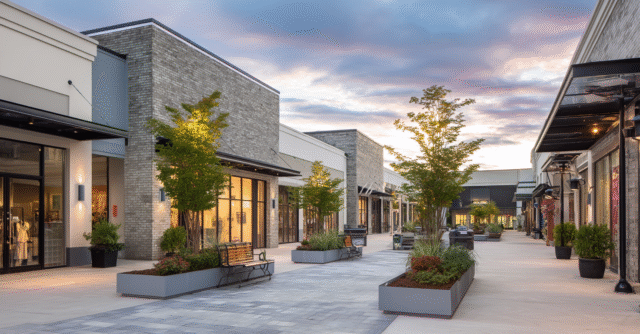
    Schlieren-based Halter AG has completed the modernization and redesign of the Signy Centre in Signy-Avenex. The renovation included two buildings with administrative and commercial space, three floors with around 50 stores and five parking decks with a total of around 1,100 parking spaces. According to Halter, the project started in 2023 and has now been completed with the official handover to customers.

    As part of the renovation, the technical systems and security facilities in the Signy Centre were modernized. Halter also redesigned the shopping center and its outdoor facilities. According to the company, the completed renovations increase the comfort and safety of employees and customers in the shopping center. The site’s energy and environmental footprint has also been improved.

    The project also involved the companies Burckhardt and ARFOLIA, which were responsible for the architecture and landscape architecture respectively. While sd ingénierie was involved as the civil engineer, Caeli Ingénierie took on the role of technical engineer. The last fire protection engineer was srg engineering.

  • La Rasude Lausanne

    La Rasude Lausanne

    La Rasude is one of Lausanne’s six urban transformation poles and is located directly next to the train station and one of the most important public transport hubs in French-speaking Switzerland. From the city’s point of view, this is the ideal location for densification that combines short distances, high density of use and a better quality of life. The plan d’affectation defines the permitted uses, building volumes and requirements for the environment, mobility and monument protection

    Building on existing buildings instead of tabula rasa
    Around 70 percent of the existing buildings will be preserved, including the striking building on Avenue de la Gare designed by Alphonse Laverrière, whose protection was explicitly secured in a revised project following criticism from the federal government and experts. Individual buildings such as “Gare 45” and “Horizon” may be raised by two storeys, and two new structures will be added. One along the tracks and one in the district center, the heights of which are defined in such a way that the existing skyline and visual references are respected and the Edipresse tower is not towered over

    Living, working and social mix
    Around 30 percent of the floor space is earmarked for housing, at least 20 percent of which will be logements d’utilité publique, i.e. non-profit apartments. In total, almost 500 people will be able to live in a district that is currently uninhabited. At the same time, a diverse mix of uses will be created, including offices, a hotel, stores, early childhood care, cultural and leisure spaces and neighborhood services. Around 500 square meters will be reserved for cultural professionals and public uses at controlled, affordable rents

    Public space, greenery and mobility
    The currently closed, heavily sealed complex will be transformed into an open, pedestrian-oriented quarter. Around half of the site will be available as public space in future, much of it with trees and green areas, supplemented by green roofs, photovoltaic systems and a connection to renewable heat sources to significantly improve the carbon footprint. Access on the surface is primarily on foot and by bicycle, while an underground garage with around 275 car parking spaces and around 1,200 bicycle parking spaces bundles the necessary mobility options underground

    Political process and outlook
    The plan is available for public inspection until December 18. Objections and objections will be incorporated into the further revision before the decision is taken by the municipal council to the canton. In parallel, competitions for architecture and public spaces with participatory formats are planned to ensure the quality of implementation. Construction is currently scheduled to begin around 2029, with the new district coming into operation in stages between 2031 and 2033, provided that any political referendums do not change the timetable.

  • Digital twin makes the invisible visible

    Digital twin makes the invisible visible

    At the heart of the project is a digital co-pilot that acts as an intelligent assistant and supports restoration decisions. Laser scans and photogrammetric images are used to create a precise 3D twin of the cathedral, supplemented by detailed data on each stone. Age, material composition and condition are scientifically documented

    At the same time, the mechanical loads in the building are simulated using methods such as Thrust Network Analysis. Damage is not only visible, but also localized in space and its development can be traced. The XR technologies show restorers, engineers and architects interactive holograms directly on the original building

    Climate as a challenge
    The ETH Zurich team correlates local weather extremes such as wind-driven rain with the real damage patterns on the sandstones. Sensors measure humidity and microclimate; the data obtained flows into models that predict future developments in the event of increasing climate change. This results in strategies for the long-term preservation of the building fabric, adapted to the individual climatic stresses at the location

    New standards for buildings worldwide
    The “Heritage ” project is a role model for digitalization in heritage conservation. The combination of digital twin, XR and AI is transferable to bridges, castles and other historic buildings. The public app for the anniversary of the cathedral communicates restoration work to visitors in a transparent and participatory way. Monument conservation not only becomes more efficient, but can be experienced by everyone.

  • More inflows to Valais, losses in Zurich and Vaud

    More inflows to Valais, losses in Zurich and Vaud

    A total of 37,816 companies moved within Switzerland last year, CRIF AG reported in a press release. The credit agency analysed the corresponding movements of companies within Switzerland. According to its surveys, 80.6 per cent of companies relocated within the canton. Only 7470 companies moved to another canton.

    Valais ranks first in terms of inflows from other cantons, with a net inflow of 88 companies. The canton of Valais was able to attract companies from the cantons of Vaud and Geneva in particular. The cantons of Appenzell Ausserrhoden and Fribourg also recorded high net immigration of 65 and 39 companies respectively. The canton of Appenzell Ausserrhoden mainly attracted companies from St.Gallen, Zurich and Zug. Companies from the cantons of Vaud, Bern and Geneva were the main movers to Fribourg.

    At the other end of the scale are the cantons of Zurich, Vaud and Lucerne. The canton of Zurich lost a net total of 133 companies to other cantons in Switzerland. From the cantons of Vaud and Lucerne, 87 and 61 companies respectively moved to other cantons.

    The cantons of Zug, Aargau and Schwyz were the main beneficiaries of the migration from the canton of Zurich. Many companies from Vaud relocated to the cantons of Geneva, Valais and Fribourg. Companies from Lucerne mainly relocated to the cantons of Zug, Zurich and Aargau.

  • Historic spa centres in the canton of Vaud sustainably renovated

    Historic spa centres in the canton of Vaud sustainably renovated

    The renovated buildings in Bière, Dommartin, Romainmôtier, Rougemont and Vufflens-le-Château date from the 17th to 19th centuries. The restoration was carried out with the utmost care in order to preserve the historical substance. At the same time, facades, roofs, windows, insulation and technical installations were modernised to increase energy efficiency without changing the original character of the buildings.

    “Every restored stone, every renovated roof conveys a message to future generations, that of a canton that takes care to preserve its heritage. By modernising these five cures, we are combining heritage conservation with sustainable development,” emphasised Isabelle Moret, Head of the Cultural Heritage Department, during her visit to the site.

    Strengthening the local economy through traditional crafts
    The renovations were carried out in close collaboration with regional craftsmen. This not only strengthens the local economy, but also provides the canton with valuable craftsmanship expertise. The project shows that monument protection and sustainability are not opposites, but together form a forward-looking strategy for building culture.

  • Vaud economy between recovery and uncertainty

    Vaud economy between recovery and uncertainty

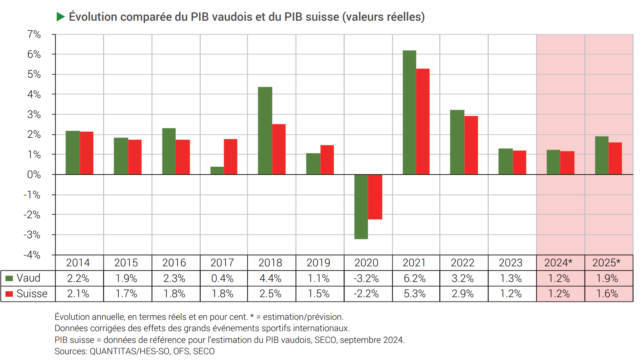
    Global economic tensions have increased in recent months. The OECD and the Swiss State Secretariat for Economic Affairs (SECO) point to risks, particularly from the new US administration and the unclear relations between Switzerland and the EU. While the US economy is growing more strongly than expected, the European economy remains weakened by structural challenges. The strong Swiss franc is slowing down export-orientated sectors, while domestic demand remains a stable pillar of the economy.

    Construction industry benefits from interest rate cuts
    The Swiss National Bank (SNB) has eased its monetary policy and lowered the key interest rate from 1.75% to 0.5%. This measure is creating a favourable investment climate, particularly in the construction industry, which is benefiting from falling financing costs. Forecasts for Switzerland as a whole predict growth of 1.5% this year and an acceleration to 1.7% next year.

    Sector development mixed picture
    While the industrial economy continues to be challenged, other sectors are showing mixed developments. The retail and hospitality sectors are struggling with a weak business climate, while the service sector is showing positive momentum. Particularly strong growth is forecast for the chemical and pharmaceutical industries, business services and the financial sector. The machinery and watchmaking industry could also benefit from the economic recovery in the medium term.

    Stabilisation with uncertainties
    The Vaud economy is looking forward to a year of opportunities, but also challenges. While key sectors are likely to benefit from a sustained recovery, geopolitical and currency policy uncertainties remain risk factors. The decisive factors will be how international trade relations and the domestic economy develop and the extent to which companies are able to react flexibly to changes.

  • New projects for decarbonisation of the gas industry to start in 2025

    New projects for decarbonisation of the gas industry to start in 2025

    EPFL and the French-speaking Swiss gas supplier Gaznat have signed a framework agreement to expand their collaboration, according to a press release. This provides for three calls for tenders for research and development projects that can make a significant contribution to a clean gas supply. The first call is scheduled for early 2025.

    The winning projects will be selected by a scientific advisory board consisting of four representatives from both sides. These include Gaznat CEO Gilles Verdan, Wendy Lee Queen and Yasmine Calisesi from the EPFL Energy Centre and EPFL Vice President Edouard Bugnion. A programme manager will coordinate the tenders and support the selected projects.

    EPFL and Gaznat have already jointly financed 17 projects in three calls for proposals. Gaznat opened its innovation lab in Aigle in 2023.

    Gaznat, based in Lausanne, procures and transports gas for partner companies in western Switzerland. The company aims to make its supply climate-neutral by 2050. “Thanks to our research and development collaboration with EPFL, we are getting closer to our goal of climate neutrality and can decarbonise our industry,” Gaznat Chairman of the Board of Directors René Bautz and CEO Gilles Verdan are quoted as saying in the press release.

  • Energy savings through AI

    Energy savings through AI

    Romande Energie is strengthening its position in the property sector. According to a press release, the Vaud-based energy supplier has acquired a stake in yord GmbH. The Fribourg-based company has developed an application that can be used to optimise heat consumption in buildings.

    Sensors throughout the building measure the temperature, humidity, brightness and air quality. The data is analysed using artificial intelligence and used to adapt the heat supply to the actual needs of the users. The solution can dock onto all existing heating systems. The optimisation of heat consumption enables energy savings of up to 40 percent.

    Yord expects Romande Energie’s involvement to accelerate its technical and commercial development. “As a committed player in the cleantech sector, Romande Energie is a strategic partner for our growth,” said Sébastien Bron, CEO and one of the four co-founders of the company founded in 2021, in the press release.

    Romande Energie wants to achieve added value for its customers with yord’s solution. “yord’s approach of optimising energy consumption while maintaining or even increasing comfort is in line with our vision of a positive energy transition that focuses on the users,” said Thibaud Weick, Head of RE Ventures, the investment arm of Romande Energie.

  • Enerdrape wins sustainability award from AMAG

    Enerdrape wins sustainability award from AMAG

    Enerdrape has received recognition for its pilot project on energy efficiency in buildings. According to a press release, the Renens-based start-up was named the winner of the first AMAG Sustainability Challenge by car dealer AMAG Group for its innovative panel solution.

    The expert jury was impressed by the world’s first geothermal panel, which transforms underground spaces such as parking garages or tunnels into renewable sources of heating and cooling. The waste heat generated there can be used to heat and air-condition the rooms above without the need for drilling and without direct contact with the ground, according to the explanatory statement.

    The start-ups 8inks and Exnaton came second and third. Other finalists were CarDust and Grensol.

    Helmut Ruhl, CEO of the AMAG Group, was full of praise for the solutions presented. “On our way to decarbonizing our business model by 2040, we are relying on electromobility and photovoltaics as well as entrepreneurship and innovation. This requires new technologies and business models. that’s why we held the AMAG Sustainability Challenge for the first time in 2024. I am overwhelmed by the response and inspired and excited by the ideas,” he is quoted as saying.

    For its contribution to reducing CO2 emissions, Enerdrape will receive CHF 50,000 from the AMAG Climate Fund as well as a branded VW ID.3 for one year.

  • Procimmo expands real estate fund

    Procimmo expands real estate fund

    Procimmo is planning to acquire several properties for its Residential Lemanic Fund. The Renens-based company, which specializes in the development and management of real estate investment products, therefore intends to carry out a capital increase of between CHF 30 million and CHF 40 million at the end of September. The exact amount and the subscription period will be communicated at a later date, Procimmo announced in a press release.

    The Procimmo Residential Lemanic Fund currently has gross assets of around 510 million francs. Three quarters of the capital is invested in real estate in Lausanne and Geneva. Procimmo aims to grow the fund “while preserving its intrinsic qualities”, the company writes.

    Founded in 2007, Procimmo SA operates as a real estate asset manager at its headquarters in Renens as well as in Zurich and Geneva. The company has been part of Procimmo Group AG since 2017. The Zug-based group of companies, which is listed on the BX Swiss, offers investment and services in the real estate sector.

  • Alpiq sells seven photovoltaic systems to Panneaux Solaires

    Alpiq sells seven photovoltaic systems to Panneaux Solaires

    Alpiq has announced the sale of seven rooftop photovoltaic plants to PS Panneaux Solaires SA. The Lausanne-based electricity provider wants to bring more solar energy into the energy grid, which is why the power plants are being sold as a unit, according to a press release. At their locations in the cantons of Fribourg, Solothurn and Vaud, the plants have a total capacity of 5.5 megawatts peak.

    Alpiq would like to concentrate more on its core business of highly flexible power plant solutions, according to the press release. The planning, construction and operation of photovoltaic plants “that are not closely related to the core business” will therefore be discontinued. “The challenge is to integrate weather-dependent electricity production from wind and solar energy into the energy system,” said Amédée Murisier, Head of the Switzerland business division and member of the Alpiq Executive Board. PS Panneaux Solaires SA, the operating company of the Gefiswiss Energy Transition Fund, is the ideal “buyer to continue operating the seven plants, which will continue to produce solar power for many years to come”, it says.

    The energy transition requires flexible solutions for greater security of supply. Alpiq wants to use its portfolio to promote the use of renewable energies as well as the expansion of storage solutions and the generation of winter electricity. With its portfolio of highly flexible power plants, the company says it sees itself as a “pioneer of the energy transition”.

    Alpiq is primarily involved in hydropower plants, such as the Nant de Drance and FMHL pumped storage power plants. Their efficient large-scale batteries with a capacity of 1,400 megawatts are an ideal means of feeding the growing proportion of photovoltaic electricity into the grids as short-term daily or weekly storage.

  • New Master’s programme for urban change

    New Master’s programme for urban change

    From the start of the 2025 autumn semester, the School of Architecture, Civil and Environmental Engineering(ENAC) at the Swiss Federal Institute of Technology Lausanne(EPFL) will be offering a Master’s degree in the challenges of urban change. A Master’s degree in Urban Systems will enable ENAC students to become specialists in adapting cities and surrounding areas to climate change, according to a press release from EPFL.

    In view of climate change, Switzerland needs to equip itself with experts in urban management in the broadest sense, according to the EPFL. The new Master’s degree programme has been developed in collaboration with practitioners. It offers graduates of the ENAC Bachelor’s degree programmes in Civil Engineering and Environmental Engineering the opportunity to specialise in the sustainable transformation of cities and surrounding areas. The Master’s programme is also open to other related disciplines, including architecture, provided they submit an application.

    The programme has three specialisations: Mobility and Transport in a Changing Climate, Sustainable Transitions in Urban Systems and Health and Wellbeing in the Urban Environment.

    At the end of the programme, students receive an EPFL Master of Science MSc in Urban Systems. This diploma entitles them to use the title EPF qualified engineer.

  • KVA Linth receives special prize for CO2 capture project

    KVA Linth receives special prize for CO2 capture project

    The Linth waste incineration plant(KVA Linth) has been honoured with a special award from InfraWatt. The association for the utilisation of energy from wastewater, waste, waste heat and drinking water, which is based in the canton of Vaud, recognised the Linth waste incineration plant’s project to build a large-scale plant for the capture and storage of carbon dioxide by 2029, according to a press release.

    Such CCS (carbon capture and storage) plants are suitable for filtering carbon dioxide from the combustion air and channeling it into specially constructed storage facilities. The CO2 captured in the Linth waste incineration plant is compressed and liquefied at low temperatures and transported away in tank wagons. An output of 90 percent is forecast for the capture plant at KVA Linth, which would correspond to around 15.5 tonnes of captured CO2 per hour. When the plant is completed in 2029, 120,000 tonnes of carbon dioxide can thus be captured and stored annually with 8,000 operating hours.

    The project is being developed together with KVA Linth and the Centre for Sustainable Waste and Resource Utilisation. All development steps will be made transparently available to all MSWI plants in Switzerland, which will then be able to implement the corresponding technologies.

  • Researchers use AI to develop new solar cells

    Researchers use AI to develop new solar cells

    As part of a research project at the Swiss Federal Institute of Technology in Lausanne(EPFL), a method has been developed to search large databases for potential materials for the utilisation of new solar cells. According to a press release, several promising halide perovskites were identified through the use of machine learning (ML). ML is a branch of artificial intelligence in which computers learn from data sets or databases made available to them.

    Perovskites represent a promising new group of materials for future photovoltaic applications due to their simple manufacturing processes combined with low costs. It is important that the new materials have a suitable band gap so that they can utilise solar energy optimally. The band gap has the property of absorbing photons with a certain energy and then converting them into electricity.

    The EPFL team led by Haiyuan Wang and Alfredo Pasquarello developed a machine learning model that was able to identify 14 completely new perovskites from 15,000 materials. These are excellent candidates for future high-efficiency solar cells. The researchers were thus able to show that the use of ML can significantly accelerate the discovery and validation of new photovoltaic materials.

  • Vaud plans electricity autonomy by 2035

    Vaud plans electricity autonomy by 2035

    The study presented by Isabelle Moret, Head of the Department of Economy, Innovation, Employment and Heritage (DEIEP), shows encouraging results on the photovoltaic potential of the roofs and façades of Vaud cantonal buildings. In the presence of Pierre de Almeida, Director General of Real Estate and Heritage, and Camille Orthlieb, Head of Sustainable Construction at the DGIP, it became clear that the cantonal administration can achieve electrical autonomy by 2035 by producing the equivalent of 23 GWh of electricity annually.

    Comprehensive photovoltaic installation
    Since the early 2000s, almost 19,800 m² of solar panels have been installed on the roofs of the cantonal administration’s buildings. This area is to be increased to around 100,000 m² by 2035. All new buildings will be equipped with photovoltaic systems so that they produce as much or even more energy than they consume. At the same time, a building refurbishment programme aims to reduce electricity consumption by around 30 % through energy optimisation.

    Responsibility and leading by example
    Isabelle Moret emphasises the importance of these measures: “Thanks to the efforts of our teams for the massive expansion of photovoltaic systems, we should achieve electrical autonomy by 2035. The Vaudois state is thus demonstrating its responsibility towards the challenges of sustainability and serving as a role model for energy consumption in the property sector.”

    Financing and project coordination
    Over CHF 18 million will be made available for the implementation of this project in order to finance both the expansion of the solar installations and the reduction in electricity consumption. Implementation requires close collaboration between the Directorate-General for Property and Cultural Heritage (DGIP), the Department for the Preservation of Historical Monuments, the Directorate for Energy (DGE-DIREN) and the Directorate for Resources and Natural Heritage (DGE-DIRNA).

    Future prospects
    In addition to the cantonal administration, the University of Lausanne (UNIL) and the Lausanne University Hospital (CHUV) are also evaluating their photovoltaic potential in order to increase their energy independence. These measures emphasise the canton of Vaud’s commitment to driving forward the energy transition and achieving long-term sustainability goals.

  • Stable economic development in Vaud

    Stable economic development in Vaud

    In 2023, the Vaud Economic Development Agency provided financial support for 733 business projects. Support for internationalisation increased by almost 20%, while support for the cleantech sector rose by 23.7%, reflecting the growing importance of innovation in the energy and climate sector. The number of branches of foreign companies remained stable at 28 new branches.

    Network and partnerships
    Isabelle Moret, Head of the Department of Economy, Innovation, Employment and Heritage (DEIEP), emphasises the importance of a strong network: “In 2023, more than a thousand companies and project promoters benefited from the Vaud government’s support measures, particularly in the areas of innovation and sustainability.” These measures supported 3722 jobs.

    Strong growth in the medtech sector
    Vaud start-ups raised CHF 444 million, with 29 of them among the top 100 best start-ups in Switzerland. The medtech sector is particularly noteworthy: 52% of investments in medical technology across Switzerland were channelled into Vaud start-ups.

    Attracting foreign companies
    Innovaud, the agency for the promotion of innovation and foreign investment, supported the establishment of 28 new companies in the canton of Vaud. The life sciences sector had a particularly strong presence, accounting for more than a third of the new companies.

    Promotion of research and development
    The innovation parks in the canton of Vaud were home to a total of 661 companies and 8326 jobs at the end of 2023. The new unlimitrust campus and the expansion of the EPFL Innovation Park with the Ecotope project are examples of growth and support for research and development.

    Support from the Innovation Promotion Fund
    The Innovation Promotion Fund was endowed with an additional CHF 50 million in 2023. This fund supports the Foundation for Technological Innovation (FIT) and various programmes such as Tech4Trust, Trust Valley’s leading acceleration programme for start-ups, and FIT Impact for young projects in the field of impact entrepreneurship.

    Sustainability as a central task
    Sustainability plays a central role in the 2022-2027 legislative planning. The “4-season tourism” framework credit of CHF 50 million aims to improve the quality and sustainability of tourism infrastructure. in 2023, 84 projects totalling almost CHF 4 million were supported to help companies make the transition to sustainability.

    A strong economic ecosystem
    The PESI also supported organisations such as Innovaud, which accompanied 328 companies and contributed to the creation of 31 new companies. Genilem, specialised in project diagnostics and entrepreneurship consulting, supported 24 companies. The Foundation for Technological Innovation (FIT) awarded over CHF 4 million in grants and loans to start-ups.

    Regional economic promotion and territorial advertising
    The regional economic promotion offices supported 712 companies and provided over 1,000 services. Vaud Promotion encouraged 165 local producers to label their products with the VAUD CERTIFIES D’ICI label. The attractiveness for tourists increased by 8.6%, with most visitors coming from Switzerland, France and the USA.

    These comprehensive measures and partnerships emphasise the successful strategy of the Vaud Economic Development Agency, which focuses on sustainability, innovation and strong networks.

  • Sustainable infrastructure renewal in the canton of Vaud

    Sustainable infrastructure renewal in the canton of Vaud

    The Schaan-based Hilcona Group is planning to invest in modernising the infrastructure at its Orbe site in the canton of Vaud. According to a press release, pipework, chillers and air compressors are to be replaced. The renovation will be carried out in such a way that the waste heat from the chillers will be used to heat water in the company once the construction work is complete. The hot water will be used for the daily cleaning work at Hilcona. According to the company, the new water heating system will save two thirds of the amount of natural gas required. CO2 emissions will also be reduced accordingly.

    “The overhaul of this chiller is another important step on our path to greater sustainability,” Lionel Monteiro from Hilcona’s Engineering department in Orbe is quoted as saying in the press release. “The CO2 footprint of the entire company can be further reduced by utilising waste heat,” adds Andrea Gerber, Head of Sustainability at the Hilcona Group.