Category: Baden

  • Where others park, you soon live

    Where others park, you soon live

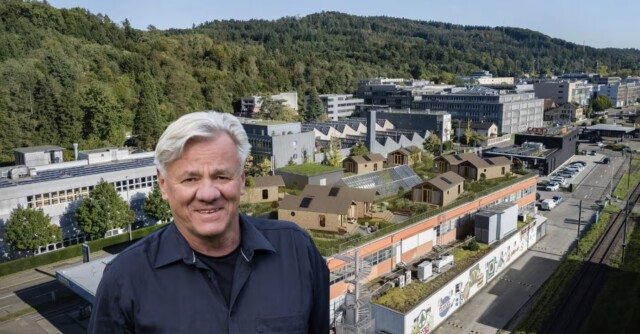
    Christoph Schoop didn’t have to look far. The real estate investor from Baden looked out of his office window at the Dättwil industrial estate and recognized the obvious: huge flat roofs, completely unused. On the roof of the factory arcade at Mellingerstrasse 208, where McDonald’s, Spar and a bakery now provide for everyday life, eight so-called Wikkelhäuser are to be built from spring 2027.

    A new world on the roof
    The Wikkelhouse concept originated in Amsterdam and is now coming to Switzerland. Compact wooden housing units that are delivered ready-made by truck and erected with minimal effort. Each unit offers 30 to 35 square meters, its own terrace and ceiling heights of up to 3.5 meters. Architect Andreas Zehnder, who designed the project for Baden, clearly formulates the added value. Instead of adding another storey, an independent living space has been created on the roof.

    Swiss wood, Uri factory
    The houses are not produced on the building site, but in the company’s own factory in Flüelen UR on the shores of Lake Lucerne. The raw material is Swiss wood from sustainable forestry. Schoop is a co-founder and supporter of Wikkelhouse Switzerland and promotes the concept as a circular economy model. A unit costs from CHF 200,000 ex works; transportation and assembly are additional costs.

    Inexpensive, sunny, connected
    By Baden standards, rents should remain low. There is already a waiting list and, according to Schoop, inquiries have come from “a wide range of people”, including those of AHV age. And although the industrial area is not considered a residential location, the roof offers all-day sunshine and a direct public transport connection. The building itself provides noise protection.

    Pilot with scaling potential
    The project in Dättwil is explicitly designed as a pilot project. Schoop sees space for 50 to 70 Wikkel houses in the industrial area alone. The city of Baden is currently reviewing the suitability for planning permission. If everything goes according to plan, the first residents will move in in spring 2027. What sounds like a curiosity today could set a precedent tomorrow.

  • Beer, concrete and living – Baden builds on its history

    Beer, concrete and living – Baden builds on its history

    Four new buildings are being constructed on around 8,000 square meters directly next to Baden train station, divided into two construction sites. Building site A is the responsibility of Frei Architekten AG from Aarau, building site B is the responsibility of the renowned Harry Gugger Studio from Basel. The volume is considerable: 81,888 cubic meters of enclosed space, 22,914 square meters of floor space and an investment of around 64.5 million Swiss francs. The general contractor is Gross AG from Brugg.

    Living where malt used to steam
    136 rental apartments with 1.5 to 4.5 rooms are being built in the heart of the city. On the first floor, a total of 2268 square meters of retail and restaurant space will characterize the quarter. In the inner courtyard, a 900 square meter beer garden invites you to linger. The motto of the building owner, the fourth-generation brewery H. Müller AG, sums it up: “brew – live – enjoy”.

    History remains visible
    Not everything makes way for the new building. The boiler house, brewhouse and malt silo remain as architectural witnesses to a brewing history that began in 1897. The Müllerbräu beer itself is now produced by the Falken brewery in Schaffhausen. However, there is still a specialty brewery on the site. The site’s past thus not only remains visible, it can still be experienced.

    Timetable and marketing
    The building permit dates from October 2023, with demolition starting in April 2024. The facades of the new high-rise buildings have been visible for the first time for a few days now. A milestone for the project. Marketing of the apartments is scheduled to start in summer 2026, with first occupancy planned for June 2027.

  • Five stones, 220 apartments, one future

    Five stones, 220 apartments, one future

    The Brisgi has roots. In the 1940s, the site was home to a shanty town for up to 1500 employees of the former BBC industrial group. Many of them were guest workers with their families. In the 1960s, a high-rise building and two apartment blocks followed, which still stand today and are carefully embedded in the new development. What was once a workers’ housing estate is now becoming a modern urban building block.

    Three sponsors, one goal
    The project is backed by three non-profit organizations that are jointly developing the 6.5-hectare site: Wohnbaustiftung Baden, Logis Suisse AG and Graphis Bau- und Wohngenossenschaft. Each will take over one of the three buildings and design them independently. The rents are calculated to cover costs. Profit is not the goal, but affordable living is.

    Wood, concrete and sun
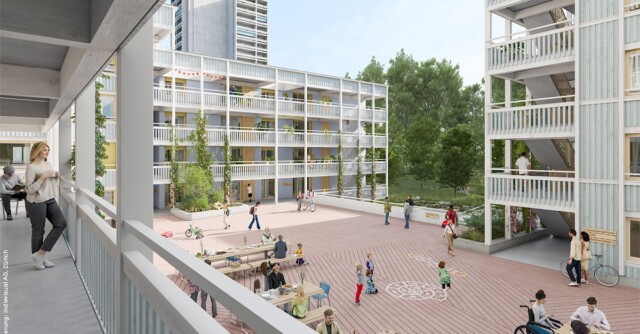
    Nine five- to six-storey buildings, pergolas, green inner courtyards and a central square will characterize the future Brisgi. The hybrid construction method combines wood and concrete. Concrete only where it is really needed. Solar panels will produce electricity on around half of the roofs and the site will be connected to the district heating network of Regionalwerke Baden. The aim is to achieve the gold certificate of the Swiss Sustainable Building Standard.

    Values carved in stone
    Five stones, found during the excavation of the building pit and engraved by a stonemason, represent the self-image of the development. Common ground, the future, sustainability, affordability and living. City President Markus Schneider, who carried the stone with the inscription “Future”, summed up the 14 years of planning work: “Now the lively Kappi is becoming even livelier. A neighborhood within a neighborhood is being created here.” The five stones will be clearly visible in the development in future.

    Milestones on schedule
    After years of objections and a planning process since 2012, things are now picking up speed. The building permit for all three courtyard buildings was granted in April 2025 and construction started on schedule in the fall of 2025. Letting will start in the second half of 2027, with occupancy scheduled for the first half of 2028. The design architects are the Baden-based firm Meier Leder Architekten together with the Zurich firm Müller Sigrist, whose “Kandalama” project was chosen as the winning project in 2016.

  • Historic Spa District gets a new perspective for use

    Historic Spa District gets a new perspective for use

    Verenahof AG, based in Baden, wants to revitalize the building complex in Baden’s Spa District. To this end, it concluded a contract with the city on February 5. According to a press release, this forms the basis for the development and use of the complex and is intended to provide planning security.

    Verenahof AG has developed a utilization concept in collaboration with the city and the cantonal monument preservation authorities. This envisages combining assisted living for older people with cultural offerings and publicly accessible uses. The technical feasibility has already been examined. Now a building application and a cost estimate are to be drawn up within twelve months under the management of Verenahof AG.

    “The concept for services in the areas of prevention, rehabilitation and healthy ageing is a perfect fit for this historically valuable location for Baden,” said Markus Schneider, Mayor of Baden, in the press release. “The Spa District has been investing in health since Roman times – it is important for Baden and the region that this offering continues to be expanded in the future.”

    The complex has been vacant since the closure of the Verenahof, Bären and Ochsen hotels in 1987 and 2004. It has been under national protection since 2019. As the owner of Verenahof AG, the Bad Zurzach Baden Health Promotion Foundation has examined several uses, including for a rehabilitation clinic. These possible uses came up against the economic and structural framework conditions as well as the requirements for the preservation of historical monuments.

  • Award for sustainable hospital construction

    Award for sustainable hospital construction

    Baden Cantonal Hospital(KSB) has been honored at the World Architecture Festival in Miami, Florida. The architecture of the new KSB building won a prize in the Health category, according to a press release. The World Architecture Festival was held from November 12 to 14.

    At the event at the Miami Beach Convention Center, 160 international jurors voted on 460 projects. The hospital building realized by Nickl & Partner Architekten Schweiz and other planning partners was recognized for its clear design language, sustainable construction and consistent focus on a healing environment for patients, according to the press release. “This award is an impressive confirmation of our vision: to build a hospital that combines medical excellence and efficient operation with state-of-the-art architecture,” said Pascal Cotrotzo, CEO of KSB. “We are proud that our new building in Miami has received international recognition. Our thanks go to everyone who made this major project possible.”

    KSB already received the European Healthcare Design Award in London in June 2025. In order to show off the entire new building to its full advantage, a green space will be built on the site of the old hospital to connect it to the city. The KSB refers to a complaint by the Aargau Heritage Society against the demolition of the old building and a petition with 7,000 signatures against this complaint.

  • 10 years of the Digital Real Estate Summit

    10 years of the Digital Real Estate Summit

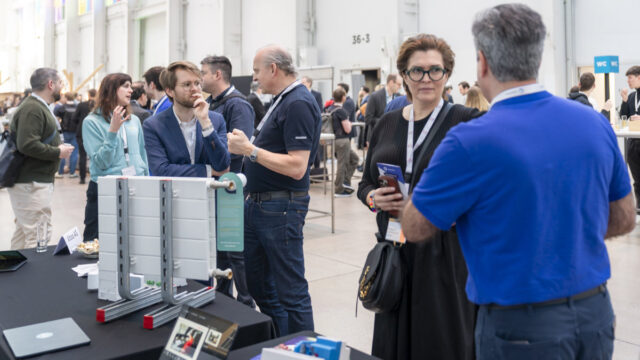
    Prof. Dr Donato Scognamiglio from IAZI AG kicked off the summit with a provocative presentation on the profiteers of digitalisation. He shed light on how digital technologies not only optimise processes, but also create completely new business models. His analysis encouraged people to question traditional ways of thinking and actively utilise the opportunities offered by digital transformation

    Visions for a networked property world
    Later in the summit, leading industry representatives shared their perspectives on the digital future. Jens Vollmar from Implenia emphasised the importance of digital solutions for increasing efficiency in the construction industry. Beatrice Bichsel from SBB explained how the digitalisation of real estate portfolios contributes to the future viability of infrastructure. Helmut Ruhl from AMAG presented innovative approaches to the use of data in property development, while Tanja Vainio from Schneider Electric emphasised the role of digital technologies in creating energy-efficient buildings

    Deepening current industry topics
    The workshops and parallel sessions at the summit offered in-depth insights into current trends and challenges. The focus was on topics such as smart buildings, big data & AI, international developments, digital platforms & ecosystems, digital twins and data-driven sustainability. These sessions enabled participants to engage intensively with the latest developments and evaluate their relevance for their own company

    Experience innovations up close
    An exhibition with around 30 exhibitors offered guests the opportunity to experience the industry’s latest technologies and solutions first-hand. This exchange not only promoted an understanding of current market trends, but also networking among industry experts. The combination of specialist presentations, practical workshops and a lively exhibition made DRES a comprehensive and inspiring experience

    A look to the future
    The 10th Digital Real Estate Summit impressively demonstrated how digitalisation is transforming the real estate industry and what potential can still be exploited. With an eye on future developments and a willingness to take innovative paths, the DRES remains a central platform for exchanging ideas and shaping the digital future of the property industry

    Save the Date
    The next Digital Real Estate Summit will take place again on 5 March 2026 at Trafo Baden. Industry experts and managers are cordially invited to save this date in order to experience the latest innovations and trends in the property industry again next year

  • Work begins on extension to Baden cantonal school

    Work begins on extension to Baden cantonal school

    Preparations for the extension of the Baden cantonal school have begun with clearing work on the construction site. According to a press release from the Canton of Aargau, this preparatory work will be carried out during the sports holidays from 3 to 14 February. This involves removing shrubbery and felling trees in the Schönaustrasse area in Baden. This work must be carried out before construction work on the extension begins in July 2025.

    The early start is necessary because the tree felling must be carried out outside the bird breeding season from the beginning of March to the end of September. New trees will be planted across the entire site once the extension has been completed. According to the press release, this will once again take greater account of biodiversity on the grounds of Baden Cantonal School.

    The building permit for the extension to the cantonal school has been valid since the end of October 2024. The extension will include an additional wing for maths, IT, natural sciences and technology (STEM subjects) and a sports wing including a double sports hall.

    In addition, the outdoor facilities and sports pitches will be redesigned. The planned extension represents the final expansion of the site based on the current school planning, according to the canton’s press release.

  • Farewell party planned for the Raben-Bad in Baden

    Farewell party planned for the Raben-Bad in Baden

    Bagni Popolari heralds the end of the interim use of the Bad zum Raben. On 25 January, the thermal baths on Kurplatz in Baden will celebrate the end of the “Acts of Attention” exhibition, the association announced in a press release. At the same time, a temporary outdoor pool with natural thermal water on the Limmat promenade will invite visitors to take a dip.

    Bagni Popolari has been revitalising the previously closed Raben-Bad since 2017 with exhibitions, performances, music, readings, lectures and animated films, attracting thousands of visitors, according to the press release. However, the thermal baths now need to be thoroughly renovated in order to continue operating. Among other things, it needs solid pool technology, ventilation, new electrical installations and wheelchair-accessible toilets.

    The Raben cooperative, which emerged from Bagni Popolari, is responsible for the renovation. It was founded in 2022 to acquire the bathing floor in the former Badegasthof zum Raben. The Raben cooperative estimates that the necessary renovations will cost around CHF 4.5 million.

    1.5 million of this is to be raised through the sale of new cooperative shares and donations. The Raben-Genossenschaft intends to raise the remaining 3 million Swiss francs through donations from the public sector, foundations and sponsors as well as loans. “If everything goes well, Bagni Popolari will be able to celebrate the first vernissage in the renovated Bad zum Raben in 2027,” hopes the association.

  • Overall transport concept 2040 for the Baden area

    Overall transport concept 2040 for the Baden area

    Following an intensive planning and participation process from 2022 to 2024, the delegation of authorities has adopted an overall transport concept that aims to sustainably improve mobility in the Baden region. The range of measures with a time horizon of 2040 includes the expansion of public transport with bus priority and optimised junctions.

    For pedestrians and cyclists, the cycle network will be expanded and additional bicycle parking spaces created. In terms of the road network, short-term measures are planned for the eastern bridgehead and improvements along Bruggerstrasse in Baden. At the same time, the upgrading of local thoroughfares and the strengthening of neighbourhoods as a “city of short distances” should promote urban and open spaces. In addition, transport demand is to be better controlled by municipalities and the canton through targeted mobility management. Long-term options for the period after 2040 were also considered.

    In addition to the short-term measures, options for the period after 2040 were also discussed. These include securing routes for important public transport corridors and possible measures for the eastern bridgehead.

    Centre relief as a central component
    The “ZEL long” variant, a road relief option with a bypass around Untersiggenthal, was also decided as a long-term option. The implementation of this variant is to be examined as soon as the impact assessment of the initial measures indicates a need.

    Participation and broad consensus
    The concept was developed in a participatory process that included mobility conferences, online participations and support group meetings. The broad involvement of municipalities, experts and the population led to a consensus-based package of measures that is now to be implemented step by step.

    With the adopted overall transport concept 2040, the Baden region is laying the foundations for sustainable and future-oriented mobility development. The coordinated measures promote public transport, non-motorised traffic and the quality of life of the population and offer a clear perspective for the coming decades.

  • Baden Cantonal Hospital focusses on local companies and sustainability

    Baden Cantonal Hospital focusses on local companies and sustainability

    Baden Cantonal Hospital (KSB) has carried out around 250 publicly tendered procurements over the course of the six-year construction phase of the new building. According to a press release, these tenders resulted in a total of 1066 contracts for work and services. The most recent tender was for the furniture. According to the KSB, the new hospital building lives up to the Swiss made label. 97 per cent of the 177 companies involved in the new building come from Switzerland. Only 3 per cent of the contracts were awarded to companies in Germany and Italy.

    A total of 25 per cent of the companies involved in the construction are based in the canton of Aargau and 40 per cent in the canton of Zurich. “We are proud that KSB has thus made a significant contribution to local and regional value creation,” KSB CEO Adrian Schmitter is quoted as saying.

    Thanks to the high presence of local companies, KSB has also set an example in terms of sustainability, Schmitter continues. “During the construction phase, it was above all a project of short distances for the trade companies involved. This resulted in various synergy effects,” says the CEO. This also applies to the time after commissioning, when reworking, maintenance or similar may be required.

    With a usable area of 76,215 square metres, the new building will offer around 30 percent more space than the building in which KSB has been housed since 1978. Commissioning is scheduled for the end of February 2025.

    The move should then be completed within five days. A total of 4571 cubic metres of medical technology and other goods will be moved, according to a KSB press release. This corresponds to the load of 76 lorries of 40 tonnes each.

  • Opening date announced for new building of Baden Cantonal Hospital

    Opening date announced for new building of Baden Cantonal Hospital

    Baden Cantonal Hospital(KSB) has announced the opening date for its new building. According to a press release, the new KSB will officially open on Tuesday, 25 February 2025, with the main move taking place the following weekend. The new building took six and a half years to complete. With a usable area of 76,215 square metres, it will offer around 30 percent more space than the building in which the KSB has been housed since 1978.

    The move will be completed in five days. A total of 4571 cubic metres of medical technology and other goods will be moved, according to the KSB press release. This corresponds to the load of 76 lorries of 40 tonnes each. The project is divided into three phases, according to the press release. In the preliminary move, material will be moved so that the doctors and nurses in the new building can start work immediately. During the main move, the intensive care unit, the monitoring ward, neonatology and the emergency department will take priority. Hospital operations will continue as normal.

    The new building will actually be ready sooner. But the KSB management deliberately chose February as the date for the move. “Theoretically, the new building would be ready for occupation as early as next autumn,” KSB CEO Adrian Schmitter is quoted as saying. However, moving before the autumn holidays would have been tight. This is because the building still has to undergo numerous complex tests beforehand. In addition, all operating licences must be obtained.

    As the KSB is always very busy between October and January and many patients with infectious diseases are treated during the flu epidemics, it was decided to use the time window with fewer patients from the end of February for the move. Details on the new KSB building can be found in KSB magazine 02-2024.