Category: Tessin

  • The silent ascent south of the Gotthard

    The silent ascent south of the Gotthard

    The EU’s Regional Innovation Scoreboard 2025 confirms Ticino’s “Innovation Leader” status. Only Zurich performs better in Switzerland. There are measurable drivers behind the ranking. The USI and SUPSI universities form the academic backbone, complemented by institutes such as the IDSIA for artificial intelligence and the national supercomputing center. At the same time, SMEs in the canton invest above average in research and development.

    Three competence centers, one park
    The Switzerland Innovation Park Ticino pools forces at three locations. The Swiss Drone Base Camp at Riviera Airport tests drone technology in real airspace. In Lugano, the Lifestyle Tech Competence Center is driving forward the digitalization of fashion, food and wellness. In Bellinzona, the Life Sciences Competence Center conducts research into biomedicine and oncology. From 2032, the park will move to the Nuovo Quartiere Officine, a 120,000 square meter urban development area in the heart of the cantonal capital.

    Lugano relies on digital infrastructure
    The city of Lugano has gone its own way in the area of crypto. Over 400 businesses already accept digital means of payment, and more than 100 fintech and blockchain companies have set up shop. Phase II was launched in March 2026 in collaboration with the company Tether. Five million Swiss francs will flow into digital resilience, AI ecosystems and decentralized urban infrastructure by 2030. Lugano is thus positioning itself as Switzerland’s third-largest financial center with technological ambitions.

    cHF 60 million and a clear signal
    The Grand Council sent a clear signal at the end of 2023. A credit line of CHF 60 million will secure the promotion of innovation, research cooperation and regional economic policy until 2027. CHF 25 million will flow directly into innovation and research synergies. Fondazione Agire, the canton’s innovation agency for over 10 years, supports 20 startup ideas every year via its Boldbrain accelerator and coaches SMEs on digitalization.

    What the real estate sector needs to learn from this
    Location promotion only develops its full value when it grows beyond strategy papers. Ticino is faced with the task of developing land availability, process reliability and urban quality at the same pace as its innovation projects. For investors, this means a region on the move with high potential and a simultaneous need for patience. Anyone who has the south of Switzerland on their radar today will find a location that wants to deliver and has the means to do so.

  • Bellinzona dares to undertake a major renovation

    Bellinzona dares to undertake a major renovation

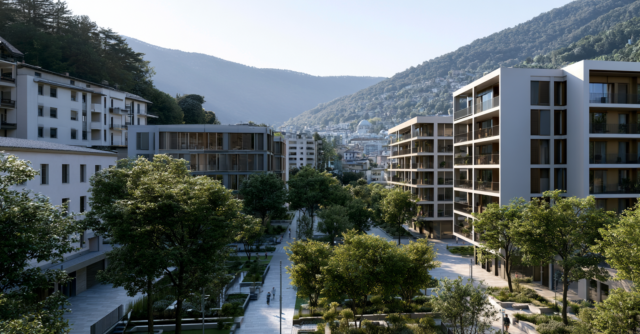
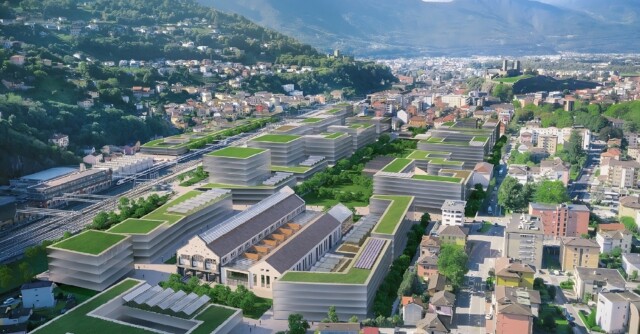
    There are hardly any inner-city transformation areas of this size in Switzerland. The FFS site in the heart of Bellinzona offers an opportunity that cities such as Zurich and Basel have long since lost. The new district will not be built on a greenfield site, but will interweave the historic city with the area around the railroad station and new development zones. Mixed use, biodiversity and generous open spaces are at the heart of the master plan.

    The international competition was won by the team sa_partners, TAMassociati and Franco Giorgetta. Their design breaks up the previously closed industrial area and organizes it around the “Almenda”. A 6.4 hectare central green space that structures the entire district as an ecological and social backbone. The listed “Cattedrale”, which has been a maintenance site for locomotives since 1919, will be retained as an identity-forming focal point and will become the anchor building of the new district.

    Innovation at the heart of
    The district will also be home to the Switzerland Innovation Park Ticino in future. The park was officially recognized as the location of the Switzerland Innovation Park Zurich in November 2024 and is supported by USI, SUPSI, BancaStato, the Ticino Chamber of Commerce and the employers’ association AITI. From 2032, the park and its headquarters will move to a 25,000 square meter area within the new quarter.

    Three competence centers are already active: Swiss Drone Base in Lodrino for drone technology, a hub in Bellinzona for life sciences and a location in Lugano for lifestyle tech. Together with postgraduate training courses offered by USI and SUPSI, an innovation cluster with supra-regional appeal is being created. Bellinzona is thus positioning itself as a location between administration, technology and urban quality of life and as a serious alternative to the major Swiss technology hubs.

    Setback in fall 2025
    The path is not clear. In October 2025, the cantonal administrative court annulled the municipal council’s detailed development plan from April 2023. The financial aspects were insufficiently explained, in particular the costs for the acquisition of public land and the remediation of contaminated sites, which are estimated at CHF 30 to 50 million. The planning process will have to start from scratch.

    At the same time, construction work is already underway on the new FFS plant in Arbedo-Castione, a major project costing CHF 755 million that is scheduled to open in 2028. The site will only become available once Officine has relocated. The first realization phase is expected to start between 2030 and 2035 at the earliest, and the overall transformation is likely to take 20 to 40 years. The time pressure is real and the complexity is high.

    Model for central Switzerland
    Porta del Ticino shows how medium-sized centers beyond the metropolitan areas can deal with large industrial sites. Not monofunctional overbuilding, but development as an urban transformation space with a long-term regional impact. What is being created in Bellinzona can be a benchmark for other cities of the same size. From Aarau to Chur, from Schaffhausen to Sion.

    The next few years will determine whether the planning quality can be secured for years to come, whether investments can be bundled and whether the vision can be translated into a resilient realization perspective. The real test has only just begun.

  • Ticino economic area between energy, housing and investment

    Ticino economic area between energy, housing and investment

    [smartslider3 slider=”52″]

    At the 108th immoTable Ticino in Savosa, representatives from the real estate industry, energy, planning and investment discussed the future of the Ticino economic region. The focus was not only on individual projects, but also on the fundamental question of how Ticino can continue to develop as a modern business and real estate location.

    The discussion made it clear that Ticino today is much more than just a vacation and second-home region. A high quality of life, strategic location and exciting development potential meet challenges in terms of processes, living space, mobility and regional cooperation.

    Roberto Fantoni from Volta RE showed how much the energy market has changed. While the feed-in tariff for photovoltaic electricity has fallen massively in recent years, new models for property owners, municipalities and site developments are emerging in the form of energy communities, virtual associations and local electricity communities. The new CLE models from 2026 in particular could have a lasting impact on the real estate market. At the same time, it became clear that owners and administrations are increasingly looking for solutions that reduce energy costs, improve the energy efficiency of buildings and simplify investments.

    Monique Bosco-von Allmen from CASSI focused on the issue of housing. She made it clear that Ticino is lagging far behind the rest of Switzerland in terms of non-profit housing construction and that the discussion about affordable housing, demographic change and sustainable forms of housing is becoming increasingly important. The topics discussed included gentrification, rising rental costs, the low proportion of non-profit housing and the question of how politicians, municipalities and private stakeholders can work together to promote new housing models. At the same time, it was emphasized that housing is much more than just a roof over one’s head, but is closely linked to social balance, intergenerational dialogue and quality of life.

    Manuel Gamper from Leading Investors presented Ticino from the perspective of national and international investors. Ticino remains attractive, but finds itself in a more demanding market environment that requires significantly more professionalism, data competence and strategic thinking. Particularly important are predictability, speed, larger volumes and a professional ecosystem along the entire real estate value chain. At the same time, it became clear that Ticino, despite its limited market size, has interesting returns and considerable development potential if projects are of high quality, flexible and long-term.

    The future of the Ticino economic region will not be decided by individual construction projects or investments alone, but by cooperation, quality, innovation and the ability to think about economic development, energy, mobility and housing together.

    The next immoTable will take place on June 18, 2026 at the StartUp Space in Schlieren.

  • Norman Gobbi points to sustainability in Ticino

    Norman Gobbi points to sustainability in Ticino

    Mr. Gobbi, you have recently been in charge of construction in Canton Ticino. What are your first priorities in this area?
    “In my new role as head of the Construction Division, which I have held since September 1, the priority is to initiate contacts with all the main players in the construction sector in Ticino, in order to understand their view of the current situation and prospects-short, medium and long term.”

    How do you intend to make spatial planning in Ticino more sustainable, particularly in the delicate balance between densification and landscape protection?
    “The canton of Ticino has a very different geographic conformation than the highland cantons. Everything is concentrated in the few square meters of the valley floors, which were already heavily anthropized during the 20th century: this makes it very difficult to reconcile all the functions that the territory has to perform, while ensuring the highest possible degree of sustainability and quality of life. The key lies in forward-looking planning, as well as the patience to remedy, step by step, the mistakes inherited from the past.”

    What role does climate change play in your building policy? Are there concrete plans for climate-resilient building in the canton?
    “Ticino stretches from 200 to over 3,000 meters above sea level and is therefore particularly exposed to the effects of climate change. The State Council is aware of this and has included mitigation of these phenomena among the goals of its long-term program.”

    What is your position on promoting the use of wood and modular construction in public building?
    “More than 50 percent of our canton’s land area is covered by forests. So our interest in promoting the use of this abundant and high-quality resource is obvious. The state is there and will play its part in this area: I also expect creative impulses from our Academy of Architecture and, of course, increasing sensitivity from the private sector.”

    Housing space in Ticino is becoming increasingly scarce and expensive. What strategies will you adopt to create affordable housing?
    “Our constitution entrusts the management of these issues, first and foremost, to the municipalities: I consider this a wise choice, since local authorities have an in-depth knowledge of what is happening on the territory and can therefore react promptly to changes in the housing context. That said, the canton is following the issue very closely and is ready to take regulatory action where it is appropriate to do so.”

    How will it work with municipalities to ensure consistent and uniform spatial planning?
    “The new Federal Law has completely changed the paradigm, and Ticino has incorporated it into its Master Plan: it is clear that-for the reasons related to the conformation of the territory I mentioned-the issue of densification is particularly delicate for our canton. The implementation of this strategy will require a broad debate both among institutions and within society as a whole.”

    In German and French-speaking Switzerland, economic promotions are very active. How much energy does the canton and individual districts, respectively, economic regions invest in positioning, and what are they doing concretely?
    “Ticino is constantly working to position itself as a dynamic region that is open to innovation. We are just under two hours from the economic hubs of Zurich and Milan, and in the future we can aspire to accommodate realities that want to remain connected to the dynamism of these metropolises without necessarily having to suffer the disadvantages in terms of quality of life.”

    What lessons do you draw from your time as safety director for your new role in the construction industry?
    “Attention to safety is a ‘mindset,’ and it helps in all situations in life-especially in professions where people risk serious or even fatal injuries. So it will be a priority for me to strengthen awareness on these issues and try to strive for a construction industry where people can work without ever having to fear for their safety.”

    How do you manage the transition from a heavily safety-focused area to a more technical one?
    “Our militia system encourages us to be ‘enlightened amateurs,’ avoiding overspecialization and maintaining an awareness that the work of the state is not made up of watertight compartments, but of interconnected organs that must work in constant dialogue.”

    Do you see your new role as a long-term task or rather as a temporary solution until the end of the legislature in 2027?
    “As I have said many times, land management is my great passion after institutions.”

  • Young talents shape the future with responsibility and context

    Young talents shape the future with responsibility and context

    The award-winning projects focus on transformation instead of tabula rasa. Existing places, materials and social structures are not replaced, but rather built upon and re-contextualized. This approach reflects a change in the profession. Analysis, research, field studies and the examination of local realities are an integral part of the design process. Architecture is understood as a precise reaction to complex framework conditions, with a clear awareness of social responsibility and resource conservation.

    New choice of location, new perspectives
    By holding the competition in southern Switzerland for the first time, the focus has shifted to regional identities and academic diversity. At the same time, the award for a project from the Università della Svizzera italiana marks a milestone for architectural education in Ticino. The jury recognized 31 Master’s theses, evaluated by renowned experts. The decision criteria reflected technical depth, spatial sensitivity and the ability to develop design clarity from complex contexts.

    Projects that open up spaces and strengthen communities
    Whether harbor area in Basel, contaminated industrial zones in Portugal or barns in alpine communities, the award-winning projects address real challenges and offer socially anchored solutions that are close to their intended use. They create meeting places, strengthen local production cultures, rethink rural spaces and experiment with temporary uses as an urban strategy. Images, models and drawings serve not only as representations, but also as research tools to make design processes transparent and comprehensible.

    A generation with attitude and vision
    All the works are united by a common ethos: repair instead of replacement, context instead of icon, cooperation instead of solitaire. This attitude stands for a concept of architecture that focuses on collective sustainability. The award ceremony made it clear that young architects are prepared to take responsibility and actively participate in the spatial transformation of our built environment. The self-image of the profession is thus developing further towards moderation, mediation and social commitment, without sacrificing aesthetic ambition.

  • The future of the Ticino real estate market at the heart of immoTable Ticino

    The future of the Ticino real estate market at the heart of immoTable Ticino

    Under the moderation of Natascia Valenta, Michele Bertini (La Mobiliare), Nicolas Daldini (SVIT Ticino), Gian-Luca Lardi (Swiss Association of Building Contractors) and Sandro Montorfani (Private Construction Department, City of Lugano) spoke.

    The debate touched on key issues such as the replanning and densification of the territory, the simplification of procedures for building permits and the need to streamline legislation in order to speed up decision-making processes.

    It was also emphasized that investments in Ticino are positive today, thanks to the decrease in vacancies, which are mainly concentrated in obsolete properties.

    Future challenges also included the issue of PPPs (public-private partnerships) and shrinking funds for renovation in the context of an ageing population and the building stock in need of renewal. This is an issue that will be of crucial importance in the coming years.

    The strategic role of Italy as an economic partner and source of skilled labor was also mentioned, as well as the effects of the recent votes on the imputed rental value, which will have a significant impact on the finances of the canton and the municipalities.

    Despite the challenges, the Sonnenstube remains a dynamic and attractive region for real estate investment, ready to take advantage of the opportunities offered by a changing market.

    [smartslider3 slider=”50″]
  • Ground-breaking ceremony for SBB plant in Arbedo-Castione

    Ground-breaking ceremony for SBB plant in Arbedo-Castione

    The new SBB plant, officially called Nuovo stabilimento industriale ferroviario (NSIF), replaces the existing plant in Bellinzona, which no longer meets the maintenance requirements of modern multiple units. The new facility creates space for 360 full-time jobs and 80 apprenticeships and specializes in the future maintenance and repair of Giruno, ETR and FLIRT-TILO multiple units. The high degree of automation and the focus on electromechanical work make the facility the most modern SBB industrial plant in Europe.

    SBB CEO Vincent Ducrot was particularly proud at the ground-breaking ceremony. The canton of Ticino is an extremely important region for SBB, which is investing in jobs, expertise and technology with this project. The new site covers an area of 150,000 square meters, equivalent to more than 20 football pitches, and also sets an example for sustainability with a green roof and integrated solar panels.

    Sustainability and major construction progress
    Work began back in June 2025 with the establishment of the construction site, excavation and foundation work as well as initial measures for the future train washing facility. The expansion of the railroad infrastructure is running in parallel. New points, additional tracks and modern control technology will ensure an optimal connection to the network. SBB attaches great importance to ecological compensation; 8.4 hectares of high-quality crop rotation areas are being compensated for at alternative locations in Ticino.

    The new plant will go into operation in stages from mid-2028. The relocation of the existing Bellinzona plant to Arbedo-Castione will give the region and its employees a sustainable future. The new SBB plant stands for innovation, growth and sustainable development in a strategically important region for Switzerland.

  • Infrastructure planning protects Magadino plain

    Infrastructure planning protects Magadino plain

    Located between Bellinzona and Locarno, the Magadino plain has been heavily influenced by infrastructure development for decades. Planned projects, from the modernization of the rail network to the reorganization of the power supply, require close coordination in order to minimize the impact on the valuable landscape. A working group headed by the ARE and involving federal offices, the canton of Ticino and Swissgrid has drawn up binding guidelines for this.

    Bundled infrastructure instead of individual projects
    One key result is the decision to relocate the All’Acqua-Vallemaggia-Magadino high-voltage overhead line underground in the moorland area. The Magadino substation will be reduced in size as part of a renovation project. For the double-track expansion of the railroad between Contone and Tenero, SBB is examining options for bundling with new power lines. The planned rail link for the direct connection of the Gotthard and Ceneri base tunnels, which crosses the Magadino plain, is also part of the overarching planning.

    Road project integrated into the overall strategy
    The federal government has been responsible for the heavily congested A13 between Bellinzona-Sud and Locarno since 2020. The new route will be integrated into the sectoral transport plan and closely coordinated with the other projects. At the same time, a strategic review is being carried out as part of the “Transport ’45” study.

    Model for sustainable spatial planning
    The approach in the Magadino Plain is considered a prime example of how national infrastructure goals and nature conservation can be reconciled. The close coordination of energy, rail and road construction projects is intended to minimize interventions, exploit synergies and protect the unique landscape in the long term.

  • Ticino is one of Europe’s most innovative regions

    Ticino is one of Europe’s most innovative regions

    According to the European Commission’s Regional Innovation Scoreboard 2025, the canton of Ticino is one of the ten most innovative regions in Europe. In Switzerland, it is in second place directly behind Zurich. The high proportion of small and medium-sized companies that introduce process or product innovations is particularly noteworthy. The canton also occupies a top position nationally in terms of trade mark registration.

    University excellence with international networking
    The Università della Svizzera italiana (USI) strengthens the region’s academic innovative power with over 20 specialised research institutes. It specialises in areas such as biomedicine, computational science and finance. Its close integration into national and international funding networks makes the USI a key player in Ticino’s innovation system.

    Practice-orientated research for companies
    The University of Applied Sciences of Southern Switzerland (SUPSI) is also a key player in the innovation landscape. It has a high level of expertise in industrial automation, robotics and materials science and is characterised by the highest success rate in accessing European funding of all Swiss universities of applied sciences. Companies benefit from practical co-operation in applied research projects.

    Statutory innovation promotion with a broad impact
    The canton provides targeted support for innovation through the Economic Innovation Act. This offers comprehensive funding opportunities, from support for research programmes and investment projects to participation in trade fairs and internationalisation projects. It is implemented by the Office for Economic Development.

    Switzerland Innovation Park Ticino as a hub
    With the Switzerland Innovation Park Ticino, the canton is promoting the transfer between business and science. The emerging centres of excellence focus on key areas such as life sciences, ICT, drone technologies and the leisure industry. The aim is to develop technical and technological solutions that are highly relevant to the canton’s economy.

    https://projects.research-and-innovation.ec.europa.eu/en/statistics/performance-indicators/european-innovation-scoreboard/eis#/ris?compare_year=2025&year=2025
  • Voters stop Locarno railroad station project

    Voters stop Locarno railroad station project

    The proposal to redesign the Locarno-Muralto train station was narrowly rejected with a voter turnout of 31%. 33,723 no votes were cast against 33,621 yes votes. The project was thus stopped by a wafer-thin margin of 102 votes. A result that shows how controversial urban planning interventions can be, even for regionally important infrastructure projects.

    Planned investments for greater clarity and mobility
    The project would have involved a comprehensive upgrade of the transport hub with a total volume of CHF 16 million. The canton of Ticino would have borne around CHF 7 million of this. The plan was to focus more strongly on pedestrian and bicycle traffic and to organize the bus bays more efficiently. The aim was to improve multimodal connections to the station and make public transport clearer and more accessible.

    Opposition from the business community
    The project faced particular opposition from businesses and restaurants around Viale Cattori. They feared that the increased bus frequency – more than 250 buses per day – would impair the quality of life on the lakeside promenade. The loss of direct access routes for motorized private transport to stores and restaurants was also seen as a significant disadvantage. Opponents argued that this could jeopardize the economic attractiveness of the zone.

    Infrastructure project with conflicting local objectives
    The rejection of the station redesign in Locarno is a good example of the tensions between the mobility turnaround, urban development and local economic interests. Despite clear advantages in terms of traffic and design, the project was not able to prevail. This was mainly due to the feared disadvantages for the existing business location. For future infrastructure projects with an impact on urban development, this will serve as a reminder to involve affected interest groups in the dialog early and comprehensively.

  • Innovation Park Ticino strategic project for the future

    Innovation Park Ticino strategic project for the future

    The Switzerland Innovation Park Ticino will be located on a 25,000 square meter site in the middle of the new quarter. The proximity to Bellinzona railroad station and excellent connections to the economic centers of Zurich and Milan make the location particularly attractive. The historic “cathedral” of the former workshops in the center of the quarter will be preserved and integrated into the modern cityscape as a landmark of the industrial past.

    Promoting research and development
    The innovation park will become a hub for cutting-edge research projects and business collaborations. Competence centers for drone technology, life sciences and lifestyle tech are planned. These are intended to strengthen the region’s innovative power and intensify cooperation between start-ups, established companies and academic institutions. The Life Sciences Competence Center, for example, will open up new avenues in biotechnology and work on animal-free drug testing.

    A strategic joint project
    Funding is provided by a broad partnership of public and private stakeholders, including the canton, BancaStato, industry and business associations as well as renowned universities such as the Università della Svizzera italiana (USI) and the SUPSI University of Applied Sciences. Switzerland Innovation Park Ticino SA was founded as a non-profit organization and will manage the development of the park.

    Stimulus for the economic development of Ticino
    With the official recognition by the national innovation network Switzerland Innovation, Ticino will be closely networked with the Innovation Park Zurich. This collaboration is intended to create synergies between the two regions and promote the exchange of knowledge between research and industry. The link to the MIND Milano Innovation District underlines the international focus of the project and strengthens Ticino’s competitiveness as a high-tech location.

    State Councillors Christian Vitta and Marina Carobbio Guscetti emphasize the strategic importance of the innovation park for Ticino. For Ticino as a business location, the innovation park is a strategic project for the economic development of the canton. The aim is to establish the region as an innovation hub, create highly qualified jobs and attract investment. The Switzerland Innovation Park Ticino will thus become a key driver of economic and technological development in the region and consolidate Ticino’s position as a major player in the Swiss innovation ecosystem.

  • Logistics centre in Bedano is operated completely fossil-free

    Logistics centre in Bedano is operated completely fossil-free

    The meat processing company Ernst Sutter AG from Gossau operates its Ticino logistics centre at the Bedano site without the use of fossil fuels. According to a press release, 45 per cent of the power supply for all necessary systems is covered by solar energy and the remainder by hydropower. The solar power is generated by a photovoltaic system on the roof of the centre, where the 271 square metre system produces 55,000 kilowatt hours of electricity per year.

    The heating system was switched from oil heating to an air-to-water heat pump system. The heat extracted from the cooling systems is used to produce hot water.

    With the company sites in Gossau and Bazenheid SG, Bedano is now the company’s third site to be supplied with fossil-free energy. “We are setting ourselves ambitious goals to continuously reduce our ecological footprint and thus contribute to a more sustainable future,” Reto Sutter, CEO, is quoted as saying in the press release. “The expansion of renewable energies at our sites plays a central role in this.”

  • Innovative sun shading for modern hotel project in Locarno

    Innovative sun shading for modern hotel project in Locarno

    The Dorint Resort & Spa in Locarno/Riazzino opened in late summer this year after a three-year construction period, Griesser announced in a press release. The internationally active developer of sun protection for buildings from Aadorf contributed the façade awnings to the four-star hotel. Specifically, the Griesser products Solozip II and Soloscreen IV were installed.

    “In addition to reliability and low maintenance, I decided in favour of the Solozip façade awnings because of their elegance,” Simone Garofoli from TIGESTIM, the architectural firm responsible for the project, is quoted as saying in the press release. “This product also fits perfectly with the architectural linearity of the façade.” When choosing the Soloscreen, the vertical awning from Griesser impressed with its colour scheme and discreet structure: “The option of black wire ropes makes the support structure almost invisible, bringing the fabric’s weave to the fore,” explains Garofoli.

  • Uri and Ticino to jointly operate the Lucendro power plant in future

    Uri and Ticino to jointly operate the Lucendro power plant in future

    The Lucendro power plant in the Gotthard region on the territory of the municipality of Airolo will be jointly operated by the cantons of Uri and Ticino in future. According to a press release, this is the result of an agreement reached on 1 November. The agreement was reached thanks to mediation by the Federal Office for the Environment, Transport, Energy and Communications, which has been ongoing since 2022. According to the agreement, both cantons will each hold a 50 per cent stake in the future company, which will be based in Airolo. Uri will receive a majority share of the electricity. Technical operation and maintenance will continue to be ensured by Azienda Elettrica Ticinese(AET). Uri will take over the commercial management.

    The power plant was built between 1942 and 1948 by the former Atel, which was later merged into Alpiq. in 2013, the two cantons decided not to renew Alpiq’s licence after the reversion. aET acquired the plant in 2015.

    The power plant utilises water from the Gotthardreuss and Ticino rivers, which is collected in the Lucendro and Sella reservoirs. It produces around 103 gigawatt hours per year.

  • First trains travel through the west tunnel of the Gotthard Base Tunnel again

    First trains travel through the west tunnel of the Gotthard Base Tunnel again

    Following the successful completion of test operations, the first trains once again travelled through the repaired west tunnel of the Gotthard Base Tunnel on 19 August 2024. The first commercial train, an early train from Chiasso to Basel, marked this important milestone. Another goods train followed, operated by SBB Cargo International. SBB will continue to carry out test runs in the coming weeks in preparation for the full reopening on 2 September 2024.

    Gradual return to normality
    Cleaning work will take place repeatedly in the run-up to the full reopening. From 2 September, the half-hourly frequency for all InterCity and EuroCity trains between German-speaking Switzerland and Ticino will be restored. This will provide travellers with a significantly faster connection through the Gotthard Base Tunnel, reducing journey times by an hour.

    Important progress on the road to normalisation
    With the trial operation in the west tunnel and the successful tests, SBB is ensuring that the Gotthard Base Tunnel will soon be fully available again. This is of key importance not only for passenger transport, but also for freight transport. The tunnel remains one of the most important transport routes in Switzerland and Europe.

    Work on the tunnel is continuing as planned and SBB is confident that regular operations can be resumed from the beginning of September 2024.

  • Largest charging park for electric cars with 18 new fast-charging stations

    Largest charging park for electric cars with 18 new fast-charging stations

    Energie 360° has opened the largest charging park for electric cars in the canton of Ticino at the Serfontana shopping centre. The park comprises a total of 38 charging points, 18 of which are newly added fast-charging points. These allow electric car drivers to charge their vehicles from 10% to 80% within 20 to 40 minutes while they shop or take a break. With this expansion, Energie 360° is setting another milestone in the promotion of electromobility in the region.

    Fast charging with green electricity
    The new fast charging stations at Centro Shopping offer an impressive charging capacity of up to 400 kilowatts, powered by 100% green electricity. Jörg Wild, CEO and Head of Mobility at Energie 360°, emphasises the importance of this expansion: “Our aim is to rapidly promote electromobility throughout Switzerland. With the new charging park, we are offering our customers one of the largest and most efficient charging parks in Switzerland.”

    Over 300 charging locations in Switzerland
    Energie 360° already operates over 300 charging locations throughout Switzerland and plans, builds and maintains them in collaboration with partners such as Coop, SBB and the Swiss Finance & Property Group. The company pursues the goal of creating sustainable energy and mobility solutions and making electromobility available nationwide. With the new charging park in Chiasso, Energie 360° is sending a clear signal in favour of the future of mobility and the expansion of the charging infrastructure in Switzerland.

  • Helion realizes major solar project at Tensol Rail

    Helion realizes major solar project at Tensol Rail

    Tensol Rail SA has put a photovoltaic system with 3082.18 kilowatt peak into operation. It was installed by the Cham-based company Helion, which describes itself as the Swiss market leader for photovoltaics, heat pumps, electricity storage and charging stations for electric cars. The order was placed by Energie Pool Schweiz(EPS).

    According to a statement from Helion, this installation is both one of the company’s largest projects and one of the largest in the region. A total of 8111 modules and 18 inverters were installed on two different transformer stations. This will reportedly save 350 tons of CO2 emissions per year. All of the electricity generated by the photovoltaic system on the roof of Tensol Rail is used for internal production.

    The management of the Ticino-based manufacturer of railroad superstructure materials and racks for rack-and-pinion railroads reportedly decided to make this extensive investment because the significant increase in energy prices in 2023 has had a negative impact on business results. CEO Roberto Ballina is convinced that the new plant will soon show results, “certainly thanks to the excellent work of Helion and our partner EPS. We are very happy to have invested in this project, which we hope will offer us a promising perspective for the future.”

  • Ticino solar specialist IngEne becomes part of Swiss Solar Group

    Ticino solar specialist IngEne becomes part of Swiss Solar Group

    IngEne from Ticino, which specialises in solar solutions, has joined the Swiss Solar Group. As the group of companies writes in a press release, it can now provide sustainable energy throughout Switzerland. The merger is an investment in solar expansion with the aim of facilitating access to clean, smart energy solutions in the areas of photovoltaic installations and mobility.

    According to the press release, the Swiss Solar Group has grown steadily since it was founded in 2013. Since then, more than 1,300 photovoltaic systems have gone into operation.

    With IngEne, the Swiss Solar Group has gained the technical expertise of one of the best solar specialists in the country. “Thanks to this expertise, we will be able to further improve our products for customers. Clean and smart energy for the whole of Switzerland is now possible. We would like to thank the IngEne team and look forward to working with them,” said Marc Preusche, CEO of the Swiss Solar Group.

    In Ticino, integrated solar panels on roofs and façades are widespread. IngEne serves both private households and industrial companies there. Systems with an output of over 1 megawatt are in use on factory roofs. The co-operation will have no impact on IngEne’s 55 employees: They will continue to work autonomously, but will also benefit from the synergy effects of the group, according to the statement.

    The addition of IngEne continues the growth. younergy Solar from Ecublens VD and the energy supplier Seetal Solar from Hitzkirch LU have already joined the Group in 2023.

  • global partnership for sustainable architecture

    global partnership for sustainable architecture

    The Lugano-based company Energy Vault, which specialises in sustainable energy storage solutions, is teaming up with the architecture and engineering firm Skidmore, Owings & Merrill(SOM) from Chicago, Illinois. According to a press release, this global partnership aims to integrate the gravity energy storage technology developed by Energy Vault into building design. Such gravity energy storage systems (GESS) in building architectures will enable faster amortisation of carbon in the construction and operation of buildings in the future.

    The plan is for SOM to act as the sole architect and civil engineer for all new gravity energy storage systems. Under the name G-VAULT, Energy Vault offers gravity-based energy storage systems for long-term storage. The company also focusses on the use of environmentally friendly and recycled materials for the transition to a circular economy with clean energy. In the future, G-VAULT will be integrated into tall buildings, urban environments and deployable structures in natural environments, according to the press release. Energy Vault has been working with SOM for the past twelve months to optimise the structure, architecture and economics of its technology.

    “We are very excited to begin this exclusive global partnership with Skidmore, Owings & Merrill, a firm with an unrivalled track record of developing some of the world’s most remarkable structures,” Robert Piconi, Chairman and Chief Executive Officer of Energy Vault, was quoted as saying in the press release. “This partnership with Energy Vault is not only a commitment to accelerate the world’s transition away from fossil fuels, but also to jointly explore how renewable energy architecture can enhance our shared natural landscapes and urban environments,” adds architect and one of the three lead SOM partners, Adam Semel.

  • Foundation stone laid for the modern swimming centre in Tenero

    Foundation stone laid for the modern swimming centre in Tenero

    The new swimming centre at CST, a renowned institution for youth sports, will revolutionise the centre of swimming in Switzerland. The existing outdoor facilities, including the 50-metre pool and diving towers, which have reached the end of their useful life, will be complemented by a state-of-the-art indoor swimming pool. This new centre will not only meet current needs, but will also set new standards in sports training and competition preparation.

    Laying of the foundation stone as a symbolic moment
    The ceremonial laying of the foundation stone on 15 May 2024 marks the start of construction work on the new indoor swimming pool. This event will be attended by important personalities such as Ticino Cantonal Councillor Marina Carobbio Guscetti, FOSPO Director Matthias Remund and BBL Deputy Director Martin Frösch. Also present will be Noè Ponti, an Olympic medallist, who will emphasise the importance of this new facility for the Swiss swimming community.

    The indoor swimming pool, which is scheduled for completion in mid-2027, will include an Olympic pool with a moving floor, a diving pool and a swimming channel. Additional facilities such as whirlpools, an ice bath and specialised areas for regeneration and strength training will complete the offer. Once the indoor swimming pool has been opened, the existing outdoor pool will also be renovated and extended to include a landing area for freestyle skiing.

    Visionary planning and long-term goals
    With an investment volume of CHF 91.8 million, approved by the Federal Assembly at the end of 2021, the swimming centre in Tenero will become a central hub for the development of swimming in Switzerland. The planned facilities are designed to optimally prepare athletes for national and international competitions while also supporting scientific research and performance diagnostics.

    The opening of the indoor swimming pool and the subsequent realisation of the outdoor facilities will transform the CST into a top destination for athletes and teams from all over the world, thus strengthening Switzerland’s position in the international sporting arena.

  • Wincasa expands west and south

    Wincasa expands west and south

    After the positive experiences that were made with the combined CMSM location “Mittelland”, the opening of another hub was the logical consequence, as Thomas Hinderling, Head of CMSM Wincasa says: “That retail specialists look after and further develop different types of property together with area experts , is a recipe for success. On the one hand, everyone involved benefits from the great know-how of the other, and the cooperation also gives rise to exciting new ideas that need to be implemented. »

    Philippe Schroff is regional manager
    The management of the CMSM Western Switzerland & Ticino is in the hands of Philippe Schroff, who, as a retail expert and former head of the Signy Center for many years, is well connected in the region. The team at the CMSM Hub Romandie in Signy is primarily responsible for two major projects: the Signy shopping center and its upcoming revitalization project, and the A-One Business Center in Rolle. Two different properties in which the specialists with their different skills complement each other perfectly.
    For Philippe Schroff, the hub is the ideal form of organization: “In the hub, we have combined the complete expertise of both areas locally. This creates efficiencies and synergies, saves resources and strengthens our market position. In addition, there is still a lot of potential in French-speaking Switzerland that needs to be exploited. Numerous projects are being developed or are imminent in several regions of western Switzerland. The agile hub organization is therefore ideal for enabling rapid adjustment to new customer needs. »

    Ticino closes the circle
    The strategic expansion of the area will continue to be actively promoted. With the acquisition of the Centro Lugano Sud, the first center mandate in Ticino, Wincasa is now represented in all language regions in the CMSM. The existing team on site will be taken over by Wincasa and led by Philippe Schroff. The center was acquired by the Swiss Prime Site Solutions Investment Fund Commercial on May 9, 2022. Philippe Schroff sees the expansion course towards Ticino very positively: “By taking over this experienced team, we now have the opportunity to implement Wincasa’s great competence and strong network in the Ticino region as well. We are very pleased to be present in southern Switzerland, as we can also see major growth opportunities here. »

  • SUPSI has new competence center for climate change

    SUPSI has new competence center for climate change

    SUPSI has inaugurated a new competence center that will deal with issues related to climate change. It was created by the Department of Environment, Construction and Design ( DACD ) in Mendrisio. According to a media release , it will focus on three main areas: exploring the scientific basis of climate change, adapting to climate change and mitigating climate change.

    According to a press release, around 50 researchers will work at the Centro competenze cambiamento climatico e territorio (CCCT). For example, they will develop measures to combat mosquitoes or monitoring systems for the warming of permafrost in the Ticino Alps. Many of the researched topics also revolve around renewable energies.

    Overall, the CCCT is intended to strengthen and coordinate the interdisciplinary competencies at the SUPSI. It will also work with cantonal institutions and associations. The center’s partners also include the association TicinoEnergia in Bellinzona, with which SUPSI is already collaborating on projects for climate-friendly buildings.

  • Artisa Group restores Locarno's grand hotel

    Artisa Group restores Locarno's grand hotel

    Artisa Group wants to renovate and expand Locarno’s Grand Hotel. A corresponding planning application has already been submitted, the Zug-based company, which specializes in real estate investments on the Swiss and European market, informed in a press release . For the project, Artisa Group is collaborating with architect Ivano Gianola.

    Artisa writes that the design envisages the preservation of the existing substance and in particular the listed frescoes, decorations and facades of the historic building. The large hall, in which the peace conference took place in 1925, is to be restored in a contemporary way. A new SPA and wellness center will be set up.

    “The new Grand Hotel Locarno will set standards worldwide in terms of excellence, sustainability and modern service,” explains Stefano Artioli, Vice President of the Artisa Group, in the press release. “In addition, we will take responsibility for 100 employees who will work in the hotel.”

    Outside, the concept envisages a redesign of the more than 4000 square meter park. Together, the hotel and park should complement the tourist offer of Ticino, according to the statement. “The holistic hotel concept fits perfectly with the OTR strategy (Mendrisiotto and Basso Ceresio, Luganese, Bellinzonese and High Ticino as well as Lake Maggiore and valleys): wellness, food and wine, events, meetings, sustainability,” says Fabio Bonetti, Director of the Tourist Organization of Lake Maggiore , cite there.

  • Planned SBB workshop in Ticino clears hurdle

    Planned SBB workshop in Ticino clears hurdle

    The SBB wants to build a new plant in Bellinzona’s Arbedo-Castione suburb. The Federal Office of Transport has defined a planning zone of around 150,000 square meters for this purpose. In March 2019, complaints were filed with the Federal Administrative Court. The complainants argued that crop rotation areas had been sacrificed too much and also wanted another location in the Bodio/Giornico TI area to be better examined.

    The Federal Administrative Court has now declared the complaints inadmissible due to “lack of legitimation on the part of the complainants”, according to a statement . The judgment can still be appealed to the federal court.

    According to SBB plans , the Ticino plant should be completed by 2027. The total investments amount to 580 million Swiss francs. A total of 360 employees and 80 trainees are to be employed at the plant.

  • HRS completes project in Locarno

    HRS completes project in Locarno

    A few days ago, HRS handed over the Residenza Step Tower in Locarno to CS Asset Management (Switzerland) AG as the client, the real estate service provider from Frauenfeld informed in a press release . The project consists of a nine-storey and a three-storey building, which house a total of 44 apartments, the Lidl branch, offices and storage rooms. HRS is pleased “that a compact structure could be implemented here that makes optimal use of the available space and is self-confident but also harmoniously integrated into the neighborhood,” writes the real estate service provider.

    All units in the Step Tower have digital controls, and the apartment doors have digital locks. HRS explains that communication with property management can also take place digitally. Both buildings meet the Minergie and Greenproperty standards.

  • Arbed Smart Center – a hub for networking in the suburbs

    Arbed Smart Center – a hub for networking in the suburbs

    An innovative project that aims to respond to a new way of conceiving spaces, the Arbed Smart Center in Castione will rise in the center of Ticino, on the Milan-Zurich axis, a stone's throw from the train station and motorway junctions as well as 10 minutes from 'drive from Bellinzona.

    The ASC is a futuristic project because it combines technological innovation with the offer of living and working. The project is specifically aimed at business travel and is made by entrepreneurs and professionals such as engineers, researchers or doctors, who travel to Ticino to expand their knowledge or start new projects.

    Three blocks for working and living
    The ASC consists of 2 main blocks whose construction is underway on an area of 10'000 square meters. A work space with technologically equipped modular meeting rooms and a smart living area, with about 70 units and green areas in which to organize events, conferences, business meetings, etc.
    The third block will be used for a hotel offer: about seventy rooms, including 34 suites, for a total of 80 beds.

    The Center is accessible to everyone, even those who do not stay inside, and wants to be a connector between tourists and local authorities.

    Technological innovation
    The guest of the Center is supported in all phases of their stay by a "customer centric" application with which they can book the restaurant, the Spa and the various services, obtain information in real time on all the activities to be carried out in the area and throughout Ticino.

    Furthermore, through the App, you can easily carry out the check-in and check-out phases. In the suites, on the other hand, home automation, combined with the high-speed wi-fi connection, allows you to connect simply and immediately to all the devices in the room such as Smart TVs and appliances.

  • «Bellinzona: a city with many projects»

    «Bellinzona: a city with many projects»

    Who is Mario Branda?
    In office since April 2012, Mario Branda (PS) is the first socialist mayor of a Ticino city. Being in this case the cantonal capital, the record doubles. An achievement that is certainly a source of pride for Mr Branda who does not like big fanfare. In 2011 he resigned from the office of public prosecutor to run for the Council of State but was not elected. He did not let himself down and in the following year he ran for the office of mayor in Bellinzona and collected an avalanche of votes. Born in 1960, a lawyer by profession, Mario Branda works at the law and notary firm MLaw in Bellinzona.

    You are the head of the city of Bellinzona which, in recent years with the aggregation, has undergone several changes. You recently developed the PAC, the Municipal Action Program. What is it about?
    To understand why the need to acquire the PAC has arisen, we must take into account two important aspects that have
    development of Bellinzona was born.

    With the 2017 aggregation, the new Bellinzona brought together 13 municipalities and grew from 18,000 to almost 45,000 inhabitants and an area that – with 164 km2 – is the largest in Switzerland for a municipality with an equivalent population.

    Managing the economic, cultural, eco-social development and guaranteeing maintenance and safety for such a large territory involves a considerable effort. With the aggregation, the administration of all the municipalities had to be standardized, a laborious operation because we have extensive agricultural and semi-agricultural areas – 1/3 of the Magadino Plan now belongs to the new jurisdiction – which have different needs and requirements compared to urban centers.

    The second important aspect is AlpTransit: the opening of the Gotthard and Monte Ceneri base tunnels constitutes a fundamental and strategic aspect that will benefit the whole Canton of Ticino and, above all, the city of Bellinzona will experience important changes to the urban fabric over time. . Transformations that can be evaluated in 10-15 years, even if already now we can observe movements that were not there until some time ago.

    The need has therefore arisen to create a document that would help the current Municipality and those who will continue to orientate itself and orient the development policy in this new reality. A competition was published in which various groups participated, with the aim of helping future choices in terms of planning and development of the city in the next 15-20 years and to be able to incorporate the current regulatory plans in a single document.

    What does the PAC contain?
    The PAC is a programming tool, consisting of a descriptive document and illustrative cards and plans. It contains some principles that are codified on which we will orient ourselves in the future and takes into account the following two important aspects:

    – Polycentric identity. The new Bellinzona has different realities and it is important to maintain the identities of the individual municipalities, their social life and their development. The former Municipalities have accepted the new status of the Bellinzona district as long as services, capillary connections and safety are guaranteed throughout the territory.

    -The Ticino river. From the landscape point of view, the river that crosses the territory from Moleno to Gudo characterizes the new territory and represents the backbone of the new Municipality.

    Once these two general principles have been established, development projects follow that are oriented towards a centripetal evolution of quality, focusing on the construction and development of economic activities in already densely populated centers to relieve the pressure of further exploitation of the territory.

    Two areas have been identified that are particularly suitable for construction activity and economic development: the sector of the former Ferriere Cattaneo and the space of the former workshops in Bellinzona, in the central area.

    Could you tell me something about the ambitious project of the Ex Officine space? It would be interesting to have some details on the timing as well.
    The project for the Ex Officine area actually includes various projects. The first big job will be to move everything located on the grounds of the SBB workshops and bring it to Castione. Here, an area of over 150,000 square meters has been identified which seems suitable for building the new SBB production site, in an easily accessible area for a total investment that should be around 400 million francs. Part of the costs will be covered by the canton (80 million francs) and the city of Bellinzona (20 million francs). The premises are good for thinking that the project can start once the administrative and recurring practices have been resolved.

    If this operation goes through, as can be hoped, the current area of the SBB workshops will be vacated, a space of approximately 120,000 square meters in the heart of the city. To understand what to do with it, a Masterplan with an international competition was launched. The data have already been published and foresee the construction of a new partly residential neighborhood, the current locomotive repair cathedral could be converted into a cultural and social center; finally, a part intended for training with a Swiss Innovation Park, a sub-site of the Swiss Innovation Parks.

    It will be a variant of the master plan that will also be based on the new Ma-sterplan to define the stages and processes of this new district. It is a project that has a vision and a horizon of 30-40 years, it will follow a defined path and it is hoped that it can be divided into lots and sectors, to be opened only when the previous one has already been completed and occupied. Part cen-
    trale of about 30,000 square meters is intended for public green, a real park where the various buildings will develop around.

    The land on which this new district will be built today is wholly owned by the SBB and the agreement signed in December 2017 established that half of it will be sold to the Canton of Ticino and the city of Bellinzona with the intention of carrying out a common project.

    What other construction sites do you have in progress or do you plan to activate in the near future?
    The new headquarters of the IRB will be inaugurated shortly in November. The current headquarters could be purchased by the city to include new biomedical research activities after some renovations. The idea is to consolidate the city of Bellinzona as a center for biomedical research.

    In 2030 work should begin on another important project: the construction of the new hospital, which will be built in the Saleggina area. The first step – the allocation of the credit of 16 million francs by the Commission for the management of the Grand Council, for the purchase of the land owned by Armasuisse – has been made.

    The other major project to be developed over the next four years will be to enhance the cultural offer of the city and the attractiveness of the three castles: essentially promoting the Bellinzona Fortress, a Unesco heritage site.

    Finally, I’m curious to know what the mayor Mario Branda’s dream is?
    In fact there are two: the consolidation of the IRB biomedical research poles and the one that will return to the building left empty by the IRB and, at the same time, take care of the project to enhance the Unesco heritage of the castles that could give a cultural and touristic turning point in Bellinzona.

    And a slogan: for a Bellinzona, a pole of research but with Art!

  • Blockchain applications for the real estate sector

    Blockchain applications for the real estate sector

    The term blockchain should be familiar by now. Most people associate it with cryptocurrencies such as Bitcoin and it is partly correct, although blockchain is the technology while Bitcoin is an application of it. The technology may seem complicated, the Swiss blockchain expert Michael Trübestein, but he is convinced that “blockchain technology is comparable to the debut of the Internet and it will not stop. For now it is only uncertain how it will develop ».

    First of all, you need to understand how it works: a blockchain is made up of individual blocks, on each of which sequences of data, such as transactions, are stored. A blockchain is a decentralized network. This means that anyone, anywhere in the world, can participate in a blockchain naturally with a computer. Each computer participating in a blockchain stores the same individual blocks in the exact sequence that forms the chain. Each block has its own "DNA". A new computer is only allowed when it has been checked and verified by everyone else. What has been programmed on a blockchain cannot be subsequently changed by a computer. To make a change, all the other computers on the network would have to be involved, and it is precisely for this reason that the blockchain is so secure. If a single computer tries to change the blockchain, the chain is immediately broken and the offender is kicked out.

    In Baar, «Hello World» is the first property in the world to be tokenized
    The possibilities that blockchain technology offers in the real estate sector are enormous, according to Michael Trübestein, professor of property management at the University of Lucerne who specializes in Real Estate Investment and Real Estate Asset Management. Numerous companies are currently researching possible application areas. “Currently, there are only isolated applications, such as in the land registry or in the investment / financing sector. A specific example is the world's first tokenization of a property, Baar's 'Hello World' property, ”says Trübestein. 20 percent (3 million Swiss francs) of the value of "Hello World" was tokenized by the Zug-based company "Blockimmo" and sold to four investors.

    Crowdlitoken also specializes in real estate: founded in 2018, the start-up sees itself as a digital real estate company. “Investors can acquire holdings in selected Swiss real estate for a minimum amount of 100 francs / euro. They are then allowed to build their real estate portfolio by allocating the purchased bonds (Crowdlitokens ‹CRTs›) individually to the various Crowdlitoken properties, ”explains Domenic Kurt, CEO of Crowdlitoken. By participating in the properties, investors can achieve annual returns of 7 percent and decide whether to have it deposited monthly into their bank account or digitally as a CRT token.

    Access to the financial market is liberalized
    No intermediary bank is needed for a digital bond and therefore it is more convenient for the investor. Crowdlitoken has over 630 investors with a volume of 18 million CRTs and its real estate portfolio is constantly growing. Among their prominent users are the Swiss professional footballer Diego Bena-
    son. Kurt defines the difference between Crowdlitoken and other companies based on blockchain technology thus: «there are no competitors who would accept such a low investment for a stake in different real estate properties. To manage investments, users can access the portal with their smartphone ».

    That blockchain has disruptive potential is clear to both Trübestein and Kurt. Crowdlitoken CEO adds: “Banks are becoming obsolete for investment products like ours. New distribution channels are emerging and access to the financial market is being liberalized ». On the one hand, the digitization of the capital market is completely disruptive as it leads to an opening of the financial market. "There are no barriers and the minimum amounts to access them have dropped." On the other hand, the digitization of titles is itself destabilizing: "it means that they are no longer transferred
    transferred values through third parties and – since they are based on blockchain technology – they can be sent without being duplicated first, ”explains Kurt.

    Trübestein adds: «Cryptocurrencies have already influenced the world and the way of thinking of the various operators on the market. Nobody knows how they will develop in the future, but the advantages are already clear now ». There are also prerequisites in Switzerland: “We have goal-oriented framework conditions and innovative companies,” says Trübestein. When implementing innovations it is important that companies work together. This is what happened, for example, with «Hello World»: the operation is the result of the collaboration between Block-immo, Elea Labs and Swiss Crypto Tokens.

    WHAT IS A TOKEN?
    Domenic Kurt, Crowdlitoken: is a digital asset (token) based on the blockchain. It is the digital representation of a title. It contains the ownership rights of the bond, as well as the right to returns and represents a redemption obligation.

    WHAT IS BLOCKCHAIN?
    Michael Trübestein, expert: a chain (= chain) of information (= block). They are time stamped and stored on different computers. This ensures a high degree of protection against forgery. Blockchain systems also differentiate between public networks and private networks. They can be used 24/7.

    WHAT CAN BLOCKCHAIN TECHNOLOGY DO BETTER THAN A BANK?
    Domenic Kurt, Crowdlitoken: With securities based on blockchain technology, it is possible to send value without duplicating it. It replaces the creditors' ledger and ensures that transactions take place in a more streamlined, convenient and efficient manner.

    Michael Trübestein

    Domenic Kurt
  • Real estate management goes digital

    Real estate management goes digital

    Digitization is transforming more and more sectors, just think of the banking sector which has long since introduced the concept of E-banking and the ability to manage payments independently directly from your PC or Smartphone. When it comes to digital transformation, real estate is reticent in the implementation of new technologies. Yet if you look at the Swiss PropTech scenario, you will find more than 100 innovative companies and start-ups in the field of Property Management, Construction and Smart Building. This is proof that real estate innovations are not lacking. What seems to be lacking, on the other hand, is the predisposition of entrepreneurs to welcome them, too often short-sighted and tied to routine processes. These mechanisms will therefore have to adapt in the next few years to respond more and more to the needs of a digital market. Tomorrow's tenants are today's teenagers, "born with smartphones in hand", and they are unlikely to have the same way of communicating as current tenants. For this reason, it is important to have a proactive approach to new technologies right from the start and implement them gradually, enabling, on the one hand, current tenants and collaborators to adapt and, on the other, to be ready in time for the needs of tomorrow's tenants.

    We at FlatMan accompany companies in this digital transformation process, allowing them to face change gradually. In a first phase we propose to install our digital notice boards at the entrance of the buildings, through which it is possible to publish any type of notice to tenants directly from your office. This allows you to save paper and travel times, as well as generate additional financial income through optional advertisements. In a second phase, the platform developed by FlatMan allows you to manage communications between tenants, real estate agencies and craftsmen via App (www.flatman.ch). This allows to optimize most of the processes related to real estate administration, increasing their efficiency and traceability.

    Roberto Fantoni, Cofounder FlatMan Sagl.
    Rocco Vicenzi, Cofounder FlatMan Sagl.

  • Flaneur D’Or 2020

    Flaneur D’Or 2020

    Riqualifica Comparto S. Simone a Vacallo
    Valutazione della giuria: Il nuovo spazio pubblico si fonda su un progetto solido, che comprende interfacce per i pedoni nelle vicinanze della chiesa. Il piazzale antistante l’edificio può avere nuove destinazioni d’utilizzo dato che i parcheggi sono stati sostituiti da un piccolo parco. La superficie della chiesa è pianeggiante e accessibile anche alle persone disabili. Gli arredi fissi disposti all’ombra degli alberi invitano a sedersi e a fare due chiacchiere, mentre un bar all’aperto offre la possibilità di ristorarsi. La presenza appena accennata di queste «piccole oasi» è comunque visibile dall’altro lato della strada. Sul marciapiede basso si può camminare in sicurezza grazie a colonnine che, se da un lato impediscono agli automobilisti di parcheggiare sul marciapiede, d’altro lato non sono ottimali per le persone ipovedenti e neanche dal punto di vista estetico.

    Davanti alla fermata riqualificata ci si può sedere sul muretto. Le strisce pedonali, dotate di isola centrale, forniscono una protezione sufficiente per attraversare la strada.

    L’intervento pragmatico e localmente molto efficace denota qualità di accesso e di sosta. Dimostra come, con un dispendio proporzionato di mezzi e con pochi ma raffinati provvedimenti, sia possibile conferire al paese un «decisivo valore aggiunto».

    Committente:
    Comune di Vacallo

    Progettazione:
    Inches Geleta Architetti Sagl;
    Studio Ing. Fabio Bianchi

    Tappe:
    2012: La Parrocchia incarica l’arch. Inches di uno studio preliminare per la riqualifica della piazza
    2013: Il Comune decide di appoggiare il progetto ma coordinandolo con la riqualifica del sedime stradale adiacente
    2016: Il progetto viene presentato alla popolazione
    2017 – 2019: Inizio e fine cantiere

    Costo complessivo: CHF 716’200