Category: Uri

  • Alpine solar plant for Central Switzerland being built in Spiringen

    Alpine solar plant for Central Switzerland being built in Spiringen

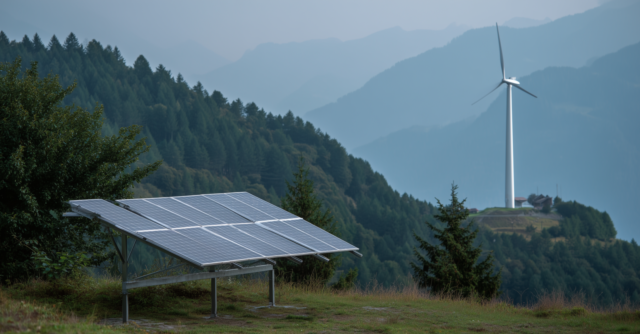
    APV Sidenplangg AG, a partner plant of the Uri-based energy service provider energieUri AG from Altdorf and the green electricity producer aventron AG from Münchenstein BL, are building the first alpine solar plant in Central Switzerland, as detailed in a press release. The plant is located in the Sidenplangg area above the village of Spiringen in the Schächental valley in Uri.

    The alpine photovoltaic plant covers an area of 10.7 hectares at an altitude of 1800 to 2000 metres above sea level. The energy is fed into the grid via an existing transformer station. The plant will have an output of 8 megawatts and will generate 12.5 gigawatt hours of renewable solar power per year from 2029. The investment costs amount to CHF 40 million, of which CHF 31 million will remain in the form of contracts for regional companies in the canton of Uri, according to the press release.

    According to the press release, projects under the national Solar Express Initiative are essential for the security and independence of Switzerland’s electricity supply. Switzerland is particularly dependent on the expansion of its winter electricity production. The altitude and production profile make alpine solar plants such as the one in Spiringen particularly suitable for winter electricity production, as they generate three times as much electricity in the winter months as their counterparts in the lowlands.

    “We are delighted to be realising the first alpine solar plant in Central Switzerland together with our partner energieUri. This project underlines the successful cooperation between the Central Plateau and the mountain cantons as well as the joint commitment to renewable Swiss energy production,” said Dominik Baier, Chairman of the Board of Directors of aventron AG.

  • Business opportunities in the Uri valley floor

    Business opportunities in the Uri valley floor

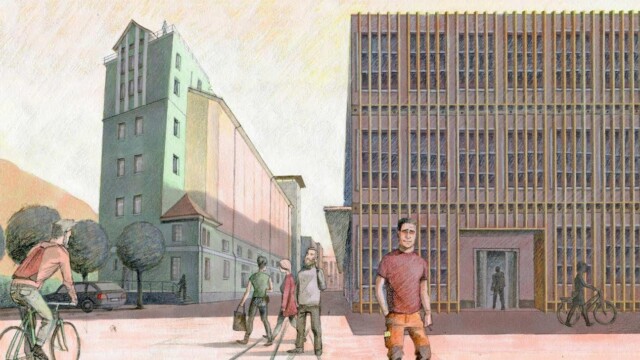
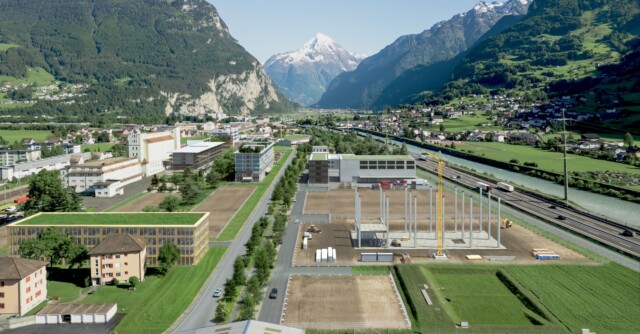
    Werkmatt Uri is one of the last large land reserves in the Uri valley floor. The first industrial uses with a direct railway connection were already established here during the First World War. The listed grain stores designed by architects Eduard Züblin and Robert Maillart in 1912/13 are particularly characteristic. These buildings will be preserved as landmarks and converted into an exhibition centre and art warehouse. The canton is investing in infrastructure to further develop the area between the new Altdorf cantonal railway station and the future Altdorf South motorway junction.

    Optimum location and economic impetus
    Uri is strategically located on the most important European north-south axis with the Gotthard Base Tunnel and the A2 motorway. The immediate proximity to the Altdorf intercity railway station and a modern bus concept promote the accessibility of Werkmatt. The improved accessibility provides impetus for economic and residential projects. With “Vena”, “Cubo” and “Strickermatte”, private investors have realised modern residential developments within walking distance.

    Development with vision
    Kässbohrer Schweiz AG has already recognised the added value of Werkmatt and relocated its headquarters to Altdorf in 2019. The new service building has created 30 qualified jobs in the areas of administration, sales, service, training, final assembly and production of special vehicles, mainly snow groomers. Werkmatt AG is also developing an innovative utilisation concept for building plots 9 and 13. The plans include a multifunctional centre with a business hotel with 80 rooms, co-working spaces, commercial and cultural spaces, restaurants and fitness and recreation areas.

    Targeted planning for sustainable growth
    As the owner, the canton of Uri is striving for a win-win situation with the future owners, users and investors in the area. The plots are to be sold and built on gradually over the next few years. The canton is developing the Werkmatt Uri site in a coordinated manner so that sustainable economic uses are created in the interests of the region as a whole. To this end, it is drawing up guidelines – including those relating to workplace density. The neighbourhood design plan serves as a planning instrument for investors and companies wishing to build on the site, which is binding on the owner and defines the parcel of land. It sets guidelines regarding utilisation, design and infrastructure.

    Success through co-operation
    Werkmatt Uri is an example of coordinated and sustainable site development. Companies benefit from a committed administration, short decision-making processes and needs-orientated solutions. The region expects the project to provide long-term economic impetus and create more than 1,000 jobs.
    Werkmatt Uri is therefore much more than just an industrial area, it is an economic driver and an attractive location for forward-looking companies.

  • Uri and Ticino to jointly operate the Lucendro power plant in future

    Uri and Ticino to jointly operate the Lucendro power plant in future

    The Lucendro power plant in the Gotthard region on the territory of the municipality of Airolo will be jointly operated by the cantons of Uri and Ticino in future. According to a press release, this is the result of an agreement reached on 1 November. The agreement was reached thanks to mediation by the Federal Office for the Environment, Transport, Energy and Communications, which has been ongoing since 2022. According to the agreement, both cantons will each hold a 50 per cent stake in the future company, which will be based in Airolo. Uri will receive a majority share of the electricity. Technical operation and maintenance will continue to be ensured by Azienda Elettrica Ticinese(AET). Uri will take over the commercial management.

    The power plant was built between 1942 and 1948 by the former Atel, which was later merged into Alpiq. in 2013, the two cantons decided not to renew Alpiq’s licence after the reversion. aET acquired the plant in 2015.

    The power plant utilises water from the Gotthardreuss and Ticino rivers, which is collected in the Lucendro and Sella reservoirs. It produces around 103 gigawatt hours per year.

  • Implenia builds large hotel complex in Andermatt

    Implenia builds large hotel complex in Andermatt

    Construction company Implenia has been awarded the contract by Andermatt Swiss Alps to build a large new hotel complex in Andermatt. According to a press release, the project is part of the overall development of the Andermatt Reuss district. A hotel & residences with 66 rooms, 164 apartments, a restaurant and a spa area are to be built in the vacation destination by the end of November 2027. Construction is due to start in spring 2025.

    According to the press release, the hotel complex consists of three individual buildings. These are connected by a spacious lobby area on the first floor. The building will be a solid construction and connected to a district heating network. Groundwater will be used for cooling and a photovoltaic system will be installed on the façade. The construction contract also includes part of the access road and a snow protection roof.

    The Buildings division in the Baumeister business unit was also awarded contracts for other major construction projects: Implenia is building two large, mixed-use residential developments in Köniz near Bern and in Zug, new school buildings in Binningen BL and Zug and a new community center in Pratteln BL. Handover for these projects is scheduled for fall 2025. This results in a total order volume of CHF 200 million.

  • Hoyou wins at the Start-up Weekend Uri 2023

    Hoyou wins at the Start-up Weekend Uri 2023

    The Canton of Uri held the second edition of its Start-up Weekend Uri from 1 to 4 September. The canton “once again presented itself as an attractive location for start-ups”, writes the cantonal Department of Economic Affairs in a statement. Four young companies were given the opportunity to further develop their business idea “in an inspiring environment between co-working space, canoe tours and culinary delights together with expert coaches”, it continues.

    “We have only known the canton of Uri in passing,” Miro Mandelz and Philip Zollinger of appreci8 are quoted as saying. Their start-up from Zollikon ZH uses artificial intelligence to mediate between job seekers and employers. “During the three days, we were able to get to know the versatile business and living location of Uri better and further develop our business idea.”

    At the final presentation on 4 September, Christine Hegglin was able to convince the jury of experts from companies and the cantonal administration with her platform for real estate exchange. She received the *zünder wildcard for this and is allowed to participate in the *zünder accelerator funding programme with her start-up Hoyou without going through the selection process.

  • The government of Uri rejects the environmental associations' objection to the renewal of a license for CHC

    The government of Uri rejects the environmental associations' objection to the renewal of a license for CHC

    Rapid expansion of renewable energies is more necessary than ever. The hunger for electricity in Switzerland is growing, the reliability of electricity imports from abroad is dwindling and a third of the annual domestic electricity production will be lost with the phasing out of nuclear energy. In short: new power plants urgently need to be built to prevent power shortages in Switzerland very soon.

    In 2018, the Canton of Uri publicly published the modified license application for the use of the Meienreuss and thus advocated the expansion of renewable energies in the canton of Uri. The environmental organizations WWF and Pro Natura then raised an objection. CKW repeatedly sought dialogue with the objectors to reach an agreement, but without success. At its meeting on July 5, 2022, the government of Uri rejected the objections of the environmental associations and thus sent an important signal for the energy transition. The environmental associations can lodge an appeal with the Uri High Court on this decision and thus take legal action, which can go as far as the Federal Supreme Court. This would trigger a massive project delay. However, CKW CEO Martin Schwab hopes that they too have recognized the seriousness of the situation: “In terms of the energy transition and in view of the current energy crisis, it must be possible for us to implement such important projects of national importance quickly. This requires targeted action on all sides. You can’t be in favor of the energy transition, the expansion of renewable energies and more climate protection and at the same time block important projects,” says Schwab.

    Power station of national importance produces electricity for the people of Uri
    The Meiental power plant is located in the municipal area of Wassen and is a joint project by CKW and several local partners. The total investment is around CHF 37 million. Hydropower has been the backbone of electricity supply in Switzerland for over 100 years. Because it produces ecologically sustainable, renewable electricity reliably and predictably at all times – even in winter. However, due to ecological requirements, hydropower is facing production losses of around 10 percent by 2050. With the Meiental run-of-river power plant, CKW wants to make an important contribution to more renewable electricity production and security of supply in the canton of Uri. The targeted annual production is 32 GWh. This corresponds to the consumption of around 7100 average 4-person households.

    Original project revised and reduced
    The power plant project meets all the requirements of the “Protection and use concept for renewable energies in the canton of Uri” (SNEE). The SNEE shows where in the canton of Uri systems for energy production from renewable sources such as water, wind and sun can be set up and where landscapes and watercourses should be preserved undiminished. Based on the SNEE, CKW has revised its original project submitted in 2008 and reduced it from two to one power station stage in the lower reaches of the Meienreuss. The use of the ecologically more valuable upper course with partial floodplain character as well as the alpine tributaries is dispensed with. With a protection and use plan, these parts of the body of water are excluded from use for energy production for the concession period of 80 years that has been applied for.

    Due to the large production volume, the Meiental power plant is considered a power plant of national importance under the Swiss Energy Act. The national public interest in safe electricity production thus takes precedence over regional protection interests. Furthermore, without this power plant, it would not be possible for the Canton of Uri to be able to achieve its own expansion target of 150 GWh for its own energy production.

  • Andermatt has the best concert hall in the world

    Andermatt has the best concert hall in the world

    The jury of the Architizer A+Awards has awarded the Andermatt concert hall the prize in the category of cultural halls and theaters , Andermatt Swiss Alps AG informs in a press release . “The award for the Andermatt concert hall recognizes the unique transformation of the mountain village of Andermatt into a prime alpine destination,” says Raphael Krucker, CEO of the company responsible for the development, realization and operation of the holiday destination. The Andermatt Concert Hall enriches the year-round destination of Andermatt with a unique cultural program.

    Designed by London-based architecture firm Studio Seilern Architects , the building can be used for multiple purposes thanks to a retractable system that allows up to nine tiers of seating to disappear beneath the main balcony. The flexible stage offers space for an orchestra of up to 75 people.

    “This victory is an extraordinary honor for us at Studio Seilern Architects,” said project manager Christina Seilern in the statement. “With entries from over 80 countries submitted for the award, I am extremely pleased with the outcome.” Recently named Architect of the Year at World Architecture News’ Female Frontier Awards , the professional hopes “the honor reputation of this project as a world-class concert hall – one that Andermatt deserves”. With the Theater Nouvelle Comédie de Genève , a second Swiss theater has made it into the finalists of the Architizer A+ Awards in the category of cultural halls and theaters.

  • A canton creates accessibility

    A canton creates accessibility

    The train and bus connections in southern central Switzerland are bundled in the new cantonal train station in Altdorf. New train stops and additional connections significantly increase the potential for skilled workers. Knowledge-based service providers on the north-south axis benefit from direct access to the labor markets of the Greater Zurich Area and the greater Milan area and encounter technologies in the sectors of precision technology, alpine technology, traffic and safety technology and environmental technologies. With foresight, the canton of Uri has secured development areas on the Werkmatt Uri, which it is handing over exclusively for high-quality jobs at attractive conditions. With the new building of the Urner Kantonalbank directly on the edge of the platform of the new cantonal railway station, a working environment with offices ready for occupancy is offered. The German IT company Essendi IT recently opened its new Swiss headquarters at Bahnhofplatz.

    The canton of Uri is also a fantastic living and leisure area with its lake landscape (water sports and sailing), the mountains and rivers (outdoor, climbing, hiking, Resort Andermatt), an authentic, unaffected area of experience with the primeval history and tradition of Switzerland . This creates inspiration for new business ideas.

  • «Innovative energy concepts in the fast lane»

    «Innovative energy concepts in the fast lane»

    Forward-looking planning has resulted in an interesting energy concept during the construction of the “SisCampus” new building project. The aim was to implement an environmentally friendly and climate-friendly concept. The client decided on a concept that was based on this objective. The main risk lay in the modern approach, and that without relying on empirical values. So the focus was not primarily on sensational elements, such as visible photovoltaics as a label for a sustainable climate image.

    The core of the innovation was the use and storage of naturally occurring energy resources. For this purpose, the sun’s energy and the groundwater are used as a heat or cooling source in an optimal way. The structural prerequisite was the creation of an adequate storage facility. For this purpose, the entire building mass was defined as storage and equipped with thermoactive components, so-called TABS. These ensure an optimal temperature distribution in the entire mass storage at a flow temperature of < 30 degrees.

    With the use of electrochromic facade glazing (SageGlas) as the primary control element, energy consumption, daylight and glare can be influenced dynamically. The energy transmission of solar energy can be easily regulated by a factor of 10 (G value 0.03-0.35). Another advantage is that other traditional sun protection solutions such as blinds or heat protection devices were not used at the location with a strong foehn influence.

    Ventilation is a key element in the climate concept. Energy-consuming air conditioning and active ventilation systems have been dispensed with. Ventilation systems can only be found in the catering area in the kitchen, in the restaurant and in the hotel rooms. The office area is ventilated by hand and ventilated by means of motorized window sashes.

    With these core elements, the year-round climate target of 22-26 °C with a humidity of 35-60% could be achieved. The investment costs for heating and cooling could be reduced by more than 60% in terms of space and system technology.

    The room climate is continuously recorded by means of meaningful monitoring. The energy requirement is currently around 8 W/m2 and will be comprehensively validated for the first time in summer 2022 after 2 years of operation.

  • Apartment house Altera

    Apartment house Altera

    Construction of this house started in June 2021. Altera comprises twelve residential units: four apartments, seven maisonettes and one penthouse. All apartments are flooded with light and the furnishings are kept in warm and light tones. The view from the floor-to-ceiling windows of the rough and mountainous Ursern Valley is the perfect contrast.
    Already in the entrance area of the house, the lobby with a fireplace and sheepskin armchairs invites you to linger. The exclusively equipped common rooms are located on the ground floor. These include a ski room with a personal ski locker including boot warmers, a fitness center including a state-of-the-art spinning studio and a wellness area with spa and sauna for ultimate relaxation.

  • Apartment house Mira

    Apartment house Mira

    The start of construction for the Mira apartment building is planned for spring 2022. The facade of the house is inspired by the stucco technique «Sgraffito». This is a historical technique for decorating surfaces. In Switzerland, “Sgraffito” is mainly found in the canton of Graubünden in the Engadin.

    The Mira apartment building comprises 18 mezzanine apartments with high ceilings, spiral staircases and generously sized windows. The diverse floor plans of the apartments add a unique and playful touch. The panoramic windows in combination with the double ceiling height give the apartments a loft flair. The 2.5 to 3.5 room apartments include well-equipped common areas, including a ski room, a sauna with a relaxation room and a fitness area.

  • Andermatt Alpine Apartments

    Andermatt Alpine Apartments

    Andermatt Swiss Alps real estate can be used both as a first and second home. In the case of a second home, the owners have the opportunity to rent the apartment to holiday guests during their absence and thus generate income. The Andermatt Swiss Alps team takes care of the entire organization and processing of the rental. From the reservation process to cleaning and on-site guest care. With this rental program, the apartments are better utilized and Andermatt Reuss is busy all year round. This also reduces the number of so-called cold beds, and numerous guests can enjoy the stylishly furnished apartments.

    Holidays in modern apartments
    The apartments in Andermatt Reuss are the ideal accommodation for a break in the mountains. Depending on the equipment for families, couples or holidays with friends. The year-round destination of Andermatt offers a variety of activities and events for young and old in both winter and summer. The Andermatt concert hall is used throughout the year and offers a varied programme. The ski area can be reached on foot in just a few minutes or with the free ski bus, and the cross-country ski trail extends just a few meters from the front door. In summer, the hiking trails and bike trails start just a few steps outside of Andermatt. There are also a few shops, restaurants and bars in the Andermatt Reuss part of the village.

  • Strickermatte: living and working at the new train station

    Strickermatte: living and working at the new train station

    The Strickermatte development will stretch across several plots opposite the Altdorf cantonal railway station. It turns the area into a dense residential and commercial settlement and aims to use the land reserves sparingly. The superstructure wants to make optimal use of the existing plots of land and fit harmoniously into the existing building structure as a whole.

    Seven apartment buildings with 104 apartments, commercial space on the ground floors of the buildings to the south and two underground car parks are planned. The commercial spaces are being created in the front buildings directly on the new station square and are intended to offer interesting offers to passers-by of the station.

    The aim of the project is to create living space for people of all ages and attractive outdoor areas that can be used privately and publicly. The apartments have balconies or loggias and a high-quality interior design with parquet floors, built-in cupboards and their own washing tower. The majority of the buildings will be built without obstacles and should thus take into account the requirements of all generations.

    With a connection to the district heating network of Heizwerk Uri AG, a photovoltaic system and charging stations for electric vehicles, the buildings meet today’s sustainability standards. A mobility offer with car sharing should also create the possibility of doing without your own car in the future.

    The former industrial and commercial buildings have already been demolished and excavation work has begun. The completion of the first new buildings is planned for the end of 2023. The work on the overall development is expected to last around 3.5 years.

    The construction project is being developed and implemented by Bricks AG in cooperation with HTS Architekten und Partner AG.

  • Three sustainable residential buildings for the Gotthard road tunnel workers

    Three sustainable residential buildings for the Gotthard road tunnel workers

    Since 1980, the Gotthard road tunnel has been the most important Swiss car corridor through the Alps. After more than 40 years of operation, this is in need of renovation. The Federal Roads Office (Astra) is building a second tube by 2029 so that the road connection can be used without interruption despite the repairs. In order to offer the teams involved in the construction optimal accommodation during their assignments, the Astra announced an architecture and investor competition. The contract was awarded to Swiss Property, which developed its project together with the engineering office Pirmin Jung. They convinced the jury with three buildings; two of them in element and one in modular construction as well as a digitized planning and construction with the Timber OS system developed by Swiss Property. This enabled the optimal balance between yield, costs and energy consumption to be calculated.

    The three buildings are named Dammastock, Galenstock and Rhonestock. Your future residents are surrounded by rock, concrete, dust and noise every day. For this reason, the rooms were deliberately designed with a high feel-good factor and a warm atmosphere. A main component used in construction is local wood.

    The Dammastock is the largest of the three buildings: in 2021, 102 single rooms, each with an area of around 14 square meters, as well as an underground car park were built here. The Dammastock has been ready for occupancy since December 2021. The facade consists of saw-grey spruce and fir wood. The building is to be dismantled in 2032: Thanks to the 105 individual wooden modules used, the Damma
    stock can be easily dismantled, transported and reassembled at another location. Possible conversions include a temporary school building, an asylum home or guest rooms.

    The other two buildings, Galenstock and Rhonestock, will be erected as hybrid structures with 72 single rooms of 14 square meters each. Both will have a staircase core made of reinforced concrete. The buildings consist of system timber construction elements made of spruce and fir wood and, thanks to the alpine architecture, harmonize perfectly with their surroundings. After the tunnel work, these buildings can be used on the spot in the long term: the interior design allows for an uncomplicated conversion into 16 apartments with areas of 40 to 110 square meters. The three buildings in Göschenen thus create a benefit that goes beyond the tunnel project.

    The interior rendering shows what an apartment could look like after conversion.
  • Post-NEAT: Off to new shores!

    Post-NEAT: Off to new shores!

    Two commercial buildings have already been realized in the Grund area of the former NEAT construction site. Other projects are taking shape and spreading a spirit of optimism from Amsteg via Silenen to Bristen. Andermatt has the tourism resort, Altdorf is proud of the canton train station. In order to put the entire canton and all regions in the best light, more lighthouses are needed, according to Silener mayor Hermann Epp: “From 1999 to 2016, AlpTransit Gotthard used this area between Gotthardstrasse and Reuss as an installation site for the construction of the Neat base tunnels. Now we want to work with partners and investors to realize new opportunities for business, leisure, living and tourism on the ground that has been freed up,” says Epp.

    In addition to the work yard of a construction company, several projects from the comprehensive plans for the site have already been put into operation. The regional medical and sports center including the restaurant is particularly important to the community. Uri still has the lowest density of doctors in Switzerland. There are also signs of an aging of the population of Uri. The need for medical services is increasing. On the other hand, it is becoming increasingly difficult to persuade young doctors to run a practice in a mountain canton. It turns out that group practices with the possibility of part-time work and flexible participation options meet a need of young doctors. The medical center is therefore well suited to ensure and increase the family doctor care for the municipality of Silenen and the middle and upper Reusstal in the long term and sustainably. An open day will take place on August 13, 2022.

    More information:
    www.silenen.ch
    www.az-silenen.ch
    www.grundimmobilienag.ch

  • Millionaires store bitcoins in secret bunker in Uri

    Millionaires store bitcoins in secret bunker in Uri

    Millionaires store their bitcoin data in a bunker on Lake Lucerne. The reporter Joon Ian Wong of the news portal “Quartz” is one of the few people who have ever seen this place live. He visited the underground high-security wing and was able to take pictures and videos.

    It is not bitcoins themselves that are stored in the 10,000 square meter data center in the bunker, but so-called cryptographic keys. They are worth their weight in gold: Whoever has them has access to the corresponding balances in the Bitcoin network.

    Bitcoin storage is a popular target for hacking attacks. That explains the downright paranoid security measures in the bunker: Its exact location is secret. Anyone wishing to enter will be photographed and not only have to provide ID, but also their fingerprints before entering a bulletproof airlock. The bunker’s steel doors, which weigh several tons, are said to be able to withstand a nuclear attack. But of course thick walls and a secret location are not enough for digital values like Bitcoin. The data in the bunker is protected against electronic attacks by a sophisticated system.

    The bunker reaches 320 meters deep into the mountain and, according to Wong, consists mainly of three rooms that are connected by tunnels. The bunker was built in 1947 and was the Swiss Army’s secret headquarters during the Cold War. According to Wong, there are still areas that have remained untouched since then. For example, an old map room with huge maps on the walls, old radio equipment, conference tables.

    A “Quartz” reporter was able to take pictures and film in the high-security bunker.
  • Vertically built craft center in Erstfeld

    Vertically built craft center in Erstfeld

    In industry and in the commercial sector, company buildings are traditionally single-storey in order to enable optimal logistics and to shorten distances. This idea has its origins in a time when land was considered an infinite resource and the car was the focus of planning.

    But land is a finite resource. For reasons of sustainability, as little soil as possible should be installed and sealed. The industry must therefore find new ways to minimize sealed ground floor areas without losing flexibility.

    The craft center Ha2 in Erstfeld is taking such a path. His concept: It stacks up the space that would otherwise be spread over a single floor. The building consists of a ground floor and two upper floors. The latter are accessed via a ramp that can be driven on by delivery vans. It connects to each floor via an arcade. A goods lift is also available.

    The Ha2 Crafts Center not only attaches importance to sustainability when it comes to the construction area. The construction was designed for durability, for example by high interior spaces and the separation of the primary, secondary and tertiary structures. The latter should also put the poor CO2 balance of concrete into perspective. The building shell of the crafts center is made of wood, the sun protection was created constructively. Depending on the user, waste wood chips or groundwater are used for heating. With a joiner’s workshop as a co-user, the building could also be heated exclusively by burning wood chip waste.

    The rainwater is collected in a cistern and reused – this saves 40 percent of the fresh water.

    The Ha2 Crafts Center aims to be planned and implemented as simply and efficiently as possible. The ground floor is built over height and can be divided into two levels. This ensures more flexibility in use.

    The craft center is being built in the commercial zone of the municipality of Erstfeld, north of the town centre, with the NEAT and A2 connections in the immediate vicinity. In the neighborhood there are, among other things, a fish farm and a system technology company.

    Small, local craftsmen’s companies should be able to develop in the craftsmen’s center. An important point is therefore the affordability of the areas.

    A company uses part of the space for a sanitary exhibition. A takeaway stand is also planned on the ground floor. Also among those interested are a local carpenter’s shop, hemp plant startups, and plumbing and electrical companies.

    The craft center Ha2 is currently in the status of the preliminary project. The building permit process is scheduled to begin in June 2022. The move into the building is planned for autumn 2023.

    Aerial photo of the micro-location: The location of the crafts center is characterized by the optimal connection to the given traffic routes.
  • New service and commercial arena planned in Werkmatt Uri

    New service and commercial arena planned in Werkmatt Uri

    Franz Kempf AG wants to move its activities to a new building in Werkmatt Uri, which it intends to build. However, since she will only use a small part of the building on the 7,000 square meter plot, managing director and company owner Franz Kempf is looking for companies that have a need for property or rental space.

    The company for plaster, stucco and panel work has too little space at its current location. Kempf also sees great potential in the new location. It is well developed and offers employees a workplace with a high quality of life close to nature. Cooperation with other companies also creates new jobs in the canton of Uri.
    In order to address interested parties from all over Switzerland, Kempf advertised in various media in Basel, Zurich, Central Switzerland, Aargau and Ticino. At the moment he is evaluating the interested parties who have contacted us. He doesn’t want to reveal what kind of company they are: “It’s very exciting, but for reasons of discretion I can’t give any information about it yet.”

    The new building is to be developed according to the needs of the interested parties. Kempf hopes that the project will start soon and that the commercial space will be available from 2024. The plot in which Kempf would like to build its service and commercial arena is the southernmost one in the Werkmatt. It is located right next to the new motorway junction.

    Franz Kempf, Managing Director and owner of Franz Kempf AG.
  • For the best work and life

    For the best work and life

    The Gotthard is a myth, a landmark known throughout Europe, which has been presenting people with supposedly insurmountable challenges for centuries, but which has also driven entire generations to new peak performances. The Gotthard still spurs us on today, not only promoting innovation, but actually demanding it. The name Gotthard radiates north and south, but also beyond our national borders and stands like no other name for durability, robustness, pioneering spirit, innovation and engineering. The brand name Innovationspark Gotthard stands for the symbiosis of stability, durability and strength with creativity, optimism, closeness to nature, community and openness.

    New talents want a place of work with prospects for the future, but also base their choice of location on soft factors and look for a top environment for their family, leisure time and relaxation. Regions outside the major centers are establishing themselves as attractive alternatives thanks to a favorable cost environment (taxes, energy, real estate prices). The Canton of Uri is predestined to develop such a living environment and to become attractive for those who have “arrived”.

    The Gotthard Innovation Park offers an inspiring environment for the knowledge- and innovation-oriented further development of products and services for companies in “outdoor technology” or in the “nature, energy and innovation” sectors.

    It focuses on companies that want to offer their talents (Gen Y, Gen Z) living and flexible working in an intact environment with a wide range of sports and cultural activities “on their doorstep”.

    Possible are:

    • Shared services (spatially: reception, cafeteria, meeting room, etc. as well as content: administrative services). The company can concentrate on its main activity.
    • Fab Lab (offer for small series, 3D printer, simulation and coaching, operating concepts, processes, etc.)
    • Inspiration spaces to promote innovation in mutual interaction
    • Clean rooms, rooms for mech. Manufacturing, experimental laboratories, test centers
    • office space
    • Flexible, open areas (engineering, testing, production, administration) characterize the intended use. It differs from a pure office space offer.
  • Business opportunity Werkmatt Uri

    Business opportunity Werkmatt Uri

    The Canton of Uri and the municipality of Altdorf are opening up new business opportunities for entrepreneurs and investors in the Werkmatt Uri Land. Industrial, commercial and service companies will find flexible options here. More than 1,000 value-added jobs are to be created here in the future.

    Sustainable economic development
    As the owner, the Canton of Uri is striving for a win-win situation with future investors, owners and users in the area. The public sector therefore invested a double-digit million amount in the area between the future cantonal railway station and the new Altdorf Süd half-way junction. The plots of land can be purchased or acquired with building rights.

    The first plots have already been sold and the first development stage has been completed. In the next few years, further building plots are to be sold step by step and built on. The canton is developing the Werkmatt Uri area in a coordinated manner so that sustainable economic uses are created in the overall regional interest. The district design plan serves investors and companies willing to build as an owner-binding, plot-specific planning instrument. It sets guidelines in terms of use, design, infrastructure and, in particular, job density.

    Noticeable increasing interest
    Interest in the Werkmatt Uri has increased again with the opening of the cantonal railway station in December 2021. The two listed buildings, the “Sackmagazin” by the architect Robert Maillart and the “Silomagazin” by the architect Eduard Züblin, have already been sold. Exciting collections of art objects can now be found where the federal government used to stack grain sacks for emergencies. Kässbohrer Schweiz AG, a manufacturer of off-road vehicles, is the first company to buy a plot of land and build on it. Other exciting projects are being planned – as the following articles in this magazine illustrate.

  • A new urbanity is emerging at the Altdorf train station

    A new urbanity is emerging at the Altdorf train station

    «With this residential and commercial building, we focused on a sustainable concept. Ecology, economy and social issues are in harmony. With “Cubo”, the focus is on the social and functional mix of the building. This is achieved with diverse and communal forms of use. With these future-oriented approaches, incentives are created for the establishment of new places of work and life in the region,” explains René Chappuis, management of the responsible CAS Group. The approach is convincing. The apartments and office space were rented out within a very short time. The opportunity to meet in the building in everyday life is particularly popular with commuters and newcomers.

    Staircase as a meeting zone
    The cubic building shell encloses two commercial floors, four residential floors and an attic floor. A total of 36 high-quality rental units with 2.5 to 4.5 rooms have been realized. “Encounter, exchange and the opportunity for joint meetings characterize the room concept. The building surprises with a very generous access zone. The atrium, which is lit by daylight, also serves as a meeting place to promote social exchange between the residents,” explains Helen Chappuis, Management and Head of Architecture. To promote social communication, the laundry room is also located on the ground floor and designed as a washable area.

    Green electricity from the roof
    During the planning, a high priority was given to sustainability. The building has a modern wooden facade and is heated with a groundwater heat pump, which is fed via the photovoltaic system installed on the flat roof. Charging stations for electric cars can easily be made available in the garage. The PV system with an output of 36 kilowatts produces around 34,000 kilowatt hours of green electricity per year. This means that around six tons of CO2 emissions can be avoided per year, which corresponds to around 42,000 kilometers driven by car. As part of an association for self-consumption (ZEV), the solar power is consumed on site as far as possible. In summer, excess solar power flows back into the grid, in winter additional energy is drawn from the public grid. Thanks to this innovative concept, the tenants receive solar power from their own roof, which costs even less than mains power.

  • Intergenerational living

    Intergenerational living

    The new and modern building extends along the Gründligasse and the Allenwindenweg, which is precisely and subtly integrated into the existing environment. On behalf of TMA Immobilien AG, hts architekten + partner ag from Altdorf have realized a dense yet small-scale development that creates modern living space, new alleys, squares and open spaces that are both private and public and can be used and played individually. Intermediate spaces allow views of the surroundings and views of the surrounding mountains. The identity-forming element of the Almausa walls, typical of Altdorf, was included in several places. It accompanies you through the whole district.

    The differentiated range of apartments, consisting of terraced single-family houses, semi-detached single-family houses and small multi-family houses, generates a good mix of residents of different age groups. A total of 51 new residential units (apartments and maisonettes) were built. At the end of the construction work, the barn on Trögligasse will be converted into a single-family home. Despite the different building volumes and the elongated and winding plot situation, the superstructure convinces with a uniform appearance. The houses, built in solid construction, meet increased energy requirements and are connected to the district heating network. The beige brushed plaster and the perforated sheet metal serving as privacy and fall protection give the facade of the new housing estate a special character.

    While the external appearance was defined by the district design plan, the interior design was carried out individually according to the buyer’s wishes. All residential units have a private outdoor space and they all share the park in the center of the quarter. Great importance was attached to a natural environment designed with native plants. In the public park, all paths and squares were designed with unpaved materials in order to leave as much space as possible for nature. Tall trees offer natural shade and invite you to stay.

    Apart from the seven terraced single-family houses along Gründligasse, all residential units have their parking spaces in 2 garages. As a result, there is as little additional traffic in the district as possible, and a lot of outdoor space can be offered. The car-free lanes and squares invite the children of the development and the surrounding districts to play outside carefree.

  • Untere Turmmatt: New urban district with eight apartment buildings

    Untere Turmmatt: New urban district with eight apartment buildings

    A new urban quarter is being created in Altdorf with the “Untere Turmmatt” residential development. Eight multi-family houses with 108 apartments are to be carefully integrated into the townscape via the height gradation and form the transition from the residential area to the industrial area.

    A new park-like inner courtyard with native trees and grass is being created between the apartment buildings as a meeting zone. Playgrounds, alleyways, lounge areas and seating invite residents to linger and promote exchange within the development.

    The clearly structured facade of the residential development has a homely character thanks to details such as rounded edges, textile plaster and French windows. Intensive green roof gardens are being created on the roofs of the superstructure.

    The residential development is to be built in three stages. The first stage is currently being completed. It comprises four apartment buildings with a total of 64 residential units, consisting of storey, attic and maisonette apartments. The apartments vary in size from 3.5 to 6.5 rooms. All apartments have a weather-protected private outdoor space in the form of a balcony or loggia. Some apartments also have direct access to the roof gardens. In March 2022, the first 20 apartments were handed over to their buyers. The next 15 apartments will follow in June and another 11 in October. The remaining apartments should be ready for occupancy in April 2023.

    The second construction phase is in preparation. It comprises two apartment buildings, one of which will be used for rent. The start of construction of the second phase is planned for autumn 2022. The third construction phase with another two apartment buildings is planned for 2024 and 2025.

    The new district is accessed via Fabrikstrasse and via pedestrian paths from Hellgasse and Turmmattweg. The apartment buildings are directly connected to the underground car parks. There are public transport stops near the building.

  • A modern hospital at the foot of the Gotthard

    A modern hospital at the foot of the Gotthard

    The canton of Uri is building a new regional hospital that will serve as a model. After three years of construction, the new Cantonal Hospital Uri (KSU) will open in June 2022. Uri thus sets a record: The new hospital is the largest building construction project that the canton has ever implemented as a builder. The hospital in the main town of Altdorf is a generational work that will secure and improve the health care of the population for years to come. From the architecture to the design to the execution: the new building of the KSU is geared towards the current and future needs of the canton of Uri. “With this investment, we are securing basic medical care in Uri for future generations. The workers on the construction site worked very hard. Thanks to their commitment, difficulties such as the corona pandemic could be overcome on the construction site. In addition, regular hospital operations were able to continue unhindered,” says government councilor Roger Nager.

    New shell, new interior
    Thanks to the investment, the cantonal hospital in Uri can play its role as a medical competence center in the future. The KSU will gain in medical treatment: In the future, patients will have short distances, comfortable rooms, more privacy, modern examination rooms and good service. The team from Darlington Meier Architects, Zurich, has succeeded in creating a compact, independent and stylish building. The new building is surrounded by a large hospital park. The building carefully creates a new, strong identity. In this way, visitors or patients can find their way around quickly and easily. This is achieved through the careful use of material, light and colour. You can see daylight everywhere in the new building, even in the operating theaters you can see the imposing mountains of Uri. As an important base, the KSU also ensures emergency care along the north-south axis for people who do not live in Uri.

    Huge public support
    On September 24, 2017, 85.5 percent of the Uri voters approved the construction loan for the conversion and new construction of the cantonal hospital. Roger Nager is convinced: “The patients and the approximately 600 employees of the cantonal hospital will feel comfortable in the new building”.

  • A wooden chalet trio for the highest demands

    A wooden chalet trio for the highest demands

    All three charming wooden chalets are connected with a passage. Behind the construction project is a comprehensive concept that focuses on sustainable tourism. At the same time, the Berg-Academy is set up, offering courses in the areas of healthy people, a healthy environment and sustainable entrepreneurship. The Academy will conduct the “live seminars” in the Berglodge37. External seminar providers can hold their own seminars on the Eggberge. Companies and organizations book the lodge for internal seminars in the mentioned areas. Adults looking for peace and quiet can use the place for a personal pit stop, a “digital detox” or simply for a few days of relaxation.

    With the Berglodge37, the two operators fulfilled a dream: “This heart project has been dormant in us for a long time,” says Ruth Koch. “Operating a mountain oasis where curious people can meet and be inspired is our common dream,” adds Martin Reichle. When building the Berglodge37, great importance was attached to an optimal energy balance and a lot of regional “moon wood” was used, wood felled during the waning moon. According to an ETH study, this wood has been proven to have a wide variety of positive properties such as better stability, better durability, fire resistance, hardness and resistance to pests. When it came to choosing the furniture, only the best was good enough. All rooms are equipped with bed systems from the Swiss manufacturer Leibundgut from the Bernese Oberland. The world’s only bed with automatic shape adjustment to every body shape and sleeping position offers perfect sleeping comfort and guarantees the best relaxation.

    As a consistently sustainable business, Berglodge37 relies on vegetarian cuisine. Guests should be able to experience that vegetarian food can taste just as good as dishes containing meat. The lodge sees itself as an innovative employer in the canton of Uri. This is reflected in the choice of employees, who practically all come from the region. The opening of the Berglodge37 is planned for mid-July 2022. More information: www.berglodge37.com.

  • Research at the epicenter of the latest developments

    Research at the epicenter of the latest developments

    Shortly before the first lockdown in February 2020, the Institute for Alpine Cultures was officially opened. After several years of competitive selection procedures, an important beacon of the Uri government began to shine. With the new institute, university research was stationed in the canton itself for the first time in the history of Uri. A university institution was deliberately chosen because it guarantees every level of university qualification through to doctorate and habilitation thanks to the connection to the University of Lucerne.

    The institute concentrates thematically on the entire arc of the Alps from Nice via Innsbruck to Ljubljana with a special anchoring in the Gotthard region. In this way, economic and social developments can be observed not only as a special case, but also in comparison. The aim is to learn from history in order to develop the best future scenarios. So it’s not just about navel gazing, but about a panoramic view in the middle of Switzerland, in the middle of Europe.

    The canton has made the best choice with its cultural-historical anchoring: in dialogue with the local population, with economic and political decision-makers, the advantages of the region are specifically determined and further developed, which with the focus on the Alps are no longer on the supposed periphery, but in the epicenter of new developments. In view of the challenges in tourism, alpine and energy management, the institute has now found a reliable partner who guarantees scientific and objectivity.

    It goes without saying that the Institute is not an ivory tower. On the contrary: the exchange between expert knowledge and experience is what really drives the institute’s work. As a result, cultural historians, legal scholars, energy economists, political scientists, philosophers, archaeologists – the list is not final – not only face a constant exchange between the disciplines, but also revise and specialize their theses thanks to local cooperation.

    Showcases for this work are regular events and excursions – be it to the Urner Boden or to the Steingletscher – under expert guidance from all over Switzerland. And more and more commissioned studies end up in the Altdorf office, which, thanks to the institute’s unique network of experts from Germany and abroad, meet the highest scientific standards. The message has long since reached the research community: the lighthouse is shining.

  • «It is worth investing in renewable energies.»

    «It is worth investing in renewable energies.»

    Is it true that the Datwyler plant in Schattdorf (UR) has been climate-neutral since 2012?
    Reto Burkart: Yes, that is correct.

    And how did you achieve this goal so early?
    There were two independent activities that led to this. Thanks to a new external partner, we were able to replace our oil heating with a wood heating plant in 2008. Since then, the process and heating energy for our plant has been generated using wood chips. In addition, since 2012 we have been using certified electricity from hydropower.

    What can other companies learn from your (temporal) know-how advantage?
    I think a company should have some basic knowledge in-house when it comes to sustainable energy. But you shouldn’t always try to take everything completely into your own hands. We have always worked with external specialists who can take on such issues and have much more specific know-how than we do. But it is important that you know your partner and can trust him.

    Would you have thought that the topic of sustainability would one day become so important?
    Yes, of course, and we were and are prepared for this and will not stop working on the topic. Of course it is more “en vogue” today to take on sustainability, but in my opinion we as a company have been benefiting from this setup for a long time, because sustainability does not only refer to energy and material consumption. The health and safety of employees are also part of this.

    What are your goals for the next ten years?
    As far as the health and safety of employees is concerned, we at the Schattdorf site are working to increase understanding of the importance of these issues through many small internal programs. In this regard, we also work very intensively with external partners such as SUVA.

    With regard to the environment, we are constantly working to reduce the absolute and relative consumption of fuel, electricity and water as well as the amount of waste. In addition, Datwyler has set itself the goal of being climate-neutral at all locations worldwide by 2030.

    Reto Burkart, head of the Datwyler plant in Schattdorf
  • Art in the former “sack magazine”

    Art in the former “sack magazine”

    In 2019, Christoph J. Hürlimann from the canton of Uri bought the former “Sackmagazin” by architect Robert Maillart on the Werkmatt site in Uri. Hürlimann, who founded the “Art Depot” foundation based in Göschenen with his family, previously owned the neighboring “Silomagazin” by the architect Eduard Züblin.

    At a media briefing together with Uri’s director of economics, Urban Camenzind
    Christoph Hürlimann gave an insight into his plans after his purchase in 2019: “My vision is to build an art path in Uri. This should begin at the Haus für Kunst Uri in Altdorf, continue to the Altdorf art silo and art depot in Werkmatt Uri, via the Göschenen art depot and end in the Sasso San Gottardo Museum on the Gotthard Pass. With the purchase of the former sack magazine, this vision has come a little closer.» Camenzind was also pleased with the sale: “The purchase of the building by Christoph Hürlimann is a stroke of luck for the canton of Uri.”

    Hürlimann now uses the two listed buildings on the Werkmatt site to store and exhibit various collections of art objects. In recent years he has developed the two historic buildings into a meeting place for cultural, artistic and social uses. This change of use enhances both the two historically significant buildings and the entire area.
    A lot of work was required to prepare the former sack magazine for its new use: “We had to carry out a variety of work: expand the stairwell as an escape route, retrofit electrical installations, install many partitions, do various painting work, make security installations, attach burglary protection,” says Hürlimann .

    The Werkmatt Uri in the Eyschachen area southwest of the Altdorf train station is one of the last large land reserves in the Uri valley floor. The 12 hectare area is located between the railway tracks and the A2 Gotthard motorway. More than 100 years ago, the first uses that required a direct rail connection were created there: the most prominent examples are the two federal grain stores built in 1912 and 1913 by the architects Eduard Züblin and Robert Maillart.

  • 92. immoTable in Uri

    92. immoTable in Uri

    [smartslider3 slider=”8″]

    The event was opened by Landammann and Economics Director Urban Camenzind. In his speech, he explained the positive development of the past few years: “A lot is being invested in a very small area, and private and public investments are mutually beneficial. Examples of this are the development around the new cantonal railway station in Altdorf or the tourism development in Andermatt,” says Camenzind.

    In the following presentation, Christoph Bugnon, Chairman of the Board of Management of Urner Kantonalbank, discussed the important contribution that the company is making with the new service building to the development around the cantonal railway station. Raphael Krucker, CEO of Andermatt Swiss Alps, portrayed tourism development in Andermatt in his presentation.

    Finally, Mario Epp, Uri Business Development Agency, explained the advantages of the Uri economic area: «We have an optimal cost environment, short distances to the decision-makers and are excellently developed, directly on the European north-south axis. In short: the canton of Uri offers the best conditions for entrepreneurial success.»

    The subsequent network aperitif with the construction and real estate industry rounded off the event. The current issue of our magazine «immo!invest» is linked to the event. It aims to show the positive developments in the canton of Uri and to get people interested in Uri as a location.

    We look back with satisfaction on the 92nd immoTable Uri. It was a successful event and we would like to thank all participants. Thanks also go to Monika Schärer for the great moderation and our speakers Urban Camenzind, Christoph Bugnon, Raphael Krucker and Mario Epp for the interesting and stimulating presentations. A big thank you also to our partners Canton Uri, Urner Kantonalbank, eSMART and PropTechMarket.

    On June 16, 2022, the 93rd immoTable Zurich Airport Region will continue in the Eventalm in Rümlang. This will be followed by the 94th immoTable Suisse Romandie on October 6th, 2022 in Lausanne and the 95th immoTable Basel on November 24th, 2022.

  • Sustainable energy solutions from Uri

    Sustainable energy solutions from Uri

    The future of energy in Switzerland is an ongoing topic. Local, sustainable and CO2-free energy solutions are a recipe for more independence without neglecting the agreed climate targets. With its integrated overall energy solutions, SmartEnergy for short, EWA-energieUri offers a clever solution for the individual energy transition. Specifically, the following is behind SmartEnergy: Produce and store electricity yourself with a photovoltaic system, sustainable heat and cold production, charging solutions for electromobility, measure and visualize the consumption of electricity, heat, cold and water with SmartMeters – everything is networked and optimized with one intelligent control.

    Great added value for owners
    EWA-energieUri is currently implementing such an integrated overall energy solution for the “Plätzli” development in Altdorf. The project in the middle of Altdorf’s village center comprises two buildings with a total of 24 apartments. Part of the energy required in the future will be produced with a photovoltaic system. All homeowners benefit from this. The electricity produced with solar power can be used, for example, to charge electric cars or to air-condition the premises. An intelligent control also connects all systems and optimizes them. In this way, the required electricity is always available when it is needed. Since the residual electricity also comes from renewable, local URstrom from Uri hydropower, the integrated overall energy solutions from EWA-energieUri are 100 percent CO2-free.

    Benefit from the local heating network
    The “Plätzli” project in Altdorf demonstrates another major advantage of integrated total energy solutions: the sustainable technologies can easily be expanded for other properties. Five existing buildings in the neighborhood also benefit from the two newly installed heat pumps in the “Plätzli” as part of the local heating network. They can say goodbye to their previous oil heating systems and significantly increase the energy balance of their properties. This option represents great added value, especially for owners of older properties. They can easily and simply benefit from sustainable solutions and at the same time help to take another step towards a renewable energy future.