Category: Winterthur

  • 300 apartments are being made fit – no one has to move out

    300 apartments are being made fit – no one has to move out

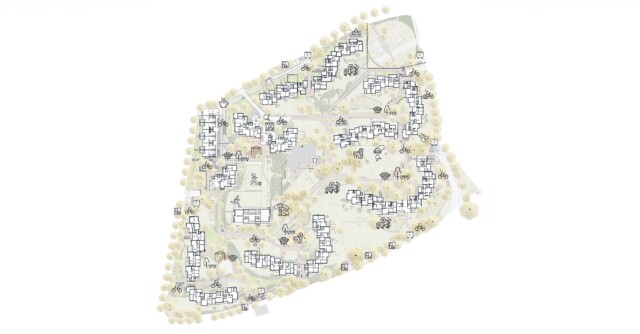
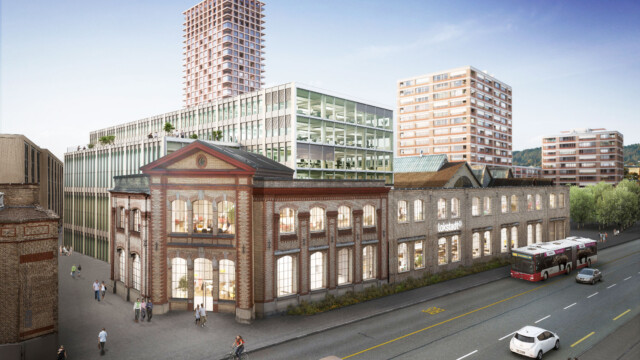
    Built in three stages between 1974 and 1990, the “Untere Bühl” still characterizes the old town center of Oberwinterthur today. The complex is considered worthy of protection and some of the buildings are still largely in their original condition. Some of them were already renovated in 2015, and the others are now being renovated. The planning application has been approved and construction is scheduled to start at the beginning of 2027.

    Nobody has to leave the field
    What makes the project stand out is its social consistency. As the asset manager of the AXA Investment Foundation, BNP Paribas designed the refurbishment from the outset in such a way that all tenants can remain in their apartments. The tenants were involved at an early stage, including workshops on outdoor space and design. “Our tenants have been an integral part of the development for years,” says Pascal Messmer, Asset Manager at BNP Paribas. This attitude runs through the entire project.

    Extensions that don’t impose themselves
    For the extension, AXA is relying on bernath widmer architects, who emerged victorious from a cooperative test planning process. The majority of the extensions and new buildings are made of wood and deliberately reflect the character of the existing buildings. Around 80 barrier-free apartments with 1 to 3 rooms will be created. An addition to the existing apartments, most of which are large today. Residential studios, communal areas and a commercial space are planned on the first floor.

    Park remains and becomes more lively
    The park-like outdoor space with communal gardens, playgrounds and the kindergarten from 1977 will be retained. The landscape architecture firm ghiggi paesaggi is taking Fred Eicher’s original open space concept and developing it further. New planting and green roof areas strengthen biodiversity and create habitats for small animals and insects. Greenery is planned on some of the roofs of the new buildings. The central pavilion is to be used by the public in future, for example as a daycare center.

    Into the future in stages
    The project will be implemented in stages, probably up to 2028, with the aim of creating a real estate portfolio with net-zero emissions by 2050. Winterthur is not only gaining refurbished existing buildings, but also 80 new apartments in a mature settlement that knows who it is.

  • From industrial heritage to innovation campus

    From industrial heritage to innovation campus

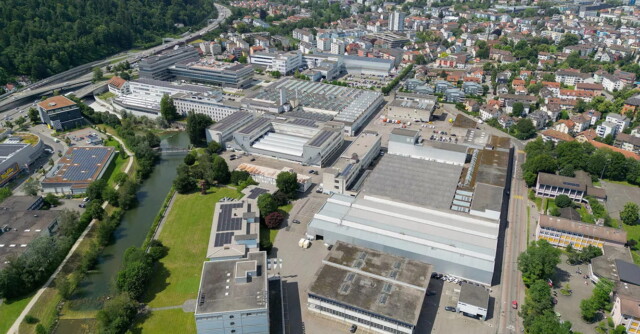
    Where textile machines and industrial production used to set the pace, a new focus for technology, trade and entrepreneurial development is now being created. The approximately 75,000 square meter site is not being conceived as an isolated business park, but as a networked innovation location with a direct link to the Töss district. Existing buildings, paths and spaces form the backbone of the transformation.

    Historical substance remains where it creates character and identity. At the same time, structures will be opened up, paths made more permeable and new places for encounters, collaboration and exchange created. The Vitus site will thus become a visible driver of Winterthur’s economic development.

    Mission statement and site strategy
    The guiding principle is both simple and ambitious. A tech and innovation cluster that brings together companies, start-ups, education and research in one place. The focus is on work, not living. Office and commercial space is planned for technology-oriented companies, research-related businesses, service providers and creative players. Co-working facilities, flexible spaces and space for young companies will also be added.

    At the same time, the site development focuses on atmosphere. Urban meeting zones, restaurants, cultural offerings and publicly accessible outdoor spaces are intended to ensure that the area also comes alive outside of traditional office hours. The planned Vitus Promenade connects the site with the Töss river and creates an identity-forming open space axis that enables movement, recreation and interaction.

    Development in stages
    The transformation is deliberately taking place in several stages. In the first phase, existing buildings will be activated, renovated or upgraded through targeted conversions. Interim uses, co-working, events and cultural formats will ensure that the area gains appeal even during the planning phase. The first companies from the fields of technology, sustainability and future mobility are already using the Vitus site as a place to work and develop.

    At the same time, structural foundations are being laid for the next steps, such as improved access, sharper utilization concepts, mobility and sustainability approaches. Individual construction projects, such as the new LANDI site, fit into this picture and strengthen the commercial character of the area. In a later stage, the eastern part of the site in particular will be redeveloped in greater depth. Additional, contemporary space for production, laboratories, offices and services will be created here – tailored to market needs and demand.

    Prospects for Töss and Winterthur
    The Vitus site will give Winterthur-Töss a strong economic anchor point. The site offers potential for several thousand jobs and thus strengthens the district’s role as a productive yet urban location. Open spaces, permeable paths and cooperation with local players should prevent the creation of an isolated commercial area.

  • Experimental field of cooperative city life

    Experimental field of cooperative city life

    As an innovation and learning platform, “mehr als wohnen” sees the Hobelwerk not only as a housing estate, but also as a real-life laboratory for new forms of housing, participation models and cooperative governance. For experts in planning, housing construction and urban development, the neighborhood offers illustrative material for central questions of future urban development. For example, the focus is on how much community everyday life can actually tolerate and how mixed uses can be organized in such a way that they function robustly in the long term. It also shows how a district can be designed to be socially open, ecologically ambitious and yet economically viable.

    The Hobelwerk is located on the former site of the Kälin & Co. carpentry factory right next to Oberwinterthur railroad station and thus in a well-developed, formerly commercial location. The client is the building cooperative mehr als wohnen, which has realized its second major project after the Hunziker Areal and developed the site in two stages between 2018 and 2023.

    five new buildings and several converted existing buildings have been built on an area of around 16,000 m², with a total of around 158 apartments plus commercial and communal areas. The development is considered a model for socially, ecologically and economically sustainable urban development and has won several architectural and energy awards.

    urban design, architecture and mix of uses
    The various structures, including long blocks along the tracks, a courtyard house, a rectangular building and a small residential tower, create a small-scale quarter with courtyards, alleyways, play areas and gardens. Several offices, including pool Architekten, Ramser Schmid, Pascal Flammer, Baubüro in situ and Studio Vulkan, ensure diversity in the details while maintaining a clear overall figure.

    the mix of uses ranges from classic 1.5- to 6.5-room apartments, cluster apartments and micro co-living to residential studios for cultural workers and commercial space of various sizes, some of which is affordable. The first floor includes a daycare center, bakery, co-working space, studios, laundromats, common rooms and communal areas that function as an extended “living room” for the development.

    living concepts and everyday organization
    The cooperative combines established and experimental forms of living such as micro-co-living for one to two people with shared kitchens and common areas, spacious cluster apartments for shared apartments, classic family apartments and inclusive housing projects, for example with partner organizations such as jawohn. The residential offering is complemented by guest rooms, guest apartments and rooms that can be flexibly rented.

    the commons play a central role with arcades, roof terraces, common rooms and the covered Hobelwerkplatz square, which facilitate informal encounters and shared use. Residents actively shape the neighborhood in neighborhood groups and participation formats, a core component of the “more than housing” DNA.

    existing buildings, open space and identity
    The old planing mill hall and the Z-Hall were preserved, gently converted and now form the center with a covered square for markets, festivals, cultural and neighborhood events. In this way, the industrial past remains present as a spatial and narrative layer and gives the area a clear identity.

    the open space design with vegetable gardens, gravel paths, play areas and the greening of courtyards and façades aims to ensure a high quality of stay, heat reduction and biodiversity. Low-car access and a mobility station with bikes and trailers make everyday life without a car easier.

    sustainability, governance and learning character
    The project focuses on energy-efficient construction, robust, durable materials and the targeted reuse of components, combined with low per capita consumption of resources and space. The Hobelwerk received several awards for this, including as one of the best new construction projects in Switzerland and for its energy-efficient, resource-conserving design.

  • New management confirmed for Stadtwerk Winterthur

    New management confirmed for Stadtwerk Winterthur

    The Winterthur City Council has confirmed Martin Emmenegger as the new Director of Stadtwerk Winterthur, according to a press release. Emmenegger is currently Head of the Networks Division and a member of the Executive Board of Elektrizitätswerk Zürich(ewz). He was previously Head of the Electricity and Telecommunications Division at Stadtwerk Winterthur for four years.

    Emmenegger has a degree in electrical engineering from the Zurich University of Applied Sciences. The 57-year-old succeeds Marco Gabathuler, who has managed the municipal utility since 2017 and will retire in January 2026.

    “With Martin Emmenegger, we have chosen a motivating personality who can successfully lead Stadtwerk Winterthur into the future,” said City Councillor Stefan Fritschi in the press release.

  • How much of the past can densification tolerate?

    How much of the past can densification tolerate?

    The Brunnergut estate was built in two stages in the mid-1950s and early 1960s and marked the transition to the functionalist, automotive city. As one of Winterthur’s first residential ensembles with underground parking, it replaced the Villa Malabar and reshaped an entire inner block between Lindstrasse, Kreuzstrasse, Sulzbergstrasse and St. Georgenstrasse. The 1954 planning application itself sparked a fierce controversy. Early debates about density, traffic and cityscape, as they occupy the entire agglomeration today

    in 2016, the city of Winterthur added Brunnergut to the inventory of buildings worthy of protection, followed by its entry in the cantonal inventory of listed buildings of supra-municipal importance in 2018. This made it clear that the estate was not only considered everyday architecture, but also an ensemble with architectural and socio-historical significance that should be taken into account in any further planning

    Legal ping-pong over protection
    With the cantonal dismissal in 2024, the building department wanted to relax the protection status again. Based on an expert opinion from the cantonal monument preservation commission and subsequent additions. The Zurich Heritage Society challenged this, and the Building Appeal Court demanded a supplementary or top-level expert opinion during the proceedings and criticized gaps in the expert assessment

    At the same time, the Winterthur city council planned to remove Brunnergut from the municipal inventory. The Zurich Heritage Society lodged another appeal against this. In its decision of November 6, 2025, the Building Appeals Court has now ruled that the city is unlawfully relying unilaterally on the KDK report and that the facts of the case have not been sufficiently clarified for the property to be removed from the inventory. The judges demanded an expert opinion from an independent expert who had not previously been involved. A clear signal for higher requirements for the justification of de-protection decisions

    More than just a technical issue of monument preservation
    The criticism focuses not only on formal deficiencies, but also on gaps in content. Imprecise plans, insufficient discussion of the qualities identified in the inventory sheet and an insufficient appreciation of the social and economic-historical significance. Specifically, the court criticized the fact that the role of the estate as an early example of dense, car-oriented post-war modernism and as part of Winterthur’s settlement history was not seriously included in the comparison with other estates

    For urban planning and the real estate industry, Brunnergut is therefore far more than an isolated case. The procedure shows how strongly inventory decisions must be legally and professionally underpinned today if they are to survive in an environment of housing shortages, pressure to densify and politically heated debates about objections and heritage protection

    What the case means for future projects
    The Zürcher Heimatschutz sees the decision as a strengthening of the inventory concept. Inventories are not mere lists, but planning instruments that must meet high standards before they can be dismantled. For cities like Winterthur, this means that anyone wishing to subsequently remove protection must transparently explain why arguments relating to building culture, urban development and social history outweigh the interests of densification, renewal or returns

    For investors, owners and planners, this increases the importance of well-documented surveys and early involvement of heritage conservation. Especially in the case of post-war housing estates, which were long regarded as “ordinary” existing buildings. Brunnergut shows that the second half of the 20th century is increasingly understood as part of the architectural heritage and that the path to conversion or replacement construction will in future often lead via independent expert reports and carefully balanced conservation concepts

  • New urban quarter at Winterthur railroad station

    New urban quarter at Winterthur railroad station

    The Stellwerk 2 project is being built on a site of just 2,000 square meters right next to the train station, combining living, working and mobility in a small space. The new building comprises 66 city apartments and around 2,000 square meters of space for offices, education and healthcare. On the first floor, a spacious retail zone of 700 square meters will provide for public-oriented uses. The aim is to make optimum use of existing railroad land without additional sealing.

    Compact units with one to three and a half rooms will be created on the upper floors. Guest rooms and communal areas promote flexible forms of living and social interaction. An approach that responds to changing urban lifestyles. The project was developed by Zurich-based Esch Sintzel Architekten, which won the 2021 SBB competition in close cooperation with the city.

    Hub for two-wheelers and everyday life
    Stellwerk 2 is being built not only to live and work in, but also to facilitate movement. In the basement, 360 new bicycle parking spaces are being created with charging facilities for e-bikes, cargo bike zones and lockers. Together with 150 recently created spaces in the existing building, the capacity of the neighboring bike station will increase to around 510 units. The new building will be connected to the existing facility under Signal Box 1 via a new passageway.

    For city councillor Christa Meier, the project is emblematic of the transformation to a mobility city: the signal box will become Winterthur’s actual bicycle hub and strengthen the station’s role as a multimodal center.

    Realization in stages
    With Stellwerk 2, SBB Immobilien and the city of Winterthur are demonstrating how urban densification and the traffic turnaround can go hand in hand. A place where living, working and sustainable mobility merge into a new urban entity.

  • Small cities are increasingly interested in the smart city

    Small cities are increasingly interested in the smart city

    The Zurich University of Applied Sciences (ZHAW), based in Winterthur, has published the Swiss Smart City Survey 2024. The report shows that small cities in particular are investing in smart solutions, according to a press release. The ZHAW survey also recorded an increase in the number of respondents.

    A total of 403 smart city projects were reported by the participating cities and municipalities in the survey. Specifically, these include categories such as Smart Governance, Smart Environment, Smart Mobility, Smart People, Smart Living and Smart Economy. 97 projects fall into the Smart Environment category, most of them in the field of photovoltaics. This is twice as many as in 2022.

    However, the report still shows great potential for development. The topic of smart cities is being actively addressed in 29% of the cities surveyed, while 18% are still in the initial phase. “Many cities are not yet in a defined smart city development phase – a clear sign that there is enormous development potential here,” said Vicente Carabias, Head of Sustainable Energy Systems and Smart Cities at the ZHAW, in the press release. “At the same time, the survey shows that more and more cities are embracing the topic of smart cities. The data from the Swiss Smart City Survey highlights the high market potential for science and companies, which can play an active role in the development of smart infrastructures.”

  • Small cities drive smart transformation

    Small cities drive smart transformation

    In the current survey, 403 projects from 124 cities were recorded, with digitalization and sustainability being the most important topics. Most initiatives relate to the smart environment, in particular renewable energies such as photovoltaics and resource-saving technologies. This dynamic underscores the transformation that Swiss cities are striving to achieve in order to reduce their carbon footprint and create innovative living spaces.

    Commitment and growth opportunities for small cities
    The number of participating cities has increased significantly. More and more municipalities are formulating their own smart city strategies, appointing responsible parties and working on pilot projects for digital transformation. Nevertheless, the survey shows that almost 80 percent of cities have not yet implemented fully developed processes and are only in the early stages of development. This is a strong signal of existing development potential and market opportunities for players from business and science.

    Governance, participation and infrastructure
    The key dimensions include smart governance, citizen engagement and co-creation. The increase in projects in digital citizen services and smart infrastructure, such as resource conservation or smart mobility, points to the need to expand and strengthen internal organizational competencies within city administrations.

    Market potential and next steps
    The authors of the study emphasize that the dynamics of smart city initiatives are high, but that there is still room for improvement in terms of design and organization. The market potential for companies and research is correspondingly high. Smart infrastructure and innovative projects offer numerous opportunities for cooperation and investment.

    Small cities as drivers of the smart future
    Small Swiss cities are proving to be the driving force behind the smart city transformation. With growing commitment, a clear focus on sustainability and digitalization and an increasing number of concrete projects, they are gaining in importance and creating new opportunities for a sustainable and networked urban landscape.

  • Climate fund Stadtwerk Winterthur awards grants

    Climate fund Stadtwerk Winterthur awards grants

    The Stadtwerk Winterthur climate fund is awarding 70,000 Swiss francs for environmentally friendly projects this year, according to a press release. The climate fund has been supporting climate protection, energy efficiency and CO2 reduction projects since 2007.

    Next Gas GmbH, based in Kloten, will receive a sum of 30,000 Swiss francs. It develops biogas reactors for small and medium-sized farms. This utilises the potential of liquid manure to generate decentralised heat and electricity. The funding will be channelled into a pilot project in which Next Gas’s fermentation process will be tested during ongoing operations.

    A pilot project organised by the Soily association will be supported with CHF 20,000. Here, a special compost with an ideal mixture of microorganisms is being tested on farms in the Winterthur region. A test field of 50 square metres will initially be set up for this purpose.

    SimpleTrain GmbH, based in Wallisellen, offers an online platform for international train journeys. The expanded platform will also enable bookings for routes that were previously not connected. With the support of Klimafonds Stadtwerk Winterthur, specific routes such as the one from Winterthur to Barcelona via Lyon will be offered. SimpleTrain is also receiving support totalling CHF 20,000 for the project.

    The fund is financed in part by voluntary contributions from electricity customers amounting to 2 centimes per kilowatt hour consumed. For an average household of four, this amounts to CHF 8 per month, according to the press release.

  • Cham Swiss Properties optimizes “Rocket & Tigerli”

    Cham Swiss Properties optimizes “Rocket & Tigerli”

    Das Hochhaus „Rocket“ mit 100 Metern Höhe und die drei angrenzenden Wohngebäude „Tigerli“ sollen in der Lokstadt nicht nur Wohnen und Arbeiten ermöglichen, sondern auch städtebauliche Akzente setzen. Die Stadt Winterthur hat Anfang April 2025 die Baubewilligung erteilt. Allerdings mit strengen Auflagen, die vor allem die öffentliche Nutzung von Erd- und Dachgeschoss betreffen. Cham Swiss Properties AG, hervorgegangen aus der Fusion von Ina Invest und Cham Group, nimmt diese Auflagen ernst und will in enger Abstimmung mit den Behörden Optimierungen vornehmen.

    Formaler Rekurs als Zwischenschritt
    Obwohl es von externen Seiten keine Einsprachen gab, hat die Eigentümerin selbst einen Rekurs gegen die Baubewilligung eingelegt. Hintergrund ist die Notwendigkeit, die Detailvorgaben der Stadt zu präzisieren und in einem konstruktiven Dialog mit dem Amt für Städtebau und dem Amt für Baubewilligungen abzustimmen. CEO Thomas Aebischer erklärt: „Das ist eine Formalie. Entscheidend ist für uns der inhaltliche Austausch, damit Rocket & Tigerli der städtebaulichen Bedeutung vollauf gerecht werden.“

    Zentrale Punkte der Nachbesserung sind eine attraktive, öffentlich zugängliche Dachterrasse und publikumsorientierte Nutzungen im Erdgeschoss, wie Cafés und Gastronomieangebote am Dialogplatz. Diese Anpassungen sollen die Aufenthaltsqualität und die Einbindung in die Lokstadt fördern.Ein Ziel, das auch der Stadt Winterthur wichtig ist. Der Rekurs schafft die rechtliche Grundlage, um diese Punkte sorgfältig zu prüfen, ohne den laufenden Projektplan zu gefährden.

    Keine Verzögerung trotz Rekurs
    Cham Swiss Properties zeigt sich zuversichtlich, dass der Zeitplan eingehalten wird. Bereits jetzt ist klar; Rocket & Tigerli bleiben Meilensteine für den urbanen Holzbau in der Schweiz. Das Ensemble nutzt das Potenzial des zukunftsweisenden Holzhybridbaus und steht für nachhaltige Stadtentwicklung mit hoher architektonischer Qualität. Bis Ende 2028 soll das Projekt abgeschlossen sein, mit Wohnungen im Hochhaus und Hotelnutzungen in den unteren Geschossen.

    Bedeutung für Winterthur
    Für die Stadt Winterthur bedeutet das Projekt nicht nur ein neues Wahrzeichen, sondern auch zusätzliche Impulse für das Quartier Lokstadt. Als Teil einer umfassenden Transformation stärkt Rocket & Tigerli die Position der Stadt als attraktiver Wohn- und Wirtschaftsstandort und unterstreicht die Bedeutung nachhaltiger, innovativer Bauvorhaben.

  • City of Winterthur extends agreement with location promotion organisation

    City of Winterthur extends agreement with location promotion organisation

    The new service agreement between the city of Winterthur and the House of Winterthur provides for an adjustment of the organisation’s tasks. The House of Winterthur should focus on strengthening the Winterthur Switzerland brand and on the strategic marketing of the location for business, education, culture and tourism, according to a statement from the city.

    This includes making the hidden champions among the companies and the diversity of the local business landscape visible. Innovation and knowledge transfer are to be strengthened through targeted networking and new event formats, among other things. The House of Winterthur will also actively support start-ups.

    Operational location promotion, on the other hand, will once again be the responsibility of the city. This includes company relocations, portfolio management and space brokerage.

    The city intends to support the House of Winterthur with CHF 760,000 per year between 2026 and 2029, CHF 100,000 per year less than before. The final say lies with the city parliament.

    In a statement, the House of Winterthur recalls that the city’s contribution was CHF 960,000 per year when the organisation was founded in 2017. Beat Schwab, President of the House of Winterthur, which is organised as an association, refers to the new management and other changes in personnel. “There is a spirit of optimism at House of Winterthur,” he is quoted as saying in the press release. “It would be a shame if excessive pressure to save money were to jeopardise this development and seriously impair the sustainable promotion of the location as well as the management of company relocations.”

    The association is supported by the city, the neighbouring municipalities and over 400 members.

  • The new Lokstadt: urban, versatile, steeped in history

    The new Lokstadt: urban, versatile, steeped in history

    The “Rocket” high-rise is one of the tallest timber residential buildings in planning. With Lokstadt, Implenia is developing a new, urban and diverse district with 750 apartments for around 1500 people. Lokstadt is located south-east of Winterthur railroad station. In the past, this area was home to the workshops of the Swiss Locomotive and Machine Factory (SLM) – the most important locomotive forge in Switzerland. The neighboring Sulzer factory took over SLM in the 1960s.

    Some of the locomotives produced by SLM bear the names of the various construction fields. For example, the “Tender”: condominiums were built here, which have been occupied since mid-2023, as well as commercial space. There were also 11 “townhouses” for sale: these are four- to five-storey maisonette apartments that have already been completed. In a second construction phase, six four-storey “townhouses” were built: these comprise a total of 24 apartments and have been ready for occupancy since spring 2023. The “Elefant” office building, which is located directly on Zürcherstrasse, has also been occupied since summer 2024.

    The central Dialogplatz will be framed by three buildings in future. The first is the “Krokodil” in timber construction. Here, 254 apartments have been created to meet the diverse housing needs of three cooperatives and individual homeowners. Vertical bands of windows are reminiscent of the former industrial halls and give the building a clear structure. BIGBOY” is located at the front of Dialogplatz. The 50 meter high building with 16 floors houses 125 rental apartments as well as office and commercial space between 55 and 370 square meters. The roof terrace offers a unique view over Lokstadt and the whole of Winterthur. The industrial past of the site is reflected in the brick façade. BIGBOY was ready for occupancy in summer 2023. The third building is still under development and is currently one of the tallest planned timber residential buildings: “Rocket”, developed and realized on behalf of Ina Invest, will be 100 meters high and with 33 floors will be the landmark of the new district and the Winterthur skyline. There are plans for 272 apartments. Charitable apartments are also planned in the “Tigerli” base building. A hotel is also planned. The move-in date is planned for 2028.

    Lokstadt stands for the sustainable use of resources, a carefully planned variety of uses and the innovative revitalization of listed buildings. These include the former factory buildings. Under the leadership of Implenia, these are being transformed into spaces that reflect local history and modern city life. The district is being developed step by step in accordance with the SIA Efficiency Path 2040. Despite the dense construction, emphasis is placed on sufficient open spaces and a high quality of stay. The site will be developed with an underground car park for motorized traffic across all building plots. Above ground, pedestrians and cyclists have priority thanks to a generously designed pedestrian zone.

    With Lokstadt, Winterthur connects the 19th century with the 21st century. Here, the city’s industrial history is brought together with Winterthur’s future as a residential and service city. The district is being built for people who love city life and care about sustainability.

  • New data center strengthens digital infrastructure in Winterthur

    New data center strengthens digital infrastructure in Winterthur

    The data center operator NorthC Schweiz AG inaugurated its new data center in Winterthur on 20 March. The new data center is located on an area of around 1100 square meters in the Turm Areal. It will play a central role as a hub for regional data communication, according to a press release.

    The data center offers SMEs and large companies in the region individual colocation solutions, secure and direct cloud connections as well as guaranteed bandwidths and speeds for business applications. The connection to the data centers in Münchenstein BL and Biel is intended to ensure reliable connections to a large number of cloud and IT service providers.

    The data center currently has a capacity of 1.8 megawatts and is powered entirely by renewable energy. According to the press release, NorthC plans to use its 2030 strategy to initiate projects that will enable the waste heat generated in Winterthur to be put to good use in the future.

    According to Patrik Hofer, NorthC relies on regional data centers with an international reach. “With our regional approach, we can offer tailor-made solutions for the Winterthur region that meet the high standards of quality, security and sustainability,” the Managing Director Switzerland at NorthC is quoted as saying in the press release.

    According to Ralph Peterli, Managing Director of the Winterthur Chamber of Commerce and Employers’ Association, Winterthur is already home to many leading technology companies. “It’s good to know that with NorthC, a regional company is offering stable and secure IT infrastructures on the city’s territory,” said Peterli, according to the press release.

    NorthC Switzerland is based in Biel and is a subsidiary of the NorthC Group based in Oude Meer in the Netherlands.

  • House of the Future secures further tenants in Winterthur

    House of the Future secures further tenants in Winterthur

    The Green Spin project aims to change the world of work in a sustainable way. To this end, the House of the Future is being built in Winterthur with 100 per cent sustainability and 100 per cent work quality, according to the Green Spin website. The project has now found its second anchor tenant in the form of the Foundation for Speech Therapy Schools in the Canton of Zurich, Green Spin explains in a press release.

    “Green Spin offers the perfect setting for innovative educational approaches,” Peter Felix from Felix Partner Architektur Design, which initiated and developed the project, is quoted as saying. “With the Stiftung Sprachheilschulen im Kanton Zürich, we have gained another tenant that ideally complements our concept of openness, networking and forward-looking development.” The foundation currently operates at four locations in Zurich, Winterthur, Fahrweid in the Limmat Valley and Stäfa.

    Green Spin received its building permit last year and construction is due to start this year. The centre is expected to be ready for occupation in 2027. In addition to the foundation, the leisure sports provider Padelta has already reserved premises in Green Spin.

    Green Spin is intended to offer young and established companies an ideal environment. The building is designed as a modular timber construction and will have a photovoltaic façade and wind power for its own energy supply. In addition to bright working environments, the project envisages meeting places such as a roof garden, a courtyard forest and market alleyways.

  • Reuse of components

    Reuse of components

    The reuse of building components has become increasingly important in recent years, both in the media and in practice. This method helps to significantly reduce grey energy in the real estate sector. Dr Andreas Oefner from Zirkular GmbH shows how targeted measures and innovative projects can promote the circular economy in the construction industry.

    Basic principles and processes
    Together with the ZHAW, Zirkular has defined the basic processes and work packages in the SIA phases. Important documents such as specialist planning contracts, handover agreements and reinstallation clauses were drawn up and made available online. These measures have significantly expanded the use of reused building components in construction projects.

    Successful implementation in projects
    Architectural competitions are increasingly integrating circular economy requirements. Component catalogues and building screenings help to identify potential components from dismantled buildings and integrate them into new projects. These components are defined, purchased, dismantled, stored and finally reinstalled. The range of reused components extends from complex load-bearing structures to simple radiators and façade materials.

    Significant emission savings
    The savings achieved by reusing components are impressive. At component level, the emission savings compared to newly produced components are around 90%. At project level, between 10-50% of construction emissions have been saved in projects that have already been realised.

    Challenges and future prospects
    Despite the progress made, challenges remain. The reuse processes must be more firmly anchored in the projects. In addition, further clarification is required in the assessment of component categories in order to ensure reusability. The framework conditions of the construction industry also need to be reorganised in order to establish the reuse of building components as part of a comprehensive strategy to reduce emissions.

    Responsibility and innovation
    Good planners are characterised by the fact that they select the right strategies for their project and take their responsibility towards the project and society seriously. The reuse of building components is an important building block in reducing the exorbitant emissions of the construction industry while continuing to utilise and convert existing buildings.

  • Winterthur invests in six smart city projects for 2025

    Winterthur invests in six smart city projects for 2025

    Since 2018, Winterthur has been focussing on smart city projects that make the city more efficient, sustainable and liveable. Already 27 projects have been successfully implemented. In 2025, the city will continue to focus on innovative solutions for mobility, digitalisation and ecological urban development.

    The subsidised projects for 2025 are wide-ranging. From the sustainable reuse of building materials to digital registration systems for school sports and an AI-supported cultural calendar. All projects aim to solve existing challenges with creative technologies and new approaches.

    Six funded smart city projects for 2025

    • Sponge city in action: Extreme weather events such as heat and heavy rain are becoming more frequent. This project is testing how green roofs and permeable soils can help to cool the city and better absorb rainwater. The effect of the sponge city elements is visualised in the Grüze innovation laboratory.

    • Winti Re-Use: Construction projects often generate large quantities of recyclable material that has previously been disposed of. A new platform ensures that construction waste is reused sensibly in order to conserve resources and protect the environment.

    • Spitex mobility: Spitex employees are out and about in the city every day – often in their own cars. This project is testing sustainable alternatives such as e-bikes and e-scooters to promote lower-emission mobility and create more flexible transport solutions for care staff.

    • Smart registration for school sports: A digital platform aims to make registering for school sports easier, faster and error-free. Parents and administration benefit from an optimised process that reduces bureaucracy.

    • CulturAI: Winterthur is a lively cultural city, but smaller events often remain in the shadow of larger events. An artificial intelligence (AI) analyses preferences and suggests individually suitable cultural events – even for users with little time for research.

    • Winbib : Unattended opening hours make libraries more flexible to use, so that books and media can also be borrowed in the evenings or at weekends.

    Smart City Winterthur 2030
    The city of Winterthur is pushing ahead with its smart city development in a targeted manner. On 1 January 2025, the City Council adopted the “Smart City Winterthur 2030” strategy. The aim is to actively promote innovation, create new networks for collaboration and further develop the city’s digital transformation.

    By promoting these six projects, Winterthur is demonstrating how modern, sustainable urban development can be achieved through creative approaches and the targeted use of technology.

  • New production sites in Singapore and China

    New production sites in Singapore and China

    Sika is expanding its global presence with new production facilities in Singapore and China. The new plant in Singapore specialises in mortar production. In contrast, the entire product range, including tile adhesives, cementitious waterproofing and floor coatings, will be manufactured in Xi’an in north-west China. The new factories should significantly reduce transport distances.

    “The expansion of our production capacities in Singapore and China is an important step in our growth strategy in Asia,” said Philippe Jost, Regional Head Asia/Pacific, in a press release. “Thanks to the new plants, we can serve our customers in these two key markets even better with our innovative solutions. In addition, both factories contribute to Sika’s sustainability performance by utilising energy-efficient processes and environmentally friendly materials.”

    According to Sika, Singapore’s construction industry is expected to grow by 4.1 per cent annually until 2028. A government masterplan for infrastructure development envisages around 22.5 billion Swiss francs for the construction of railway stations and important transport corridors.

    The new plant in Xi’an is Sika’s 35th in China. The construction industry in the country is expected to be worth the equivalent of 4.3 trillion Swiss francs in 2025 and grow by 3.9 per cent annually until 2028. China has reportedly budgeted half a trillion Swiss francs for infrastructure projects and more ambitious quality targets in the construction industry, and a further 12 trillion francs for the net-zero target by 2060.

  • Smart City Winterthur 2030

    Smart City Winterthur 2030

    Since the first smart city strategy in 2018, Winterthur has established itself as one of the most progressive cities in Switzerland. At that time, the focus was on quality of life and resource efficiency, supplemented by topics such as energy, mobility, education and health. With the revision of the strategy towards Smart City Winterthur 2030, the City Council is now focussing on new cross-cutting topics such as innovation, needs orientation and co-creation. These topics are crucial to meeting the requirements of a changing society.

    Two programmes are driving implementation
    The new strategy is being implemented through two programmes, the Innovation Programme and WinLab. The innovation programme supports employees of the city administration in the development and implementation of innovative projects. The aim is to strengthen the culture of innovation within the administration.

    The WinLab, on the other hand, acts as an urban real-world laboratory in which representatives from business, science, civil society and municipal institutions work together. In this creative space, forward-looking solutions for the city are developed and tested. Both programmes create scope for experimentation and promote sustainable innovations that meet the needs of citizens.

    A strategy for the future
    The Smart City Winterthur 2030 strategy comes into force on 1 January 2025 and is part of the long-term goal of shaping Winterthur as a sustainable and adaptable city. The strategy will be reviewed after five years at the latest to ensure that it continues to meet the needs of the city and its population.

  • Partnership for climate protection and innovation

    Partnership for climate protection and innovation

    The Bern-based ClimateTech company Neustark has been awarded a long-term contract by AXA Switzerland to reduce CO2 emissions. From 2026 and until 2030, the company is to reduce 1800 tons of the greenhouse gas with its technologies for capturing and mineralizing carbon dioxide, according to a press release. The project is part of AXA’s strategy, which aims to reduce operational carbon dioxide emissions by 43 percent between 2019 and 2030. AXA is also working with the German-Brazilian start-up InPlanet, which aims to remove a total of 1950 tons of CO2 by 2028 and store it for the long term.

    “By supporting these projects, we are making a contribution to net zero and at the same time promoting future-oriented technologies and Switzerland as a location for innovation,” said Daniela Fischer, Chief Sustainability Officer at AXA Switzerland, in the press release.

    Neustark has developed a technology that captures CO2 from biogas plants and stores it in demolition concrete. “Partnering with pioneering companies like AXA Switzerland that are investing in permanent CO2 removal helps us to scale the carbon removal industry,” explains Lisa Braune, Head of Carbon Removal at Neustark.

  • Winterthur adapts building and zoning regulations

    Winterthur adapts building and zoning regulations

    The aim of the IVHB is to standardise key construction terms and measurement methods throughout Switzerland. Although the canton of Zurich has not joined the concordat, it is implementing the harmonisation – a significant step towards simplifying planning and building law. Winterthur is now integrating these changes into the local building and zoning regulations.

    Significant changes to the building and zoning regulations
    The partial revision of the BZO includes numerous amendments that are mandatory in connection with the IVHB building concepts. For example, 24 paragraphs of the BZO were adapted on a one-to-one basis. The dimensions were reviewed and adjusted in 15 paragraphs. For example, the building height is now defined on the basis of the façade height, which replaces the previous practice of full storeys.

    Introduction of the green area ratio
    This new term replaces the open space ratio and defines the relationship between green and plot areas. The aim is to promote unsealed, planted areas and preserve near-natural characteristics.

    Effects on planning applications and procedures
    The new green space ratio is already subject to a “negative prior effect”. This means that planning applications will be assessed according to both the previous and the new regulations. Projects that are still in the approval phase must fulfil both criteria.

    No value-added tax required
    As the amendments do not result in any planning advantages, there is no obligation to pay compensation in accordance with the law on value-added compensation.

    Public consultation and participation
    The planning documents for the partial revision of the BZO will be open to the public from 27 November 2024 to 27 January 2025. Objections can be submitted to the Office for Urban Development during this period. Interested citizens are invited to actively participate and voice their concerns.

    Winterthur is showing foresight with the implementation of the IVHB building concepts. Standardised definitions and sustainable building regulations strengthen the legal framework and create a future-oriented basis for urban developments.

  • Winterthur approves the renewal of the waste incineration plant

    Winterthur approves the renewal of the waste incineration plant

    The voters of Winterthur have clearly approved the renewal of the municipal waste incineration plant with 87.0% and a yes majority in all city districts. This means that incineration line 2 of the waste incineration plant can be renewed. Investments of CHF 293 million are planned for a new incinerator, an electrostatic precipitator, a new flue gas cleaning system and a new waste water treatment system.

    The new plant will be able to incinerate 190,000 tons of waste per year while maintaining the same capacity. In future, however, it will be possible to use the waste heat from flue gas cleaning for district heating. This will increase its heat output by 30 percent. In addition, the flue gas cleaning system will in future be 40 percent below the limit value for nitrogen oxide emissions and save 12.6 cubic meters of water by condensing the flue gases. In future, the new wastewater treatment system will recover up to 7.5 tons of gypsum per day. An additional hot water storage tank and a photovoltaic system are also planned.

    The project will be financed via the fees budget.

  • Construction work on the extension of the ZHAW has begun

    Construction work on the extension of the ZHAW has begun

    Building Director Martin Neukom, Education Director Silvia Steiner and ZHAW Rector Jean-Marc Piveteau gave the go-ahead for the construction work to expand and modernise the School of Engineering at the ZHAW on 13 September. The ZHAW is one of the leading universities in Switzerland with over 14,000 students, according to a press release. However, some of the existing buildings on the site of the former technical centre in Winterthur no longer meet today’s requirements. In addition, the number of students continues to grow. Campus T will therefore be modernised and expanded in several stages over the next few years.

    In the first construction phase, two new five-storey laboratory buildings will be built behind the historic technical centre. They will provide urgently needed space for teaching, research and development. Various test rooms as well as a publicly accessible canteen and cafeteria will be created there. The new buildings will be connected to the district heating network of the city of Winterthur and equipped with photovoltaic systems.

    As part of the first construction phase, the Eulach will also be ecologically upgraded with a public, near-natural park and flood protection will be expanded, according to the press release. Two new bridges will connect the old town and Campus T with the Büelrain cantonal school and the surrounding residential neighbourhood.

    The existing TB building will be dismantled by November. At the same time, the excavation pit for the smaller TT laboratory building will be dug. Work will then begin on the shell of the first new building, which is scheduled for completion in 2027. The second new building should be ready for occupancy in 2029.

  • Sustainability in the event industry in Winterthur

    Sustainability in the event industry in Winterthur

    The Eulachhallen have achieved Swisstainable Level II – engaged. The largest event hall in Winterthur is now officially part of the Swisstainable sustainability programme. Switzerland Tourism ‘s initiative for sustainable travel is not awarding a new certificate, but recognises businesses that already have recognised sustainability credentials.

    The Swisstainable strategy is all about the sustainable development of Switzerland as a tourist destination. The programme creates orientation and transparency for guests looking for sustainable offers. The Eulachhallen are now one of the 2,500 tourism businesses that are already part of this programme.

    The programme comprises three levels: Level I – committed, Level II – engaged and Level III – leading. “With Level II, we are committed to continuously taking measures to act in a resource-conserving and environmentally conscious manner,” reads a statement from the Eulachhallen.

    Specifically, the operators are focusing on measures in nine fields of action, including energy efficiency, water utilisation, waste reduction and awareness-raising. They are being supported by the Winterthur-based climate protection movement Myblueplanet. “The association is our sparring partner”, the press release states, “and helps us to focus on the right activities”.

  • Climate fund supports sustainable building and heating projects in Winterthur

    Climate fund supports sustainable building and heating projects in Winterthur

    According to a press release, the Stadtwerk Winterthur climate fund has awarded a total of CHF 55,000 in funding to two companies. This fund has been supporting regional and local projects for CO2 reduction, energy efficiency and renewable energies in line with the city of Winterthur’s energy and climate policy since 2007.

    Roto Re-Use from Winterthur will receive CHF 35,000. The company, which is currently being founded, sees itself as a Swiss-wide centre of excellence for a circular construction industry. It develops workshops that show how the circular economy can be implemented in the construction industry. Specialists learn directly on the construction site how components can be dismantled and reused and how reuse must be planned.

    According to the Climate Fund, the construction industry in particular has great potential for CO2 savings, citing the Environment Switzerland 2022 report, according to which construction is responsible for more than 80 per cent of waste. In addition, building materials are responsible for around 10 per cent of Swiss greenhouse gas emissions.

    The company Trinovent from Oberengstringen will receive CHF 20,000 from the climate fund. It is developing an ice storage heating system for single-family homes. Trinovent is developing an ice storage heating system for single-family homes. The company is combining the proven technologies of air or water heat pumps with ice storage. The funding project is intended to help find customers for the new heating system in Winterthur and develop the prototype into a series model.

  • New owner drives expansion and innovation in the area of room systems

    New owner drives expansion and innovation in the area of room systems

    Swiss Life Asset Managers has reached a binding agreement with Condecta AG on a full takeover of the Winterthur-based specialist for modular construction, Swiss Life Asset Managers announced in a press release. The asset manager of the Swiss Life Group, which specialises in real estate and infrastructure, intends to expand Condecta’s presence and offering. The Winterthur-based company is currently represented in Switzerland, Germany and Italy. The two partner companies have agreed not to disclose the purchase price.

    “The Swiss market for rental solutions in the modular space sector has potential, particularly in the public sector, industry, construction, architecture and the private sector, which require high-quality modular building solutions,” said Gianfranco Saladino, Head of Value-Add Infrastructure at Swiss Life Asset Managers, in the press release. “Condecta, known for its high Swiss quality, is well positioned to meet the growing demand.”

    According to Condecta CEO Olivier Annaheim, the company has found “the perfect new owner in Swiss Life Asset Managers to drive forward our growth and innovation plans and further expand our market leadership in the area of room systems in Switzerland”. For Matthew Dooley, Investment Director at Swiss Life Asset Managers, Condecta is “complementary to Swiss Life Asset Managers’ extensive property and infrastructure business in Switzerland”.

  • Innovation centre expands its services

    Innovation centre expands its services

    Startup & Innovation Space AG is expanding the offering of its start-up centre Home of Innovation. The plans include “more office space and co-working spaces, more training for founders and new access to investor funds”, Home of Innovation announced in a press release. The centre, which currently operates at three locations, is currently used by around 100 start-ups, innovative SMEs and co-workers as well as five Winterthur business associations. Home of Innovation has developed a strategy with five strategic themes for the expansion of Winterthur’s innovation ecosystem.

    The aim is to acquire additional office space of at least 2,000 square metres in Winterthur. In addition to attracting existing companies, a second focus will be placed on start-ups. They are to be supported by the establishment of a project manager position to promote start-ups. In addition, Home of Innovation intends to strengthen its already successful Launch Control training and support programme. Last but not least, investors and start-ups are to be brought together as part of the Winti-Ventures initiative.

    In preparation for the next phase of growth, Home of Innovation is also making changes to its management. Thomas Giger has been appointed Chairman of the Board of Directors, while Thomas Breitenmoser will head up operations as Head of Operations. Founder and initiator of Home of Innovation, Raphael Tobler, is stepping down as Chairman of the Board of Directors, but will remain with the start-up centre as Vice Chairman with a focus on Launch Control.

  • First use of CPC concrete slabs in building construction

    First use of CPC concrete slabs in building construction

    The Zurich University of Applied Sciences(ZHAW) is using the CPC concrete slabs (Carbon Prestressed Concrete) it has developed for the first time in building construction. This refers to concrete slabs that are reinforced with prestressed carbon. According to a press release, an innovation laboratory has been created in Winterthur from these innovative components, which functions as an information and event centre for sustainable construction. The carbon concrete panels are not only recyclable, they also have a significantly lower impact on the environment than conventional reinforced concrete during production. “Thanks to the new lightweight construction method in concrete, we reduce the CO2 footprint by a factor of two to four and save up to 75 per cent material compared to conventional construction methods,” Josef Kurath, co-founder of CPC AG, a spin-off of the ZHAW, and developer of the carbon concrete panels, is quoted as saying in the press release.

    The carbon concrete panels used for this purpose are currently being manufactured, processed, cut to the millimetre and assembled into building elements at Holcim ‘s first CPC plant in Germany. This preliminary work saves time during assembly on site, as there is no need for time-consuming on-site reinforcement work. “This results in much shorter construction times, which is a particular advantage for urban construction sites,” continues Kurath. Extensions or changes to buildings are also possible at any time. “Our carbon concrete construction system works in a similar way to Lego, but like a modern version of it, with customised components.” And CPC even has advantages over conventional building materials in the event of dismantling: 90 per cent of the processed material can be reused.

  • UBS and Wincasa launch new property advisory service

    UBS and Wincasa launch new property advisory service

    UBS and property service provider Wincasa are offering owners of investment properties a new advisory solution. According to a press release, both companies want to use this offer to support owners in the renovation and energy-efficient refurbishment of their properties. The expertise of the Zurich-based financial institution UBS and the real estate company belonging to the Implenia Group will make the renovation of investment properties easier and more seamless, according to the press release. In particular, the focus is on greenhouse gas emissions. The real estate sector is the second-largest emitter in Switzerland with around 25 per cent.

    In a consultation with UBS and Wincasa, the needs of owners of investment properties are discussed and a modular offer is drawn up. UBS experts determine the financial feasibility of planned projects.

    “We are delighted to be launching this comprehensive advisory solution for the energy-efficient refurbishment of investment properties in the Swiss market together with Wincasa,” said Alain Conte, Head of Corporate & Real Estate Banking Switzerland at UBS, in the press release. “With this new offering, we want to give an additional boost to sustainable thinking in the property sector.” “Wincasa and Implenia have extensive expertise and experience in advising, planning and implementing renovation projects, particularly in the energy-efficient refurbishment of older existing properties. We will bring this expertise to the new offering and thus create added value for UBS customers,” adds Jens Vollmar, Chairman of the Board of Directors of Wincasa and Head Division Buildings at Implenia.

  • Home of Innovation opens coworking space in Effretikon

    Home of Innovation opens coworking space in Effretikon

    Startup & Innovation Space AG operates two coworking areas in Winterthur under the name Home of Innovation. Another location has now been opened in Effretikon. According to a media release by the location, tourism and economic development agency House of Winterthur, the rooms are located in the former building of ewp AG directly at the railway station in Rikonerstrasse 4.

    On the initiative of the Economic Development Agency and financially supported by the City of Winterthur, “well-equipped meeting rooms, modern coworking spaces and individually designable offices” have been created. Supplemented by advice on setting up and developing businesses, regular events and a lively community, an “economic ecosystem” has been created.

    Start-ups and small businesses in particular could find many opportunities for flexible forms of work and network. The project could act as a “hub for coworking, innovation, sustainable entrepreneurship and digital transformation”, Marco Nuzzi, Mayor of Illnau Effretikon, is quoted as saying.

  • Kistler baut Smart Factory in Winterthur

    Kistler baut Smart Factory in Winterthur

    Kistler is investing in Winterthur. A smart factory is to be built on a plot of land adjacent to the existing main site, the globally active specialist in measurement technology and sensors announced in a press release. There, state-of-the-art production processes will be combined with a high level of automation. Kistler also wants to set up the world’s largest production facility for piezoelectric sensors in the new factory.

    “We believe in Switzerland as a place to work,” Group CEO Rolf Sonderegger is quoted as saying in the statement. “That’s why Kistler is investing in Winterthur and creating the conditions for future growth.” Once the Smart Factory is completed, the company plans to consolidate its employees, who are currently spread across three Winterthur locations, in one place. The move is planned for 2028.

    Kistler signed the contract for the purchase of the site on 30 August. No details are given in the announcement about the purchase price for the almost 20,000 square metres of space. However, it was important to the former owner “to sell the property to a local industrial company in order to strengthen the location of the Winterthur economic area”, writes Kistler.