Category: Construction

  • Ground-breaking ceremony for SBB plant in Arbedo-Castione

    Ground-breaking ceremony for SBB plant in Arbedo-Castione

    The new SBB plant, officially called Nuovo stabilimento industriale ferroviario (NSIF), replaces the existing plant in Bellinzona, which no longer meets the maintenance requirements of modern multiple units. The new facility creates space for 360 full-time jobs and 80 apprenticeships and specializes in the future maintenance and repair of Giruno, ETR and FLIRT-TILO multiple units. The high degree of automation and the focus on electromechanical work make the facility the most modern SBB industrial plant in Europe.

    SBB CEO Vincent Ducrot was particularly proud at the ground-breaking ceremony. The canton of Ticino is an extremely important region for SBB, which is investing in jobs, expertise and technology with this project. The new site covers an area of 150,000 square meters, equivalent to more than 20 football pitches, and also sets an example for sustainability with a green roof and integrated solar panels.

    Sustainability and major construction progress
    Work began back in June 2025 with the establishment of the construction site, excavation and foundation work as well as initial measures for the future train washing facility. The expansion of the railroad infrastructure is running in parallel. New points, additional tracks and modern control technology will ensure an optimal connection to the network. SBB attaches great importance to ecological compensation; 8.4 hectares of high-quality crop rotation areas are being compensated for at alternative locations in Ticino.

    The new plant will go into operation in stages from mid-2028. The relocation of the existing Bellinzona plant to Arbedo-Castione will give the region and its employees a sustainable future. The new SBB plant stands for innovation, growth and sustainable development in a strategically important region for Switzerland.

  • Efficiency in timber construction thanks to statics

    Efficiency in timber construction thanks to statics

    Timber frame construction scores highly as a sustainable alternative to concrete. However, there is a problem with structural planning. Walls with windows were previously considered “statistically invisible” due to a lack of reliable data on load-bearing behavior. Planning, use of materials and costs suffered as a result.

    Large-scale tests for greater material and cost efficiency
    In order to close this knowledge gap, Empa, the Bern University of Applied Sciences and ETH Zurich launched a joint research project, supported by the FOEN and industrial partners. In Empa’s construction hall, wooden walls are deliberately subjected to extreme horizontal loads, generating valuable data on the load-bearing capacity of walls with window openings. The aim is to use the horizontal bracing values of such elements reliably in everyday engineering in the future.

    Less concrete, more wood
    The findings are being incorporated into a new, simple computer model. The initial results show that walls with windows also make a significant contribution to bracing. This reduces the need for steel anchors and concrete cores and cuts the amount of material, time and costs involved in timber construction. In the long term, this results in more economical and ecological buildings.

    Cooperation between research and industry
    The focus is on the practical suitability of the new model. In close dialog with industry partners, the complex research model is translated into an applicable solution for planning practice. This benefits planners, investors and residents alike.

    With new test procedures and calculation models for window walls, the research project is taking timber construction a step further towards greater efficiency, resource conservation and innovation.

  • New building strengthens Solothurn cantonal police force

    New building strengthens Solothurn cantonal police force

    The tasks of the police have become more diverse. Technology and society are changing rapidly. Legal requirements are becoming increasingly complex. KAPO Solothurn needs new structures to be able to react to this. Well-trained employees and ongoing training are more important than ever. Sufficient equipment is also a basic requirement for efficient work today.

    Lack of space, outdated infrastructure
    The existing infrastructure no longer meets current requirements. Many services work in cramped and unsuitable rented premises. There is a lack of special rooms for training and modern investigations. Forensics and the education and training service are particularly affected. Employees therefore have to move to external premises. This complicates processes and costs time.

    The new building as a solution
    A central unit for the police is being built at the Oensingen site. More than 150 employees from eleven different services will work under one roof in future. This will create better communication and shorter distances. Cooperation with the nearby heavy traffic control center will also be simplified. The new building offers enough space for current and future teams. Modern working and training conditions ensure greater efficiency and motivation.

    The focus is on training and quality
    A new on-site training center simplifies the training of police officers. Forensic technology will have modern laboratories and examination rooms. This increases the quality of work and improves conditions for everyone.

    More efficiency, lower costs

    The new structures will simplify processes and reduce costs. The internal synergies and proximity to the SVKZ lead to shorter deployment times. This makes the jobs for the police more attractive and increases their effectiveness.

    Facts, figures and outlook
    The building is planned to cost around 85 million francs. The floor space amounts to a good 10,400 m². The building offers rooms for all important police services. It has special training areas, laboratories and 204 parking spaces. Completion and occupation are scheduled for 2031. Luna Productions from Deitingen delivered the winning project in the competition. The costs are constantly being reviewed and optimized.

    The new building will position the Solothurn cantonal police for the future. Better working conditions, more efficient processes and modern technology will ensure that police work can continue to develop flexibly.

  • Oil heating out, house value up?

    Oil heating out, house value up?

    Simon Lüthi from Wüest Partner recommends renovating the house as soon as possible. Any time is the right time for the environment. Economically, it is particularly attractive if subsidies, tax savings and lower ancillary costs additionally support the increased market value.

    Energy efficiency as a value factor
    The demand for energy-efficient properties is increasing. Investors, funds and pension funds are paying attention to sustainability, often for regulatory reasons. Investments in energy efficiency increase the value of real estate in the long term. This is particularly the case when renovation and modernization coincide.

    Tenancy law and urban regions
    Energy-efficient refurbishment is also worthwhile in cities. The market there is particularly responsive to sustainable improvements. Refurbishment also protects against future legal requirements. However, local tenancy law regulations can restrict the possibilities for apportionment.

    Replacing the heating system is a sensible step
    If you need to replace your heating system anyway, you should switch from an oil system to a heat pump or district heating. A heating system replacement is usually due every 25 years anyway and covers the repairs at the same time. For many homeowners, simply replacing the heating system is the most economically attractive option.

    Homeowners should start with a heating system replacement if the building envelope is intact. If the envelope is in need of renovation, it is worth combining the renovation of the roof, façade and windows with the replacement of the heating system.

    Regulations, subsidies and expert opinions
    Regulation is becoming stricter. The aim is to achieve a climate-neutral building stock by 2050. Subsidies and tax benefits make refurbishment profitable. If you are unsure, consult an expert for planning.

    Financing and grey energy
    Banks often offer more favorable mortgages for sustainable properties. In future, the focus will also shift to efficient cooling and the reuse of building components. Grey energy, i.e. the production energy contained in the building, is becoming increasingly important.

    Replacing oil heating is a real added value. It offers lower heating costs and a higher house value, for today and tomorrow.

  • New orders in Germany strengthen building construction business

    New orders in Germany strengthen building construction business

    Implenia has landed contracts for building construction in Germany with a volume of more than 200 million euros. According to a press release, the projects are “in line with the Group’s strategic focus on large and challenging property projects that require extensive expertise and many years of experience”.

    On behalf of project developer and asset manager Rock Capital Group, the construction group will act as general contractor in Munich-Neuhausen, transforming the approximately one-hectare Bruckmann Quartier on Nymphenburgerstrasse into a high-quality office quarter. A combination of new construction and modernisation will create 28,000 square metres of office floor space in a prime central location. Individual parts of the building will be newly constructed, historic components will be modernised, one building will be extended and another will have a listed façade. Construction is due to start in 2025.

    In Brandenburg, Implenia is constructing a new administration building as the technical leader in a joint venture with GP Papenburg, a comprehensive school in the Ruhr region and a six-court sports hall with functional buildings for two grammar schools in Frankfurt am Main. All three new buildings will be handed over on a turnkey basis.

    Implenia is once again active at the Mainz customs harbour. The Group is now realising the Rheinwiesen living project for the project company of BWL Wohnungsbaugesellschaft and Volksbank Darmstadt. It consists of five five-storey residential buildings with an unobstructed view of the Rhine. Implenia has also been commissioned to construct a senior citizens’ residential complex in Magdeburg and an exhibition and sales building for the Stark Group in Nuremberg.

  • Baby boomers will not trigger a wave of home sales

    Baby boomers will not trigger a wave of home sales

    Hopes of lower prices on the residential property market as a result of the so-called silver tsunami of baby boomers entering retirement age en masse will not be realised. This is the conclusion of Raiffeisen ‘s property study for the third quarter of 2025, according to which the massive demographic shift triggered by the retirement of the baby boomer generation born between 1955 and 1969 will not lead to a greater supply of residential property and consequently to falling prices.

    The main reason for this is their extremely low residential mobility: the relocation rate of homeowners of retirement age is just around 1.5 per cent for both condominiums and single-family homes. In contrast, the relocation rate for retirees living in rented flats is almost three times as high at 4.1 per cent.

    “The increase in vacancies in residential property observed from 2023 onwards is not a harbinger that demographic ageing will lead to a structurally higher vacancy rate in property,” explains Raiffeisen’s Chief Economist Fredy Hasenmaile in a press release. “It can be explained primarily by the higher interest rates in the meantime and the resulting temporary loss of the housing cost advantage in property ownership.”

    According to Raiffeisen, factors such as the severe supply shortage, low interest rates and immigration have had a much greater impact on price trends than the ageing of society. Demand also far exceeds supply on the rental flat market. Despite the lively public debate, housing construction has not got off the ground. Accordingly, according to Hasenmaile, “a noticeable increase in asking rents and declining vacancy rates must also be expected in the future”.

  • Conference highlights the opportunities and challenges of circularity

    Conference highlights the opportunities and challenges of circularity

    The Kästli companies have organised their Kästli symposium for the fourth time. According to a press release, around 100 experts and interested parties discussed the circular economy in construction at the Rubigen gravel pit.

    The construction industry already recycles 70 percent of its approximately 75 million tonnes of construction waste every year. But: “Circularity is more than just recycling,” said Susanne Kytzia from the OST – Eastern Switzerland University of Applied Sciences, according to the press release. The circular economy must strike a balance between many different interests. Many small decisions together could make a big difference.

    Patric van der Haegen from Eberhard Unternehmungen pointed out the high ecological and social costs of a purely profit-driven approach. “This makes it all the more important that we as an industry take responsibility now and set a new course.” Pascal Remund from host Kästli called for cross-generational thinking. “We need to think and act with foresight – in the interests of those who come after us,” said the Chairman of the Management Board of the family business, which will soon be 140 years old.

    Michael Widmer, Managing Director of the Swiss Building Materials Recycling Association (BKS ), also believes that politicians and the administration have a duty in this regard, especially when it comes to public procurement. However, all those involved in the construction industry also need courage, according to the participants. This ranges from building owners, planning companies and construction companies and also includes the scientific community. “The circular economy is not a goal, but a path on which we are constantly learning,” said Pascal Remund. “It is crucial that we act now – together and courageously.”

  • Construction project becomes a learning laboratory for students and researchers

    Construction project becomes a learning laboratory for students and researchers

    The two ETH departments of Architecture and Civil, Environmental and Geomatic Engineering are turning the complete renovation and extension of the HIL building on the ETH Hönggerberg campus into a research project. Instead of handing over the construction planning to an external planning office, an internal planning team involving professors, mid-level staff and students will be responsible for it, according to an ETH report. They will use their diverse construction expertise to research interventions and constructions in the HIL Living Lab in order to advance sustainable, circular and resource-saving construction in existing buildings.

    The HIL building was constructed between 1972 and 1976 and serves as the main building for the two architecture and construction departments. It has 800 workstations, 1600 seats in lecture theatres and seminar rooms as well as large drawing rooms and has reached the end of its first life cycle. In particular, there is reportedly a considerable need for refurbishment in terms of fire protection and building services. In addition, the striking building envelope is insufficiently insulated.

    In addition, the building is to be significantly expanded and extended by around 2035, as the ONA architecture centre is to be abandoned and integrated. The project also addresses the central question of how work, teaching and research should be organised at the HIL in the future. The aim is to create a modern space that is more conducive to interaction and collaboration with so-called hybrid teaching and learning landscapes. Those involved still want to define what this means in concrete terms.

    “The Living Lab enables us to incorporate teaching and research directly into a building project,” says Professor of Architecture Matthias Kohler on the project website. He initiated the project together with the Director of the ETH Real Estate Department, Hannes Pichler. “The fact that we are researching our own ‘home’ makes it all the more exciting for us because we can help shape our future.”

  • Whitepaper “Sustainable building concepts”

    Whitepaper “Sustainable building concepts”

    The authors of the white paper are calling for a paradigm shift. Planning, building and operating should be understood as a coherent, holistic process. Buildings are seen as dynamic systems that serve people, the environment and the economy in equal measure. Even in the early planning phase, a forward-looking automation strategy creates the basis for energy-efficient, comfortable and long-lasting operation.

    Building automation delivers tangible added value
    Digital control of lighting, air conditioning, heating and ventilation as well as the targeted use of sensor technology measurably reduces resource consumption and improves the indoor climate. This has a positive impact on operating costs, user comfort and compliance with ESG criteria – a significant advantage for investors, operators and users.

    Focus on people
    The white paper attaches great importance to the human factor: modern buildings should contribute to health and productivity and meet individual needs. Aspects such as air quality, thermal comfort and acoustics are becoming more important. Thanks to digital technologies – from sensors to personalized room profiles – adaptive and user-friendly working and living environments are becoming feasible.

    Circular economy and digital infrastructures as the future standard
    Building automation supports the economical use of energy and water and facilitates the implementation of circular building concepts. Cloud-based platforms, IoT sensors and IP-based networks create space for smart functions such as desk sharing or asset tracking and increase the value of real estate in the age of digital transformation.

    Comfort, sustainability and value enhancement
    The white paper impressively demonstrates that holistic building automation not only ensures greater comfort and cost efficiency, but is also indispensable for sustainable, health-promoting and value-stable properties.

    The whitepaper is available for download at: www.siemens.ch/raumautomation

  • ETH spin-off teaches the construction industry how to save money

    ETH spin-off teaches the construction industry how to save money

    The ETH spin-off is making its mark on the grounds of Innovation Park Zurich. A three-and-a-half-ton dumper truck is presented at customer demos with the specially developed hybrid drive. The construction industry is facing enormous challenges in view of the three gigatons of CO₂ emissions produced by its machines worldwide. The hybrid drive enables a reduction of 30 to 50 percent in fuel consumption and emissions. A revolution for construction companies facing increasingly strict environmental regulations.

    Efficiency and development as an ongoing task
    The pressure to innovate is high. In order to remain competitive and meet future requirements, the team is constantly working on further developments and optimizing the technology for various applications. Cooperation with construction and machinery companies ensures practical solutions, while the location in the IPZ pavilion offers ideal conditions for research and development.

    From prototype to series production
    Following intensive collaboration with partners, series production is imminent. This means that the innovative hybrid drive will soon be widely used and make a significant contribution to decarbonization and cost reduction in the construction industry. The technology combines power and flexibility with ecological responsibility. A model that will give the Swiss construction industry a new boost.

    The company impressively demonstrates how technological innovations master the balancing act between efficiency, economy and sustainability. The path to the future of construction leads via intelligent drives.

  • Densification and residential construction over railway tracks

    Densification and residential construction over railway tracks

    Centrally located railroad station areas in particular have enormous untapped potential. The redevelopment of railway yards is an urban development strategy that is already being used successfully around the world, for example in major cities such as London, New York and Vienna. In Swiss cities, too, this option is increasingly becoming the focus of debates on sustainable densification and innovative urban development.

    Political initiatives and reactions
    Josef Dittli, a member of the Council of States, has submitted a motion calling on the Federal Council to examine concepts and processes for the use of space above railway tracks. The focus here is particularly on technical and legal feasibility as well as sustainable integration into the existing urban structure. The Federal Council responded positively and sees great potential for residential construction in central locations in the track areas. The business is now being discussed in the Council of States and promises new impetus for urban development projects.

    Similar initiatives are also being promoted at cantonal level, for example by the FDP in Zurich, with the aim of making better use of the space available in urban areas and improving the quality of life.

    Opportunities and challenges
    The realization of such construction projects requires innovative processes and interdisciplinary cooperation between authorities, rail transport companies, construction companies and urban planners.

    Central to this are

    • Ensuring the functionality and safety of rail traffic
    • Sustainable and energy-efficient construction methods
    • Integration with existing infrastructure and the cityscape
    • Legally clear and transparent processes for planning and planning permission

    The use of space above railway tracks offers a promising answer to the challenges of urban densification and the creation of living space. With political initiatives at various levels and the positive attitude of the Federal Council, this potential could be tapped in a meaningful way in the future and future-oriented urban development projects could be realized.

  • Construction industry at the center of future flood protection

    Construction industry at the center of future flood protection

    The intensity of heavy precipitation increases as temperatures rise. Warmer air stores more moisture, which can be discharged in a short time. Local thunderstorms in particular trigger massive surface runoff that cannot seep away or be absorbed by the sewage system. Cellars, underground garages and streets are thus regularly flooded, even far away from rivers or lakes.

    According to analyses by the Mobiliar Lab, 62% of all buildings in Switzerland are already potentially affected. Two thirds of all flood damage in the last ten years is due to surface runoff and the trend is continuing upwards, especially in urban areas.

    Structural measures with major benefits
    The key lies in prevention. Property protection measures such as raised light wells, sloping ramps at underground garage entrances, water-resistant building materials or targeted terrain adjustments prevent damage and offer an exceptionally good cost-benefit ratio. Many cantons provide financial support for such investments.

    Building technology also holds considerable potential. In future, intelligent systems could use environmental data and precise weather forecasts to automatically activate mobile protective elements. A flexible addition where permanent structural solutions cannot be implemented.

    Construction industry as a key player
    The construction industry is involved in every construction project in Switzerland and is therefore indispensable for the widespread implementation of such protective measures. Only through close cooperation between planners, architects, construction companies and building technicians can decentralized solutions be implemented on a large scale.

    The Mobiliar Lab for Natural Risks therefore calls on the construction industry to play an active role. Not just as an implementer of contracts, but as a strategic partner in the fight against the consequences of climate change. With innovative strength, practical experience and responsibility for the built environment, the industry can make a significant contribution to ensuring that flood damage remains insurable in the future.

  • Disbursements of subsidies for energy-efficient refurbishments stagnate in 2024

    Disbursements of subsidies for energy-efficient refurbishments stagnate in 2024

    The Swiss federal and cantonal building programme, which promotes measures to reduce the energy consumption or CO2 emissions of properties, distributed around CHF 528 million in subsidies in 2024. According to a press release, the amount paid out remains at the level of the record year 2023 and has stagnated for the first time since 2016.

    The subsidies for technical building systems increased by 5 per cent in 2024 to around 228 million francs (2023: 216 million francs) and enabled the replacement of 25,633 oil, gas or electric heating systems, 84 per cent of which with climate-friendly heat pumps. CHF 131 million was spent on thermal insulation projects, CHF 89 million on system renovations and CHF 23 million on district heating projects.

    Energy-efficient new buildings in accordance with Minergie-P or GEAK-A/A standards received CHF 43 million last year, a significant increase of 76 per cent compared to the previous year. cHF 17 million went towards information and training projects as well as quality assurance, two thirds of which went towards the creation of cantonal energy certificates with an advisory report.

    Subsidy commitments from the buildings programme amounted to around CHF 542.5 million in 2024, the majority of which (CHF 190 million) went to building technology projects and around a quarter (CHF 123 million) to system renovations.

    Thanks to the federal and cantonal subsidies, measures were implemented in 2024 that will save around 12 billion kilowatt hours and 3.5 million tonnes of CO2 over their lifetime, according to the press release. The impact per franc of funding also improved from 152 francs per tonne of CO2 (2023) to 147 francs in 2024.

  • Feasibility study for regional wind farm launched

    Feasibility study for regional wind farm launched

    Energy producer Axpo is examining the feasibility of a wind farm together with the two local communities of Rüthi and Sennwald and the political municipality of Rüthi. According to a press release, three wind turbines are planned in Rüthi, one in Altstätten SG and three in Sennwald. Together, they could generate around 54 gigawatt hours of electricity per year, even in winter. This corresponds to the average annual consumption of 11,500 households.

    Axpo informed the population in Rüthi on 25 August and in Sennwald on 26 August. Experts from the canton and Axpo answered citizens’ questions. The Axpo wind mobile was also on site to explain the technology and show a 3D visualisation of the potential wind farm.

    The press release quotes the mayor of Rüthi, Irene Schocher, who welcomes the transparent clarification of the wind potential and the early involvement of the local population: “A sound basis for decision-making is essential in order to realistically assess the potential of a wind farm in our region.” The local community of Sennwald is in favour of the project, according to its president Daniel Berger. It sees “the planned wind farm as an opportunity to strengthen the regional energy supply and make an active contribution to the energy transition.”

    A wind measuring mast will be erected in October 2025 to collect data on wind and bat activity for over a year. The economic viability of the project will then be assessed and a decision made on further planning. If it is realised, the local communities and the local population can participate in a project company.

  • New partnership promotes permanent carbon removal

    New partnership promotes permanent carbon removal

    The Bern-based ClimateTech company Neustark has been awarded a multi-year contract for CO2 removal (CDR) by Swiss International Air Lines (Swiss), according to a press release. For the first time, a representative of the aviation and construction industries are joining forces to work together to permanently reduce carbon emissions, the press release continues. Both sectors are considered high-emission industries that are difficult to decarbonise, according to Valentin Gutknecht, co-founder and co-CEO of Neustark.

    For the start-up, which was founded as a spin-off from the Swiss Federal Institute of Technology in Zurich (ETH) in 2019, the partnership paves the way for a Europe-wide expansion of carbon capture, storage and removal technology. “Pioneers like Swiss play a crucial role in the further expansion of our CO2 removal technology, enabling us to permanently remove exponentially more tonnes of hard-to-avoid CO2 emissions from the atmosphere every day,” Gutknecht is quoted as saying.

    Neustark’s solution is based on the reutilisation of concrete from demolished buildings and mineral waste materials. The technology triggers an accelerated mineralisation process in which CO2 is bound to the pores and surface of the granulate and thus permanently removed from the air. The demolition granulate can then be reused in carbonised form in the construction of roads or for the production of recycled concrete.

    The partnership was concluded with the option of extending the volume and duration and is part of a long-term initiative to remove CO2 from Swiss. The airline, which is part of the Lufthansa Group, already has partnerships with Swiss climate technology companies such as Climeworks and Synhelion, according to the statement: “The permanent removal of CO2 is an important building block on the way to net zero in aviation. Together, we are taking an important step towards scaling this technology,” CEO Jens Fehlinger is quoted as saying.

  • Swiss kitchen manufacturer expands presence in Germany

    Swiss kitchen manufacturer expands presence in Germany

    Suter Inox wants to establish itself in Germany in the long term. The 78-year-old family business from Aargau, which specialises in stainless steel kitchen fittings, is officially entering the German market at Küchenmeile 2025 and will be a permanent exhibitor there after two years on a special area. The most important European B2B trade fair for decision-makers in the kitchen and furniture industry will take place from 20 to 26 September 2025 in the North Rhine-Westphalian town of Löhne.

    According to a press release from Suter Inox, the company will be exhibiting on 150 square metres of presentation space in the architecture workshop there. Marco Suter, President of the Board of Directors of Suter Inox AG, describes it as “an important forum for high-quality kitchen architecture and creative material presentations. As a new partner, we are delighted to help shape the kitchen as a holistic architectural experience and to present ourselves in this inspiring environment.”

    The marketing association of 24 companies, which together generate around 90 per cent of German kitchen furniture sales and organises the Küchenmeile, is once again expecting 25,000 trade visitors this year, 40 per cent of whom will come from abroad.

    At the same time, the company will be showcasing its customised worktops, sinks and basins, drain and overflow technology and taps in the BORA flagship store in Herford, just a few minutes away from the trade fair. According to the information provided, this store will be specifically visited during the Kitchen Mile.

    “Germany is a demanding but exciting market with great potential for our high-quality stainless steel products,” says Suter. “Our presence in the architecture workshop and in the BORA flagship store is the start of a targeted expansion of our market activities. We look forward to exchanging ideas with specialist retailers – and to many new partnerships.”

  • Timber trading company opens modern site in Obernau

    Timber trading company opens modern site in Obernau

    Herzog-Elmiger AG has officially opened its new site in Obernau near Kriens. Previously, the wood-based materials trading company had been based on Langsägestrasse in Kriens for 65 years. The search for a new company site had become necessary because the family had been expropriated by the Federal Roads Office for the Lucerne bypass motorway project, according to a press release.

    The family business also celebrated its 120th anniversary on 23 and 24 August 2025 at the same time as the reopening. Siblings Melanie and Michael Herzog took over the business from their father André Herzog in 2022 and are now the fifth generation to run it.

    Customers, partners, neighbours and members of the public were given guided tours of the company’s new 10,190 square metre timber building and its business – from the fully automated storage area to the veneer warehouse with special woods and the new exhibition to the photovoltaic system on the roof, which saves around 336 tonnes of CO2 per year.

    The twelve-metre-high hall, its supporting structure made of Swiss wood and the view of the logistics department, where up to 200 tonnes of goods are moved every day, were particularly impressive. The rooms created for the employees also aroused great interest: an activity room, a room furnished with local Swiss stone pine wood for relaxation, a terrace with a large barbecue and a coffee bar.

    “With this new building, we have taken the opportunity to further develop our company in a future-oriented and sustainable way,” Michael Herzog is quoted as saying. “Here we have room for innovation and at the same time a strong connection to our tradition.”

  • Basel tests CO2-free operation of construction sites

    Basel tests CO2-free operation of construction sites

    The Department of Construction and Transport of the Canton of Basel-Stadt is analysing possibilities for the electrification of construction sites on the basis of a pilot test. In cooperation with Lucerne University of Applied Sciences and Arts, the planning office EcoForce GmbH from Schötz LU and partners, the department is working on the basis for the future use of electric construction machinery, according to a joint press release.

    As a first step, an above-ground waste collection point for glass, tinplate, aluminium and batteries in Spalenring will be replaced by an underground one in Hegenheimerstrasse from the end of August until the end of October 2025. If collection containers are located below ground level, they are “more user- and disabled-friendly, cause less noise, blend in better with the cityscape and need to be emptied less frequently thanks to their larger capacity”.

    According to the information provided, the construction of a recycling collection centre with electric construction machinery serves as a test environment. “From the excavator to the wheel loader to the dumper”, the machines run purely electrically. The aim is for the Department of Construction and Transport to gain insights into the technical and organisational requirements for the electrification of future civil engineering projects.

    In order to draw a comparison with conventional construction sites, a second underground recycling collection point at St. Johann-Platz is being built with diesel machines. The CO2 emissions, electricity requirements and noise emissions as well as infrastructure requirements are of interest. Step two involves working with regional construction companies to draw up a concept for the necessary adjustments when converting to electric operation. According to the cantonal climate protection strategy, the operation of construction sites in the canton of Basel-Stadt should be CO2-neutral from 2037.

  • New paving blocks reduce CO2 emissions in construction

    New paving blocks reduce CO2 emissions in construction

    CREABETON, a building materials company based in the canton of Lucerne and a subsidiary of Müller-Steinag Baustoff AG, has developed a new series of cement-free paving blocks in collaboration with the start-up Oxara. According to a press release, the new concrete blocks produce 30 percent less CO2 emissions than conventional paving blocks.

    The new product is available in three variants. In addition to the standard paving block version, water-permeable or grass paving blocks can also be laid. Instead of conventional cement, the material uses the Oulesse binder developed by Oxara, a spin-off of the Swiss Federal Institute of Technology in Zurich(ETH).

    “With these products, we are responding to the growing demand for climate-friendly construction solutions,” said Hendrix Müller, CEO of the Müller-Steinag Group, in the press release. “Our collaboration with Oxara enables us to offer our customers more sustainable alternatives – today, not in a few years’ time.” Martin Bodmer, Head of Operations at Oxara, is convinced that the collaboration with CREABETON can scale up his company’s sustainable developments.

  • New training program for real estate professionals launched

    New training program for real estate professionals launched

    Real estate company Naef Holding SA has launched its in-house training program, the Naef Acedémie. As Naef reports in a LinkedIn post, the six-month program aims to train the next generation of real estate professionals. The first cohort of the program will start in autumn. Interested parties can apply now via Jobup.

    The Naef Académie combines practical work with theoretical modules under the guidance of Naef experts. The aims of the program include introducing students to key professions in the real estate industry, supporting career transitions and initial work experience, and attracting talent from various institutes. The programme includes introductions to Naef’s services such as administration, condominium development and accounting, individual mentoring and personalized coaching.

    Naef is already established in the largest French-speaking cities in Switzerland and is active in all areas of the real estate sector. With its subsidiaries, Naef also offers various services in the areas of real estate valuation, construction and architectural project management.

  • Modernization boosts urban mobility in Zurich

    Modernization boosts urban mobility in Zurich

    The Rigiblick funicular is currently being modernized and is due to resume operations in the autumn. In addition to the new vehicles, which have been jointly developed by Verkehrsbetriebe Zürich, Garaventa, Milani Design and CWA, new train ropes will also be in use. Fatzer AG, based in Romanshorn, manufactured and delivered the high-performance ropes. They have now also been installed, according to a statement from the BRUGG Group, to which Fatzer belongs.

    The two 32-millimetre-thick hauling ropes are each 480 meters long and weigh 1.9 tons. “With around 160 journeys per day and a travel time of just two minutes without stopping, the strain on the ropes is high. The high level of stress requires the highest material quality in order to ensure reliable operation with maximum safety,” reads the press release on the train ropes of the “symbol of urban mobility and quality of life”, which is also part of Zurich’s cultural heritage.

    The Performa rope from Fatzer has been specially developed for urban applications. The rope features plastic profiles between the strands, creating an “almost cylindrical surface structure”. This significantly reduces vibrations and noise. The company also points out the durability of the ropes.

  • Simple building needs courage and less bureaucracy

    Simple building needs courage and less bureaucracy

    The term “building type E” stands for straightforward, pragmatic construction with reduced standards. This is enshrined in law in Germany and is possible in Switzerland as long as the minimum legal requirements such as fire protection and statics are met. Obstacles do not arise from paragraphs, but from excessive comfort requirements, a lack of expertise on the part of the authorities and pressure from investors.

    Conversion instead of new build as a lever
    The current regulations reach their limits, particularly in existing buildings. Conversions are often assessed according to the standards of a new building, which drives up costs and hurdles. Beat Flach, lawyer, National Councillor and SIA legal consultant, calls for more proportionality. Conversions should be treated more pragmatically, including when it comes to energy requirements. This would allow new, more affordable apartments to be built more quickly and save CO₂ at the same time.

    Standards as an opportunity, not a shackle
    SIA standards are not a rigid corset, but allow for alternative approaches. Planners can also achieve goals in other ways or define them through agreements. It is crucial that architects, engineers and authorities recognize and make use of this leeway. The fear of objections and dependence on third-party guidelines are currently leading to unnecessary bureaucracy and rising construction costs.

    Reforms for building permits
    The procedures are considered overly complex. Flach advocates a two-stage approval process. First a simplified examination of the central issues with the possibility of objection, followed by detailed clarification. This would give investors security, speed up the construction process and reduce costs.

    “Simple construction” does not mean less quality, but more courage to find pragmatic solutions. The key lies in conversion, in more flexible standards and in clear political guidelines. Only when planners, authorities and politicians pull together can construction become faster, cheaper and more sustainable.

  • Lock-in effect blocks the housing market

    Lock-in effect blocks the housing market

    While existing rents remain stable or even fall over the years, asking rents are rising sharply. A study by Zürcher Kantonalbank shows that anyone who moved into an apartment in the canton of Zurich in 2008 pays an average of 3.3 percent less today. New tenants, on the other hand, have to pay over 33 percent more. This so-called “stay bonus” means that moving is financially unattractive for many.

    Lock-in effect paralyzes use of living space
    The result is a distorted use of living space. Family apartments remain in place even after the children have moved out, and rooms in shared flats are not reallocated. The lock-in effect keeps older generations in apartments that are too large, while young families can hardly find adequate living space. Large cities are particularly affected, where regulations further exacerbate the effect.

    Consequences for society and the economy
    The stagnation of the rental market has far-reaching consequences. Younger households can hardly find larger apartments to start a family, while the older generation lives in oversized living spaces. At the same time, the problem hits low-income households particularly hard. If they were to move, a significant proportion of this group would have to pay more than 40 percent of their income on rent.

    Solutions required
    This could be remedied by increased construction activity, tax incentives for moving to smaller apartments and innovative housing and financing models. At municipal level, flexible framework conditions are needed to expand the supply. It is also crucial to design regulations in such a way that they do not unintentionally reinforce the lock-in effect and thus harm the very groups that are supposed to be protected.

    The lock-in effect is a recent but increasingly dominant phenomenon in the rental market. It leads to inefficient use of living space, social imbalance and a loss of dynamism. Only with more new construction, creative market models and targeted political incentives can the blockade be broken and the housing market get moving again.

  • Barrier-free doors thanks to invisible damping system

    Barrier-free doors thanks to invisible damping system

    Dormakaba has launched a new soft-closing system for doors. The global locking technology company from Rümlang has launched IST Home, a system that enables doors in the home to be opened and closed smoothly and allows barrier-free passage, according to a press release. A similar soft-closing system is already known from drawers and kitchen furniture.

    With IST Home, the level of damping can be adjusted via a valve. To open the door, gentle pressure is sufficient to overcome an initial resistance. The door also closes gently without the door leaf hitting. The IST Home system can be fully integrated into the door for frames and full-leaf doors with a thickness of at least 40 millimetres and a maximum weight of up to 100 kilograms. This means that no components are visible from the outside. According to the company, the new system is durable and maintenance-free.

  • Swissbau 2026 provides strong impetus

    Swissbau 2026 provides strong impetus

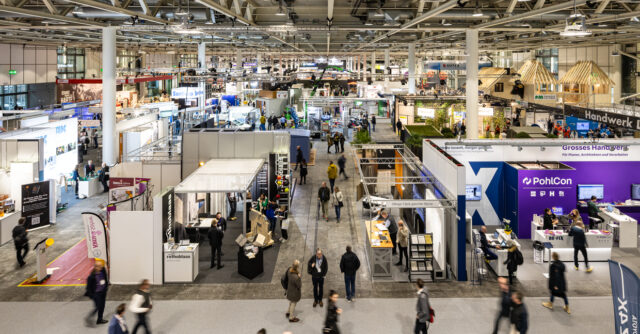
    Die Trendwelt Innenausbau in Halle 1.2 bleibt auch am Samstag geöffnet. Tobias Hofmeier begrüsst Ausstellerinnen und Fachpublikum als neuer Messeleiter.
    Aussteller der Swissbau 2026 erhalten in diesen Wochen ihren Platzierungsvorschlag. Keine einfache Aufgabe für die Messeverantwortlichen – gibt es doch sehr viel Neues an der nächsten Ausgabe. Das Team der Swissbau hat die beliebte Mehrbranchenmesse mit neuen Ideen gespickt, um grosse und kleine Marken für eine Teilnahme zu begeistern.

    Treffpunkt Handwerk mit «Swissness»
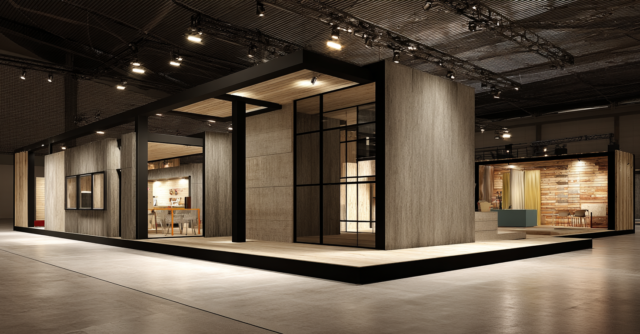
    In Halle 1.0 bietet ein lebendiger Treffpunkt für das Handwerk dem vielfältigen Wirtschaftszweig eine starke Lobby. Highlight der 2500 Quadratmeter grossen Fläche ist der Bau eines doppelstöckigen Holzhauses und einer modernen Stahlhalle von verschiedenen, parallel arbeitenden Gewerken. Zum Austausch und Fachsimpeln bietet die BauBeiz ausreichend Platz. Berufsstolz steht hier hoch im Kurs, genau wie auf den spielerischen Aktionsflächen daneben.

    Neue Kooperationen für mehr Vielfalt
    Nicht nur in Halle 1.1 führt eine neugeborene Kooperation mit dem Schweizerischen Maler- und Gipserunternehmer-Verband SMGV zu verschiedenen Inszenierungen. Live-Demos, Trainings, Veranstaltungen sowie Ausstellung und Auszeichnung des renommierten «Schweizer Preis für Putz und Farbe» mobilisieren die kreative Branche und bieten Herstellern ein attraktives Umfeld zur Produktpräsentation.

    Eine neue Plattform für den Innenausbau
    Die grösste Veränderung betrifft die designorientierte Trendwelt, die von Halle 2.2 in die modernere Halle 1.2 umzieht. Messeleiter Rudolf Pfander erzählt: «Die Trendwelt Bad wird auf den Innenausbau erweitert. Aussteller profitieren von einem hochwertigen Ambiente sowie neuen Synergien der Bereiche Bad, Boden/Wand/Decke, Licht, Büro- und Objekteinrichtung auf einer gemeinsamen Ebene.» Ein zusätzlicher Vorteil: Nur die Trendwelt hat am Samstag für unter der Woche ausgelastete Fachbesucher sowie private Eigentümerinnen und Bauherren geöffnet.

    Swissbau unter neuer Führung
    Seit 25 Jahren leitet Rudolf Pfander die Geschicke der Swissbau und führte sie erfolgreich in die Neuzeit. Um nach der Ausgabe 2026 neue Aufgaben bei MCH Exhibitions & Events zu übernehmen, übergibt er bereits diesen September die Nachfolge an seinen Stellvertreter Tobias Hofmeier. Der 36jährige Lörracher lenkt seit 2020 das Swissbau Projektmanagement sowie die erfolgreiche Entwicklung der Kollaborations-Plattformen Swissbau Focus und Lab.

    Breites Angebot an Präsenzen
    Vom Individualstand über die All-In-Theke bis zur Neuheiten-Demonstration im Swissbau Lab: Wer an der Swissbau 2026 präsent sein möchte, kann aus einer Vielzahl an Teilnahmemöglichkeiten wählen. Tobias Hofmeier und sein Team freuen sich über jede Kontaktaufnahme. Er präzisiert: «Unsere Kunden können sicher sein, dass wir ihre Bedürfnisse an erste Stelle setzen und gemeinsam eine passende Präsenzmöglichkeit finden».

    Unterstrichen wird die anhaltende Relevanz der Swissbau durch namhafte Partnerschaften. Der Schweizerische Ingenieur- und Architektenverein SIA, die Schweizer Marke LAUFEN sowie der neue Partner Abacus Business Solutions engagieren sich an der Swissbau 2026 in grossem Umfang und bringen ihre Expertisen ein.

    Swissbau 2026 – die führende Plattform der Bau- und Immobilienwirtschaft in der Schweiz

    Messedauer, Öffnungszeiten
    20.- 23./24. Januar 2026
    Dienstag bis Freitag, 9 bis 18 Uhr
    Samstag Zusatztag Innenausbau in Halle 1.2, 9 bis 16 Uhr

    Weitere Informationen
    swissbau.ch

  • Track construction and modernisation at Speicher station

    Track construction and modernisation at Speicher station

    According to a press release, the Dietiker construction company Walo Bertschinger AG is contributing its many years of experience in track construction in the municipality of Speicher. Construction work is underway there to remodel the railway station. Walo is carrying out the track and points work to optimise the track systems for smooth rail traffic. According to the information provided, Walo is helping “to ensure that railway lines remain sustainable, safe and reliable so that the mobility of today and tomorrow is guaranteed”.

    The construction work is expected to last until mid-September 2025 and will include the creation of comfortable and barrier-free platforms, new surfaces and drainage systems for greater safety and durability. The lighting and equipment are also to be modernised for a pleasant station experience.

    The municipality of Speicher in the canton of Appenzell Ausserrhoden is pursuing plans for greater sustainability. These include the increased use of renewable energies, energy-efficient construction and environmentally friendly mobility. The railway station renovation is also one of the sustainability projects in Speicher. The municipality is endeavouring to equip it with LED lighting, ecological materials and barrier-free access. The aim is to create a climate-friendly and modern public transport system.

  • Gebäudeversicherung Bern joins forces with Designform for sustainable remodelling

    Gebäudeversicherung Bern joins forces with Designform for sustainable remodelling

    Björn Ischi’s Designform GmbH has worked on the remodelling of the first floor at GVB – Gebäudeversicherung Bern in Ittigen. Together with the GVB team, “upcycling by design in its most beautiful form” was realised, writes Ischi in a post on LinkedIn. Specifically, material that was removed during the renovation was not disposed of, but reused directly on site.

    For example, “cool seating areas” were created from former wall sections of the old design for the new furnishings. Because not only can mobile phones and laptops be charged there, but users can also recharge their own batteries, the GVB team gave these seating areas the name “Powerbanks”, explains Ischi. For the owner and product designer of Designform GmbH, however, the project in Ittigen was “more than just upcycling with style”.

    This is because the GVB employees were involved in the planning and realisation of the conversion via two workshops. In the first workshop, needs were identified and ideas developed. In the second workshop, the employees then lent a hand in building the furniture themselves. “Screwdrivers instead of keyboards and suddenly the teams were literally behind the furniture,” says Ischi. Furniture specialist Girsberger from Thunstetten BE provided professional support for the project.

  • Robot system optimises lift installation in Singapore

    Robot system optimises lift installation in Singapore

    Schindler’s robotic installation system for lifts, Schindler R.I.S.E, has been used in the new Shaw Tower in Singapore. As the Ebikon-based company reports in a LinkedIn post, the robot plays a key role in the installation by reducing manual labour, improving site safety and increasing the overall efficiency of the installation process. The self-climbing robot autonomously performs installation steps such as drilling and placing anchor bolts.

    With the R.I.S.E system, installation steps can be completed faster than with conventional installation methods. While the system works independently and requires no operation, a camera mounted on the platform enables remote monitoring. In addition, a Schindler R.I.S.E operator remains on site during the installation period for quality control and support.

    “Schindler R.I.S.E is now being used successfully on numerous construction sites around the world. It has not only impressed customers and colleagues with its unrivalled speed and accuracy, but has also drastically improved working conditions for our employees. It is innovation at its best,” says Urs Püntener, Head of Global Fulfilment at the Schindler Group, via the company website.

  • Renovation incentives secure energy targets and the construction industry

    Renovation incentives secure energy targets and the construction industry

    The building stock plays a key role in reducing emissions and closing the winter electricity gap. Energy modernization measures such as better insulation or the replacement of fossil fuel heating systems with heat pumps are key levers for achieving energy and climate targets. However, without targeted incentives, the necessary momentum to trigger investments on a large scale is lacking.

    Criticism of the imputed rental value bill
    The bill to be voted on on September 28 not only provides for the abolition of the imputed rental value, but also the elimination of deductions for building maintenance and energy-related investments. Bauenschweiz warns that this threatens to put a stop to renovations, with serious consequences for local SMEs in the construction and crafts sector and for climate protection. Instead of creating incentives, such a system change would prevent renovations, weaken the trade and place a burden on SMEs.

    Study shows enormous efficiency potential
    A recent study by Lucerne University of Applied Sciences and Arts and FLUMROC illustrates just how great the opportunities are. A combination of heat pumps and an optimized building envelope could reduce electricity consumption in Switzerland by 5.3 terawatt hours per year. This could cover almost ten percent of total consumption and practically close the winter electricity gap.

    Switzerland is at a turning point in its energy policy. Instead of creating barriers to investment, we need framework conditions that promote energy-efficient renovations, strengthen the construction industry and fully exploit the contribution of the building stock to the climate transition.

  • Builders’ association welcomes EU negotiating mandate

    Builders’ association welcomes EU negotiating mandate

    The construction industry is highly dependent on stable political and economic conditions. The Swiss Federation of Master Builders therefore emphasizes the importance of the adopted negotiating mandate with the European Union. Orderly relations with the EU are a basic prerequisite for Switzerland as a business location, the association emphasizes. At the same time, it makes it clear that wage protection is not an obstacle in the upcoming negotiations.

    ISAB as a digital core instrument
    The Information System Alliance Construction (ISAB) has been in use since 2019. A digital enforcement tool that ensures wage protection throughout the construction industry. The system combines three central components such as the ISAB portal, the joint CLA certificate and the ISAB Card.

    ISAB is used to digitally check and monitor compliance with generally binding collective employment agreements. According to the SBC, the joint inspection alone carries out around 16,000 construction site inspections with ISAB every year. More than in almost any other sector. This means that wage and employee protection in the construction industry is particularly tightly meshed.

    Clear stance towards trade unions
    The SBC rejects the expansion of accompanying measures, as demanded by the trade unions. The current Posted Workers Act already offers a tried and tested instrument that prevents abusive undercutting of wage and working conditions. As this law is in line with the European Posting of Workers Directive, the association does not expect any resistance from the EU.

    Responsibility of building owners
    The SBC emphasizes that building owners, especially large public clients, bear a central responsibility. By consistently relying on the use of digital tools such as ISAB, they make a decisive contribution to combating undeclared work and ensuring fair working conditions. This sends out an important signal, especially in the current European political context.

    Expensesregulation as an open question
    While the SBC believes that wage protection is secured, the association still sees a need for clarification regarding the EU expenses regulation. The association is calling for an expenses regulation based on the place of performance principle, i.e. according to Swiss standards. This is the only way to prevent foreign companies from gaining an unjustified competitive advantage over Swiss providers through lower expense rates.

    The SBC sees the adopted negotiating mandate as an opportunity to put relations between Switzerland and the EU on a stable footing. With the digital enforcement instrument ISAB, wage protection is guaranteed. A further expansion of the accompanying measures is not necessary. It is now crucial that clients assume their responsibility and implement digital solutions across the board. The association is calling for a clear solution in favor of fair competition when it comes to expense regulations.