Category: Property Management

  • People aged 55 and over moving house could ease pressure on the housing market

    People aged 55 and over moving house could ease pressure on the housing market

    The moving patterns of the ‘Best Ager’ generation – those aged between 55 and 74 – are becoming increasingly important for a functioning housing market in Switzerland, as shown by the new Helvetia Housing Report, according to a press release from Helvetia Baloise. The study was conducted by the insurer in collaboration with the Sotomo research institute in Zurich.

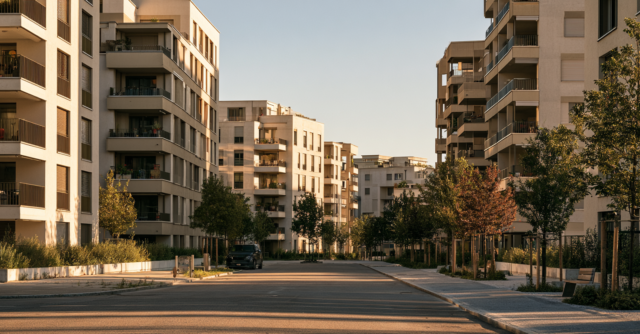
    When this age group moves house, they usually relocate to less central areas or, increasingly, abroad. This frees up larger, centrally located flats, which are subsequently occupied by families much more frequently. According to the study, this helps to distribute existing housing more efficiently across different stages of life.

    Furthermore, emigration abroad increased by almost 50 per cent between 2014 and 2024. At the same time, moves within one’s own municipality remain comparatively rare. It is only from the age of 75 that the trend reverses: older people then move more frequently back to well-connected, central locations.

    “Additional moves by this age group make an important contribution to better utilisation of living space,” says Michael Hermann, Managing Director of Sotomo. This dynamic is driven in particular by the moving behaviour of foreign ‘Best Agers’, whose likelihood of moving is 50 per cent higher than that of Swiss nationals. However, this trend is being held back by the so-called lock-in effect: homeowners move significantly less often – their likelihood of moving is over 60 per cent lower than that of tenants. According to the report, however, the often-discussed influence of affordable existing rents is significantly lower than assumed and is not the decisive factor behind the low mobility of older households.

  • Hybrid is the new normal

    Hybrid is the new normal

    77% of Swiss companies now rely on hybrid working models. That is more than twice as many as before the pandemic. In Germany, 79% of companies offer hybrid working, while the proportion of employees working from home remains stable at between 23% and 24%. At the same time, the analysis of job advertisements, a reliable seismograph for medium-term corporate decisions, shows that hybrid working has been consistently communicated as a working model in around 20% of German and 15% of Swiss job advertisements since 2023.

    Recalibration, not capitulation
    Yes, the average time spent working from home has fallen slightly. In Switzerland from 1.36 to 1.15 days per week, in Germany from 1.0 to 0.85 days. Anyone who sees this as the end of flexibilization is misreading the data. Only 4 to 5 percent of German companies are considering doing away with the home office completely. 74 percent plan to retain hybrid models, while 11 percent even want to increase flexibility. Adjusting entrepreneurial thinking, not turning back.

    Rethinking the office
    The real question is not how many days someone spends in the office. It is why someone should come to the office. 75 percent of employees see the office as a better place for social interaction, 58 percent for networking and career development, 49 percent for creative interaction. The office is changing from an obligatory place to a meeting point for things that don’t work remotely. CBRE speaks of the “office as an attractor”, a place that must offer tangible added value in order to justify the journey. Globally, office occupancy has now recovered to 53%, the highest level since March 2020.

    What companies need to do now
    The data is clear, as are the areas for action. 72% of the companies surveyed have set themselves the goal of improving office space utilization. 66 percent want to sustainably improve the office experience. In other words, spaces that enable collaboration instead of hindering it. Concepts that make team days meaningful and a corporate culture that makes presence attractive rather than enforcing it. Anyone who views the office as a mere cost problem is missing the real strategic question. What value does it create for people and the organization?

    Flexibility as a competitive factor
    Hybrid working has long been more than just an HR issue. It is a factor in the battle for skilled workers. Companies that credibly embrace flexibility have a measurable advantage in recruiting. The ISG study on the future of the Swiss workplace shows that employee experience has become a key lever, from collaboration and onboarding to the availability of space. Hybrid working is the new normal and those who strategically shape it now will position themselves as employers of the future.

  • More AI does not solve data problems

    More AI does not solve data problems

    The mistake begins with the investment
    It’s a familiar pattern: a company recognizes the potential of artificial intelligence, looks at solutions, chooses a tool – and gets started. The expectation is that the new technology will somehow solve existing data problems. The reality: It doesn’t. It makes them more visible.

    This is no coincidence. It is the consequence of a wrong sequence.

    Data is collected – but not made usable
    Data is available in most real estate companies. Property data, tenant data, operating figures, maintenance histories – they exist. The problem is not its absence, but its condition. They are scattered across systems, inconsistently maintained, inconsistently defined or simply cannot be linked to one another. There are sometimes three different versions of the same key figure – in three different systems.

    Anyone who sets up an AI model under these conditions will not get any answers. What you get is output that reinforces existing uncertainties – automatically and at high speed. AI recognizes patterns in data. If the data is inconsistent, the model learns from the inconsistency. If it is incomplete, it operates on an incomplete basis.

    A new layer of complexity
    What is created in practice is not a gain in efficiency. It is a new layer of complexity: AI outputs that nobody trusts. Departments that manually check results. Projects that come to a standstill. A lot of effort, little effect, growing frustration.

    The fatal thing is that many companies react to this with the next tool upgrade. The cycle starts all over again.

    A data hub is not a tool – it is a structure
    The solution does not lie in better models. It lies in a structural decision: the creation of a common, harmonized database. A data hub is not another system that is added to the existing IT landscape. It is the opposite – it replaces fragmentation with central availability. It integrates distributed data sources, breaks down silos and inconsistencies and creates the basis for scalable AI applications and automated reporting.

    The decisive factor is not where the data is stored. What matters is how it can be used: uniformly defined, quality-assured, accessible for different use cases. Only on this basis can AI deliver what it promises.

    Data quality is not preliminary work – it is an ongoing task
    Even with a data hub, a central challenge remains: Data quality is not a one-off cleansing project before go-live. It is a continuous process. Anyone who sees data quality as a preliminary project will realize after the launch that the real problem is only just beginning.

    The database is supplemented by a data catalog: It transparently documents which data exists, where it comes from and how reliable it is. It creates a common language that connects specialist departments and technology – and gives control back to the organization.

    In the webinar: From the database to scalable AI
    In our free webinar “The optimal AI architecture: How data hub, data quality and data catalog make the difference”, we show how real estate companies can tackle this transformation in concrete terms – from data architecture and quality assurance to the productive use of AI. With practical insights, concrete solutions and time for your questions.

    Register now for free

  • Who pays, who lives, who benefits?

    Who pays, who lives, who benefits?

    The SOSDA framework developed by Zimraum and Stratcraft records the social performance of residential real estate along nine key figures in three scopes: tenants, neighborhood and society. The data pool comprises 30 portfolios with around 68,500 apartments from 17 owners. These include pension funds, investment foundations, listed funds and non-profit housing developers. A database that allows comparisons to be made for the first time.

    Affordability is holding up better than expected
    78 percent of the apartments in the data pool are considered affordable according to the SOSDA definition. The net rent accounts for less than a third of the monthly taxable median income in the respective municipality. Even in the new-build segment, this figure is 58 percent. In institutional portfolios, 48 percent of new-build apartments reach this threshold. This contradicts the widespread view that new construction and affordability are fundamentally mutually exclusive.

    High satisfaction, solid management quality
    Tenant satisfaction is remarkably high. 90 percent of respondents are somewhat to very satisfied with their apartment. 83 percent also give their property management good marks. The residential environment is also impressive. 85 percent are satisfied with their neighborhood, 77 percent rate the neighborhood conditions positively. Quality is obviously not a product of chance in the Swiss housing market.

    Family apartments remain under-occupied
    When it comes to occupancy efficiency, the benchmark reveals a structural weakness. Only 58 percent of apartments fulfill the “room minus 1” rule. For family apartments with four or more rooms, this proportion drops to 41 percent. Although non-profit portfolios perform slightly better than institutional portfolios when it comes to family apartments, the difference remains small. This is a clear area for optimization for all market participants.

    Letting practice under the magnifying glass
    For the first time, the benchmark also documents to whom apartments are actually let. The range is considerable. Depending on the portfolio, between 46 and 100 percent of family apartments went to households with children. Only 9 percent of apartments were rented to senior citizens. The proportion of affordable apartments that went to low-income households varied between 30 and 50 percent. The database is still limited, but the direction is clear. Social performance can no longer be ignored in the future.

  • Artificial intelligence: Absolutely, but..

    Artificial intelligence: Absolutely, but..

    Whether the English “AI” or the German “KI” – artificial intelligence is currently omnipresent. How its impact is assessed depends heavily on the perspective of the individual: For some, the opportunities outweigh the risks, while others primarily see risks. However, one thing is undisputed: the technology is here to stay.

    For us as a digital real estate platform, an open approach to technological innovation has always been part of our DNA. With ImmoScout24 and Homegate, we have been actively shaping the real estate market for over two decades. Our principle also applies here: AI must not be an end in itself, but should act as an unprecedented “enabler”. After all, the true potential of these two letters lies in the accelerated development, smart expansion and enhancement of innovative products that can create real added value and achieve daily efficiency gains.

    In the professional real estate sector in particular, the benefits of AI can be seen in its productive integration into existing, established processes. While this enables us as platforms to develop market-oriented products in a more agile way, it creates new efficiency gains for brokers and property managers in their day-to-day operations. The decisive factor is not the technology itself, but its real contribution.

    Two examples from the SMG Real Estate ecosystem illustrate this:

    • Our AI-based listing text creation saves an average of 14 minutes per listing. Extrapolated to an entire portfolio or a marketing campaign, this results in a substantial gain in productivity. The time saved can be invested specifically where it makes the biggest difference – in consulting, negotiation and customer relations. Anyone who instead advertises on ImmoScout24 or Homegate as a private individual can use this new intelligent function to partially compensate for a lack of marketing experience.
    • The new “Insight Hub” for real estate professionals provides AI-driven answers to questions about the potential and performance of listings that were previously difficult to narrow down. Every week, real estate agents and managers receive an overview of the listings with the greatest potential for improvement, including specific recommendations for action and the expected increase in visibility.

    This is just a small excerpt, plus numerous current developments at SMG Real Estate, including “Agentic AI”, a digital companion for real estate professionals in their day-to-day work – from the transcription of meeting notes to seamless CRM integration. But more on that in the near future. At the same time, technological innovation requires continuous investment – especially in cybersecurity. After all, it’s not just the right players who benefit from AI. State-of-the-art protection mechanisms, two-factor authentication, integrated access controls, etc. are essential to secure data and effectively prevent attempted fraud. Trust remains the central currency in the real estate market – especially in the digital one.

    But thanks to these targeted, ongoing investments in AI applications, we at SMG Real Estate are actively continuing to shape our role as the “digital shaper” of the Swiss real estate industry. Our goal is and remains first and foremost to make real estate professionals not only more efficient, but also more successful in the long term. This is also what our vision stands for: “Next-Gen Swiss Real Estate – digital and simple.”

  • New platform provides early information on building applications

    New platform provides early information on building applications

    With Baugesuche Pro, Zurich-based Houzy AG has developed a “Switzerland-wide construction alert for your own neighbourhood,” as it describes the service in a press release. Owners, tenants or prospective buyers can use it to get an overview of building applications in their neighbourhood, which previously required studying official gazettes or municipal websites.

    “Transparency about the immediate environment is the basis for smart real estate decisions,” Houzy’s COO and CMO Nicolas Steiner is quoted as saying in the press release. “With Baugesuche Pro, we now offer everyone – from long-time homeowners to tenants planning to buy a flat – a tool to better understand the dynamics in their own neighbourhood without tedious research.”

    Users can register with Houzy and enter the location of their property or their desired neighbourhood. They will then receive a notification for every new building application within a relevant radius.

  • Clean waste disposal systems as a success factor in property management

    Clean waste disposal systems as a success factor in property management

    Functioning waste disposal systems are a central component of modern properties. Underfloor and waste containers must not only be emptied, but also professionally cleaned on a regular basis to ensure hygiene, operational safety and value retention. The requirements for odour management, cleanliness and documented service processes are growing, especially in densely used residential and mixed-use areas.

    For property managers and owners, this means that container cleaning must increasingly be seen as an integral part of site management. Today, modern processes with closed water cycles and standardised procedures enable efficient and sustainable implementation.

    Practical example from Ascona

    A recent CleanTech Day in Ascona showed how professional container cleaning works in practice. Representatives from local authorities and facility management took the opportunity to watch live cleanings and exchange ideas directly with experts. The positive response confirms the growing importance of structured container maintenance in property operations.

  • Digital assistant makes everyday rental life easier

    Digital assistant makes everyday rental life easier

    Zurich-based LIVIT AG has launched a chatbot supported by artificial intelligence (AI). According to a press release, the chatbot, called Livio, is designed to guide tenants digitally through a catalogue of essential questions about renting and living. The real estate service provider, a subsidiary of Swiss Life, wants to expand its digital offerings with this innovation.

    The chatbot draws exclusively on verified content from the LIVIT website, which is constantly updated and expanded by an in-house team of experts from the fields of property management, communication and digital business. Livio is currently in a beta phase.

    “Livio enables us to assist tenants in a straightforward manner. Recurring enquiries are answered automatically, while employees can focus more on individual concerns,” said David Rivière, Head of Management at LIVIT AG, in the press release. Livit is collaborating with the Zurich-based AI company Typewise on the technical implementation of the chatbot.

  • Modular furniture system optimises waste management in the office

    Modular furniture system optimises waste management in the office

    Lista Office LO is expanding its office furniture brand of the same name with a modular system for waste management. According to a press release, the LO Value modular system offers sliding and pull-out containers in various sizes, reversible doors and interchangeable magnetic or adhesive labels.

    Fronts that open at the touch of a finger and generous disposal flaps with handles or foot pedals are designed to reduce contact points and the risk of contamination. Freely integrable PET and can presses compress the volume of waste. This in turn reduces the effort required for storage, transport and management.

    According to the information provided, the available LO Value variants are designed to fit into any design concept. As a colourful counterpoint, it attracts attention, while in monochrome it can blend in with its surroundings – depending on “whether the call for waste separation is to be implemented discreetly or as a visual exclamation mark”.

  • Portfolio approach drives electric mobility in residential properties

    Portfolio approach drives electric mobility in residential properties

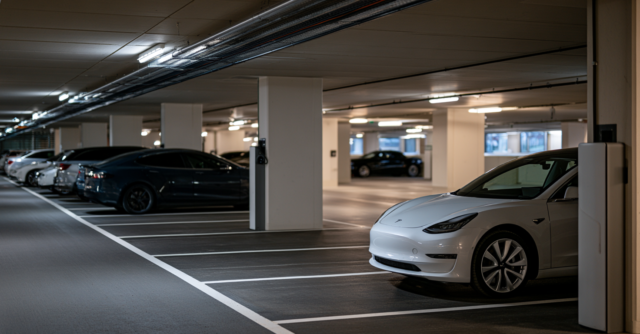
    According to a press release, Helvetia Baloise Holding AG, the insurance company formed in December 2025 from a merger between Helvetia and Baloise, is promoting e-mobility together with its partner Energie 360°. The energy and e-mobility company, which is 96 per cent owned by the City of Zurich, has already taken over more than 150 charging stations in 13 properties, mainly in western Switzerland, the Mittelland and Basel.

    As Reto Baschera, head of the mobility group at Energie 360°, emphasises, the expansion is “demand-driven and geared to the requirements of the tenants”. According to the information provided, six further properties are currently in the planning stage, with more to follow gradually. The focus is on a harmonised portfolio approach with a hardware-independent billing solution that takes into account different building types and product characteristics. Helvetia Baloise has a total of around 845 properties in Switzerland with approximately 30,000 apartments.

    “For me in strategic procurement at Helvetia Baloise, it was crucial to find a partner who sees electromobility not as a single product, but as an integrated part of a large real estate portfolio,” says Karin Hauser of Baloise Asset Management AG. “In our collaboration with Energie 360°, we particularly appreciate the structured approach, the reliable implementation and the ability to pragmatically map different starting points in our properties.”

  • Artificial intelligence assists with advertising residential properties

    Artificial intelligence assists with advertising residential properties

    The Swiss Marketplace Group (SMG) is launching new options on its real estate platforms ImmoScout24 and Homegatethatallow private sellers to advertise their properties online. According to a press release, these tools are supported by artificial intelligence (AI) and make it easier for non-professional sellers to advertise on the internet.

    To create an advertisement, all that is required is to enter the most important property attributes such as address, size and amenities. The real estate platforms then use AI to create the complete advertisement title and description of the property. This includes descriptions of the location and surroundings of the property, according to the press release. Finally, users can upload pictures and complete the advertisement.

    “Many private landlords only occasionally deal with creating an advertisement. Thanks to AI support, they now receive a high-quality, structured proposal within a few seconds that meets the standards of professional estate agents,” Martin Waeber, Managing Director at SMG Real Estate, is quoted as saying in the press release. “This also benefits all searchers, because the more accurately an advertisement is described and the faster it goes online, the faster people can find their new home.”

    The modules have been available to professional providers for about a year. With the now broader positioning for private providers as well, SMG aims to further advance digitalisation in the Swiss real estate business.

    SMG Swiss Marketplace Group AG combines the digital marketplaces of TX Group, Ringier and Mobiliar.

  • Digital intelligence in construction

    Digital intelligence in construction

    “Planning is already highly digitalized, construction less so and operations more so,” explained Alex Walzer from the FHNW. A lot of information still gets lost between the project phases. This is a problem, particularly with regard to the circular economy. Walzer sees great potential in the consistent use of data. Learning from projects, designing buildings based on data, standardizing processes. But without a clean data basis and precise questions, even artificial intelligence remains ineffective.

    Consistent data with Lakeup
    Michal Rzinski from Bond BIM presented the Lakeup platform, a system for life cycle data management. It is designed to enable building owners and real estate organizations to use data in a structured way over the entire life cycle of a building. From the definition of requirements to ordering and evaluation, Lakeup creates data consistency and transparency.

    According to Rzinski, the focus is on people. “We want to pick up specialist planners, engineers and decision-makers in equal measure.” One example is provided by the University Hospital Basel, where AI agents automatically classified 25,000 data records, the basis for later applications. The platform has a modular structure, from specialist planning tools to corporate solutions.

    Virtual bathrooms and real decisions
    Things got practical with Patrick Marti from Hegias Vision. His platform combines 3D visualization with real-time data in bathroom renovation. Using an iPhone, rooms can be scanned, objects automatically recognized and designed in a digital environment. Customers can immediately see what their bathroom could look like, including materials, lighting moods and real product data.

    Together with BMS, Hegias is enabling a new, interactive consultation process. “People used to leave the showroom with a block full of product names, now they leave with a link to their dream bathroom,” says Ilona Lupart from BMS. The room scanner makes it easier to get started, speeds up decisions and increases satisfaction.

    People at the heart of digitalization
    In the final round, everyone agreed that automation cannot replace people. “AI should relieve the burden on advisors, not replace them,” emphasized Marti. Walzer emphasized that AI is particularly strong where large amounts of data are analysed or supply chains are optimized. Nevertheless, specialist knowledge, reflection and further training are still required.

    Rzinski added that Lakeup was deliberately designed to cover different levels of expertise, from data specialists to management. Lupart added that training, involvement and communication are key to reducing skepticism. Openness is more important than age: even 90-year-olds have used VR glasses enthusiastically.

    New skills and outlook
    Walzer sees a change at the FHNW. “Students today are working more collaboratively and critically with technology.” In addition to technical skills, soft skills, communication, understanding of interfaces and teamwork are increasingly in demand.

    Marti and Rzinski announced that they will continue to expand their platforms in the future. More automation, better user guidance and deeper integration of AI into existing processes. Walzer dares to look ahead “In ten years, AI will work as naturally in the background as electricity from the socket. The goal will have been achieved when building is fun again thanks to technology.”

  • Infrastructure investment gains momentum in Europe

    Infrastructure investment gains momentum in Europe

    Construction company Impleniahas secured major infrastructure projects in Germany and Norway, according to a press release. The contract package includes the new Peene Bridge in Wolgast, the replacement of the Main Bridge in Marktbreit, the first construction phase of the Riederwald Tunnel in Frankfurt am Main and the new Lågen Bridge in Norway.

    For the new Peene Bridge in Wolgast, Implenia is leading a consortium with DSD Brückenbau, Victor Buyck Steel Construction and Stahl Technologie Niesky. The approximately 1.4-kilometre-long cable-stayed bridge will connect the A20 motorway with the island of Usedom and, with a clearance height of 42 metres and 70-metre-high pylons, will be one of the largest bridges of its kind in Europe. Construction work has been underway since December 2025 and is expected to continue until 2030.

    Implenia is the technical leader in a consortium with Plauen Stahl Technologie for the replacement of the Marktbreit Main Bridge on the A7 motorway. The new bridge will be built as a steel composite box girder using the incremental launching method. It will be around 925 metres long and 31 metres wide. Construction is taking place while traffic continues to flow and will be completed by around 2033. The new contracts in Germany are rounded off by the construction of the new Riederwald Tunnel in Frankfurt am Main. In a consortium with Wayss & Freytag Ingenieurbau and Bickhardt Bau, Implenia is realising the centrepiece of the gap closure between two important motorway sections. The approximately 1.1-kilometre-long tunnel is being built using the open construction method. Work began in 2025 and will take around three years.

    In Norway, Implenia is building the Lågen Bridge on the new E6 Roterud–Storhove motorway on behalf of AF Gruppen. The 552-metre-long, four-lane concrete box girder bridge spans the Lågen River north of Lillehammer. Strict environmental regulations to protect breeding birds, spawning grounds and biodiversity minimise the impact on the sensitive delta area.