Tag: A2

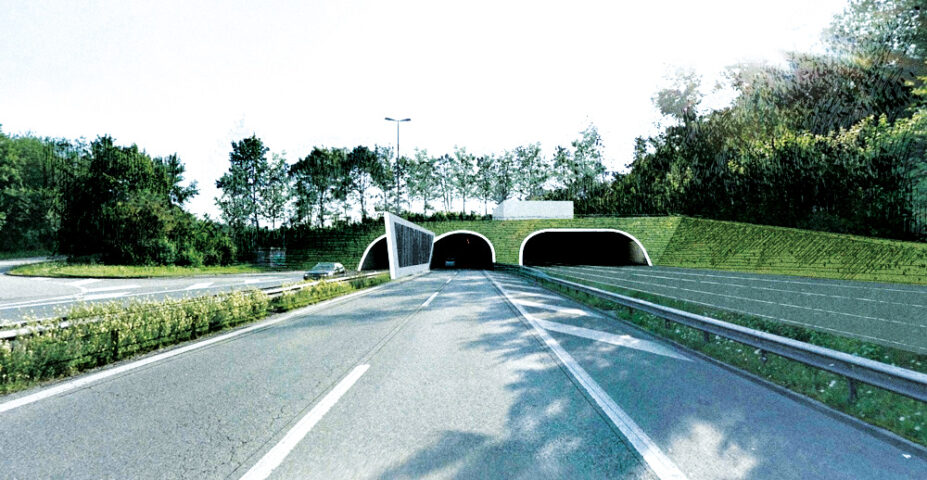
  • Partial covering of the A2 in Lucerne South

    Partial covering of the A2 in Lucerne South

    On 16 November 2024, the Federal Roads Office, the Canton of Lucerne, LuzernPlus and the City of Kriens offered a platform at the Schappe Kulturquadrat in Kriens to present the interim status of the partial overlays of the A2. Visitors were able to talk directly to the planning teams, make suggestions and ask questions.

    The planning, which entered its second phase in 2024, aims to sharpen the objectives, prepare the legal basis and clarify financing and technical requirements. The results of the ongoing studies are expected at the end of 2025.

    Areas with potential
    The test planning from 2023 identified three possible locations for partial covers. The designs aim to connect urban areas, improve the quality of life by reducing noise and create new urban spaces.

    • Grosshof/Luzernerstrasse: Focus on a close-knit network of paths and the upgrading of public spaces.
    • Arsenal/Schlund: Potential for LuzernSüd through the overlaps and the development of new utilisation options.
    • Schlund/Horwerstrasse: Opportunities for neighbourhood development and a gentle transformation of the Wyssmatt commercial district through the extension of the Schlund tunnel.

    Technical challenges
    In addition to the in-depth studies, a feasibility study is analysing the technical framework conditions of the planned partial overpasses. These are independent of the overall Lucerne bypass system, but will be closely coordinated with other projects in the region.

    Prospects and next steps
    The partial overpasses of the A2 offer the opportunity to redesign urban spaces and create synergies between transport and neighbourhood development. The results of the studies will provide a sound basis for further planning and implementation that takes into account the interests of the population and the institutions involved.

    The partial covering of the A2 motorway in Lucerne South shows how infrastructure projects can contribute to urban development and quality of life. The dialogue with the population and the intensive planning set the framework for a sustainable and future-oriented design of the Lucerne South region.

  • Lucerne bypass relieves road network

    Lucerne bypass relieves road network

    In the past ten years, traffic to and from Lucerne has increased by around 20 percent. Further growth is forecast – but the A2 and A14 are already reaching their capacity limits. At the Rotsee junction outside Lucerne, the traffic flows of the A2 north-south axis and the A14 from Zurich-Zug meet. On the city thoroughfare, regional and local destination and source traffic are added. In order to ease the situation, the federal government wants to significantly improve the traffic situation on both motorways with the Lucerne bypass. Without the bypass, alternative traffic on the subordinate road network would increase, and as a result, public transport would also be impeded.

    The core element of the bypass consists of two two-lane tunnels with a length of 3760 metres in the northbound direction and 3850 metres in the southbound direction, which pass under the city of Lucerne and the Reuss river. In the north, the connection points are in the Ibach area and in the south in the Grosshof area (Lucerne-Kriens). The planned tunnel bypass is primarily intended to accommodate transit traffic.

    In addition, it is planned to expand the A14 in the north from four lanes today to six lanes in the future from the Rotsee junction to the Buchrain junction. To achieve this, the Rathausen tunnel will be extended with a third tube. The structures will be adapted at the Rotsee junction. At the Rotsee junction, the A2/A14 Basel lane will be widened to two lanes in the direction of Zug in order to eliminate the existing bottleneck.

    Between the Rotsee junction and the Lucerne-Kriens junction, the A2 will become an urban motorway serving exclusively the destinations, sources and domestic traffic of the Lucerne conurbation. Emmen Süd, Luzern-Zentrum and Luzern-Kriens are connected to it. If necessary, for example in the event of an incident or during maintenance and repair work, the urban motorway serves as an alternative route to the bypass and vice versa.

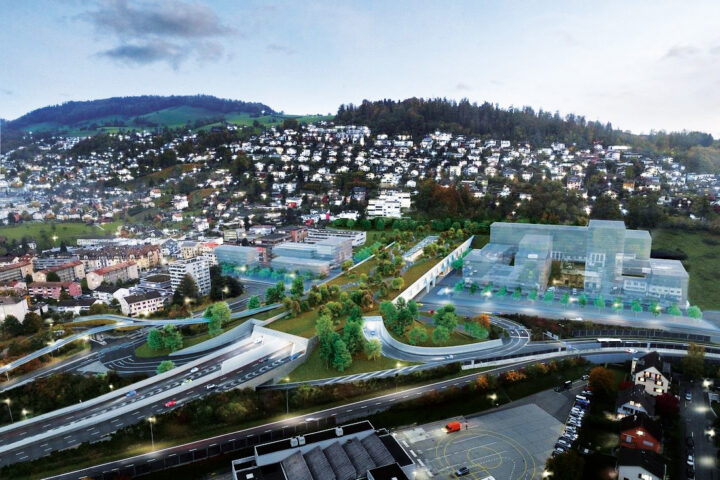
    The Grosshof bridges as the new gateway to the city of Kriens.

    In the south, the Spier tunnel between the Lucerne-Horw and Hergiswil junctions is to be re-marked with three lanes in each direction. The third lane will extend the entry and exit lanes. The new Grosshof bridges will provide the town of Kriens with a new gateway: a park with paths from Sonnenberg to Kriens, Horw and Lucerne is planned on the roof. Below the bridge, a diverse mix of uses is to be created, including cafés, shops and commercial space.

    The Lucerne bypass envisages the construction of three new road wastewater treatment plants (SABA) in Rathausen, at the Rotsee junction and at Grosshof-Kriens. Thanks to these, the wastewater from the motorway will be cleaned in an ecological way before it flows into the surrounding water bodies.

    The Bypass relief project is intended to improve the flow of traffic on the motorways and ensure the functionality of the north-south axis. It will also create alternative routes in case of accidents or maintenance work. Central Switzerland and the Lucerne agglomeration will benefit from better accessibility, and the urban motorway will be relieved of through traffic. Last but not least, safety for all road users will be increased.

    The Rathausen tunnel will be extended with a third tube.

    The total costs amount to CHF 1.8 billion and are financed by the federal government. If everything goes according to plan, the bypass should be open to traffic in about 2035 after about 12 years of construction – subject to the still pending planning permission.