Tag: Abwärme

  • Climate-friendly heat supply for Zofingen and Oftringen

    Climate-friendly heat supply for Zofingen and Oftringen

    StWZ Energie AG and Primeo Energie want to jointly create a sustainable district heating supply in the lower Wiggertal valley. To this end, the energy service providers have founded the joint company Fernwärme Unteres Wiggertal AG (FUWI) as of 19 September 2025. The aim is to combine “infrastructure, customer proximity and energy expertise” in order to further develop the heat supply in a climate-friendly way.

    The new network is to be operated using waste heat from the erzo-KVA waste incineration plant and from existing decentralised StWZ energy centres. Existing heating networks from StWZ in Zofingen and Primeo Energie in Oftringen are to be integrated.

    The first households are to be supplied with low-CO2 heat energy from the new network from summer 2027. Two phases are planned for the expansion. Phase one is to begin in 2026 from the erzo-KVA waste incineration plant and run towards Oftringen Süd and Zofingen. The second phase will follow in 2030 at the earliest and will depend on the planned new construction of the waste incineration plant. This will require the consent of the people of Oftringen for the zoning of a required piece of land. If both construction phases go into operation, 10,000 households could be supplied with heat and 30,000 tonnes of CO2 could be saved.

    Michael Schneider, Managing Director of Primeo Wärme AG, sees the energy revolution as a heating revolution. This step lays a “foundation stone for a long-term sustainable heat supply in the lower Wiggertal”. “By combining regional energy sources with modern technology, we are reducing CO2 emissions in a targeted manner and expanding the supply of reliable, decarbonised heat,” Paul Marbach, Managing Director of StWZ Energie AG, is quoted as saying.

  • Dielsdorf data centres to supply district heating for the region

    Dielsdorf data centres to supply district heating for the region

    Green Datacenter AG(Green) from Lupfig AG and BRUGG Pipes from Kleindöttingen have agreed to work together to supply several municipalities in the canton of Zurich with district heating. According to a press release, the waste heat from the new Green Metro-Campus Zurich will supply 11,500 households in Dielsdorf and five neighbouring municipalities as well as industrial and commercial companies with district heating.

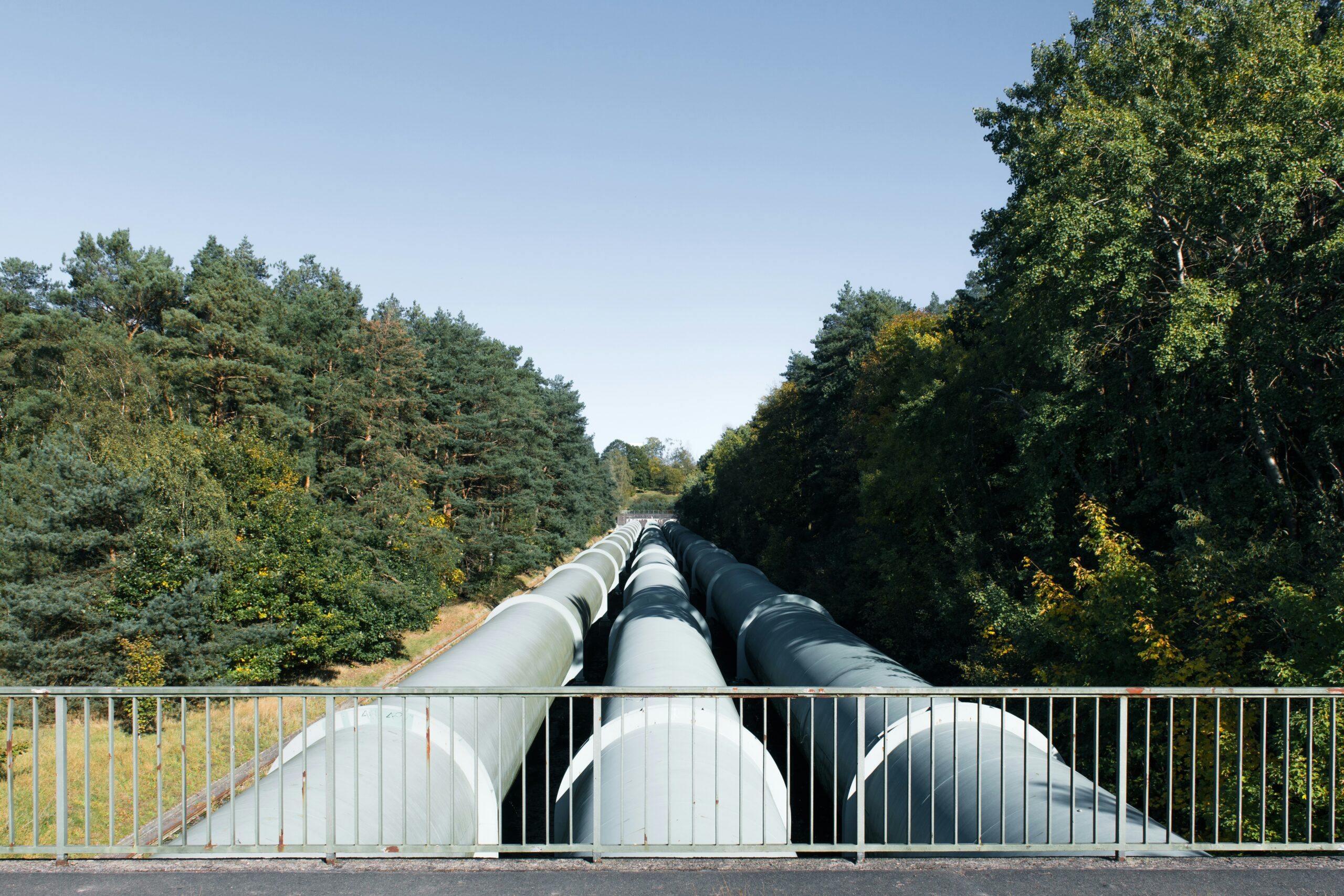
    In collaboration with the energy supplier Energie 360°, CO2-free heating is to be generated from the waste heat of the new data centre. An energy centre is being built right next to the Green Metro campus. The companies involved are relying on pipes from BRUGG Pipes to build the district heating network. The Aargau-based company has already supplied 126 pipes, each 12 metres long and with an external diameter of 70 centimetres. The pipe system is laid underground and is no longer visible after construction. The system is equipped with a smart monitoring system for maintenance purposes.

    “The data centres in Dielsdorf are a good example of how waste heat can be used sensibly and CO2 can be saved,” said Martin Rigaud, CEO of BRUGG Pipes, in the press release.

    Energie 360° aims to supply the first district heating in 2026. Green is already using the waste heat from the data centre to heat its own office buildings and a nearby industrial complex.

  • Expansion of the district heating network in Ober- and Unterentfelden

    Expansion of the district heating network in Ober- and Unterentfelden

    With the heating network in Ober- and Unterentfelden, Eniwa AG will connect the next network to its grid, as detailed in a press release. The Buchs-based energy supplier has now received authorisation to build an energy centre and the first part of the network. From 2026, waste heat from the Buchs waste incineration plant(KVA Buchs) will supply CO2-neutral thermal energy to the first customers.

    The first stage is scheduled to go into operation in 2026. According to the press release, it will enable the supply of thermal energy for a demand of 20,000 megawatt hours. Fewag is expanding the pipeline network from Suhr to the energy centre in Unterentfelden to transport the waste heat from the waste recycling plant to Entfelden.

    The waste heat will be transported to the energy centre in the form of hot water and distributed to the buildings via the distribution network at 65 degrees Celsius. Aleksandar Dunjic, project manager for heating/cooling, uses the example of a central heating system to compare the cycle thus initiated. After being converted into thermal energy for heating and hot water preparation, the cooled water is transported back to the heat source.

    After the first realisation phase by 2028, Eniwa is aiming to increase the amount of energy generated by district heating to 60,000 megawatt hours by expanding the network in Oberentfelden and Unterentfelden, according to the press release. “The district heating projects offer customers a high level of supply security at stable prices in the long term,” CEO Hans-Kaspar Scherrer is quoted as saying. The expansion targets are 12 kilometres of lines over the next 15 to 20 years.

  • Cooperation for sustainable energy supply in Arlesheim, Münchenstein and Reinach

    Cooperation for sustainable energy supply in Arlesheim, Münchenstein and Reinach

    Primeo Energie and uptownBasel are intensifying their collaboration. The two Basel-based companies signed “two important contracts” at the end of December 2024, explained Primeo Energie in a press release. Among other things, they aim to use the waste heat generated on the site of the competence centre for Industry 4.0 in Arlesheim to heat thousands of flats in the surrounding municipalities of Arlesheim, Münchenstein and Reinach.

    To this end, uptownBasel partner Primeo Energie is making Building 4 available on a long-term basis. This is where the Münchenstein-based energy supplier will set up the transfer centre for the competence centre’s waste heat. The second contract concerns the site network. Under this contract, Primeo Energie is responsible for both the operational management and maintenance of the network on the 75,000 square metre site of the competence centre. The site grid includes high and medium-voltage lines for supplying energy to the site and its nine buildings.

  • Energy contract signed for sustainable neighbourhood in Romont

    Energy contract signed for sustainable neighbourhood in Romont

    Granges-Paccot-based energy supplier Groupe E and KAAB have signed an energy contract for the La Maillarde neighbourhood in Romont. According to a press release, the 40-year contract covers the supply and utilisation of internal waste heat, the provision of a microgrid infrastructure and the installation of solar modules. Groupe E will supply energy to the site on behalf of KAAB, which will ensure the operation, maintenance and financing of the systems.

    Heat is supplied via the district heating network of the municipality of Romont. The network managed by Groupe E is mainly fuelled by wood chips from local forestry and waste heat from the roasting systems at the Nespresso plant. A gas-fuelled auxiliary heating system is provided for long periods of cold weather.

    The electrical system is controlled by the neighbourhood’s own microgrid. This is fed by a photovoltaic system with an output of one megawatt. It generates around one gigawatt hour of electricity per year.

    The La Maillarde neighbourhood, which is owned by KAAB, was used by the multinational company Tetra Pak until 2016. From 2025, watch manufacturer Rolex will set up shop there, creating around 250 new jobs in the region. The final La Maillarde project envisages an area of 40,000 square metres. Currently, 19,000 square metres are in use.

  • Partnership for a sustainable energy supply in Volketswil

    Partnership for a sustainable energy supply in Volketswil

    Energie 360° and Vantage Data Centres have entered into a partnership to set up an energy network. The data centre operator based in the US state of Colorado is planning to build a new data centre campus in Volketswil. According to a press release, the planned utilisation of waste heat at the new site will create the “ideal energy source for an energy network”. “We are delighted about this partnership and the fact that we can make a contribution to the decarbonisation of the energy system,” Wolfgang Zepf, Country Manager of Vantage Switzerland, is quoted as saying.

    Construction of the energy centre is scheduled to begin in summer 2025. From the end of 2028, 70 megawatts of neutral thermal energy are to be generated for 7,000 households in the municipalities of Volketswil, Greifensee, Schwerzenbach and Effretikon.

    Consumers will probably not have to wait that long. In order to be able to supply heat from the energy network as soon as possible, work has begun on creating a climate-friendly interim solution, according to the statement: “In order to utilise synergies with other construction work, Energie 360° is already building part of the transport pipeline between Volketswil and Effretikon. The first properties could be supplied with climate-friendly heat as early as the end of 2026.

  • NEST serves EU project as pilot plant

    NEST serves EU project as pilot plant

    The Swiss Federal Laboratories for Materials Science and Technology(Empa) is part of the international consortium for the recently launched three-year HorizonEurope research project HEATWISE. The aim is to fully integrate the waste heat from these systems into the building technology in buildings with extensive IT infrastructure.

    “The goal is a zero-waste principle,” explains Binod Koirala from Empa’s Urban Energy Systems Lab in a press release. “This means that we want to recover as much waste heat as possible and integrate it into the building’s heating system.” In this context, the Empa team’s first task is to identify the potential for heat gains in Empa’s NEST research building. In addition to the waste heat from the microcomputing centre in its basement and the computers in the offices, the influence of people present on the room temperature will also be taken into account.

    The researchers want to use the data obtained in this way to derive predictive control algorithms that link the energy management of the IT infrastructure with the building technology. In addition to NEST, they will then be installed in three other pilot facilities: in buildings at Aalborg University in Denmark, in a car factory in Turkey and in an IT research and development centre in Poland.

    At NEST, the data centre’s air cooling system will also be supplemented by the newly developed on-chip liquid cooling system from Israeli project partner ZutaCore. The heat of up to 70 degrees recovered in this way can be used to power the showers in the building, for example.

  • Efficient utilisation of building heat – EMPA’s HEATWISE project

    Efficient utilisation of building heat – EMPA’s HEATWISE project

    At a time when sustainable energy management is becoming increasingly important, the unused waste heat from IT systems in buildings represents a considerable waste. Hospitals, universities and office complexes have extensive IT infrastructures that not only consume energy but also produce a significant amount of heat that remains largely unutilised. The Horizon Europe project HEATWISE addresses this challenge and brings together twelve research and industry partners from eight countries to develop innovative solutions for utilising this waste heat.

    The project, which was launched in early 2024 and will run for three years, is funded by the European Union under Horizon Europe and by the Swiss State Secretariat for Education, Research and Innovation. A key element of HEATWISE is the development of predictive control algorithms that not only link the IT infrastructure and building technology, but are also designed to enable energy-efficient, low-carbon and cost-effective operation.

    One example of the practical realisation of these goals is Empa’s “NEST” research building in Dübendorf, which serves as a real pilot plant. Here, the waste heat from a microcomputing centre is already being successfully used for heating, supported by innovative cooling technologies such as the “on-chip liquid cooling” system from Israeli project partner ZutaCore. This enables optimum heat recovery and the utilisation of the recovered heat for high-temperature-intensive applications, such as hot water supply.

    For specialists from the property and location development sector, HEATWISE not only offers insights into pioneering heat recovery and energy efficiency technologies, but also concrete application examples that show how IT infrastructures and building technology can be used synergistically for more sustainable energy management.

  • Birstal heating network installs wood-fired boiler

    Birstal heating network installs wood-fired boiler

    The sustainable Birstal heating network has taken another step forward with the installation of the first wood-fired boilers. According to a press release, the project initiated by Primeo Energie from Münchenstein and uptownBasel has expanded the heating system on the uptownBasel site with the installation of the boilers. A heat pump is to be installed at a later stage. The wood-fired boilers are two biomass boilers with outputs of 8 and 11 megawatts. According to the press release, modern filter systems and technologies should lead to the lowest possible exhaust gas values. At a later date, the heating centre is expected to deliver an output of 40 megawatts, making it the largest plant operated by Primeo Energie in Switzerland.

    The Birstal heating network consists of 25 heating plants and networks in Reinach, Arlesheim and Münchenstein. It is increasingly being converted to renewable energies. Part of the energy source will be waste heat from the uptownBasel area in Arlesheim, while biomass and wood from regional cultivation will also be burnt in cold seasons or during peak loads.

    With the new energy centre and the Birstal heating network, Primeo Energie aims to make a contribution to the energy transition and to a sustainable heating and cooling supply in the region, the press release explains further.

  • Neues Rechenzentrum auf dem Metro Campus Zürich

    Neues Rechenzentrum auf dem Metro Campus Zürich

    Die Green Datacenter AG setzt die Expansion auf dem Metro-Campus Zürich fort. Nach der Fertigstellung des ersten Datacenters im Jahr 2022 wird der Bau der Datacenter N und O früher als ursprünglich geplant umgesetzt. Dieser Schritt erfolgt aufgrund einer steigenden Nachfrage nach Datenzentren, die sowohl sicher als auch leistungsfähig sind.

    Roger Süess, CEO des Unternehmens, kommentiert das Wachstum mit den Worten: «Unsere Expansion spiegelt den rapiden technologischen Fortschritt und die Digitalisierung wider. Moderne Datacenter sind eine Voraussetzung dafür, dass diese Transformation in der Schweiz schnell, sicher und nachhaltig realisiert werden kann.» Die beiden neuen Datenzentren sollen Platz für bis zu 160’000 IT-Systeme bieten.

    Die erzeugte Abwärme aus den Datenzentren soll in bestehende Fernwärmenetze eingespeist werden, wodurch Haushalte und Betriebe in den umliegenden Gemeinden davon profitieren können. Green Datacenter investiert erhebliche Mittel in die Abwärmenutzung und kooperiert dabei mit Energie 360°, einem Zürcher Energieversorger, der in der Region verschiedene Fernwärmeprojekte realisiert. Roger Süess betont: «Durch die Nutzung der Abwärme und weitere Maßnahmen tragen wir zur Kreislaufwirtschaft bei und unterstützen die Energiewende. Für uns ist klar, dass nachhaltige Datacenter eine wesentliche Voraussetzung für eine zukunftsorientierte Digitalisierung darstellen.»

  • NEST data center helps with heating

    NEST data center helps with heating

    The ECO-Qube project examines how the electrical and thermal worlds can be brought together with IT infrastructure. For this purpose, the waste heat potential of micro data centers for building heating is to be examined. The field tests are taking place in the newly installed data center in Empa ‘s NEST research building and at two other locations in Turkey and the Netherlands.

    ECO-Qube is designed for three years. After that, the team wants to provide guidelines for planners and operators of buildings. The project is supported by the EU funding program Horizon 2020. It brings together research and industry partners from Switzerland, Turkey, Spain, Germany, Sweden and the Netherlands. “Our goal is to reduce both the energy requirements and the CO2 emissions of small data centers by a fifth,” says Çağatay Yılmaz, Innovation Manager at the Turkish IT solution provider Lande and project manager of ECO-Qube, in an Empa press release quoted.

    With the help of big data structures and artificial intelligence, sensor data from the individual IT components is accumulated and combined with air flow simulations for precise cooling. At the same time, the computing loads would be distributed in such a way that the systems work as energy-efficiently as possible.

    The three data centers will also be integrated into the energy systems of the surrounding districts. If possible, they should be powered by renewable energy. “It is interesting for us to consider the micro data center not just as an electrical consumer, but as a dynamic component in the overall system,” explains Philipp Heer, head of the Energy Hub energy research platform at Empa.

  • Waste heat from food production will heat miles

    Waste heat from food production will heat miles

    Since the beginning of the year, Delica AG's sweets and snacks have been produced in Meilen with energy obtained from the water of Lake Zurich, explains Energie 360 ° in a press release . The Zurich energy service company implemented this project for Delica AG, which belongs to Migros. “This is a big step towards CO2-neutral production,” said Markus Müller, responsible for energy management at Delica AG in Meilen, in the message.

    The waste heat from the production process is to be used for heating in miles. For this purpose, Energie 360 ° will implement an energy network together with the municipality of Meilen. From autumn next year around 100 properties could be supplied with heating energy, explains the energy service company. Together, they would save around 1.1 million liters of heating oil each year and thus avoid up to 3,000 tons of CO2 emissions.

    Those interested can find out more about the project online and check a connection option, says Energie 360 °. The company also offers a guide price calculator there, with which a guide price offer can be obtained.