Since the Housing Protection Ordinance came into force in Basel-Stadt in May 2022, planning applications for rental apartments have plummeted by 76 percent. in 2024, only 151 new-build apartments were completed in the city canton, less than a quarter of the long-term average. While Zurich recorded a 20 percent increase in building applications in the same period, construction activity in Basel effectively came to a standstill.
No renovation, buildings fall into disrepair
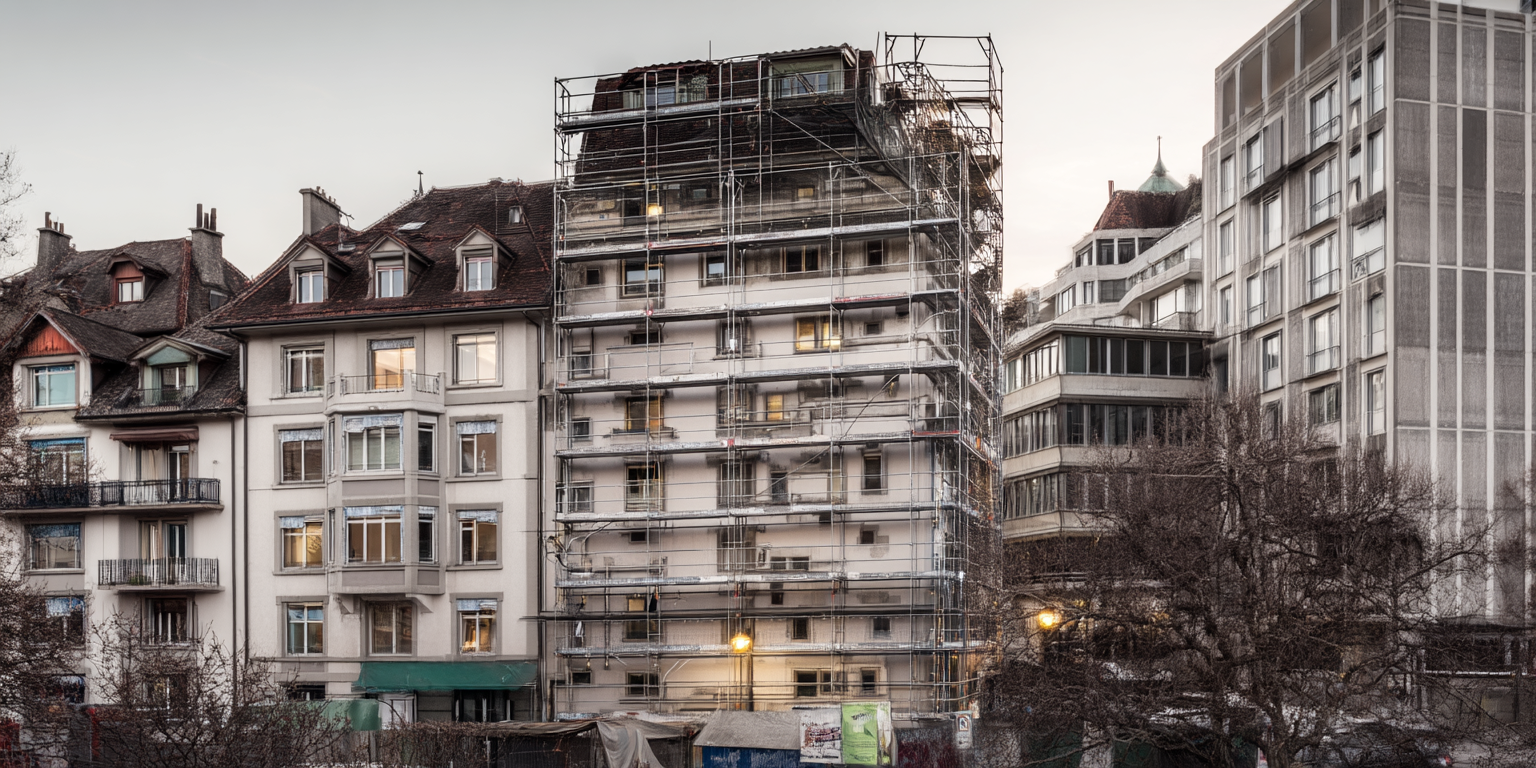
Regulation not only slows down new construction, it also paralyzes the renewal of existing buildings. Craft businesses are complaining about a lack of orders; individual companies are looking for work 40 kilometers away in Fricktal. Necessary energy-efficient renovations are not being carried out and properties are falling into disrepair. This ultimately affects the tenants themselves and thwarts any claim to climate protection.
Geneva 40 years of regulation, 40 years behind
Geneva has had one of the strictest tenant protection laws in Switzerland since 1983. The result is sobering. 83.5 percent of residential buildings over 40 years old have never been comprehensively modernized, compared to 47.6 percent in Basel and 41.3 percent in Zurich. New tenants in Geneva pay an average of 30 percent more per square meter than existing tenants. Strict tenant protection therefore primarily protects those who already have an affordable apartment. Not those who are looking for one.
The real problem, too little supply
If you want to reduce rents, you have to increase supply. This means faster approval procedures, more densification, more replacement new builds and extensions and fewer objections. The Zurich Cantonal Council has already drawn up two counter-proposals that focus on better framework conditions rather than bans. This is the right direction.
What Zurich needs to decide
The housing market in the canton of Zurich is under pressure, that is real. But a rent cap does not solve the problem, it exacerbates it. Basel and Geneva are not a theory, but a living warning. On June 14, Zurich has the choice of learning from its mistakes or repeating them.
