Tag: Ansiedlung

  • Lucerne Economic Development Wermelinger takes over

    Lucerne Economic Development Wermelinger takes over

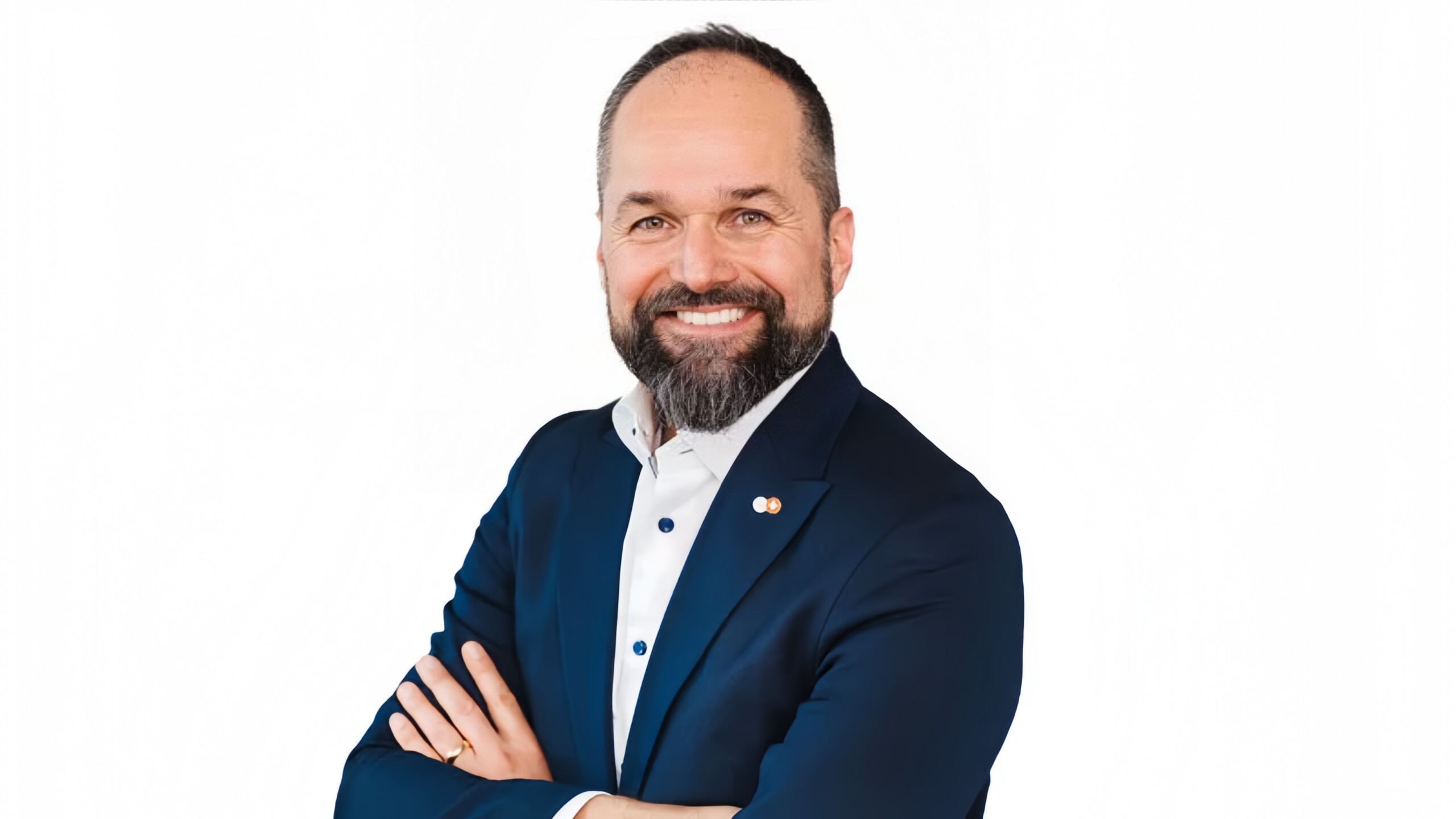
    The Board of Trustees of Lucerne Economic Development has elected 54-year-old Patrik Wermelinger from Lucerne as its new Director. He comes from the canton of Lucerne, lives with his wife in Meierskappel and has known the regional economy at close quarters for many years. He has a degree in business administration and an Executive MBA in General Management, which he completed at Lucerne University of Applied Sciences and Arts.

    Wermelinger is currently Chief Investment Promotion Officer and a member of the Executive Board at Switzerland Global Enterprise. In this role, he supports international companies in setting up operations in Switzerland and operates at the interface between location marketing, investment decisions and global competition for projects. This profile predestines him to position Lucerne visibly in the competition between business locations. With a clear understanding of the requirements of international investors.

    Familiar head with a return bonus
    Patrik Wermelinger is no stranger to Lucerne. From 2006 to 2016, he was head of location promotion and marketing at the Lucerne Economic Development Agency. During this time, he built up a broad network of companies, municipalities, institutions and partners in Switzerland and abroad. He knows the strengths, but also the challenges of the economic region from practical experience. From industry to tourism and knowledge-intensive services.

    This return with additional international experience is a strategic advantage for the organization. Wermelinger brings in-depth relocation and promotion experience from Switzerland as a whole, combined with a clear view of Lucerne as an independent brand in the competition between locations. This creates good conditions for maintaining existing relationships and attracting new companies. Especially in an environment in which location decisions are more competitive.

    Orderly transition at the top
    Patrik Wermelinger will take over as Director on June 1, 2026. The current Director, Ivan Buck, will retain operational responsibility until the end of February 2026. He will then set up his own company in the field of relationship management. For the transition phase between March and the end of May 2026, Deputy Director Andreas Zettel will take over management on an interim basis and ensure a smooth transition.

    Lucerne Economic Development thus relies on continuity in ongoing operations and a clear handover. The combination of temporal overlap, internal interim solution and succession communicated at an early stage strengthens planning security for partners, municipalities and companies that work with the organization.

    Trust in expertise and personality
    The Board of Trustees is convinced that it has made the right choice in Patrik Wermelinger. President Erwin Steiger emphasizes both the high level of expertise and the international experience of the designated Director. At the same time, he emphasizes his trustworthy and winning manner. A combination that is central to the work at the interface between politics, administration and business.

    With this personnel decision, Lucerne Economic Development is positioning itself for the coming years with regional roots, an international network and a director at the helm who already knows Lucerne as a location.
  • Support for 91 foreign companies setting up operations

    Support for 91 foreign companies setting up operations

    In terms of location marketing, 2024 surpassed previous years in terms of quality, size and excellence. These are the results of GZA ‘s activities in the past year. As the location promoter explains in a press release, the GZA supported a total of 91 international companies in their expansion projects in this “year of top quality” together with the public location and economic development agencies of the joint economic area.

    The GZA describes it as “particularly pleasing” that four out of five of these relocations came from the actively marketed key technologies of cleantech and artificial intelligence, the strategic focus for 2024. “In 2025, sustainability and innovation will become even more of a strategic focus for the GZA,” Managing Director Lukas Huber is quoted as saying. “Since the beginning of 2024, we have been evaluating projects not only in terms of economic aspects, but also from an ecological and social perspective.”

    According to GZA, the most significant new additions include companies such as Revolut, Anthropic, OpenAI, the Robotics and AI Institute, BYD and Estun Automation. The strong international focus of these new companies confirms the attractiveness of the Zurich economic area for companies from the fintech, robotics, electromobility and artificial intelligence sectors.

    The Starlab Space project also deserves special mention. The Greater Zurich Area is thus also positioning itself as a central innovation location in the future sector of the new space economy. “The location factors that make up the success of the Greater Zurich Area – from quality of life and security to tax attractiveness, entrepreneurial-minded administrations, infrastructure and talent pool – must continue to be actively cultivated,” summarises GZA Chairman of the Board of Directors Dr Balz Hösly.

  • Zurich buys site for urban housing estate in Witikon

    Zurich buys site for urban housing estate in Witikon

    The city of Zurich has acquired a site for social housing in the Witikon neighbourhood. According to a press release, the city purchased the Harsplen site from the Swisscanto Investment Foundation for a sum of CHF 210 million. With the 30,300 square metre plot of land, Zurich acquired development plans for a residential area with 370 units. The costs totalled 211.28 million Swiss francs.

    The acquisition will be the first urban development on the eastern edge of Witikon. The housing development is in line with the goal of increasing the proportion of non-profit rental housing to one third by 2050. The construction project fulfils the requirements for urban housing construction and the corresponding sustainability requirements. According to the development plans for municipal housing construction, living space for around 700 people can be created here. The city council is regulating the associated building and zoning regulations in order to ensure optimal transport links to the site.

  • Lucerne Economic Development Agency assists 25 companies in settling in Lucerne

    Lucerne Economic Development Agency assists 25 companies in settling in Lucerne

    The Lucerne Economic Development Agency assisted 25 companies in settling in the canton last year, 17 of them from abroad. Four of the new companies each came from the USA and Germany. A total of 338 new jobs were created in the canton. In the future, the economic development agency will concentrate more on European countries, namely Germany, France, Italy, Great Britain and the Benelux countries, it writes in a statement.

    The economic development agency has also been able to complete 17 local business development projects. This created about 130 jobs. In addition, it was able to complete six financing projects and solve six challenging cases as an ombudsman.

    At the end of 2022, a total of 32,600 companies were registered in the canton’s commercial register, 3 per cent more than in the previous year and a new record. “The impressive growth of over 10,000 companies in ten years impressively demonstrates the attractiveness of the Canton of Lucerne as a business location,” Ivan Buck, Director of Lucerne Economic Development, is quoted as saying in the press release.

  • Urban Manufacturing!

    Urban Manufacturing!

    More than ten years ago, we prepared an internal study on user-centred location development for an economic region. The core focus was on high-tech companies whose needs were to be taken into account in settlement processes. By high-tech companies we did not just mean the “Googles” and “Facebooks” of today’s economy, but companies in general that operate with the most modern means, i.e. also manufacturing industry. Larger companies looking for a new location were interested in having a university close to them geographically. This was in order to ensure an exchange with science and teaching and to be able to attract graduates with attractive offers in relative proximity. Google leads the way: in 2004, the American company started in Zurich with two employees. Today, the high-tech company offers around 5,000 jobs in Zurich. This is not only because Zurich is a beautiful city, but above all because the renowned “Eidgenössische Technische Hochschule” (ETH) is at home in Zurich. The study also showed that employees of such companies look for a wide range of local leisure and cultural activities, i.e. short distances. Even if land prices are higher in the city than in the countryside: many companies attach importance to “exciting” buildings for their corporate base (see exemplary article picture). The city often offers interesting brownfield sites where industrial companies used to be located. As a PR effect and from the perspective of good employer branding, this should not be underestimated.

    So why should urban locations consider creating more offers for manufacturing industry again in the future? The answer: underused areas are functionally mixed and thus upgraded. The municipality contributes to shorter distances, relieves the sometimes overburdened local transport system, the commuter volume is reduced, which leads to an increased sustainability of a location. By creating jobs in the municipality, purchasing power is increased, which in turn increases business tax revenues. Urban manufacturing is a megatrend that distinguishes between “urban industry”, “urban manufactures” (handicrafts) and “urban agriculture” (urban farming). A future topic that is very interesting for every city and urban region and should be kept in mind as a topic in location development. Why not create a picture of the future that shows what a sustainable location could look like in the future with a healthy mix of manufacturing, leisure and housing?


    Swiss Association for Location Management SVSM – the umbrella organisation for location and business development
    The SVSM is a practice-oriented and independent contact point for questions on the topic of location management and business development. As an umbrella association, it has around 80 members from the fields of location management, regional marketing, business development and real estate. The association promotes the interdisciplinary exchange of experience and networking and is committed to professionalism in location management. With the event series “SVSM Dialog”, the SVSM organises a semi-annual hybrid specialist conference with a changing focus on location management or economic development. Since 2007, the organisation has presented the SVSM Awards for innovative projects in location and business development and elected a deserving personality as location manager of the year.

    www.svsm-standortmanagement.ch
    info@svsm-standortmanagement.ch

  • Central Switzerland remains an attractive company location

    Central Switzerland remains an attractive company location

    The cantons of central Switzerland also attracted many new companies during the pandemic, according to an article in the “Luzerner Zeitung”. Uri has helped 16 companies set up in the canton. As Stefan Büeler, Head of the Office for Economics and Public Transport at the canton of Uri, explains in the article, he sees the canton on track to be able to achieve a similar number again in 2021. The canton benefits from major projects such as the Altdorf cantonal railway station, the cantonal hospital, the construction of the second Gotthard tube and the tourist development in Andermatt.

    Meanwhile, the canton of Schwyz recorded a record number of start-ups last year. Urs Durrer, head of the office for economy of the canton Schwyz, attributes this in the article to successful settlements. The establishment of the American software company Palantir was a great success. Overall, there are currently more settlement projects to be managed than before the pandemic, said Durrer.

    The canton of Lucerne settled 19 companies last year. The canton of Zug sees itself back at pre-crisis level when it comes to settling in. The canton of Nidwalden did not experience any slump during the pandemic.

    During the pandemic, numerous settlement projects could be prepared, which are now being implemented, as several business promoters emphasize in the article. For example, many international companies had their settlement projects that they had to postpone due to the pandemic implemented in the first half of 2021, says Reto Sidler, media spokesman for the Greater Zurich Area . The location marketing organization and its member cantons – Schwyz, Zug, Uri and six other cantons – were able to relocate 55 companies from abroad last year.