Tag: Arbeit

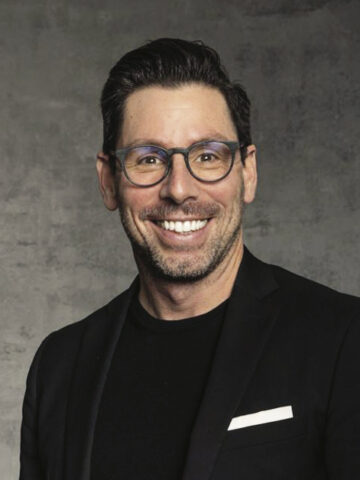
  • Fabian Streiff becomes Head of the Office for Economic Affairs – Hans Rupp Head of the Office for Employment

    Fabian Streiff becomes Head of the Office for Economic Affairs – Hans Rupp Head of the Office for Employment

    In the coming years, the economic challenges will continue to increase. Competition among locations is intensifying, while the world of work is changing rapidly. The digital transformation, more flexible and location-independent working models, as well as the labour shortage pose major challenges for companies, the labour market and the entire economy. In order to be prepared for these in the best possible way, the existing economic and labour market policy competences in the currently broadly structured Office of Economic Affairs and Labour (AWA) will be strengthened organisationally. Therefore, at the request of the Department of Economic Affairs, the Government Council decided last year to transfer the AWA into two independent offices as of 1 January 2024: an Office for Economic Affairs (AWI) and an Office for Labour (AFA).

    The AWI will be responsible for location promotion, economic policy, work permits, working conditions, housing promotion and national economic supply. The AFA will be responsible for the labour market, unemployment insurance and the unemployment fund.

    Hans Rupp with many years of operational and strategic leadership
    Hans Rupp will be the new head of the Labour Office. After studying at the University of Zurich, the 57-year-old gained professional experience in various organisations and companies. Most recently he was managing director of building and housing cooperatives and in the real estate sector. In addition to these operational tasks, Hans Rupp has held various mandates in the area of strategic management. He has many years of experience in operational and strategic management. Among other degrees, Hans Rupp holds an Executive MBA from the University of Zurich.

    Fabian Streiff: From Head of Location Promotion to Head of the Office of Economic Affairs
    Dr. Fabian Streiff will be Head of the Office of Economic Affairs. After completing his studies in geography and economics at the University of Zurich, the 39-year-old first worked as a consultant in the fields of strategy development, sustainability issues and economic promotion before earning his doctorate in economic geography and regional development at the University of Bern. He then headed up location promotion in Basel-Stadt before becoming Director of Healthcare Innovation / DayOne at BaselArea.swiss. Since December 2020, Dr Fabian Streiff has been head of location promotion for the Canton of Zurich at the Office of Economic Affairs and Employment.

    Dr Fabian Streiff and Hans Rupp will take up their posts on 1 January 2024.

    Source: zh.ch

  • “The central location is a big plus”

    “The central location is a big plus”

    Mr. Zettel, what are the goals of the Lucerne Economic Development Agency?

    We pursue three main goals. The first is exciting and good jobs for our population. The second is to generate tax revenue for the services provided by the canton and municipalities. And the third is the positive perception of Lucerne as a business location, both internally and externally.

    What are your responsibilities as Head of Corporate Development?

    As Head of Corporate Development, my main focus is on the existing companies of the Canton of Lucerne. We have just over 30,000 companies and support them in developing positively. Most of our projects with companies revolve around their location. For example, when a company grows, its needs change. In this context, questions about expansions or a change of location may arise. What are currently the biggest challenges facing companies? Issues around limited resources such as building land and commercial space often pose challenges to businesses. Another major issue is currently the shortage of skilled workers and labour. There are currently major uncertainties, such as the Ukraine war or inflation. This also includes issues such as energy prices and supply bottlenecks. These challenges show us once again how dependent we are on what happens outside Switzerland.

    What are currently the most important construction projects in the canton of Lucerne?

    The entire canton of Lucerne has a high level of construction dynamism. A lot is currently going on in the two development focal points of Lucerne North and Lucerne South. The new central cantonal administration is being built in the Smart City Lucerne North. In Lucerne South, many projects are already underway, such as the Nidfeld site or the Pilatus Arena with the Pilatus Tower, Lucerne’s tallest skyscraper. The Horw campus of the Lucerne University of Applied Sciences and Arts will be expanded and renovated by the end of this decade.

    What makes Canton Lucerne an attractive place to live?

    In Canton Lucerne there is something for everyone. We have great places to live and very different regions and landscapes. We have a great city with a wonderful cultural offer. We have lakes, mountains and a tourist offer that is also available to the population. All this makes Lucerne an attractive overall package. Moreover, Lucerne is a manageable place in terms of size. You can integrate well here, we have many clubs and great events. Overall, the quality of life in Lucerne is outstanding.

    What about free and affordable housing in the
    Canton of Lucerne?

    Housing is also an issue in Lucerne. We have a vacancy rate of just under one percent. That is an average value: some communities have practically no vacant flats, in others there are definitely offers. It’s the same with prices: while housing in the city of Lucerne, for example, is relatively expensive, there are also municipalities where there are cheaper offers. At the same time, a lot is being built. That is also the most important thing at the moment: that construction projects are realised and new flats come onto the market quickly.

    Besides the city of Lucerne, which municipalities are particularly popular with companies?

    We have 80 great municipalities in the canton of Lucerne, and each municipality has its own strengths. In terms of the number of companies, the large municipalities in the agglomeration such as Emmen, Kriens, Horw and Ebikon are important locations in addition to the city of Lucerne. Sursee, the second centre of the canton, is also attractive for companies due to its location. But there are also many great companies in regions such as Willisau or Hochdorf, especially in industry. This broad and diverse economic structure is one of Lucerne’s strengths.

    Why should a company come to Lucerne instead of Zurich, Bern or Basel?

    The central location in the middle of Switzerland is a big plus. You can get to Basel or Zurich quickly, but also to Italy or Germany. In addition, we have very attractive corporate taxes, a broad educational landscape and a good skilled workforce.

    Where does Canton Lucerne stand in terms of digitalisation?

    I look at the topic primarily from the perspective of the economic structure. For example, we have many IT service providers who specialise in digitalisation. For most companies, the topic has been around for a long time. But digitisation doesn’t stop there. The transformation into a digital business model is ongoing, and new topics are constantly being added. We also take up these topics. Last year, for example, we co-founded a hub for artificial intelligence. This makes the topic of AI visible and helps companies in its application. We also support companies in networking with suitable partners for digitalisation projects.

    As an economic developer, you have a relatively young profession. What distinguishes this profession for you?

    I come into contact with an incredible number of interesting people – be it from companies, from politics or from the administration. In addition, we are at the source of new ideas and projects. Professionally, this job also has many facets: from business administration to spatial planning and real estate to politics and communication. For me, it is a privilege to be able to do this work.

  • The transformation of the Papieri site

    The transformation of the Papieri site

    The Papieri site in Biberist, Solothurn, can look back on a long industrial history: Its existence began in 1862 as the site of the “Papieri” paper mill. After almost 150 years, the factory ceased operations in 2011, most recently owned by the international paper group SAPPI. Subsequently, HIAG from Zurich acquired the 60,000 square metre site – with the aim of creating a lively and diverse quarter.

    However, the industrial spirit that is strongly anchored here is not to be lost: The “Papieri” is to continue to be used for commercial and industrial purposes. The location and general conditions of the area are still ideally suited for this. The site can be reached in a few steps from Biberist Ost railway station. In addition, it is served by the bus stops Biberist Emmenbrücke and Biberist Derendingenstrasse (BSU). Attractive pedestrian and bicycle connections are also planned for the medium term.
    HIAG has worked out a sustainable development strategy in close consultation with the canton, municipalities and other stakeholders. As early as 2013, an urban planning study was carried out in collaboration with five architectural firms. The findings of this study commission formed the basis for the master plan, which was completed in 2015 in consultation with the municipality of Biberist. The partial zone plan revision is currently underway. This is currently undergoing a cantonal preliminary examination.

    The long-term planning envisages a division of the site into two parts: The “West” area near the Biberist East railway station comprises about one third of the total area and is to become an area open to the public with quiet commerce, services, leisure, culture and housing. No concrete residential projects are planned yet. But: “The future usage regulations allow for a residential share in the western area,” says Dominik Ulrich, project developer of HIAG Immobilien Schweiz AG. The eastern area towards Derendingen, on the other hand, will be transformed into a workplace area for the manufacturing industry.

    nightnurse.ch

    Access to the publicly accessible western area of the site is already from the southwest. In future, the triangular Papier-Platz will mark the beginning of the site. The square is enclosed by the striking existing building at Fabrikstrasse 1, which will be made fit for the planned transitional uses by mid-2023: On the ground floor, spaces between 160 and 1000 square metres will be rented to commercial and service providers. The rooms on the upper floors are ideally suited for commercial and storage space as well as studios. Offices are also available in the neighbouring building. “The transitional use of Building 1 is planned for up to ten years. The goal is to establish uses that will last in the long term,” explains Ulrich. The dismantling of the machinery was a prerequisite for opening up the area. The machines were successfully sold in recent years and transferred to new owners.

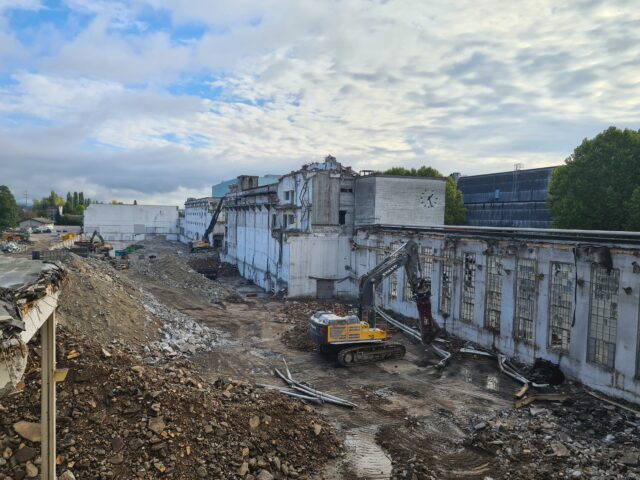
    The centre of the area, and thus the centre, is the square by the canal: Demolition work is currently underway here to create open spaces and breakthroughs in the hall structures. So far, 17,000 tonnes of material have already been removed. HIAG attaches great importance to sustainability: 14,000 tonnes of it will be processed into granulate on site and reused. The deconstruction work is scheduled to be completed by the end of this year. From mid-2023, the construction of a new modern building is planned, which will offer around 15,000 square metres of usable space for trade, production and offices. The first tenants are expected to move in by the end of 2024. According to Ulrich, concrete negotiations are currently underway with prospective tenants.

    Demolition work is currently underway in the middle of the site.
  • This is what office design looks like today

    This is what office design looks like today

    How and where do we like to work or work best? This is the question that occupies employees. And the challenge that companies are dealing with.

    The change from a culture of presence in hierarchical structures to a culture of trust and performance in networks is progressing. We are becoming more and more used to getting involved in common corporate goals regardless of time and place. The involuntary mass home office test in particular has shown how the definition of the workplace is changing over the long term. Companies are reactivating their offices and asking themselves: are our workspaces still up to date? It's obvious: The office with future prospects goes beyond the walls of the company headquarters. A new design normality is emerging that supports hybrid use and regards the office as part of an ecosystem.

    What does office design look like today?

    It depends on the location
    In addition to the premises, the location is decisive for how much we are motivated to commute to the office. Employees expect good accessibility by public transport and the best catering and shopping options on site.

    Cheers to diversity and freedom of choice
    An attractive office is a working environment in which employees can choose the zone that best suits their current activity. So a mix of project, creative, meeting and focus rooms as well as lounge-like meeting zones. And not to forget: the workplace with the height-adjustable desk for focused individual work. Alternatives such as home office, coworking space or coffee house expand the range of work outside of the office.

    The neighborhood is our territory
    So-called home bases or hubs provide orientation in the office. These are neighborhoods where teams come together. Rituals are also beneficial for mutual exchange: for example the fixed office day, the team breakfast or cooking lunch together. The office design is crucial for establishing social activities among employees.

    Do not disturb!
    Online meetings will remain an integral part of everyday work in the future. Of course it's annoying when everyone makes the calls in the open team office. The solution? Opportunities to retreat in the form of "telephone booths" with good acoustics, ventilation and lighting. Larger cubicles are perfect for one-on-one conversations or as a temporary individual office.

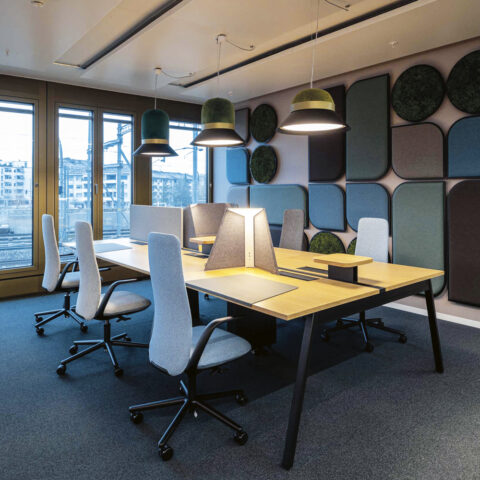
    Acoustically optimized workplace for collaborative teamwork.

    Preferably hybrid
    Zoom & Co. for digital meetings make the journey to the site superfluous. At the same time, we also value physical encounters. It is not a question of whether the collaboration is hybrid, but rather how much. The key lies in the spatial integration and intuitive operation of the technology.

    The office as a feel-good place
    How a room is designed demonstrably influences engagement, perceived appreciation and satisfaction. The acoustics are particularly important: Speech intelligibility should be high in meeting and communication rooms, but it should be as quiet as possible in open spaces. Targeted lighting and plants also ensure a pleasant working atmosphere.

    Office? Yes of course!
    The more natural the environment, the better we feel. Naturalness can also be achieved in the office with furniture and decoration. What is not visible at first glance, however, is the sustainability of the materials used. Wood from sustainable forestry, fabrics made from recycled materials or refurbished furniture give the office additional inner values.

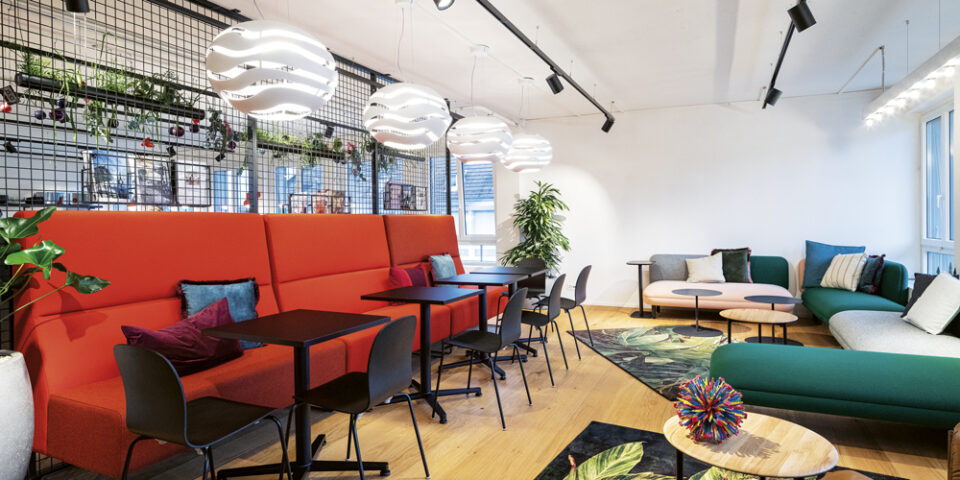
    Space for chance encounters and conversations.

    Take the opportunity to shape the identity and culture of your company with the physical work environment. Show your employees why it is worth coming back to the office in the future.

    To person
    Oliver Hauri is the Vice President of Central & Eastern Europe and Managing Director at Haworth Schweiz AG.

    In his role, he is responsible for Haworth's leadership and growth in Central and Eastern Europe. The family company is one of the world's leading solution providers for furnishing inspiring learning and working environments.

    haworth.com

  • Successful conference on business promotion

    Successful conference on business promotion

    Due to the corona situation, the first SVSM dialogue for business development did not take place as a hybrid event as planned, but as a purely virtual event. The event conveyed specialist knowledge and networked location managers, business developers, real estate experts, room planners and other interested parties. The speakers presented impressive practical examples from a wide variety of regions – from Montreux to Uri to St. Gallen – and also reported on challenges, organizational issues and experiences in the spirit of best practice. The participants received valuable input for their daily work. Thanks to dedicated question and answer sessions and a panel discussion, professionally moderated by SVSM board member Markus Müller, the professional exchange of experience and networking were not neglected.

    Interaction between economy and tourism
    Stefan Büeler, Head of the Office for Economic Affairs and Public Transport in the Canton of Uri, demonstrated the approaches to economic development in Uri based on current projects such as tourism development in Andermatt, the Gotthard base tunnel or educational and research institutes. He also discussed which procedures and organizational forms have proven themselves in practice and which challenges need to be mastered in everyday life. Samuel Zuberbühler, head of location promotion for the city of St. Gallen, gave an insight into the "Sankt ohne Senf" campaign, with which the city in eastern Switzerland is marketing itself and residents, homesick St. Gallen and “newcomers” in a target group-oriented way. He impressively demonstrated how closely business, location promotion and tourism are related. This was also confirmed by Bernard Schmid, Managing Director of Promove. Schmid provided a glimpse of the working methods, structure and current issues of an economic development organization in French-speaking Switzerland: The Promove association aims to promote the economy in the Riviera-Lavaux region on the Swiss shore of Lake Geneva and connects authorities, business and tourism. The cooperation between the various areas, some of which are also organizationally linked, is correspondingly close. Schmid showed how this works in practice using the "Dolce Riviera" project, which was launched in 2020 and aims to integrate the entire tourism value chain in the Montreux Riviera destination.

    The start of the new series of events was a success: The consistently positive feedback from the participants on the presentations shows that the SVSM is on the right track with the new event format. The next SVSM dialogue is already being planned, this time with a focus on location management. Make a note of the date – more information will follow:
    SVSM dialogue location management: Thursday, March 31, 2022, 3 p.m. to 7 p.m

    Further information:
    Swiss association
    for site management SVSM
    office
    Ricketwilerstrasse 135
    8352 Ricketwil (Winterthur)

    Telephone 058 255 08 88
    info@svsm-standortmanagement.ch www.svsm-standortmanagement.ch

  • In-house Livit Academy celebrates its 15th anniversary

    In-house Livit Academy celebrates its 15th anniversary

    Since its foundation in 2007, the academy has repeatedly taken innovative paths and has developed from offering a once compact course program to today's industry-wide known competence center. It is an expression of Livit's strategic orientation of investing heavily in its employees and supporting them in achieving their goals – the credo to this day.

    For the practice of most professional groups, different skills are required today than 15 years ago. The (working) world is becoming more and more digital, the flow of information is faster and job profiles are changing. Livit recognized the opportunities offered by new technologies and has become more and more modern in recent years. The Livit Academy developed accordingly and acted as a sparring partner in change management. In an accompanying function, she supports employees in remaining professionally qualified and in being able to develop culturally with the organization and strategic orientation.

    Prepared for the future
    The complexity will continue to increase and the specialization of the job profiles will affect the professional requirements and the need for training and further education, says Judith Engel, head of the Livit Academy. This also means that cooperation is becoming increasingly important in order to achieve more together. The Livit Academy recently initiated a cooperation with the SVIT, the HWZ and Wincasa and jointly developed further training in the field of real estate accounting, which will start in March 2022 for the first time. The future is all about cooperation: Livit is also intensifying this with Swiss Life Asset Managers – with the launch of the “AM Academy”, of which the Livit Academy is a part. Together with the parent company, Livit is expanding its know-how in the national and international real estate market, using synergies and promoting networking.

  • Fabian Streiff becomes the top Zurich location promoter

    Fabian Streiff becomes the top Zurich location promoter

    There is a change at the top of the business location promotion department at the Zurich Office for Economics and Labor. Markus Assfalg is retiring after eleven years as head of location promotion, as announced by the office. He will be replaced by Fabian Streiff . The 35-year-old has been with the Basel Area Business & Innovation since the beginning of 2019 and heads the DayOne healthcare initiative. Prior to that, he was co-head of Basel-Stadt's economic development department.

    Streiff holds a doctorate in economic geography from the University of Bern and a Master of Science from the University of Zurich .

    One of the first to congratulate the cantonal location promotion and to Fabian Streiff is the location promoter of the city of Schlieren , Albert Schweizer. "We are very pleased with the choice of Fabian Streiff," he says. "We have known Fabian Streiff for a long time and have followed his work in the canton of Basel-Stadt very carefully."