Tag: Arbeiten

  • Energy location with future potential

    Energy location with future potential

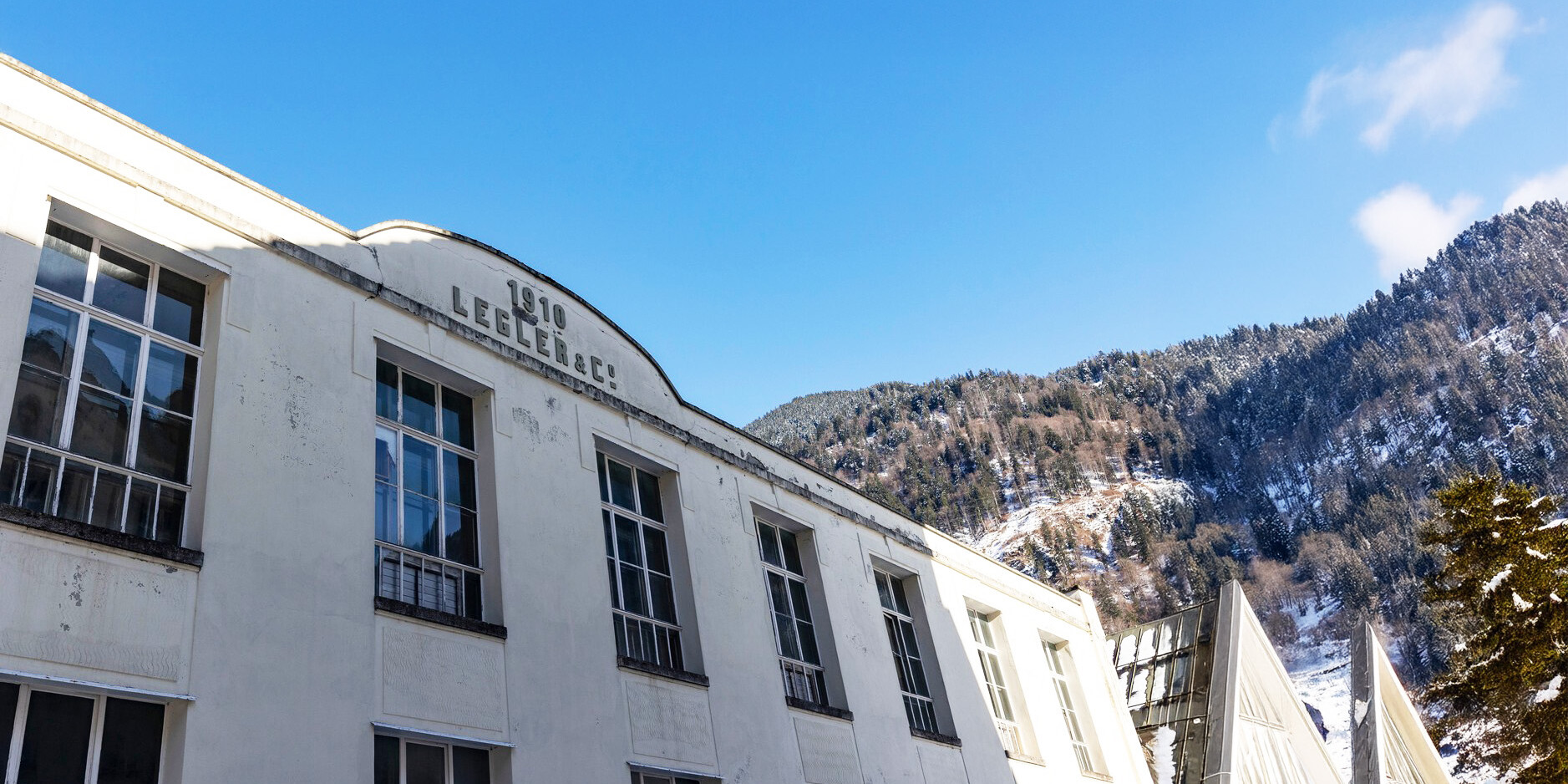
    With the purchase of the former Legler site by Hochdruckkraftwerk Diesbach AG and the simultaneous participation of the municipality of Glarus Süd, a new chapter has begun for the traditional factory site in Glarnerland. The operator of the local hydroelectric power plant has secured the site, including the power plant centre. At the same time, the municipality is acquiring agricultural land from the previous owner and will become the largest shareholder with a 40% stake.

    Energy meets site development
    The acquisition not only serves to preserve the historic power plant, but also opens up new opportunities for long-term site development. “We can offer areas ranging from 50 to several 1,000 square metres,” says Chairman of the Board of Directors Weber-Thedy.

    The municipality of Glarus Süd has secured two seats on the Board of Directors and an important land reserve of almost 30,000 square metres of agricultural land, which is earmarked for replacement measures or ecological compensation areas. The municipality is thus creating space for future developments.

    Long-term perspective with interim utilisation
    The potential of the Legler site is undisputed, but a new use takes time and requires careful planning. The aim is a mixed-use development with residential and office space that fits in with the landscape and the municipality. The first steps towards realisation are not expected before the next ten years.
    Until then, the site will be put to sensible interim use. The large halls will be rented out as storage space. They can be divided up flexibly, even if they are only suitable for certain purposes due to structural restrictions.

    Sustainability as a guiding principle
    The high-pressure power plant is focussing on environmentally friendly energy production and will renovate the plant to the latest standards in 2025. Earlier discussions about the expansion were postponed in favour of a sensitive approach to the landscape, but the roar of the Diesbach Falls is to be preserved.

    A boost for the Glarus region
    The acquisition of the Legler site is more than just a change of ownership. It is an example of forward-looking site development, supported by local energy production, public participation and a long-term perspective. The municipality of Glarus Süd is actively committed to the development of the site and at the same time minimises the risk of a prominent property falling into disrepair.

    The combination of energy infrastructure, property development and public involvement makes the project a beacon for the region and a role model for comparable sites in Switzerland.
  • First construction phase in Unterfeld Süd in Baar starts in 2025

    First construction phase in Unterfeld Süd in Baar starts in 2025

    The owners Ina Invest and Estella Invest and the developer Implenia decided in favour of a digital project competition in which a digital 3D model was submitted instead of physical models. This made the jury process much easier, as different levels and elements could be flexibly combined and analysed. The winning design for the first construction phase, a combination of the proposals from Enzmann Fischer Partner AG and ORT AG, impressed with its innovative floor plans and a well thought-out design of the open space that harmoniously combines living and working.

    Open space design as the key to the attractiveness of the neighbourhood
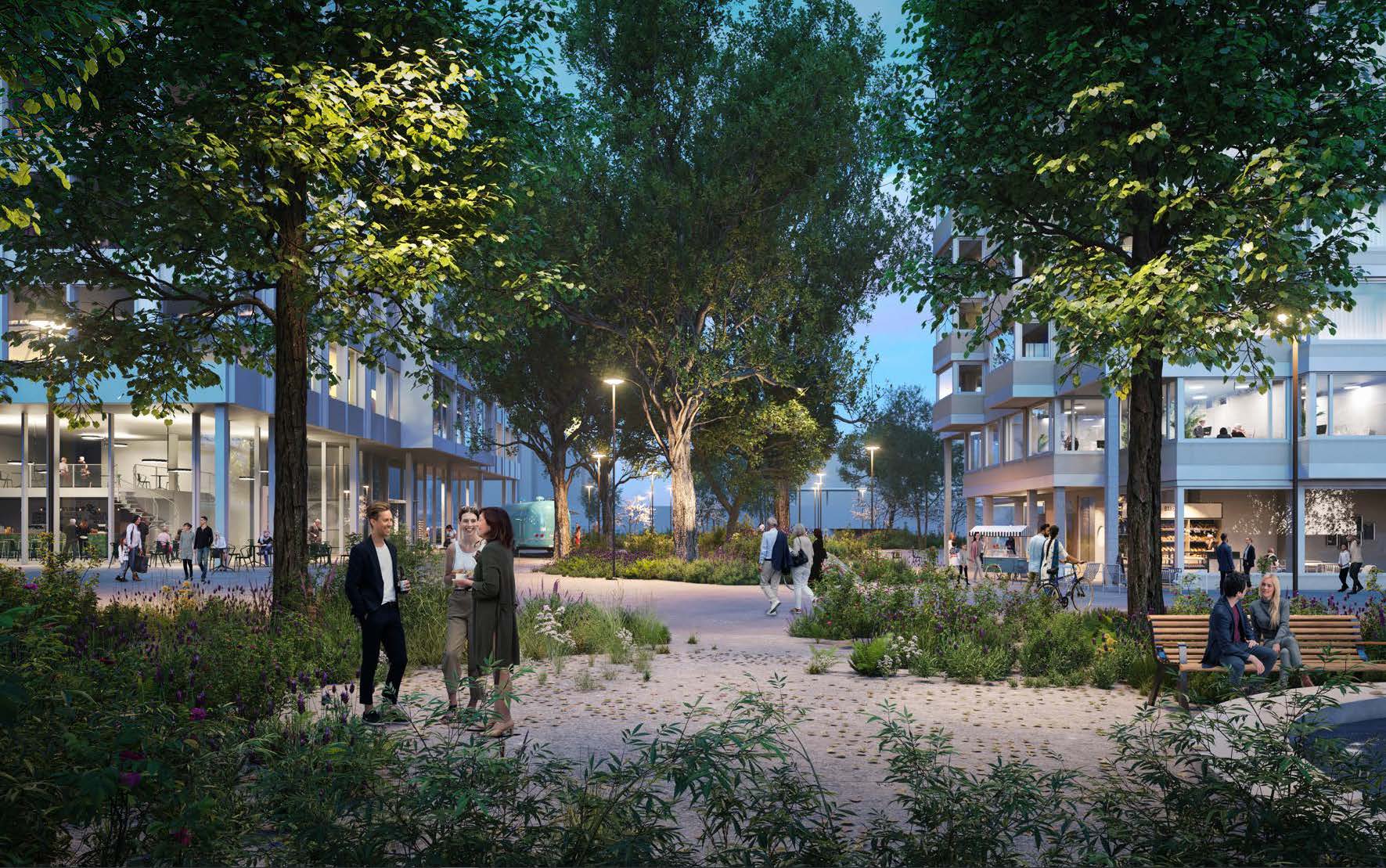
    The Unterfeld Süd neighbourhood will be enhanced by generous open spaces, which
    extend along the Stampfibach stream. An ecologically valuable green space is being created here that offers a wide range of uses. The central arrival square at the S-Bahn station will be transformed into an inviting place to meet and linger thanks to tall trees and green islands.

    High-rise building with a view to the future
    The 60-metre residential tower block in the first phase is impressive not only for its height, but above all for its well-thought-out floor plans and flexible room layouts. The generous windows offer impressive views from every flat, while the bay windows on the façade allow residents to enjoy both the outside and the inside of their own flat.

    Commercial building as a centre for dynamic companies
    The adjoining commercial building also focuses on flexibility. Two glazed inner courtyards create islands of light that can be used as break areas. With its flexible room structure, the building offers space for a wide range of uses – from small offices to larger rental spaces for anchor tenants.

    The second phase will provide affordable housing and flexible commercial space
    The second construction phase, the planning of which is already at an advanced stage, will focus on affordable rental flats and owner-occupied flats. The inner courtyard of the planned perimeter block development in the second phase will create opportunities for retreat and public meeting spaces in equal measure. The buildings along Nordstrasse are deliberately designed to minimise noise pollution. A referendum on the second stage will also be held in Baar in 2025.

    Sustainable architecture and flexible usage concepts
    The architecture of the buildings reflects the vision of a future-oriented neighbourhood. The combination of flexible living, versatile commercial space and well thought-out open spaces creates a lively and attractive cityscape. Particularly noteworthy is the combination of living and working, which is supported by well thought-out spatial concepts and attractive outdoor areas.

  • “Vision 2040 “AROVA HALLEN in Flurlingen

    “Vision 2040 “AROVA HALLEN in Flurlingen

    One step on a long journey has been taken: all those involved in the consultation process have signed the utilisation and development concept (NEK) for the AROVA HALLEN site. The Cantonal Office for Spatial Development ARE accompanied the upstream informal process in an advisory capacity without a signature. This means that the planning realisation can be addressed and discussed.

    Culturally unique and economically viable
    The AROVA HALLEN site is currently registered in the regional structure plan as a workplace area and is clearly differentiated from others by its historic building fabric. This represents both an obligation and an opportunity. The aim of the NEK is to put the site on a sustainable and economically viable footing and thus provide a forward-looking response to the challenges of spatial development in the Weinland region.

    Goals and visions for a mixed neighbourhood
    The main objective of the NEK is to maintain and strengthen the location as a place to work and to value the architectural heritage. The plan is for high-quality internal development that brings living and working closer together. “Vision 2040” envisages the creation of around 250 new flats by 2040 without reducing the existing 400 jobs. The focus is on modern forms of living and working as well as a lively neighbourhood with moderate traffic, complementary specialist shops and restaurants.

    Working and living in harmony
    The NEK thus follows the idea of mixed utilisation – living and working are moving closer together. Due to the historic building fabric, the site is particularly suitable for moderately disruptive businesses and services. The “Vision 2040” target image shows how the site can be developed into a modern business park that reduces mutual emissions and creates a lively neighbourhood.

    Current developments and plans
    In addition to the long-term goals, there are numerous current measures to strengthen the image and identity of the site. By focussing on the preferences of potential tenants, additional space has already been let. Interim uses and temporary events are also planned for the future. Following the fire in the beautiful WERKHALLE, the damage was repaired and a meeting point for tenants and their customers is to be created on the ground floor.

    Coordination and information
    The AROVA HALLEN utilisation and development concept is closely coordinated with the settlement development strategy of the municipality of Flurlingen. Further information and the final report can be downloaded at www.arovahallen.ch.

  • Potential for transformation despite development delay in Basel

    Potential for transformation despite development delay in Basel

    The study conducted by Sotomo shows that Basel has experienced subdued growth momentum over the last ten years, particularly in comparison with cities such as Zurich, Geneva and Bern. With only six per cent growth in the housing stock since 2012, Basel brings up the rear among the eight largest Swiss cities. Only a small proportion of flats were built after 1990, which suggests a delayed development dynamic.

    Demographic challenges and opportunities
    The study also emphasises that Basel is the only city in the study that does not have a birth surplus, which indicates a weak population dynamic. The comparatively low proportion of young adults and families and the high proportion of older households reflect a demographic challenge that also influences the development of the labour market.

    Despite these challenges, the study emphasises that new-build flats do not necessarily lead to higher rents in existing flats. On the contrary, they could even revitalise the market for affordable flats in older buildings. This points to untapped opportunities in urban planning and development.

    The potential of “Klybeck Plus
    One particularly striking example of untapped potential is the planned “Klybeck Plus” urban quarter. This area is to be built on a former industrial site and offers space for flats for 8,500 people and 7,500 jobs. similar to Basel’s Gundeli or Geneva’s Le Pâquis neighbourhood, “Klybeck Plus” could offer a lively mix of living and working and at the same time be as green as Basel’s Gellert district.

    The study emphasises that, despite current challenges, Basel has considerable potential that can be exploited through strategic planning and innovative development concepts. The results are a wake-up call for urban planners, developers and political decision-makers to mobilise the available resources and reposition Basel as a dynamic and future-oriented city.

  • Palanggenbach power plant celebrates opening

    Palanggenbach power plant celebrates opening

    The inauguration ceremony for the Palanggenbach power plant took place on 3 June. This means that the latest hydroelectric power plant in Uri is now officially open, around six months after commissioning, completed tests and some optimisation work, informs EWA-energieUri in a statement. The energy service provider realised the Palanggenbach power plant together with aventron AG, Korporation Uri and the municipality of Seedorf.

    “We can be proud of what we have realised with the Palanggenbach power plant,” Werner Jauch, Chairman of the Board of Directors of Kraftwerk Palanggenbach AG, is quoted in the statement from his speech at the inauguration. “With its annual production of 11.5 gigawatt hours of electricity, the Palanggenbach power plant will contribute to the security of supply in the future, and it will do so in a CO2-free, sustainable and renewable manner.” In addition, Jauch pointed out that over 85 per cent, or about 18 million Swiss francs, of the investment in the project benefited the canton of Uri in the form of contracts. Even during operation, the power plant generates “considerable contributions to the corporation of Uri, the canton of Uri and the municipality of Seedorf”.

    For the official inauguration, the doors of the power plant were open to the interested public. There was an exclusive opportunity to explore the 1.3-kilometre-long tunnel down to the water intake. The power station control centre and turbine were also open to the public.

  • Halter plans high-rise in St.Gallen

    Halter plans high-rise in St.Gallen

    The Schlieremer construction company Halter AG is developing plans for the redevelopment of a quarter on the edge of St.Gallen’s city centre. According to a media release, a new high-rise building with high-quality architecture is planned on the Bogenstrasse site next to Kreuzbleiche. The investment costs amount to around 60 million Swiss francs.

    The planned building is to be sustainable. According to Halter, there will be below-average land consumption per capita and a minimum number of parking spaces. The building will be supplied with district heating and will also produce energy via photovoltaic systems. The new high-rise building will mainly be used for condominium and rental living. Gastronomy will be located on the ground floor. Team offices with divided areas, such as meeting rooms and co-working zones, are also planned in the new high-rise.

    “The broad utilisation concept will create a versatile place for working, living, gastronomy and culture for a mixed public,” project initiator Rolf Geiger of Halter AG is quoted as saying. The added value for the neighbourhood and the city includes the newly created public square, which will be landscaped as much as possible.

    The special use plan procedure is to be carried out in 2024 and provides for public participation. Another year is planned for the building permit procedure, followed by realisation.

    “Building inner development offers a great opportunity to make our city fit for the future. All those involved in the project want to take advantage of this opportunity with a high-quality development that combines the tried and tested with the new,” councillor Markus Buschor of the Planning and Construction Directorate is quoted as saying.

  • New business card for Sursee

    New business card for Sursee

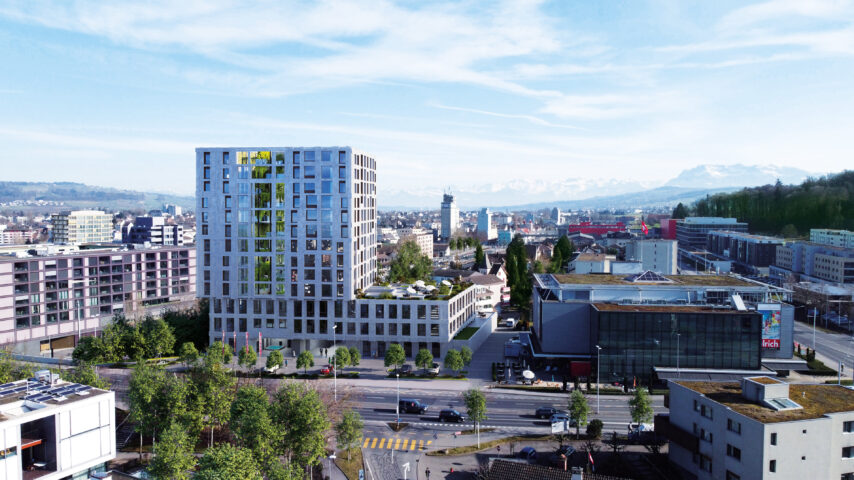
    Möbel Ulrich AG and Truvag AG, which have been based in Sursee for around 60 years, are jointly planning an office, commercial and residential building on the Ulrich site between Ringstrasse and Pilatusstrasse, which will complement and revitalise the existing furniture store. The project, called ALEA, is intended to become the new calling card for the location: The plan is to build 70 affordable rental flats with between 2.5 and 4.5 rooms using timber construction. In addition, there will be 2400 square metres of commercial and 1600 square metres of retail and restaurant space. The project scores not least with its central location directly at the railway station.

    The approximately 49-metre-high CO2-neutral timber construction was developed by the planning consortium Leuenberger Architekten AG from Sursee and Deon AG from Lucerne. The flats will have visible wooden beams and partly also wooden walls. The environmentally friendly material is breathable, insulating, very stable and load-bearing. In ancient Greek, ALEA means “warmth and protection” – these features should be visible and tangible for the future residents and employees. For fire protection reasons, only the façade design had to do without domestic and sustainable wood.

    But ALEA also does justice to its Latin meaning with its cube shape. The lower part of the building comprises three storeys – this is integrated into the slope. The silhouette is thus visible at a height of around 41 metres. While the upper part of the building is intended for residential use, the base area is available for offices, shops, commerce and gastronomy. A walkway creates a safe and fast pedestrian connection between the Kotten quarter and the railway station. All squares and connections in the new building are open to the public.

    The carefully thought-out traffic concept is intended to keep motorised individual traffic to a minimum: to this end, sharing services for cars, bicycles and e-scooters are planned. Accordingly, the parking garage will be equipped with a minimum number of parking spaces. The rental price structure is also intended to offer incentives for a life without a car. Generous parking spaces for bicycles have been designed to encourage non-motorised traffic.

    ALEA combines living and working.

    So that the tenants do not live anonymously, togetherness and mixing are to be promoted: A public square with a restaurant on the same level as the railway station creates meeting opportunities with various seating options around the building. The residents also have access to a green roof terrace for common use. Furthermore, several green terraces are planned.

    It is important to the initiators, who have strong regional roots, that “Surse residents build for Surse residents”:

    Not only were the partners chosen to carry out the construction work based on regional roots, but preference was also given to people who live or work in Sursee when renting out the apartments. In addition, Truvag AG, with around 80 employees, will relocate its headquarters to the new building. With the building planned by Möbel Ulrich AG and Truvag AG, the two traditional companies want to create added value for Sursee and enrich the area. The construction costs are expected to be in the double-digit millions.

  • The retaining wall of the cathedral platform will be renovated

    The retaining wall of the cathedral platform will be renovated

    The construction of the first retaining walls near the present cathedral platform began as early as the 14th century. Between 1479 and 1531, the walls were extended and took on their present appearance. The last major renovation work took place in the late 1980s. Today, the thirty-metre-high retaining wall is damaged in various places due to the weather and therefore needs to be renovated. The renovation work will be carried out in several stages until 2026.

    Cleaning and mortar application
    At the beginning of February, the renovation work will begin with the erection of the scaffolding at the eastern corner of the retaining wall. The work on the masonry will be of varying degrees of depth: Some larger areas of the wall will simply need to be cleaned and cleared of vegetation. On other parts of the wall, it will be necessary to apply mortar or fill in cracks and joints. The original structure is retained as far as possible. As part of the renovation, Energie Wasser Bern (ewb) is replacing the existing lighting on the wall with more economical LED spotlights. All the renovation work was planned in cooperation with the monument preservation service.

    The platformremains open
    The platform remains open during the renovation work. The respective work areas will be closed to the public with barriers. In the Badgasse, which is located at the foot of the wall, some of the parking spaces must be temporarily removed to allow for the installation of scaffolding and construction equipment. Replacement parking spaces will be provided. However, due to the narrowness of the space in the Matte, only part of the parking spaces can be replaced.

    Preservation of a historical monument
    The renovation of the retaining walls will preserve the cathedral platform as a historical monument in Bern’s old town and ensure safety. In March 2022, the City Council approved a construction credit of CHF 3.32 million for the renovation.

  • WWZ geht Fernwärmenetz in Rotkreuz an

    WWZ geht Fernwärmenetz in Rotkreuz an

    WWZ leitet die Bauarbeiten für ein Fernwärmenetz im Zentrum von Rotkreuz ein, informiert der Zuger Energie-, Telekom- und Wasserversorger in einer Mitteilung. Dabei werden ab der bestehenden Fernwärmeleitung in der Waldetenstrasse weitere Quartiere im Gebiet Waldetenstrasse, Meierskappelerstrasse, Waldeggstrasse und Buonaserstrasse an den Wärmeverbund Ennetsee angeschlossen. Die Bauarbeiten sollen bis Sommer 2024 abgeschlossen sein.

    Im Wärmeverbund Ennetsee soll die gleichnamige Region im Kanton Zug mit Abwärme aus der Kehrichtverbrennungsanlage in Perlen versorgt werden. Damit könnten in den Gebieten Rotkreuz, Bösch, Hünenberg-See, Cham, Städtler Allmend und Äussere Lorzenallmend, Zug und Steinhausen jährlich rund 12’000 Tonnen CO2-Emissionen vermieden werden, erläutert WWZ in der Mitteilung. Das Unternehmen hat sich zum Ziel gesetzt, „möglichst schnell viele Haushaltungen, Büros und Geschäfte des Gebietes Ennetsee mit CO2-freier Fernwärme zu versorgen, um die Abhängigkeit von fossiler Primärenergie in der Region zu reduzieren“.

    Während der Bauarbeiten wird es im Zentrum von Rotkreuz zu Änderungen in der Verkehrsführung und punktuellen Behinderungen für Verkehrsteilnehmende kommen. In der Mitteilung werden die geplanten Massnahmen detailliert beschrieben.

  • Station area Wettingen becomes a residential area

    Station area Wettingen becomes a residential area

    Under the aspect of living and working directly on the track, the SBB has announced an architectural competition for the design of their area at the railway station in Wettingen . According to the press release, the results are now available. They can be viewed in an exhibition in the foyer of the Tägi Wettingen until Tuesday, March 8th.

    The winning project is called Stadtlaube and, according to the SBB announcement at Wettingen station, envisages two long, five-storey residential buildings with service, retail and catering areas on the lower floors and a four-storey service building with public-oriented uses. The historical railway buildings are preserved.

    The two buildings to the west of the station form a boundary opposite the track field and thus create living and recreation space in a central location, according to the project announcement. The entrance areas and partly open-plan staircases are intended to provide a view of the railway tracks. There will be small squares and a play street in front of the house entrances. Flexible 2.5 to 4.5 room apartments with private outdoor areas and communal roof terraces are planned.

    A four-storey service building with shops and restaurants is planned to the east of the residential buildings and embedded in the historic station buildings. According to the announcement, the protected individual objects Lokremise, goods shed, station building and turntable will be preserved.

    The winning team of the architectural competition consists of Burkard Meyer Architects from Baden AG, ASP Landscape Architects from Zurich, MWV Civil Engineers from Baden, Leimgruber Fischer Schaub from Ennetbaden AG, Mühlebach Partner from Winterthur and Scherler AG from Lucerne.

  • Swiss Prime Quartier Riverside is ready for occupancy

    Swiss Prime Quartier Riverside is ready for occupancy

    In Zuchwil, the new residential and work area Riverside is now ready for occupancy. According to a press release , the first tenants will move into the Widi Huus and Sulzer Huus in October. The project of the Swiss Prime Investment Foundation is characterized by modern energy supply and traffic management as well as recreational opportunities. It was also developed by the Swiss Prime Investment Foundation in Olten as a “living space”. As a location in the country with all the amenities of an urban place. The new Riverside district combines living and working. The Aare in turn connects nature with the city. The quarter has direct access to the river.

    According to Jérôme Baumann, President of the Board of Trustees of the Swiss Prime Investment Foundation, “120 apartments have already been rented. Only a few are available. ”The apartments offer a lot of quality of life. The Solothurn architect Benedikt Graf from gsj architects and agps architecture was quoted as saying that the choice of materials was "extremely careful". The heat generation for heating and water takes place sustainably via a groundwater heat pump. Natural cooling is in operation in summer.

    All apartments are designed according to the guidelines of Procap Switzerland and are wheelchair accessible. There are individual charging stations for e-vehicles at the visitor parking spaces. The parking spaces in the underground car park can also be equipped with a charging station. All five houses of the first stage should be occupied by autumn 2022.

  • Solar offensive should create thousands of jobs

    Solar offensive should create thousands of jobs

    Many jobs have already been destroyed throughout Switzerland by the Corona crisis, others are in danger. The Swiss Energy Foundation ( SES ) sees the increased use of renewable energies, especially solar power, as a means of counteracting this. The SES has commissioned a study on this at the Zurich University of Applied Sciences ( ZHAW ) in Wädenswil ZH. According to the press release on this, a “courageous solar offensive” can create thousands of new jobs in a short period of time. Jürg Rohrer, author of the study and head of the Renewable Energy Research Group at the ZHAW, states: "If we equip the most easily usable areas with solar systems, we need around 14,000 additional jobs." A total of 12,000 of them would be in the Installation of photovoltaic systems, which employees can carry out after only a short training period. In 2000, specialist planners required more specialist knowledge, for which, depending on their previous education, they would need around six months of further training.

    The package of measures of the Energy Strategy 2050, which was adopted in a referendum in May 2017, provides for more energy efficiency and renewable energies to be used in the future energy supply. However, the implementation has so far only got off to a slow start. The SES proposal, which should also be included in the consultation on the revision of the Energy Act, should help to compensate for this deficit. Felix Nipkow, Head of Renewable Energies at SES, mentions a threefold benefit of the initiative: “Investing in solar energy now helps to achieve the climate goals, creates new jobs and strengthens the security of supply in the electricity sector.” The new Energy Act will only be able to come into force in a few years. A solar offensive would trigger investments today and create new jobs quickly. In this way, photovoltaics will become a job engine.