Tag: Arbeitssicherheit

  • Platform strategy strengthens construction and environmental expertise

    Platform strategy strengthens construction and environmental expertise

    TIC Holding Schweiz AG, based in Baar, has acquired HSE Conseils from Laténa. According to a press release, its managing director Marc Dutoit will remain in his position. TIC Holding is a construction and technology platform financed by Winterberg Investment X and managed by Winterberg Advisory GmbH in Munich.

    HSE Conseils is the leading specialist in the industrial, building materials, construction, environmental and occupational safety sectors in the canton of Neuchâtel and at six other locations in the cantons of Vaud, Valais, Geneva, Fribourg and Jura, the press release continues. It offers a comprehensive portfolio of services for construction companies, real estate managers, planners, businesses and public institutions. These include Swiss Accreditation Service (SAS) accredited pollutant diagnostics and analyses (including asbestos, polychlorinated biphenyls and lead), environmental and waste management, safety and health concepts, and indoor air quality measurements. Its remit also includes safety consulting, training and advice on construction safety, from risk assessment to remediation concepts.

    “With HSE, we now cover the industrial, building materials, construction, environmental and occupational safety sectors,” said Ralph Nowak, member of the board of directors of TIC Holding Switzerland and partner at Winterberg, in the announcement. “This is an important step in the further development of our TIC Holding Switzerland – the three platforms underline our position as the leading independent group in these areas throughout Switzerland.” Marc Dutoit is banking on strong growth for HSE Conseils and many synergies with other group members as a result of the merger. “Our structure, the entire team and all contact persons for our customers will remain in place, and we will continue to deliver the highest quality and reliability,” says Dutoit.

  • Heat protection on construction sites becomes a joint task

    Heat protection on construction sites becomes a joint task

    Switzerland is topographically diverse, from inner-city construction sites to alpine locations and large-scale infrastructure projects. Standardized measures therefore fall short. While earlier working hours are made possible in certain municipalities, other projects rely on mobile shading systems or adapted break regulations. The decisive factor is the adaptation to the respective region, the environment and the project type.

    Shared responsibility of the building owner
    Walz emphasizes that it is not only the task of construction companies to provide heat protection. Building owners and project authors can also implement effective measures through forward-looking planning and tendering. In doing so, they take responsibility for occupational safety and prevent discussions about additional costs. “If you address the issue at an early stage, you create clarity and commitment for everyone involved,” says Walz.

    Cooperation at all levels
    Close coordination between site management, foremen and employees is a key factor. Although employers have a legal duty to ensure health and safety, employees also have a role to play. They must actively use protective measures, seek out shady areas and use the aids provided. The Ordinance on Accident Prevention (VUV, Art. 11) obliges all parties to implement these measures.

    Legal framework and challenges
    Employers are already legally obliged to implement protective measures. Support is provided by Suva and SBV guidelines. Nevertheless, there are structural problems. If the work rhythm is adjusted due to a heatwave, delays occur that are not always covered by work contracts. The provisions of SIA standard 118, which provide for deadline extensions in the event of weather-related interruptions, are often waived. As a result, the risks end up with the construction companies and their employees. A practice that the SBC clearly criticizes.

    Round table sends out signals
    In order to develop viable solutions, the SBC joined forces with trade unions, client representatives such as KBOB, SBB, Astra and IPB as well as authorities and Suva at the “Heat Round Table”. In mid-May 2025, a consultative decision was taken to enshrine heat protection in the Construction Site Ordinance (BauAV), in KBOB and IPB recommendations and in the SIA 118 contract standard. This means that building owners and social partners are committed to taking health protection into account on a binding basis. It is now up to politicians to send a clear signal in the same direction.

    Heat protection on construction sites is not just a matter for the boss; it requires the shared responsibility of all those involved, from the client, companies, site managers and employees. Only if everyone pulls together can the growing risks posed by rising temperatures be managed effectively. In times of climate change, heat protection is thus becoming an integral part of modern building culture and a decisive factor for occupational safety and fair framework conditions.

  • Digitised road network for the district of Horgen

    Digitised road network for the district of Horgen

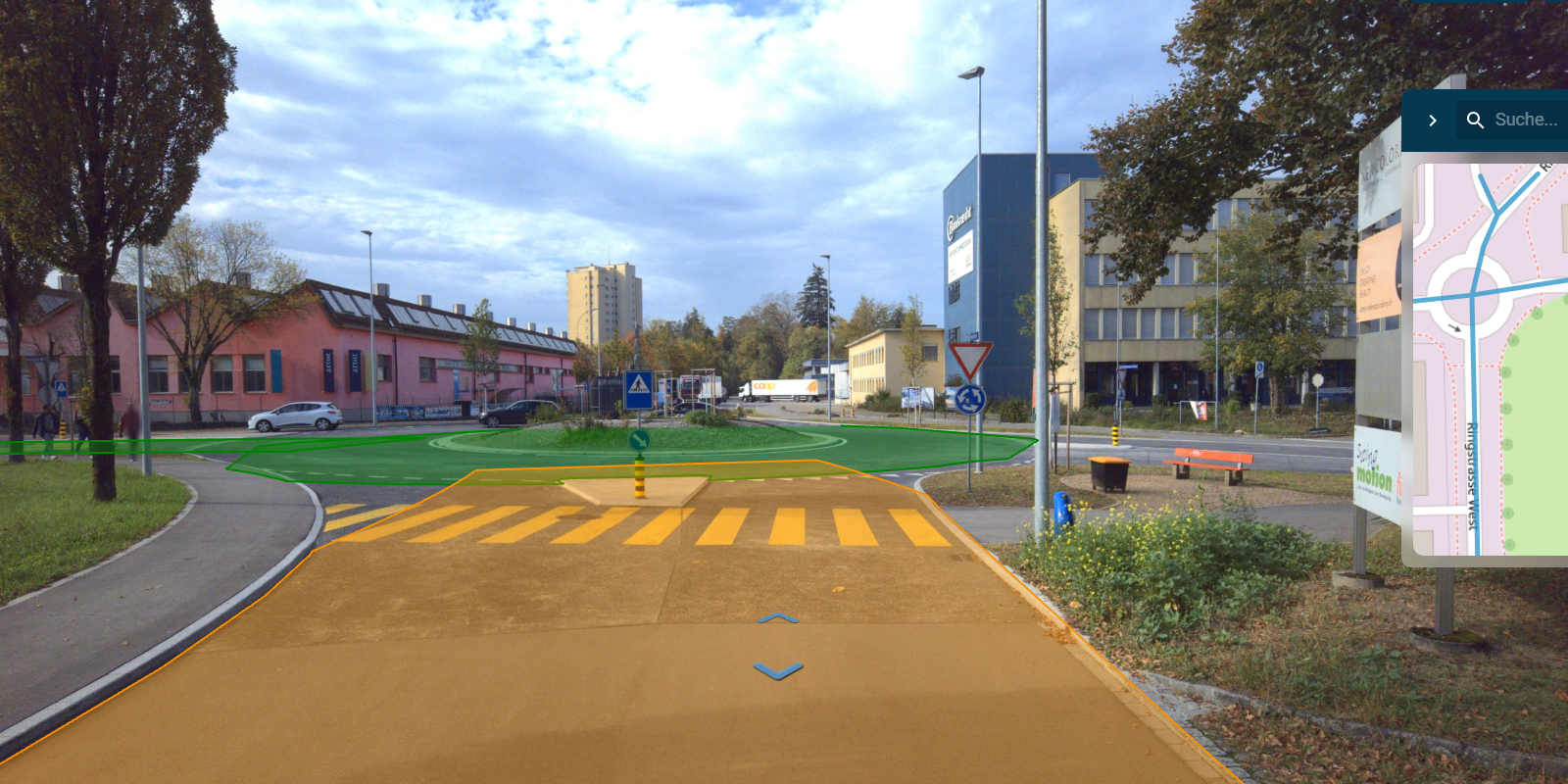
    From mid-July 2025, iNovitas from Baden will be mapping the streets in the district of Horgen. The company is creating a three-dimensional digital image of the public road network, according to a press release. The data obtained from the model is intended to form a basis for the areas of administration, utilities management and planning. The digital image reduces the time and effort required for inspection trips and inspections and should therefore provide an efficient organisation for maintenance and planning directly from the office.

    The municipal and cantonal roads of Adliswil, Kilchberg, Langnau am Albis, Rüschlikon, Thalwil and Oberrieden will be digitised. The municipality of Horgen had already commissioned iNovitas to carry out this work at an earlier stage. The data is recorded exclusively on public roads. According to the press release, people and number plates are anonymised, thereby protecting personal rights. The captured image and geodata is provided via the web-based infra3D platform and is only available to authorised specialists or administrative bodies with the appropriate authorisation.

  • Robot platform ensures safety and efficiency on construction sites

    Robot platform ensures safety and efficiency on construction sites

    Work such as drilling, sanding, spraying insulation or lifting heavy materials harbours high risks. According to recent figures, in 2024 there were 30 fatalities on construction sites in Europe alone within four months.

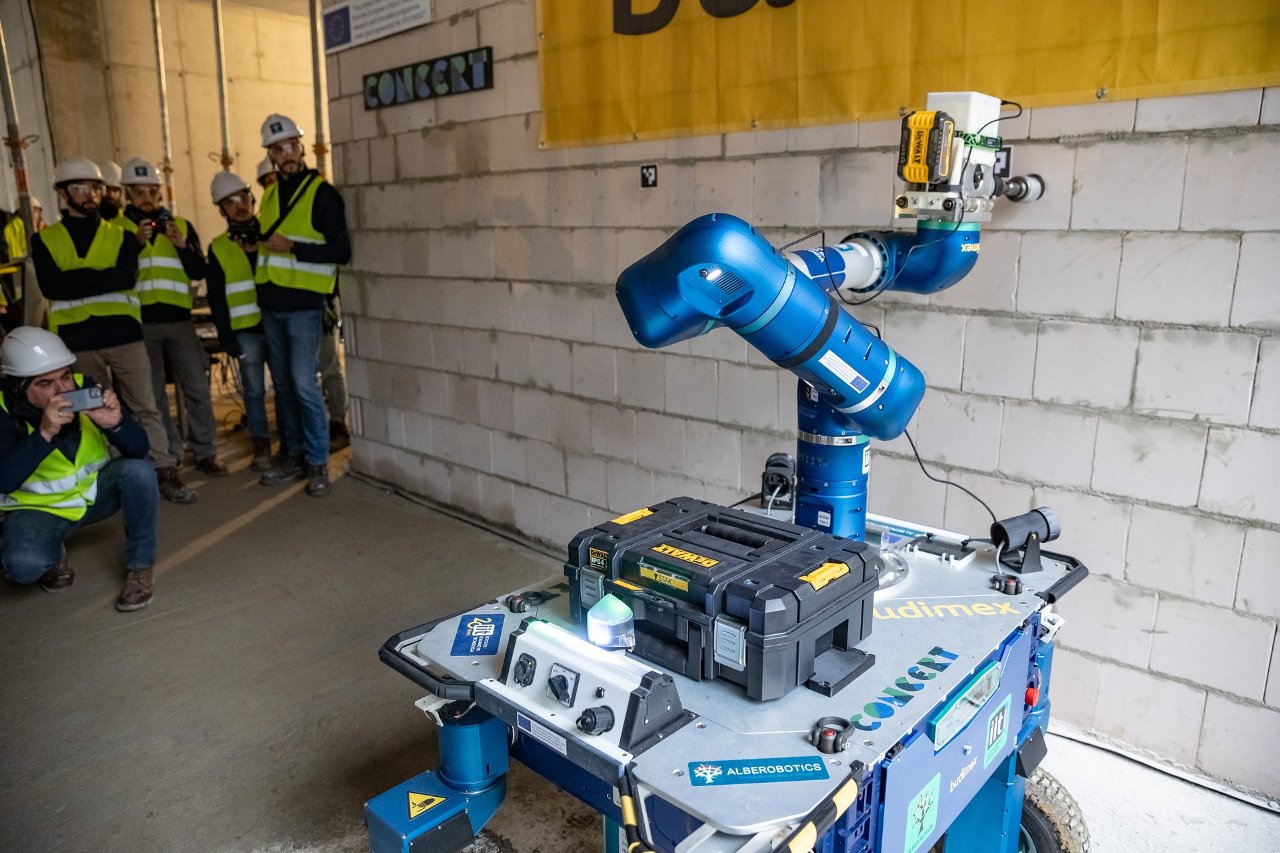
    With the support of the EU-funded CONCERT project, IIT has developed an innovative, modular robot platform. “Our aim was to create a flexible and adaptable solution that optimises construction processes, reduces the workload on people and improves safety,” explains Nikolaos Tsagarakis, project coordinator at IIT.

    Robot as a support – not a replacement
    Although the CONCERT robot can work autonomously, it was primarily designed as an assistance system for construction workers. While the machine takes over repetitive or dangerous tasks, skilled workers can concentrate on more complex activities. This not only increases work safety, but also efficiency on construction sites.

    “Instead of using a separate robot for each task, we have developed a fully reconfigurable solution that can be customised directly on the construction site,” continues Tsagarakis.

    Seamless integration into the digital construction site
    The robot was successfully tested under real construction site conditions. It not only demonstrated its performance, but also its flexibility by being able to adapt to the spontaneous requirements of the construction team.

    One major advantage is the link to digital building information models (BIM). This allows the robot to be controlled directly via a tablet without workers having to operate heavy power tools.

    A breakthrough for construction robotics
    CONCERT has ushered in a new era in digital construction site automation with the first reconfigurable multi-purpose construction robot platform.

    The solution not only has the potential for broad industrial application, but also exceeds the usual technology maturity level in research projects. “The flexibility of the platform makes it usable for many other construction tasks,” says Tsagarakis. Future developments will expand the areas of application even further.

  • HighStep joins industry association Swiss Safety

    HighStep joins industry association Swiss Safety

    HighStep Systems AG has joined the Swiss industry association for manufacturers and importers of personal protective equipment (PPE), according to a press release. Swiss Safety is committed to improving safety standards in the industry and offers its members access to a wide range of resources, training courses and networks, it added.

    As a new partner in the association, HighStep Systems AG wants to play an active role in promoting occupational safety and efficiency, according to the press release. HighStep’s fall protection systems and ergonomic solutions for working at heights and depths are specially designed to make workplaces safer and more productive.

    HighStep Systems AG was founded in 2007 and is based in Dietikon. It develops and sells arrester systems as an alternative to conventional climbing methods such as fixed ladders. As a result, workstations at great heights can be reached safely and comfortably, which increases safety and productivity for employees. The HighStep climbing protection system consists of two components: an aluminum rail as a system carrier and a selectable climbing device, the HighStep Easy and the portable HighStep Lift.

    In terms of application, the focus is on electricity pylons, wind turbines, transmission towers and industrial plants. Several thousand installations are in operation worldwide – primarily in Europe and also in Asian countries such as China and India. Customers include the Swiss transmission system operator Swissgrid, the European high-voltage grid operator TenneT and the Chinese energy company State Grid Corporation of China.