Tag: Arbeitszone

  • Mollis airfield on the upswing

    Mollis airfield on the upswing

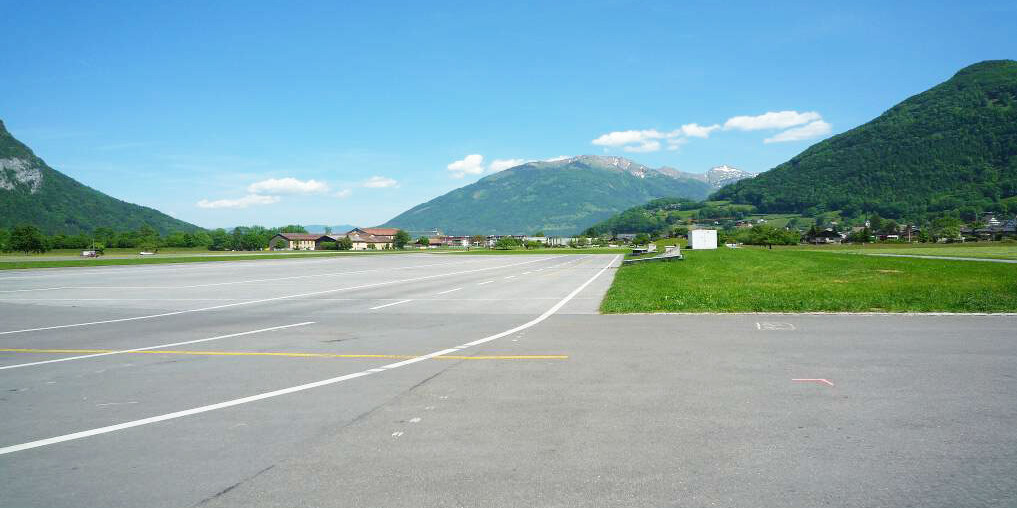
    Parcel no. 2487 at Mollis airfield is an undeveloped plot of land with an area of over 18,000 m². As part of the new utilisation planning, it was designated as work zone A. The Glarus North municipal council has commissioned a masterplan for this area, which is being drawn up by KCAP Architects and Planners in Zurich. The focus is on aviation-related businesses in particular, which should complement the existing ecosystem in a meaningful way.

    A site with a multifaceted identity
    Mollis airfield is much more than just an airfield. It is also a business location, home to innovative aviation companies, a meeting place for dedicated aviation clubs and an important local recreation area in the Glarus region. The six companies based there today, including Rega, Heli Linth and Kopter Group AG, provide over 150 jobs and stand for technological expertise in the field of aviation and rescue. This economic profile is complemented by the active use of the site by the Mollis motorised flight group, the Glarnerland gliding group and the model flying group.

    Past as a foundation for the future
    Mollis airfield can look back on over 100 years of history. Since the first landing in 1916, the site has repeatedly been the scene of significant developments – from Walter Mittelholzer’s pioneering flights to its use by the Swiss Air Force. Today, the site is used for civilian purposes and is committed to safe, balanced and economically viable operations. The history of the airfield creates an emotional bond and is an essential part of its identity.

    Sustainable development through a clear strategy
    The common goal of the municipality of Glarus Nord and Mollis Airport AG is to drive forward the development of the site while taking economic, ecological, agricultural and public interests into account. The masterplan takes into account both infrastructural requirements and potential for events, leisure use and security of supply. The well-connected location and the special combination of aviation, industry and recreational space make the Mollis site a promising development location in the canton of Glarus.

    A location with a signal effect for the region
    The Mollis Airfield Masterplan provides a strategic basis for attracting new companies, strengthening existing structures and harmonising usage interests in the long term. The close collaboration between the municipality, owners and MAAG is a prime example of co-operative regional development. Mollis airfield is not just a place for aviation, but a future-oriented location with charisma, diversity and responsibility – far beyond the canton.

  • Up to 10,000 new jobs in Sisslerfeld

    Up to 10,000 new jobs in Sisslerfeld

    The Sisslerfeld in Fricktal should develop into a place of the future. It is the largest contiguous and zoned industrial area in the canton of Aargau. With the further development of the Sisslerfeld, more companies should settle in the area and 5,000 to 10,000 additional highly qualified jobs should be created.

    The four municipalities involved – Eiken, Münchwilen, Sisseln and Stein – the Fricktal Regio planning association and the canton of Aargau therefore decided at the end of 2018 to tackle the development of the 200-hectare work zone together and in a coordinated manner. Qualitative growth is in the foreground.
    As early as 2019, people who live or work in Sisslerfeld, as well as companies and property owners, were asked about their needs. This resulted in guiding principles for further development.

    From January to September 2020, four teams of specialist planners looked for solutions to implement the guiding principles. In this so-called test planning, the teams dealt with the question of how jobs in Sisslerfeld can grow while traffic can remain bearable and the beauty of the landscape with its local recreational value can be preserved. Experts from the fields of business, society, urban planning, mobility, open space and energy worked together on an interdisciplinary basis. They examined and compared different approaches and discussed their advantages and disadvantages.

    Their solution approaches were intensively and critically discussed by a 16-strong assessment committee in three workshops. In order to give the younger generation enough weight, very young specialists were also represented on this body. The judging panel was chaired by Rainer Klostermann, an architect and urban planner from Zurich. In the test planning, it was important for him to "consider all the ideas and findings on how the Sisslerfeld can be designed as a future place of work, but also as a place to live and play". "On the other hand," Klostermann continues, "it is important to take local needs into account, indeed to protect them." The test planning not only explored how the Sisslerfeld could be developed. "It was just as important to discuss and reconcile different perspectives."

    Following the test planning, the various concerns were brought together to form a coordinated overall picture. The judging panel approved this synthesis in early July 2021. It consists of eight directions and shows how Sisslerfeld could develop sustainably and what course can be set for this today.

    In a next step, these directions will be discussed with the municipalities, the population and the landowners. The results of this dialogue are to be transferred in 2022 to plans that are binding on the authorities and then on the landowners.