Tag: Arealtransformation

  • Urban change on the Wellis site

    Urban change on the Wellis site

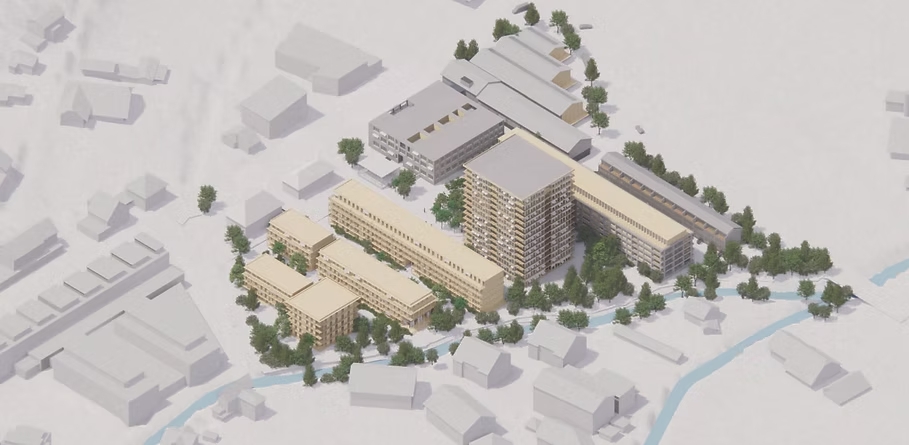
    One of the region’s most exciting transformation areas is located between the railroad station and the old town. Halls, warehouses and work yards are being transformed into an urban quarter with its own character. The area thus plays a key role as the gateway to Willisau.

    The area is roughly the same size as the historic old town. The previously closed production site is being transformed into an open piece of town. Paths, squares and open spaces will connect the station, the old town and the district. The previous barrier will become an urban interface.

    Mixture instead of monofunction
    The development clearly focuses on a mixture of uses. Several hundred apartments of different sizes and typologies are planned, supplemented by areas for commerce, services and local amenities. Living, working, shopping and leisure are moving closer together.

    It creates frequency throughout the day, increases the utilization of the infrastructure and reduces dependency on a single type of use. At the same time, it opens up scope for new forms of work, small-scale service providers and local suppliers.

    Identity from the industrial past
    The Wellisareal remains recognizable as a place. Parts of the existing building fabric will be preserved and used for new purposes. The industrial character not only provides history, but also identity. It clearly distinguishes the district from green meadow developments on the outskirts of the town.

    New buildings complement the existing buildings without covering them up. A high point marks the area in the silhouette of Willisau. The decisive factor here is not the height alone, but the effect in the urban space. This creates an image that remains anchored in the perception of residents, visitors and investors.

    Open space as a location factor
    The project consistently combines density with open space. Generous green spaces, trees, squares and paths structure the quarter and ensure a quality of stay. Instead of the inner courtyard as a residual area, the open space is at the center of the concept.

    For future users, this is more than just a matter of comfort. Shaded recreational areas, well thought-out outdoor spaces and differentiated microclimates are becoming hard location factors. They influence rentability, image and long-term value development. A robust open space concept also supports the adaptability of the neighborhood over its life cycle.

    Rebalancing mobility
    The location directly next to the train station and close to the old town allows for a low-traffic approach. Priority is given to pedestrians and cyclists, with public transport services within walking distance. The project deliberately reduces the number of parking spaces and focuses on alternative forms of mobility.

    For local authorities and investors, this means less land consumption for cars, more space for value creation and quality of life. At the same time, there is increasing pressure to think of mobility as an integrated offer. From sharing solutions to logistics and neighborhood services.
  • Thun North forms a new urban neighbourhood

    Thun North forms a new urban neighbourhood

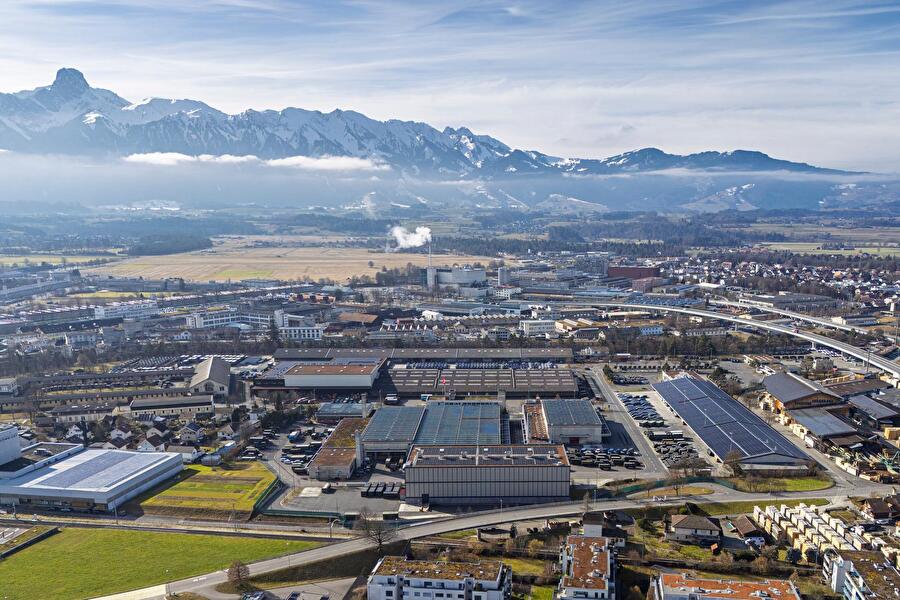
    The cantonal development centre Thun North is considered the most important business location in the Bernese Oberland and is one of the four premium locations in the canton of Bern. The area between Selve and Lerchenfeld, which is still heavily characterised by military use, is to be gradually opened up for new uses. This will create space for working, living and mobility, linked by a new public access route.

    Workshop process as a milestone
    In 2025, the city of Thun conducted a workshop process together with Armasuisse Immobilien, Ruag Real Estate AG and BLS. It marked an important milestone in the transformation of the area. The task was to identify ways in which the site could develop into a modern, networked urban district. In addition to the future Thun Nord S-Bahn station, the creation of a lively urban environment is at the centre of the project.

    Open spaces as a basic framework
    The planning considerations focus on open spaces as a connecting element between the closed military areas to the south of the site. The three interdisciplinary teams developed several approaches in dialogue with experts, owners and interest groups. Despite different concepts, a common core emerged. The open space, Aare, Alpenbrücke and Allmendstrasse form the supporting framework to which future neighbourhood structures will connect. The new railway station also makes reference to the existing buildings. The striking shed roof hall will serve as the backbone and identity carrier.

    From idea to realisation
    The next phase is now starting. In a so-called synthesis, the city, owners and project partners are working on further refining the open space and neighbourhood structure. This forms the basis for the next, harmonised plans, such as infrastructure projects or the necessary planning instruments. Thun North is thus taking shape as a forward-looking neighbourhood that combines economic strength and spatial quality.

  • Bellinzona transformiert

    Bellinzona transformiert

    The historic SBB workshops, the centrepiece of Ticino’s industrial history, are making way for a district that serves as a model for sustainable urban development, an innovative mix of uses and high-quality living spaces. The political, economic and urban development significance of the project extends far beyond the borders of Bellinzona.

    Historical continuity
    The SBB offices have shaped the city centre for more than a century, providing thousands of jobs and an independent industrial identity. The relocation and replacement construction of the SBB industrial facilities in Arbedo-Castione by 2028 will create a rare development opportunity in the centre of Bellinzona. Over 100,000 square metres will be freed up for a comprehensive urban redevelopment, with a balance between tradition, innovation and strategic urban development.

    Participatory guiding process
    The redesign of the site is based entirely on participatory processes. The development process began with an international urban planning competition. Five European planning teams competed against each other, with the “Porta del Ticino – Urban Living Lab” project ultimately coming out on top thanks to its bold use of green space, multifunctionality and attractive density. Public consultations and a broad-based residents’ dialogue ensured broad acceptance and political backing. A representative survey showed that 65 per cent of the population supported the winning concept. Younger generations in particular have high expectations of innovation and quality of life.

    Urban structure, mix and development phases
    The masterplan concept envisages a clear linear tripartite structure for the site. Two peripheral zones combine flats, cooperatives, administrative and research uses, universities, commercial and hotel facilities. In the centre, the spacious Almenda will be a public green and meeting space that will serve as a social, cultural and ecological focus. The implementation period for the realisation of the district extends over several years in order to gradually create lively, resilient living, working and research landscapes. This guarantees flexible management of market dynamics and avoids vacancies or excessive property yield orientation.

    The striking “cathedral”, a listed building dating from 1919, will remain as a cultural magnet and will be transformed into a meeting and event venue. A worthy perspective for a landmark of industrial labour culture.

    A real laboratory of urban change
    The development plan commits to the highest sustainability standards, with the aim of achieving the Swiss Sustainable Building Standard (SNBS). Fossil fuels are excluded, and comprehensive photovoltaics and greenery, rainwater utilisation in the spirit of the “sponge city”, energy-efficient district heating and active promotion of electromobility are integral components. An energy plan supports the objective of covering a large part of the neighbourhood’s electricity requirements locally. Wide green spaces, biodiversity, urban gardening, resource-saving construction methods and low-emission mobility round off the ecological profile.

    Special attention is paid to intergenerational housing models, educational and research facilities, start-up promotion and the new innovation park, which will give Bellinzona a model character and regional appeal

    Model character and regional appeal
    The project combines socio-cultural values, sustainable infrastructure, entrepreneurial innovation and ambitious living and quality of life to create a new urban “engine” for the region. With its combination of participatory governance, versatile utilisation options and resilient open spaces, Bellinzona is setting exemplary standards for Swiss and European urban development in the coming decades.