Tag: Asphalt

  • Netherlands tests recycling train for sustainable road construction

    Netherlands tests recycling train for sustainable road construction

    Crushed stone, sand, gravel and petroleum-based bitumen in asphalt roads are the same materials that make up new roads. The only difference is that the asphalt has already been heated and laid.

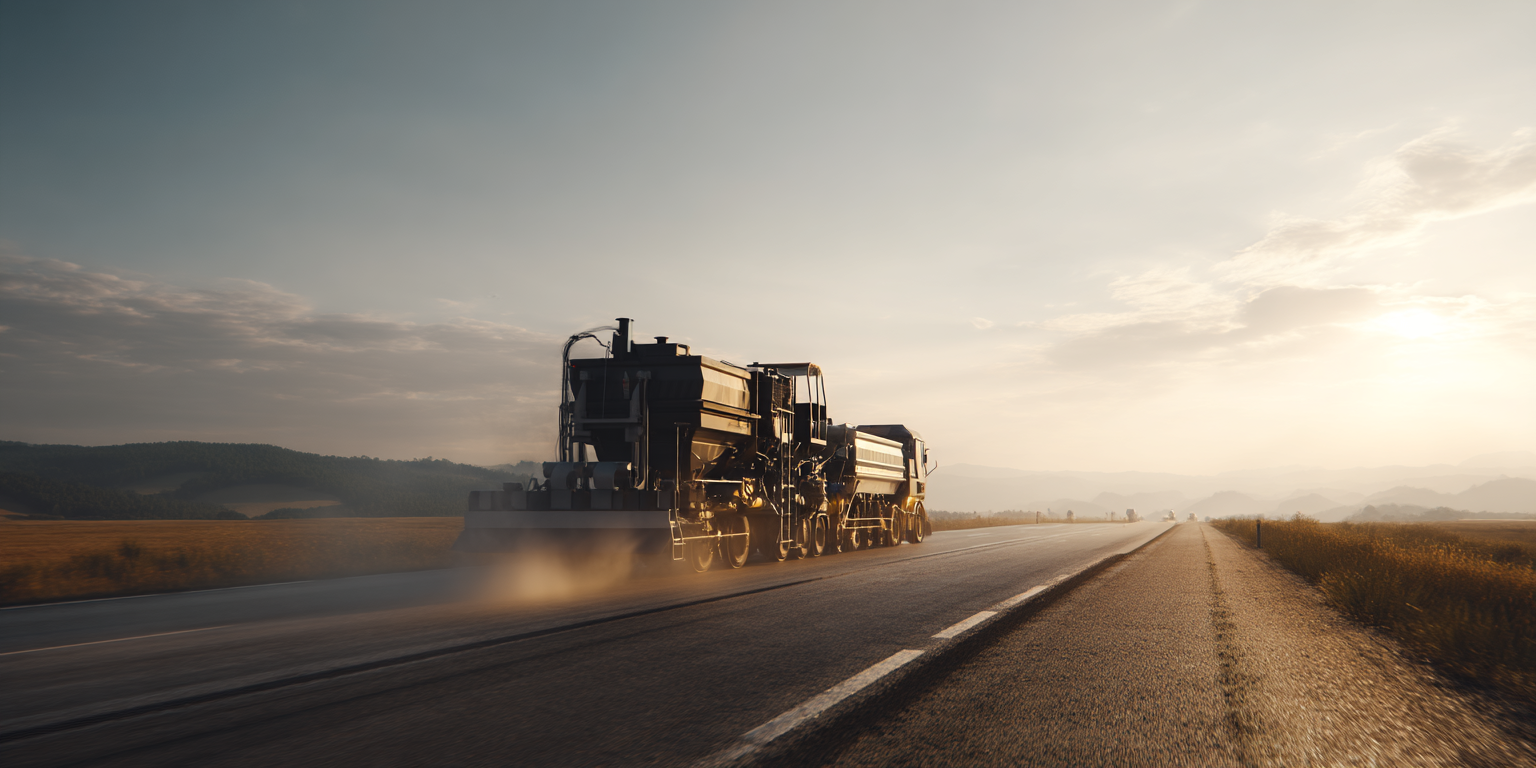
    For this reason, Dutch officials from the Rijkswaterstaat infrastructure agency in Utrecht, part of the Ministry of Infrastructure and Water Management, have invested in the Asphalt Recycling Train (ART or Asphalt Recycling Train). This is a vehicle-like machine that reuses old roads on site instead of tearing them up and disposing of them and then using new materials and thus emitting more carbon. This allows new asphalt to be laid in the same place.

    “With the ART, we can renew roads in a far more sustainable way,” Fredy Sierra-Fernandez, who is developing the ART at the ministry, is quoted as saying in a press release. “At the moment, we are testing a single machine to see how it performs in practice.”

    ART loosens the worn surface layer of roads, heats the old asphalt, picks up the melted material, stirs and mixes it and then applies the renewed asphalt back onto the road. The machine also compacts the road to create a smooth surface.

    Fernandez is now investigating how the roads behave after this process. Since June and from October last year, a provincial road in Gelderland in the east of the Netherlands and a section of the A2 highway have been monitored after the ART was used there.

    The road in Gelderland is in good condition. The section of the A2 highway is somewhat more worn, but still adequate. “We will continue until we are 100 percent satisfied,” says Fernandez. Tests in other regions are planned for April and May 2025.

    The Dutch government hopes to have three or four ARTs in operation across the country by 2030 to create a circular economy for asphalt.

    The ART was awarded the InfraTech Innovatieprijs 2025.

  • Empa repurposes old asphalt

    Empa repurposes old asphalt

    In a research project, the Swiss Federal Laboratories for Materials Testing and Research has investigated the possibilities of recycling asphalt deposited on waste heaps in new construction and in the repair of road surfaces. According to a media release, researcher Martins Zaumanis’ goal was to increase the recycling content of asphalt. To this end, two test sections with recycled asphalt were set up in Uster ZH and on the Lukmanier Pass between the cantons of Graubünden and Ticino. The results are reportedly promising.

    The research project is called HighRAP (Reclaimed Asphalt Pavement) and was carried out by Zaumanis together with the Federal Roads Office, the Federal Office for the Environment, the cantons of Zurich and Graubünden and several industry partners from 2019 to early 2023.

    The tests showed that on the busy road near Uster, 30 per cent RAP content could easily be introduced without any loss of performance. “Typically today, for such a heavily trafficked road, RAP is completely dispensed with in the surface course,” says Zaumanis. For the underlying binder course, between 40 and 50 per cent RAP was possible.

    The road section at the Lukmanier Pass is not exposed to heavy traffic, but to harsh climatic conditions. At an altitude of 1900 metres, the strong temperature fluctuations can cause cracks in the road surface. Nevertheless, RAP admixtures of 85 percent in the foundation layer and 70 percent in the base and binder layers above were possible.

  • Efficient asphalt recycling in Switzerland

    Efficient asphalt recycling in Switzerland

    In Switzerland, the growing amount of old asphalt in landfills is a problem that is now being addressed through innovative research. The “HighRAP” project, led by Martins Zaumanis and in collaboration with authorities and industry partners, aims to maximise the use of recycled asphalt in road construction.

    Challenges and solutions
    Waste asphalt is a challenging resource. Its binder, bitumen, ages and stiffens over time, making it difficult to use. In addition, old asphalt is often a mixture of different road layers and time periods, which affects its homogeneity. Zaumanis’ research project offers solutions here. Specialised testing methods and a newly developed computational model make it easier to reuse old asphalt.

    Practical tests and applications
    The project has already proven its practicality in two pilot projects. In Uster, it was possible to incorporate up to 50% recycled asphalt into the road surface without sacrificing performance. Even on the climatically challenging Lukmanier Pass, asphalt with high recycled content was successfully used. These results encourage the expanded use of recycled materials.

    Forward-looking research
    The project not only offers practical solutions for road construction, but also sheds new light on the possibilities of using recycled material efficiently and sustainably. Martins Zaumanis is confident that his research will help to significantly reduce the amount of used asphalt in landfills.

    With the “HighRAP” project, sustainable road construction in Switzerland is taking off. New methods, political will and successful practical tests make a future with less waste and more recycling in road construction seem realistic.

  • “Green” asphalt: a milestone towards climate-friendly road construction

    “Green” asphalt: a milestone towards climate-friendly road construction

    By 2037, Basel-Stadt aims to reduce its greenhouse gas emissions on cantonal territory to net zero. Conventional asphalt used in road construction produces greenhouse gases. The canton plans to carry out road renovations in a targeted manner and to use asphalt sparingly, in a degradable and sorted manner. In future, “green” asphalt with vegetable carbon will be used for renovations in order to reduce the CO2 footprint of road construction.

    IWB in Basel produces certified vegetable carbon from green waste in a plant under oxygen exclusion. The heat released is used for the district heating network. The remaining plant carbon contains the carbon component of the CO2 extracted during plant growth. This removes CO2 from the atmosphere in the long term. The Basel-Stadt Civil Engineering Office and the Institute for Construction Materials Technology ViaTec Basel AG have developed and tested asphalt mixtures with plant carbon. Vegetable carbon asphalt meets Swiss standards, is of high quality and durable. The costs are slightly higher than for conventional asphalt.

    Since 2022, the plant charcoal asphalt has been tested on a recycled construction material transfer site. Positive results show that one tonne of the mixture permanently binds 50 kilograms of CO2. The CO2 sequestration exceeds the release during production, transport and paving. The pavement is “CO2-negative”. The area-wide use of this technology is planned.

    The Basel-Stadt civil engineering office is working with regional pavement mixing plants to simplify the production of the mix. The civil engineering offices of Basel-Landschaft and Basel-Stadt are exchanging experiences. The Construction and Transport Department of Basel-City is planning to use vegetable charcoal asphalt throughout the country for road rehabilitation. This could save around 1,250 tonnes of CO2 equivalent annually and exceed the amount of CO2 produced by road construction by 450 tonnes.

  • Zurich is testing colored road surfaces for their cooling effect

    Zurich is testing colored road surfaces for their cooling effect

    Since the summer of 2020, the civil engineering office in Zurich has been running a pilot project to reduce heat. According to a press release from the city of Zurich , differently colored road surfaces were applied to Roggenstrasse in Zurich-West in order to measure the effect on the temperature. The results show that the light-colored coverings – in contrast to shadows from trees and houses – only have a minor influence on the temperature.

    For these measurements, new surfaces were installed on Roggenstrasse and the road was divided into three areas: a reference area made of conventional, street-gray asphalt and two areas with a beige and a reddish surface, according to the city’s statement. Cameras and embedded probes recorded the surface temperature and heat storage of the pads.

    The results now available show a minor effect of the light-colored deposits on the surface temperature. The reference surface in conventional gray was even about 2 degrees cooler on average than the two bright surfaces. This result can be explained by the shadow that trees and a high building temporarily cast on the reference area, it is said. It therefore heated up less.

    The differences between the two light surfaces were small. The beige covering stayed a little cooler than the reddish one. Calculations showed that if all surfaces had been exposed to the same amount of sunlight, the light surfaces would have been 2 degrees cooler than the reference area.

    The results of the pilot project clearly show how important shade and trees are for reducing heat in cities, according to the civil engineering office.

  • Empa is replacing bitumen in road construction with string

    Empa is replacing bitumen in road construction with string

    Researchers at the Eidgenössische Materialprüfungs- und Forschungsanstalt ( Empa ) are currently examining a new method for stabilizing the amount of stone in road construction. Specifically, according to the press release, it is about replacing the bitumen binding agent in the production of the driving surface. Asphalt consists of stones of different shapes and sizes and only becomes a surface that can be used for roads when it is stabilized with the help of bitumen.

    Bitumen causes environmental problems. Air pollutants are released during production from crude oil and later during use. Asphalt is also prone to cracks and deformations and impermeable to rainwater, which pollutes the environment.

    The two Empa researchers Martin Arraigada and Saeed Abbasion from the concrete and asphalt department at Empa are currently implementing a method known from art for the production of road surfaces in a test arrangement. In such art objects, stone steles have been used, which are stabilized by a weave of twine and withstand loads of up to 20 tons at a height of 80 centimeters.

    In the experiment, an electronically controlled robot arm applies a string to a stone layer in a specific pattern. By “interweaving” the stones are fixed in five layers in their position in the “road bed”. In tests, these were already as strong as conventional bitumen asphalt under loads of half a ton. Inexpensive twine was used, such as are conventionally used for tying up packages.

    The trials have not yet led to a ready-to-use product that could be used in road construction. The basic work, however, provides a lot of innovation potential in order to get closer to a recyclable and perhaps rollable road surface using simple means, according to the Empa announcement. A video of the procedure can also be viewed on the website.

  • Green asphalt permanently removes CO2 from the air

    Green asphalt permanently removes CO2 from the air

    In Dornbirn, as part of the expansion of the district heating network, new asphalt is being laid on a stretch of road. So-called green asphalt is used for the first time. 1.7 percent charcoal from the production of theEnergieWerk Ilg is added to the asphalt. This allows the carbon contained in the charcoal to be stored and the CO2 formed with it to be permanently removed from the atmosphere. The company is thus improving its carbon footprint.

    A first test mixture was installed on September 24th, according to a message from EnergieWerk Ilg. If this mixture meets expectations, a test section of 30 meters is to be laid on October 14th and 15th.

    If the pilot project in the state of Vorarlberg is successful, roads can become new CO2 sinks. Asphalt can contain around 5 percent of such additives on average. This means that 100,000 tons of asphalt could soon permanently remove well over 10,000 tons of CO2 from the atmosphere.

    The pilot project is supported by a number of partners. The asphalt is manufactured by Migu Asphalt in Lustenau, which intends to use it to introduce a new product and strengthen its market position. The technology for producing the charcoal comes from the Syncraft company in Schwaz in the state of Tyrol. EnergieWerk Ilg, which supplies the admixture, has already been climate-neutral and can become climate-positive with this product. The city of Dornbirn is profiling itself as a model region for the energy transition .

    Hans-Peter Schmidt from the Ithaka Institute in Arbaz VS advises the project. Carbonfuture GmbH in Freiburg i.Br. certifies carbon storage. This means that certificates for the removal of carbon from the atmosphere can be issued and the green asphalt can be co-financed.

    The project was initiated by the European Biochar Industry ( EBI ) consortium. EBI wants to create and establish new, verifiable and certifiable CO2 sinks with charcoal and biochar.