Tag: Attraktivität

  • Property market remains attractive

    Property market remains attractive

    The Swiss property market remains attractive for 98 per cent of property investors, EY Switzerland reports in a press release. The auditing and consulting firm based its findings on the latest edition of its annual “Real Estate Investment Market Trend Barometer”. For this, EY Switzerland surveyed a representative cross-section of 96 companies.

    “According to investors, the high level of attractiveness can be attributed to the stable economy, persistently high demand and the fact that Switzerland remains a lucrative location despite the geopolitical changes,” Daniel Zaugg, Sector Leader Real Estate at EY in Switzerland, is quoted as saying in the press release. “According to the respondents, the Swiss National Bank’s interest rate hikes will also have no substantial short-term impact on the market value of investment properties.” 96 per cent of those surveyed expect inflation to remain below 3 per cent this year.

    Within the property market, residential property is becoming more attractive. Interest here has risen from 93 per cent in the two previous years to 96 per cent this year. Fewer investors want to invest in office, logistics and healthcare properties than in the previous year, at 39, 42 and 45 per cent respectively. Only 16 per cent of respondents expressed interest in space for food retailers and specialist stores.

    Sustainability criteria are playing an increasingly important role for a large majority of respondents when selecting investment properties. Investors also predict that demographic changes and climate change will have an increasing influence on the property market in the future.

  • Fixed-rate mortgages overtake the former favourites

    Fixed-rate mortgages overtake the former favourites

    In Switzerland, there was a veritable run on variable Saron mortgages after the interest rate turnaround. However, the former favourites no longer seem as attractive as before.

    Interest rates for Swiss fixed-rate mortgages have been on a downward trajectory since mid-June 2023. According to the mortgage index of the Swiss online comparison service Moneyland, ten-year fixed-rate mortgages are currently quoted at 2.31 per cent – the lowest level since May 2022.

    The downward trend intensified after the Swiss National Bank (SNB) surprisingly announced a pause in interest rates in September. As a result, fixed-rate mortgages are no longer more expensive than variable-rate Saron mortgages, which previously accounted for a large proportion of new business, for the first time since October last year.

    Today, fixed-rate mortgages are significantly cheaper than Saron mortgages for all maturities. Two-year fixed-rate mortgages are currently 0.35 percentage points, five-year mortgages 0.42 percentage points and ten-year mortgages 0.30 percentage points cheaper than their variable-rate counterparts.

    Experts agree that interest rates in Switzerland appear to have peaked. The majority of market observers assume that the SNB will leave key interest rates unchanged at the next meeting and in the first quarter of 2024 and could only announce interest rate cuts in mid-2024.

    The property specialists at Moneypark also reported that over 90 per cent of mortgage providers surveyed in Switzerland expect the SNB to leave the key interest rate unchanged at 1.75 per cent at its next meeting. Over the next three months, interest rates are likely to remain stable for shorter terms of up to five years, while longer terms are expected to see more volatility and a trend towards lower interest rates.

  • Lucerne – the business location with a tailwind

    Lucerne – the business location with a tailwind

    Courageous decisions and the resulting dynamism have shaped the development of Lucerne as a business location over the past two decades, with the KKL, which opened in 1998, serving as a symbol of change. In the course of this renewal, Lucerne expanded its university location and increased its fiscal attractiveness for residents and businesses.

    After years of strong growth and economic prosperity, sustainability is now high in the zeitgeist. In addition to economic and social aspects, ecological issues in particular are given greater weight than in the past. In particular, the consideration of climate protection has become a real yardstick for the sustainability of business models. Companies must rise to this challenge and find the right balance between the business of today and that of tomorrow.

    The canton supports global efforts in climate protection and aims to achieve net zero emissions of greenhouse gases by 2050. The Canton of Lucerne’s climate strategy invites the economy and businesses to work together towards this goal. A central lighthouse project is presented in more detail in this issue: the unique energy ecosystem in Dagmersellen.

    In the areas of taxes, accessibility and education, the canton remains competitive through the planned revision of the tax law and the construction of two generation projects in the transport infrastructure (through station and bypass). Meanwhile, the expansion of the university locations in Horw and Lucerne will ensure that companies have access to the skilled workers they will need in the future.

    Testimonials

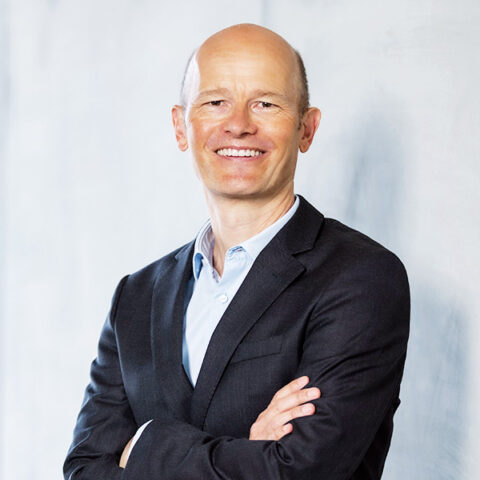
    Adrian Steiner
    CEO, Thermoplan AG
    “Thermoplan relies on Lucerne as a business location because you can find well-trained and loyal skilled workers in all areas here.”

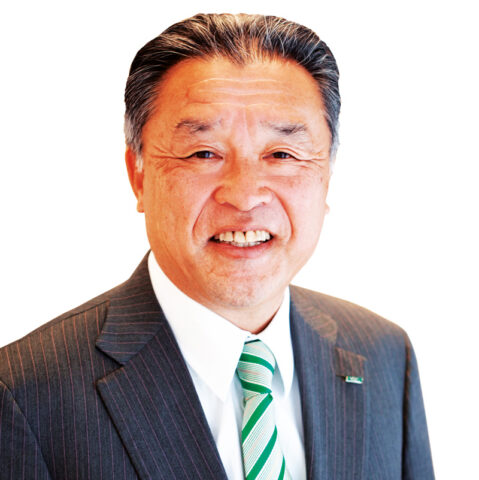
    Makoto Nakao
    President, GC International AG
    “Dental medicine in Switzerland is among the best in the world in terms of quality. Lucerne convinced us in terms of infrastructure, education and safety.”

    Dr Ralf P. Halbach
    CEO, Geistlich Pharma AG
    “The attractive business location convinces people from all over Switzerland and abroad to move to Lucerne and work here. Experience shows: The advantages of living in Lucerne are a strong argument.”

    Peter Ruppeiner
    CEO and Co-Founder, AVANTYARD LTD.
    “Lucerne is increasingly becoming a hotspot for personalities with innovative ideas and start-ups. An attractive location with a manageable size is perfect for quickly building a network.”

    Lucerne Economic Development

    Alpenquai 30, CH-6005 Lucerne
    +41 41 367 44 00
    info@luzern-business.ch, www.luzern-business.ch

  • Investors are lining up in front of first-class properties

    Investors are lining up in front of first-class properties

    Wer heute eine Immobilie an bester Lage erstehen will, braucht viel Geld und Geduld. Vor Büro- und Wohngebäuden mit hervorragender Erschliessung bilden sich heute lange virtuelle Schlangen von Investoren, die ihre Mittel möglichst sicher anlegen wollen. Bieterverfahren treiben die Preise auf neue Höchstwerte: In der Zürcher Goldküsten-Gemeinde Zumikon etwa erwarb ein Käufer kürzlich ein nicht mehr benötigtes, nur eine Minute neben einer ÖV-Station gelegenes Feuerwehrgebäude mit einigen Wohnungen für rund CHF 21 Mio. 37 Interessenten hatten sich beworben, der Endpreis lag fast zweieinhalb Mal so hoch wie der von der Gemeinde aufgrund einer professionellen Schätzung vorgegebene Mindestpreis von CHF 8.7 Mio. Im Fokus der Anleger standen 2021 vor allem sogenannte Core-Objekte: “Als risikoarme Anlageklasse sind erstklassige Immobilien nach wie vor ohne Alternative”, begründet Yonas Mulugeta, CEO von CSL Immobilien, diese in den Zentren beobachtbare Entwicklung.

    Die Preisentwicklung führte 2021 dazu, dass die Netto-Anfangsrenditen in den meisten Segmenten des Investmentmarkts weiter auf neue Tiefstwerte sanken – dies, obwohl die meisten Investoren eher eine Seitwärtsbewegung erwartet hatten. Wohnliegenschaften erstklassiger Güte rentierten im Landesschnitt mit 1.85% (Vorjahr 2.1%). Noch stärker sanken die Renditen für Top-Büroobjekte: Diese fielen mit 1.9% (Vorjahr 2.35%) sogar knapp auf das Niveau der Wohnimmobilien.

    Ein Grund dafür: Investoren, die im Wohnmarkt nicht mehr zum Zug kamen, wichen in den Büromarkt aus. Auf Interesse stiessen 2021 auch Gewerbe- und Logistikimmobilien – dies als eine weitere Ausweichbewegung von Investoren, die vom boomenden Onlinehandel profitieren wollen.

    Leere Büros in der Peripherie

    Auch die Unternehmen fokussierten ihre Nachfrage 2021 noch stärker auf zentrale Standorte. Der grössere Teil der in den vergangenen sechs Monaten verfügbaren Büroflächen von 2.43 Mio. m2 (Vorjahr 2.26 Mio. m2) entfiel deshalb auf Liegenschaften ausserhalb der städtischen Zentren. Im Wirtschaftsraum Zürich waren in den vergangenen sechs Monaten rund 910’000 m2 Bürofläche inseriert (Vorjahr 812’000 m2). Damit ist das Angebot innerhalb eines Jahres um 12% gestiegen – ähnlich stark wie in den Wirtschaftsräumen Bern (+14%) und Genf (+12%).

    Der Fokus der Unternehmen auf zentrale Bürostandorte ist insbesondere auch auf die Pandemie zurückzuführen. Viele Mitarbeitende haben sich an das Homeoffice gewöhnt. Um sie zumindest teilweise zurück ins Büro zu holen und dort einen neuen Alltag zu etablieren, muss dieses attraktiv sein. Neben der zentralen Lage mit guter Verkehrsanbindung gehört dazu ein ansprechendes Interieur, das Kreativität und Teamprozesse fördert. Unternehmen, die dies nicht bieten können, haben auf dem Arbeitsmarkt einen Nachteil.

    Eigenheimpreise flächendeckend gestiegen

    Auch im Wohnmarkt machte sich die Pandemie bemerkbar: Das Zuhause gewann an Bedeutung. Gleichzeitig löste das Homeoffice in vielen Haushalten ein Platzproblem aus. Dies führte zu einer steigenden Nachfrage – insbesondere im Eigentumssegment, das weiterhin vom attraktiven Finanzierungsumfeld profitiert. Auf der Angebotsseite kam nur wenig Neues hinzu. Die Folge waren fast flächendeckend steigende Preise für Eigenheime. Dieser Trend dürfte sich 2022 fortsetzen – die Hypothekarzinsen bleiben auf tiefem Niveau, auch wenn sie zuletzt leicht gestiegen sind.

    Im Mietwohnungssegment wirkte sich die gestiegene Nachfrage insbesondere strukturell aus: Gesucht waren 2021 vor allem grössere Objekte, während das Interesse an 1- bis 2.5-Zimmer-Wohnungen an vielen Lagen spürbar abnahm. Die Erfahrung von CSL Immobilien im Markt zeigt: Paare beziehen heute kaum mehr eine 2.5-Zimmer-Wohnung, sondern suchen mindestens eine Wohnung mit 3.5, lieber noch mit 4.5 Zimmern. Dies zeigt sich auch in den Zahlen: Im Kanton Zürich stieg der Anteil der 1- bis 2.5-Zimmer-Wohnungen unter den leerstehenden Wohnungen 2021 auf 27%, ein Jahr zuvor lag dieser noch bei 22%.

    Die Leerstandsquote im Wohnmarkt sank 2021 aufgrund der grossen Nachfrage über das ganze Land gesehen auf 1.54% (Vorjahr 1.72%).

    Allerdings zeigt die Quote grosse regionale Unterschiede. Im Vergleich der grössten Agglomerationen weist Zug mit 0.4% den tiefsten Wert auf, Olten-Zofingen mit 3.8% den höchsten. Im Kanton Zürich lag die Leerstandsquote 2021 bei 0.72% (Vorjahr 0.91%). In der Stadt Zürich stieg die Leerstandsquote 2021 zwar minimal an, zeigte aber mit 0.17% (Vorjahr 0.15%) immer noch einen äusserst ausgetrockneten Markt.