Tag: Auswirkungen

  • Figures on the Swiss economic area

    Figures on the Swiss economic area

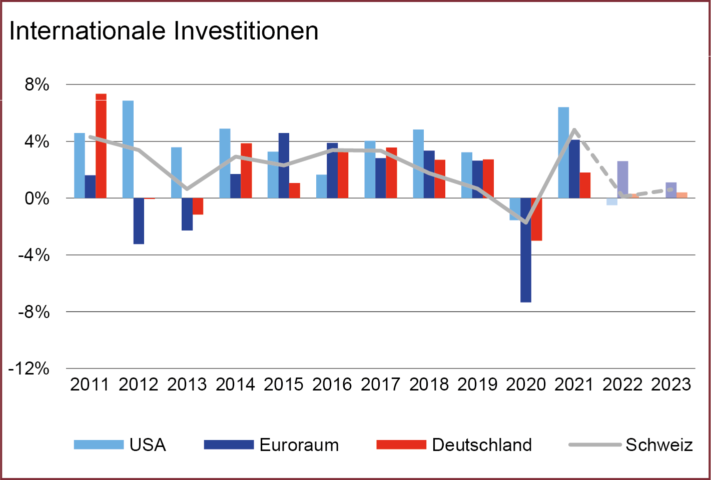
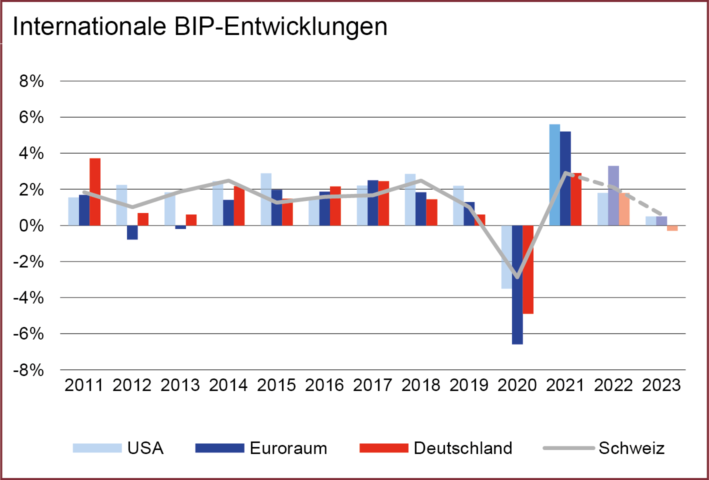
    International GDP development as well as investments have recovered excellently in 2021. However, the latest developments
    show that investment volumes are currently subdued and GDP development is cooling down worldwide. Economic analysts’ forecasts predict a slowdown in 2024 and a possible downward trend.

    The pandemic hardly plays a role in the media any more, but its consequences continue to be felt. In addition, rising energy and food prices as a result of the war in Ukraine, Corona measures by major economic players and supply chain problems have led to uncertainty, which is reflected in rising inflation rates. With the interest rate hike, the SNB was able to calm things down and is slightly above target. The forecasts of a slowdown in economic growth are reflected in a restrained development.

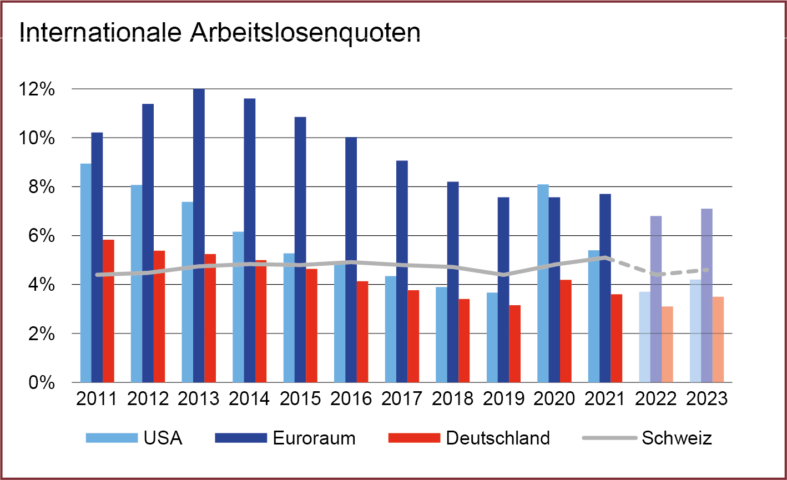
    Real incomes in Switzerland have fallen slightly, which, together with the pandemic-related pent-up demand in the consumer sector, is having a positive effect on the economy. The outlook for the labour market is good and an upswing is possible by 2024.

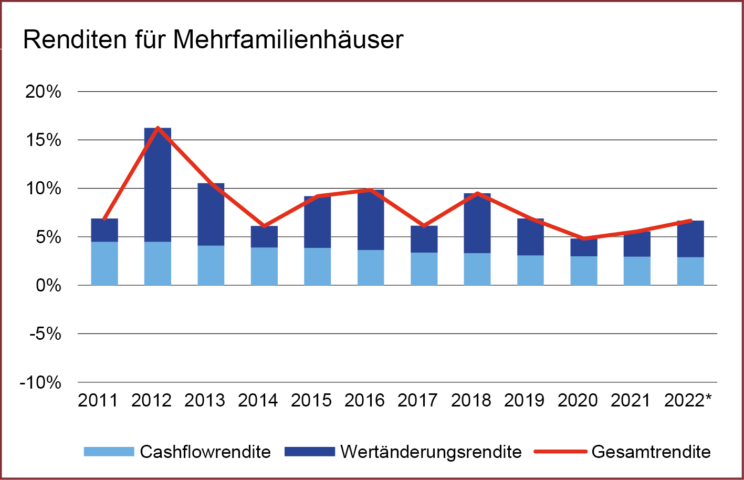
    The residential real estate market is robust and could not be affected by the financial crisis, the Corona pandemic or the war in Ukraine. The Swiss office market is unimpressed by the negative news from the global economy.

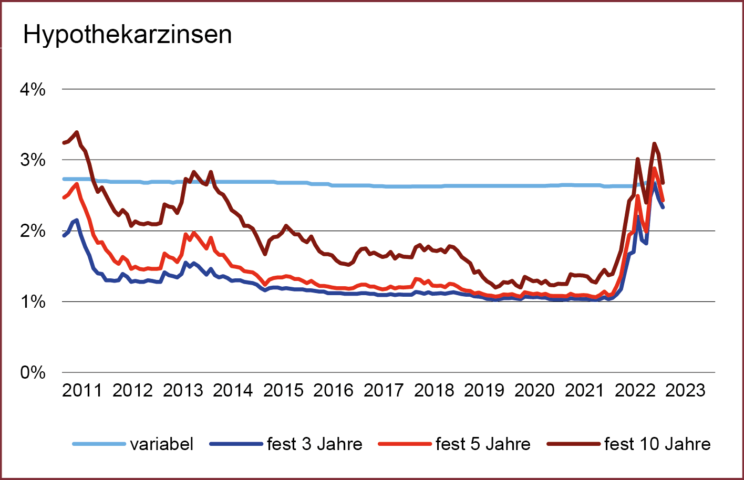
    Further interest rate steps by the SNB are expected and yields could rise slightly. However, due to immigration, vacancies in the periphery are falling and demand for space in the centres remains high, leading to rising market rents.

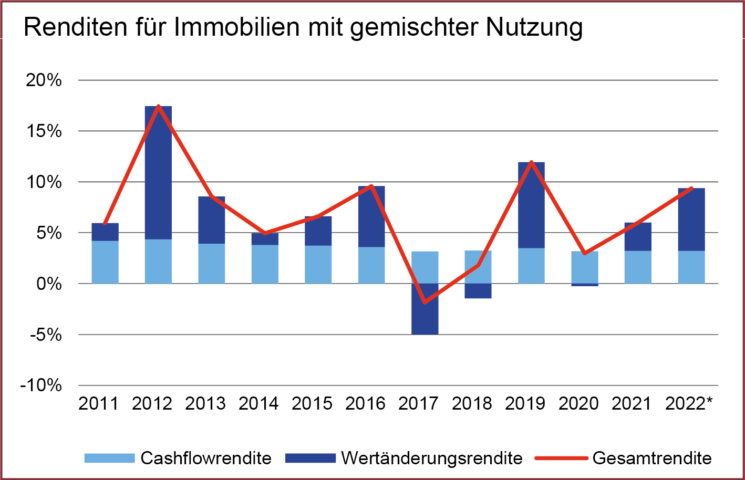
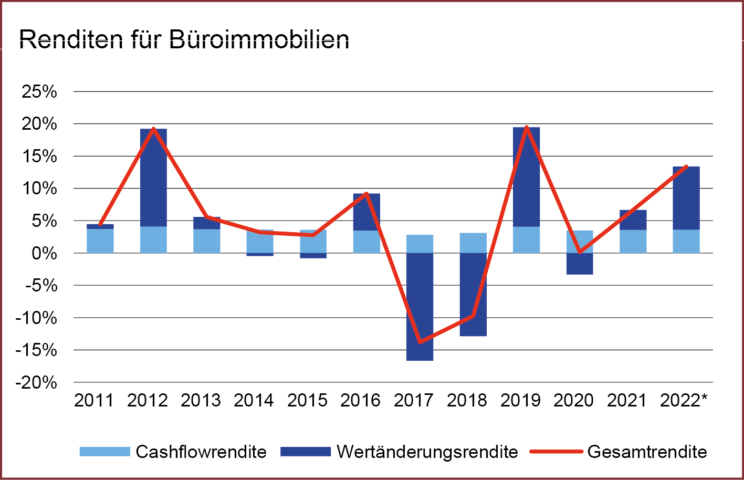
    In the area of commercial real estate, yields are not expected to rise in the near future, as interest rates could rise. There is a tendency for market values to fall, which could be cushioned by investors’ investment pressure.

  • Negative effects of the Ukraine war on the real estate industry in Switzerland

    Negative effects of the Ukraine war on the real estate industry in Switzerland

    The Ukraine war has global economic ramifications. How do you feel it in the local real estate market? PriceHubble investigated this question with a survey of real estate professionals from all areas of the real estate industry.

    55 percent of the real estate professionals who took part in the current study "Effects of the Ukraine War on the Real Estate Industry in Switzerland" believe that the Ukraine crisis could have a negative impact on their company over the next twelve months. 31 percent think there will be no impact. In contrast, 14 percent of respondents see a positive development for their business.

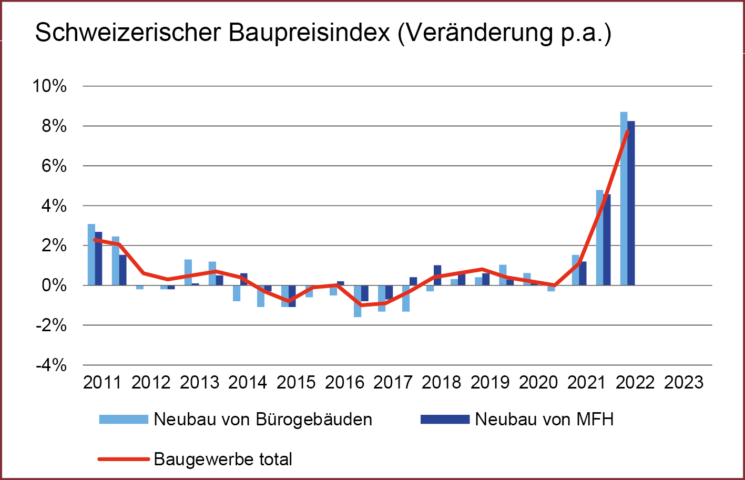
    According to those surveyed, the reasons for a change are the increase in construction costs, rising mortgage interest rates and a stagnating or declining buyer's market. As one real estate manager comments: «The increase in material costs and delivery times affects both the construction sites and the purchase prices. As a result, buyers will resort to existing goods and abandon construction projects.”

    In general, more real estate professionals (28 percent) see a decrease in the number of mandates over the next twelve months than an increase (17 percent). More than 55 percent of those surveyed do not expect any change in the number of mandates.

    50 percent of the respondents are of the opinion that projects will not be postponed because of the Ukraine war. 9 percent expect a postponement of up to 6 months, 12 percent a delay of 6 to 12 months, 26 percent of 12 to 18 months, 2 percent a postponement of the projects by 18 to 24 months and another 2 percent even by up to to 24 to 30 months.

    Development of luxury properties difficult to predict
    In the case of luxury real estate, 34 percent of those surveyed stated that they expected prices to rise. In contrast, 31 percent believe that a decline is to be expected. 35 percent are of the opinion that the prices in this segment will not change.

    In the comments column to this question, many of the respondents indicated that they expected a decrease in general interest in objects in this segment. Others are of the opinion that luxury real estate is crisis-resistant and that the strong demand will remain. Many are also convinced that the supply will remain stable.

    "Luxury real estate in Switzerland, especially in exclusive locations, will always tend to find buyers (both domestically and abroad) and it is therefore possible that the prices for them remain the same or may even rise," comments one broker.

    Price development of energy-efficient objects remains exciting
    When it comes to the question of whether a greater price change is to be expected when buying properties with a high energy efficiency class (A or A+), there is a tie: 50 percent say "yes" and 50 percent say "no".

    With regard to the demand for real estate with a high energy efficiency class since the beginning of the Ukraine crisis, 68 percent of the real estate experts surveyed stated that they had not noticed any change. "But it will come, people are slowly becoming sensitive to it," a real estate manager commented on this question. 32 percent of those surveyed believe that demand has already increased.

    Regarding rental prices for properties with a high energy efficiency class (A or A+): 69 percent of the participants stated that there will be no changes. In contrast, 31 percent expect a change.

    Further results, for example on the impact of rising mortgage interest rates, the development of rents or sales prices of residential properties can be found in the complete study.

  • The effects of the pandemic on industry and construction are weakening

    The effects of the pandemic on industry and construction are weakening

    According to a statement from the Federal Statistical Office ( FSO ), production in the secondary sector in Switzerland fell by 4.4 percent year-on-year in the third quarter of 2020. At the same time, sales by Swiss companies in industry and construction fell by 6.3 percent. The coronavirus pandemic is thus "continuing to leave its mark in the secondary sector," write the FSO analysts. Compared to the previous quarter, however, the declines were "only about half as large".

    In the industrial sector, production fell 5.1 percent year-on-year in the quarter under review. A weakening of the decline was observed over the three months. It was the strongest in July at 6.7 percent. In August production was 5.6 percent below the previous year's figure, in September the minus weakened to 3.8 percent.

    In the construction industry, production decreased by 0.4 percent in the third quarter of 2020 compared to the third quarter of 2019. A decline of 7.2 percent was recorded in building construction. In contrast, production in civil engineering and other construction trades increased by 4.6 and 2.9 percent at the same time.

    Sales in industry were 7.9 percent lower in the reporting quarter than in the same quarter of the previous year. Gradually weaker declines between 9.7 percent in July and 5.6 percent in September were observed in the individual three months.

    Sales in the construction industry fell 0.6 percent below the previous year's figure in the third quarter of 2020. Here the range ranged from a minus of 6.9 percent in building construction to a plus of 5.1 percent in civil engineering.