Tag: Basel

  • Swissbau 2026 creates new synergies

    Swissbau 2026 creates new synergies

    Collaboration has always been the defining theme of Swissbau: meeting in person, acting together, helping each other move forward. For the next edition in January 2026, the trade fair organizer is increasingly focusing on positive synergies. Joint development is not only practiced in the Swissbau Focus & Lab collaboration platforms, the exhibition areas of the trade fair have also moved closer together both spatially and thematically. This is particularly evident in the newly staged Hall 1.2, which provides an atmospheric stage for the entire interior design sector.

    Trend world interior design for design enthusiasts
    Newly positioned in Hall 1.2, the Swissbau public will encounter a world of bathroom innovations, trendy surfaces, atmospheric lighting and high-quality contract furnishings. The shared level for interior design offers space for discoveries and an in-depth exchange with renowned manufacturers and new brands. The highlight: the new Trend World in Hall 1.2 is also open on Saturday. Thanks to the Swissbau Focus with partner lounges, info points and events, the weekend visit leads directly to the Trend World via escalators.

    Experience the trade up close
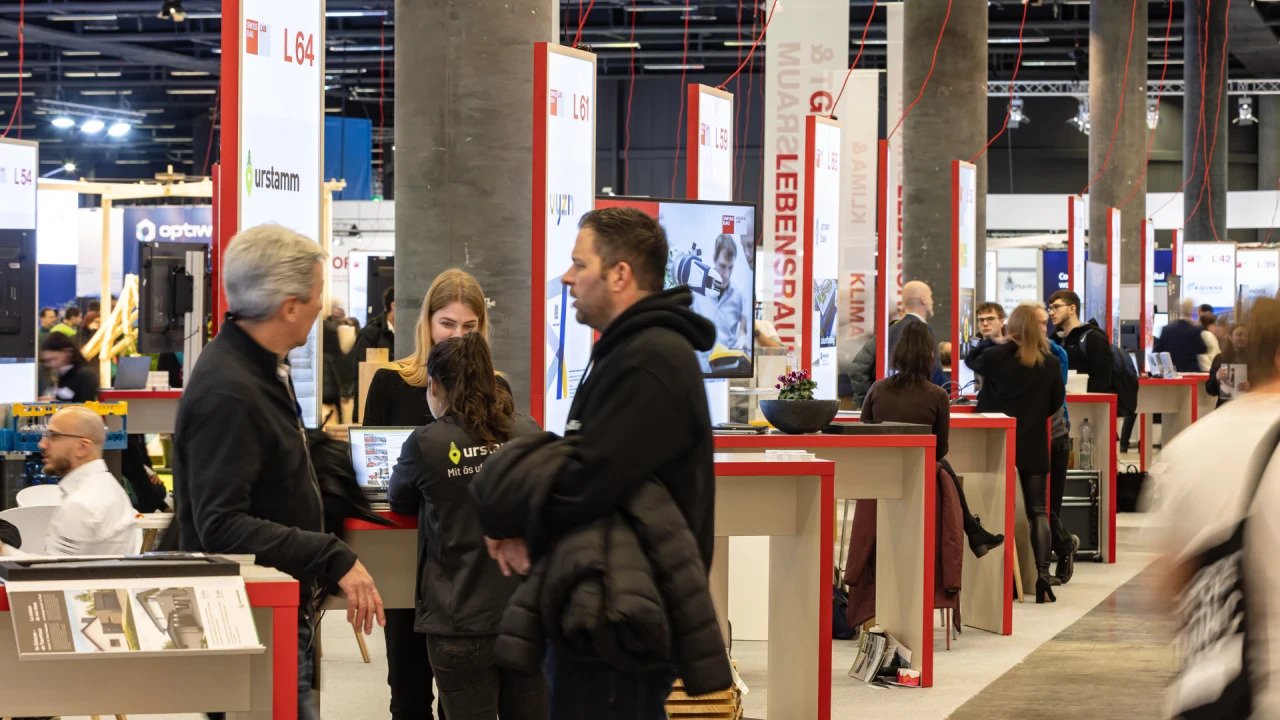
    Swissbau’s eye-catchers in Hall 1.0 on the first floor are undoubtedly two real construction projects that are being built and developed in parallel by various trade businesses. In a steel hall, metalworkers, electricians, gate and door builders demonstrate their skills. In the two-storey residential building, woodworkers, plasterers and tilers can be seen at work. Both buildings will be completed on the construction site after Swissbau. The “Treffpunkt Handwerk” has even more to offer: In addition to playful activity areas and a forum with practical topics, craft businesses and topic-specific exhibitors will be presenting themselves in the surrounding area. A spacious BauBeiz invites you to talk shop.

    Benefit from the exchange with experts
    Swissbau Focus in Hall 1.0 and Swissbau Lab in Hall 1.1 are the best examples of an interdisciplinary dialog on current challenges and future trends in the industry.
    Leading associations, institutions and universities will contribute their positions to the Swissbau Focus event platform. Trade visitors can discover and try out suitable products and market-ready solutions in the Swissbau Lab. Visitors will also benefit from an enlarged Swissbau Workshop, where they can scrutinize innovative applications in practice. Participation in the extensive program in the Swissbau Focus and Lab is included in the admission ticket. Event registrations are easy to complete on the Swissbau website and should not be missed in any trade fair preparation for an optimal gain in know-how.

    A colorful marketplace for plaster and paint
    A new-born cooperation with the Swiss Painting and Plastering Contractors’ Association SMGV offers insights into innovative techniques, high-quality materials and sustainable solutions in the creative sector in Hall 1.1. With its presence at the multi-industry trade fair, the association aims to position itself more strongly with architects, planners and other construction professionals. Highlights of the themed area include the “Swiss Prize for Plaster and Paint” exhibition and award ceremony on January 22 in the Swissbau Focus, live training sessions by two newly crowned Swiss champions for the WorldSkills in Shanghai, the “SMGV-Marktblitz Spezial” industry get-together on January 21 and 23 and a “Maler-Gipser-Stübli” for personal discussions. The SMGV training centers will present practical examples of their diverse industry sectors. In the painter-plasterer workshop, experienced craftsmen will show how facades are designed with decorative plaster structures.

    Valuable partnerships
    Before exhibitors and partners take command of the halls on Tuesday morning and unveil their innovations, Swissbau will be opened by Bauenschweiz, the umbrella organization of the Swiss construction industry. In discussions with people from politics and business, the core group of the finishing trade and building envelope, as the industry with the highest turnover, will focus on its importance, needs and further development at the opening ceremony. The continued relevance of Swissbau in 2026 is also demonstrated by renowned partnerships. The Swiss Society of Engineers and Architects (SIA), the Swiss brand LAUFEN and the new partner Abacus Business Solutions are making a major commitment and contributing their specialist expertise to the trade fair’s offering.

    Swissbau under new management
    Rudolf Pfander has been at the helm of Swissbau for 25 years and has successfully led it into the modern era. In order to take on new tasks for MCH Exhibitions & Events after the 2026 edition, he handed over the reins to his deputy Tobias Hofmeier in September. The 36-year-old from Lörrach has been in charge of Swissbau project management and the successful development of the Swissbau Focus and Lab collaboration platforms since 2020. Rudolf Pfander emphasizes: “Tobias is the perfect successor for Swissbau. He knows the needs of exhibitors, partners and visitors inside out and is also aware of the future development opportunities for the trade fair.”

    Swissbau 2026 – the leading platform for the construction and real estate industry in Switzerland

    Exhibition duration, opening hours
    20.- January 23/24, 2026
    Tuesday to Friday, 9 a.m. to 6 p.m
    Saturday additional day Interior Construction and Swissbau Focus, Hall 1.2 and Hall 1.0 South, 9 a.m. to 4 p.m

    Buy a ticket or redeem a voucher
    swissbau.ch/ticket

    Register for events
    swissbau.ch/events

    All information
    swissbau.ch

    Organizer
    MCH Exhibitions & Events GmbH, Swissbau, CH-4005 Basel

  • Switzerland Innovation Park Basel Area Main Campus

    Switzerland Innovation Park Basel Area Main Campus

    The site extends over 115,000 square meters, structured around a central park that acts as a social and creative heartbeat, promoting communication and creating encounters. The striking main buildings, Main Campus HQ, HORTUS, ALL, SCALE, HOPE, Swiss TPH, ALBA Haus, Innovation Garage, Holiday Inn Express and the parking garages, create a visionary structure. Each building is more than just space. HORTUS is a prime example of the circular economy and sustainable urban development, ALL combines flexible working and laboratory landscapes in a new architectural idea, SCALE and HOPE are aimed at growing biotech and medtech industries, while Swiss TPH and ALBA Haus combine expertise in public health and research.

    Sustainability and community
    The cluster offers more than just space. Radically sustainable construction, energy recovery from photovoltaics, green roof landscapes and a self-regenerating campus park set new standards for urban development. With coworking, intellectual exchange zones and gastronomy, innovations are created in everyday life. Up to 8,000 workplaces will be created on the site and supplemented with sports, educational and leisure facilities.

    The Botnar Institute of Immune Engineering
    In 2027, the Botnar Institute of Immune Engineering (BIIE) will move into a new building on the campus. Endowed with one billion dollars by the Fondation Botnar, BIIE will focus on international immune-based research and therapies, especially for children and adolescents. As an anchor tenant in the ALL building, the institute will attract up to 300 researchers, putting Basel on the global map for cutting-edge research. The decision in favor of Basel was made against major international applicants from the USA, England, Israel and Singapore and underlines the importance of the research cluster in the region.

    Innovation, networking and prospects
    More than 100 companies, universities and international teams from biotech, digital health and medtech are working here on the challenges of tomorrow. Accelerator programs such as BaseLaunch, open community platforms and physical proximity establish a dynamic workspace in which knowledge transfer is lived directly. One third of the usable space is reserved for start-ups and founders and the link between science and entrepreneurial practice is promoted.

    The Switzerland Innovation Park Basel Area Main Campus brings a new quality of collaboration, spatial concept and scientific excellence. Basel’s vision of becoming a model city for circular innovation and applied research can become a reality here, internationally visible and locally rooted.

  • How the Wolf site in Basel is becoming a residential neighbourhood

    How the Wolf site in Basel is becoming a residential neighbourhood

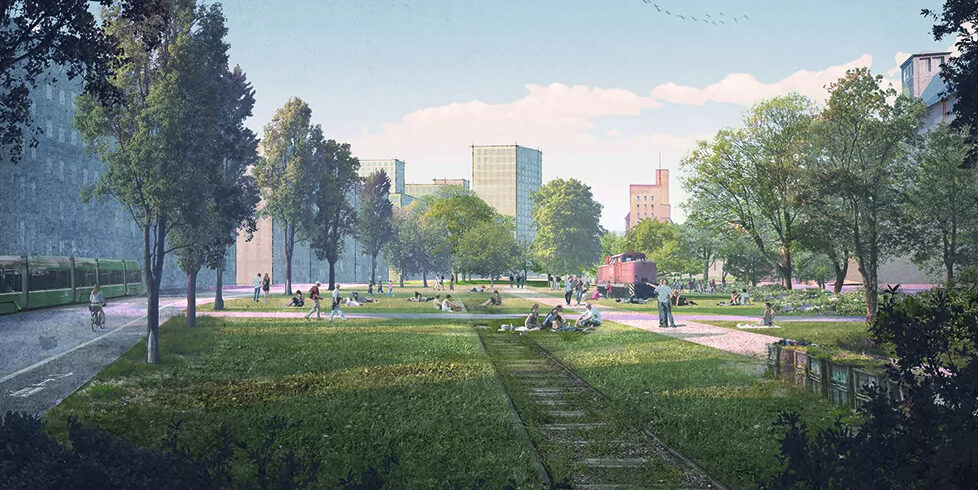
    The relocation of freight handling to the harbour area freed up a 16-hectare site near Basel SBB station. SBB has been pursuing the vision of a mixed neighbourhood here for years, combining living, working and leisure. The urban development plan is based on a design by Christ & Gantenbein and EM2N. The central element is a large courtyard that stretches from east to west, shields against noise and links public and private uses as a green boulevard.

    Two faces “Janusproject
    The Paris-based firm Experience, together with M-AP Architects from Lausanne, won the competition for the MF02 construction site. Their “Janus” project responds to the contrasts between the railway side and the inner courtyard with two architectural languages.

    A horizontal ribbon façade with striking concrete frames stretches towards the track side, conveying a powerful image to passing trains. Towards the courtyard, a finely structured façade with staggered balconies and greenish decorated surfaces appears.
    The construction method follows a hybrid approach of concrete skeleton and timber construction. The floor plans are compactly organised, with a clear separation between bedrooms, wet rooms and spacious living areas. Only the lack of privacy in the ground-floor flats was criticised.

    Noise protection as a design element “Binariaproject
    The “Binaria” project by Basel-based ARGE Parabase and Confirm won the competition for the MF03 construction site. It counters the street noise with a robust north façade made of reused trapezoidal sheet metal and protruding acoustic elements. In contrast, a transparent, green glass façade with balconies and plant troughs opens up to the courtyard side.
    The multi-storey passageway connecting the courtyard and the street is particularly striking. The circular ventilation grille made of sound-absorbing panels makes a strong architectural statement here. Inside, linear floor plans allow for flexible living concepts from 2.5 to 5.5-room flats. Sustainability is characterised by reused beams, recycled concrete and re-used wood.

    Pilot character with high standards
    Both winning projects pursue innovative approaches to noise protection, the flexibility of the flat layouts and the use of recycled materials. The roofs are used for photovoltaics and rainwater management, the façades are partially planted or fitted with integrated solar technology. Energy is generated from renewable sources, while shading and evaporation provide thermal insulation in summer. Special attention is paid to reversible construction. Constructions are to be screwed together instead of glued in order to facilitate subsequent reutilisation or material cycles.

    Milestones and prospects
    The new buildings in the west of the site will be realised in the first stage, with construction scheduled to begin in 2028. A second stage with a city logistics hub and additional uses will follow from 2031. Even before completion, SBB will open the site for interim use. The listed 2,000 m² railway hall will be used for sports activities, for example. The Wolf site will thus become a pilot project for urban housing construction that answers questions about noise protection, sustainability and socially mixed housing on a large scale. For Basel, this is not just an urban planning experiment, but a decisive step towards more affordable living space and a higher quality of urban life.

  • BeOne Medicines anchors itself in the Basel Area

    BeOne Medicines anchors itself in the Basel Area

    BeOne Medicines, formerly BeiGene, has officially relocated its headquarters to Switzerland. Already present in Basel since 2018, the global oncology company is now permanently anchored in the heart of one of Europe’s most innovative biotech hotspots. Basel not only boasts more than 30,000 highly qualified life sciences specialists, but also excellent conditions for regulatory cooperation and international networking.

    Strategic impetus for research and development
    BeOne pursues a vertically integrated innovation strategy that combines basic research, clinical development and production under one roof. The company has one of the most extensive oncology pipelines in the world. With more than 50 investigational compounds, including a BTK inhibitor already approved in 75 countries, BeOne addresses both hematological diseases and solid tumors. Development is based on future technologies such as multispecific antibodies and protein degradation products.

    Site selection as part of a global expansion strategy
    The Basel Area will thus become the European hub of BeOne’s clinical activities. As early as 2024, 13 new drug candidates were transferred to clinical trials. A peak value even compared to Big Pharma. More than 40 trials are currently underway in Europe, involving over 3,000 patients. BeOne employs more than 11,000 people worldwide on six continents, with a rapidly growing proportion in Switzerland.

    A gain for the location and for investors
    For Basel as a location, BeOne’s decision means a clear gain in international visibility, jobs and investment momentum. For investors and project developers in the life sciences, there are new opportunities along the entire value chain, from laboratory space to clinical study centers and production. The proximity to science, talent and regulatory authorities creates ideal conditions for further growth.

  • Swissbau Lab opens up new horizons

    Swissbau Lab opens up new horizons

    From January 20 to 23, 2026, Messe Basel will be the meeting place for the Swiss construction and real estate industry. The Swissbau Lab in Hall 1.1, a space for ideas, innovations and new partnerships, will take center stage. Topics such as the circular economy, digital planning opportunities, changing construction processes and climate protection will shape the discussions. The start of the program design on 6 May 2025 marks the beginning of an intensive phase of concept development to which companies, associations and institutions are invited.

    Workshop as a springboard for innovation
    The kick-off workshop on May 6, 2025 in Zurich marks the beginning. Both confirmed and interested companies will receive all the information they need about the concept and opportunities to participate in Swissbau Lab. Those responsible for the trade fair will coordinate the subsequent program development. First in plenary sessions, then in specific thematic groups. Short-term registrations for the workshop are possible until May 2, 2025.

    Networking as the key to progress
    Whether you are a start-up or an established company, the decisive factor is the motivation to actively shape the future of the construction industry. The Swissbau Lab is a dynamic innovation network supported by the Swiss Society of Engineers and Architects SIA as a leading partner. The platform promotes open exchange and focuses on cooperation rather than individual competition.

    Markus Weber, President of Bauen digital Schweiz and Co-Head of the Digital Construction course at Lucerne University of Applied Sciences and Arts, underlines the importance: “For us, Swissbau is a unique opportunity to focus on the principle of ‘together instead of every man for himself’. Setting impulses together for a networked, digital and sustainable construction and real estate industry.”

  • Preparations begin for harbour railway relocation in Basel

    Preparations begin for harbour railway relocation in Basel

    The city of Basel is planning a large-scale transformation of the Klybeck and Westquai areas. Living and working space for around 8,000 people is to be created there, complemented by green and open spaces. In order to better connect the neighbourhoods to the Rhine and the meadow, the existing harbour railway will have to be removed.

    The Grand Council approved a loan of CHF 36 million for this in June 2024. These funds will be used to relocate the harbour railway and other infrastructure facilities, including the customs metering station of Gasverbund Mittelland AG (GVM).

    Replacement construction of the customs metering station as the first step
    The first step will be to relocate the customs metering station, which feeds the regional gas network, to a new site in the Lange Erlen near Freiburgerstrasse. Construction work will begin in March 2025 and should be completed by the end of 2026. As the construction of a high-pressure gas pipeline in a residential area is not permitted, this location was chosen as the only solution that could be authorised.

    Special protective measures apply to the existing trees and the water protection zones. Any necessary tree felling will be compensated for by reforestation and replacement areas.

    Construction site coordination to minimise disruption
    Other major projects are being carried out in the surrounding area in parallel with the construction of the new customs measuring station. Deutsche Bahn is building a new Wiesenbrücke bridge, while the Basel-Stadt civil engineering office is working with IWB to renovate Freiburgerstrasse. All the work is being closely coordinated in order to clearly signal diversions for traffic and minimise disruption.

    With these measures, Basel-Stadt is taking an important step towards sustainable urban development and creating the basis for new, liveable neighbourhoods on the waterfront.

  • Foundation stone laid for new research institute in Allschwil

    Foundation stone laid for new research institute in Allschwil

    The foundation stone has been laid for the construction of the ALL laboratory building on the Main Campus of the Switzerland Innovation Park Basel Area in Allschwil, which is operated by Basel Area Business & Innovation. According to a press release, the building should be ready for occupancy in 2027. The anchor tenant is the independent and non-profit international Botnar Institute for Immune Engineering(BIIE), which opened in June 2024. It is dedicated to research into the immune system of young people and will be endowed with 1 billion dollars over 15 years by the Basel-based Botnar Foundation. This is one of the highest amounts ever donated by a Swiss charitable foundation.

    “We were looking for a location for our institute that fully meets the high standards of the world’s best researchers in immune engineering,” says BIIE CEO Stephen Wilson. “The Main Campus of the Switzerland Innovation Park Basel Area is located in one of the best life sciences ecosystems in Europe and has proven to be the best global location for us.”

    Following the Main Campus HQ and Hortus buildings, the new ALL building is the third collaboration between investor and real estate developer Senn and Basel architects Herzog & de Meuron on the Main Campus. It will offer 20,500 square meters of space and comply with the Platinum Standard for Sustainable Building Switzerland(SNBS).

    The BIIE on the Main Campus will further strengthen Basel as a research location, emphasizes the President of the Switzerland Innovation Park Basel Area, Domenico Scala. “The exchange of knowledge on the Main Campus is the focus of our work, and having the BIIE on board is a great benefit.”

  • Roche opens new centre for pharmaceutical research

    Roche opens new centre for pharmaceutical research

    A significant milestone has been reached at Roche’s headquarters in Basel. The inauguration of the new Pharma Research and Early Development Centre (pRED). The centre, which offers 1,800 state-of-the-art workstations for laboratory and office work, brings together experts from various fields of research. The aim is to increase the efficiency of research and development through close collaboration. Federal Councillor Guy Parmelin also attended the opening ceremony, which emphasises the national importance of this project.

    With the new pRED Centre, Roche is pursuing a clear vision of pooling expertise from areas such as chemistry, biology and data science in order to drive forward pioneering innovations. Thomas Schinecker, CEO of the Roche Group, emphasised the central role of the centre in the company’s global innovation network. “This centre will not only improve the efficiency of our research, but also help us to achieve the greatest possible benefit for patients worldwide.”

    Investing billions in the future
    The investment in the pRED Centre is part of Roche’s long-term commitment to the Basel site. Since 2009, the company has invested 4.6 billion Swiss francs in the expansion of the site. With the new four buildings – including two high-rise laboratory buildings, an office complex and a congress centre – Roche is sending another strong signal for the future.

    And this is just the beginning: a further 1.2 billion Swiss francs are being invested in modernising and expanding the site, which will strengthen Basel’s role as a global centre for pharmaceutical research and development in the long term.

    With the opening of the new pRED Centre, Roche is not only investing in its own innovative strength, but also in strengthening Basel as a business location. This billion-euro investment is a clear signal that the pharmaceutical company intends to further expand its leading role in global research and development – a significant step both for the industry and for the region.

  • Energy supplier invests in climate-friendly switchgear and earthquake safety

    Energy supplier invests in climate-friendly switchgear and earthquake safety

    According to a press release, the Basel-based energy supplier IWB is strengthening the most important hub of the Basel electricity grid in the Volta substation. One of the largest switchgears in a Swiss distribution grid is being replaced there, the press release continues. IWB will replace all electrical systems in the Volta substation by 2029 and also make the building earthquake-proof. The new switchgear will be operated with a climate-friendly insulating gas and the power grid will be reinforced with additional transformers. By investing in the renovation of the building and systems, IWB is making an important contribution to the high reliability of Basel’s electricity supply, the statement continues.

    The Volta substation is the largest of IWB’s seven substations and is almost 100 years old. It was put into operation in 1932. Around a fifth of Basel’s electricity flows through the substation every day, an average of 600,000 kilowatt hours.

    A new switchgear is currently being installed. It is replacing the switchgear for the 145-kilovolt grid, which dates back to 1976. It will consist of eleven switch panels and will be 16 metres long when completed. IWB will then also replace the switchgear for the 12-kilovolt grid. It will consist of 78 switch panels and be around 60 metres long. According to IWB, these will be the largest switchgears ever installed in a Swiss supply network. Both switchgears will also be equipped with climate-friendly insulating gas.

    There are three transformers in the Volta substation that will be overhauled as part of the project. IWB will also install two additional transformers. The overall renovation of the substation will take place during ongoing operations.

  • Basler Baubranche in der Krise – Appell an die Regierung

    Basler Baubranche in der Krise – Appell an die Regierung

    Die Basler Baubranche, vertreten durch Oscar Elias, CEO der Stamm Bau AG, richtet einen dringenden Appell an die Regierung, um auf die wachsenden Herausforderungen im Wohnungsbau aufmerksam zu machen. In einem persönlichen Schreiben an Regierungsrat Kaspar Sutter verdeutlicht Elias die Sorgen der Branche, die durch das neue Wohnschutzgesetz und einen deutlichen Rückgang von Sanierungs- und Umbauprojekten stark betroffen ist.

    Die Stamm Bau AG, die 2023 ihr 180-jähriges Bestehen feiert, hat ihren Sitz in Arlesheim, erhält jedoch die Mehrheit ihrer Aufträge aus Basel. Elias betont, dass insbesondere Sanierungsprojekte, die für zwei Drittel des Umsatzes der Firma verantwortlich sind, durch das Wohnschutzgesetz komplett zum Stillstand gekommen seien. Dies führt zu einer signifikanten Planungsunsicherheit, wodurch Projekte unberechenbar und risikoreich werden.

    Der Brief beleuchtet die Notwendigkeit eines Handlungsbedarfs, da die Baubranche bereits die negativen Auswirkungen des Gesetzes auf die Wirtschaft und den Arbeitsmarkt spürt. Elias äußert seine Bedenken, dass die momentane Situation die Bausubstanz der Stadt und den Wohnungsmarkt gefährdet. Er fordert von der Regierung eine Lockerung der Regularien für Wohnen und Bauen, eine Einschränkung der Einsprachemöglichkeiten sowie Anreize für mehr Sanierungen und die Schaffung von neuem Wohnraum.

    Die Reaktion des Mieterverbands und des Kantons deutet darauf hin, dass eine Anpassung der Praxis und eine aktivere Information über das Wohnschutzgesetz notwendig sind, um die Investitionsbereitschaft der Eigentümer wiederherzustellen. Der Kanton Basel-Stadt ist aktuell mit der Evaluation der Auswirkungen des Wohnschutzes beschäftigt, und Regierungsrat Sutter signalisiert in seiner Antwort an Elias die Bereitschaft, bei Bedarf Korrekturen vorzunehmen.

    Für Elias und die Basler Baubranche ist jedoch klar: Es besteht dringender Handlungsbedarf, um die Herausforderungen im Wohnungsbau zu meistern und die Planungssicherheit für Eigentümer und Investoren wiederherzustellen.

  • Ein erfolgreicher Treffpunkt der Baubranche

    Ein erfolgreicher Treffpunkt der Baubranche

    Die Swissbau 2024 zog in diesem Jahr mit ihrer beeindruckenden 85’000 m² großen Ausstellungsfläche 52’486 Besucherinnen und Besucher an. Die Messe bot eine einzigartige Gelegenheit für Fachleute aus der Bau- und Immobilienbranche, sich über aktuelle Innovationen und Trends zu informieren und wertvolle Kontakte zu knüpfen. Im Fokus der Veranstaltung stand der Wissenstransfer, angereichert durch Diskussionen und praktische Demonstrationen auf den Plattformen Swissbau Focus und Lab.

    Die Messe, die traditionell alle zwei Jahre stattfindet, war in diesem Jahr von einer besonderen Dynamik geprägt. Im Zentrum stand der persönliche Austausch, der angesichts der zunehmenden Digitalisierung und der Beliebtheit von Videokonferenzen eine neue Qualität erlangte. Unter dem Motto “Den Wandel gemeinsam gestalten” bot die Swissbau vielfältige Plattformen für Produkterlebnisse, Informationsaustausch und Networking.

    Erstmals entschieden sich die Veranstalter, die Messe auf vier Tage zu verkürzen und den wenig geschätzten Samstag aus dem Programm zu nehmen. Dieser Schritt wurde von Ausstellern und Besuchern positiv aufgenommen, da die Qualität der Gespräche und die Bereitschaft zur Auftragsvergabe gesteigert wurden. Die Messe zog Expertinnen und Experten aus verschiedenen Fachbereichen wie Architektur, Planungswesen, Immobilien und Handwerk an.

    Rudolf Pfander, Messeleiter der Swissbau, unterstrich die Bedeutung der Messe als Plattform für neue Angebote und die Entwicklung innovativer Konzepte. Die diesjährige Messe beinhaltete neu geschaffene Marktplätze für Begegnungen und die Designbühne Swissbau Inside, die das Fachpublikum und private Bauinteressierte gleichermaßen begeisterten.

    Die Leitthemen der Swissbau, wie Kreislaufwirtschaft, Energie, Digitalisierung und Lebensraum, spiegelten die aktuellen Herausforderungen der Branche wider. Die Kollaborations-Plattformen Swissbau Focus und Lab boten in intensiver Vorarbeit ein hochkarätiges Programm, das diese Themen adressierte.

    Namhafte Partnerschaften mit Organisationen wie dem SIA, Schweizerischer Ingenieur- und Architektenverein sowie Bauen digital Schweiz / buildingSMART Switzerland zeigten die anhaltende Relevanz der Swissbau. Ebenso zufrieden zeigten sich die Themenpartner Hörmann, Laufen und Siemens mit dem Messeverlauf.

    Die nächste Swissbau wird vom 20. bis 23. Januar 2026 stattfinden. Bis dahin bleibt die Swissbau-Website eine wichtige Informationsquelle für die Branche, mit Fachwissen, Standpunkten und Neuheiten aus der Bau- und Immobilienwelt.

  • Steiner converts and expands Basel’s ex-UBS building

    Steiner converts and expands Basel’s ex-UBS building

    The former UBS building at Aeschenplatz 6 in Basel will be further developed into a “versatile urban building block”. Steiner AG announced this in a message on LinkedIn. Through conversions and extensions, it will in future offer attractive space for living, working and relaxing for people of all ages and population groups.

    “Located in the pulsating heart of Basel, at the entrance to the city centre, within walking distance of the railway station and close to the St. Alban and Gellert quarters, this site represents an exciting challenge for us,” says the Zurich-based real estate service provider, which also has a location at this very Basel address.

    According to the information provided, the project focuses on the efficient and careful use of resources. The planned preservation of the existing building will make a significant contribution to optimising the ecological footprint. The added new construction is intended to exploit previously unused potential and provide attractive, new living space.

    During the development process, Steiner will provide continuous online updates on the project. Construction is scheduled to begin in 2028, with completion planned for 2030.

  • Roche opens tallest building in Switzerland

    Roche opens tallest building in Switzerland

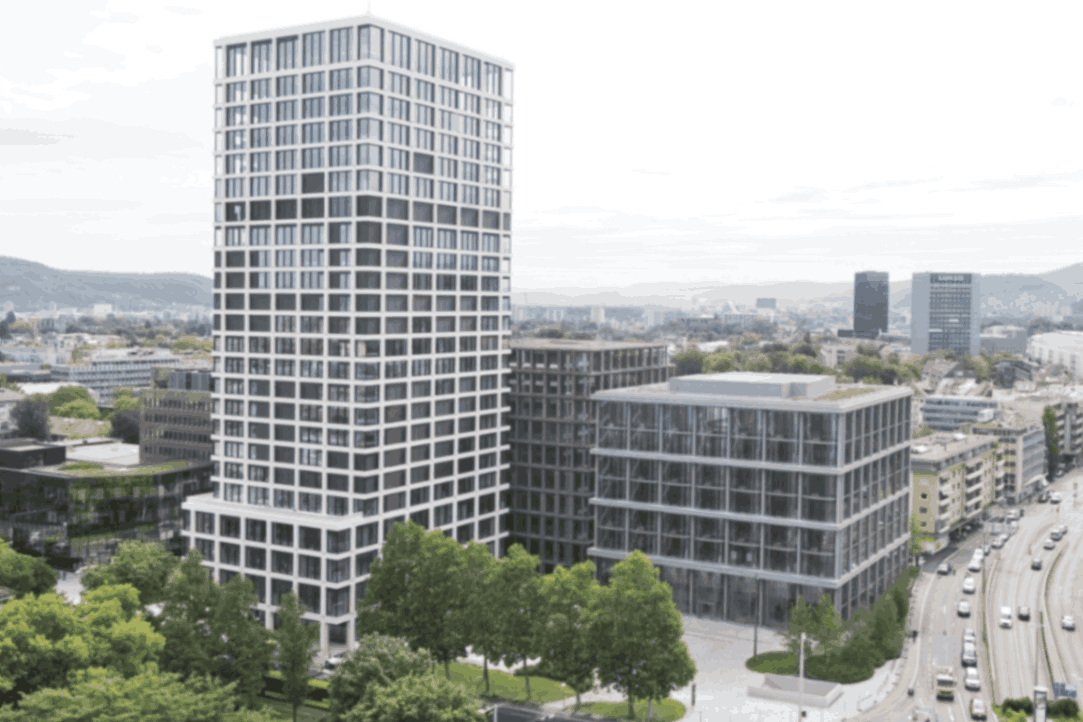
    Roche has opened a new office building with 3,200 jobs at its headquarters in Basel. At 205 meters, Building 2 is currently the tallest building in Switzerland. The new building has 50 floors.

    With the construction, the pharmaceutical company is once again committed to its headquarters in Basel. "Building 2 is another visible commitment by Roche to the Basel site, where Roche was founded over 125 years ago," CEO Severin Schwan is quoted as saying in the statement. "It is another milestone in our site development, which creates a highly attractive, modern location for our headquarters."

    Roche has invested 550 million Swiss francs in Building 2. Employees who were previously housed in various buildings across Basel are to come together at the new location. The building allows modern forms of collaboration, from teamwork to concentrated forms of work to a combination of distance and office work.

    According to the announcement, the building is "one of the world's most sustainable office towers". It is heated with waste heat from the area and cooled with groundwater. It also has an energy-efficient facade with 50 percent glass and provides a bicycle cellar with 400 parking spaces.

    Another building is expected to open on the site in autumn 2024: Roche is currently building a new research and development center for 1.2 billion Swiss francs.

  • Lonza is expanding in Basel

    Lonza is expanding in Basel

    Lonza AG is expanding its operational headquarters in Basel, which has been located on the Lindenhof site since 1962, the cantonal administration of Basel-Stadt informs in a press release . Two more high-rise buildings are to be built in the vicinity of the existing Lonza high-rise building, which is under a preservation order. In addition to commercial and service areas that are required by Lonza, apartments "for different needs" are also planned, according to the statement.

    The extension buildings are intended to “develop the area into a green, mixed-use and publicly accessible district component of the St. Alban district,” writes the canton administration. The edge of the park is to be preserved and planted with more trees. Grounds previously sealed by parking lots and tennis courts will be "upgraded and greened in terms of biodiversity and climate compatibility".

    The plan requirement for the necessary change to a development plan from 1991 that was never implemented can be viewed at the cantonal building and transport department until September 30th. On September 6, Lonza also wants to provide information about the project itself from 6 p.m. in the Hotel Victoria.

  • Steiner enters into partnership with House of Lab Science

    Steiner enters into partnership with House of Lab Science

    «Wir freuen uns sehr über die Partnerschaft mit Steiner, um unser bestehendes Flächenangebot für Life Sciences–Firmen um weitere Standorte erweitern zu können. Mit dem Standbein in Basel leisten wir einen Beitrag zu einem der beiden wichtigsten Life Science-Clustern der Schweiz, wodurch wir von bedeutenden Synergieeffekten dieser Ökosysteme profitieren. In Winterthur hingegen demonstrieren wir unsere Kernkompetenz, ein neues Zentrum auch bei vergleichsweise geringen Netzwerkeffekten erfolgreich aufbauen zu können», so Dr. Christian Hugo Hoffmann, CEO von House of Lab Science. 

    Bei der Entwicklung von Immobilienprojekten berücksichtigt Steiner stets gesellschaftliche Trends und antwortet mit innovativen Lösungen auf die Herausforderungen der Zukunft. Im Büro- und Gewerbebereich hat das Unternehmen bereits vor längerer Zeit das nachhaltige und mehrdimensionale Konzept «Manufakt» entwickelt, das nebst modular nutzbaren Räumlichkeiten ein Angebot an geteilten und nach Bedarf benötigten Flächen bietet. Das erste Manufakt-Gebäude konnte im Sommer 2021 nach knapp anderthalbjähriger Bauzeit feierlich eröffnet werden. 

    Steiner und das House of Lab Science verfügen zusammen über das notwendige Know-how, um mit innovativen Gebäudekonzepten auf den wachsenden Flächenbedarf im Bereich Life Sciences, einer Schlüsselindustrie der Schweiz, zu antworten. Während das House of Lab Science unter anderem seine innovative Community-Plattform sowie die exzellenten Kontakte in die Branche und Startup-Welt beisteuert, liefert die Steiner AG das erforderliche Know-How in der Immobilienentwicklung und die dazugehörigen Ressourcen. 

  • Hälg buys Etavis

    Hälg buys Etavis

    According to a press release , Hälg Facility Management AG , based in the St.GallenBodenseeArea, has bought Zurich-based Etavis Facility Services AG . With the takeover, Hälg intends to expand in the Facility Management division in the Zurich region.

    According to the press release, Etavis Facility Services has a strong customer service culture and many years of industry experience in the maintenance and repair of building technology systems. The specialist for building management becomes part of the Hälg branch in Zurich. The workforce will be fully taken over. “With the integration of the team in Zurich, we are gaining the expertise and network of the employees,” says Markus Haldimann, Managing Director of Hälg Facility Management AG. “We are thus further strengthening our facility management services.”

    The company merger leads to a change of name: Etavis Facility Services gives up the company name. Both companies will be called Hälg Facility Management AG in the future.

  • Steiner and House of Lab Science are planning new innovation parks

    Steiner and House of Lab Science are planning new innovation parks

    Steiner is collaborating with the young company House of Lab Science , which specializes in offering and operating innovation parks for life sciences companies. As a first step, the two partners have planned the establishment of two new innovation parks in Basel and Winterthur. Steiner AG contributes its expertise in real estate development and its corresponding resources. House of Lab Science contributes its community platform and its contacts in the life sciences industry and start-up scene.

    “With the base in Basel, we are making a contribution to one of the two most important life science clusters in Switzerland, which means that we benefit from significant synergy effects of these ecosystems,” Christian Hugo Hoffmann, CEO of House of Lab Science, is quoted in the press release. “In Winterthur, on the other hand, we are demonstrating our core competence of being able to successfully set up a new center even with comparatively few network effects.”

    The Manufakt concept developed by Steiner is to be used in the construction of the innovation park. These are modular rooms with which areas can be divided as required. The first manufactory building was opened last summer after almost a year and a half of construction, explains Steiner in the press release.

  • Ten years of cross-border urban development at the border triangle of Basel

    Ten years of cross-border urban development at the border triangle of Basel

    The “3Land”, the area around the border triangle, which for decades was characterized by industrial and port facilities, is in transition and will change in the coming years. There is space for something new. Large, closed and mono-functional areas are to be opened up and reused. New lines for public transport, accessible and continuous banks of the Rhine and networked green and open spaces create a cross-border district.

    The cooperation between the neighboring cities of Basel, Weil am Rhein and Huningue, which has lasted for more than ten years, is already showing visible results: A continuous Rhine bank path was created between Huningue and Basel, which is equally popular as a commuter route and as a promenade in leisure time. With the expansion of the Rheinpark in Weil am Rhein and the redesigned shore areas in Huningue, new open spaces were created directly on the water on both sides of the three-country bridge. They offer a wide range of games, sports and recreation and will be expanded in future construction stages. This is how the 3Land idea creates a tangible benefit for the population.

    On behalf of the eight partners involved, the Basel government councilor Esther Keller, the mayor of Huningue and president of Saint-Louis Agglomération, Jean-Marc Deichtmann, and the mayor of Weil am Rhein, Wolfgang Dietz, signed a trinational planning agreement today at the border triangle the next steps and a joint budget until the end of 2025. The main topics are mobility, open space and nature conservation, spatial planning and urban development.

    A new Rhine bridge is central to growing together and mobility in 3Land. Designed for tram, foot and bicycle traffic, it connects the banks of the Rhine between Huningue and Basel at the height of the Wiese estuary. A recent cost-benefit analysis confirms that the Rhine bridge will bring major economic benefits to all three countries involved. It enables a trinational quarter by connecting countries, bringing people together and creating a high quality of life through sustainable transport connections. The project partners have therefore decided to continue the ambitious project and to create the planning, legal and financial basis for the project in the next steps. The course for this is set in the joint planning agreement.

    The new 3Land tour offers an interesting insight for cyclists and pedestrians. The 13-kilometer route leads through the project area and makes the stories and special features of the quarters come alive at ten stations. Informative texts, images and videos are available at the individual stations and on the 3Land project website. The GPS data can be loaded onto a smartphone using the well-known “Outdooractive” app.

    For the continuation of planning for trinational urban development in 3Land, the government council is requesting that the Great Council spend a total of CHF 1,106,000. The 3Land planning agreement signed today by the head of the construction and transport department is subject to the approval of the expenditure by the Grand Council.

    The “Coordination Cell 3Land” is funded by the European Regional Development Fund (ERDF) as part of the Interreg V Upper Rhine program of the European Union, the canton of Basel-Stadt and the Swiss Confederation, as well as the city of Weil am Rhein, the district of Lörrach, the city of Huningue , Saint-Louis Agglomération and the Collectivité européenne d’Alsace. The city of Saint-Louis is an associated partner. The project sponsor is the Trinational Eurodistrict Basel.

  • Basel Area reaches new milestone with settlement of LifeMine

    Basel Area reaches new milestone with settlement of LifeMine

    Basel Area Business & Innovation , the agency for location promotion and innovation promotion, has reached a new milestone. With LifeMine Therapeutics , the 200th company has now been supported in settling in the Basel area. The biotechnology company has its headquarters in Cambridge in the US state of Massachusetts and is now establishing its European headquarters in the Basel Area, which consists of the three cantons of Basel-Stadt, Basel-Landschaft and Jura.

    “Having LifeMine Therapeutics as our 200th customer is very exciting for our team and the region,” said Christof Klöpper, CEO of Basel Area Business & Innovation. “The fact that LifeMine Therapeutics comes from the Boston Area – one of the world’s largest life sciences centers – underscores the opportunities that the Basel Area offers international biotech companies.”

    LifeMine develops drugs based on genetically encoded small molecules and will now also drive this work from Basel. “We are very pleased to be able to expand our activities to Basel and settle in a region full of innovative companies,” says co-founder and Chief Operating Officer (COO) WeiQing Zhou. “Basel Area Business & Innovation gave us fantastic support and made the process as smooth as we could have wished for.”

    Of the 200 companies supported by Basel Area since 2016, 164 are not from Switzerland. A total of 122 work in the life sciences. In the meantime, however, more and more companies from the production and process technology sectors are deciding to settle in the Basel area.

  • Werkarena Basel: NOMEN EST OMEN

    Werkarena Basel: NOMEN EST OMEN

    [smartslider3 slider=”10″]

    In spring 2022, the commercial area on Neudorfstrasse in Basel’s St. Johann district came to life with the first companies moving in. Before that, in November 2021, a public kick-off event took place in the premises, which were still in the basic construction at the time: around 60 representatives from politics and business took part in the event and were enthusiastic. However, it took a while for that to happen. After the government council granted the building permit in 2013, the architecture team led by Markus Kägi and Thomas Schnabel won the 2014 competition put out by the municipality. The municipal trade association was involved as a partner in the processes right from the start, and the relevant companies were supposed to appear together as investors. But this plan didn’t work out. Invited project developers were able to present their ideas. Steiner AG prevailed against well-known competitors. Construction work on the factory arena began in 2019, and the shell was completed in March 2021.

    An appeal to the future
    The triangular, 4316 square meter lot of the business park is located in the north of Basel and directly on the French-Swiss border with St. Louis. The Rhine flows further to the east. The port of St. Johann existed there until 2009, which was then transformed into a waterfront promenade. It showed that industry has a long tradition in the district of the same name. Today, however, ship traffic no longer dominates and the newly settled sectors are more colourful: in the immediate vicinity of Neudorfstrasse there is sometimes the gambling industry or a hotel, but also the premises of a meat and poultry producer or the customs office. The location is ideal for high-emission traders. They have increasingly left the city in recent years because their noisy productions were no longer tolerated in many places. Now they are benefiting again, also in other areas: In addition to the connections to Basel-Mulhouse-Freiburg Airport and the St. Johann through station, the motorway makes trinational long-distance traffic possible. Finally, a fast connection to Basel city center is guaranteed from the Werkarena by car, bus and soon also by tram. The building has a total of 244 parking spaces for employees and visitors.

    Architecture with silent references
    The architectural appearance of the Werkarena is reminiscent of Erich Mendelsohn’s (1887–1953) department store Schocken in Chemnitz, which was completed in 1930. This example of new building caused a sensation at the time as a kind of horizontally layered composition with careful materialization. The structure of the façade of the Werkarena is only broken up towards Neudorfstrasse on the first three floors. The ground floor and first floor have 10 meter wide galleries that can be driven on. These floors are particularly suitable for commercial companies with a large logistics or production share. The connection to the outside space, i.e. to the street, is provided here intelligently and across floors by the element of the ramp. With a room height of 3.47 to 4.37 meters, they stand out visually from the other four floors, which are 2.95 and 3 meters high. At the same time, they give the building volume a visually refreshing depth. There, the pillars, which are arranged at regular intervals, also set a vertical counterpoint to the horizontal rows of windows from the third floor upwards.

    No marketplace of vanities
    With a usable area of 19,300 square meters, the business park is intended to appeal to small and medium-sized companies. Various tenants are already on board and will move into the complex with their offices after completion. They should benefit from each other through the direct proximity and thus also from the vision of the Werkarena – the focus is on a so-called ecosystem, i.e. close (technical) cooperation between the various companies, the use of synergies and a transfer of know-how. Nathalia Szydlowski, Managing Director of Tandemworks GmbH, was enthusiastic at the kick-off event in November 2021: Her company started as a start-up and has now established itself in the construction industry. This rise also has something to do with co-working spaces, because the existing infrastructure and all the accompanying programs have always allowed her to concentrate on her core business. Now Nathalia Szydlowski wants to continue her success story in the Werkarena – this also offers services such as telephone and postal services and various shared facilities, such as office, meeting and conference rooms or catering areas that can be used collectively. Stefan Gabriel, who heads the development team at Steiner AG in Basel, adds: “Right from the start, our concept was aimed at developing a flexible and site-specific product for the highly competitive Basel commercial and office market.”

  • Swiss Prime Site Immobilien reports success in the first half of the year

    Swiss Prime Site Immobilien reports success in the first half of the year

    In the first half of 2022, Swiss Prime Site Immobilien doubled its lettings compared to the same period of the previous year. According to a press release from the Zurich-based company, 90,000 square meters have been newly let or re-let across the entire portfolio and across all regions. In the first half of 2021 it was 47,000 square meters.

    Swiss Prime Site Immobilien AG, which belongs to the Swiss Prime Site Group based in Zug, attributes this success to the good market conditions and the associated demand for commercial space. Despite the global economic slowdown, the signals for development in Switzerland remain mostly positive, according to the statement. In the service sector, for example, 105,000 new jobs were created in the past twelve months, an increase of 2.6 percent. The 114,000 vacancies also testified to a robust Swiss labor market.

    The real estate company noticed a particularly positive development in Basel, Zurich and Geneva. According to Swiss Prime Site, the two development projects currently under construction, JED in Schlieren and Stücki Park in Basel, are also enjoying brisk demand. Pre-letting rates of around 90 percent are expected there by the end of the year.

    “With the strong performance of re-lettings and new leases within our portfolio and the still intact economic prospects, we are also optimistic about the low vacancy rate and positive rental income development at the end of the year,” says Martin Kaleja, CEO of Swiss Prime Site Immobilien.

    Swiss Prime Site announces that it will publish the detailed half-year results for 2022 on Thursday, August 25.

  • Zurich remains at the top of the Swiss city ranking

    Zurich remains at the top of the Swiss city ranking

    The magazine “ Bilanz ” has published this year’s ranking of the quality of life in Swiss cities. Zurich took first place again and, according to the report , has been the undisputed leader for eleven years. The cities of Zug and Bern took second and third place, followed by Winterthur, Basel and Geneva.

    The city ranking was created by the real estate experts from Wüest Partner for the business magazine “Bilanz” based on several indicators for the quality of life in cities, for example in the areas of the job market, education, leisure and shopping. A total of 162 cities were rated in this way.

    According to the article by “Bilanz”, it hardly seems possible for other cities to break into the absolute top group. In the top 10, only the canton’s capital, Aarau, lost two places and fell from 6th to 8th place. When asked whether other cities even had a chance of making it into the top group, Patrick Schnorf from Wüest Partner was quoted as saying: “It’s impossible It doesn’t.” For example, St.Gallen, which currently ranks 11th, has a chance if the city could increase its educational and cultural offerings as well as its population growth.

    According to Schnorf, Bassersdorf ZH is a counter-example, which has slipped back eleven places. “Compared to other cities, Bassersdorf has not developed as quickly, for example in terms of education and culture,” Schnorf is quoted as saying. According to the ranking, the two economic regions of Zurich and Lake Geneva are the most liveable.

    Since there are only four cities in the top 30 from western Switzerland and Lugano, one in Ticino, it must be said that the overall quality of life in German-speaking Switzerland is higher.

  • iCITY is intended to strengthen the Allschwil life sciences location

    iCITY is intended to strengthen the Allschwil life sciences location

    The life sciences location around Basel is to be further strengthened with a new office concept. Behind it is iCITY , an initiative and an ecosystem that wants to network start-ups, investors and researchers. This is to take place in the Alba House , which will be completed by the architects Herzog & de Meuron by 2023.

    The Alba House is being built on the BaseLink campus in Allschwil. The Swiss Innovation Park Basel Area , the Swiss Tropical and Public Health Institute and the Innovation Office of the University of Basel are also located on the site. The house will offer flexible workplaces on a total area of almost 15,000 square meters. According to a press release, it is based on a compact design, circular economy, geothermal energy and photovoltaics.

    iCITY also operates a location for companies from the life sciences and biotech sectors in Reinach BL. There it offers, among other things, special laboratory and workspaces on an area of 10,000 square meters.

    iCITY has its roots in the Dutch family company Vebego . This has also implemented a similar concept for high-tech players in Eindhoven.

  • Swiss and German debt collection industry exchange ideas

    Swiss and German debt collection industry exchange ideas

    Both associations have developed codes of conduct in recent years that define rules for fair debt collection. The Code of Conduct of Inkasso Suisse has been in effect since December 1, 2020. Since October 1, 2021, the Code of Conduct of the BDIU has been mandatory for all members of the German Debt Collection Association.

    Martin Wehrli explains: “With our code of conduct, we take into account both the legitimate interests of creditors to have their claims settled and the no less legitimate interests of consumers, whom we want to protect against abusive collection of claims. We see debt collection as a mediative, dispute-avoiding and communicative activity. This is the only way to reach amicable agreements. Both the Code of Conduct of Inkasso Suisse and that of the BDIU are formulated in this spirit.”

    “Our member companies are a pillar of the economy. Especially in these economically challenging times, they ensure that companies are supplied with liquidity, thus securing entrepreneurial livelihoods and many jobs,” adds Kirsten Pedd. “However, debt collection companies only live up to this great responsibility if they treat everyone involved in the collection of receivables fairly. Debt collection service providers commit to this with our Code of Conduct.”

    The two associations will continue the exchange that began during the development of the respective code, both bilaterally and within the European umbrella organization FENCA (Federation of European National Collection Associations), whose founding members include Inkasso Suisse and BDIU. A dialogue between the ombudsmen Stephan Glättli (Inkasso Suisse) and Brigitte Zypries (BDIU) is also to be initiated.

  • Konnex Baden wins two more tenants

    Konnex Baden wins two more tenants

    On behalf of the co-ownership, SPGI Zurich AG has rented two additional areas in the Baden connection . The Konnex building complex in the center of Baden is currently being completely renovated. According to themedia release , a “city in a city” offer will be available there by mid-2023. A total of around 35,000 square meters of space will be rented for this purpose.

    According to the press release, the new tenants are Casino Davos AG and SkySale. Casino Davos has already moved in as an interim tenant and will move into its new 495 square meter space once the refurbishment is complete. SkySale Schweiz GmbH, better known under its apple box brand, is also a new tenant. It will move into around 814 square meters of space in early summer 2023.

    The interest in the innovative multi-tenant concept of the Konnex is great and negotiations are currently taking place for many other areas. The city-in-city concept envisages a range of services and amenities, including restaurants, convenience stores, fitness, childcare and co-working.

    SPGI Zurich AG, based in Zollikon, is a subsidiary of the Intercity Group , an independent real estate service provider with group companies in Zurich, Lucerne, Bern, Basel, St.Gallen, Olten SO and Zug. Since 1993, SPGI Zurich AG has been an alliance partner of Cushman & Wakefield , a leading global provider of real estate services with headquarters in Chicago and 53,000 employees in 60 countries worldwide.

  • Zurich is the second best city in Europe for real estate investments

    Zurich is the second best city in Europe for real estate investments

    Zurich gained two places in the European Thematic Cities Index (TCI) compared to the previous year and is now in second place. London is in first place and Stockholm is in third place. According to a press release , this index from Swiss Life Asset Managers measures 135 European cities in 28 countries. He evaluates them on five core themes that shape a city’s real estate market: Change and Disruption, Climate and Environment, Communities and Clusters, Consumers and Lifestyle, and Connectivity. He wants to offer a comparability for real estate investments.

    The six Swiss cities in the ranking are all in the top 50 of the TCI. Among them, Zurich remains “the most dynamic and healthy city with the best networks”. Despite the lack of an international airport, Bern’s 9th place is now “the third most accessible city in the entire ranking”. Basel gains one place compared to the previous year and is in 7th place, Lausanne in 15th place. Geneva has gained the most with 16 places and is listed in 31st place. Due to its “less environmentally friendly mix of sectors and above-average car use”, Lucerne lost nine places and ended up in 41st place.

    According to the TCI, all six Swiss cities promise little growth potential despite their stability and attractiveness. According to this analysis, they are all among the eleven worst European cities in terms of this criterion. And as in the TCI 2021, this year’s analysis rates health as the weakest issue in Swiss cities.

  • New service and commercial arena planned in Werkmatt Uri

    New service and commercial arena planned in Werkmatt Uri

    Franz Kempf AG wants to move its activities to a new building in Werkmatt Uri, which it intends to build. However, since she will only use a small part of the building on the 7,000 square meter plot, managing director and company owner Franz Kempf is looking for companies that have a need for property or rental space.

    The company for plaster, stucco and panel work has too little space at its current location. Kempf also sees great potential in the new location. It is well developed and offers employees a workplace with a high quality of life close to nature. Cooperation with other companies also creates new jobs in the canton of Uri.
    In order to address interested parties from all over Switzerland, Kempf advertised in various media in Basel, Zurich, Central Switzerland, Aargau and Ticino. At the moment he is evaluating the interested parties who have contacted us. He doesn’t want to reveal what kind of company they are: “It’s very exciting, but for reasons of discretion I can’t give any information about it yet.”

    The new building is to be developed according to the needs of the interested parties. Kempf hopes that the project will start soon and that the commercial space will be available from 2024. The plot in which Kempf would like to build its service and commercial arena is the southernmost one in the Werkmatt. It is located right next to the new motorway junction.

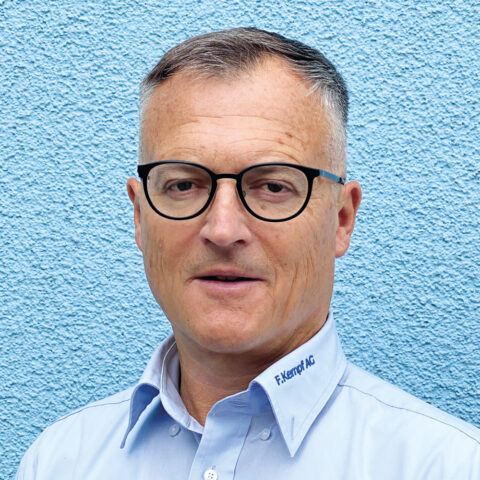
    Franz Kempf, Managing Director and owner of Franz Kempf AG.
  • Demand for condominiums is highly dependent on region and price

    Demand for condominiums is highly dependent on region and price

    The latest edition of the Online Home Market Analysis from the real estate portal Homegate and the Swiss Real Estate Institute (SwissREI) examines the advertisement data for condominiums for 2020 and 2021. The evaluated advertisements come from the four largest Swiss Internet portals and thus comprise around 85 percent of all online advertisements during the period under review. Detailed reports on the study for all regions can be found here in the online media release .

    For Martin Waeber, Managing Director Real Estate, SMG Swiss Marketplace Group, the latest online home market analysis shows how heterogeneous the Swiss condominium market is: “Overall, the demand for condominiums throughout Switzerland developed somewhat less dynamically last year due to the corona. However, certain market segments have seen lively demand over the past year, particularly in cities.” On average, the duration of advertisements in the low price segment has increased significantly in the cities examined, while it has remained practically unchanged in the higher price segment, although the number of advertisements has increased. “Similar to the rental apartment market, preferences in the condominium market have shifted away from smaller and cheaper to larger and more expensive properties during the Covid19 pandemic,” said Waeber, summarizing the study results.

    Longer advertisement duration despite smaller offer
    The significant increase in the average tendering period for condominiums from 61 to 84 days in 2020 compared to 2019 due to the Covid19 pandemic was confirmed at a high level in 2021 with 85 days. In comparison, the length of listings for single-family homes has fallen from just over 61 days in 2019 to pre-pandemic levels.

    On the other hand, around 20 percent fewer condominiums were offered online across Switzerland in 2021 than in the previous year. With such a severe shortage of offers, one would expect that the average duration of advertisements would also be correspondingly shorter. However, the fact that this has not shortened, but actually lengthened slightly, is evidence of a declining demand for condominiums across Switzerland for 2021.

    Prof. Dr. Peter Ilg, head of the SwissREI institute, sees several reasons for the weaker demand for condominiums: “Condominium prices in Switzerland rose by more than 8 percent on average in 2021. This is the strongest price increase in ten years. Such a significant increase in prices is likely to have had a dampening effect on demand in general. Increasing demand can only be seen in selected regions and in individual upper price segments, in which the buyers were probably able to increasingly resort to advance inheritances». This can be deduced, for example, from the distribution of taxable assets and homebuyers by age group. In the canton of Zurich, for example, the over-54s have more than half of the taxable assets, while across Switzerland the majority of home buyers are under the age of 55, Ilg continues. 

    Regional differences in the duration of advertisements are increasing
    From a regional perspective, the differences in the duration of advertisements in the eight major regions examined in 2021 have become more pronounced. In the Zurich region, where sellers have to advertise a condominium for the shortest time in Switzerland, the duration of the advertisement was reduced significantly by around a quarter to just 43 days (minus 14 days). In the two regions with the longest average duration of advertisements for a condominium, on the other hand, they continued to rise significantly, each at around 22 percent; the Vaud/Valais region recorded an increase of 18 to 98 days, Ticino by 25 to 139 days.

    In absolute terms, the greatest reduction in the length of advertisements was seen in the Central Switzerland region. After a decline of 19 days (minus 27 percent) for 2021 with 51 days, this region now has the second shortest advertisement duration of all eight regions surveyed, right after the Zurich region. The Geneva region, on the other hand, which still had the shortest advertisement duration in Switzerland at 52 days in 2020, fell back to third place in 2021 after an increase of 12 percent (plus 6 days).

    Increasing demand only in three out of eight regions examined
    The combination of the change in the duration of advertisements and the change in the number of advertisements allows conclusions to be drawn about the change in demand in the regions examined. In the three regions of Ticino, Vaud/Valais and Geneva, for the year 2021, despite a shortage of supply (i.e. a declining number of advertisements), there has been a significant increase in the duration of advertisements in some cases and thus a shrinking demand for condominiums. For the three regions of Central Switzerland, Northwestern Switzerland and Zurich, on the other hand, increasing demand (larger percentage decline in the length of advertisements than in the number of advertisements) can be observed. The other two regions (Eastern Switzerland and Espace Mittelland) show constant demand for 2021.

    Growth in demand for city apartments, especially in the upper price segment
    In addition to the eight regions, the Online Home Market Analysis also examines eight Swiss cities. When analyzing the demand for condominiums, a closer look at the price segment shows that demand in Basel, Lausanne, Geneva and Lugano in particular has increased. Both in the high price segment (CHF 1.5 million – CHF 3.0 million) and in the low price segment (CHF 0.3 million – CHF 0.5 million). In the high price segment, demand increased overall in six of the eight cities surveyed – in addition to Basel, Lausanne, Geneva, also in St. Gallen and Lucerne – while in the low price segment, the remaining four cities recorded constant or falling demand. This increased demand in the high price segment is now taking very different forms; While in Basel the declining length of advertisements in particular led to higher demand, in Geneva a much higher increase in the number of properties on offer compared to the length of advertisements indicated this conclusion.

  • Forest dominates land use in cities

    Forest dominates land use in cities

    The current study on the use of land in Swiss cities is astonishing, writes the Swiss Association of Cities in a statement on the ” Statistics of Swiss Cities 2022 ” drawn up jointly with the Federal Statistical Office . According to the analysts’ surveys, in 2018 settlement areas accounted for just 23.5 percent or 95,000 hectares of the total area of the 170 Swiss cities surveyed. Most of the urban soil, specifically 32.3 percent, was covered with forest at the end of the study period from 1985 to 2018. At 30.9 percent, the proportion of agricultural land in 2018 was also significantly larger than the settlement area.

    In the six largest cities in Switzerland (Basel, Bern, Geneva, Lausanne, Winterthur and Zurich), the proportion of settlement area in 2018, at 54.2 percent, was significantly higher than in the overall calculation, the statement explains further. Forest and agricultural land accounted for 29.6 and 14.3 percent, respectively.

    The analysts observed growth in the reporting period, above all in residential areas. Between 1985 and 2018 it increased by almost 10,000 hectares to 35,000 hectares. The areas used for traffic and built up with recreational and green areas also grew in the reporting period. In contrast, the area used by industry in cities with more than 100,000 inhabitants fell by 26 percent between 1985 and 2018.

  • Halter realizes winning project in Emmen

    Halter realizes winning project in Emmen

    At the Seetalplatz in Emmen, a new development with a variety of uses for all sections of the population is to be built. There was a competition for this, in which six architects' offices took part. According to the press release , the study drawn up by Westpol Landschaftsarchitektur from Basel together with Dreier Frenzel architecture + communication from Lausanne emerged as the winner and is recommended for further processing.

    On behalf of the Rüüssegg housing cooperative, the planning and implementation of the superstructure will be carried out under the leadership of Halter AG . Completion of the entire development on the relevant construction sites is scheduled for the end of 2026.

    The Rüüssegg housing cooperative based in Lucerne is the holder of the building right. It was founded by Halter AG and the non-profit housing cooperative Wir sind Stadtgarten after they, as a bidding consortium, had been awarded the building lease by the Lucerne government council in June 2021.

    The winning concept "offers an opportunity for social interaction, communication and exchange between residents and users," says the managing director of the Rüüssegg housing cooperative, Thomas Häusler.

    "In addition to a well-balanced mix of apartments in terms of price and space, the project also provides age-appropriate housing, commercial, office and studio space, which allows for a mix and social diversity," says Peter Lötscher, Head of Portfolio Management at the Canton of Lucerne's Real Estate Office. This also fulfills the mandate of the cantonal parliament.