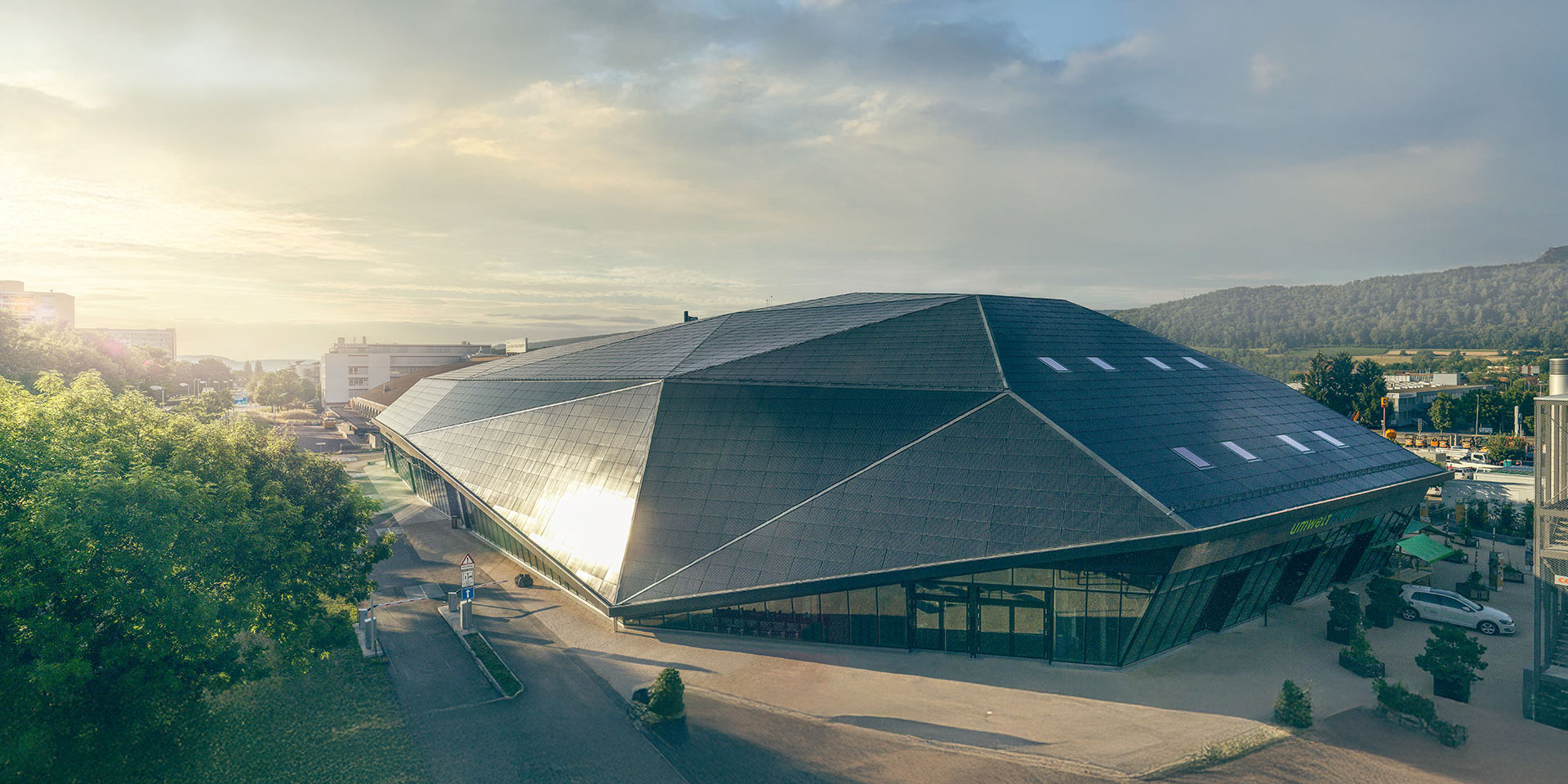
Today, around 90 people work at the Pöschen, Gmeindwisen site on over 90,000 square meters. Over the next 20 years, 600 to 800 new jobs are to be created there and living space for around 1,200 people.
With the further conversion of all plots, additional space for 100 to 200 more jobs and around 300 more residents is planned. The basis for this is the rezoning to a five-storey residential and commercial zone with a design plan obligation, which has been legally binding since February 2024. The development will take place in stages over several decades, with existing businesses retaining their place.
Traffic, public transport and “low-car” concept
The focus of the dialog with the population was on traffic. Questions were asked about parking, access and the future of the bus station. The planning team emphasized the clear focus on public transport. The district is not intended to accommodate through traffic, residents’ cars will be parked in underground garages and no new park-and-ride areas are planned. Despite the development of the area, the planned bypass will remain possible. Those responsible expect to attract a younger, more public transport-oriented population.
Green spaces, neighborhood life and phasing
The approximately 50 attendees were particularly positive about the generous green and open spaces, squares and connecting paths. The winning project structures the area into clearly recognizable neighbourhoods, with a noise-shielding block along Zürichstrasse, workplace-oriented uses towards the tracks and diverse residential areas in between. This structure facilitates implementation in stages. Complete realization is expected in ten to fifteen years.
Political backing and participation
Mayor Christian Pfaller and the landowners reaffirmed their support for the winning project and the long-term development of a diverse, sustainable district. As the municipality does not own any land itself, it is reliant on a cooperative approach with the owners. A school building is not required. Kindergarten and daycare facilities are planned, which the municipality intends to buy into. With the 2022 building and zoning regulations, the electorate approved the transformation to a mixed zone in principle, but at the same time anchored a design plan obligation. The current consultation event is part of this communication process. The feedback will now be incorporated into the indicative project, which will form the basis for the public design plan, which is expected to be discussed again next year.