Tag: Batteriespeicher

  • Crowdfunding drives flexible solar energy forward

    Crowdfunding drives flexible solar energy forward

    Solarify GmbH is further expanding its range of investment opportunities for private investors in the energy transition. According to a press release, the Wabern-based company now offers crowdfunding for a new generation of solar power plants connected to battery storage systems. These enable solar power to be delivered at a later time.

    Solarify.ch is thus also responding to a change in the remuneration of solar power. In future, feed-in tariffs will be based on hourly rates. In addition, market prices will be recalculated on a quarterly basis. The storage facilities allow for a flexible response to prices.

    The company is already using solar systems with battery storage, for example at the Tannental asylum accommodation in the municipality of Muri near Bern and on the roof of Condecta AG in Bern.

    “With this new generation, we can operate solar systems in a way that benefits the grid and the system,” CEO Roger Langenegger is quoted as saying in the press release. “Instead of putting strain on the grids at midday, the electricity is consumed locally or sold at times of higher demand.”

    Solarify.ch enables private individuals to invest in the energy transition. Founded in 2016, the company has implemented 160 solar projects throughout Switzerland and invested 26 million Swiss francs.

  • New storage concept for stable power grids presented

    New storage concept for stable power grids presented

    The Zug-based greentech company PLAN-B NET ZERO and its subsidiary PLAN-B NET ZERO BESS GmbH presented their new concept for an energy storage system at this year’s D-A-CH Hydrogen Symposium at the Höhere Technische Bundeslehr- und Versuchsanstalt Wiener Neustadt. According to a company press release, it combines battery storage (Battery Energy Storage System, BESS), green hydrogen and artificial intelligence (AI) to create an integrated, flexible energy system that stabilises power grids and increases security of supply.

    Tjark Connor Hennings-Huep, battery systems expert at PLAN-B NET ZERO, argued at the symposium that class A grid planning is no longer sufficient in Germany, Austria and Switzerland because volatile feed-in of energy from wind and photovoltaics, slow grid expansion and increasing weather extremes are putting a strain on grid stability: “We need intelligent decentralised systems that can react independently to fluctuations.”

    As the company emphasises, it does not see combined battery-hydrogen solutions as competition to other systems, but rather as a complementary building block in a more resilient energy system for regional energy centres. “Together, both technologies form the bridge to a robust, fully renewable energy system and, when combined, offer additional parameters in terms of control and flexibility,” says Hennings-Huep.

    Battery storage and hydrogen are complemented by AI-supported forecasting and control algorithms that dynamically balance generation, storage and consumption. “Our goal,” says the expert, “is an energy system that stabilises itself – digital, decentralised and decarbonised.”

  • Switzerland continues to massively expand solar power

    Switzerland continues to massively expand solar power

    The expansion of solar power reached a new record in 2024, according to a statement from Swissolar. According to the industry association, systems with a total output of 1,798 megawatts were installed, an increase of 10 per cent compared to the previous year. In total, 8170 megawatts were installed by the end of 2024. This generated 5961 gigawatt hours of electricity.

    Solar power accounted for 10.4 per cent of electricity demand in 2024. In the previous year, it was 8.25 per cent. Swissolar expects a share of 14 per cent by 2025. “Solar power is already a central component of our energy supply today and is well on its way to becoming the second mainstay of our electricity supply alongside hydropower,” said Matthias Egli, Managing Director of Swissolar, in the press release.

    Swissolar also emphasises the importance of solar power for the winter months. Around 2,400 gigawatt hours of solar power were generated between the beginning of October 2024 and mid-April 2025, around a third of annual production.

    The number of newly installed battery storage systems grew by 4 per cent in 2024. In single-family homes, 47 per cent of all solar installations were already equipped with battery storage systems, compared to just 42 per cent in the previous year. The total installed storage capacity at the end of 2024 was already 896 megawatt hours, enough to cover the consumption of 100,000 households for one day.

  • Automated production for sustainable energy use

    Automated production for sustainable energy use

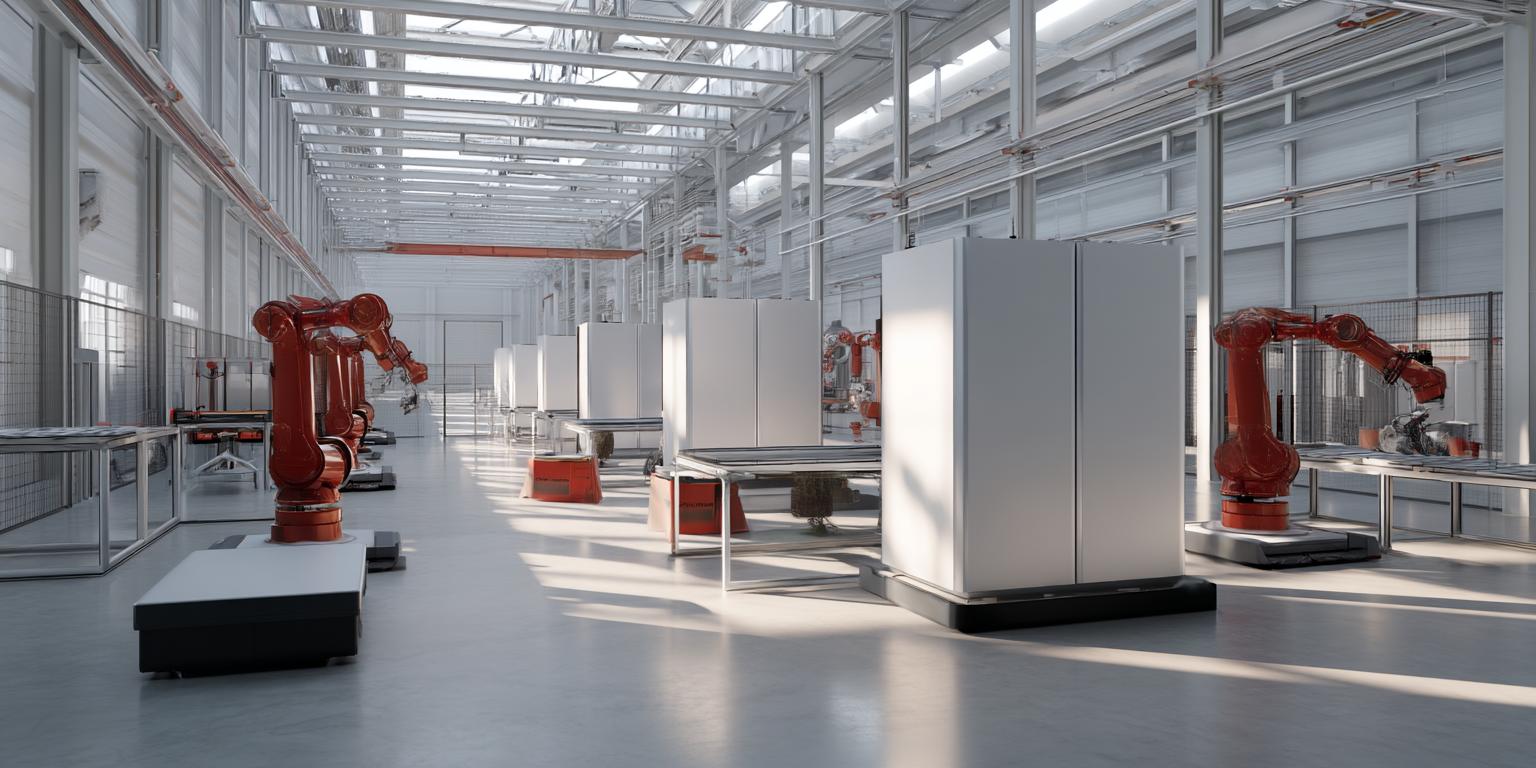
    Libattion AG, based in Opfikon, has opened a new plant in Biberist for processing used batteries from electric cars. Here, the batteries are used to produce modular stationary energy storage units. According to the company, this is Europe’s largest plant of its kind. The production facility was set up on the site also used by battery recycling company Librec.

    The new facility has a high degree of automation. “Our new production hall enables us to respond flexibly to market requirements and make an important contribution to conserving resources in Europe,” said Stefan Bahamonde, CEO and co-founder of Libattion, in the press release. “By automating our production, we can not only operate efficiently, but also economically and adapt our capacities precisely to demand.”

    In 2022, Libattion produced stationary storage systems with a total capacity of 7 megawatt hours; last year, the company already achieved a total capacity of 27 megawatt hours. The company aims to increase its total capacity to 500 megawatt hours by 2026. Libattion’s storage systems have a modular design and can have capacities ranging from 97 kilowatt hours to 60 megawatt hours. Safety is the top priority, explains Bahamonde: “Thanks to automated production and strict quality controls, we can guarantee the highest safety standards for every storage system”.

  • Focus on solar technology for agriculture

    Focus on solar technology for agriculture

    The international energy company Eaton and the agrivoltaics specialist Insolight, also based in Lausanne, have agreed on a strategic collaboration to optimise the use of solar power in agriculture. According to a press release, Eaton’s experience in intelligent energy management will be combined with Insolight’s solar technologies. In particular, it will be investigated whether Insolight’s photovoltaic systems can be coupled with Eaton’s battery storage systems (BESS) and charging infrastructure for electric vehicles. Insolight plans to install more than 100 projects with a capacity of 300 megawatt peak by 2026. For its part, Eaton intends to support the projects with technical expertise and product training.

    Both companies will also support the farmers involved in the integration, commissioning and ongoing maintenance of new sustainable energy systems. Insolight’s agrivoltaic systems not only generate electricity that can be used on the farms, but also protect plantations against wind, hail and heavy rain.

    “This collaboration with Eaton represents an important milestone in our endeavour to bring innovative agrivoltaic solutions to the market,” said Luiggino Torrigiani, Head of Marketing and Partnerships at Insolight, in the press release. “By partnering with Insolight, we can extend our capabilities to the agrivoltaic sector, where energy efficiency can have a real impact alongside agricultural productivity,” added Anne Lillywhite, Senior Vice President and General Manager for Energy Transition, Digital and Services at Eaton.

  • Vision for sustainable technology centre takes shape

    Vision for sustainable technology centre takes shape

    FlexBase intends to realise its new technology centre in line with the plans already presented. According to a press release, the technology company has secured the ERNE Group, also based in Laufenburg, as general contractor. Construction is scheduled to begin in 2025. An updated planning application has been submitted to the relevant authorities.

    The technology centre is to be built on the former Swissgrid site. The centrepiece will be a new building opposite the existing building. In addition to many research facilities, a data centre with capacities for the use of artificial intelligence is to be built there. FlexBase also plans to build a 20,000 square metre battery storage facility with a capacity of more than 500 megawatts on the site. According to the press release, the non-flammable and non-explosive storage facility is the “world’s largest and most modern battery storage facility of its kind”. The construction of the new technology centre will create several hundred jobs for skilled workers and apprenticeships.

    According to the press release, Marcel Aumer, CEO of the FlexBase Group, does not anticipate a delay in construction despite the relaunch of the project. He justifies this view with the close collaboration with ERNE: “In this project, I have not only experienced ERNE’s expertise right from the start, but also the full attention of the top management.” The CEO of ERNE, Giuseppe Santagada, is also optimistic: “My personal commitment goes far beyond the realisation of this project; it also includes the promotion of new technological skills and increasing the attractiveness of Laufenburg as a location for the vision of a prosperous region”.

  • New battery storage system for Gossau ensures grid stability

    New battery storage system for Gossau ensures grid stability

    Axpo has installed and commissioned a battery storage facility with a capacity of 2.5 megawatts on the site of the Gossau municipal utility. The municipal utility now has the largest battery storage facility in the region, explained the Aargau-based energy company in a press release. According to the press release, the storage facility is tailored to the specific needs of the municipality of Gossau and the region’s grid topography. The press release does not provide any information on the financial scope of the project.

    Stadtwerke Gossau intends to use the battery storage system to compensate for fluctuations in demand and power peaks. It will also process reactive power and contribute to maintaining the grid voltage in the region. It will also help to stabilise the grid in the region by providing system services for the national grid company Swissgrid.

    The new battery storage system is capable of stand-alone operation and black start. This means that in the event of a power outage, it can autonomously restore the power supply for units connected to island operation. Relevant companies for maintaining the supply to Gossau can take advantage of this. “What was initiated in 2019 with a parliamentary initiative can be demonstrated five years later,” says Claudia Martin, City Councillor and Head of the Supply Security Department of the City of Gossau, in the press release. “An energy storage facility that guarantees Gossau’s security of supply.”

  • Emost AG erhält den Innovationspreis Zurzibiet

    Emost AG erhält den Innovationspreis Zurzibiet

    Das Wirtschaftsforum Zurzibiet (WFZ) mit Sitz in Klingnau hat die Dietiker emost AG mit dem diesjährigen Innovationspreis Zurzibiet ausgezeichnet. Laut einer Medienmitteilung wurde der Preis für den mobilen Batteriespeicher Butler s zugesprochen. Der umweltfreundliche Stromgenerator ohne CO2-Ausstoss ist als Ersatz für die herkömmlichen Dieselgeneratoren an Baustellen entwickelt worden. Die Technologie namens emost (electric mobile storage/Deutsch: elektrischer mobiler Speicher) kann aber auch bei Veranstaltungen oder in Notfällen eingesetzt werden.

    Entwickelt wurde das fahrbare Gerät, für dessen Einsatz es keiner besonderen Genehmigung bedarf, gemeinsam mit einem Team des Energieversorgers Axpo in Baden AG. Entwicklungsort war Döttingen AG im Zurzibiet. Der Preis wurde am 25. April im Kulturhaus Rain in Kleindöttingen AG dem Siegerprojekt übergeben. Der Preis wird alle zwei Jahre vergeben.

    Zu dem prämierten Gerät heisst es auf der Internetseite des Herstellers, der emost Butler s sei für Einsatz bei Bauunternehmen im Tief- und Strassenbau sowie Gartenbau konzipiert. Ebenso für die Verwendung bei Blaulichtorganisationen, im Transportsektor, bei Ladestationen für E-Autos, bei Festivals, Messen, Food-Trucks und zur unterbrechungsfreien Notstromversorgung. Das Gerät sei wirtschaftlicher als Dieselgeneratoren. Da es keine Abgase gebe, sei es auch für geschlossene Räume geeignet. Und der Butler s sei leise und ermögliche so den Einsatz auf Nachtbaustellen.

  • AEW invests in energy grid stability

    AEW invests in energy grid stability

    AEW Energie AG has launched a battery storage project together with Hitachi Energy. The storage facility is scheduled to go into operation on the AEW site in Baden-Dättwil AG in October 2023.

    The pilot project is intended to establish a solid energy supply and provide information about energy systems of the future. This is according to a media release. According to the statement, the companies have joined forces with students from the University of Applied Sciences Northwestern Switzerland (FHNW) in Windisch AG. The operating concept for the battery energy storage system (BESS) was developed as part of a student project. The goal is intelligent battery storage and innovative analysis, software and digital functions to cover peak loads, they say. The storage system is mainly used when demand is particularly high, for example at lunchtime.

    The energy service provider AEW is thus responding to the increasingly decentralised expansion of sustainable energy supply. In the development towards an energy mix, the regeneratively generated electricity must be distributed among photovoltaic systems, heat pumps, storage units and electromobility. At the same time, the storage system is intended to increase the level of knowledge on the operation of battery technologies, grid stability and ageing behaviour.

    Hitachi is providing the battery system. It provides 10 megawatt hours of usable capacity and an output of 5.5 megawatts. With a fully charged battery, the annual energy consumption of two four-person households can be covered or a community of 11,000 inhabitants can be supplied with electricity for about 45 to 60 minutes. The storage unit can be charged in less than two hours.

  • AEW takes a stake in the Aargau energy start-up

    AEW takes a stake in the Aargau energy start-up

    AEW Energie AG has entered into a strategic partnership with Virtual Global Trading , according to a media release . It will gradually acquire a stake of up to 35 percent in the start-up company based in Aarau.

    With eNet, Virtual Global Trading has developed a digital trading platform for the energy sector. It offers customers of energy suppliers various business models. For example, companies can present offers for battery storage or solar systems on the platform. These can then be used by private individuals – the customers of energy suppliers.

    The platform uses the daily updated data from the network operator's intelligent meters. The traded and processed energy data are automatically compared with the systems of the distribution network operator. When the platform registers a new smart meter, it creates a one-time token. Thanks to this token system developed and patented by Virtual Global Trading, the proof of origin of the energy is provided. Overall, the platform also enables all participants to react quickly to market developments.

    Together with the Liechtenstein power plants ( LKW ), the start-up is already implementing its system in Liechtenstein. The use of the platform there is also intended to serve as a model for other regions. The goal now is to roll out eNet continuously in Switzerland and Europe.

    “With our involvement in the start-up company, we are securing market experience from neighboring countries, where the regulation and liberalization of the electricity market are well advanced. We want to use this experience for our preparation for the complete liberalization of the electricity market ”, said Marc Ritter, Head of the Energy Business Unit at AEW, in an AEW announcement . Together with the start-up, AEW also wants to develop new market models for Switzerland.