Tag: Bauindustrie

  • Six Innovation Awards for construction and tool solutions

    Six Innovation Awards for construction and tool solutions

    Hilti has received six awards for recently launched products at the Pro Tool Innovation Awards(PTIA) 2025 in the USA, according to a press release. The internationally active manufacturer and supplier in the construction and tool sector is headquartered in Schaan, Liechtenstein, and is active in over 120 countries. Hilti took part in the annual PTIA competition through its North American headquarters in Plano, Texas. In total, more than 400 product solutions from over one hundred manufacturers were submitted, according to the report. A jury of experts assessed the degree of innovation, performance and safety and ergonomic aspects, among other things. “We are delighted with the high level of innovation this year,” said Clint DeBoer, General Manager of the PTIA, in the press release.

    Hilti was honoured for products in various categories. The new DD 150-U-22 diamond core drill came out on top in the concrete and masonry core drill category. It works cordlessly and is equipped with an oscillating function that makes it easy to remove a core from the drill bit. The VC 5 construction hoover, the PR 400-22 rotating laser, the DSH 700-X petrol grinder, the new KCCM Kwik Cast Connect anchor system and a filter system for vacuum cleaners (VC-CB 20/40/150-X) also came out on top in other categories.

    At the Swiss innovation conference Open-i in November, the CEO of the Hilti Group, Jahangir Doongaji, talks about how research and development (R&D) is prioritised and embedded in his company. “At Hilti, we drive innovation in a targeted manner so that our customers can build more productively, safely and sustainably,” said Doongaji in the run-up to the conference. In Hilti’s R&D and test centres, experts are working on solutions for selected areas such as occupational safety, productivity and technology integration.

    Open-i sees itself as a Swiss innovation community and dialogue platform for business and science. It brings together academic and business experts and aims to pave the way for collaborations that will secure Switzerland’s leading role as an innovative and successful market. Open-i is organised by NZZConnect, a branch of the NZZ based in Bern. The conference will take place on 27 November and tickets are available now.
  • Digital concrete analyses for higher quality and sustainability

    Digital concrete analyses for higher quality and sustainability

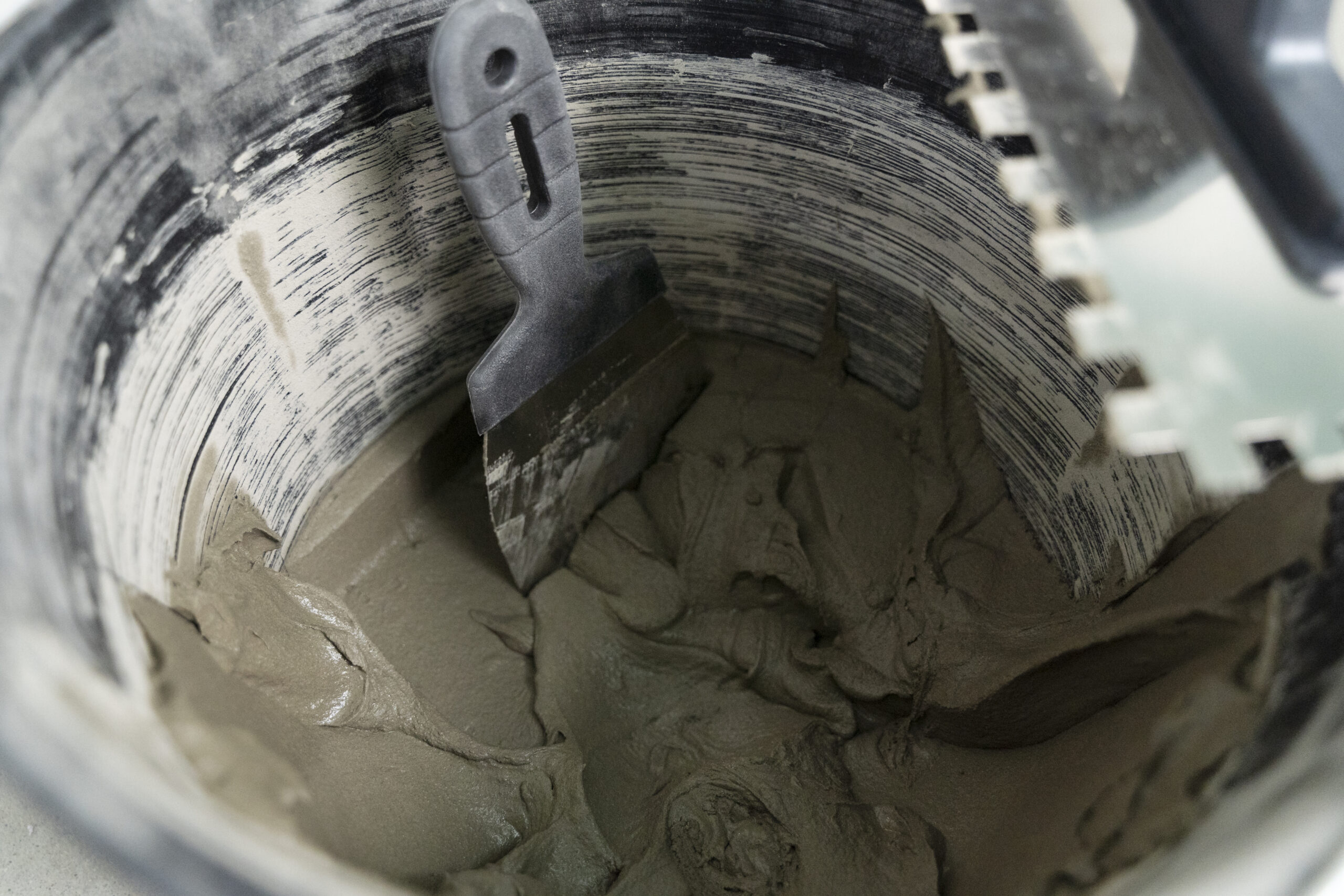
    Sika has made a strategic investment of an undisclosed amount in the Canadian company Giatec Scientific, headquartered in Ottawa. In a press release, it describes the Zug-based speciality chemicals company as a “significant milestone in its overarching digital strategy”.

    Giatec develops sensors, software solutions and data analysis tools that improve the quality, durability and sustainability of concrete, from production to transport and processing. Sika anticipates that Giatec’s Artificial Intelligence-based precise analysis and optimisation of concrete mixes, together with Sika’s admixture technologies, will lead to “significant” cost and CO2 savings.

    Pouria Ghods, CEO and co-founder of Giatec, wants to “redefine the future of AI-powered concrete construction” through this strategic partnership with Sika. He sees the global presence of the new partner as a great opportunity “to establish our intelligent technologies worldwide”.

    Like Ghods, Sika’s Head of Construction, Ivo Schädler, wants to help shape the future of the concrete industry through digital transformation “working closely with Giatec and its network of strategic global partners such as Heidelberg Materials. By utilising digital innovation, we provide the construction industry with data-driven insights that improve sustainability and performance and enable the next level of modern construction.”

  • New production sites in Singapore and China

    New production sites in Singapore and China

    Sika is expanding its global presence with new production facilities in Singapore and China. The new plant in Singapore specialises in mortar production. In contrast, the entire product range, including tile adhesives, cementitious waterproofing and floor coatings, will be manufactured in Xi’an in north-west China. The new factories should significantly reduce transport distances.

    “The expansion of our production capacities in Singapore and China is an important step in our growth strategy in Asia,” said Philippe Jost, Regional Head Asia/Pacific, in a press release. “Thanks to the new plants, we can serve our customers in these two key markets even better with our innovative solutions. In addition, both factories contribute to Sika’s sustainability performance by utilising energy-efficient processes and environmentally friendly materials.”

    According to Sika, Singapore’s construction industry is expected to grow by 4.1 per cent annually until 2028. A government masterplan for infrastructure development envisages around 22.5 billion Swiss francs for the construction of railway stations and important transport corridors.

    The new plant in Xi’an is Sika’s 35th in China. The construction industry in the country is expected to be worth the equivalent of 4.3 trillion Swiss francs in 2025 and grow by 3.9 per cent annually until 2028. China has reportedly budgeted half a trillion Swiss francs for infrastructure projects and more ambitious quality targets in the construction industry, and a further 12 trillion francs for the net-zero target by 2060.

  • New approaches for CO2 credits in the construction industry

    New approaches for CO2 credits in the construction industry

    conspark is part of Switzerland’s first open innovation program on CO2 storage called Carbon Removal Booster. The Zurich-based company, which promotes the circular economy in the construction industry, is thus receiving project-related support from Innosuisse. Under the program, twelve projects will each receive 24,000 Swiss francs a year in funding, methodological support and contacts.

    The project submitted by conspark is entitled “Clarifying carbon credit ownership and methodology in construction”. According to a company press release, the aim of the project is to develop guidelines to clarify the eligibility of CO2 credits in the construction industry. The questions “Who along the value chain can claim CO2 sinks?” and “How are the sink benefits recorded?” are to be answered.

    The background to this is the goal of sustainable construction to turn buildings from CO2 emitters into CO2 sinks. This is possible if carbon is permanently stored in the building structure, building materials are recycled and buildings are operated in a CO2-neutral manner.

    The focus of the conspark project is on mineralization and biochar in building products. The project is reportedly being implemented with implementation partners. These are Klark – the climate clay from Logbau, neustark, zirkulit, First Climate Switzerland and Carbonfuture.

    “The project relies on the necessary cooperation of all relevant stakeholders in the construction industry,” says conspark Managing Director Florian Robineck. “The entire value chain is represented through our strong implementation partners.”

  • New partnership strengthens construction technology in Mexico

    New partnership strengthens construction technology in Mexico

    Leica Geosystems, part of Hexagon, and Dimanor have announced their new partnership. The two companies have agreed that Dimanor, a provider of machinery solutions in agriculture, mining and construction based in Mexico City, will expand its portfolio to include Leica Geosystems’ machine control solutions. Dimanor’s presence in Mexico spans the states of Baja California North and South, Sonora, Sinaloa, Chihuahua, Nayarit, Jalisco, Michoacán, Guerrero, Estado de México, Hidalgo and Mexico City. In these regions, heavy industry customers will have access to Leica Geosystems’ construction technologies.

    “Adding Leica Geosystems’ advanced machine control solutions to our offering is a strategic step to further increase the efficiency and productivity of our customers’ projects,” said Product Manager Ricardo Ortega, explaining his company’s motivation for partnering with Leica Geosystems.

    Evandro Manffra, head of Leica Geosystems’ heavy construction segment in Latin America, describes Dimanor as an ideal partner: “Together, we look forward to bringing our state-of-the-art machine control solutions to a wider audience in Mexico and improving the efficiency and precision of construction projects throughout the region.”

  • Strengthening presence in the construction industry through acquisition in Slovenia

    Strengthening presence in the construction industry through acquisition in Slovenia

    SFS has acquired EPRO D.O.O., a distribution partner in the construction industry based in Ljubljana, with effect from 1 October, the globally active manufacturer of tools, precision components, assemblies and fastening systems from the St.Gallen-Lake Constance area announced in a press release. The purchase price was not disclosed. EPRO sells fasteners, fixing elements, fall protection systems and other products for flat roofs, industrial lightweight construction and façade elements in Slovenia, Croatia and the wider Adriatic region.

    The acquisition is intended to strengthen the regional presence and market position of the SFS Group in the region. EPRO will continue its activities “unchanged with all employees” under the SFS umbrella, according to the press release. The Group, headquartered in Heerbrugg, has around 140 sales and production sites in 35 countries in North America, Europe and Asia.

  • KohlenKraft sponsors Zurich Climathon

    KohlenKraft sponsors Zurich Climathon

    KohlenKraft is one of the sponsors of the Climathon inZurich. This is according to an announcement from Runway, the sponsor of early-stage start-ups based at Technopark Winterthur. The Runway Incubator is a program of the Center for Entrepreneurship at the Institute for Innovation and Entrepreneurship at Zurich University of Applied Sciences (ZHAW).

    The Climathon is a 32-hour format organized once a year by the Impact Hub Zurich. The event serves to find and develop ideas for climate protection in Zurich. This year, it will take place on November 1 and 2 at the Zurich Kraftwerk.

    The start-up company KohlenKraft, founded in 2023, is also based at Technopark Winterthur. Last year, the park headlined a short portrait of the start-up’s move into its premises with the sentence: “Runway start-up KohlenKraft is getting ready for revolution”. KohlenKraft has set itself the task of supplying the construction industry with climate-positive materials. Its products such as plaster, wall plaster for industrial use, bricks and thermal insulation made from biochar absorb more CO2 during their service life than they emit.

    KohlenKraft also closes the cycle: The biochar is made from biomass waste, reduces the need for raw materials such as sand and thus contributes to a circular built environment. This is why KohlenKraft was also supported by the Circular Building Industry Innovation Booster. The Innosuisse program supports the transition to a circular economy in the Swiss construction industry through systematic innovation.

    CEO Charles Gerike-Roberts and CTO Moritz Keller have already received several awards. in 2022, the two KohlenKraft founders won the FrontRunner Award at the ZHAW Sustainability Challenge. They took first place in the ZHAW Startup Challenge 2023 and were class winners in the Startup Campus and Innosuisse Business Concept course.

  • Innovative drone research

    Innovative drone research

    At the centre of this research is the “DroneHub”, a state-of-the-art laboratory that is being built on the Empa campus in Dübendorf. This unique research building makes it possible to test drones under real-life conditions – a significant development for both the construction industry and environmental sciences. In the future, drones could repair buildings before damage escalates or even save lives by monitoring dangerous areas before the fire brigade.

    The spirit of innovation driving this project is evident in the extraordinary combination of environmental monitoring and construction robotics. The new drone models can place sensors in trees or collect water samples from the depths of oceans and lakes – essential data to monitor the health of our ecosystems.

    However, Kovac and his international team are going even further. With aerial additive manufacturing (AAM) technology, drones could be able to print building materials from the air. This technology has the potential to fundamentally change the way buildings are maintained and constructed while utilising resources more efficiently.

    Redefining building maintenance
    The “DroneHub” provides a protected space for the development and testing of robots and drones that can autonomously perform tasks such as building maintenance and environmental monitoring. The DroneHub’s unique AAM wall simulates real building surfaces on which the drones demonstrate their repair and maintenance capabilities. These technologies are particularly relevant for the property sector, where safety and efficiency in maintenance are becoming increasingly important.

    This collaboration between Empa and EPFL not only opens up new perspectives for robotics, but also for the future of the property industry. Drones that carry out inspections and repairs autonomously could revolutionise the way buildings are maintained. For managers and professionals in the property and location development sector, this project offers an exciting look at the future of the industry – innovative, sustainable and with a clear focus on efficiency and safety.

  • Strategic realignment at Implenia with new management team

    Strategic realignment at Implenia with new management team

    Implenia is facing a change of leadership. The internationally active construction and real estate company from Opfikon announced in a press release that current CEO André Wyss will retire from operational business at the end of March 2025. According to information from SBB, the outgoing Wyss will join the Board of Directors of Swiss Federal Railways in April 2025 and will take over the chairmanship from Monika Ribar in 2026. Implenia’s Board of Directors has appointed Jens Vollmar as Wyss’ successor. The current Head Division Buildings and Country President Switzerland has been with Implenia since 2013.

    “I am delighted that in Jens Vollmar we have been able to appoint an ideal internal successor as future CEO,” said Hans Ulrich Meister, Chairman of Implenia’s Board of Directors, in the press release. “The Board of Directors is convinced that with his strategic, business and construction expertise, his experience and his personality, he will lead the Group successfully into the future.” Implenia will decide on a successor for Wyss at the head of the Buildings division at a later date.

    The Civil Engineering Division will also be restaffed. Erwin Scherer will succeed Christian Späth, who is leaving the company, on September 1, 2024. Scherer has been responsible for tunnel construction and related infrastructure projects in the European markets at Implenia since 2019.

    In a further press release, Implenia announces its results for the first half of 2023. According to the statement, revenue increased year-on-year from CHF 1.72 billion to CHF 1.74 billion. At the same time, the operating result at EBIT level rose from CHF 49.9 million to CHF 50.5 million. For the year as a whole, Implenia expects EBIT of around CHF 130 million.

  • Largest 3D-printed housing estate being built in Texas

    Largest 3D-printed housing estate being built in Texas

    In the Wolf Ranch community in Georgetown, Texas, 100 single-storey houses are being built using the Vulcan printer from ICON. This 3D printer builds the houses layer by layer from a special concrete mix that is robust and weather-resistant. The construction process saves time and labour while creating walls that can withstand extreme weather conditions.

    Resilience and modern challenges
    The solid concrete walls of the houses not only offer excellent protection against extreme weather conditions, but also provide excellent insulation. This construction proves particularly useful in hot summer months, as the interiors remain cool and the air conditioning systems are relieved. However, the thick walls also pose challenges: the signal strength of wireless networks is impaired, which is why many residents rely on meshed routers.

    Building revolution
    The Wolf Ranch homes, known as the “Genesis Collection”, are available for between 450,000 and 600,000 dollars, and a quarter of the units have already been sold. The project demonstrates the potential of 3D printing to change the construction industry for good. ICON already built its first 3D-printed house in Austin in 2018 and is even planning to use the technology on the moon as part of NASA’s Artemis programme in the future.

    3D printing on the upswing worldwide
    3D printing in the construction industry is also picking up speed in Germany. the first 3D-printed detached house was opened in Beckum in 2021, and further projects, such as the publicly subsidised apartment block in Lünen, are in the pipeline. These developments show that 3D printing is becoming increasingly important worldwide and will potentially shape the future of construction.

  • Investment in cement-free construction

    Investment in cement-free construction

    Oxara announces a successful pre-series A financing by two high-calibre investors from the construction industry. According to a press release, the new partners are buildify.earth, an Evergreen Investment Holding specialising in circular and sustainable tech companies, and Samih Sawiris, who is developing the region in the canton of Uri into a premium destination with his company Andermatt Swissalps.

    The funds received will reportedly be used to strengthen operational activities and to construct the first cement-free building together with its industrial partners. Oxara’s products will be presented exclusively in this building.

    The spin-off from the Swiss Federal Institute of Technology in Zurich has reportedly successfully completed seven commercial pilot projects since it was founded in 2019. Oxara has gained an industrial partner for the production of its cement-free additive and binder for the manufacture of concrete. In addition, the patent portfolio has been expanded through active research and development of new products and the team has been significantly enlarged. Oxara is now preparing to broaden its business and offer its fully commercialised products with national and global partners and customers in the DACH region as well as in Europe, Africa and the Middle East.

  • Automation of contract review in the construction industry through the use of AI technology

    Automation of contract review in the construction industry through the use of AI technology

    The legal technology AI will be integrated into a specialised AI module that is being developed in collaboration with a multinational construction company. According to an official announcement, this technology will enable automated contract review specifically tailored to the construction industry.

    The construction company’s industry-specific expertise will be incorporated into the training of the AI. “This collaboration creates ideal conditions for developing an effective, industry-specific solution for AI-assisted contract review,” the CEO of the technology company is quoted as saying. The cooperation underlines the commitment of both companies to fully utilise the potential of innovative technologies and to position themselves as pioneers in the use of AI in the legal practice of the construction industry.

    “This partnership sends a strong signal to the construction industry that AI and legal departments can work very well together,” says the construction company’s Head of Legal and Compliance. “The use of AI in legal matters is an important step in our strategy to improve services and increase efficiency,” adds the Head of Global Legal Strategy. He expects this to result in “improved management of contractual risks, greater standardisation and a significant reduction in the workload of our legal experts”.

  • Geberit Group navigates through difficult financial year 2023

    Geberit Group navigates through difficult financial year 2023

    2023 was a challenging year for the Geberit Group, characterised by a slowdown in the construction industry in Europe and a change in demand that increasingly focused on heating systems. Despite a significant decline in volumes and pressure on the sanitary industry, the company managed to improve operating margins – a testament to its agile production and logistics processes, lower energy costs and efficient price management. Although the increased strength of the Swiss franc posed a challenge, the effects were largely offset by the robust corporate structure.

    This resilience enabled the Group to consolidate its market leadership in the sanitary ware sector and expand its market share. Although net sales fell by 9.1 % to CHF 3,084 million, operating cash flow (EBITDA) increased by 1.4 % to CHF 921 million, which corresponds to a remarkable EBITDA margin of 29.9 %. Despite a 12.6 % decline in net profit to CHF 617 million due to a one-off tax benefit in the previous year, the net return on sales remains strong at 20.0 %. Earnings per share fell by 10.2 % to CHF 18.39, but continue to reflect the Group’s financial robustness.

  • Sika grows profitably

    Sika grows profitably

    Sika closed the 2023 financial year with record figures for sales, operating free cash flow and adjusted operating profit, the globally active speciality chemicals group for construction and industry announced in a press release. Specifically, sales increased by 7.1 per cent year-on-year to 11.24 billion Swiss francs. Adjusted for one-off acquisition effects, the operating result at EBIT level rose by 12.7 per cent to CHF 1.68 billion. Operating free cash flow improved by 58.7 per cent to CHF 1.37 billion.

    “We are proud of the fact that, in addition to finalising the MBCC acquisition, we also mastered the challenges of a demanding macroeconomic and geopolitical environment well in the past financial year,” Thomas Hasler is quoted as saying in the press release. The Sika CEO also anticipates challenging market conditions for the current year. “However, we are seeing good momentum in all regions for major construction and infrastructure projects that are either in the planning phase or about to be realised.” Hasler expects Sika to benefit here.

    In the year under review, the Group also adopted its new Strategy 2028 entitled Beyond the Expected. According to this strategy, Sika’s innovative strength and market position are to be used to generate profitable annual sales growth of 6 to 9 per cent in local currencies. The strategy, which is based on the pillars of market penetration, innovation & sustainability, acquisitions and people & culture, represents “a balanced combination of financial and non-financial targets”, writes Sika.

  • Erfolgreiche Bilanz trotz herausforderndem Markt

    Erfolgreiche Bilanz trotz herausforderndem Markt

    In den ersten neun Monaten des Jahres 2023 verzeichnete die Unternehmensgruppe einen Umsatzrückgang von 12,3% auf CHF 2’390 Mio. Der Rückgang ist teilweise auf negative Währungseffekte in Höhe von CHF 119 Mio. zurückzuführen, die durch den erstarkten Schweizer Franken verursacht wurden. In lokalen Währungen betrug der Rückgang 7,9%. Trotz dieser Herausforderungen gelang es, die EBITDA-Marge um 320 Basispunkte auf 31,3% zu steigern und das Gewinnwachstum pro Aktie in lokalen Währungen um 5,2% zu erhöhen.

    Der Nettoumsatz im dritten Quartal belief sich auf CHF 728 Mio., was einem Rückgang von 7,9% im Vergleich zum Vorjahresquartal entspricht. Währungsbereinigt ergab sich eine Abnahme von 4,8%, getrieben durch Volumenrückgänge und einen positiven Preiseffekt von etwa 6%.

    Die europäischen Märkte waren besonders von den schwierigen Bedingungen betroffen, mit einem währungsbereinigten Umsatzrückgang von 9,2% nach neun Monaten. Insbesondere Österreich, Deutschland und Osteuropa verzeichneten zweistellige Rückgänge, während die Region Nahost/Afrika ein Wachstum von 11,5% erzielte.

    Der währungsbereinigte Nettoumsatz sank bei Rohrleitungssystemen um 5,4%, bei Badezimmersystemen um 7,9% und bei Installations- und Spülsystemen um 10,1%.

    Trotz des herausfordernden Marktumfelds gibt es positive Aspekte wie den Bedarf an Renovierungen, den Trend zu höherwertigen Sanitärstandards und das günstige Marktumfeld in Ländern wie Indien und der Golfregion. Die Unternehmensgruppe hat sich für 2023 auf strategische Stabilität und operative Flexibilität fokussiert, um die Herausforderungen zu meistern und das mittelfristige Potenzial nicht zu beeinträchtigen.

    Für das Gesamtjahr 2023 erwartet die Unternehmensleitung einen Rückgang des Nettoumsatzwachstums in lokalen Währungen im mittleren einstelligen Bereich und eine EBITDA-Marge von 29 bis 30%. Die Unternehmensleitung ist überzeugt, dass das Unternehmen aus der aktuellen Marktsituation gestärkt hervorgehen wird. Diese Überzeugung stützt sich auf die stabile Strategie, starke Kundenbeziehungen und die finanzielle Stabilität des Unternehmens.

  • Wingtra has new distributor in Taiwan

    Wingtra has new distributor in Taiwan

    Wingtra continues to expand: as the Zurich-based manufacturer of mapping drones announces, it can now also tap into the market potential in Taiwan with its new distribution partner Century Instruments. Based in Taichung City, Taiwan, the company has been focusing on its country’s surveying market for 30 years. According to a company statement, it now offers Wingtra’s drones in addition to expert advice and top-notch equipment.

    The high-precision, vertical take-off and landing (VTOL) drones, which are easy to operate, specialise in GIS, the geographic information system for mapping technology. They were developed by the company, founded in 2016 as a spin-off of the Swiss Federal Institute of Technology Zurich(ETH), specifically for aerial surveying and mapping in the construction industry.

    The Wingtra drones provide consistent, high-quality survey data faster and at lower cost than other surveying tools, even for large areas and with high resolution and accuracy, Wyss Zurich says. The foundation supports Wingtra and other translational projects at ETH and the University of Zurich.

    In June and July this year, Wingtra has already announced the establishment of business relationships with two new distribution partners in Mexico and a company in Canada. One of its investors, Seattle-based venture capital firm DiamondStream Partners, had announced in March 2023, following the successful completion of a $22 million Series B financing round, that it would support Wingtra as it enters new markets on the North and South American continents.

  • SFS strengthens market presence in America

    SFS strengthens market presence in America

    SFS, headquartered in Heerbrugg, Switzerland, has acquired the fastener business and other products of Connective Systems & Supply, Inc.(CSS), based in Denver, Colorado, USA, effective 1 July. This gives the globally active manufacturer of precision and fastening components from the St.Gallen-Lake Constance area market access to the fast-growing region around Denver, according to a media release. The purchase price was not disclosed.

    The business will be integrated into the Triangle Fastener Corporation(TFC) in Pittsburgh, Pennsylvania, which belongs to the SFS Group. TFC is active as a supplier of fastening technology and other products for end users in the construction industry at 25 trading locations in the USA.

    Within the SFS Group, TFC is assigned to the Construction Division in the Fastening Systems segment. “With the acquisition, TFC strengthens its market position in this attractive market,” the media release states. The Denver area is considered a growth region in the USA. The construction industry in North America has experienced a strong upswing in recent years, as it has in Europe.

    CSS was founded in 1985 and has since developed into a “major partner for fasteners and other products for end users in the construction industry in the state of Colorado”. CSS’s divested business generated $15 million in sales last year with its 20 employees.

    The employees will be taken over by SFS, and the two locations in the Denver region will be retained and continued by the current management.

  • Hilti wants to lead transformation in the construction industry

    Hilti wants to lead transformation in the construction industry

    Hilti launched its new Lead 2030 strategy at the beginning of 2023, the Schaan-based global tool manufacturing group said in a statement. It is intended to put Hilti in a position to lead the transformation in the construction industry. To this end, the group is continuously investing in product innovations.

    In the 2022 financial year, Hilti has already increased spending on research and development by 17.2 per cent year-on-year to CHF 437 million. In the same year, the tool manufacturer also made “the most extensive product launch in the company’s history”, according to the statement. Specifically, the new Nuron battery platform was launched with more than 70 tools.

    The higher investments, combined with increased costs and the strong franc, had a negative impact on Hilti’s profits. At 731 million, operating profit in 2022 was 13.7 per cent lower than in the previous year. At the same time, net profit fell by 16.3 percent to CHF 565 million. In contrast, sales generated worldwide increased by 10.0 per cent in local currencies to 6.35 billion Swiss francs.

    “2022 was a challenging year, which inevitably left its mark on our profitability,” CEO Jahangir Doongaji is quoted as saying in the statement. “Nevertheless, we achieved our growth target in local currencies and continued to invest massively in the future of our company.”

  • Start-up smino takes over Viennese Bimspot

    Start-up smino takes over Viennese Bimspot

    The start-up smino based in Jona takes over the software manufacturer Bimspot based in Vienna. According to a press release , smino wants to become the standard solution for project management and collaboration in the construction industry in the DACH region.

    The start-up from the St.GallenBodenseeArea offers a digital platform for planning and construction projects in Switzerland. 8,000 companies are already using the smino application, which acts as a data hub for construction projects.

    Bimspot's technology, with which building information from models for digital construction planning (Building Information Modeling/BIM) is brought together, structured and automatically checked for errors and completeness, is to be integrated into the smino platform after the takeover.

    This is intended to expand the range of functions for users in the area of BIM process handling. The Bimspot employees should complement the smino team. From a new location in Vienna, the BIM experts and software developers will promote the further development of the technology and its sale.

    “With this acquisition, we will take over the market leadership in the field of BIM. I am firmly convinced that our two offers complement each other ideally and that we can offer customers further real added value," says Silvio Bee, co-founder and managing partner of smino AG, as quoted in the media release.

  • Umwelt Arena shows new exhibition on insulating materials

    Umwelt Arena shows new exhibition on insulating materials

    The Swiss Environmental Arena is opening a new special exhibition. According to a message on Facebook, it is about the recycling of old insulating materials in the construction industry. Instead of old insulating materials ending up in the dumpster and then in the landfill during renovations and demolitions, they are taken back and processed again, according to Facebook on the subject. The Flumroc company based in Flums is showing how this is done in the new exhibition in the so-called Recycling City in the Umwelt Arena. Flumroc is a “pioneer in the field of insulation recycling”, according to the press release.

    On its website , Flumroc advocates the sustainable use of insulating materials. “Rockwool becomes rockwool”. it says there. Flumroc stone wool is 100 percent recyclable. This “closed cycle” should be maintained as far as possible. The company therefore appeals not to simply throw away construction site cuttings and construction site waste made from Flumroc stone wool during demolition, renovation or conversion work. “We’re happy to take them back in the bags or containers provided and recycle them,” says the company.

    The new exhibition provides information about the procedure for reprocessing.