Tag: Baukultur

  • City of Zurich honors best construction projects 2025

    City of Zurich honors best construction projects 2025

    The award-winning projects, which were realized between 2021 and 2024, contribute to the identity and quality of life of the city of Zurich with their architectural quality, responsible use of resources and strong social connection. From Friday, October 3, to November 9, 2025, the award-winning buildings will be on display in the themed exhibition at the Zentrum Architektur Zürich.

    One hundred projects, ten awards
    “The quality and diversity of the hundred or so projects submitted was impressive,” explained Mayor Corine Mauch. The works submitted create lively urban spaces with a high quality of stay, promote social interaction and shape the identity of the neighborhoods. An interdisciplinary jury of experts chaired by City Councillor André Odermatt selected the ten outstanding buildings from this broad spectrum.

    Socio-spatial and ecological responsibility
    The assessment went beyond pure architecture. Socio-spatial aspects such as inclusion, meeting opportunities and the responsible use of natural resources were also included in the decision-making process. “What all these projects have in common is that they take responsibility for people, nature and the identity of the city. They shape how we perceive Zurich and create lasting memories,” says André Odermatt.

    Open space as the key to urban quality of life
    City Councillor Simone Brander particularly emphasized the importance of even small and inconspicuous open spaces: “These in-between spaces significantly determine how a city and its districts function and how we experience them.”

    Audience award goes to the new building of the University Children’s Hospital
    The audience award was determined by an online vote and went to the new building project of the University Children’s Hospital Zurich with around 300 votes. With its modern wood and concrete architecture, the building creates a warm atmosphere and sets new architectural and functional standards in healthcare construction.

    Award-winning projects
    Office and commercial building Binzstrasse
    Client: Swiss Life Asset Management AG
    Architecture: EM2N Architekten AG
    Landscape architecture: Balliana Schubert Landschaftsarchitekten AG

    Complete refurbishment of the “Im Birkenhof” housing estate
    Client: City of Zurich
    Architecture: Romero Schaefle Partner Architekten AG
    Landscape architecture: Westpol Landschaftsarchitektur GmbH

    Complete refurbishment of Zurich main station south wing
    Client: SBB AG, Immobilien Development
    Architecture: Aebi & Vincent Architekten SIA AG

    Complete renovation of Building Q, Werkstadt Areal
    Client: SBB Immobilien AG
    Architecture: Baubüro in situ ag
    Transformation of use: denkstatt sàrl

    House in the garden
    Client: Irma Peter
    Architecture: Loeliger Strub Architecture
    Landscape architecture: Permatur

    High-rise ensemble WolkenWerk and Messeturm
    Client: Leutschenbach AG, Nyffenegger Immobilien AG
    Architecture: Staufer & Hasler Architekten AG, von Ballmoos Partner Architekten AG
    Landscape architecture: Mavo GmbH

    Kongresshaus and Tonhalle Zurich – renovation
    Client: Kongresshaus-Stiftung Zürich
    Architecture: ARGE Boesch Diener
    Landscape architecture: Vogt Landschaftsarchitekten AG

    New University Children’s Hospital Zurich (Audience Award)
    Client: Children’s Hospital Zurich – Eleonorenstiftung
    Architecture: Herzog & de Meuron
    Landscape architecture: August Margrith Künzel Landschaftsarchitekten AG

    Provisional sports buildings
    Client: Canton of Zurich, Department of Structural Engineering
    Architecture: pool architects
    Landscape architecture: Balliana Schubert Landschaftsarchitekten AG

    Allmend school complex
    Client: City of Zurich
    Architecture: Studio Burkhardt – Studio for Architecture ETH SIA
    Landscape architecture: Ganz Landscape Architects

    Temporary sports buildings and school buildings were also recognized for their use of wood and sustainable design.

    Exhibition and podium
    The exhibition at ZAZ Bellerive offers the opportunity to get to know all the award-winning building projects in detail. On November 5, 2025, there will also be a panel discussion on the topic of “Weiterbauen: Strategies for the existing building stock”. Leading experts from the fields of architecture, planning and real estate development will discuss perspectives for urban redensification and the sustainable use of existing buildings.

    A prize with tradition and a sense of the future
    The City of Zurich’s award for good buildings is only presented every five years and is the city’s most prestigious architecture prize. By consciously taking sustainable and social criteria into account, it promotes a building culture that not only shapes Zurich today, but also makes it worth living in for future generations.

  • City of Zurich presents building culture

    City of Zurich presents building culture

    As part of the European Heritage Days 2025 on 11 and 13 September, the Zurich Monument Preservation Office and City Archaeology will be presenting Zurich’s architectural heritage. According to a press release from the city, Zurich’s heritage preservation authorities will open the Heritage Days on 11 September in the new Brunnenhof school building and music centre and celebrate the 50th anniversary of the 1975 Heritage Year with Katrin Gügler, Director of the Office for Urban Development, and Head of Building Andre Odermatt. The vernissage of the publication “erhalten&umnutzen” will follow in the evening, with a panel discussion and musical accompaniment from the Zurich Music Conservatory (MKZ).

    In addition, on 13 September, the Zurich Department for the Preservation of Historical Monuments and the City Archaeology Department are jointly organising numerous guided tours focusing on the stories of Zurich’s architectural monuments. Conversions, restorations, finds and findings will be discussed. Both events on 11 and 13 September are free of charge. Prior registration is required for participation in the guided tours on 13 September

    The European Heritage Days, which in 2025 will celebrate the 50th anniversary of the Year of Monuments and Sites 1975, will this year be dedicated to the topic of architectural history.

  • Building culture in focus, NRP 81 begins

    Building culture in focus, NRP 81 begins

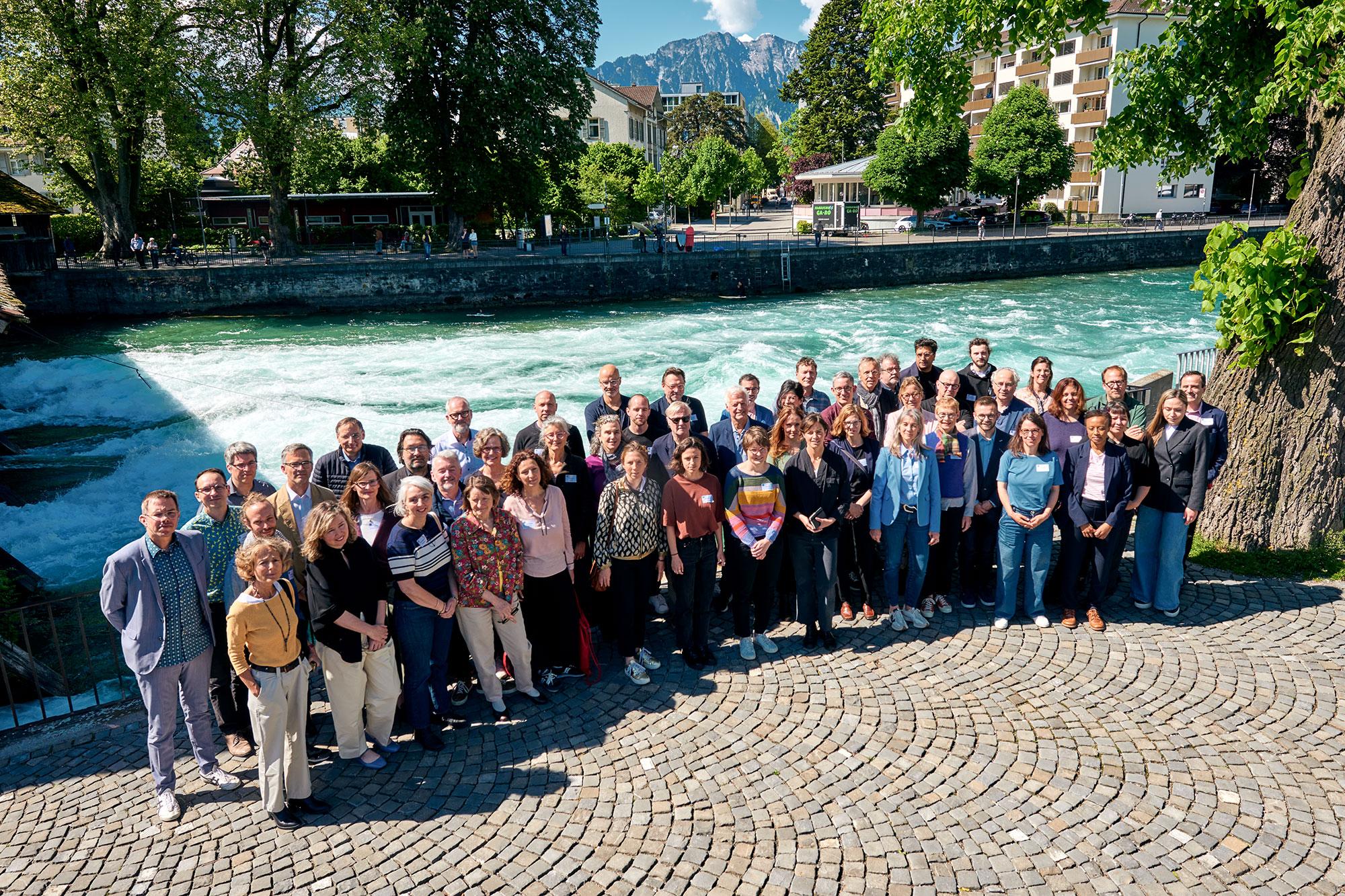
    Am 13. und 14. Mai 2025 traf sich die NFP-81-Community erstmals persönlich in Thun. Rund 80 Vertreterinnen und Vertreter aus 13 Forschungsteams präsentierten ihre Projekte in kurzen Vorträgen und gewährten dabei Einblick in die beeindruckende thematische Breite des Programms. Ergänzt wird diese akademische Vielfalt durch die 45 Praxispartnerinnen und -partner, die mit ihrem Praxiswissen die Forschungsarbeiten bereichern. Insgesamt sind über 130 Personen direkt am Programm beteiligt. Ein klares Zeichen für die starke Verankerung des NFP 81 in Wissenschaft, Wirtschaft und Gesellschaft.

    Impulse aus der Praxis: Stadt Thun als Gastgeberin
    Der erste Veranstaltungstag endete mit zwei aufschlussreichen Vorträgen von Dr. Raphael Lanz, Stadtpräsident von Thun und Florian Kühne, Stadtarchitekt von Thun. Beide betonten die entscheidende Rolle eines offenen Dialogs in der Baukultur und die Bedeutung interdisziplinärer Zusammenarbeit. Diese Perspektiven lieferten wichtige Impulse für die Arbeit in den Forschungsprojekten, die das Ziel haben, ökologische und soziale Fragen in der Baukultur stärker zu verknüpfen.

    Austausch über gemeinsame Herausforderungen
    Der zweite Veranstaltungstag diente dazu, die gemeinsamen Herausforderungen und Schnittmengen der vielfältigen Forschungsvorhaben zu identifizieren. Dr. Oliver Martin vom Bundesamt für Kultur und Prof. Ivana Katurić, Co-Autorin eines Handbuchs für das New European Bauhaus, gaben den Auftakt für einen intensiven Austausch. In gemischten Breakout-Sessions diskutierten die Teilnehmenden engagiert darüber, wie sich unterschiedliche Perspektiven und Kompetenzen bündeln lassen, um innovative und nachhaltige Lösungen für den gebauten Raum zu entwickeln.

    Gemeinsame Vision und positives Fazit
    Zum Abschluss des Treffens zeigte sich Prof. Dr. Paola Viganò, Präsidentin der Leitungsgruppe, erfreut über den intensiven Austausch und die Aufbruchstimmung: «Ich freue mich zu sehen, dass hier eine Gruppe entsteht, die ein gemeinsames Ziel teilt. Wir alle möchten mit diesem Programm den Diskurs über den ökologischen und sozialen Wandel des gebauten Raums voranbringen.» Dieser Satz bringt das gemeinsame Selbstverständnis der Teilnehmenden auf den Punkt: Das NFP 81 ist keine Aneinanderreihung isolierter Projekte, sondern eine Gemeinschaft mit einer gemeinsamen Mission.

    Transparenz und Partizipation
    In den kommenden Tagen werden auf der Webseite des NFP 81 die Porträts der einzelnen Projekte aufgeschaltet. Neben prägnanten Beschreibungen der Forschungsvorhaben werden dort auch die Praxispartner vorgestellt, die im Programm eine tragende Rolle einnehmen. Dieser transparente Einblick soll nicht nur den Austausch innerhalb der Community fördern, sondern auch eine breitere Öffentlichkeit ansprechen und zum Mitdenken und Mitwirken einladen.

  • Historic spa centres in the canton of Vaud sustainably renovated

    Historic spa centres in the canton of Vaud sustainably renovated

    The renovated buildings in Bière, Dommartin, Romainmôtier, Rougemont and Vufflens-le-Château date from the 17th to 19th centuries. The restoration was carried out with the utmost care in order to preserve the historical substance. At the same time, facades, roofs, windows, insulation and technical installations were modernised to increase energy efficiency without changing the original character of the buildings.

    “Every restored stone, every renovated roof conveys a message to future generations, that of a canton that takes care to preserve its heritage. By modernising these five cures, we are combining heritage conservation with sustainable development,” emphasised Isabelle Moret, Head of the Cultural Heritage Department, during her visit to the site.

    Strengthening the local economy through traditional crafts
    The renovations were carried out in close collaboration with regional craftsmen. This not only strengthens the local economy, but also provides the canton with valuable craftsmanship expertise. The project shows that monument protection and sustainability are not opposites, but together form a forward-looking strategy for building culture.

  • Davos Baukultur discusses sustainable transformation of the built environment

    Davos Baukultur discusses sustainable transformation of the built environment

    At its annual meeting in Geneva on 18 June, the Davos Baukultur Alliance set the course for a sustainable transformation of the built environment. At the conference, which was opened by Federal Councillor Elisabeth Baume-Schneider, relevant approaches and successful models from practice were discussed, the Federal Office of Culture reported in a press release. Founded in 2023 in partnership with the World Economic Forum(WEF), the alliance is convinced that sustainable, circular and affordable construction is worthwhile from a social, environmental and economic perspective.

    The Davos Baukultur Alliance currently comprises 27 countries, 21 international construction and real estate companies and a number of civil society and international organisations. “The Davos Baukultur Alliance stands for the need to tackle the diverse challenges of the present and future together,” says Alois Zwinggi, Managing Director of the WEF, in the press release from his speech at the conference. “With its cross-sectoral structure, the Alliance is a role model for the effective and efficient creation of better living spaces for all.”

    One of the Swiss founding partners is the globally active building materials group Holcim. “Our built environment must be designed with people at the centre and in successful collaboration between the private and public sectors and civil society,” said Cédric De Meeûs, Head of Public Affairs & Government Relations at Holcim, at the conference.

  • Birsstadt honoured with the Wakker Prize

    Birsstadt honoured with the Wakker Prize

    The Swiss Heritage Society is awarding this year’s Wakker Prize to the Birsstadt association. It honours the cooperation between nine municipalities in the canton of Basel-Landschaft and the Solothurn municipality of Dornach in solving the challenges in the agglomeration. This cooperation lays the foundation for repairing the uncoordinated growth of the area at the gates of the Basel metropolis.

    In its press release, Heimatschutz praises in particular the upgrading of the natural and living space along the Birs, the careful further development of important industrial sites and the safeguarding and strengthening of the architectural heritage. However, Birsstadt also addresses overarching strategies in the areas of landscape, settlement, mobility and adaptation to climate change.

    The Birsstadt association was founded in 2018. In addition to Dornach, it includes the municipalities of Aesch, Arlesheim, Birsfelden, Duggingen, Grellingen, Muttenz, Münchenstein, Pfeffingen and Reinach. Together, the ten municipalities have a population of around 94,000. The association sees great opportunities in being honoured by the Heritage Society. It wants to use this opportunity to make the Birsstadt better known throughout Switzerland, it writes in its own press release. It also intends to launch a project this year on dealing with building culture in the region.

    The award will be presented on 22 June as part of a Wakker Prize celebration on the Domplatz in Arlesheim.

  • Under pressure to grow

    Under pressure to grow

    The problem is recognised: More people who at the same time want more and more living space per capita. According to the Federal Statistical Office, Switzerland will have exactly 10,015,400 inhabitants by 2040. Space is in short supply. Solutions for sustainable and quality settlement development are neither simple nor can they be realised in the short term.

    In his article, Andres Herzog, architect and editor of the magazine Hochparterre, uses examples from the city, agglomeration and village to show how higher density is possible while at the same time preserving and creating new architectural qualities. Balz Halter, Chairman of the Board of Directors of Halter AG, emphasises the importance of urban planning across parcels. In the interview, economist and happiness researcher Mathias Binswanger pleads for moderation and thus less living space per capita. But he also states clearly: without growth we will run straight into the crisis.

    For decades we have practised building on greenfield sites. This was easy and fast, especially in times of low interest rates. The consequences in space are obvious and painful. We have to get away from this culture of building. Densification does not mean tabula rasa. Building in the existing fabric, i.e. building and maintaining where many people already live and feel comfortable, is the new discipline. Quality inner development will become the standard for all building and planning offices. This

    this also includes a mindful approach to buildings and open spaces that are worthy of protection, because in the best case scenario this creates more desire for density.

  • Chalet. Longing, kitsch and building culture

    Chalet. Longing, kitsch and building culture

    Switzerland loves its chalets. Foreign travellers also associate temporary living during skiing and hiking holidays with the charm of the wooden chalet. But what actually is a “chalet”? Are there characteristics that make a cosy wooden house a chalet? Is it the wide overhanging roof? Is it the geraniums in front of the windows, the carved roof beams? Or is the “chalet” simply a symbol of the longing for alpine nature and thus an invention, a myth? The more precisely one tries to grasp the chalet, the more blurred its contours become.

    In the exhibition “Chalet. Sehnsucht, Kitsch und Baukultur” (10 March to 30 June 2023), the Swiss National Library and its cooperation partner Gelbes Haus Flims take a winking, informative and entertaining look at the chalet. It approaches this Swiss phenomenon via the three focal points of longing, kitsch and building culture. It shows how the chalet became a romantic image of longing. It traces the path of the “Laubsägeli-Chalet” to becoming an export hit and, in small format, a souvenir. It presents current buildings that deal freely with this type of house.

    A playful approach
    The exhibition offers a playful approach to the subject of the chalet from different angles and via different media: text, images, film, graphics, sound, interactive stations and objects. On the one hand, the exhibition makes use of loans: from toys and models to photographs of contemporary chalet buildings (e.g. by Gion Caminada) and “false chalets”, which are actually bunkers. On the other hand, collection holdings of the National Library are presented. For example, works from the Swiss Literary Archives (archives of the author Daniel de Roulet, his publication “Un dimanche à la montagne”), from the Prints and Drawings Department (small masters, posters) and publications on the subject of chalets from the General Collection will be shown.

    Ultimately, the exhibition “Chalet” contributes to a more precise understanding of the phenomenon of the chalet, i.e. to answering questions such as: What makes a chalet? Why is it a symbol of the longing for alpine nature? And what does it mean at a time when many have moved to the countryside (for corona reasons)? In addition, the show shows what the contemporary chalet can look like and is thus also informative for those interested in architecture and design.

    Varied accompanying programme to deepen the content
    On the one hand, the Swiss National Library has planned events for a broad public to accompany the exhibition: Concerts, readings, creative workshops, a silent disco, guided tours of the stacks and much more will be offered for young and old at both the Bern Museum Night on 17 March 2023 and the BiblioWeekend, the weekend of libraries open throughout Switzerland, on 25/26 March 2023. In addition, on 2 May 2023, the curator will give a guided tour of the exhibition. On the other hand, the National Library is focusing on digital cultural mediation: In the podcast “Gegensprecher”, four experts will explore the individual exhibition lines together with the curator and contribute their knowledge and views in conversation. In addition, on the website kleinmeister.ch, under the title “Chalets in all pictures”, historical pictures of Swiss houses from the National Library’s Prints and Drawings Department are prepared in such a way that viewers can immerse themselves in Switzerland’s early building culture.