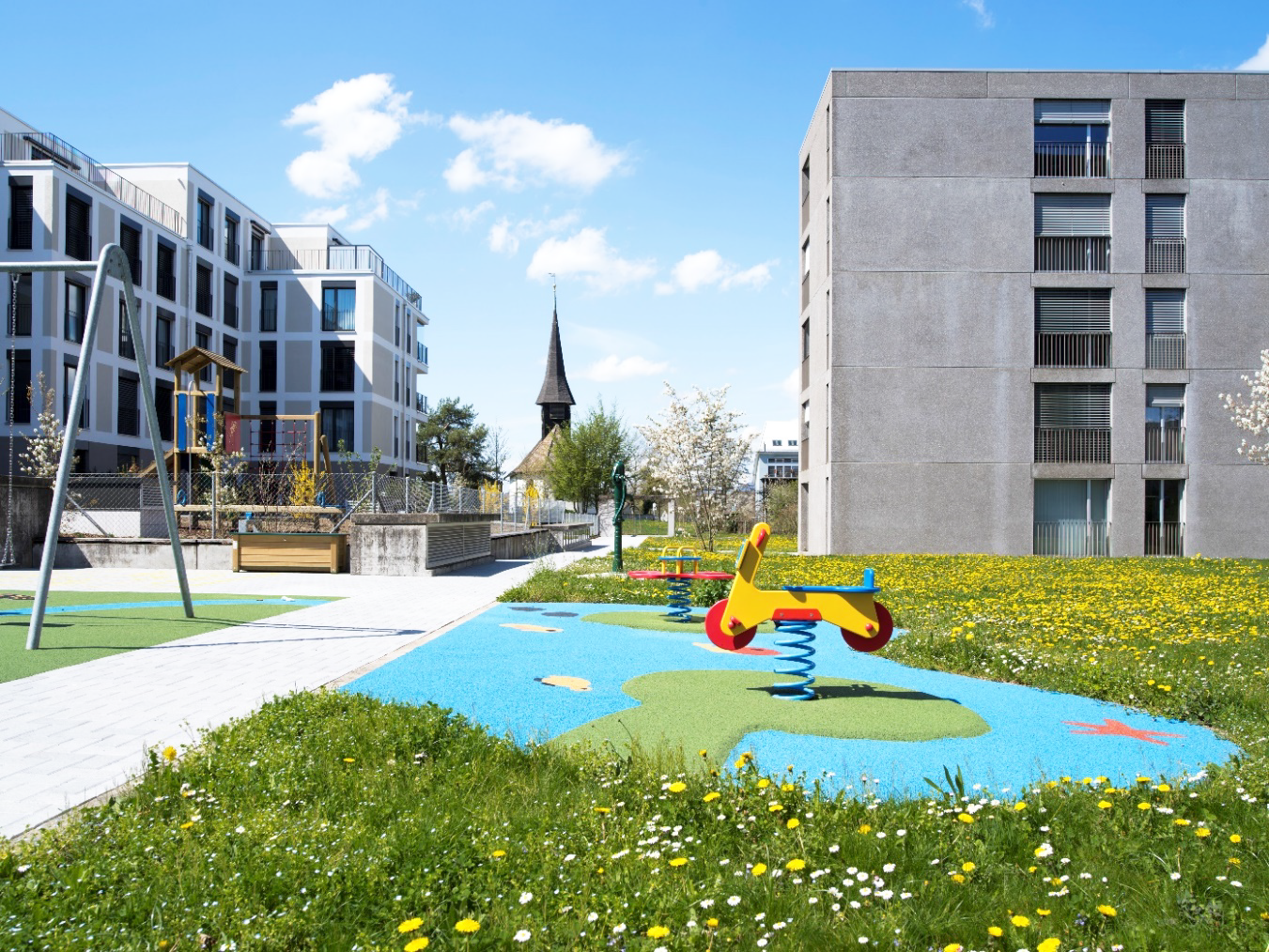
Residential construction is a key factor in sustainable urban and spatial development. Switzerland is faced with the task of creating new living space without unnecessarily taking up valuable land outside existing settlement areas. The findings of the Federal Office for Spatial Development show that the construction of existing housing in particular will play a key role in future development. However, this is associated with more complex challenges than new construction on previously undeveloped land.
Where are new apartments being built?
An analysis of residential construction activity between 2018 and 2022 shows clear patterns. Rural and peri-urban municipalities show a higher level of new construction activity in relation to their primary housing stock than urban areas. Nevertheless, the proportion of new builds on previously undeveloped building plots has decreased overall, while the proportion of construction in existing buildings now accounts for 59% of building permits. In urban areas, residential construction is increasingly concentrated in existing residential areas, while growth continues to be recorded on the outskirts of settlements.
The challenge of building on existing properties
Building housing on existing sites is more complex than developing new building areas. One key finding is that municipalities with large undeveloped building land reserves have less building activity in existing areas. The pressure for redensification is lower where there is still sufficient space for new buildings. At the same time, targeted measures by the municipalities and high-quality construction projects can make a positive contribution to inner development and create incentives for the use of existing structures.
Drivers of and obstacles to building activity
Building activity on undeveloped land is easier to analyze as it is strongly influenced by measurable factors such as property price trends and rent levels. Case studies show that municipalities with an active housing policy have a higher rate of inner-city development. Municipal measures such as targeted advice, land policy or attractive public spaces can provide decisive incentives for redensification.
Quality as the key to acceptance
Another success factor is the quality of the construction projects. Social acceptance is higher when construction projects not only create additional living space, but also contribute to the quality of the settlement. This includes publicly accessible open spaces, the promotion of biodiversity and socially acceptable housing. Such quality criteria are particularly important in inner-city development, as structural changes often take place in the direct residential environment of the residents.
Settlement development a long-term change
Ten years after the Spatial Planning Act came into force, initial data shows that the transformation towards inner-city development has begun. Particularly in urban areas such as Zurich, Basel and Lausanne, more and more apartments are being built by converting or adding storeys to existing buildings. However, there is also an increasing trend in peri-urban and rural communities towards the use of already built-up areas.
Strategies for residential construction
The analysis of residential construction activity shows that targeted control through spatial planning is possible. Municipalities that actively promote inner-city development are better able to meet the challenges of residential construction. Successful strategies include a forward-looking land policy, high-quality construction projects and close cooperation between the public and private sectors. Inner development remains one of the central tasks for future-oriented spatial development in order to meet the growing demand for housing in a resource-efficient manner.
