Tag: Baustart

  • Pioneering work and education centre being created in Winterthur

    Pioneering work and education centre being created in Winterthur

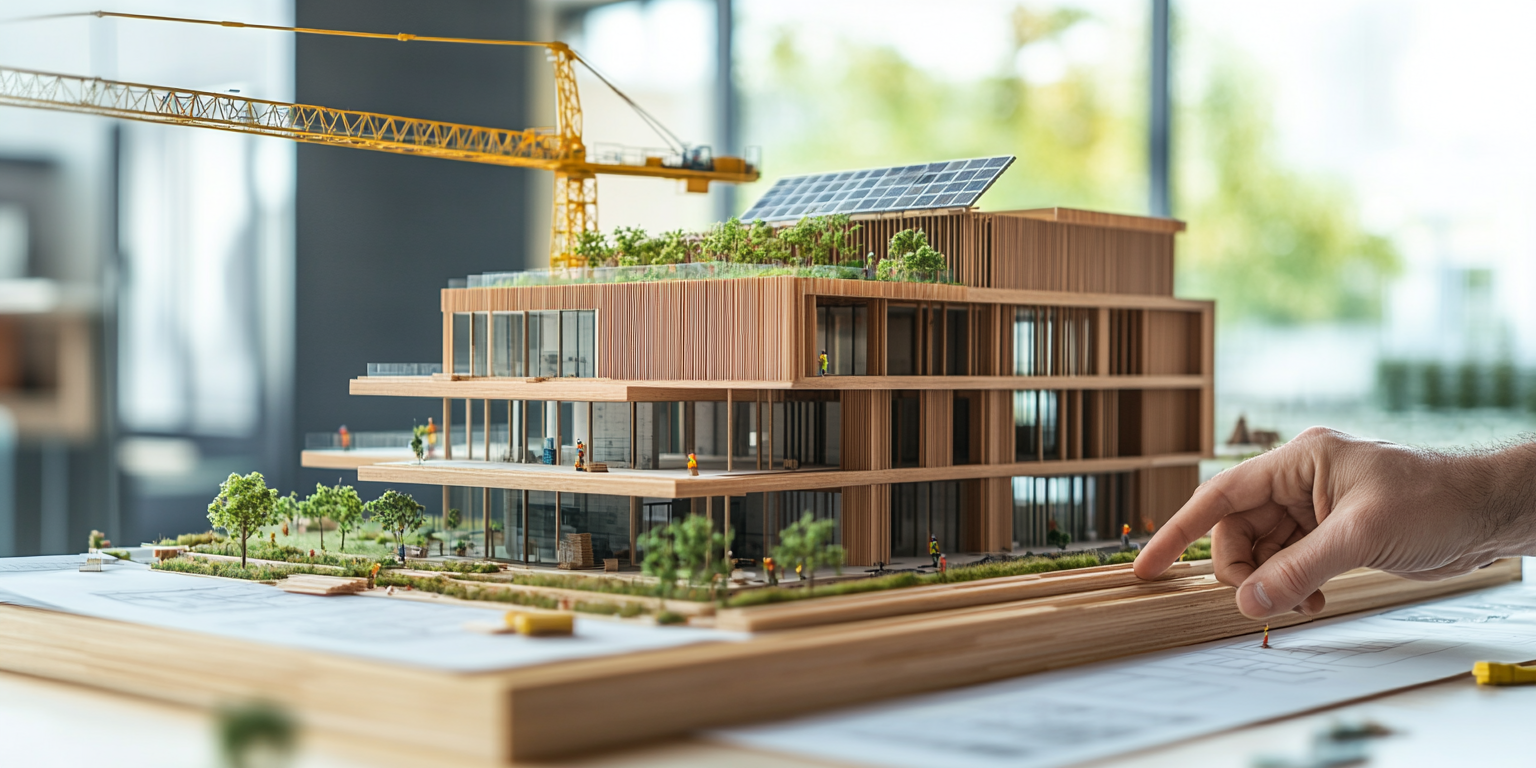
    The Green Spin project aims to change the world of work in a sustainable way. To this end, the House of the Future is being built in Winterthur with 100 per cent sustainability and 100 per cent work quality, according to the Green Spin website. The project has now found its second anchor tenant in the form of the Foundation for Speech Therapy Schools in the Canton of Zurich, Green Spin explains in a press release.

    “Green Spin offers the perfect setting for innovative educational approaches,” Peter Felix from Felix Partner Architektur Design, which initiated and developed the project, is quoted as saying. “With the Stiftung Sprachheilschulen im Kanton Zürich, we have gained another tenant that ideally complements our concept of openness, networking and forward-looking development.” The foundation currently operates at four locations in Zurich, Winterthur, Fahrweid in the Limmat Valley and Stäfa.

    Green Spin received its building permit last year and construction is due to start this year. The centre is expected to be ready for occupation in 2027. In addition to the foundation, the leisure sports provider Padelta has already reserved premises in Green Spin.

    Green Spin is intended to offer young and established companies an ideal environment. The building is designed as a modular timber construction and will have a photovoltaic façade and wind power for its own energy supply. In addition to bright working environments, the project envisages meeting places such as a roof garden, a courtyard forest and market alleyways.
  • Start of construction for the Bern West performance upgrade

    Start of construction for the Bern West performance upgrade

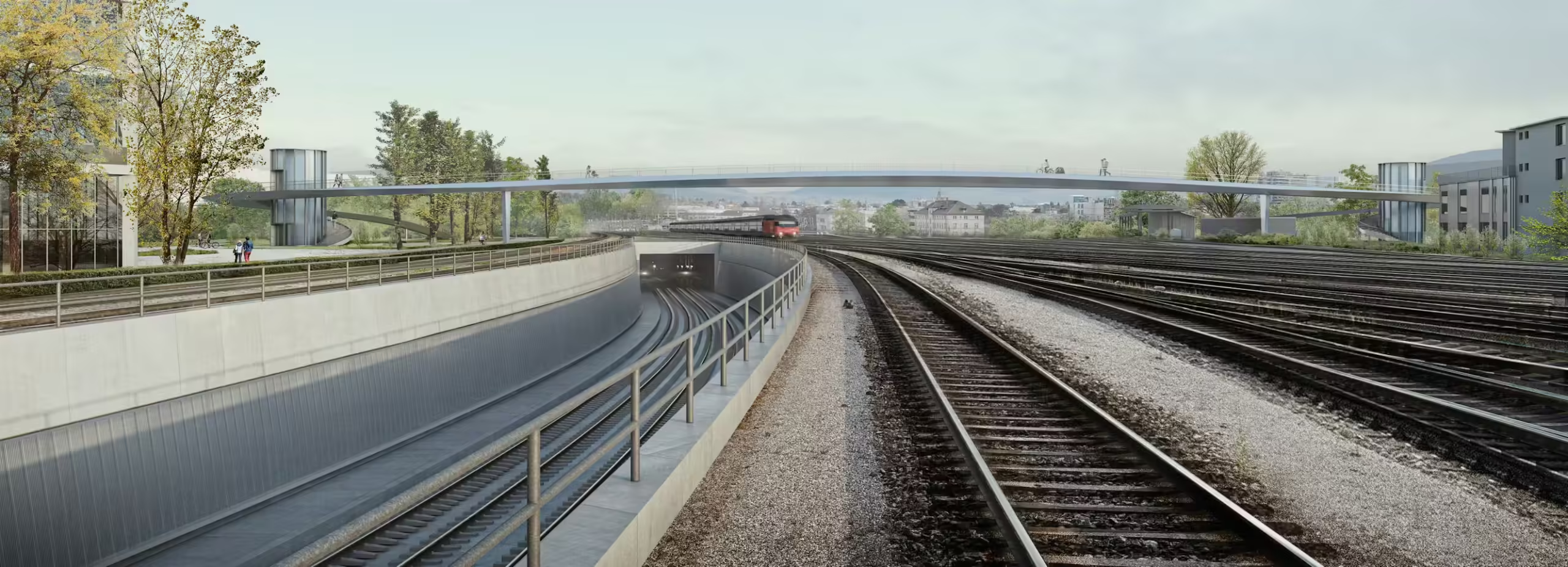
    SBB, in cooperation with the City of Bern and BLS, is launching one of the region’s most important infrastructure projects, the “Bern West performance upgrade”. The aim is to make the Bern railway junction more flexible, more stable and more efficient. The major project comprises five sub-projects, including the new Holligentunnel, the Europaplatz Nord railway station and the Steigerhubel overpass.

    A milestone for the Bern railway junction
    A particular focus is on improving regional transport. The new Holligen tunnel will allow regional trains to run without crossings, enabling stable and more frequent connections, such as the quarter-hourly service between Münsingen and Flamatt. The urban Europaplatz neighbourhood will also have a direct connection to public transport thanks to the new station and a larger subway.

    Challenges for travellers and residents
    Rail operations will be maintained during the construction period, which will last until at least 2036. Nevertheless, travellers will have to be prepared for timetable changes and replacement buses. Stöckacker station will close in December 2025 and will be replaced by tram line 8 until Europaplatz Nord opens in 2027.

    For local residents, the work will result in restrictions due to construction noise, dust and logistics traffic. However, the builders promise to minimise emissions as far as possible and to carry out replacement planting for felled trees.

    Sustainable future and financing
    The total cost of the project is around 900 million Swiss francs and will be financed by the federal government’s 2025 expansion programme. The new pedestrian subway at Europaplatz Nord, a contribution from the City of Bern, will be covered by a framework credit of CHF 60 million.

    With the completion of the “Bern West performance upgrade”, Bern’s railway infrastructure will meet the requirements of modern, sustainable mobility – a benefit for the entire region.

  • Start of construction for the extension and renovation of Hofwil High School

    Start of construction for the extension and renovation of Hofwil High School

    Hofwil High School is being expanded with the construction of a new school building and a triple sports hall to accommodate the increasing number of pupils. Originally designed for ten classes and 200 pupils, the school currently accommodates 21 classes with around 460 pupils. Temporary buildings that were erected in 2013 and 2017 are to be replaced by the new buildings. The new school building will include classrooms and practical rooms, including two chemistry laboratories. An outdoor cafeteria extension is also planned. The new triple sports hall will be equipped with cloakrooms, sanitary facilities, a workroom for teachers and a theory room.

    Move into the new buildings expected in summer 2026
    Completion of the new school building and the triple sports hall is planned for summer 2026. After completion, the focus will be on the structural refurbishment of the existing listed buildings, which should be completed by autumn 2027. These renovations include necessary room changes and maintenance measures in order to meet current educational standards. At the same time, the existing temporary school rooms are to be demolished and used for other purposes.

    Sustainable construction and energy concept
    Both new buildings will be constructed in accordance with the Minergie-P-ECO standard and equipped with photovoltaic systems to ensure sustainable and energy-efficient operation. This commitment to sustainability emphasises the future-oriented focus of Hofwil High School and sends out a strong signal of ecological responsibility in the education sector.

    Financing and total costs
    The total costs for the extension and refurbishment of Hofwil High School amount to CHF 65.63 million. This investment will not only cover current space requirements, but will also provide future generations with a modern and well-equipped learning environment. The financing of these extensive building measures is a sign of the canton’s commitment to education and infrastructural development in Münchenbuchsee.

    Historical significance and future prospects
    Hofwil High School, last renovated in the early 1980s, is an important part of the educational landscape in the region. The planned extensions and refurbishments are not only a response to current space requirements, but also an investment in the future. With the new infrastructure, the school will be able to cope with increasing pupil numbers and at the same time fulfil modern educational requirements.

    The remodelling and extension plans for Hofwil High School are an important step towards ensuring high-quality education in the region. With modern teaching and sports facilities, the school will be optimally prepared to meet the needs of the pupils and offer them a comprehensive, contemporary education.

  • Ground-breaking ceremony for Bern’s first PlusEnergy neighbourhood

    Ground-breaking ceremony for Bern’s first PlusEnergy neighbourhood

    Today’s ground-breaking ceremony symbolically marked the start of the PlusEnergy Aarerain neighbourhood in Worblaufen. Following an extensive development phase, preparations for the construction site began in September 2023.

    The new development will offer 189 flats for up to 400 residents. In addition to the flats, a daycare centre and studio spaces are also planned on the ground floors, which will enliven the neighbourhood square. The project’s slope path will provide barrier-free access to the Aare area and the municipality of Ittigen’s new leisure and water sports centre. “Good things come to those who wait,” is a well-known saying,” says a delighted Marco Rupp, President of the municipality. “The Aarerain project completes the reorganisation of the Aare area in Worblaufen and fits in perfectly with our sustainable basic ideas of urban development.”

    PlusEnergy neighbourhood produces energy surplus
    Over the course of the year, the new housing estate will produce more energy than it consumes in accordance with the PlusEnergy neighbourhood energy standard based on weighted criteria. This will be achieved through the consistent use of photovoltaics on the roofs and façades of the six to eight-storey buildings. The PV panels on the façades will be realised in a green-blue colour and reflect the play of colours of the Aare and the surrounding area. Heat is generated by means of geothermal probes; the geothermal probes are regenerated in summer by cooling the flats via the underfloor heating.

    The “PlusEnergy neighbourhood” energy standard launched by the Swiss capital region promotes sustainable development in the building sector with a simple and clear definition, thereby contributing to the implementation of the Swiss government’s Energy Strategy 2050. The cantons and municipalities are working together with renowned infrastructure companies and investors. Cantonal Councillor Christoph Ammann adds: “PlusEnergy neighbourhoods enable sustainable development – without compromising on living comfort. I am delighted when such flagship projects shine beyond the capital region.”

    Close to nature and sustainable
    However, the development will not only score points in terms of its positive energy balance. The sustainable project is characterised by attractive flat layouts, a natural living environment with a view of the Aare and the greatest possible preservation of the green spaces on the banks of the Aare. Keeping the green spaces free is made possible by the compact construction of the site in the eastern part of the plot. Thanks to this skilful urban planning in the sense of economical use of the land, a good half of the plot remains undeveloped and natural. The car-free neighbourhood square between the buildings offers a high quality of stay and counteracts overheating in summer with its differentiated paving and greenery.

    The symbolic ground-breaking ceremony on 9 April 2024 marked the official start of the development of the Aarerain PlusEnergy district in Worblaufen, a project by Losinger Marazzi in collaboration with the CPV/CAP Coop pension fund and the municipality of Ittigen. The architecture was designed by Fischer Architekten AG. This ultra-modern residential development is scheduled for completion at the end of 2026 and will not only offer 189 flats, but also communal facilities such as a daycare centre and studios to enliven the neighbourhood.

  • Implenia starts work on the tunnel in Hamburg

    Implenia starts work on the tunnel in Hamburg

    Construction work on Hamburg's district heating tunnel began on August 5, Implenia announced in a statement . The construction and real estate company from Opfikon is realizing the project on behalf of Wärme Hamburg . The 1.16 kilometer long tunnel will cross the Elbe about 2 kilometers west of the Elbe tunnel for the autobahn.

    From the winter of 2024/25, this will be used to transport waste heat from industrial processes in the south to the north of the Hanseatic city. This is a requirement so that the coal-fired power plant in Wedel can be replaced by energy from the future Hafen Energy Park of Hamburger Energiewerke GmbH . "We are pleased that we can plan and implement this large and complex infrastructure project for the Hamburger Energiewerke and thus contribute to a sustainable energy supply in Hamburg," said Thomas Fiest, Head of Tunneling Germany at Implenia.

    In the first construction phase, Implenia is constructing the start and target shaft with diaphragm walls 1.5 meters thick and 30 meters deep. Then a tunnel boring machine will bore the actual tunnel with a diameter of 4.55 meters. Access and operating equipment for the operation should be accommodated in the shafts.

  • Halter redesigns the center of Wetzikon

    Halter redesigns the center of Wetzikon

    With the demolition of buildings in the northern part of the planned new development, the Schliere-based construction company Halter AG has started to redesign the center of Wetzikon . According to the media release , a lively center with shops, services and apartments is to be built there by the end of 2025. In the past two years, Halter AG, as the developer, has brought the project to construction maturity together with the Wetziker architectural office meierpartner . The investor is Turintra AG Zurich, represented by UBS Fund Management. The investment volume on the 9013 square meter area amounts to around 138 million Swiss francs. 

    The shell construction work for the building construction of the first stage is to begin in the spring. Delivery is planned for November 2023. The second stage should be ready for occupancy in November 2025. According to a statement by Halter AG, the superstructure offers space for shops and restaurants, public-oriented uses and a medical center. Rental apartments ranging in size from 2.5 to 4.5 rooms for different target groups are being built on the upper floors. Some of the rental apartments are offered according to the MOVEment concept, in which electronically movable room elements create living comfort in a small space.

    114 apartments and 35 MOVEment apartments are planned. 3,100 square meters are planned for the services area, and 4,600 square meters for sales and gastronomy. Garages for 176 cars, 34 motorcycles and 450 bicycles will be created.

    A central city lane for pedestrians and passers-by and a city square are to be created in Wetzikon. A "Spanish Step" is intended to serve as a cross connection between Bahnhofstrasse and Jörg-Schneider-Park as well as the Wetzikon vocational school.