Tag: Bauwesen

  • Research project develops global corrosion index for construction applications

    Research project develops global corrosion index for construction applications

    Sky-Frame from Frauenfeld and the WITG are jointly investigating whether a global corrosion index can be developed on the basis of available weather and climate data. This project is being supported with an innovation cheque from Innosuisse. The maximum funding amount of CHF 15,000 from the Swiss Innovation Agency is a credit for a preliminary study. It enables ideas, idea studies and analyses of innovation and market potential to be commissioned from a Swiss research partner and collaboration with this partner to be tested.

    The WITG is contributing its expertise in corrosion and the evaluation of material properties to the project with Sky-Frame. According to a press release, the first step involves linking real project locations with available climate databases and systematically analysing existing empirical values from the application. Taking into account factors such as proximity to the sea, wind direction and project-specific microclimate conditions, this will result in an initial, scientifically sound approach to risk classification.

    “This project is an example of how innovation ideas do not have to be in the realm of ‘rocket science’ in order to be funded,” says the WITG. Instead, they should offer the company a sustainable benefit and future added value and include a risk component during implementation and thus the possibility of failure.

  • New concrete reduces CO2 emissions in the construction industry

    New concrete reduces CO2 emissions in the construction industry

    Omya is a new partner in NEST, the modular research and innovation building of Empa and Eawag in Dübendorf. In the Beyond.Zero unit, which has been based there since the beginning of 2024, they want to test a cement-reduced concrete that they developed in a joint research project, according to a statement from Empa.

    Omya contributed its expertise as a globally active specialist in industrial materials. “The fact that we can now jointly develop sustainable building materials and test them directly in NEST under real conditions accelerates the transfer of innovations into climate-friendly construction methods,” said Empa Director Tanja Zimmermann.

    This innovative building material replaces up to 70 per cent of its clinker content with natural minerals. As Empa explains, this significantly reduces its CO2 footprint. “For a new type of concrete to be widely accepted, it needs to be tested in practice,” Empa researcher Mateusz Wyrzyklowski from Empa’s Concrete and Asphalt department is quoted as saying. “By using it in the NEST Beyond.Zero unit, we can comprehensively validate our cement-reduced concrete: from processing to durability.”

    The aim is a building material “that not only fulfils the ecological requirements, but also impresses in terms of workability, mechanical properties, volume stability and durability,” says Empa. The Beyond.Zero unit goes beyond the net zero target in construction. It pursues the vision that buildings can serve as carbon sinks in the future – in other words, they will have a negative CO2 balance on balance. The construction sector currently accounts for around 28 per cent of CO2 emissions in Switzerland.

  • New building in Sursee for cycling team

    New building in Sursee for cycling team

    According to an article in the “Luzerner Zeitung”, the Tudor Pro Cycling Team, currently based in Schenkon, is about to move to Sursee. The team would like to invest 18 million Swiss francs in a new six-storey headquarters there. The initiator is Sette Immo AG, which runs not only the professional team but also a junior team through its Sette Sports Group. Fabian Cancellara, a former racing cyclist, is not only team manager of the Tudor Pro Cycling Team, but is also active at Sette Immo AG.

    The team’s new headquarters is due to be completed in September 2026 and will provide space for storage, workshops, training and meeting rooms. Offices for the administration and recreation rooms for the drivers will also be built, as well as a showroom for the team. A photovoltaic system will also be installed on the roof.

    The team, which is sponsored by watch manufacturer Tudor from Geneva, is currently taking part in the Tour de France until the end of the month.

  • Swiss Cultural Message 2025–28 for building culture

    Swiss Cultural Message 2025–28 for building culture

    The draft Cultural Message 2025-28 places building culture at the centre of sustainable spatial development. In the face of climate change, resource scarcity and the loss of biodiversity, the design of living space is gaining strategic importance. With its holistic approach, Baukultur provides answers to key challenges and enables a sustainable future.

    Design as a social mission
    Baukultur encompasses all spatially effective activities from monument preservation and urban planning to the design of contemporary buildings. Well-designed buildings, settlements and infrastructure promote the well-being of the population, strengthen the cultural heritage and combine ecological, social, economic and cultural values. This integrative quality makes Baukultur a decisive instrument for the transformation of cities and regions.

    Forward-looking impetus from Davos
    The international Davos Baukultur process and the latest declarations by European culture ministers confirm the need for a holistic understanding of Baukultur. Switzerland is taking up this impetus and is planning to enshrine Baukultur in the Nature and Cultural Heritage Protection Act, an important step towards strengthening the federal government’s role model function and making targeted use of existing funding instruments.

    Circular economy and innovation as guidelines
    Future building culture must be consistently geared towards the circular economy and sufficiency. New standards such as life cycle limits for emissions, the conscious use of resources and a culture of remodelling form the foundation. In addition, a culture of innovation is needed that promotes new materials, technologies and processes.

    Recommendations for coherent implementation
    The signatory organisations have made specific demands. The environmental sector should be more closely integrated, municipalities and cities should be included in advisory and training programmes and effective construction taxation should be taken into account when adjusting subsidies. In addition, a consistent application of the concept of Baukultur is required, for example in the Swiss Culture Awards or in the work of Pro Helvetia. The Swiss Building Culture Round Table offers itself as a national platform for coordination with international initiatives.

  • From a peripheral area to an urban neighbourhood with a vision

    From a peripheral area to an urban neighbourhood with a vision

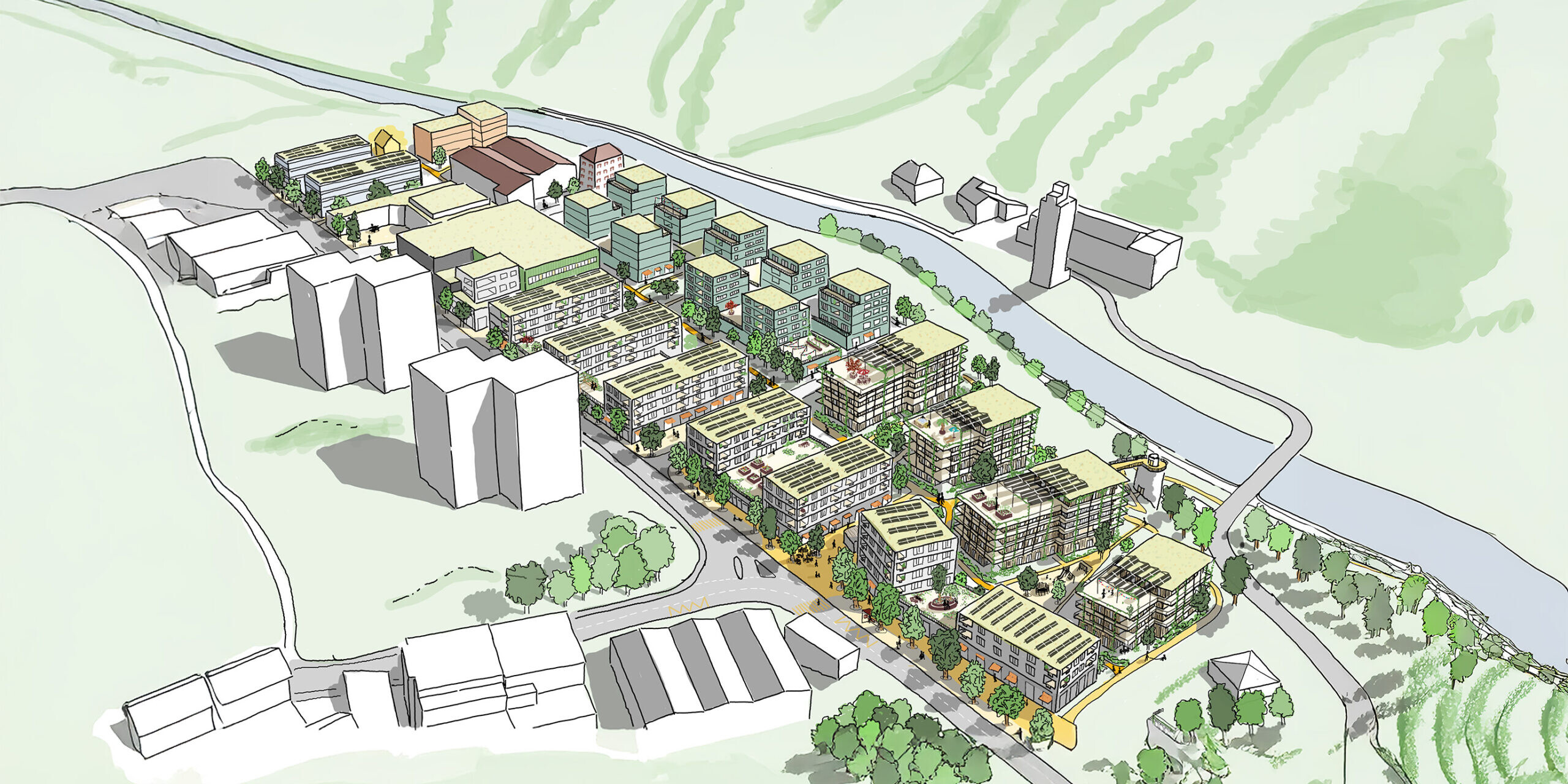
    Buchholz stands for a new urban beginning. On an area of around 36,300 m², an independent urban quarter is being created that combines living, working, exercise and socialising. The previously heterogeneous structure is giving way to a clearly organised mix of uses that combines spatial quality with ecological responsibility. The centrepiece of the development is the “green centre”. A centre with a school, sports facilities and open space, framed by high-rise residential and commercial buildings.

    From industrial site to lively neighbourhood
    The development is the result of a successful study commissioned by the Zurich architecture and planning office helsinkizurich. This formed the basis for a finely balanced indicative project with a development strategy that provides for a staged, in-depth planning process. Realisation will take place in three phases – tailored to the different interests of the owners. Particular attention will be paid to the architectural heritage: elements such as the listed powder tower will be carefully incorporated and respectfully integrated into the urban context.

    Neighbourhood life at the bottom, quality of life at the top
    Commercial uses and communal areas in the plinth zones along Buchholzstrasse characterise the public face of the neighbourhood. Above, light-flooded flats open up wide views of the landscape. Meeting spaces, courtyards and access axes promote social interaction. The graduated public realm allows both retreat and participation, a principle that does justice to urban life.

    Blue-green infrastructure as the backbone
    In the Buchholz neighbourhood, sustainability is not a promise, but a reality. Well thought-out water management with rainwater retention and evaporation areas relieves the burden on the infrastructure and improves the microclimate. Green roofs, permeable paving and climate-active open spaces create quality of life, are ecologically effective and have a convincing design.

    Strong identity, clear address
    The new promenade along Buchholzstrasse not only creates a functional access route, but also an identity-forming address for the new neighbourhood. The district thus positions itself between the scenic Linth area and the urban centre – open, permeable, forward-looking.

    Urban development with impact
    Buchholz is an example of urban development that thinks long-term and takes a differentiated approach. The project creates new living space and a modern form of urban quality on the outskirts of Glarus – networked, sustainable and with a view to the big picture.

  • BRUGG Pipes opens production in the USA

    BRUGG Pipes opens production in the USA

    BRUGG Pipes is about to deliver the first pipe rings for its CALPEX PUR-KING flexible pipe system, announced the Kleindöttingen-based company, which is part of BRUGG Group AG in Brugg, in a press release. The pipe rings were manufactured in the new production hall of BRUGG Pipes and Rovanco Piping Systems in Joliet in the US state of Illinois. In April last year, BRUGG Pipes and Rovanco agreed to set up a joint venture in Joliet to start production in the USA.

    The partner companies have invested around 20 million dollars in the new plant. Under the management of Pirim Dahinden from Switzerland, between 3,000 and 5,000 feet of the CALPEX PUR-KING pipe system will be produced there each year. BRUGG Pipes specialises in the production of pipe systems for liquids, gases and heat.

    “With the new production facility in the USA, we are increasing planning security for our customers, reducing delivery times and transport costs and are also not affected by potential US tariffs,” said Martin Rigaud, CEO of BRUGG Pipes, in the press release. “This gives us a decisive competitive advantage in the current market situation.” According to BRUGG Pipes, around 80 per cent of the raw materials processed in the new plant come from the USA.

  • Where electricity will come from in 2050

    Where electricity will come from in 2050

    For Switzerland to become CO₂-neutral by 2050, transport, heat supply and industry must be largely electrified. Today’s electricity demand of 56 terawatt hours will increase to around 75 TWh by 2050. At the same time, 23 TWh will come from nuclear energy. The necessary reorganisation of the energy system is far-reaching in technical, economic and social terms.

    Massive expansion of renewable energy
    According to the EDGE report, around 60 % of electricity must be covered by new renewable energies by 2050, specifically 45 TWh per year. This would be possible with 28 TWh from photovoltaics, 13 TWh from wind power and 4 TWh from biomass. To achieve this, photovoltaic capacity would have to be quadrupled to 26.8 GW. Wind power would need to be expanded 80-fold to 8.4 GW, especially for winter operation. According to the researchers, this is hardly realisable without strong subsidies.

    Limiting electricity imports makes the system more expensive
    The new Electricity Act limits net electricity imports in winter to 5 TWh. In order to meet this target, an additional 80 % more wind power, 11 % more gas capacity and 10 % more solar capacity would be required. This would increase electricity generation costs by 20 % and electricity prices could more than double.

    Europe remains decisive
    If European electricity trading were to be severely restricted, e.g. through a 70 % reduction in cross-border grid capacities, Switzerland would have to expand wind power by a further 20 %. Supply costs would rise by an additional 8 %. A survey by the EDGE consortium shows the conflicting priorities. 60 % of the population would like to cooperate with Europe, while at the same time 70 % want energy independence and favour domestic energy sources.

    Investments flow abroad
    Another study shows that more than half of the annual investments made by Swiss energy suppliers in large-scale renewable energy projects are channelled mainly to Germany, France and Italy. Only 1 % of these funds are invested in Switzerland. There is a lack of suitable projects or framework conditions in Switzerland. This means that Switzerland is often financing the energy transition indirectly, but not at home.

    Net zero has its price
    The cost of living could rise between 2020 and 2050, for example due to CO₂ taxes, emissions trading or higher production costs. The annual consumption loss of a household could be 0.63-0.75 %, depending on the global climate protection pathway. Without offsetting options abroad, the costs could rise to up to 1%. In the long term, however, this would be more favourable than the consequences of unchecked climate change.

    The energy transition is feasible and challenging
    A CO₂-neutral electricity supply by 2050 is technically possible if photovoltaics and wind power are massively expanded, imports are used intelligently and investments are channelled in a targeted manner. Access to the European electricity market remains crucial. At the same time, we need broad social support and an understanding that inaction will be more expensive than a bold transformation.

  • Erlenpark Näfels creates new living space

    Erlenpark Näfels creates new living space

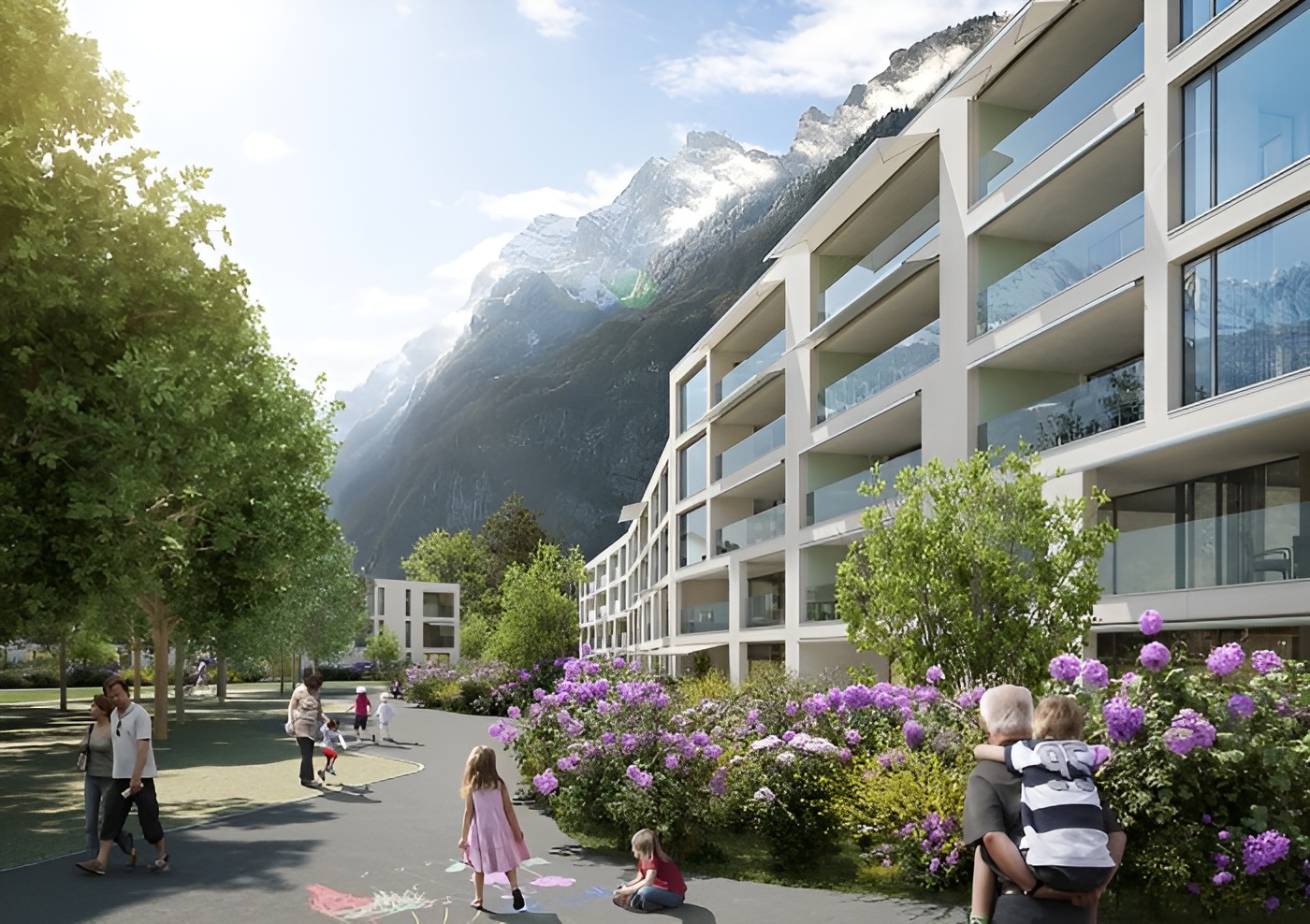
    On the 16,000 m² “Feld” site in Näfels, the municipality of Glarus Nord is realising a pioneering residential development together with FT3 Architekten AG. A total of ten apartment blocks with around 98 flats are being built in three rows of buildings. The flats are between 1½ and 5½ rooms in size and are aimed at people at all stages of life – from singles and families to senior citizens. The diverse range of apartments is intended to promote a social mix and revitalise the neighbourhood.

    Quiet inner courtyard as the centrepiece of the development
    The special geometry of the plot results in a diamond-shaped arrangement of the buildings, which enclose a green inner courtyard measuring around 6,800 m². It acts as the centre of the car-free development and offers space for people to meet and relax – protected from the noise of the surrounding traffic routes. The staggered residential buildings also provide a rhythmic structure and create architectural quality as well as optimal sunlight for the flats.

    Car-free and central access
    A central feature of the project is its consistently traffic-free design. Access and all parking facilities are bundled at a central point, keeping the entire residential area free of motorised traffic. This increases safety, creates attractive, liveable open spaces and meets the current requirements for residential and urban development.

    Signal for site development and building culture
    Municipal president Fritz Staub sees Erlenpark as a strong signal for municipal development. Shortly after the overall revision of the NUP II land use planning came into force, the project is an example of how high-quality, space-efficient residential construction projects can be realised in the canton of Glarus. The ground-breaking ceremony took place in April 2025 and the first construction phase will be completed by summer 2027, followed by the second and third phases by autumn 2028.

    Modern construction with high standards
    The planning and realisation by FT3 Architekten AG follows a clear architectural approach. Towards the street, the buildings appear closed and compact, while they open up towards the inner courtyard with generous balconies. The staggering of the storeys supports the natural lighting and gives the buildings a clear structure. Erlenpark is thus a successful example of modern, high-quality construction in the Glarus region. A project with a signal effect for site development in rural centres.

  • International expansion with a focus on emerging markets

    International expansion with a focus on emerging markets

    As part of its local-for-local strategy, Sika is expanding its presence in China, Brazil and Morocco. In China, the globally active speciality chemicals company for construction and industry has expanded its existing site in the Suzhou metropolitan region, Sika announced in a press release. The site produces polyurethane bonding and sealing solutions for the automotive, construction and industrial sectors.

    In Brazil, Sika has expanded its site near Belo Horizonte. In this strategically important industrial region of the country, Sika manufactures admixtures for ready-mix concrete, cement and mining. The company has built a new plant for mortar and admixtures near Agadir. From here, Sika intends to supply the south of Morocco and neighbouring markets.

    “These site investments reflect our customers’ trust in us and our long-term commitment to our markets,” said Sika CEO Thomas Hasler in the press release. “By expanding our local production capacities, we are not only improving flexibility, but also creating a resilient, sustainable foundation for our continued growth alongside our long-standing customers and partners.” Sika expects the construction industry in the three countries to grow by more than 4 per cent annually until 2028.

  • New residential neighbourhood planned in Weggis with 44 condominiums

    New residential neighbourhood planned in Weggis with 44 condominiums

    Halter AG has inaugurated work on the Chalet Weggis residential development with a ground-breaking ceremony, the Schlieren-based property developer announced in a post on LinkedIn. The ceremony is described there as “a significant milestone for this unique project on the Wyermatt site”. The residential development near Lake Lucerne comprises four buildings with a total of 44 condominiums.

    All four residential buildings stand on a common plinth level and are also connected by two contiguous basement levels, explains Halter in the project description. The basement levels house 62 garage spaces, bicycle storage rooms, private cellar compartments and technical and security rooms. Anyone buying a flat can design the interior fittings themselves using the Trend AG configurator.

  • OST thinks AI ahead

    OST thinks AI ahead

    Artificial intelligence is more than just a trend at the OST. It is an integral part of teaching and research. Rector Daniel Seelhofer emphasised that the OST specifically builds bridges between scientific excellence and practical application. More than 20 OST research institutes are now working with AI, often in collaboration with companies, administrations or the healthcare sector. The topic has been part of all degree programmes since 2021.

    The importance of this focus was emphasised by Bettina Surber, member of the St. Gallen cantonal government. She praised the OST as a driving force for Eastern Switzerland and pledged the canton’s political support for the university.

    From concrete to care to children’s language
    Various short presentations and films demonstrated the wide range of applications for AI at OST.

    Sustainable construction
    AI helps to optimise concrete mixes with reduced cement content for specific requirements.

    Focus on ethics
    How can AI be used fairly?

    Self-determined handling of data
    A digital “data account” is intended to give citizens more control over their information.

    Sport and intelligence
    Exergames train the intelligence of professional ice hockey players under physical stress.

    Healthy eating with digital support
    A smart app creates personalised meal plans – taking allergies, preferences and health goals into account.

    Agriculture with robots
    Agricultural robots carry out maintenance work such as irrigation or pest control independently.

    Care advice via chatbot
    A digital assistance system for caring relatives was developed in collaboration with the city of St.Gallen.

    Understanding children’s language
    An AI supports professionals in interpreting children’s expressions.

    Two panel discussions focussed on the social dimensions of AI. SRF presenter Florian Inhauser led the discussions. Questions about data protection, responsibility and inclusion were addressed. The discussion showed that technological development alone is not enough. Clear ethical guidelines and social dialogue are needed.

    AI as a tool, not an end in itself
    The second OST University Day made it impressively clear that artificial intelligence is already present in many areas of life – and is making real improvements possible. The decisive factor is how responsibly it is used. The OST is positioning itself as a key player in combining innovation with social benefits.

  • STRABAG builds utility lines in Arbon

    STRABAG builds utility lines in Arbon

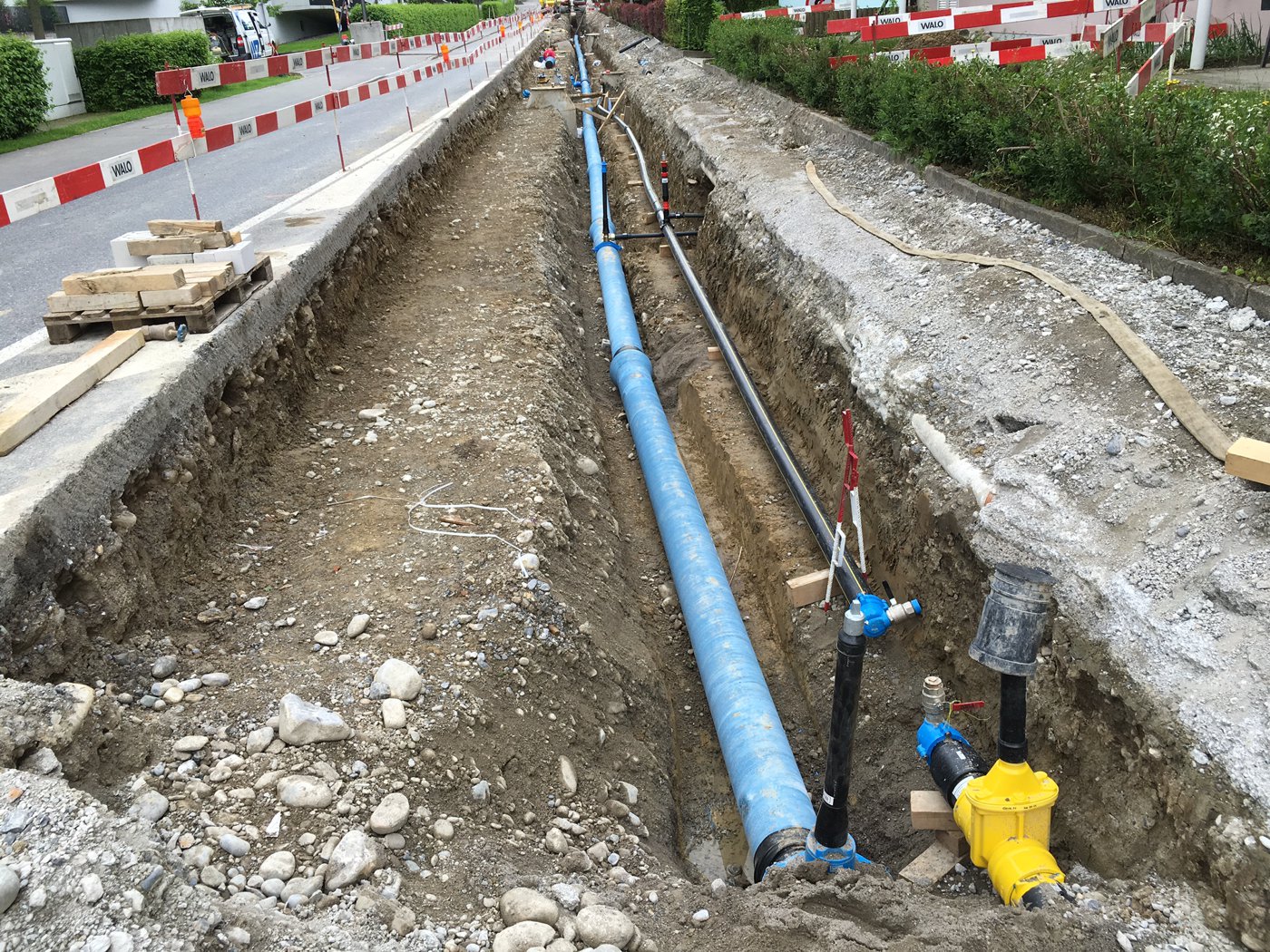
    The Schlieren-based construction company STRABAG AG is building new underground pipes in Arbon, according to a press release. According to the company’s press release, the service lines in Amriswilerstrasse and Egnacherstrasse in Arbon were in a state of serious disrepair. These service lines for water, electricity, gas and the Swisscom data cables are being completely renewed. A new rainwater drain will also be created as part of the work.

    According to STRABAG, the project is characterised by the cooperation between the municipality and the utility company. The construction costs will be borne jointly.

    According to STRABAG, the last renovation of the utility lines was decades ago. Surprises were therefore inevitable during the work. For example, the employees had to uncover power lines by hand. During the process, a mistake would have led to the power being switched off in the entire neighbourhood.

    At the same time, the traffic flow and the interests of neighbours had to be kept in mind. One junction leading to an agricultural machinery park was particularly tricky because there was no way to divert traffic there. However, Ivo Schlappritzi’s team found a solution and a complete closure was avoided without delaying the construction work.

    “Thanks to careful planning and close collaboration with Innoplan Bauingenieure AG, we were able to successfully overcome the challenges on this construction site. Together as a team, we ensured that the new utility lines could be handed over to the municipality of Arbon on schedule in autumn 2025,” said Schlappritzi, STRABAG construction manager for civil engineering and road construction in the Mittelland region.

    Innoplan Bauingenieure AG is an engineering office for structural and civil engineering based in Arbon.

  • LG site becomes an urban neighbourhood

    LG site becomes an urban neighbourhood

    The transformation of the LG site aims to create a lively, open district characterised by architectural quality and urban flair. The project is based on a development plan that ensures that urban development and architectural standards as well as social and ecological aspects are incorporated into the planning. In a study process, the team Salewski Nater Kretz, pool Architekten, Studio Vulkan Landschaftsarchitektur and mrs partner were selected as the winners, whose concept forms the basis for the neighbourhood development.

    Purchase of land by the city of Zug
    In order to influence the urban use and price development on the LG site in the long term, the city of Zug is planning to purchase a central plot of land on Theilerplatz. The cost of the plot amounts to CHF 65 million. This transaction will soon be dealt with by the Grand Municipal Council. This acquisition will enable the city of Zug to influence the design of the neighbourhood and ensure that affordable living space is created in the heart of Zug in the near future, as demanded by the people of Zug in June 2023 when they approved the 2000-apartment initiative.

    Remodelling work on the LG site
    While the long-term development plans for the upgrading of the LG site are in the political planning process, two existing buildings on the UBS Fund Management (Switzerland) AG site are currently being renovated. These are Gartenstadt 2a and the brick building at Zählerweg 3-9, both of which are adjacent to the Shedhalle with the “Freiruum”. This renovation is being carried out by property developer and total contractor Losinger Marazzi AG outside of the ordinary development plan procedure on the LGAreal and is being implemented in stages.

    Occupation by 2027
    The building at Gartenstadt 2a should be completed by mid-2026 and provide space for new commercial tenants. The 60 or so flats at Zählerweg 3-9, on the other hand, are expected to be ready for occupation in early 2027. If everything goes according to plan, the “Freiruum” will move into the ground floor of the 200-metre-long building at this time. Once the LG-Areal development plan comes into force, the Shedhalle can be renovated in a further stage in order to offer the “Freiruum” its long-term premises from 2029.
    New urban neighbourhood
    By 2032, the once “forbidden city” will become an open and mixed neighbourhood with an industrial character and urban flair. Around 1,200 flats and 2,300 jobs will one day be on offer. Theilerplatz, the heart of the new urban quarter, will be transformed into a central meeting place for neighbourhood residents and the city’s population with inviting places to spend time and green open spaces.

  • Prof Nora Dainton takes over as Head of the FHNW Institute of Digital Construction

    Prof Nora Dainton takes over as Head of the FHNW Institute of Digital Construction

    Prof Nora Dainton takes on dual responsibility as interim head of the institute. She heads the Institute of Digital Construction and at the same time remains head of the MSc in Virtual Design and Construction programme. This combination enables a close integration of research, teaching and strategic development. “I look forward to actively shaping the future of digital construction together with our students and colleagues,” she emphasises.

    Prof. Dainton has been working at the institute since 2021 and is shaping the content and strategic direction of the VDC Master’s programme. A degree programme that focuses on digital processes in construction and real estate.

    Bridging the gap between research and practice
    One of Prof. Dainton’s key concerns is applied research in close collaboration with practice partners. As a link between industry, teaching and research, she wants to actively support the digital transformation in the construction industry. The focus here is on new planning and construction processes, innovative forms of organisation and digital tools that increase efficiency, sustainability and quality in the construction process.

    Her cross-institutional role within the university also enables her to contribute to the further development of the departments and university development at a strategic level.

    Handover with perspective
    Prof. Dainton succeeds Prof. Manfred Huber, who has built up and shaped the Institute of Digital Construction with great commitment over eight years. From August 2025, Prof Huber will take on a new management role as Director of the Department of Engineering & Architecture at Lucerne University of Applied Sciences and Arts.

    The transition marks a new phase for the institute, which is positioning itself as a regional, national and international driving force for digital transformation in the construction industry.

  • Expansion of the headquarters to start this year

    Expansion of the headquarters to start this year

    CSS is planning to start construction work on the extension of its headquarters on Tribschenstrasse in Lucerne in the fourth quarter of this year. The building application will be submitted at the beginning of April, the Lucerne-based health, accident and property insurer is quoted as saying in a report in the Luzerner Zeitung newspaper. The new building and renovation of the commercial building acquired by CSS in 2015 should be completed by the end of 2027.

    CSS intends to use almost all of the space in the new building and the commercial building for its own needs. A bistro is only planned on the ground floor of the commercial building. The amount of the construction costs is not being communicated by CSS, at least not at the moment.

    The concept for the extension of the CSS headquarters is based on a design by Diener und Diener Architekten. The Basel-based architectural firm won a competition organised by CSS against nine competitors. The winning Lambris design envisages that the commercial building, which is classified as worthy of protection, will be enclosed by the extension.

  • New factory opens in Ecuador

    New factory opens in Ecuador

    Sika AG is expanding its presence in Ecuador. In addition to its existing site in the economic area of Guayaquil, the globally active speciality chemicals company for construction and industry opened a second factory for mortar in Quito on 3 April, Sika announced in a press release. With the new site in the Ecuadorian capital, the company aims to optimise its nationwide supply chain through shorter transport routes and lower CO2 emissions.

    Sika also hopes to benefit from the growing construction activity in Ecuador. “Our new plant in Quito comes at a crucial time as construction activity in Ecuador is recovering strongly,” said Mike Champion, Regional Manager Americas at Sika, in the press release. “Sika is well positioned to supply the growing markets in the north and south of the country with high-quality, innovative solutions to meet the increasing demand.” According to the press release, Sika has already established a leading position in Ecuador in the distribution of tile adhesives and mortars.

  • Glarus North mobilises building land – opportunities for investors and developers

    Glarus North mobilises building land – opportunities for investors and developers

    The municipality of Glarus North has given the go-ahead for a comprehensive mobilisation of municipal land. The focus is on sites in Filzbach and Oberurnen. This initiative follows the newly defined guidelines for the allocation of building land and properties and emphasises the municipality’s commitment to sustainable and needs-based development.

    Attractive plots on offer
    Specifically, three plots of building land in the residential zone in Filzbach are being advertised for sale. In Oberurnen, the 5,084 m² Schranerwiese in the work zone is being allocated under building rights. These plots offer a wide range of opportunities for residential and commercial projects and are therefore of interest to a broad spectrum of investors and developers.

    Transparent and structured process
    The tendering process is clearly defined and transparent. Interested parties can find all relevant documents on the municipal website (www.glarus-nord.ch) and in the official gazette of the Canton of Glarus. A registration form is available for applications, which ensures a fair and objective evaluation based on the defined award criteria.
    The closing date for applications is 30 May at 16:00.

    Focus on future-oriented development
    The mobilisation of building zone areas is a central component of Glarus Nord’s new land use planning. The municipality is thus consistently implementing the requirements of the Spatial Planning Act and creating the conditions for orderly and future-oriented development. The continuous tendering of municipal land makes an important contribution to strengthening the location and creating attractive living and working space.

  • Research into the preservation of bridges using artificial intelligence

    Research into the preservation of bridges using artificial intelligence

    Scientists at the Swiss Federal Institute of Technology in Zurich(ETH) are researching ways in which artificial intelligence (AI) can be used to optimise the maintenance, repair and construction of railway bridges. In collaboration with SBB, researchers at the Institute of Structural Analysis and Design are creating AI models of reinforced concrete bridges, according to a press release. With the help of large data sets, the machine learning programmes will provide information on the durability and service life of the bridges and assess which structure would be in a critical structural condition.

    “In Switzerland, too, a considerable proportion of infrastructure structures are approaching the end of their planned service life and need to be reviewed and, if necessary, reinforced,” said Sophia Kuhn, PhD student and member of the research group, in the press release. “We are developing a tool that helps to keep bridges in operation for as long as possible and thus conserve resources without taking disproportionate risks of accidents.”

    The models not only provide information on structural safety, but also deliver more precise data than conventional data acquisition for analysing stability. This should save engineers both time and resources in the maintenance of bridges.

    In a further step, the AI assistants developed by the research team will also help with the design of new bridges.

  • Guide to sustainable building published

    Guide to sustainable building published

    The Rotkreuz-based Charta Kreislauforientiertes Bauen has published guidelines for sustainable and circular economy-orientated construction. According to a press release, the guidelines are intended to provide a practical basis for reducing non-renewable primary raw materials, lowering grey greenhouse gas emissions and improving the circularity of construction projects. The guideline is aimed at all partner organisations of the charter and also at interested building owners and investors. In addition to specific material instructions, the guidelines also take into account national and international environmental targets.

    Clear key indicators such as the Circularity Index Construction (CIC) are used to ensure transparency and comprehensible measurements of success. These enable the origin of materials to be recorded and grey greenhouse gas emissions to be measured.

    “The guidelines are more than just a guide – they are a practical tool that enables the Charter partner organisations to implement circular strategies in construction projects in a targeted and measurable way,” says Philipp Cescato, Charter Manager of the Circular Construction Charter, in the press release. “We create transparency and comparability with clearly defined indicators.”

    The Circular Construction Charter is run by Switzerland Innovation Park Central.

  • Potentials and challenges of repurposing

    Potentials and challenges of repurposing

    Technical and economic challenges
    The conversion of commercial buildings into residential space requires considerable structural adjustments. Building depths, lighting conditions and infrastructure pose challenges that require high levels of investment. At the same time, conversion can be economically attractive if the rental potential for residential space is higher than that of office space. Creative concepts such as modular building elements or alternative living models such as co-living can facilitate realisation.

    Legal hurdles and political factors
    Building regulations, zoning plans and the NIMBY phenomenon (Not In My Back Yard) can delay or prevent projects. Early dialogue with authorities and residents can help to minimise resistance. In addition, politicians are increasingly willing to adapt the regulatory framework in order to facilitate conversions.

    Innovative practical examples
    Successful projects such as the conversion of the Rennbahnklinik in Muttenz or the pilot project on the former ZWHATT industrial site in Regensdorf show that sustainable living space can be created through flexible concepts, reduced construction costs and intelligent space solutions.

    Future prospects
    Conversions offer great potential for overcoming the housing shortage and for resource-saving urban development. Success requires innovative planning, political support and a co-operative approach between investors, authorities and the population.

  • Lighthouse Papieri Cham

    Lighthouse Papieri Cham

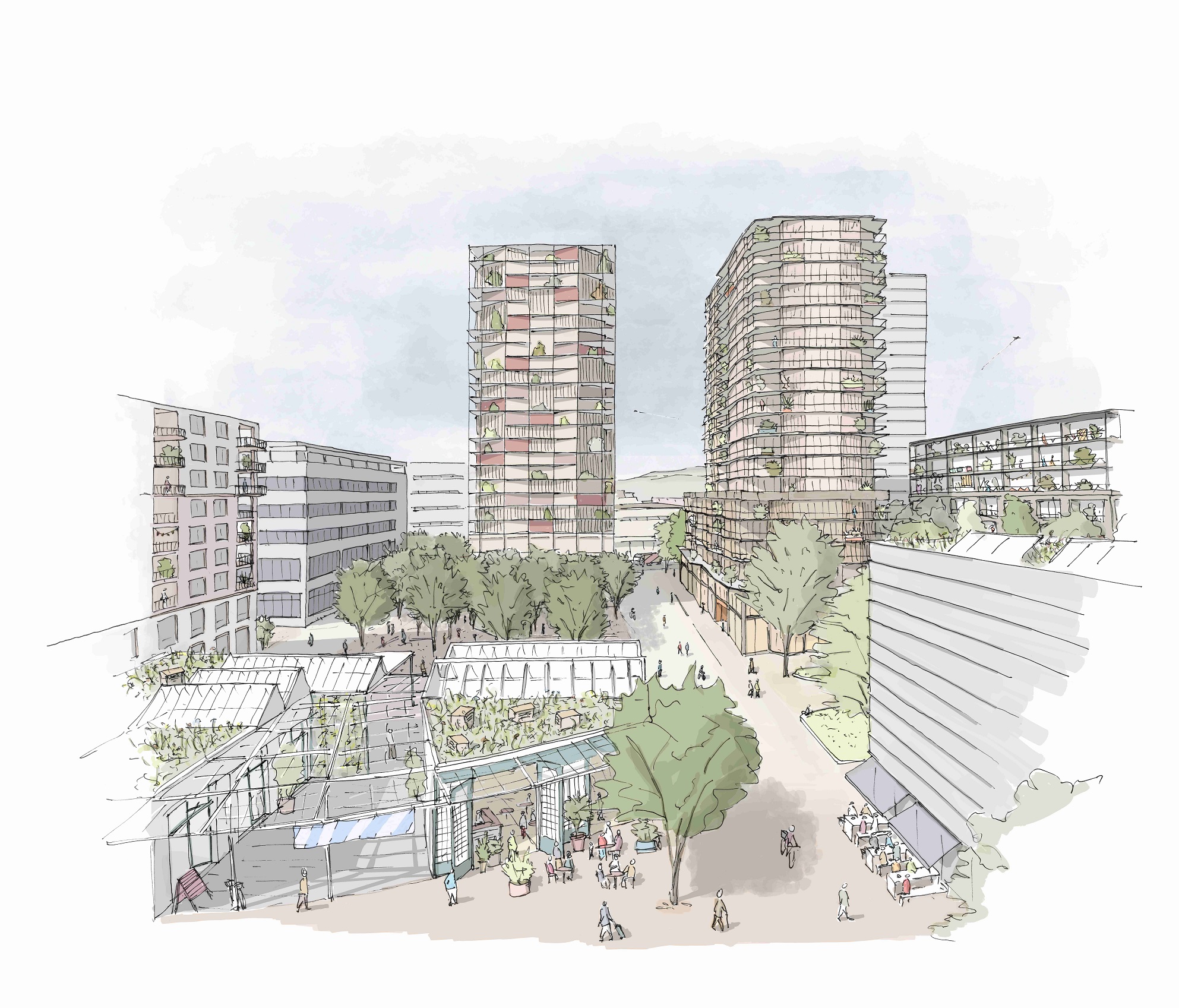
    People today are looking for the “as well as” – in the case of Papieri, it is the interplay of an urban lifestyle in close proximity to nature. On the one hand, the new district offers all the extras of a lively neighbourhood with practical services for everyday life, such as a wide range of shopping and dining options, childcare and cultural and sporting activities
    And catering facilities, childcare and cultural and sporting activities. On the other hand, you can find peace and quiet by the River Lorze or in one of the neighbouring recreational areas.

    Next Level Spaces
    In the third construction phase, a total of 10,000 m² of office, commercial and retail space will be created with the “Next Level Spaces”. Where and how people work has changed dramatically in recent years. Attractive and adaptable work concepts are needed to inspire employees. This leads to new requirements for buildings, such as a high degree of flexibility in order to fulfil a wide range of needs, from office layout to building services.

    The spaces in the “Next Level Spaces” can be flexibly designed and are over 6 metres high with a payload of up to one tonne per m², and intermediate floors can be installed as required. The user decides where intermediate floors are needed and can also create additional space at a later date. The “Next Level Spaces” offer future-orientated companies a wow location for offices, trade and Industry 4.0.

    Landmark boiler house
    The landmark at the heart of the site – the listed boiler house – will also be converted in the third construction phase. Where steam boilers used to be fired up, guests can expect a culinary treat in future. In spring 2026, the Segmüller Collection will expand its portfolio of unique gastronomy concepts such as Carlton, Loft Five, Roof Garden and Sablier in Zurich to Papieri-Platz in Cham and open a new grill restaurant with bar and lounge on the ground floor of the Kesselhaus. Industrial charm meets modern lifestyle, archaic fire cuisine meets refined elegance – a place that promises enjoyment for every taste. In the western section above, unique office space awaits new users in the former monument, while a fitness centre in the eastern section offers space for physical exercise.

    Sustainability
    Awarded the “Watt d’Or” by the Swiss Federal Office of Energy, the energy system of the Papieri site enables completely CO2-free operation and ultimately generates around 75% of the energy on site. In addition, the “Next Level Spaces” commercial building is certified with the internationally renowned “Leed Platinum” sustainability label. Resource-conserving construction is also already common practice at Papieri. For example, with the conversion of listed buildings such as the boiler house or an innovative timber-hybrid residential tower block. However, the most important contribution to sustainability is a long service life. Great attention is paid to this factor during development. Buildings must be flexible in order to meet the as yet unknown needs of a changing society in the future. An office building that can be converted into flats, for example, prevents premature demolition and thus contributes to sustainability. This is why Papieri constructs high-quality, adaptable buildings that will still be in favour for various uses decades from now.

  • How wood can be better utilised

    How wood can be better utilised

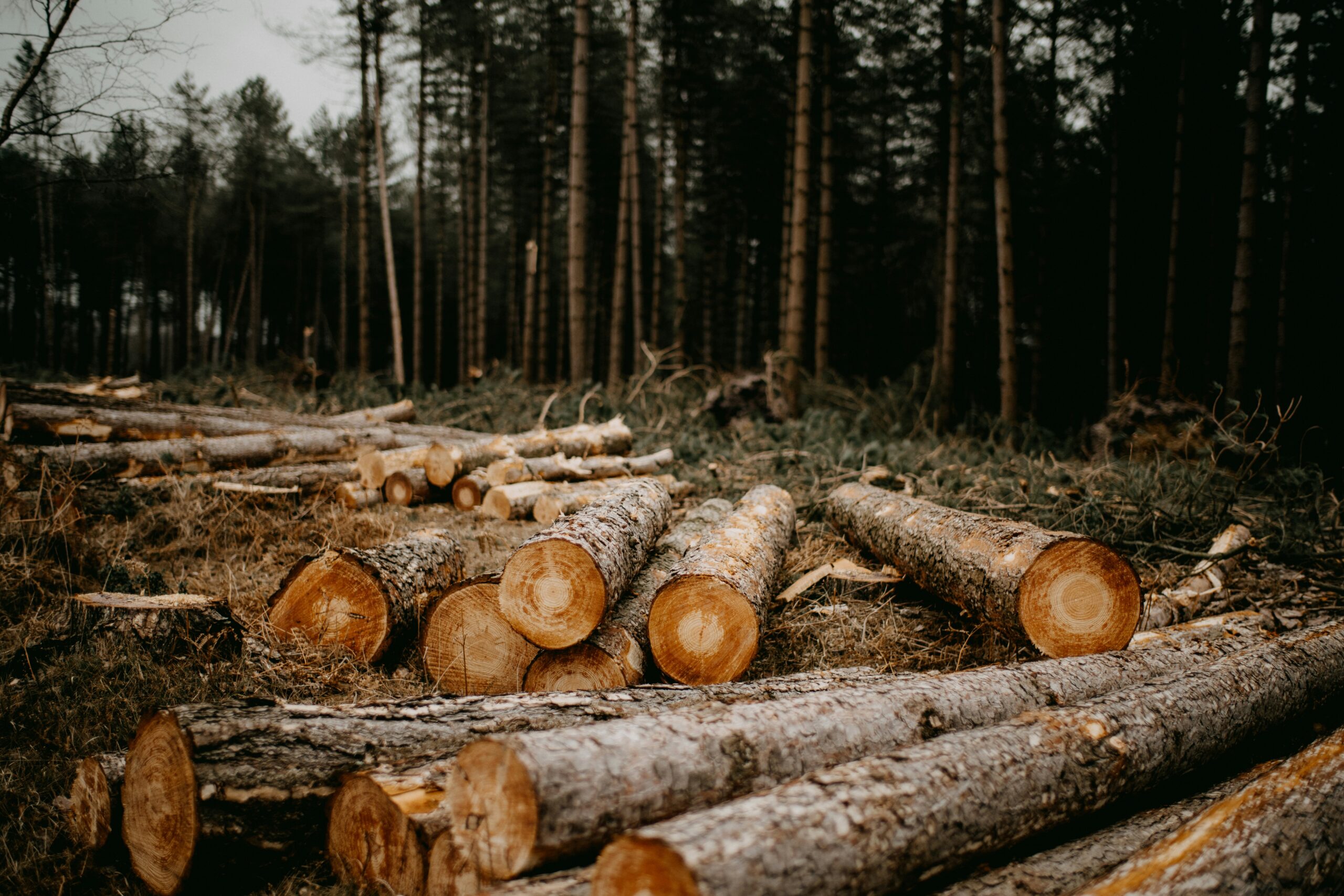
    Switzerland is aiming for net zero by 2050. Wood plays a key role in this endeavour. It binds CO₂ from the atmosphere, is versatile and offers sustainable alternatives to fossil fuels. But how much wood is actually available for construction, industry or energy generation? Researchers from Empa and WSL have provided the answers by analysing the material flows of wood in Switzerland in detail for the first time as part of the SCENE project.

    For their analysis, the researchers used data from 21 different sources for the year 2020, from wood harvesting to disposal. “In contrast to other studies, which often only use modelled values, we were able to draw on real data,” explains Nadia Malinverno from Empa. The effort paid off, as the study provides a precise picture of the entire wood flow in Switzerland.

    Recycling potential and the correct use of wood
    Only eight per cent of wood is currently recycled, compared to around 70 per cent for paper. In addition, 40 per cent of the wood harvested each year is used directly as fuel. “This is not ideal from an ecological point of view,” emphasises Claudia Som, co-author of the study. In order for wood to fulfil its role as a CO₂ store, it should be used as a material for as long as possible.

    The researchers’ vision is cascade utilisation
    Here, wood is first processed into durable products such as beams and boards that remain in the construction industry for as long as possible. Only after repeated use is the wood further processed into wood chips or fibres before it is finally burned. “Wood should only be used as an energy source when it is no longer usable as a material,” explains Som.

    The path to sustainable wood flows
    As part of the SCENE project, the researchers want to investigate more closely in future which uses of wood make the most ecological and economic sense. They are focussing on specific material flows. In what form is the wood available? How is it processed? Where is there potential for optimisation?

    “The sustainable use of wood is a key component of the energy transition,” says Malinverno. “Our work shows that Switzerland still has many untapped opportunities here, both in terms of climate protection and resource efficiency.”

  • Zug remains Zug – liveable, visionary, vibrant

    Zug remains Zug – liveable, visionary, vibrant

    How is the Zug economy doing?
    Zug is praised in numerous specialist publications and in the media for its diversified economy – services, trade, manufacturing industry and commerce. Growth is still above the Swiss economic average of 1.2% and has so far proved resilient to global or technical upheavals. Thanks to the positive financial results, the city of Zug, together with private households and the flourishing economy, is an important pillar for further growth in the coming years.

    How does the city of Zug plan to ensure its economic growth is sustainable in the coming years, especially given the strong focus on the financial and crypto industries?
    Sustainability also means that we look after the companies based here and are reliable partners and employers. It is therefore important that we continue to have strong legal certainty in Switzerland and Zug. We offer a strong education system, have short distances to the city and canton, maintain great local recreational areas and have good road and rail connections to Lucerne and Zurich.

    Zug is experiencing high demand for residential and commercial space. What long-term solutions does the city see to promote residential construction while maintaining the quality of life?
    Many years ago, we demanded the framework conditions for the V-Zug site/technology cluster development plan and the LG site development plan with a letter of intent. In both of these cases, we defined 10,000 m2 of affordable housing and affordable commercial space. We have also been working closely with Zug’s building cooperatives for over 10 years. We also recently purchased an area right next to the railway station for 65 million. This is to be used for the construction of affordable housing. The mix of flats still needs to be defined and will ultimately be put to a referendum. Here, too, it is to be sold under building rights. This is because the building cooperatives know what the people of Zug need in terms of housing. In addition, the city of Zug is working closely with landowners to develop development plans in cantonal densification areas that permit high densities. The municipal high-rise building regulations form an important legal basis for this. As part of these measures, increased attention is paid to the quality of the open spaces on the sites themselves, as well as the other public open spaces. In the spirit of a “city of short distances”, the inner-city open spaces and leisure infrastructure, as well as the natural and landscape areas, should be easily accessible, especially by public transport, on foot and by bike.

    What new projects and initiatives is the city of Zug planning to promote sustainable urban development?
    There are many new projects in the city of Zug. They all have to take equal account of social, economic and ecological aspects. In this respect, each of our projects should already support sustainable urban development. Perhaps you will allow me to give you two examples in which we are also playing a pioneering role. For example, an internal strategy project is underway to check whether we are well organised and sufficiently fit to master the future challenges of sustainable development. Or in the area of climate adaptation: we are currently installing temperature sensors throughout the city to identify heat islands and take targeted measures.

    The issue of affordable housing is becoming increasingly important. What measures is the city taking to ensure that Zug remains attractive for less affluent people?
    The city council is already calling for affordable housing to be created on at least 20% of the additional eligible floor area in residential and mixed zones when issuing ordinary development plans. Following the adoption of the “2000 flats for Zug’s middle class” initiative, affordable housing of at least 40% of the newly constructed living space must be created in residential and mixed zones located in densely populated areas when issuing ordinary development plans and in the case of rezoning and upzoning. To be honest, however, this has also halted construction projects. We are currently working on solutions.

    How important is citizen participation in municipal projects to you, and what opportunities do the residents of Zug have to contribute their ideas and opinions?
    The city of Zug has a strong and long-standing culture of participation. Public participation projects on various topics have been held regularly since the 1990s. The online participation portal “mitwirken-zug.ch” has also been available since 2020.

    Traffic in and around Zug is increasing. What is the city’s plan to bring the transport infrastructure in line with growth and strengthen public transport at the same time?
    Unfortunately, the city tunnel was rejected and solutions must be found nonetheless. The city of Zug is working closely with the cantonal civil engineering office to develop a joint transport plan for the vibrant centre of Zug. The city’s aim is to ensure that the existing road space is available to all road users equally and efficiently: Cars, public transport, bicycles and pedestrians. Fortunately, the city of Zug is small-scale, so many things can be done on foot or by bike.

    What plans are there to further expand public transport in order to relieve commuters and reduce traffic in the city?
    The next major expansion step is planned for the opening of the Zimmerberg tunnel. This will be around 2035 to 2037. Until then, public transport will continue on the current routes and the frequency will be adapted to demand. The public transport system will thus be adapted to the needs of the municipalities on a “small scale”. According to GöV, the municipalities have the option of purchasing additional services over and above those ordered by the canton. The city of Zug does this with the Zugerberg railway and on bus route 5, where it purchases additional cable cars and courses. This additional service, which is decided by the city parliament, gives the city of Zug flexibility over and above the service determined by the canton. However, it is clear that the service ordered by the canton is excellent and that the municipalities hardly need to make any improvements. The city of Zug already has excellent public transport connections in all neighbourhoods. Additional courses significantly reduce the cost recovery ratio. The cost recovery ratio to be achieved according to the GöV is 40%. Personally, I would like the S-Bahn to offer double-decker trains.

    How does the city of Zug support the expansion of educational facilities in order to address the shortage of skilled labour and at the same time strengthen Zug as a location for education?
    Education is our only resource and this is where the city of Zug invests the most money. The design of attractive school buildings as places to work and learn, with the involvement and participation of pupils and teachers in the planning process, are key concerns. In addition, there are attractive childcare and leisure facilities for children and families as well as a modern ICT infrastructure. In addition, forward-looking and innovative projects and collaborations such as the school portal – where parents can communicate online with teaching and support staff and the school administration – the DigiWerkstatt and the inclusion of AI in lessons are being driven forward. However, it is also important that we meet the needs of companies and actively support the dual education system. A great project is underway here!

    What role does the promotion of innovation play in Zug and how is the city planning to establish itself as a centre for pioneering technologies and companies?
    The promotion of innovation plays a central role in the city and canton of Zug in positioning the city as a centre for pioneering technologies and companies. One important point is: we try things out. For example, following a presentation by a student, we decided to accept Bitcoin as a means of payment in the city of Zug, which caused a worldwide furore. Today, the city of Zug is THE Crypto Valley worldwide with over 4000 employees in over 800 companies. True to the motto: “no risk, no fun”. We will continue to be innovative! Targeted measures and programmes are designed to strengthen the innovative power of the city of Zug so that the environment becomes even more attractive and motivating for companies and, above all, for employees. You can move mountains with innovative projects and motivated people. The framework for this is provided by the development strategy for the city of Zug adopted by the City Council in autumn 2021: “Zug remains Zug – liveable, visionary, vibrant”. It is an overarching management tool with a long-term perspective to help shape the future of the city of Zug. Innovative economy, green city, strong community, healthy finances – these are our credos for the future.

    What is your long-term vision for the city of Zug? What goals are you determined to achieve in the coming years?
    As a growing business location with excellent conditions for companies and skilled workers from near and far, we cultivate our economic diversity and position ourselves specifically through future-oriented industry clusters. We are developing Zug as a green city in a sustainable and resource-conserving manner and are planning mobility, space and energy in a visionary way.

    In the tension between tradition and modernity, we promote dialogue and create an inspiring framework for a vital, diverse and cosmopolitan urban community. And to maintain our healthy finances, it is important to ensure competitive framework conditions, make future-oriented investments and secure our tax base in the long term. In addition to all impact targets, we promote lifelong learning, utilise the potential of diversity in the population, economy and culture for pioneering lighthouse projects for change and use incentives to steer change.

    Zug is committed to more climate protection. Can you give us an overview of the most important measures that are currently being implemented to reduce CO2 and increase sustainability in the city?
    When it comes to climate protection, the focus is on moving away from fossil fuels. All heating systems must be able to run on local renewable energy in the medium term. Compliance with modern building standards and, together with Wasserwerke Zug (WWZ), the expansion of district heating are at the forefront here. We have brought Circulago into being. We take cold and heat from the lake and thus have a “battery” on our doorstep. At the same time, we also want to upgrade our own properties, produce our own electricity and get rid of fossil-fuelled heating systems. The introduction of CO2 monitoring and many larger and smaller measures as part of the “Energy City” programme, where we have also been certified with the “Gold” label for 2023, will help us achieve this. I am convinced that we can supply ourselves with energy. We have innovative companies such as Siemens, Landis & Gyr, V-Zug, the technology cluster and many more companies in Zug that all offer these technologies and innovations. It’s certainly been 10 years since Siemens showed us that the technology for local self-sufficiency already exists, so let’s do it!

    Where do you see the city of Zug in 20 years’ time?
    In 20 years’ time, the city of Zug should be a liveable, innovative and sustainable place that offers both economic dynamism and a high quality of life. In other words, we will have made Zug even more attractive for companies and skilled workers, while at the same time creating space for a strong community. Zug’s role as an international business and financial centre has been strengthened, particularly in the area of digitalisation and new technologies such as blockchain and AI applications. Thanks to sustainable urban planning and environmentally friendly infrastructure, the city of Zug is climate-neutral. We have attractive places to live and work, green recreational areas, attractive cultural offerings and a diverse infrastructure for education, leisure and health. Zug has made a name for itself as a centre of education and innovation that is networked with tertiary education institutions and research facilities. We have intelligent traffic management and an efficient infrastructure that meets the needs of a growing population and is designed to be sustainable. Progress is being made step by step – I am delighted!

  • Into the future with wood and clay

    Into the future with wood and clay

    Wood and clay, two proven building materials, are at the centre of the “Think Earth – Regenerative Building” project. Under the leadership of ETH Zurich and in collaboration with Empa and other universities and industrial partners, modern construction techniques are being developed to reduce the environmental impact of the building industry. While wood provides load-bearing capacity and rigidity, clay provides additional mass that contributes to thermal regulation, fire safety and vibration damping.

    Reusable wood connections strengthen the circular economy
    In order to use wood sustainably, its reusability must be increased. Currently, it is only 10 per cent. The project aims to increase this figure to 90 per cent by developing efficient, flexible wood joints. Researchers at Empa and ETH Zurich are working on methods for the simple dismantling of timber structures and developing digital tools that promote the reuse of timber components.

    Crack-free clay construction methods using green additives
    Clay is available in almost unlimited quantities and has an excellent carbon footprint. However, shrinkage during drying is a common problem, resulting in cracks. Researchers at Empa and ETH Zurich are investigating bio-based and biodegradable additives that prevent shrinkage without impairing recyclability. These innovative additives are being tested on a large scale in collaboration with BASF Schweiz AG and Eberhard Bau AG to enable the use of clay in building construction.

  • How to make wood glow

    How to make wood glow

    Empa researchers in St. Gallen have succeeded in endowing wood with new properties. Their latest breakthrough – luminous wood. This material is created by treating wood samples with the Hallimasch fungus, which emits a green light due to the natural substance luciferin.

    From natural phenomenon to laboratory success
    Luminescent wood is not a new phenomenon; Aristotle described the green glow of wood over 2,400 years ago. However, biotechnology has now succeeded for the first time in reproducing this process in the laboratory under controlled conditions. The decomposition of lignin preserves the tensile strength of the wood, while the fungal filaments produce the glow.

    Sustainability and creativity in perfect symbiosis
    This biohybrid material opens up new possibilities. In addition to technical applications, furniture, jewellery or other design elements could also be realised with the luminous wood. At the same time, this innovative use of hardwood contributes to sustainable cascade utilisation and reduces the energy recovery of the wood.

    Optimising the luminosity
    After three months of incubation, the luminous wood develops its maximum brightness. The process, which takes place under humid conditions, currently lasts around ten days. Researchers are working on further improving the luminosity and duration in order to make the material even more versatile in the future.

    A pioneering solution
    The luminous wood shows how natural resources can be transformed into new, sustainable applications using innovative technologies. The symbiosis of wood and fungus is a fascinating example of how research can contribute to solving ecological and economic challenges.

  • New principles for data exchange in the construction process

    New principles for data exchange in the construction process

    For over three decades, SIA 451 has formed the basis for standardised data exchange in the construction industry. Originally conceived as a guideline for bills of quantities, it defined how data fields should be structured and exchanged as early as 1992. Supplemented by modern requirements, such as the integration of images and memos, the standard has continuously adapted to the needs of the industry. Nevertheless, a fundamental revision was long overdue.

    New content and objectives of the revision
    The revised SIA 451 not only defines the processes and terms of information and data exchange, but also sets clear requirements for delivery objects, IT infrastructures and quality assurance. The introduction of a standardised information management process regulates the following aspects:

    Clear definition of interfaces and data structures
    Quality assurance:
    Standards for the testing and certification of software solutions.

    IT infrastructure:
    Requirements for technology and expertise of the players.

    These innovations ensure that the standard will continue to serve as the basis for advanced solutions and standards in the construction industry in the future.

    Relevance for construction practice
    The importance of SIA 451 for the construction process can hardly be overestimated. It is not only the basis for numerous software solutions, but also an essential component of communication between all stakeholders – from planning and procurement to the operation and maintenance of buildings. By promoting open standards, it creates transparency and access for all market participants. This strengthens collaboration and enables technological innovations to be integrated efficiently.

    A standard for the future
    The revision of SIA 451 represents a decisive step towards the digital transformation of the construction and planning industry. The revised content sets new standards for data exchange and creates a solid basis for future developments. SIA 451 thus remains an indispensable tool for everyone working in the construction industry.

  • Construction of the world’s largest building

    Construction of the world’s largest building

    With a height and width of 400 metres each, the Mukaab will surpass the Empire State Building in New York almost twenty times over. Construction work has now begun in the desert state and the megaproject is due to be completed by 2030. The cube will offer a variety of flats, shops and leisure facilities, strengthening Riyadh’s position as an up-and-coming tourist metropolis. Saudi Arabia is investing 50 billion dollars in the north-west of the capital to create a new urban landscape.

    Virtual reality and artificial intelligence
    The outside of the Mukaab is to be equipped with virtual reality technology to transport visitors to fascinating landscapes. Inside, artificial intelligence will create holograms and simulations that project different places and times at breathtaking scale. The building will thus become a kind of digital adventure park that will attract visitors from all over the world.

    Prestigious projects with challenges
    Mukaab is part of Crown Prince Mohammed bin Salman’s “Vision 2030”, which aims to turn Saudi Arabia into a global tourist destination and business centre. The city of Neom and the linear megaproject “The Line” are also part of this ambitious plan. However, the plans for “The Line” have already been scaled back considerably due to logistical and financial hurdles. Instead of 170 kilometres, the structure will only be 2.4 kilometres long by 2030. It is uncertain whether it will ever reach the planned capacity for 9 million people.

    The Jeddah Tower – a long construction history
    Another mega project, the Jeddah Tower, was originally planned to be the tallest building in the world. After years of delays, the height was reduced from 1600 metres to 1007 metres. Construction began in 2013, but after a five-year break, the project is progressing slowly. The Jeddah Tower could be completed in 2029 at the earliest and become the new record holder.

    Criticism and controversy
    The Mukaab has already caused controversy. The design of the giant cube reminds many of the Kaaba in Mecca, the central shrine of Islam. This similarity is causing criticism in the conservative kingdom, as some citizens consider the construction to be disrespectful.

    It remains to be seen whether the Mukaab project will be realised on time or, like other Saudi megaprojects, run into difficulties. However, the size and ambition of these construction projects show the transformation that Saudi Arabia is undergoing. A transformation that is set to turn the country into a global tourism and business centre and will extend far beyond the oil era.

  • New school building creates space for 500 pupils

    New school building creates space for 500 pupils

    The Lycée Français de Zurich has celebrated the laying of the foundation stone for a new building. The planned extension will create space for around 500 new pupils, the public school from Dübendorf announced in a press release. The Lycée Français currently has around 1130 pupils.

    The expansion is being managed by the Zurich branch of HRS from Frauenfeld and financed by Zürcher Kantonalbank. The construction work should be completed by the start of the 2026 school year. In the same year, the Lycée Français de Zurich looks back on 70 years of history.

    The Lycée Français de Zurich is run by parents and is recognised by the Canton of Zurich’s Department of Education. At the public school, children aged 3 to 10 receive bilingual tuition in German and French. They can then go on to specialise in German and English in an international branch and take the trilingual international French baccalaureate at the end of their schooling.

    Marion Paradas, Ambassador of France to Switzerland and Liechtenstein, Marc Ferracci, Member of the French Parliament in Switzerland and Minister of the French Government, and Susanne Hänni, President of the primary school and Councillor of the municipality of Dübendorf, were among those present at the laying of the foundation stone.

    The ceremony to mark the opening of the construction work included the preparation of a time capsule to be placed in the foundations of the building. The time capsule was filled with documents about the construction of the building, daily newspapers and the school’s yearbook.

  • Association complaints about residential construction projects restricted

    Association complaints about residential construction projects restricted

    In future, associations will no longer be allowed to lodge complaints against smaller residential construction projects if they are located within building zones. This applies to projects with a floor area of less than 400 square metres. The National Council voted in favour of the more restrictive provisions of the Council of States on Monday, meaning that the matter is ready for the final vote.

    Originally, the National Council had proposed that complaints should also be authorised for construction projects within water areas. However, the Council of States cancelled this option and restricted complaints by associations to construction projects in areas of “national importance”. This means that the right of appeal for associations will be significantly restricted in future.

    Limited right of appeal for construction projects in watercourse areas
    A motion by National Councillor Martina Munz (SP/SH) calling for the right of appeal to be cancelled only for construction projects that encroach slightly into the watercourse area failed in the Council. The motion was rejected by 118 votes to 72. This means that the regulation that smaller construction projects in watercourse areas can no longer be contested by associations remains in place.

    The amendment to the Nature and Cultural Heritage Protection Act was triggered by a parliamentary initiative from Valais National Councillor Philipp Matthias Bregy (centre). The aim is to restrict the right of appeal for smaller residential construction projects in order to facilitate construction activity in Switzerland.

    The new regulation, which severely restricts the right of appeal for smaller construction projects in building zones, represents an important step towards speeding up residential construction projects. In future, it will be more difficult for associations to take action against smaller construction projects, particularly in water areas.

  • Relaxation of noise protection regulations in residential construction

    Relaxation of noise protection regulations in residential construction

    After lengthy discussions, the National Council and the Council of States have reached a compromise on noise protection regulations. In new flats, at least half of the noise-sensitive rooms – i.e. rooms in which people regularly spend time – must now have windows that comply with the noise limits.

    If controlled ventilation is available, it is sufficient if the limit values are complied with in one room per flat or if a cooling system is installed. Alternatively, a building permit can also be granted if a quiet outdoor space and a quiet window are available.

    Remediation of contaminated children’s playgrounds
    In addition to noise protection, the remediation of children’s playgrounds contaminated by fertilisers and air pollution was also discussed. Public playgrounds must be analysed and remediated in future. The federal government supports these measures through the so-called Vasa Fund and covers 60 per cent of the renovation costs.

    In the case of private playgrounds and home gardens, remediation remains voluntary. Here, the Vasa Fund covers 40 per cent of the costs if the owners decide in favour of remediation.

    With the revision of the Environmental Protection Act, Parliament has made important decisions concerning both noise protection in new residential areas and the renovation of contaminated playgrounds. These compromises promote a healthy living environment and at the same time contribute to the sustainable development of residential and play areas.