Tag: Bebauungsplan

  • Zug city parliament supports Metalli development plan

    Zug city parliament supports Metalli development plan

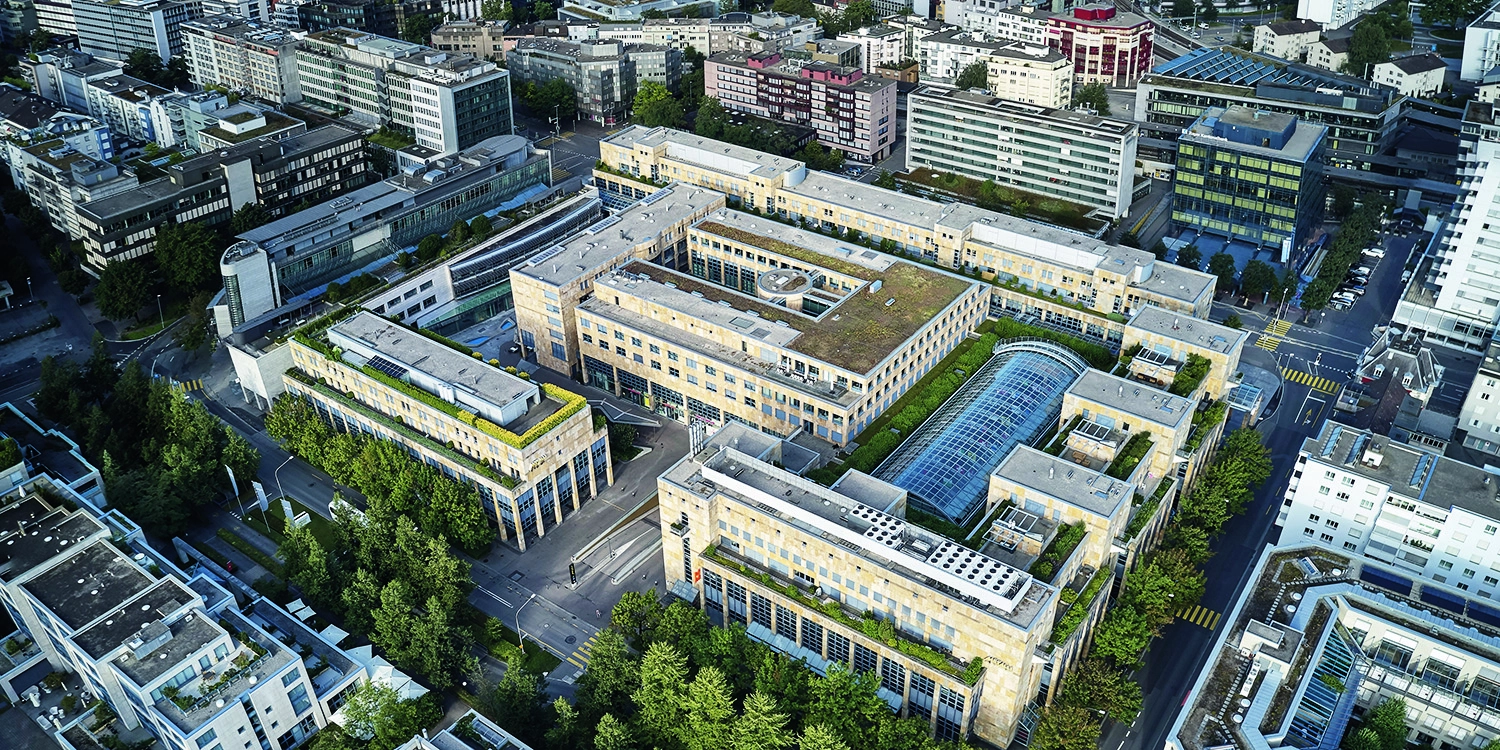
    The Metalli development plan has entered the political approval process, the Zug Estates Group announced in a press release. The property company, which focuses on Zug as a business and living space, is planning to develop the existing shopping avenue into a lively district. The aim is to create additional living space and new green public outdoor areas.

    The city council of Zug had already approved the Metalli development plan on 8 April. On 17 June, the development plan was also approved in the first instance by the Zug City Council. The plans will now go out for public consultation before returning to the Grand Municipal Council for a second reading in spring 2026. Zug Estates can then initiate the actual planning process with an architectural competition.

    The Metalli development plan envisages the creation of 160 new flats, 130 of which will be in addition to the existing housing supply. To this end, extensions to existing buildings and a new tower block are planned. A new square with a connection to the railway station site will serve as the entrance to Metalli. Zug Estates also wants to create a public and park-like roof terrace.

    “With the Metalli Living Space project, we are picking up on proven qualities and preserving the characteristic architecture of the Metalli with its glass roofs, arcades and typical materialisation,” Peter Wicki, Head of Project Development at Zug Estates, is quoted as saying in the press release. “Thanks to the targeted upgrading and modernisation of the infrastructure and the increased attractiveness of the shopping avenue, the Metalli living space is also an opportunity for the preservation and further development of retail and gastronomy.”

  • Development plans are being revised and expanded in Hünenberg

    Development plans are being revised and expanded in Hünenberg

    OSRI AG from Lucerne is supporting the Zug municipality of Hünenberg in the implementation of two development plans. According to a press release, the urban planning and spatial development company is to assist the municipality with the transfer of existing development plans, to finalise the planning basis and to coordinate with cantonal authorities. The aim is to create a consistent, legally compliant basis.

    Parallel to this work, OSRI is to draw up a development plan for the Langrüti conservation area. This will integrate the building structure, the open space planning and the urban planning connection.

    With this joint project, Hünenberg aims to drive forward sustainable community development in which the existing buildings are harmonised with future developments.

  • Development plan for the ZVB site was clearly approved

    Development plan for the ZVB site was clearly approved

    The ZVB acts as a mobility service provider in the service of the population. In order to be able to fulfil its mission in the future, an urgently needed new infrastructure is required, which is set out in the Areal An der Aa development plan. Today’s referendum Sunday marks a historic moment for ZVB: with 81.3% in favour, the electorate has clearly voted in favour of the future of ZVB and positioned itself behind the company.

    Cyrill Weber, Managing Director of ZVB, is delighted with the clear result and emphasised in his speech: “We have always worked to take all the concerns of our project into account and achieve the best possible result for everyone. Today’s vote shows me that our efforts are recognised and appreciated by the public.”

    Thanks to the positive decision, the construction project can move forward. With the new main base, ZVB will be able to promote the growth of mobility and drive forward the electrification of the fleet. ZVB employees, who currently work in outdated infrastructures, will have modern workplaces where they can give their best.

    By adopting the development plan, additional uses will be made possible on the company premises and the area will become more permeable and greener. The ZVB is very grateful for the great support it has received over the past weeks and months.

  • New Clinic 3: Government Council approves changes

    New Clinic 3: Government Council approves changes

    The University Hospital Basel (USB) is facing a long-term renewal of its structural infrastructure. With this generational project, the USB is laying the foundation for people in the Basel region to have access to a wide range of outpatient and inpatient medicine at university level in the coming decades. The changes to the existing development plan create the conditions for the construction of Klinikum 3. With a view to long-term use for the benefit of patients, the new Klinikum 3 offers a high degree of flexibility in use and enables sensible hospital processes. According to the current planning status, the new clinic will offer space for complex outpatient treatments, for example for a tumor center, and it will also accommodate functional and laboratory areas. Research facilities will also be added later. In addition, the new building offers the necessary space during the realization of Klinikum 2 without having to build costly and unsustainable provisional solutions in the hospital garden.

    According to the current planning status, a first phase of the new building of Klinikum 2 is to be realized in the years 2022 to 2028, for which the development plan is already available and has been approved by the Great Council. The construction of Klinikum 3 is planned for 2024 to 2030. Some of the uses of Clinic 2 will then be shifted to Clinic 3 in order to be able to complete the base building of the new Clinic 2 between 2031 and 2038.

    An objection from Homeland Security was received within the deadline against the public plan requirement regarding changes to the existing development plan. The University Hospital Basel and the Department of Construction and Transport have exchanged views with the Heimatschutz Basel and presented the hospital operational and planning law standpoints. The Government Council proposes that the Great Council dismiss the objection.