Tag: Begegnungszone

  • Schlieren station shines in new splendor

    Schlieren station shines in new splendor

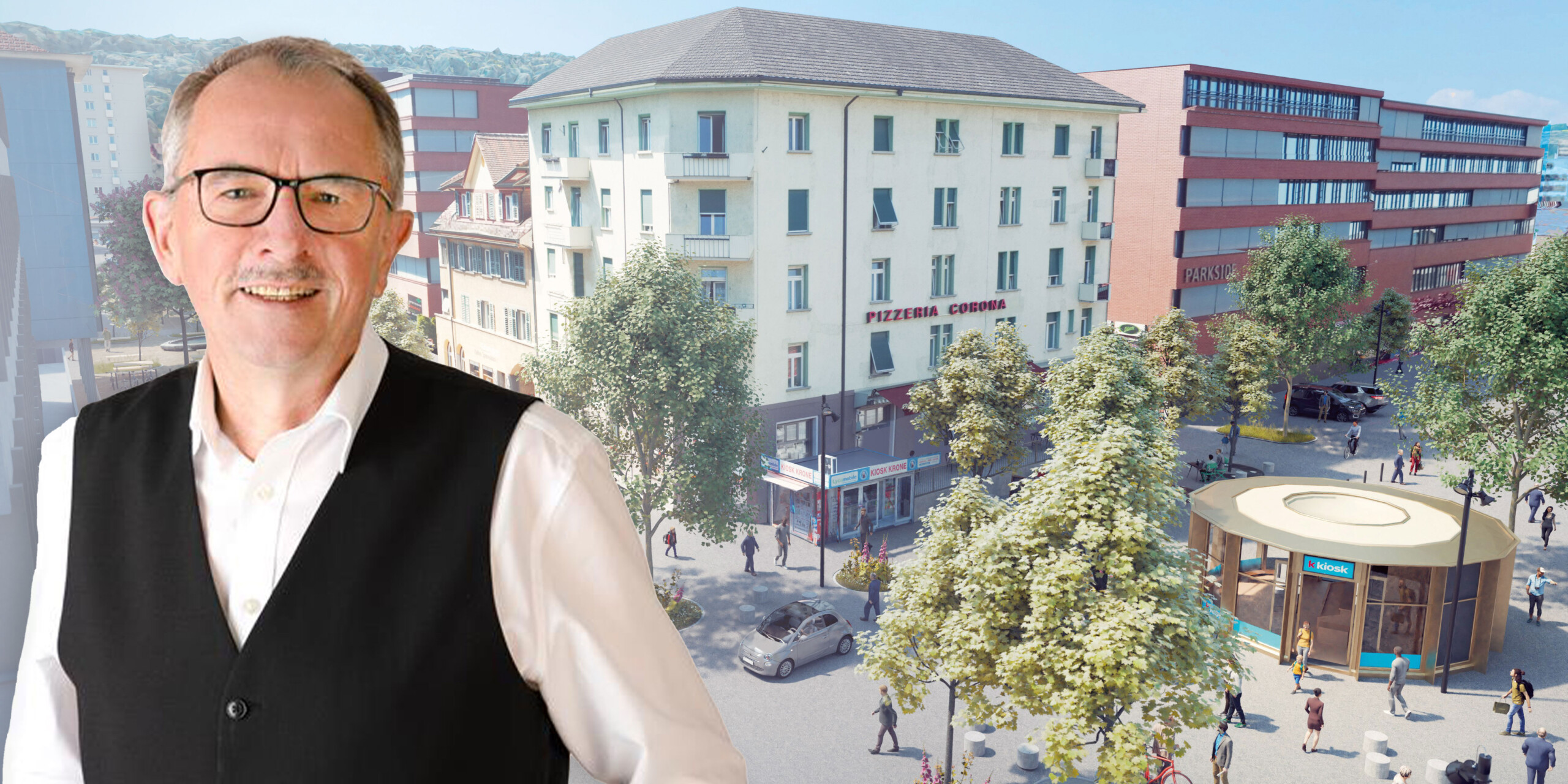
    The station square in Schlieren has been transformed into a modern meeting zone that creates space for recreation, encounters and visible mobility. In the center is a spacious square with a striking tree as a green landmark. In front of the city library, a fountain with benches invites people to linger, and new recreational areas have also been created by the SBB West underpass and in front of the restaurants.

    A central element is the clear right of way for pedestrians through the meeting zone. Sidewalks have become superfluous and the entire space belongs to public life. Almost 70 new bicycle parking spaces also encourage people to switch from bicycles to public transport.

    Green spaces for the urban climate
    An innovative approach to climate adaptation was chosen with the implementation of the sponge city principle. 1,200 m² were unsealed to allow rainwater to seep away better. Newly planted trees and around 500 m² of additional green space provide shade and evaporation for cooling, especially on hot summer days.

    The planting is not only ecologically valuable, but also aesthetically pleasing. The cityscape looks livelier and more inviting.

    Grand opening for the public
    The new meeting zone will be inaugurated with a two-day celebration on Friday and Saturday, June 20 and 21, 2025. The event will kick off with an official speech by City Councillor Stefano Kunz on Friday at 5.00 pm, accompanied by the Harmonie Schlieren band. This will be followed by the street festival with culinary delights and live music, including country artist Tobey Lucas.

    It continues on Saturday from 11.00 am. Local musicians will perform on the stage at Bahnhofsplatz, including the Schlieren music school teachers’ band, Patrick Harbor, the music school choir and Valerù with their band.

    Bahnhofstrasse will be closed to traffic during the festivities. The town belongs to the people this weekend.

    A project with a signal effect
    The pedestrian zone is an example of future-oriented urban development that combines quality of life, climate resilience and mobility. What was initiated by a referendum in 2021 now stands for a new chapter in urban design in Schlieren.
  • Historic site becomes new cultural and educational centre

    Historic site becomes new cultural and educational centre

    The city of Schaffhausen is pursuing an ambitious goal with the redevelopment of the Kammgarn site: to transform the historic area into an attractive location for culture, education and socialising. The Schaffhausen electorate approved this project back in August 2020.
    The comprehensive redesign not only creates a better connection to the urban fabric, but also new utilisation options. In addition to the existing entrances from Baumgartenstrasse, Rheinuferstrasse and Rheinstrasse, a new passageway will be created along Klosterstrasse. This strengthens the connection with the old town and increases the attractiveness of the neighbourhood. The Kammgarn area will become part of a “string of pearls” of meeting places along the banks of the Rhine, which will enhance the area in the long term.

    More quality of stay through new open spaces
    The redesign of the Kammgarnhof will transform the inner courtyard, which was previously used as a car park, into a car-free zone. Green spaces, seating and a water feature will increase the quality of stay and turn the courtyard into a central meeting place. The redesign will enable a variety of uses for events, culture and recreation.

    Another core element of the development is the construction of a single-storey underground car park with around 90 parking spaces under the courtyard. This will make the entire area above ground car-free and open up new possibilities for use. A pergola will be erected in front of the west wing, while a spacious terrace will be created in front of the north wing.

    Modern infrastructure for culture and education
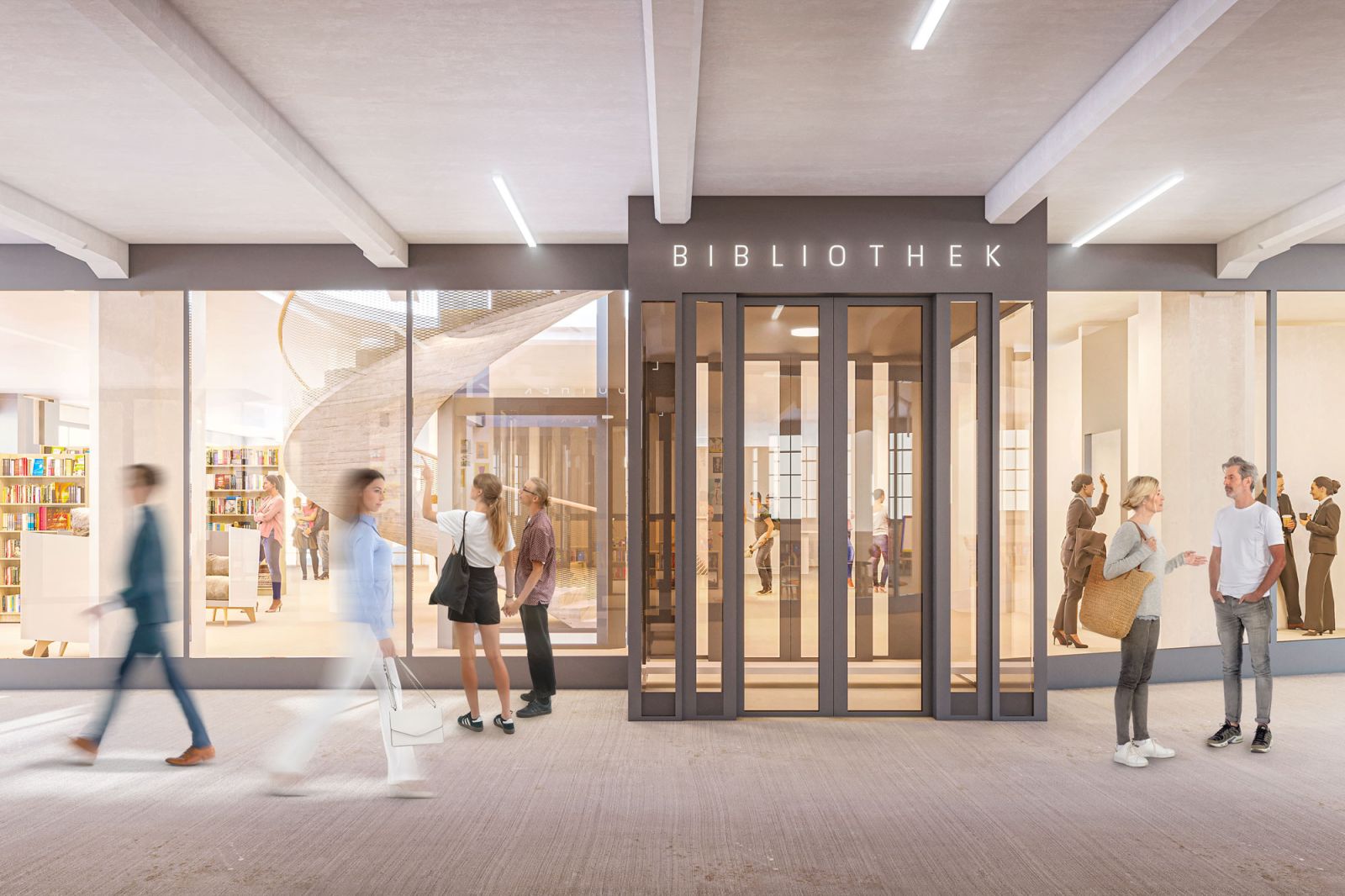
    The west wing of the Kammgarn site is being prepared for new uses as part of the refurbishment. The library and toy library will move into the ground floor and first floor. Glazed façades offer passers-by a glimpse into the world of books and games.
    The Schaffhausen University of Teacher Education will move into the second and third floors, while the fourth floor will be available for other tenants. The diverse use of the site reinforces its importance as an educational and cultural centre.

    Construction progress and archaeological work
    Construction officially began in September 2024 with the symbolic ground-breaking ceremony. Prior to this, archaeological rescue excavations were carried out, during which significant finds from the last 1000 years were discovered.

    Work is currently underway on the underground car park and the redesign of the courtyard. At the same time, the renovation of the west wing is progressing. In addition to structural measures, the façades and roof are being renovated and preparations are being made for the interior work.

    The first floor slab for the new courtyard was concreted in January 2025. To protect the valuable trees, a retaining wall (Rühlwand) is being erected around the large chestnut tree in the courtyard.

    A new meeting place for Schaffhausen
    After the remodelling, the Kammgarnhof will be an attractive place for locals and visitors to the city. Reading, meeting friends or enjoying concerts – all this will be possible in the redesigned surroundings.

    The construction of the underground car park is being financed jointly with IWC Schaffhausen, the direct neighbour of the site. This close collaboration will result in a sustainable solution that improves both the flow of traffic and the quality of life.

    A lively neighbourhood with a future
    The comprehensive renovation and redesign will transform the Kammgarn site into a modern cultural, educational and meeting centre. The connection to the old town and the Rhine will be strengthened, while new uses will enrich Schaffhausen’s cityscape. The project is scheduled for completion at the end of 2026 – a significant step for the long-term development of the city.

  • Future-oriented neighbourhood management: cultivating an active living space

    Future-oriented neighbourhood management: cultivating an active living space

    It is essential to involve all relevant actors in the neighbourhood design process to promote social sustainability. This includes both residential and commercial tenants. The creation of activity and meeting zones not only strengthens social cohesion but also provides a platform for business synergies.

    Added value through neighbourhood activation
    The active management of a community increases the attractiveness and value of the neighbourhood, which has a positive effect on the marketing of vacant spaces. At the same time, sustainable social hubs are created that strengthen the sense of community.

    Pioneers in nationwide implementation
    Initial projects in various neighbourhoods in Switzerland show the success of this approach. For example, a pop-up event was launched in Winterthur that combined gastronomy and culture for six weeks. Due to the great popularity, this concept will be further expanded and also implemented in Zurich for the coming winter.

    A young but promising discipline
    Although community management is still quite new as a field, it is seen by experts as a promising and as yet untapped area. “We see great potential in this approach and want to develop and promote it,” say industry experts. I hope this paraphrase meets your needs and offers a new perspective on the subject.