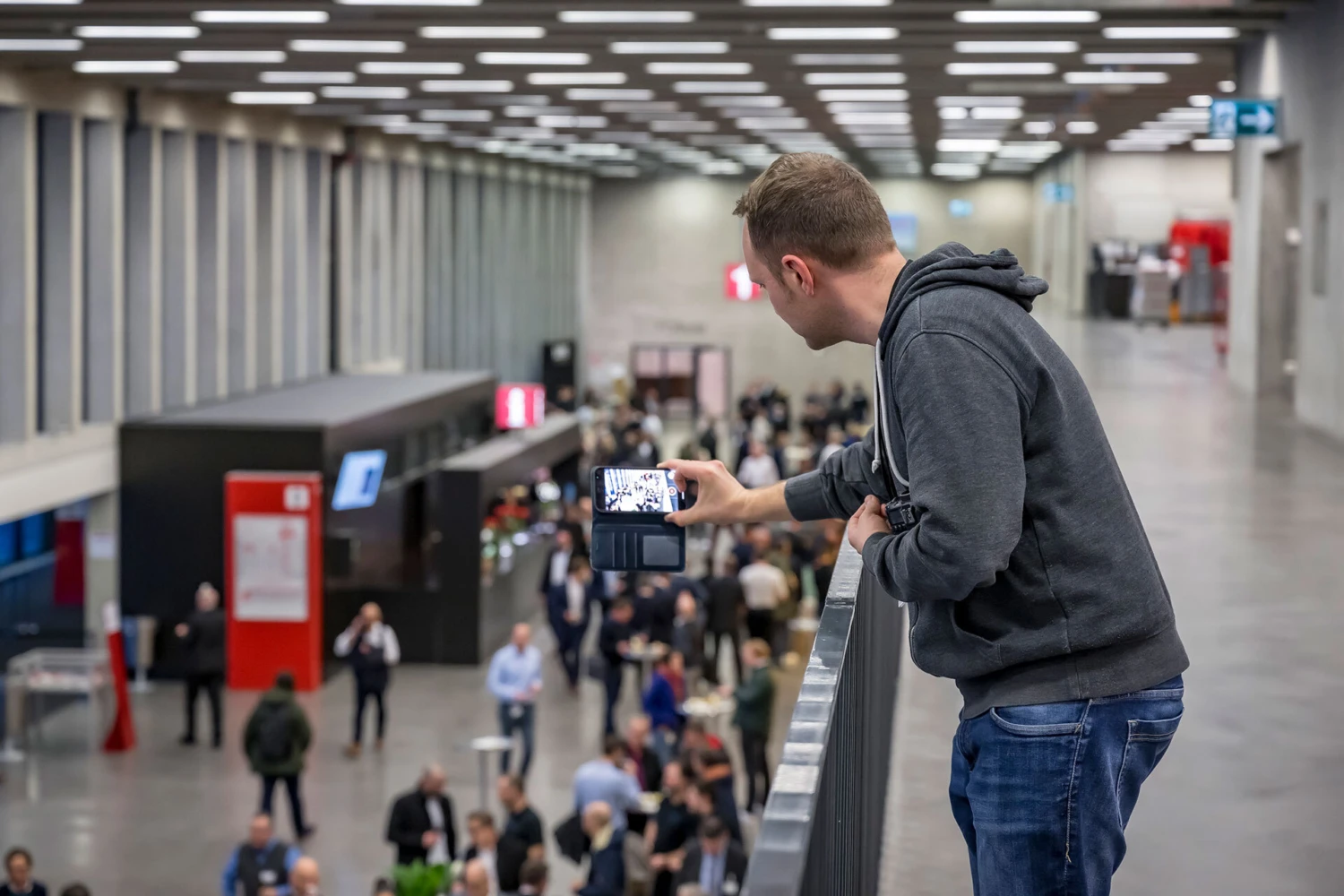
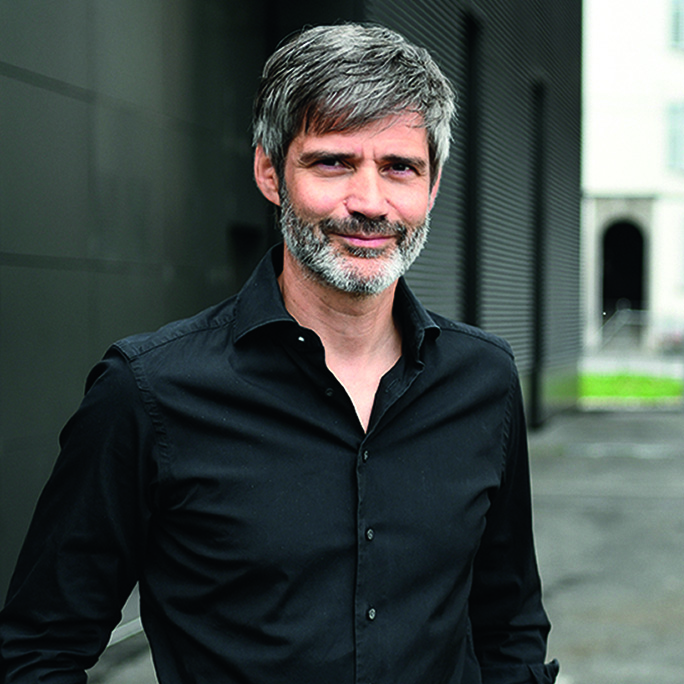
Messe Luzern AG is launching Terra Solid, a trade fair dedicated entirely to the complex interplay between foundation engineering, infrastructure and natural hazards. At a time when civil engineering projects are increasing and climate-related risks are growing, the trade fair is responding to an urgent need in the industry for exchange, orientation and concrete solutions in a specialised format. Exhibition Director Elio Cavazzutti emphasises: “Terra Solid is more than just a product show, it is a platform, knowledge centre and meeting place for professionals with responsibility.”
Future topics at the centre The B2B platform is aimed at professionals from planning, science, authorities and the construction industry. The focus is on innovations in building materials, digital solutions in risk management, sustainable construction methods and protection systems against natural hazards. The exhibitors are organised in two clearly structured segments. On the one hand, planning and service providers and, on the other, manufacturers and contractors.
A specialist forum with expert presentations, discussion rounds and networking zones rounds off the programme. The exchange is intended to provide impetus for sustainable, resilient and technically advanced solutions, from urban development planning to slope stabilisation.
Strong partnerships – high credibility With the Federal Office for the Environment FOEN as a patronage partner and other organisations such as InfraSuisse, Terra Solid receives strong support from research, practice and politics. Direct access to specialist knowledge and the latest research also makes the trade fair attractive for strategically-minded investors and site developers.
Hybrid thinking and active 365 days a year Thanks to the live content marketing concept, Terra Solid is not only active during the trade fair days; exhibitors can also present their expertise, projects and events online. This creates a digital platform that enables networking, knowledge transfer and visibility throughout the year – a modern response to the demands of the market.
Data is a key resource for economic development, research and social progress. To prevent data from remaining in isolated silos, the federal government is focussing on a national data ecosystem. This comprises topic-specific data spaces in which companies, universities, authorities and organisations can exchange data in a secure and controlled manner.
The Federal Council has instructed the Federal Chancellery to create a central contact point to coordinate these data rooms. The Swiss Data Ecosystem Focal Point, which began operations on 15 January 2025, is operated by the Federal Chancellery in collaboration with the Federal Office of Communications, the Federal Statistical Office and the Directorate of International Law.
Coordination, advice and international networking The main task of the contact point is to create the basis for an interoperable data ecosystem. This includes regulations, technical standards and organisational structures. At the same time, it supports ongoing data room projects with conceptual, organisational and legal advice.
A central element is the networking of the relevant players. Experts can exchange knowledge and experience in so-called communities of practice in order to accelerate the development of joint data solutions. In addition, the contact point works with international partners such as the Fraunhofer Institute to ensure the compatibility of Swiss data spaces with European and global initiatives.
Making data usable for business, research and society Several data room projects are already under development, for example in the areas of health (“DigiSanté”), tourism (“National Data Infrastructure for Tourism”) and agriculture (“agridata.ch”). Another example is the planned mobility data space, in which players from public transport, logistics and the authorities exchange mobility data. This will enable more efficient traffic management, optimised route planning for freight forwarders and faster response times for emergency services.
With the new contact point, Switzerland is taking an important step towards utilising the potential of data sustainably and promoting digital innovations across industry and administrative boundaries.
Protect birds, prevent collisions Environmental protection is the focus of this new law, which is intended to protect avian fauna. According to estimates, over three million birds lose their lives in Switzerland every year as a result of collisions with mirrored façades and window panes. In future, new buildings are to play a pioneering role here and take measures to prevent such tragedies. The Cantonal Council today decided at first reading that planning must take bird safety into account in future. Following the successful vote of 147 votes to 30, the bill will now be passed to the drafting committee and is expected to be formally enshrined in law in around four weeks.
Room for manoeuvre for sustainable solutions However, the discussion about the exact wording led to controversial debates. While the SP called for a more comprehensive regulation that would also include existing buildings, parliament agreed on the current compromise. “It is crucial that we implement bird protection now, even if we would have liked more,” emphasised Theres Agosti from the SP. Thomas Forrer from the Greens also expressed the wish that larger conversions should also be included in the new bird protection article.
Challenges for developers and authorities While some parliamentary groups supported the initiative, the FDP expressed reservations and saw no urgent need for action. They argued that the existing legal framework was already sufficient and that plans that endanger birds should not be authorised. Nevertheless, Agosti emphasised that there was often insufficient awareness of the problem of bird protection and referred to examples such as the Winterthur Cantonal Hospital, which caused hazards due to transparent glass railings.
Green Building Director Martin Neukom also recognised the dangers posed by glass and emphasised that a comprehensive law would be important to ensure a sustainable future. Nevertheless, the cantonal government expressed concerns about the additional workload for building owners and authorities and ultimately rejected the bill.
Mobimo has laid the foundation stone for the Hofhaus and Hallenhaus buildings in Aarau’s Aeschbach neighbourhood with representatives from the authorities and its project partners, according to a press release. As part of the overall Torfeld Süd development area, the next stage in the expansion of the neighbourhood, which was revitalised in 2019, is thus being realised.
Based on plans by Baumberger Stegmeier Architekten from Zurich, 126 rental flats with 1.5 to 5.5 rooms will be built there. The courtyard house is being realised as a timber construction with a garden courtyard in a future-oriented, ecological design. According to Mobimo, the hall building stands out positively in terms of sustainability and grey energy because as much of the existing façade of the former Hall 5 has been retained as possible. It will serve as the ground floor for the extension of the historic building.
Completion is planned for autumn 2026, with occupancy scheduled for the second quarter of 2026. Marketing will begin in the third quarter of 2025. The Aeschbachquartier will then have a total of around 260 rental and owner-occupied flats. It will also offer around 4600 square metres of commercial space for 1400 people working there.
Im Rahmen des ambitionierten Gesamtverkehrskonzepts für den Raum Baden haben zehn beteiligte Gemeinden einen entscheidenden Schritt vollzogen. Diese Ziele, ausgerichtet bis zum Jahr 2040, zielen darauf ab, die Mobilität im Raum Baden effizienter, umweltschonender und zukunftsfähiger zu gestalten. Zu den Kernpunkten gehören die Förderung einer flächensparenden Mobilität, die Schaffung attraktiver Bedingungen für den Arbeits- und Bildungsverkehr und die Sicherstellung einer stabilen Erreichbarkeit für den Autoverkehr. Die Planungen unterstützen zudem eine Siedlungsentwicklung in gut mit dem öffentlichen Verkehr erschlossenen Gebieten.
Ein besonderes Augenmerk gilt dem Transit-Schwerverkehr, für welchen spezifische Erfolgskriterien hinzugefügt wurden, um die Siedlungsgebiete zu schonen. Dies folgt einem Antrag der Gemeinde Obersiggenthal, der eine Zunahme des Transitschwerverkehrs verhindern möchte.
Mit dem Abschluss der ersten beiden Planungsschritte hat die Behördendelegation eine solide Grundlage für die nachfolgenden Fachplanungen geschaffen. Abschließend ist es das Ziel des Kantons Aargau, in Kooperation mit den lokalen Akteuren, ein vorausschauendes und integriertes Mobilitätsangebot zu entwickeln. Die Ergebnisse der GVK-Planung sollen bis 2025 in den kantonalen Richtplan aufgenommen werden, um die Weichen für zukünftige Mobilitätsbedürfnisse rechtzeitig zu stellen.
Luucy AG, based in Lucerne, was founded in 2019 by the architect and entrepreneur Mark Imhof. He describes himself as a visionary who has been dealing with the complex issues of the internal development of villages and cities for a long time. It struck him that he was repeatedly reaching limits with the usual methods and procedures. Imhof decided to develop a solution that strengthens and simplifies communication and cooperation between all parties involved: “Luucy combines the relevant data for the spatial and real estate development of all Swiss municipalities in one central location. The planning platform also provides intelligent tools for development and supports the exchange with all stakeholders through the understandable 3D visualization, ”explains Mark Imhof, CEO of Luucy AG.
Data and information from all stakeholders could be easily found, further developed and made available via the comprehensive platform. To make this possible, Luucy was constructed as a digital twin of built Switzerland. Imhof: “The topography of the Swiss landscape with all existing buildings is available in 3D as a basis. Thanks to the web solution, no software needs to be installed to use it. Initial building volumes and variant studies can be modeled directly in Luucy and compared with one another. Additional apps from third-party providers, for example for calculating investment costs, provide valuable additional information for decision-making. “
The official survey data, maps and access to the building laws can also be called up directly on the platform. “Luucy enables all interested third-party providers to connect additional solutions and thus offers space for new business models and value chains,” says Imhof. The solution met with great interest in the real estate industry: “Having all the relevant data and tools for room and real estate development available online in one place increases efficiency considerably,” explains Imhof.
Make feasibility studies much easier Luucy isn’t the only platform that makes data accessible in a digital twin. «The specialty of our solution is the platform concept. We don’t work out everything ourselves – we integrate and work with the best. As a result, the platform is growing steadily, ”says Imhof, explaining the advantages. The interactive platform also differs from other solutions, because it acts as an intermediary builder of bridges between the authorities, which often do not know enough about the needs of the private sector, and the private sector, which the overarching goals of spatial development in the sense of a sustainable and holistically functioning organism Too little consideration of “living space”.
“Today, for example, many steps in different systems are necessary to create a feasibility study. The analysis of the legal basis in the building laws of the 2172 municipalities in Switzerland and their interpretation is often a challenge. A lot of time is lost here, ”says Imhof. Luucy has all of these basics ready in a single system. The platform would primarily be used by specialists from architecture or site development. In this way, they can check meaningful development scenarios in just a few hours. “Authorities and spatial planning offices can also use our solution to display local planning revisions and potential spatial developments over a large area. Investors can easily make their own initial potential assessments of properties and areas,” explains Imhof.
The modeling of own building volumes and the quick calculation of the corresponding rough costs are currently most in demand. “Here, the entire settlement context is taken into account, and the influence on neighboring buildings in terms of shadows and views can be quickly checked. In addition, Luucy is often used for digital competitions in which the different project ideas are simply evaluated and compared with one another, ”says Imhof.
In 10 years the most used planning and coordination platform for the space and real estate industry The main focus of Luucy AG is initially on Switzerland. “But it is quite conceivable that the solution will also be offered in the DACH region and Europe in the next few years,” says Imhof. The basic costs for the platform are CHF 3,000 per year. This means that three administrators can create any number of projects, and unlimited users can work in these projects.
In the coming months, the start-up plans to continuously expand its offerings: “In five years, Luucy will be so extensive that all room-relevant data and functions can be accessed via the platform. Simulations, for example on noise, mobility and climate, can be displayed », says Imhof. And he is convinced: “In ten years, our solution will be the planning and coordination platform for the space and real estate industry. And with Luucy, cooperation with the private sector will also be greatly simplified for the authorities. Planning applications can then be published in 3D format. “
In addition to a further developed geometer system, Luucy will one day ensure that an up-to-date digital twin is available to all planners on a daily basis. The spatial strategies and the associated development of the infrastructure of the cities and municipalities should be available. The solution is disruptive and is likely to play a key role in replacing complicated and less dynamic processes in the construction industry, as Imhof explains.
Mark Imhof, CEO Luucy.
Wir verwenden Cookies zur Unterstützung und Verbesserung unserer Dienste. Mit der Nutzung dieser Website erklären Sie sich mit der Verwendung von Cookies einverstanden. Weitere Informationen finden Sie in unserer Datenschutzerklärung.