Tag: Bern

  • The future of living

    The future of living

    The central symposium on 7 November in Bern will take stock of five decades of housing policy and focus on the challenges of the coming years. Experts from the fields of the environment, energy, spatial planning and property will discuss which management instruments will be needed in the future to reconcile climate targets, housing shortages and social change.

    The focus will be on issues relating to resource-conserving construction, socially mixed neighbourhoods and dealing with limited land areas. A public launch on 21 October entitled “Beautiful living – housing promotion” will address these topics. At the Kornhausforum Bern, experts from the fields of architecture, sociology and urban development will discuss ways to create liveable, dense neighbourhoods and the role of cooperatives and local authorities.

    Mountain areas under pressure
    The second symposium in cooperation with the Federal Office for Spatial Development and the State Secretariat for Economic Affairs will take place in Interlaken on 10 November. It will shed light on the tense housing situation in tourist mountain regions, where rising demand for second homes and a lack of primary residences are increasingly displacing the local population and labour force.

    Workshops and practical examples show how municipalities can develop new instruments for affordable housing, from earmarking strategies to regional housing funds. The aim is to strengthen approaches that ensure long-term utilisation while maintaining the attractiveness of the location.

    Rethinking urban development
    At the same time, the framework programme presents innovative perspectives on housing and urban structure. The symposium “The city of short distances”, organised by EspaceSuisse and the Swiss Association of Cities, will address the interaction between housing, mobility and work.

    Guided tours of sustainable neighbourhoods in Bern show real examples of implementation with a focus on participation and communal living. The cinema evening with the film White Building brings global challenges such as gentrification and displacement back to local issues of urban development. In addition, the travelling exhibition “10 Minute Neighbourhoods” from 3 to 17 November on Waisenhausplatz illustrates how urban distances can be shortened in everyday life and quality of life improved.

    Shared future agenda
    The Swiss Housing Days have long been more than just a specialist congress. They are a platform, discussion forum and laboratory for shaping the housing policy of tomorrow. The BWO uses the anniversary to bring politics, business and society closer together. With the aim of rethinking housing as a social and ecological resource.

  • The Swiss champions 2025 at SwissSkills

    The Swiss champions 2025 at SwissSkills

    From 17 to 21 September, the BERNEXPO site was transformed into the centre of Swiss building technology. 62 participants from all parts of the country took on challenging competition tasks under realistic conditions. The young professionals competed against each other in the disciplines of heating installer, sanitary installer, plumber, ventilation system installer and in the three specialisations of building technology planning.

    The new Swiss champions are

    • Timo Bruggmann, heating fitter (Rorschach SG)
    • Oliver Ihringer, plumber (Winterthur ZH)
    • Tino Zimmermann, tinsmith (Oberbalm BE)
    • Armin Gaiser, ventilation system fitter (Erstfeld UR)
    • Camille Svitek, Building Services Planner Plumbing (Limpach BE)
    • Kilian Gendroz, Building Services Planner, Heating (Cuarny VD)
    • Mirco Burri, Building Services Planner Ventilation (St. Gallen SG)

    Innovation and practical orientation take centre stage
    The 35th Swiss Building Services Engineering Championships once again presented practical challenges. The young professionals had the opportunity to demonstrate their skills in front of a large audience and under time pressure on an area of almost 1900 square metres. Technical ability, creativity and teamwork were equally in focus. Skills that are becoming increasingly important in an increasingly digitalised and sustainable construction industry.

    Building technology experience inspires the public
    In addition to the competition, SwissSkills 2025 offered a broad supporting programme in Hall 19. Interactive zones such as the “Try-a-Skill” area invited visitors to experience technology for themselves and discover professions with their own hands. The careers fair stand, special Foxtrails and experience stations encouraged dialogue between young people, trainers and industry representatives. The direct dialogue and the opportunity to master challenges together make building technology a modern field of innovation.

    Significance for promoting young talent and the industry
    The successful Swiss championships impressively illustrate how attractive and future-oriented building technology is for motivated apprentices. With their skills and professional pride, the award-winning young talents look beyond the horizon and build a bridge to a sustainable and vibrant industry. For companies, educational institutions and the public, SwissSkills is an important impetus for further establishing building technology as a key area of the Swiss construction and energy transition.

  • Berner Kantonalbank focusses on climate-friendly mortgages

    Berner Kantonalbank focusses on climate-friendly mortgages

    Berner Kantonalbank wants to significantly reduce greenhouse gas emissions from its mortgage portfolio by 2030. To this end, BEKB is supporting energy-efficient refurbishments with the introduction of myky mortgages, BEKB announced in a press release. They are based on the renovation calculator of the myky online platform.

    “Our customers benefit from preferential conditions when renovating their homes in an environmentally friendly way”, BEKB CEO Armin Brun is quoted as saying in the press release. “At the same time, we as a bank are promoting the reduction of CO2 emissions in our market area.” By 2030, emissions from financed residential properties are to be reduced by 45 per cent and those from other properties by 35 per cent.

    The myky platform was launched at the end of 2021 by BEKB together with Energie Wasser Bern and Gebäudeversicherung Bern. The start-up specialises in practical tips and tools to support homeowners. In addition to BEKB, 16 other cantonal banks are currently involved, represented by NNH Holding AG.

  • Start of construction for the Bern West performance upgrade

    Start of construction for the Bern West performance upgrade

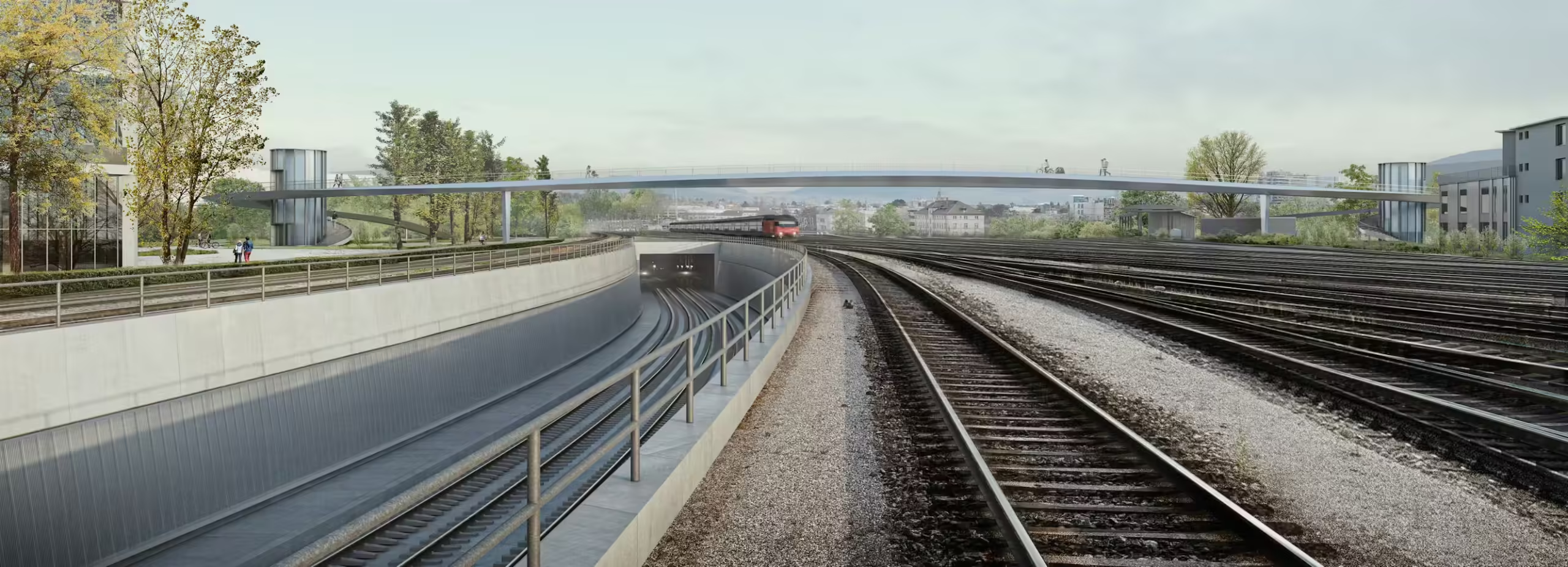
    SBB, in cooperation with the City of Bern and BLS, is launching one of the region’s most important infrastructure projects, the “Bern West performance upgrade”. The aim is to make the Bern railway junction more flexible, more stable and more efficient. The major project comprises five sub-projects, including the new Holligentunnel, the Europaplatz Nord railway station and the Steigerhubel overpass.

    A milestone for the Bern railway junction
    A particular focus is on improving regional transport. The new Holligen tunnel will allow regional trains to run without crossings, enabling stable and more frequent connections, such as the quarter-hourly service between Münsingen and Flamatt. The urban Europaplatz neighbourhood will also have a direct connection to public transport thanks to the new station and a larger subway.

    Challenges for travellers and residents
    Rail operations will be maintained during the construction period, which will last until at least 2036. Nevertheless, travellers will have to be prepared for timetable changes and replacement buses. Stöckacker station will close in December 2025 and will be replaced by tram line 8 until Europaplatz Nord opens in 2027.

    For local residents, the work will result in restrictions due to construction noise, dust and logistics traffic. However, the builders promise to minimise emissions as far as possible and to carry out replacement planting for felled trees.

    Sustainable future and financing
    The total cost of the project is around 900 million Swiss francs and will be financed by the federal government’s 2025 expansion programme. The new pedestrian subway at Europaplatz Nord, a contribution from the City of Bern, will be covered by a framework credit of CHF 60 million.

    With the completion of the “Bern West performance upgrade”, Bern’s railway infrastructure will meet the requirements of modern, sustainable mobility – a benefit for the entire region.

  • District heating project in Bern utilises the River Aare as an energy source

    District heating project in Bern utilises the River Aare as an energy source

    Energie Wasser Bern wants to supply the north-east of Bern with climate-friendly heat. To this end, the Bernese energy supplier is planning to build a corresponding heat production infrastructure, ewb announced in a press release. One of the sources of heat will be the water from the River Aare.

    Specifically, ewb wants to draw water from the Aare on the western bank at Engehalde and channel it into an existing cavern. Heat is to be extracted from the water here, which will then be transported to a new Aare Wyler energy centre to be built on the eastern side of the river. Properties in neighbourhoods adjacent to the energy centre could then be heated with district heating from the energy centre’s heat pumps. Ewb is also considering setting up a second, smaller Aare Engehalde energy centre on the west side of the river. It could supply the Tiefenau area with district heating.

    The company has already submitted a licence application to the Office for Water and Waste of the Canton of Bern for the construction of a catchment structure and the extraction and return of water from the Aare, explains ewb. The company expects a decision in spring 2026. In the meantime, a precise location for the planned Aare Wyler energy centre is to be found.

  • Sustainable construction projects launched in Germany and abroad

    Sustainable construction projects launched in Germany and abroad

    Implenia, the construction and property company based in the Glattpark district of Opfikon, has won several tenders for building construction contracts. According to a press release, the contracts have a total volume of 160 million Swiss francs.

    The company will construct the new office building of the Swiss National Science Foundation(SNSF) in Bern. The sustainable building will be constructed using local timber and recycled concrete in accordance with the Swiss Sustainable Building Standard (SNBS). Implenia has also been awarded several contracts in Germany.

    In Mainz, Implenia, together with its partners Gemünden and Apleona, was awarded the contract to construct a new 10,000 square metre research building for TRON. The research institute develops new diagnostics and active ingredients for immunotherapeutic treatments.

    In Leipzig, Implenia and its partner GP Günter Papenburg AG are building a seven- to eight-storey residential development on nine connected properties. In addition to 202 residential units, many commercial and ancillary premises are to be built. The buildings will be constructed as low-energy buildings in accordance with the Efficiency House 55 standard and the entire complex will be handed over on a turnkey basis.

    Three residential buildings with 101 units are being built in Munich, which should be ready for handover by 2026. Implenia will also realise a further stage of an ongoing project in Heilbronn and has been commissioned with a pre-construction phase in Siegburg.

  • Future-oriented urban development in Bern

    Future-oriented urban development in Bern

    Wankdorfcity 3 is located on a 34,000 square meter site in the north of Bern. An urban living space is being created here that goes beyond mere residential use. With this project, the real estate developer IMMOFONDS is creating a dense district that offers both living space and contact points for commercial and leisure activities. The direct connection to public transport creates a lively ecosystem characterized by interaction and exchange.

    Efficient planning and rapid approval
    The complexity of the planning for this project required innovative approaches and close cooperation between the responsible architects, urban planners and authorities. Gabriela Theus, Managing Director of Immofonds Asset Management AG, explains: “The efficient processing by the City of Bern and the collaborative partnership between all parties involved led to approval in accordance with building law without any objections – a record-breaking success throughout Switzerland.”

    Social and ecological sustainability
    Social sustainability is a key component. The creation of meeting places, communal spaces and outdoor areas will encourage interaction between residents. The planned urban garden and the varied open spaces characterize a place of togetherness.

    Diversity in living space
    In order to accommodate different lifestyles, the project offers a variety of living arrangements. From small apartments and tiny houses to family-friendly townhouses and multifunctional communal areas – there is something for every target group. This diversity ensures a lively district that meets the needs of its users.

    Innovative strength in urban development
    Wankdorfcity 3 is based on the innovative concept of the sponge city, which promotes sustainable water management in urban areas. Landscape architect Maurus Schifferli explains that rainwater is stored in special systems so that it can be released again in a targeted manner. This principle helps to regulate the local climate and shows how modern urban planning can combine resource conservation with aesthetics.

    Outlook for the next steps
    The final building permit marks the start of the implementation phase. The apartments and the associated services and commercial space will be ready for occupation in stages from 2027. In the coming years, Wankdorfcity 3 will not only contribute to the quality of life in Bern, but will also serve as an innovative example of modern urban development throughout Switzerland.

    This forward-looking project signals a new era of urban living that combines intergenerational living, inclusivity and sustainability.

  • Future-oriented urban development in Bern

    Future-oriented urban development in Bern

    Wankdorfcity 3 is located on a 34,000 square metre site in the north of Bern. An urban living space is being created here that goes beyond mere residential use. With this project, property developer IMMOFONDS is creating a dense neighbourhood that offers both living space and contact points for commercial and leisure activities. The direct connection to public transport creates a lively ecosystem characterised by interaction and exchange.

    Efficient planning and rapid approval
    The complexity of the planning for this project required innovative approaches and close collaboration between the responsible architects, urban planners and authorities. Gabriela Theus, Managing Director of Immofonds Asset Management AG, explains: “The efficient processing by the City of Bern and the collaborative partnership between all parties involved led to approval in accordance with building law without any objections – a record-breaking success throughout Switzerland.”

    Social and ecological sustainability
    Social sustainability is a key component. The creation of meeting places, communal spaces and outdoor areas will encourage interaction between residents. The planned urban garden and the varied open spaces characterise a place of togetherness.

    Diversity in living space
    In order to accommodate different lifestyles, the project offers a variety of living arrangements. From small flats and tiny houses to family-friendly townhouses and multifunctional communal areas – there is something for every target group. This diversity ensures a lively neighbourhood that meets the needs of its users.

    Innovative strength in urban development
    Wankdorfcity 3 is based on the innovative concept of the sponge city, which promotes sustainable water management in urban areas. Landscape architect Maurus Schifferli explains that rainwater is stored in special systems so that it can be released again in a targeted manner. This principle helps to regulate the local climate and shows how modern urban planning can combine resource conservation with aesthetics.

    Outlook for the next steps
    The final building permit marks the start of the realisation phase. The flats and the associated services and commercial space will be ready for occupation in stages from 2027. In the coming years, Wankdorfcity 3 will not only contribute to the quality of life in Bern, but will also serve as an innovative example of modern urban development throughout Switzerland. This pioneering project signals a new era of urban living that combines intergenerational living, inclusivity and sustainability.

  • New offices and meeting rooms completed in Bern

    New offices and meeting rooms completed in Bern

    The remodelling and renovation of the offices and meeting rooms at the Halter construction company’s Bern site have been completed. They were realised by Integral design-build AG, part of the Halter Group in Schlieren, within six months. The keys were handed over last week, according to Integral’s LinkedIn page. “By using recyclable materials such as wood, glass and metal, we have created a space that not only minimises our ecological footprint, but also reflects our values of sustainability and aesthetics,” it continues.

    The Halter site in Bern is growing and with it the “need for a larger and more inspiring working environment”, according to a Halter press release. Since the beginning of March this year, an additional 600 square metres of the former Denner site have been rented at the location in the House of Religions realised by Halter. The conversion phase, including dismantling, began in November 2023 and was successfully completed in July 2024. The expansion has increased capacity from 40 to 58 workstations. There are now also additional touchdown workstations and meeting rooms with modern equipment. The move has been successfully completed and the premises have already been filled with life.

    A particular highlight of the remodelling is the impressive staircase, which connects the two floors and creates an open and dynamic working atmosphere, according to the Halter press release.

    The Halter Group comprises a total of ten companies. The head office is in Schlieren, with further locations in Münchenstein BL, Bern, Kriens LU, Lausanne, St. Gallen and Geneva.

  • Energie Wasser Bern plans to expand the heating networks in Köniz

    Energie Wasser Bern plans to expand the heating networks in Köniz

    Energie Wasser Bern is planning to expand its existing network of heating networks in the municipality of Köniz. The two new thermal networks in the Köniz districts of Niederwangen and Wabern near Bern will also supply parts of the city of Bern with climate-friendly heat. The conditions for realisation are currently being examined. A final decision on realisation is expected to be made next year, ewb announced in a press release.

    The new Niederwangen heating network will be supplied by the existing ewb Forsthaus and Rehhag energy centres in Bern. Independent heat generation using energy from surplus water is planned for the Bern-Wabern heating network. The expansion of the climate-friendly heat supply supports the plans of the city of Bern and the municipality of Köniz to reduce their own greenhouse gas emissions to net zero by 2045 at the latest.

    The Bernese energy supplier is assuming operational and financial responsibility for the project. The municipality of Köniz is supporting the project by creating the best possible conditions. In particular, the municipal administration is responsible for coordinating construction and spatial planning activities and informing the residents of Köniz. A corresponding cooperation agreement is to be signed at the end of this year.

  • Free steel hall is ready for collection

    Free steel hall is ready for collection

    A steel hall in Bern that is no longer needed by the Beachcenter Bern is being given away, Luna Sonia Sagasser from öbu reports in a post on LinkedIn. The 29.2 metre wide and 32.4 metre long hall is located at Goumoënsstrasse 50 in Bern. It can be “collected free of charge and set up at another location”, writes Sagasser.

    The hall’s façade is made of sandwich elements from Montana Bausysteme, while the roof consists of an insulated sheet metal cassette from the same company. The room height varies between 6 and 8 metres. Other features mentioned in the article include two large doors, an internal steel structure with a gallery and a large skylight.

    Interested parties should contact the architect Michael Batt. A telephone number and e-mail address are given in the article.

  • New construction of the Witzwil regional prison

    New construction of the Witzwil regional prison

    The plans to modernise the prison infrastructure in the canton of Bern are taking shape. The new building is to be financed with a total budget of CHF 13.5 million, which the cantonal government has now submitted to the cantonal parliament. This step is part of a comprehensive strategy to modernise the prison system, which is set out in the Canton of Berne’s master plan.

    CHF 12 million has been earmarked for the competition to ensure the best possible realisation of the new building project. The need for this new building arises from the condition of the existing Biel/Bienne regional prison and the requirement to provide adequate support for the closed prison system. The clarifications on prison space requirements and operating costs requested by the Grand Council in advance have now been provided, which means that the project is based on solid data.

    In addition, the realisation of the new building requires the relocation of a number of agricultural buildings that are essential for prison operations in Witzwil. In order to avoid expensive interim solutions, it is proposed to construct these buildings from scratch, for which an additional CHF 1.5 million has been budgeted.

    The vote on these financing proposals is scheduled for the 2024 summer session of the Grand Council. The approval of these loans will not only advance the urgently needed modernisation of correctional facilities in the Canton of Bern, but also ensure an efficient and sustainable solution for the accommodation of offenders.

  • Spatial planning moderates real estate market

    Spatial planning moderates real estate market

    The Federal Office of Housing(BWO) and the cantonal planners of the Zurich metropolitan area commissioned the Center for Regional Economic Development of the University of Bern, in cooperation with IAZI, to investigate the contribution of spatial planning to rising housing costs. According to the results of the study, spatial planning plays a moderating role in the real estate market. It has an impact on construction activity and thus influences housing costs, writes the BWO in a statement on the study.

    By limiting the availability of building land and zoning capacities, spatial planning controls how flexibly the supply can adapt to the development of demand for housing. Too strict spatial planning can lead to higher housing costs in the long term, the authors of the study state. At the same time, however, spatial planning also has the task of protecting the landscape and limiting urban sprawl.

    The study identifies inner development as a solution to this dilemma. It offers an instrument “that makes it possible both to protect the landscape and to increase the supply of living space”. Another instrument proposed by the study is rezoning, i.e. the expansion of possible uses in a building zone. In addition, “lengthy approval and appeal procedures are described as driving up housing costs”.

    From 3 to 7 November, the Swiss Housing Days 2023 will take place in Biel BE. On 6 November, the programme will include a discussion by experts on the question of internal development that leads to more affordable housing.

  • Plans for Bern’s West railway expansion project are on the table

    Plans for Bern’s West railway expansion project are on the table

    Bottlenecks occur time and again at the Bern railway junction, which have an impact on all long-distance traffic in Switzerland. With the Federal Expansion Plan 2025 (AS25), such bottlenecks will be eliminated and rail operations in Switzerland will be further optimised: There will be more stable and more connections between Bern and Zurich, a half-hourly service to Lucerne and Neuchâtel, and more trains on the Bern-Thun line. In future, there will be an S-Bahn train every quarter of an hour between Bern and Münsingen, and there will also be more connections between Bern and Burgdorf.

    Various projects planned
    Five sub-projects are planned for the overall AS25 project “Performance improvement Bern West”:
    – the Holligen disentanglement with the 1.7 km long new Holligentunnel
    – the Aebimatt stabling facility
    – the west end of Bern railway station
    – the Europaplatz Nord stop
    – the Steigerhubel passerelle for pedestrian and bicycle traffic

    The new Europaplatz Nord stop also includes a new pedestrian subway for the city of Bern. A separate planning approval procedure will be submitted later to the Federal Office of Transport (FOT) for the west end of Bern station.

    Construction work will take twelve years
    Construction is scheduled to start in spring 2025. The new station with the project name Europaplatz Nord will go into operation in 2028 and will thus replace the existing Stöckacker stop located a few hundred metres to the west. Passengers are expected to travel through the Holligentunnel for the first time in 2034. As things stand today, it will take until 2036 for the entire project to be completed.

    In February 2023, SBB submitted the dossier for the planning approval procedure to the Federal Office of Transport. The public consultation will take place in Bern from 15 May 2023 to 13 June 2023.

    As things stand today, the estimated costs for the “Bern West service enhancement” amount to around CHF 750 million (+/- 10%). The project will be financed through the federal government’s extension step 2025 (AS25).

    Information room opens its doors
    An information room will be open during the planning period so that residents and interested parties can obtain comprehensive information about the project. It is located in the BLS building at Stöckackerstrasse 25 in 3018 Bern.

    Further information on the project can be found at sbb.ch/bernwest

  • Halter starts construction of the Toffematt housing estate

    Halter starts construction of the Toffematt housing estate

    With the ground-breaking ceremony, the construction of the Toffematt housing estate with 30 condominiums has begun in the Bernese municipality of Toffen. Halter AG is responsible for the development of the project with three new buildings, according to a media release. Thanks to a new form of cooperative ownership, condominium ownership is affordable for people with different purchasing power and remains cost-effective in the long term, according to the detailed Halter release.

    The ground-breaking ceremony on Thursday, 16 March, was attended by community president Carl Bütler, pastor Nadja Heimlicher and parish councillor Reto Casty. In October 2019, Halter AG acquired the right to purchase the plots from the Toffen community and the Belp-Belpberg-Toffen parish. The sustainable price of the land was linked to the condition that the resulting living space would be offered in a moderate price environment. in 2021, the newly founded Toffematt housing cooperative acquired the plots and Halter AG developed the development as a residential property project with building rights.

    According to the press release, the housing cooperative’s (WBG) sponsorship model not only enables condominium ownership in Toffematt with purchase prices 10 to 20 per cent below market prices. It is also intended to prevent speculation.

    With the purchase of a flat, the owners join the WBG Toffematt. According to the building lease contract, future profits from the sale of the flat benefit the cooperative. That is why a short-term resale is not worthwhile, according to the statement. And the flats remain affordable in the long term.

  • Bern has the most climate-friendly building stock

    Bern has the most climate-friendly building stock

    Navitas Consilium has developed an interactive tool to show the share of renewable or imported energy in the building stocks of each municipality in Switzerland, the Martigny-based energy and climate consultancy informs in a press release . The amount of greenhouse gases generated by the building stocks can also be called up using the tool. With its development, Navitas Consilium wants to help determine the need for decarbonization of building stocks for the implementation of the Swiss climate strategy.

    An interactive map can be used to show that the most densely populated areas of the country use a low proportion of renewable energy compared to rural areas. With a share of 28 percent, Lausanne is still the best of the ten major cities. For Switzerland as a whole, the values vary between 2 and 84 percent.

    At almost 40 percent, heating and hot water in buildings account for a very high proportion of total energy consumption. For the implementation of the climate strategy, Navitas Consilium therefore considers a reduction in energy consumption in combination with the use of low-emission renewable energies to be essential.

    The city of Bern is currently one step ahead when it comes to the climate-friendliness of its building stock. With 23 kilograms of CO2 equivalents per square meter per year, Bern has the lowest emissions of the ten largest cities in Switzerland. Zurich and Basel follow, each with 24 kilograms of CO2 equivalent per square meter. In general, cities with less than 10 percent energy from renewable sources have comparatively high emissions of greenhouse gases.

  • EPFL student turns plastic waste into bricks for building

    EPFL student turns plastic waste into bricks for building

    For her master’s thesis in civil engineering, Selina Heiniger developed a method for the more sustainable production of building material. According to a press release from the Swiss Federal Institute of Technology in Lausanne ( EPFL ), she uses plastic waste, concrete that has already been used and terracotta bricks that have been made small.

    In her master’s thesis, Heiniger wanted to tackle two related challenges: reducing environmental pollution from plastic waste and developing construction methods that use fewer raw materials.

    She developed bricks made from recycled plastic – polypropylene (PP), polyvinyl chloride (PVC) and high-density polyethylene (HDPE) – as well as crushed terracotta bricks and recycled concrete. Their bricks are designed to interlock, so no mortar is required. Initial tests are encouraging, but the invention is still in the prototype stage. If successful, Heiniger’s work could make a significant contribution to reducing the construction industry’s carbon footprint.

    Heiniger graduated from high school in the canton of Bern and then enrolled at the EPFL to study civil engineering. At first she only studied part-time, as she also worked in a civil engineering company in Lausanne.

    Selina Heiniger’s master’s thesis was jointly developed by Corentin Fivet, head of EPFL’s Laboratory for Structural Exploration in the Faculty of Architecture, Civil and Environmental Engineering, and Yves Leterrier, a senior scientist at EPFL’s Laboratory for Advanced Composites Processing in the Faculty of engineering, supervised.

  • Swiss Prime Site selects four start-up ideas

    Swiss Prime Site selects four start-up ideas

    Swiss Prime Site , a listed real estate company based in Zug, has identified and promoted four start-ups in its accelerator program that are rethinking existing business models in the industry: DuraMon from Zurich, Novalytica with offices in Bern and Zurich, Proximi from Helsinki and Spotr from Den Hague.

    The participants had to develop relevant use cases for the real estate company and its subsidiaries, which lead to sustainable processes , improved efficiency and sustainable growth. Finally, the jury selected these four start-ups that were able to present themselves to the board of directors. The aim is a sustainable cooperation.

    DuraMon believes in safer, more affordable and sustainable construction and repair solutions that reduce concrete infrastructure maintenance costs and carbon emissions. Novalytica supports companies in the development of clearly defined data strategies in order to generate business-relevant insights and tools.

    Capable of relating any application to a specific location, Proximi’s platform provides tools for geofencing, delivers mobile content, automates IoT devices and integrates third-party interfaces. The start-up Spotr uses numerous image sources from people to satellites to analyze entire building portfolios in minutes.

    “The Swiss Prime Site Accelerator is very well designed,” Yurena Seguí Femenias is quoted as saying by DuraMon. The experts asked the right questions and gave “informative and tailor-made advice”.

  • The city wants to use synergies with the expansion of district heating

    The city wants to use synergies with the expansion of district heating

    Since 2020, Energie Wasser Bern has been working on expanding the district heating network from the energy center in the Forsthaus. By 2035, 36 kilometers of main lines are to be laid in the existing roads. The district heating project is of central importance for achieving the goals of the municipal energy plan and is one of the largest infrastructure projects in recent decades.

    Based on initial experiences in the Länggasse district, the municipal council intends to consistently use the district heating project for improvements in the interests of the population. If the street space is broken up for the laying of the lines, urban climate measures such as unsealing and planting of street and square surfaces, improvements for biodiversity, water retention or seepage should be implemented. At the same time, the municipal council wants to increase safety for pedestrians and cyclists and for school children. In addition, urban drainage measures are to be implemented underground and, where appropriate, traffic signal systems are to be optimised.

    Loan application is being prepared

    To implement these measures, the municipal council is planning an investment loan of CHF 35 million. This loan is also intended to finance the necessary positions in the Directorate for Civil Engineering, Transport and City Green (a total of 5 additional project manager positions). After completion of the district heating project, the additional job budget will be reduced again through natural fluctuation. In view of the highly competitive market for skilled workers, the district heating expansion that has already started and the long lead times for construction projects, the municipal council has authorized the responsible directorate to advertise the positions now.

    The corresponding loan proposal is now being prepared and is expected to be submitted to voters in the city of Bern in June 2023.

  • Zurich remains at the top of the Swiss city ranking

    Zurich remains at the top of the Swiss city ranking

    The magazine “ Bilanz ” has published this year’s ranking of the quality of life in Swiss cities. Zurich took first place again and, according to the report , has been the undisputed leader for eleven years. The cities of Zug and Bern took second and third place, followed by Winterthur, Basel and Geneva.

    The city ranking was created by the real estate experts from Wüest Partner for the business magazine “Bilanz” based on several indicators for the quality of life in cities, for example in the areas of the job market, education, leisure and shopping. A total of 162 cities were rated in this way.

    According to the article by “Bilanz”, it hardly seems possible for other cities to break into the absolute top group. In the top 10, only the canton’s capital, Aarau, lost two places and fell from 6th to 8th place. When asked whether other cities even had a chance of making it into the top group, Patrick Schnorf from Wüest Partner was quoted as saying: “It’s impossible It doesn’t.” For example, St.Gallen, which currently ranks 11th, has a chance if the city could increase its educational and cultural offerings as well as its population growth.

    According to Schnorf, Bassersdorf ZH is a counter-example, which has slipped back eleven places. “Compared to other cities, Bassersdorf has not developed as quickly, for example in terms of education and culture,” Schnorf is quoted as saying. According to the ranking, the two economic regions of Zurich and Lake Geneva are the most liveable.

    Since there are only four cities in the top 30 from western Switzerland and Lugano, one in Ticino, it must be said that the overall quality of life in German-speaking Switzerland is higher.

  • Konnex Baden wins two more tenants

    Konnex Baden wins two more tenants

    On behalf of the co-ownership, SPGI Zurich AG has rented two additional areas in the Baden connection . The Konnex building complex in the center of Baden is currently being completely renovated. According to themedia release , a “city in a city” offer will be available there by mid-2023. A total of around 35,000 square meters of space will be rented for this purpose.

    According to the press release, the new tenants are Casino Davos AG and SkySale. Casino Davos has already moved in as an interim tenant and will move into its new 495 square meter space once the refurbishment is complete. SkySale Schweiz GmbH, better known under its apple box brand, is also a new tenant. It will move into around 814 square meters of space in early summer 2023.

    The interest in the innovative multi-tenant concept of the Konnex is great and negotiations are currently taking place for many other areas. The city-in-city concept envisages a range of services and amenities, including restaurants, convenience stores, fitness, childcare and co-working.

    SPGI Zurich AG, based in Zollikon, is a subsidiary of the Intercity Group , an independent real estate service provider with group companies in Zurich, Lucerne, Bern, Basel, St.Gallen, Olten SO and Zug. Since 1993, SPGI Zurich AG has been an alliance partner of Cushman & Wakefield , a leading global provider of real estate services with headquarters in Chicago and 53,000 employees in 60 countries worldwide.

  • Zurich is the second best city in Europe for real estate investments

    Zurich is the second best city in Europe for real estate investments

    Zurich gained two places in the European Thematic Cities Index (TCI) compared to the previous year and is now in second place. London is in first place and Stockholm is in third place. According to a press release , this index from Swiss Life Asset Managers measures 135 European cities in 28 countries. He evaluates them on five core themes that shape a city’s real estate market: Change and Disruption, Climate and Environment, Communities and Clusters, Consumers and Lifestyle, and Connectivity. He wants to offer a comparability for real estate investments.

    The six Swiss cities in the ranking are all in the top 50 of the TCI. Among them, Zurich remains “the most dynamic and healthy city with the best networks”. Despite the lack of an international airport, Bern’s 9th place is now “the third most accessible city in the entire ranking”. Basel gains one place compared to the previous year and is in 7th place, Lausanne in 15th place. Geneva has gained the most with 16 places and is listed in 31st place. Due to its “less environmentally friendly mix of sectors and above-average car use”, Lucerne lost nine places and ended up in 41st place.

    According to the TCI, all six Swiss cities promise little growth potential despite their stability and attractiveness. According to this analysis, they are all among the eleven worst European cities in terms of this criterion. And as in the TCI 2021, this year’s analysis rates health as the weakest issue in Swiss cities.

  • Housing estate receives self-sufficient lighting

    Housing estate receives self-sufficient lighting

    The outdoor lighting in the Moosbühlstrasse housing estate in Moosseedorf near Bern is no longer dependent on the power grid, BKW said in a statement . The Bernese energy and infrastructure company has installed 27 solar-powered LED lights here, which throw sufficient light onto stairs and into house entrances, but emit as little light as possible that is irritating to people and the environment. With the project, which is financially supported by the municipality , BKW is “for the first time equipping an entire settlement with sustainable solar lights,” project manager Simon Jakob from BKW is quoted as saying in the press release.

    The innovative lighting has a whole range of advantages over conventional outdoor lighting, as explained in more detail in the press release. Not only can the lamps be operated independently of the mains supply, but there is also no need to pull cables when setting up and replacing them. The solar panels attached to all four sides of the lamp posts generate enough energy to operate the lights even on dark winter days. Motion-dependent control also helps to save energy. "The trend towards as little light as necessary and the population's greater environmental awareness makes solar outdoor lighting interesting for residents and owners," says Jakob.

  • Housing estate receives self-sufficient lighting

    Housing estate receives self-sufficient lighting

    The outdoor lighting in the Moosbühlstrasse housing estate in Moosseedorf near Bern is no longer dependent on the power grid, BKW said in a statement . The Bernese energy and infrastructure company has installed 27 solar-powered LED lights here, which throw sufficient light onto stairs and into house entrances, but emit as little light as possible that is irritating to people and the environment. With the project, which is financially supported by the municipality , BKW is “for the first time equipping an entire settlement with sustainable solar lights,” project manager Simon Jakob from BKW is quoted as saying in the press release.

    The innovative lighting has a whole range of advantages over conventional outdoor lighting, as explained in more detail in the press release. Not only can the lamps be operated independently of the mains supply, but there is also no need to pull cables when setting up and replacing them. The solar panels attached to all four sides of the lamp posts generate enough energy to operate the lights even on dark winter days. Motion-dependent control also helps to save energy. “The trend towards as little light as necessary and the population’s greater environmental awareness make solar outdoor lighting interesting for residents and owners,” says Jakob.

  • Forest dominates land use in cities

    Forest dominates land use in cities

    The current study on the use of land in Swiss cities is astonishing, writes the Swiss Association of Cities in a statement on the ” Statistics of Swiss Cities 2022 ” drawn up jointly with the Federal Statistical Office . According to the analysts’ surveys, in 2018 settlement areas accounted for just 23.5 percent or 95,000 hectares of the total area of the 170 Swiss cities surveyed. Most of the urban soil, specifically 32.3 percent, was covered with forest at the end of the study period from 1985 to 2018. At 30.9 percent, the proportion of agricultural land in 2018 was also significantly larger than the settlement area.

    In the six largest cities in Switzerland (Basel, Bern, Geneva, Lausanne, Winterthur and Zurich), the proportion of settlement area in 2018, at 54.2 percent, was significantly higher than in the overall calculation, the statement explains further. Forest and agricultural land accounted for 29.6 and 14.3 percent, respectively.

    The analysts observed growth in the reporting period, above all in residential areas. Between 1985 and 2018 it increased by almost 10,000 hectares to 35,000 hectares. The areas used for traffic and built up with recreational and green areas also grew in the reporting period. In contrast, the area used by industry in cities with more than 100,000 inhabitants fell by 26 percent between 1985 and 2018.

  • City view of Bern is accessible in 3D

    City view of Bern is accessible in 3D

    Bern makes the three-dimensional view of the entire city publicly available. So far it has only been accessible to municipal offices and other interested parties. An Internet browser or a newer smartphone is sufficient for access.

    As the city of Bern informs , the city model includes all existing and planned buildings in the city. It also shows the most important bridges in detail. The vegetation can also be added as a 3D object or as a point cloud. The sub-municipalities were also supplemented using freely available data from the Federal Office of Topography.

    As a video shows, you can find out how high the Bern Minster is by zooming, sliding and rotating. In addition, it becomes clear which shadow course a building shows on a cloudless day. With the measuring tools control element, distances and building heights can be taken from the model. For example, the linear distance between two placemarks can also be determined. Much more information is also available via a link to the city map.

    Experts from urban planning, architecture and landscape design can also switch on official surveying data for their projects. For a processing fee, the city of Bern also offers to prepare and submit the data according to customer requirements.

  • Swiss train stations perform moderately

    Swiss train stations perform moderately

    Of 50 train stations in Europe that were examined, the train stations in Bern and Zurich performed moderately to poorly in terms of passenger-friendliness. According to a press release, Bern train station landed in 40th place in the European Railway Index 2021, while Zurich train station was in 21st place.

    The consumer protection group Consumer Choice Center , based in Washington, has examined in its index, among other things, the shopping experience, the accessibility, the WLAN network, the number of national and international destinations as well as the choice of travel providers.

    The main train station in Bern, for example, has toilets for wheelchair users, but with six shops and eight restaurants only a very limited range of options for eating and shopping. The Zurich main station offers more than 53 shops and 39 restaurants, but does not provide barrier-free toilets for wheelchair users.

    Leipzig Central Station performed best in front of Vienna Central Station and St. Pancras in London. According to a media release, the train station in the German state of Saxony offers most domestic destinations, many shops and restaurants, and several railway companies.

  • Bern is testing street lamps as charging stations

    Bern is testing street lamps as charging stations

    The municipal energy supplier Energie Wasser Bern (ewb) wants to convert street lamps in two Bern quarters into charging stations for electric vehicles. At the end of March, according to a press release, ewb will put two upgraded lanterns into operation at Thormannstrasse 62 and 64 and at Huberstrasse 16. The two masts will be equipped with type 2 sockets, the European standard for charging e-cars.

    ewb is responding to the growing demand for e-cars and thus also for charging points in Bern. The test stations are located on residential parking areas marked blue. According to the press release, this makes them particularly suitable for residents of Thormannstrasse and Huberstrasse who have an e-car and a resident parking card.

    ewb wants to expand the e-charging stations specifically in the blue zones, because this is where most people from Bern park. The energy supplier is technically supported for the project by Siemens and ubitricity as well as MOVE as an e-mobility service provider. The City of Bern and EnergieSchweiz are also involved.

    For owners of diesel and gasoline cars as well as e-vehicles that are not supposed to be charged, the areas will no longer be available until the end of the pilot phase in spring 2022. They should be able to recognize this from the corresponding signs. At the end of the test phase, ewb and its project partners want to evaluate the data and decide whether to introduce such charging lanterns across the board.

  • Bern gets a new festival hall

    Bern gets a new festival hall

    The voters from Bern have not only approved the construction of the new festival hall, but also the city's investment of CHF 15 million, according to a press release by the trade fair operator Bernexpo AG . This should enable events with up to 9,000 visitors in the future. In addition to trade fairs and congresses, concerts and cultural events are also planned.

    "With the New Festival Hall, we will upgrade the Bern event and trade fair center and thus make a significant contribution to strengthening a diverse range of cultural and entertainment offers that radiate beyond the city and into the region and throughout Switzerland," says Franziska von Weissenfluh in of the announcement quoted, Co-Chairman of the Board of Bernexpo AG.

    The old festival hall is now being demolished. Work on the new festival hall is to begin in the first quarter of 2022 and is to be completed by 2024.