Tag: Betonbau

  • Renovation of the airport runway takes place during ongoing flight operations

    Renovation of the airport runway takes place during ongoing flight operations

    Walo Bertschinger AG, based in Dietikon, is participating in the renovation of the main runway at EuroAirport Basel-Mulhouse together with its partner TRBA from Péruwelz in Belgium. The large-scale project involves the dismantling and restoration of parts of the runway, according to a Facebook post.

    The work is being carried out at high intensity. Within 29 hours, 38,000 square metres of runway were dismantled. Over 15,000 cubic metres of concrete had to be demolished and replaced. At the same time, 500 people are working on the project at peak times. The work is being carried out in parallel with flight operations on the secondary runway 07/25. According to the airport, flight movements with larger A319 and A320 aircraft, which normally use the main runway, will also take place there. Work has been underway since 15 April and will continue until 20 May 2026, with the new runway due to reopen on 21 May.
  • Foldable and reusable formwork revolutionises concrete construction

    Foldable and reusable formwork revolutionises concrete construction

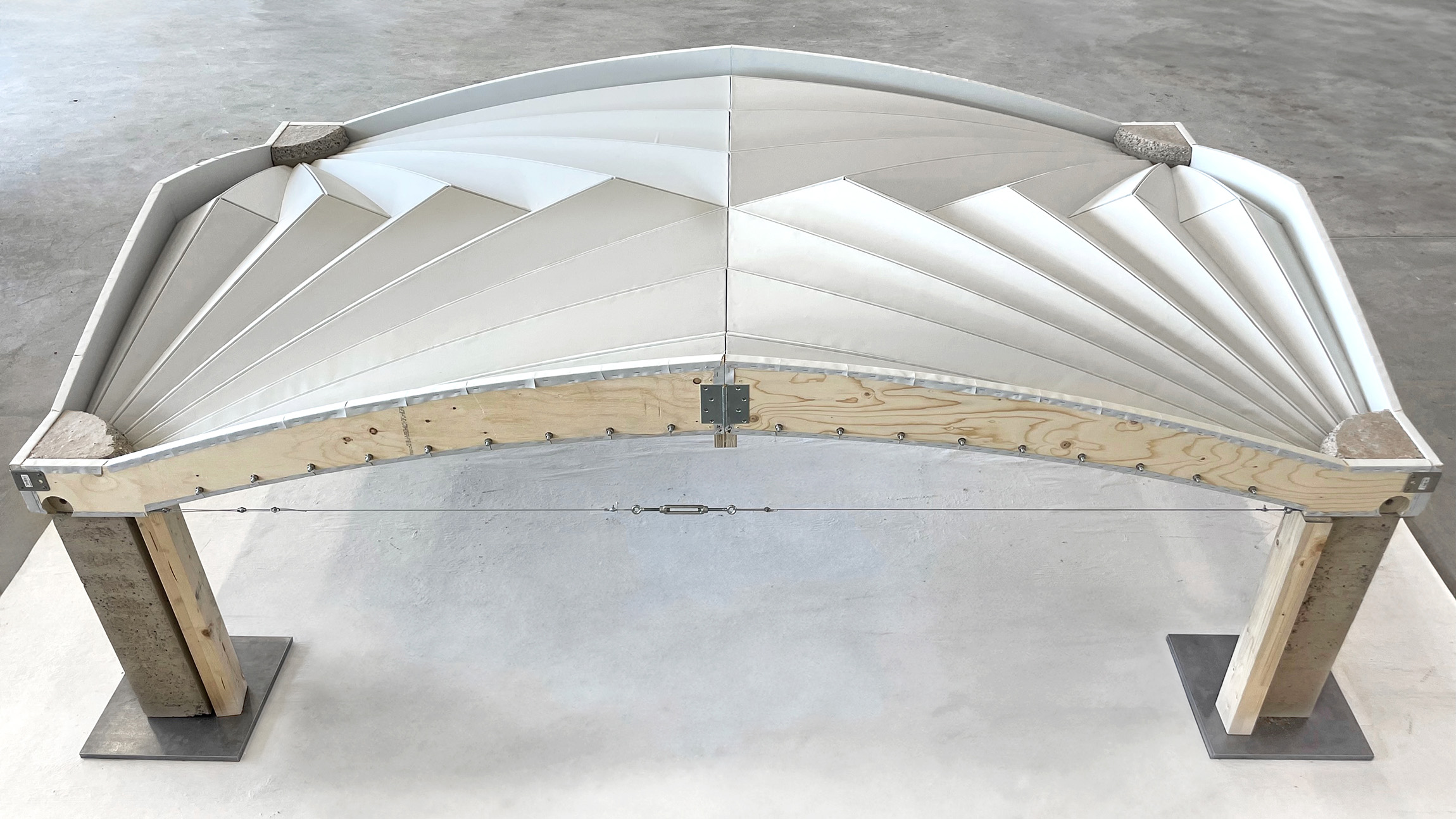
    Unfold Form is the name of the lightweight and reusable formwork for vaulted concrete structures. It was developed by architecture doctoral student Lotte Scheder-Bieschin in Philippe Block’s ETH research group. According to an ETH report, it saves up to 60 per cent concrete and up to 90 per cent steel compared to conventional ceilings.

    Unfold Form consists of thin, flexible plywood strips. They are connected to each other by textile hinges and can be unfolded like fans. Four such moulds are quickly and easily joined together in a wooden frame to form a load-bearing formwork with spikes. The concrete is poured on top. “The concrete absorbs these corrugations as ribs,” says the inventor. “These ribs help to transfer loads.”

    Once the concrete has hardened, the formwork can be removed from below, folded up again and used again. According to the information provided, the entire system for the prototype weighs just 24 kilograms, but can carry up to 1 tonne of concrete.

    “In addition to the material, you only need a template for the mould and a stapler.” The material for the prototype cost 650 francs. As the researcher emphasises, the formwork can be produced and set up without specialist knowledge or high-tech. This means it can be used worldwide, even with limited resources, for example in developing countries. The demand for new buildings is particularly high there.

    The second prototype was cast on site by the South African partner company nonCrete, which is committed to sustainable buildings and affordable housing. “The innovative formwork system,” says Scheder-Bieschin, “will one day be used to build high-quality, dignified and sustainable homes in South African townships.”