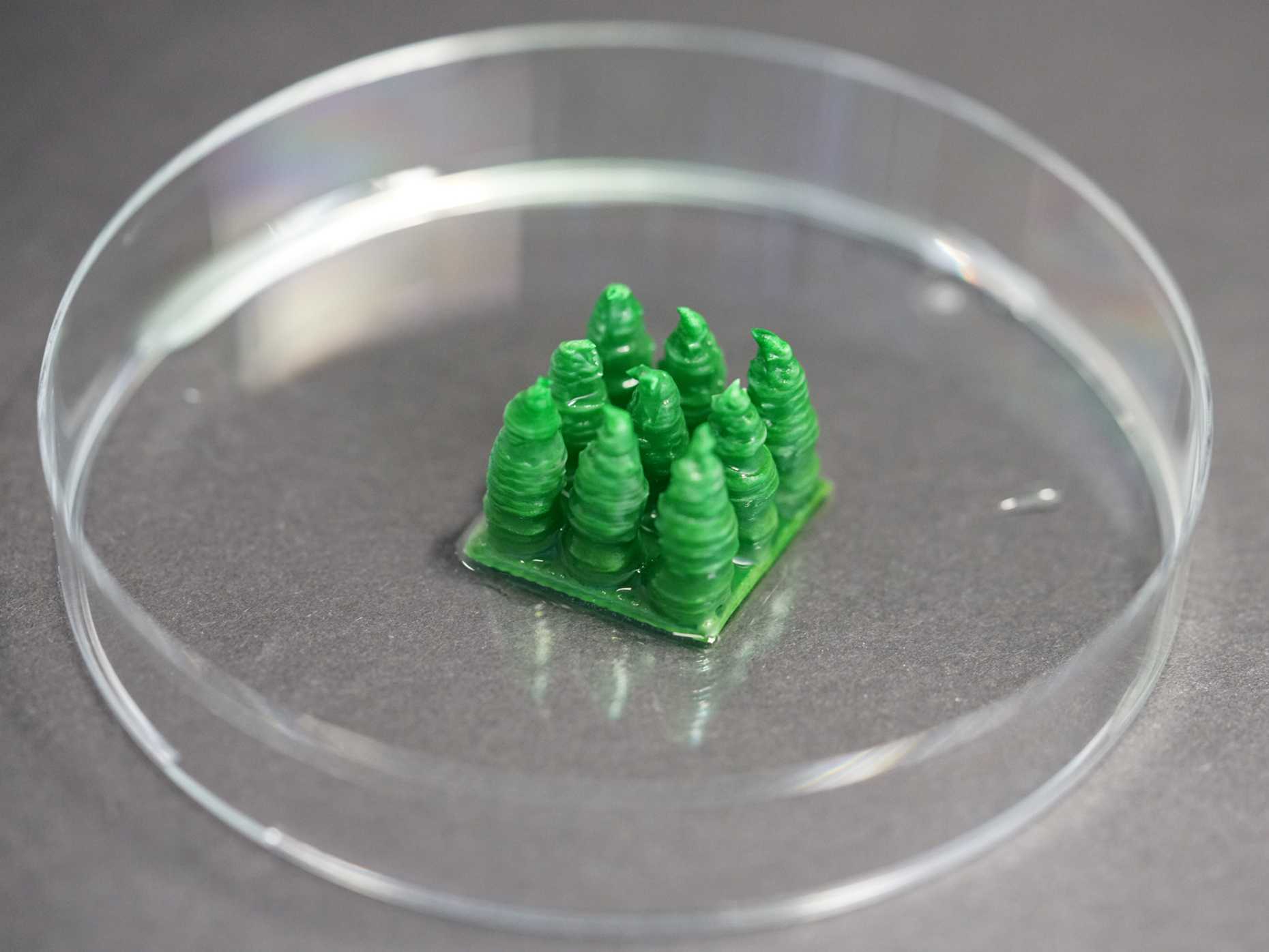
The construction sector is considered one of the biggest sources of CO₂ emissions worldwide. Researchers at ETH Zurich are now pursuing a radically different approach. They have developed a living, organic building material that actively binds carbon dioxide from the atmosphere during its lifetime. Inside this material live cyanobacteria, also known as blue-green algae, which produce biomass via photosynthesis and also form carbon-containing minerals.
The innovation combines biology, material science and 3D printing to create a promising concept for climate-neutral construction. The material is not only functional, but also structurally customisable. It can be moulded into freely selectable shapes, is lightweight and only requires sunlight, CO₂ and artificial seawater to grow.
3D printing with photosynthesis in the system
The project is led by Mark Tibbitt, Professor of Macromolecular Engineering at ETH. Together with his interdisciplinary team, he has succeeded in developing a hydrogel that stably coats the sensitive cyanobacteria and makes them printable at the same time. The result is a biologically active system that is architecturally mouldable and at the same time continuously binds CO₂.
The double binding effect is remarkable. The material stores carbon both in the growing biomass of the bacteria and in the form of stable minerals. This creates a permanent carbon store that can potentially significantly reduce the carbon footprint of buildings.
From the laboratory to the built environment
The researchers see the primary area of application in the future in the building sector, for example as a façade coating. In contrast to conventional building materials, which cause emissions, this material could absorb CO₂ throughout its entire life cycle.
Its implementation in architectural formats has already been tested at renowned platforms such as the Venice Biennale and the Triennale in Milan. The experience gained there shows that the concept can prove itself not only in the laboratory, but also in an architectural context.
Potential for urban cycles
The material is more than just an ecological experiment. It could become part of future urban material cycles. By not only housing users, but also serving as biological CO₂ sinks, buildings open up a new chapter in climate-conscious architecture.
The ETH researchers’ findings have been published in the journal Nature Communications. An indication of the scientific relevance and level of innovation of the development. Now it is time to take the next steps towards scalability and long-term stability.
