In the first half of 2025, CHF 1.47 billion flowed into Swiss start-ups, an increase of 36 per cent compared to the previous year. This is the third-best result since measurements began. However, growth was driven by a small number of startups that raised large sums from international investors. The number of financing rounds fell for the third time in a row to 124, which corresponds to a decline of ten per cent.
Biotech as a growth driver The biotech sector in particular produced a strong result. It set a new record with an inflow of CHF 705 million in capital. The previous record of CHF 436 million from 2021 was clearly surpassed. The reasons for this success lie in highly qualified start-up teams and technological developments based on excellent research.
Recovery in ICT and fintech The recently weakening ICT and fintech sectors were also able to recover. General ICT start-ups recorded investment growth of 86 per cent to CHF 247 million. Fintech companies received CHF 153 million, which corresponds to an increase of 93 per cent. The number of transactions remains low, which indicates continued investor selectivity.
Swiss startup ecosystem remains resilient Despite the uncertain market environment, the Swiss startup ecosystem is able to produce internationally competitive companies. One example of this is Sygnum Bank, which became Unicorn in the first half of 2025. The bank, which specialises in digital assets, was valued at over 1 billion dollars, a signal of the potential of innovation outside of the healthcare sector.
Gloomy outlook among investors A broad-based survey shows that expectations for the coming twelve months are subdued. Fundraising and more difficult exit opportunities are of particular concern. International trade barriers, on the other hand, only play a subordinate role. Access to capital is likely to remain challenging for many start-ups, despite individual success stories.
The 50-page report, published by Deep Tech Nation Switzerland in collaboration with Dealroom.co, Startupticker and the VC firms Founderful and Kickfund, is the most comprehensive analysis of the Swiss deep tech ecosystem to date. The facts are impressive: with 60 per cent of all Swiss venture capital flowing into deep tech between 2019 and 2025, Switzerland leads the world, ahead of the US and other tech nations.
The country also reached a new level with over USD 100 billion in company valuations created. Almost all late-stage financing rounds are supported by international investors, particularly from the US and the EU. This enables Switzerland to combine innovative strength with global visibility.
Academic excellence meets entrepreneurial growth A key success factor lies in the close integration of research and entrepreneurship. Alongside Oxford and Cambridge, ETH Zurich and EPFL in Lausanne are among the four most active universities in Europe when it comes to founding deep-tech spin-outs. These academic hotspots are the origin of a growing number of scalable companies, supported by a strong patent density, international partnerships and an innovation-friendly funding landscape.
AI, energy, robotics and techbio are gaining relevance Although biotech remains the dominant sector in terms of value creation and VC density, the Swiss deep tech ecosystem has broadened significantly in recent years. Start-ups in the fields of artificial intelligence, machine learning, robotics, ClimateTech, TechBio and energy systems are on the rise. Since 2021, the AI/ML sector has accounted for 23 per cent of all start-ups – almost double the proportion compared to the previous period.
This structural change underlines the dynamism and future viability of the ecosystem. More than 1500 analysed companies testify to a remarkable breadth and depth, many of which are highly mature and have international scaling potential.
Zurich, Lausanne, Basel and Geneva as key locations The innovation corridors of Zurich, Lausanne, Geneva and Basel are identified as strategic hubs where clusters for individual technologies are increasingly emerging.
The report provides decision-makers with a data-based foundation for further improving the framework conditions. The report is an important tool for politics and business, particularly with regard to regulatory decisions, infrastructure and international positioning.
Deep tech as Switzerland’s future expertise The Swiss Deep Tech Report 2025 shows a confidently operating ecosystem that is impressive in terms of capital, talent and technological maturity. Switzerland is positioning itself not only as an incubator for world-class technologies, but also as a location that consistently focuses on implementation, internationalisation and social relevance. With the now established monitoring and continuous data collection, Deep Tech Nation Switzerland creates a platform for long-term excellence and reaffirms Switzerland’s claim to leadership in the age of deep technologies.
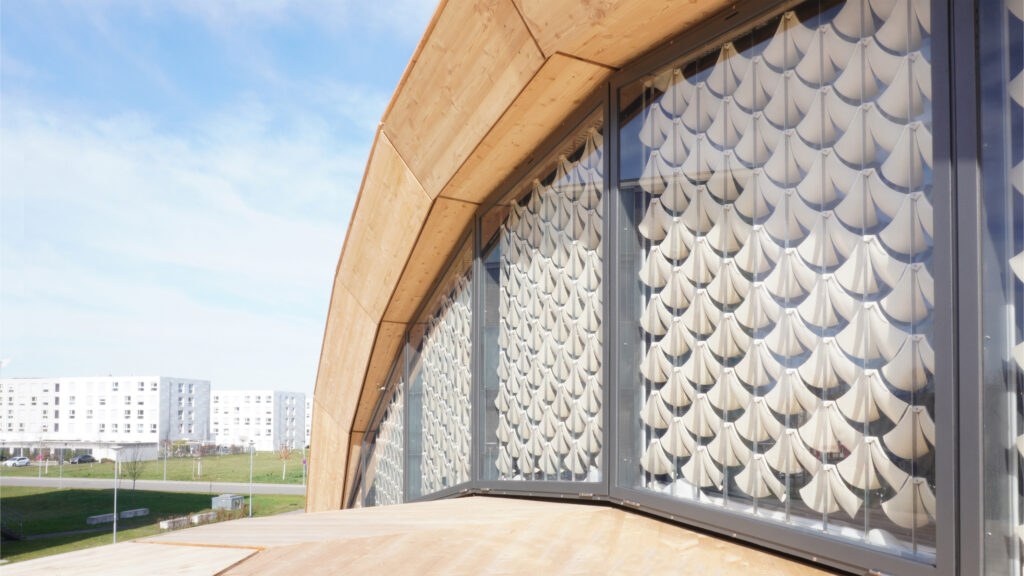
In nature, plant structures adapt intelligently to their environment, and these principles are now also being utilised in architecture. Researchers at the Universities of Freiburg and Stuttgart have developed the “Solar Gate”, a façade system that reacts to changes in humidity and temperature without the need for mechanical or electrical components.
This adaptive shading system was installed on the livMatS Biomimetic Shell, a research building at the University of Freiburg. It is based on hygromorphic materials that open and close independently like pine cones. As a result, the system lets sunlight into the building in winter for natural heating and protects against excessive heat in summer – completely energy self-sufficient.
4D printing enables intelligent façades The secret behind the innovation lies in the combination of bio-based cellulose materials and state-of-the-art 4D printing technology. Cellulose, a renewable and abundant raw material, reacts to fluctuations in humidity by expanding or contracting. The research team has utilised this natural property to develop a two-layer structure that automatically adapts depending on the weather.
The elements produced using 4D printing curl up and open in high humidity, while they flatten and close in dry conditions. The “Solar Gate” thus offers a completely new way of regulating buildings in a climate-neutral way.
Energy-efficient construction of the future The building sector is responsible for a large proportion of global CO₂ emissions. Buildings can significantly reduce their energy consumption for heating, cooling and ventilation using intelligent, bio-based materials. The “Solar Gate” shows how natural principles and modern manufacturing technologies can lead to sustainable architectural solutions.
With this innovative shading system, the researchers prove that sustainable construction methods can not only be environmentally friendly, but also efficient and cost-effective. The future of architecture could therefore be a great deal closer to nature.
Over the years, more and more companies from the same industries have settled here, resulting in the formation of various industry clusters, as they are known. This also includes education, research and various platforms such as the Innovation Park or associations, in which a lively exchange takes place. The large number of companies, service providers, suppliers and private institutions provide mutual support and promote a service-orientated and efficient administration. The local companies also benefit from the high educational standards and excellent infrastructure.
Blockchain, fintech and IT Zug has developed into a global hotspot for blockchain, fintech and IT. Here, innovations unfold in a symbiotic ecosystem where pioneering technologies meet and create a wealth of limitless opportunities. Zug has earned recognition for its transparent regulations, crypto-friendly banks and administrations, a dynamic labour market for cryptocurrencies and a varied calendar of events. Due to its proximity to the Zurich region, Zug is developing an attractive ecosystem for around 600 crypto companies in the “Crypto Valley” and is the birthplace of Ethereum. This environment is favoured by a positive regulatory framework, attractive taxes, incubators such as CV VC and a large number of fintech companies. The Canton of Zug supports research in this area financially by contributing almost CHF 40 million to the blockchain research initiative of the University of Applied Sciences and Arts Lucerne and the University of Lucerne.
Zug’s “Fintech Cluster” embodies a centre of innovation in the field of financial technology. Within the “Crypto Valley”, this cluster acts as a dynamic meeting place for fintech companies, start-ups and financial institutions. Zug is also home to the National Test Centre for Cybersecurity (NTC) as well as various labs and research centres in the fields of blockchain, AI, ML and robotics at HSLU, located in Rotkreuz.
Life sciences (pharma/biotech and medtech) The canton of Zug is a leading location for life sciences with around 300 companies and 9,000 employees. In addition to the strong focus on commercial functions, the medical and clinical areas are also growing. The regional innovative strength is reinforced by other leading clusters in deep tech, AI and ICT, which creates innovative synergies.
Pharma/biotech Zug attracts numerous international pharmaceutical and biotech companies, including Biogen, Amgen, Astra Zeneca and Johnson & Johnson. In addition, around 60 US biotech companies have chosen Zug as their European headquarters in recent years. The high density of pharmaceutical and biotech companies in the canton of Zug and the large number of service providers specialising in life sciences create an advantageous business environment.
Medtech In the medical technology sector, more than 100 companies specialising in diagnostics and medical production are represented with production sites and global headquarters. Representative examples of global headquarters are Roche Diagnostics, Medela, SHL Medical, Schiller and Johnson & Johnson Medtech with important global functions at their international campus in Zug.
Zug also offers up-and-coming medtech start-ups such as Deep Breath Intelligence, Heart Force and Sedimentum optimal conditions for growth and innovation.
New SHL Medical AG building
The 5,000 m² office and 10,500 m² production building for the tenant SHL Medical AG is being built on the Tech Cluster Zug site. The compact design, the reduction in materials and the innovative hybrid construction of wood, steel and concrete promote resource-saving, efficient construction. Visible wood on the inside and a protective aluminium layer on the outside reflect the high quality standards. A 20% reduction in CO2 emissions is made possible by on-site concrete production using Jura Eco cement.
SHL’s energy supply is designed as part of the site-wide multi-energy hub. The energy supply is supplemented by lake water cooling and large-scale PV systems on roofs and façades. The surplus heat and energy is recovered for further use in the hub.
New Roche production building
Roche is investing 215 million in a new 29,000 m² diagnostics production building in Rotkreuz, which will be completed by 2027. The flexible design will allow the building to be adapted to future production needs, thereby increasing long-term efficiency. Sustainability is a top priority: a fossil-free energy supply, water circulation systems and resource-saving construction methods are planned. The surrounding area will be designed to be close to nature, with wet meadows, a fen and a roof garden at a height of 23 metres to promote biodiversity.
Tech industry The tech industry is one of the largest employment sectors in Switzerland. With around 14,000 employees and 750 companies, this sector is also important for the canton of Zug. The focus of the high-tech cluster in Zug is on the development, design and manufacture of electronic products and services. Digitalisation, the Internet of Things (IoT), robotics and artificial intelligence (AI) also play important roles.
Zug stands out as one of the most dynamically expanding technology centres in Europe. The canton of Zug is home to numerous notable SMEs and start-ups specialising in cutting-edge and pioneering technologies. Their influence extends across various industries as they develop ground-breaking solutions based on emerging technologies. Access to various research and networking institutions such as the University of Applied Sciences (HSLU), the Innovation Park Central Switzerland and the Technology Forum Zug create the ideal framework for innovative, technology-driven companies.
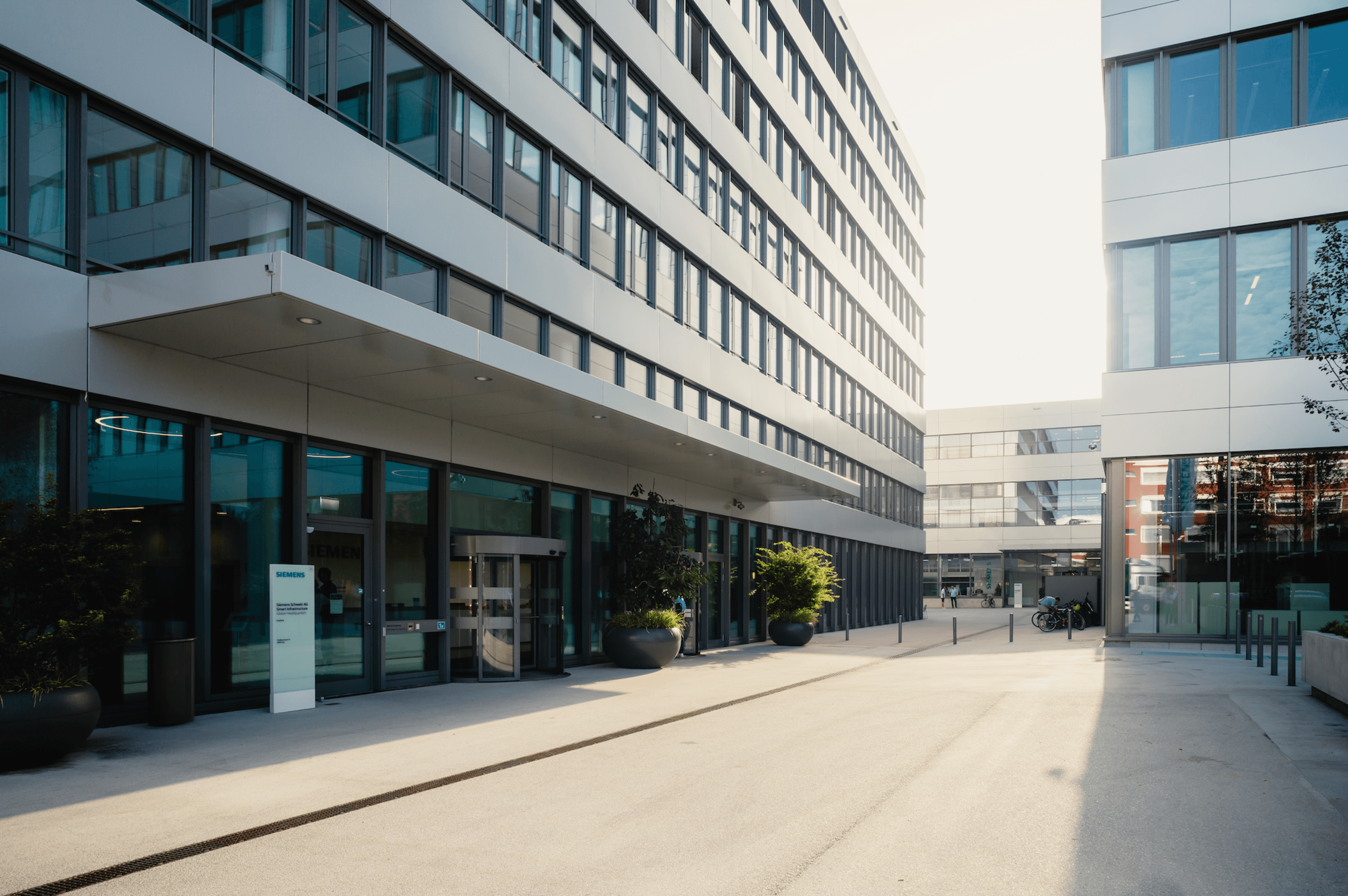
Siemens Campus
The 81,000 m2 Siemens Campus Zug is a showcase project for digitalisation and sustainability and demonstrates how modern products and solutions can accelerate the digital transformation. It sets technological standards in every respect and shows how buildings and infrastructures can be developed from static, inactive objects into responsive and reactive objects. The campus combines everything a community needs: Fire protection, access and intrusion control, CCTV, CO detection, extinguishing, voice-controlled evacuation, room automation and much more.
Financial service providers Around 2,000 companies form a dynamic environment for financial services in the canton of Zug. Hundreds of companies from the fields of asset management, family offices and hedge funds are based in the canton of Zug.
In the private equity/venture capital sector, for example, Partners Group, Capital Dynamics, HBM Healthcare Investments, CAPVIS and Invision should be mentioned. Leading Swiss financial institutions and platforms are also based here, including the Institute of Financial Services Zug IFZ, the Swiss Private Equity and Corporate Finance Association SECA, the Swiss CFO Forum and the VQF, the leading self-regulatory organisation in the non-banking sector.
New Partners Group Campus
Partners Group, Switzerland
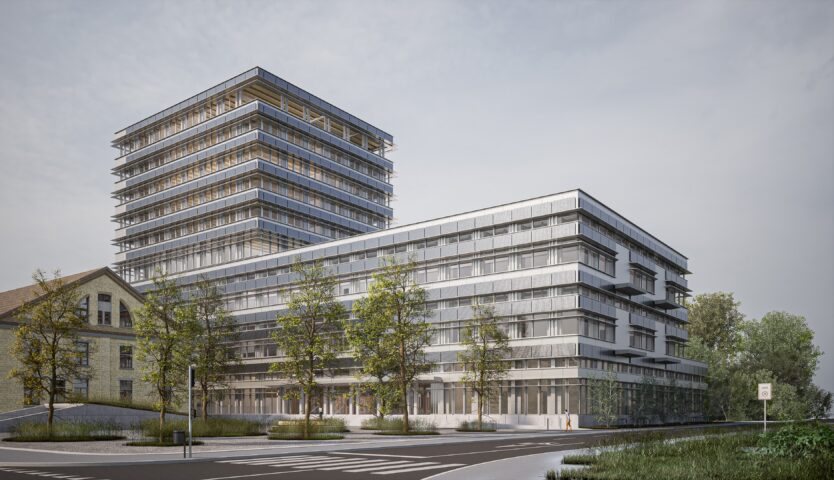
Partners Group’s new global headquarters consists of three buildings: the “Green Building”, an elongated, elliptical structure whose variously curved, terraced layers provide a richly planted, forward-looking counter-accent to the two brick buildings, which are modelled on historic factory buildings and evoke the past. This is Partners Group’s way of emphasising its focus as a company builder.
The building not only impresses with its architecture, but also with its high-quality infrastructure, including an in-house gym, canteen, daycare centre and car park.
Consumer goods The canton of Zug is also home to over 1,700 consumer goods companies with around 14,000 employees, which account for around a third of GDP. Zug is home to international and regional headquarters of leading brands in the areas of food and beverages (e.g. Anheuser-Busch InBev, Burger King, Coca Cola HBC), personal care (e.g. Galderma, Kenvue), textiles (e.g. Odlo, Hugo Boss) and sporting goods (e.g. Specialized). The automotive supply sector and the wholesale of raw materials and pharmaceutical products also play an important role.
Commodities trading Zug is a leading global trading centre for commodities, particularly in the areas of metals, (renewable) energy and agricultural commodities, with over 200 companies (e.g. Glencore, Shell) and specialised professionals. Key areas include headquarters, trading, supply chain, production, processing and marketing.
Headquarters, Supply Chain Management & Procurement In recent decades, Switzerland has developed into a leading location for international headquarters with over 1,000 companies. The canton of Zug has the highest density of headquarters with globally leading industry clusters.
A special centre for companies in the supply chain & procurement sector has developed here.
Centralisation enables cost-effective procurement and efficient management of production resources along the entire value chain. Large multinational companies such as Bossard, Glencore, Johnson & Johnson and V-Zug have located global supply chain and procurement functions here.
The headquarters of Securecell AG in Urdorf has been expanded. The biotech company has been based in the Luberzen industrial area since April 2019. At that time, the move to an area of 1800 square meters with around 30 employees took place. According to the media release , the company, which specializes in the development of automation solutions for bioprocesses, has since doubled the number of its employees and has therefore now enlarged its workspace. At the turn of the year, the ground floor at the company headquarters became vacant. According to the press release, Securecell AG was able to move into an additional 2,000 square meters of office and production space at the end of 2021.
When moving into the 1st floor in 2019, modern offices, a research laboratory and a clean room for medical technology development as well as a production facility for small devices with an attached warehouse and workshop were set up. The newly added work area on the ground floor is perfectly tailored to Securecell’s needs and could be used immediately without much effort, according to the press release.
The previous tenant equipped the rooms with modern office workplaces and meeting rooms, an ESD-protected workshop suitable for electronics and production, and a large warehouse. ESD means protection against electrical discharges. In addition, the floor offers access to the loading dock and a spacious kitchen.
Wir verwenden Cookies zur Unterstützung und Verbesserung unserer Dienste. Mit der Nutzung dieser Website erklären Sie sich mit der Verwendung von Cookies einverstanden. Weitere Informationen finden Sie in unserer Datenschutzerklärung.