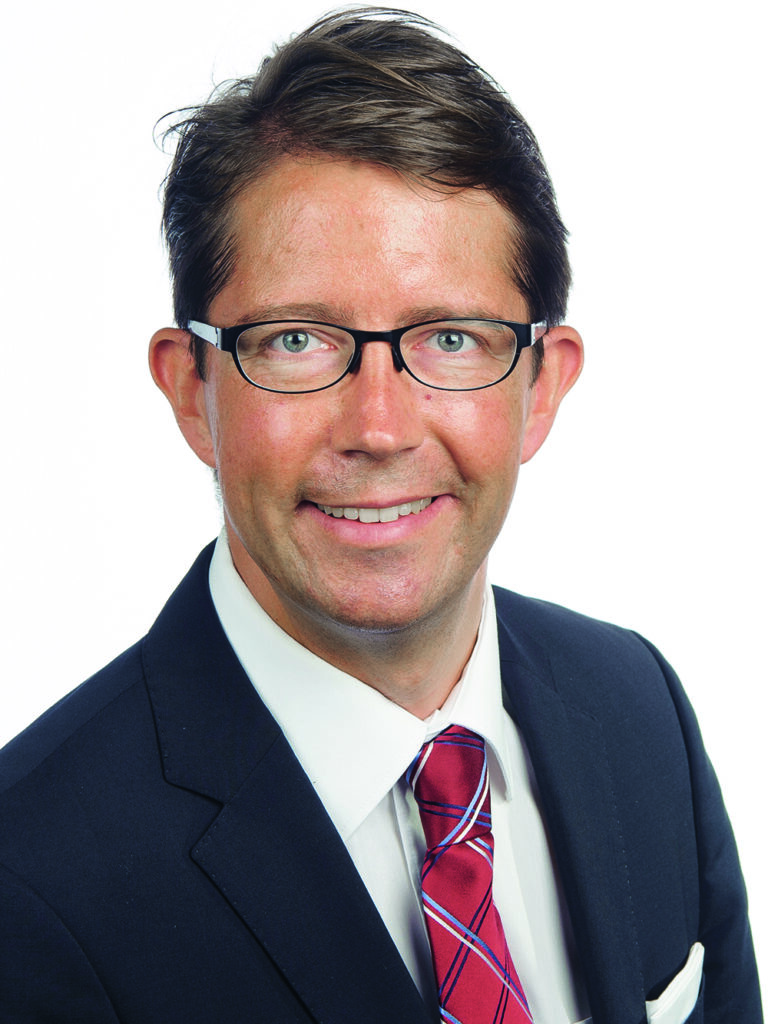
By the end of 2025, JuCoin plans to expand the current nine-strong team in Baar to 100 employees, with space for up to 400 employees in total. The focus is on recruiting local talent to ensure both cultural proximity and a deep understanding of the market. The location will be led by CEO Kenny Dan and COO Hugo Teo, who bring extensive experience in the fintech and cryptocurrency sector.
Setting the regulatory course A key objective is to obtain the MiCA license, which ensures compliance with EU regulations and enables the legal acceptance of clients throughout the EU. In this way, the company aims to create a secure, compliant and trustworthy trading environment for the European market.
Broad-based ecosystem With the new location, the company is bringing its extensive service and product portfolio to Europe. This includes the blockchain infrastructure JuChain, the social platform JuChat, the entertainment platform JuGame and the hardware solution JuOne. The company is already active in over 30 countries worldwide and serves more than 12 million users.
Significance for Crypto Valley The move underscores Switzerland’s role as a global innovation hub in the field of blockchain and cryptocurrencies. Baar is thus not only gaining a new employer with international appeal, but also an impetus for the further development of Crypto Valley as a leading competence center for digital financial technologies.
The Canton of Zug is supporting the establishment of the “Blockchain Zug – Joint Research Initiative” with a financial commitment of around CHF 40 million. This innovative cooperation project between the University of Lucerne and Lucerne University of Applied Sciences and Arts aims to develop Crypto Valley into an international centre for blockchain research. The Cantonal Council gave the go-ahead for the project in February 2024.
New research institute at the University of Lucerne A central component of the initiative is the establishment of a Zug Institute for Blockchain Research at the University of Lucerne. With nine new chairs, an interdisciplinary research environment will be created to analyse the social, economic and legal aspects of blockchain technology. HSLU is contributing its expertise from the fields of computer science, finance and engineering, thus creating a unique synergy between technological innovation and a humanities perspective.
Lighthouse project with international appeal The aim of the initiative is to establish Zug as a global centre for blockchain research. Finance Director Heinz Tännler emphasises the importance of this project: “Blockchain has the potential to transform many areas of our lives. With this initiative, we are ensuring that we are at the forefront of this development.” This is not only an investment in the technology of the future, but also a strategic measure to strengthen Zug as a business location.
Technology meets society Unlike many purely technological research projects, the “Blockchain Zug – Joint Research Initiative” takes a broad approach. In addition to the technical foundations, the effects on the economy, politics and society are also being analysed. This emphasises the unique character of the project, which not only aims to drive innovation, but also to understand and shape social transformations.
Long-term perspective and sustainable funding The initiative is designed for the long term. After five years of start-up funding from the Canton of Zug, the research network is to be placed on a sustainable financial footing. An external evaluation after three years will determine the way forward.
The Spanish stock exchange Bolsas y Mercados Españoles(BME), a SIX Group company, has become one of the main shareholders of OpenBrick, according to a press release. The Madrid-based company founded by Grupo Lar, Renta 4 Banco and ioBuilders is developing a platform using blockchain technology. This connects issuers, investors and financial intermediaries with a large number of property projects whose tradable securities can be purchased on a primary market and then traded on a secondary market. In addition to BME, Garrigues and Teras Capital are also new strategic partners.
The market will act as a financing channel outside of banks. The aim is to enable property players to obtain funds for the development of their projects more quickly and cost-effectively. BME will assume the role of platform operator via the Spanish central securities depository Iberclear and will be responsible for managing the trading and settlement system under the DLT (Distributed Ledger Technology) Pilot Regime of the European Securities and Markets Authority.
OpenBrick received authorisation to sandbox from the Spanish Securities and Exchange Commission(CNMV) in February 2023 with a positive preliminary assessment. The company reportedly expects to receive the EU licence for operations via BME 2025. The first project will start with the Madrid-based property manager Alquiler Seguro.
“With this investment, SIX is positioning itself as a key player in the EU’s digital agenda and in the further development of the financial markets,” said Javier Hernani, Head Securities Services and member of the Executive Board of SIX. SIX is convinced “that this is the first step on a long and successful journey”.
With the support of the Canton of Zug, an interdisciplinary research centre is being established that will focus on the diverse applications and effects of blockchain technology. The initiative, which is being realised in cooperation with the University of Lucerne and Lucerne University of Applied Sciences and Arts, will not only research the technological aspects of blockchain, but also the social, economic and political aspects. Finance Director Heinz Tännler emphasises that the project not only promotes scientific research, but also strengthens Zug as a business location, particularly in light of the new OECD minimum taxation that was introduced at the beginning of 2024.
Globally unique research initiative The newly founded Zug Institute for Blockchain Research at the University of Lucerne will focus on the challenges and opportunities of this disruptive technology. Nine new chairs will be created to address the various facets of blockchain technology. The research will pursue a holistic approach that encompasses technological innovations as well as the associated social, economic and political issues. The aim is to develop an in-depth understanding of blockchain technology and its potential impact on society.
Strengthening research capacities at the Lucerne University of Applied Sciencesand Arts The Lucerne University of Applied Sciences and Arts will significantly expand its existing activities in blockchain research through the new initiative. The university is contributing its expertise in the fields of computer science, finance and technology to the project and is working closely with the University of Lucerne to create a comprehensive research environment. This cooperation forms the basis for the hub, a platform for collaboration and communication that promotes exchange between the participating researchers and the global blockchain community.
Sustainable funding and long-term goals Following the initial start-up funding from the canton, it is planned that the project will switch to sustainable sources of funding. An external evaluation after three years will assess the effectiveness and progress of the research initiative. These measures will ensure that the “Blockchain Zug – Joint Research Initiative” becomes a permanent fixture in the global research landscape in the long term and establishes Zug as a leading centre for blockchain technology.
Switzerland, already known as a leading blockchain hub and home to major players in blockchain and cryptocurrencies, also recognises the potential that these technologies offer. Switzerland has an open attitude towards digital assets and blockchain technology in general. This could help establish the country as a preferred destination for companies looking for new locations to benefit from the emerging industry.
In light of recent challenges in the crypto space, such as the collapse of the crypto exchange FTX in the US, many companies are considering alternative locations. Here, Switzerland offers a promising opportunity by positioning itself as a safe and attractive location for the crypto industry. However, other countries, most notably France, are already actively attracting crypto companies and developing regulatory solutions to provide them with an optimal environment.
Switzerland, as a respected blockchain hub, should not underestimate the competition in this dynamic sector. It is crucial that Switzerland continues to build on its pioneering role in order to position itself optimally for digital financial products and blockchain technology in the future. In the coming months, the Swiss Blockchain Federation will continue to work to raise awareness of these developments among policymakers, regulators, the media and other key players.
It is a highly political question what our monetary system will look like, says Fabian Schär. The professor of financial market infrastructure is one of the most sought-after experts internationally when it comes to cryptocurrencies and blockchain technologies. He has even been invited to speak at the G-20 meetings, most recently at the invitation of the Indian Ministry of Economic Affairs.
Bitcoin as a “store of value” For him, it was a tremendous experience, says Schär. “The atmosphere at such a meeting is very impressive This is also because the most powerful of the powerful come together there: The G-20 is a loose association of the most important economic nations in the world. At these meetings, international regulations are regularly discussed in advance, often behind closed doors.
Currently a hot topic is Schär’s area of expertise: “FinTech”. This means everything that has to do with financial market infrastructure. For example, the question of how payments are processed. Cryptocurrencies are important drivers of innovation here: for example, payments with Bitcoin no longer need a central counterparty – the money can be sent directly from the buyer to the seller. This is not the case with standard bank transfers: in most cases, payments go through a third party, often a bank.
So will Bitcoin become established as a new currency? Schär is very cautious about making predictions. He says: “If everything develops the way the original idea was, then Bitcoin can possibly become a store of value in the future.” Bitcoin, on the other hand, is unlikely to establish itself as a means of payment.
“I was extremely sceptical” Nevertheless, Schär says he finds the innovations of cryptocurrencies extremely exciting. One reason for this lies in the hobby of his youth: back then, he spent a lot of time playing video games and thus developed an interest in computer science. Later, when he was studying economics, he began to look into cryptocurrencies.
“At first I was extremely sceptical,” says Schär, “but the more I looked into it, the more it fascinated me.” Bitcoin is highly exciting, he says today, a fantastic innovation. “The system is incredibly well thought out.” But Schär also warns of the risks: “The high fluctuations in value are a problem.” One should be careful when investing in cryptocurrencies, he says. He recommends rather investing in one’s own education and in a better understanding of cryptocurrencies.
What will banks do in the future? Schär does the same in his role as a professor for cryptocurrencies. What he likes most about his job is the versatility. As a professor, he can exchange ideas with many exciting people from politics and the private sector and pass on input from his research. This also involves the financial infrastructure of the future and the role of intermediaries such as banks. Much is still unclear, says Schär, but one thing can already be said: “The roles will change
The number of new companies from abroad settling in the Zurich economic region has stabilised at a high level in 2022, according to GZA. Together with its location promotion partners, the location marketing organisation supported 108 companies in establishing new branches in the nine associated cantons, the city of Zurich and the Winterthur region, according to the 2022 annual report presented on 30 March. In the previous year, there had been 129 companies, in 2020 only 89, and in 2019 a total of 109.
The 108 companies newly established last year created 516 jobs, 19 per cent fewer than in the previous year. This downward trend reflects the use of new technologies, the increasing automation of production processes and the cross-border division of labour among international companies, according to the media release accompanying the annual report. However, the companies that have settled in the region are planning to create a further 1292 jobs in the next five years.
The front-runner among the new settlements in 2022 was the life sciences with 22 companies, followed by 20 companies from fintech and blockchain, 16 from information technologies and 12 from artificial intelligence and computer vision.
The majority of the newly established companies come from the USA (33), Germany (14) and Italy (9). According to GZA, their internationality increases the networking of the business location and contributes to its resilience. “We want to attract attractive companies to the Zurich economic region that can create something new for a sustainable future here and throughout Switzerland,” says Balz Hösly, Chairman of the Board of Directors, as quoted in the media release.
The focus of the 2022 Annual Report is the circular economy. GZA AG is a founding member of the recently launched Workshop for the Circular Economy CE123, an initiative from the business community that aims to pave the way for circularity, especially for SMEs. “Alongside digitalisation, the circular economy is becoming a big business prospect,” says Managing Director Sonja Wollkopf. It will “lead to more innovation and prosperity”.
The Zug-based Swiss Blockchain Federation plans to launch the Home of Blockchain.swiss initiative on May 24 at the World Economic Forum in Davos. According to a media release , this is a public-private partnership under the patronage of Federal Councilor Ueli Maurer. It is also supported by the foreign trade promoter Switzerland Global Enterprise ( S-GE ), several cantons and CV Labs .
The aim of the initiative is to show the advantages of Switzerland as a blockchain location abroad. For example, Swiss appearances at international conferences are to be organised. A media campaign is also planned.
According to the initiators, Switzerland offers good breeding ground for blockchain companies. The “business-friendly framework conditions” are emphasized here. In addition, the Crypto Valley is a good example of success. A number of blockchain companies have already settled in the region, the heart of which is in Zug, such as Sygnum Bank and 21Shares .
“The possibilities of blockchain technology are endless and Crypto Valley in Switzerland is at the forefront of this revolution. Now is the time to seize that opportunity. With Home of Blockchain.swiss, Switzerland’s good reputation will be carried out into the world,” Heinz Tännler, President of the Swiss Blockchain Federation and Finance Director of the Canton of Zug (SVP), is quoted as saying.
The initiators also want to present the Swiss Digital Asset Market Report 2022 as part of the World Economic Forum. Among other things, providers of digital assets in Switzerland were surveyed for the report.
Swiss Asset Management – Vermögensverwaltung launched its Metaverse platform DecentWorld on March 1st. The game offers users the opportunity to invest in digital real estate and roads using NFT (Non-Fungible Token) technology. According to a media release , the creators of DecentWorld expect their creation to “step by step revolutionize the blockchain industry and bring real value to virtual real estate.”
The purchased virtual roads can be grouped into collections. Completed collections automatically generate income. These are accumulated and distributed at regular intervals.
As the release goes on to say, Switzerland is on the way to becoming the next Silicon Valley for crypto and blockchain. “Inspired by the Swiss approach to designing the future”, the development team “created a unique user interface with an artistic touch”. DecentWorld also stands for trust and transparency in the blockchain industry through the use of state-of-the-art security functions.
The term blockchain should be familiar by now. Most people associate it with cryptocurrencies such as Bitcoin and it is partly correct, although blockchain is the technology while Bitcoin is an application of it. The technology may seem complicated, the Swiss blockchain expert Michael Trübestein, but he is convinced that “blockchain technology is comparable to the debut of the Internet and it will not stop. For now it is only uncertain how it will develop ».
First of all, you need to understand how it works: a blockchain is made up of individual blocks, on each of which sequences of data, such as transactions, are stored. A blockchain is a decentralized network. This means that anyone, anywhere in the world, can participate in a blockchain naturally with a computer. Each computer participating in a blockchain stores the same individual blocks in the exact sequence that forms the chain. Each block has its own "DNA". A new computer is only allowed when it has been checked and verified by everyone else. What has been programmed on a blockchain cannot be subsequently changed by a computer. To make a change, all the other computers on the network would have to be involved, and it is precisely for this reason that the blockchain is so secure. If a single computer tries to change the blockchain, the chain is immediately broken and the offender is kicked out.
In Baar, «Hello World» is the first property in the world to be tokenized The possibilities that blockchain technology offers in the real estate sector are enormous, according to Michael Trübestein, professor of property management at the University of Lucerne who specializes in Real Estate Investment and Real Estate Asset Management. Numerous companies are currently researching possible application areas. “Currently, there are only isolated applications, such as in the land registry or in the investment / financing sector. A specific example is the world's first tokenization of a property, Baar's 'Hello World' property, ”says Trübestein. 20 percent (3 million Swiss francs) of the value of "Hello World" was tokenized by the Zug-based company "Blockimmo" and sold to four investors.
Crowdlitoken also specializes in real estate: founded in 2018, the start-up sees itself as a digital real estate company. “Investors can acquire holdings in selected Swiss real estate for a minimum amount of 100 francs / euro. They are then allowed to build their real estate portfolio by allocating the purchased bonds (Crowdlitokens ‹CRTs›) individually to the various Crowdlitoken properties, ”explains Domenic Kurt, CEO of Crowdlitoken. By participating in the properties, investors can achieve annual returns of 7 percent and decide whether to have it deposited monthly into their bank account or digitally as a CRT token.
Access to the financial market is liberalized No intermediary bank is needed for a digital bond and therefore it is more convenient for the investor. Crowdlitoken has over 630 investors with a volume of 18 million CRTs and its real estate portfolio is constantly growing. Among their prominent users are the Swiss professional footballer Diego Bena- son. Kurt defines the difference between Crowdlitoken and other companies based on blockchain technology thus: «there are no competitors who would accept such a low investment for a stake in different real estate properties. To manage investments, users can access the portal with their smartphone ».
That blockchain has disruptive potential is clear to both Trübestein and Kurt. Crowdlitoken CEO adds: “Banks are becoming obsolete for investment products like ours. New distribution channels are emerging and access to the financial market is being liberalized ». On the one hand, the digitization of the capital market is completely disruptive as it leads to an opening of the financial market. "There are no barriers and the minimum amounts to access them have dropped." On the other hand, the digitization of titles is itself destabilizing: "it means that they are no longer transferred transferred values through third parties and – since they are based on blockchain technology – they can be sent without being duplicated first, ”explains Kurt.
Trübestein adds: «Cryptocurrencies have already influenced the world and the way of thinking of the various operators on the market. Nobody knows how they will develop in the future, but the advantages are already clear now ». There are also prerequisites in Switzerland: “We have goal-oriented framework conditions and innovative companies,” says Trübestein. When implementing innovations it is important that companies work together. This is what happened, for example, with «Hello World»: the operation is the result of the collaboration between Block-immo, Elea Labs and Swiss Crypto Tokens.
WHAT IS A TOKEN? Domenic Kurt, Crowdlitoken: is a digital asset (token) based on the blockchain. It is the digital representation of a title. It contains the ownership rights of the bond, as well as the right to returns and represents a redemption obligation.
WHAT IS BLOCKCHAIN? Michael Trübestein, expert: a chain (= chain) of information (= block). They are time stamped and stored on different computers. This ensures a high degree of protection against forgery. Blockchain systems also differentiate between public networks and private networks. They can be used 24/7.
WHAT CAN BLOCKCHAIN TECHNOLOGY DO BETTER THAN A BANK? Domenic Kurt, Crowdlitoken: With securities based on blockchain technology, it is possible to send value without duplicating it. It replaces the creditors' ledger and ensures that transactions take place in a more streamlined, convenient and efficient manner.
There is an enormous amount of dynamism in the real estate market. The apartment carousel also rotates correspondingly quickly. Supply and demand find each other easily and directly via digital platforms. Because the web clearly shows what the rental property has to offer. In the further process, however, the creditworthiness of the potential tenant remained opaque until a year ago. Despite the excerpt from the debt enforcement register that those interested in the rental property had to submit. Because even this document, which at that time still had no alternative and was therefore indispensable, with a cumbersome name and the same procurement method, did not provide the landlord with any clarity. On the one hand, the conventional extract only shows the debt enforcement situation at the current place of residence. Any debt enforcement proceedings at previous places of residence remain invisible – the more than 400 debt enforcement offices in Switzerland are not networked. On the other hand, the document, which is still issued on paper, can be ‘corrected’ fairly easily. Accordingly, trickery is often used here with unpleasant entries.
More trust, less uncertainty with CreditTrust … It is therefore not surprising that the newly developed CreditTrust certificate, launched in 2020, has established itself as an innovative and extremely reliable creditworthiness certificate with property managers within a few months. The digital, blockchain-secured certificate cannot be falsified, uses the two largest creditworthiness databases in Switzerland to determine solvency and only brings advantages on all sides: the landlord minimizes his risk of rent defaults many times over and the prospective tenant can deal with it within show the certificate issued in three minutes as really solvent and trustworthy.
… and gain a multiple of security and expressiveness Almost as quickly, the CreditTrust certificate made it into the group of nominees for this year’s Real Estate Award in the management category. The award recognizes key projects and innovations that change the market and give impetus to the Swiss real estate world. The joy of all three companies involved in the development of the CreditTrust certificate – Intrum AG, CRIF AG and Certifaction AG – about the nomination was correspondingly great: Manuel Zollikofer, CRIF AG, Benoit Henry, Certifaction AG and Martin Honegger, Intrum AG, are themselves unanimously: “The nomination is valuable recognition. It confirms to us that with CreditTrust we have created a radical innovation that the market has been waiting for. ” The founders and innovators are well aware of the real estate industry’s difficulties with the debt enforcement extract: “We are proud to have set a new digital standard together. CreditTrust has not simply replaced the debt enforcement register extract. The digital certificate is many times more secure, more meaningful and more digital than a conventional debt collection register extract. “
A large market is open to the reliable, digital certificate The CreditTrust certificate entered the market with great success. It is to be expected that the digital certificate will soon completely replace the conventional debt enforcement register extract due to its qualities and advantages. In view of the 3.2 million debt enforcement register extracts ordered annually in Switzerland for a variety of purposes, the predicate ‘radical innovation’ for CreditTrust does not only apply to its effect in the real estate industry.
The term blockchain should be familiar by now. Most associate it with cryptocurrencies like Bitcoin. That's right, where blockchain is just the technology and Bitcoin is a resulting application. Even if the technology may seem complicated, the Swiss blockchain expert Michael Trübestein is certain: “Blockchain technology is comparable to the beginning of the Internet. It won't go away anymore. At the moment it is just uncertain how it will develop. "
First you have to understand how a blockchain works: It consists of individual blocks – each of which stores data such as transactions. A blockchain works decentrally. In other words, anyone around the world can join a blockchain – virtually via a computer, of course. Every single computer stores all and exactly the same blocks that form a chain. Each block has its own «DNA». A new computer will only be admitted if it has been checked and verified by all other computers. Once programmed on a blockchain, it cannot be changed retrospectively by a single computer. For this, all computers would have to be involved – and that is exactly what makes the blockchain so secure. If a single computer tries to change the blockchain, the chain is immediately interrupted and the culprit is excluded.
"Hello World" in Baar is the first property in the world to be tokenized The possibilities of blockchain technology are enormous for the real estate industry, as Michael Trübestein says. He is professor for real estate management at the Lucerne University of Applied Sciences, with a focus on real estate investment and real estate asset management. Numerous companies are currently researching possible areas of application. “Currently there are only a few applications, such as in the land register or in the investment / financing area. The world's first tokenization of a property, the “Hello World” property in Baar, ”says Trübestein, is an outstanding example. 20 percent of “Hello World” (CHF 3 million) of the property value was tokenized by the Zug-based company “Blockimmo” and sold to four investors.
The company “Crowdlitoken” has also specialized in real estate: the start-up founded in 2018 sees itself as a digital real estate bond. «Investors can participate in selected Swiss real estate from 100 francs / euro. After the investment, our users can put together their own real estate portfolio by placing their purchased bonds (Crowdlitokens “CRTs”) individually on the various Crowdlitoken properties, ”says Domenic Kurt, CEO of Crowdlitoken, explaining the concept. By participating in the real estate, the investors generate returns of up to 7 percent per year. You can either have this paid out monthly to your bank account or receive it in CRTs.
Access to the financial market is being liberalized A bank does not have to be interposed for a digital bond, which is cheaper for the investor. Crowd litoken already has 630 investors with a volume of 18 million CRTs. The real estate portfolio is constantly being expanded. The Swiss professional footballer Diego Benaglio is one of the prominent users of Crowdlitoken. Kurt defines what distinguishes Crowdlitoken from other companies that also rely on blockchain technology: “There is no comparable competitor who enables investors to invest such a low amount as an entry point for a stake in several properties. Investors can access the portal from their smartphone, where they can manage their entire investment. "
It is clear to both Trübestein and Kurt that blockchain has disruptive potential. The CEO of Crowdlitoken says: “Banks are becoming obsolete for investment products like ours. New sales channels are emerging and access to the financial market is being liberalized. " On the one hand, the digitization of the capital market is inherently completely disruptive, as this leads to an opening of the market. «There are no entry barriers; Entry sums are reduced. " On the other hand, the digitization of securities is inherently disruptive: “This means that values are no longer transferred via third parties. With blockchain-based securities, it is possible to send values without duplicating them, ”explains Kurt.
Trübestein adds: “Some applications such as crypto currencies have already influenced the world and the way market participants think. Nobody knows how the applications will develop in the future, but the advantages are already clearly visible. " The prerequisites are also in place in Switzerland: "We have target-oriented framework conditions and innovative companies here," says Trübestein. Cooperation between companies is important when implementing innovations. This is what happened, for example, with the “Hello World” property – the transaction results from a collaboration between Block-immo, Elea Labs and Swiss Crypto Tokens.
Michael Trübestein Domenic Kurt
What is a token Domenic Kurt, Crowdlitoken: A digital asset (token) based on the blockchain. It is a digital representation of a security. It contains property rights to the bond as well as the right to returns and represents a repayment obligation.
What is blockchain? Michael Trübestein, Expert: A sequence (= chain) of information (= block). These are "time stamped" and are stored on several computers. This guarantees a high level of protection against forgery. There are also public and non-public systems. It can be used around the clock, seven days a week.
What can blockchain technology do better than a bank? Domenic Kurt, Crowdlitoken: With blockchain-based securities it is possible to send values without duplicating them. It replaces the book of creditors and ensures that processes are designed and implemented in a leaner, more cost-effective and efficient manner.
Wir verwenden Cookies zur Unterstützung und Verbesserung unserer Dienste. Mit der Nutzung dieser Website erklären Sie sich mit der Verwendung von Cookies einverstanden. Weitere Informationen finden Sie in unserer Datenschutzerklärung.