Tag: Branchenverband

  • SVIT Switzerland with new management

    SVIT Switzerland with new management

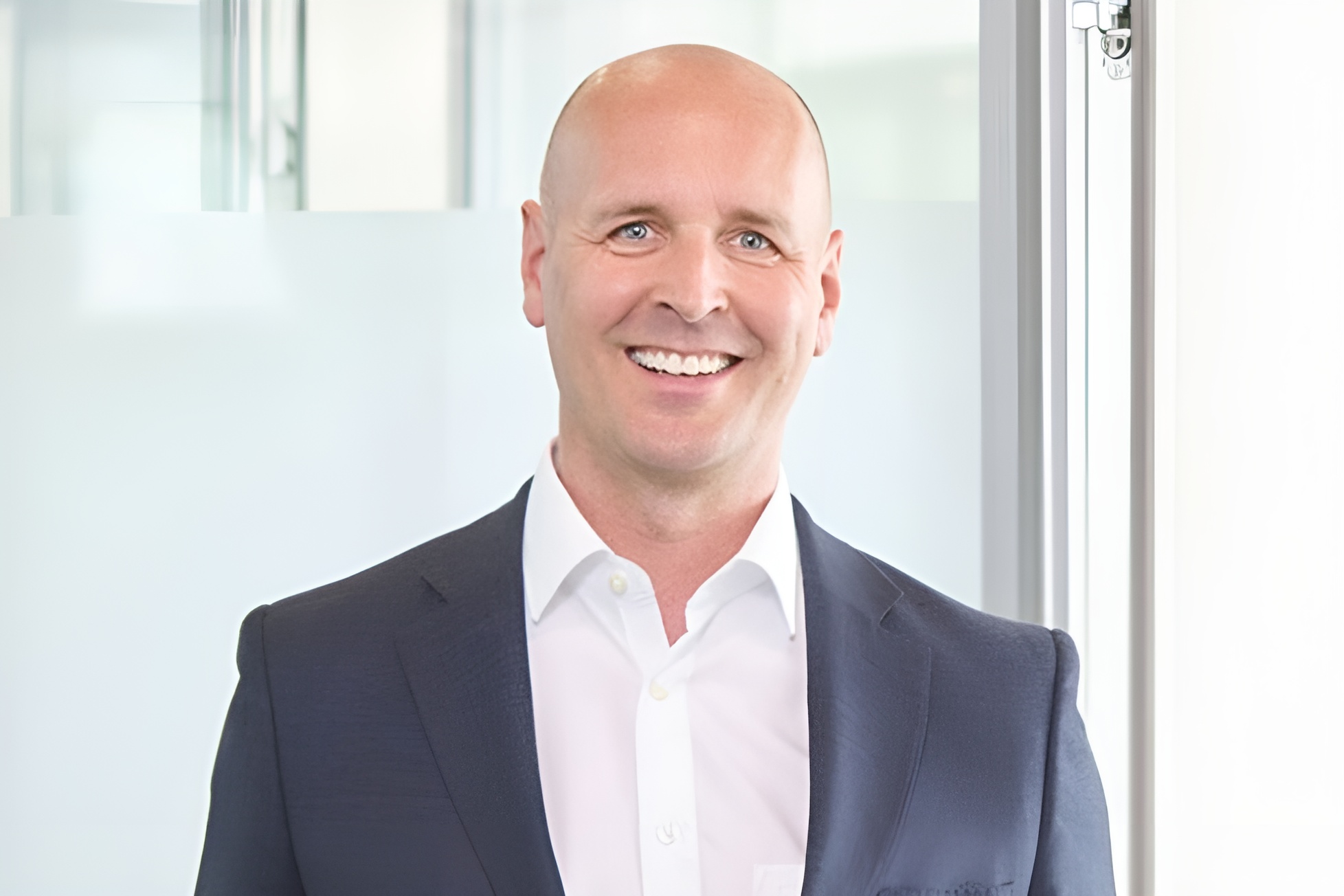
    With the handover of the chairmanship from Andreas Ingold to Michel Molinari, SVIT Switzerland has completed a significant generational change. Molinari, previously Vice President and CEO of BLKB Fund Management AG, is thus assuming responsibility for an association with over 2,600 members. At the same time, Cécile Berger-Meyer and David Zumsteg were elected to the presidency. Their predecessors, Andreas Ingold and Jean-Jacques Morard, were made honorary members for their many years of commitment.

    An association on the move
    2024 was an intensive year, with targeted political positioning, strategic projects such as the DACH cooperation and the tenancy law commentary. The successful new edition of “SVITPedia” and a high demand for training have made SVIT Switzerland a dynamic and adaptable organisation. The “eduQua” certification was renewed and training courses and examinations were successfully organised in all parts of the country.

    Strategic clarity and strong operational
    The positive development of the association over the past eight years is due to clear strategic decisions and the professionalisation of structures. The separation of strategy and operations, the introduction of a CEO model and the reorganisation of the Forum, Campus and Summit platforms have created a stable foundation. A strategic action plan for positioning has been developed and is currently being implemented. The aim is to further increase the visibility and effectiveness of the association.

    Political relevance strengthened
    The 2025 Delegates’ Meeting once again demonstrated the growing political relevance of SVIT Switzerland. The delegates approved a motion to no longer conclude sponsorship agreements with Swiss Marketplace Group AG in future. Current contracts will also be cancelled until they expire. The association is thus sending out a signal in favour of independence and clear representation of the industry’s interests.

    Visible, present, consistent
    With its new leadership and strengthened position, SVIT Switzerland aims to further expand its role as a leading professional and industry association. The three strategic pillars of training, politics and networking form the stable foundation for a future-orientated commitment. The Assembly of Delegates as part of the Swiss Real Estate Forum also provided the right stage for this in 2025, with inspiring impulses from personalities from politics, sport and business.

  • SBC launches election platform “For a constructive Switzerland

    SBC launches election platform “For a constructive Switzerland

    The density of regulation in the construction sector, the 2050 climate targets, security of supply and the shortage of skilled workers are key concerns of the population, the economy and politics and will accordingly also be the focus of the federal elections on 22 October 2023. The SBC has therefore chosen these key issues for its national election platform “For a constructive Switzerland”. This with the catchy slogan “We modernise, we build, we take responsibility”. Gian-Luca Lardi, Central President of the Swiss Association of Master Builders, states: “The main construction trade can and wants to contribute to constructive solutions for the future”. Until election day on 22 October, the positions on these topics, which are also at the heart of the SBC’s “Agenda 125.0”, will be presented on www.konstruktive-schweiz.ch. On the other hand, candidates will be presented on the platform whom the SBC recommends to the voters for election. Newsletters, posts in the social media, reporting in the association’s publications and construction site leaflets round off the communication support for the candidates. The SBC works closely with its cantonal sections on this.

    We modernise. We build. We take responsibility.
    Since Switzerland’s building stock is responsible for almost half of the country’s energy consumption, this is another area where we must take action, says Martin Bäumle, a member of the Zurich National Council: “Security of supply is of central importance. That’s why it’s crucial that we renovate buildings to make them more energy-efficient and enable efficient new buildings.” In concrete terms, higher incentives and the removal of barriers to modernisation could help Switzerland to increase its building renovation rate to the necessary level.

    In addition to modern buildings, Switzerland also needs a top infrastructure, says Bernese National Councillor Christian Wasserfallen: “After all, infrastructures are Switzerland’s lifeline.” Alex Farinelli, National Councillor for Ticino and candidate for the Council of States, adds: “The ecological and energy challenges require an efficient infrastructure and a modern building stock. That’s why it’s important to give the building sector the opportunity to make its contribution with faster procedures and fewer bureaucratic hurdles.” The necessary framework conditions and legal certainty are created by politics, while the construction work is done by the master builders.

    Last but not least, the shortage of skilled workers is also a topic in the campaign of the Swiss Association of Master Builders. The challenges of finding the necessary personnel are also great in the main construction trade. “I am committed to a constructive Switzerland that continues to train enough practitioners to implement Switzerland’s modernisation in buildings and infrastructure,” emphasises Isabelle Chassot, Fribourg’s Councillor of States. “We must take decisive action against the shortage of skilled workers,” adds Diana Gutjahr, National Councillor for the Canton of Thurgau. This starts with ensuring that vocational apprenticeships remain as attractive as possible, Gutjahr continues.

  • «The conversion and renovation market will show the strongest growth»

    «The conversion and renovation market will show the strongest growth»

    To person
    dr Jens Vollmar is Head Division Buildings/Country President Switzerland and a member of the Executive Committee at Implenia AG. He is also Vice-President of Swiss Development and a member of the board of the umbrella organization «Bauen Schweiz». The 37-year-old studied at the University of St. Gallen (HSG) and the University of California in Berkeley and has a doctorate in Accounting and Finance. He is also a lecturer in the areas of construction & real estate management and mergers & acquisitions (mergers and takeovers) at the HSG.

    Which factors are important for the further successful development of the real estate market in our country from the point of view of Swiss Development?
    From our point of view, the market parameters, i.e. the so-called fundamental data, continue to support the positive development of the Swiss real estate market in the short and medium term. We see important drivers such as population growth, low interest rates or the unemployment rate at a stable and good level. However, the real estate itself is also important for healthy development. In addition to the location of a property, the focus is on the quality of the investments. In doing so, we understand quality not only as the materialization, but rather the optimal balancing of the needs of all stakeholder groups. A property today must have the desired flexibility and adaptability for users and owners. But the deadline within which a property can be put on the market is also important. As an association, we are committed to greater planning security, faster approval processes and streamlining and standardization of planning legislation. In this context, we strive to sensitize the actors involved to these issues.

    What influence does climate change and the associated overheating of cities have on construction projects?
    The frequency and intensity of heat waves are increasing and are already a reality. In addition, spatial planning calls for more dense building towards the inside, which contributes to the additional warming of the cities. As a direct result, temperatures in the unair-conditioned or uncooled interior spaces of properties will rise in the summer. We have to face this challenge. Our members work accordingly on technical and structural solutions. This includes, for example, thermal simulations in the early development phase or the option of activating floor heating for cooling. We are also seeing increased demand for greening buildings.

    Online trade is booming, which is likely to have an impact on commercial ground floor uses. How do you assess the future of these uses?
    The uses of the ground floor actually pose major social and urban planning challenges for the municipality, urban planners, investors and project developers. Different uses are increasingly converging: Today, working, living and leisure time can no longer be separated from each other. The separation of uses provided for in zoning plans and in the building and zoning regulations is difficult to reconcile with this trend. From our point of view, new, flexible zoning based on alternative criteria is worth examining – this could make ground floor uses more attractive again.

    Are there already changes?
    Yes, we are registering the advancement of innovative ground floor formats such as showrooms or parcel pick-up points. In the future, the restrictions on motorized private transport that are being asked for more and more, the creation of pedestrian zones and the discussion about wider sidewalks are likely to change the outdoor spaces of properties and quarters in the long term and thus also influence the use of ground floors. However, in our opinion, the latter should be defined in a needs-based manner, taking into account use and the environment, and not have to follow rigid legal requirements. In the long term, flexibility should also be a decisive point for ground floor uses.

    What factors influence the decision to convert/refurbish or build a new building?
    In the past, replacement buildings were a big topic. However, we believe that the conversion and renovation market will show the strongest growth in the future. Especially with regard to the increasing sustainability considerations. Energy and space efficiency as well as regulatory requirements play an important role here. Various factors are relevant for a decision about new construction or conversions or a change of use: recording the condition of the building and where a property is in the life cycle, analyzes of location and local market development, financial/economic parameters or also the consideration of the property utilization reserves.

    «
    inflexible
    complicate regulations
    the building at
    Duration
    »

    What efforts is Swiss Development making in digitization?
    The planning and realization of buildings and infrastructure still have a strong unique character today. Topics such as industrialization, productivity and digitization are essential for Switzerland's competitiveness in the field of development. Thanks to the use of BIM and 3D printers, digital construction progress control or the use of drone or robotic technology, planning security in terms of costs, quality and deadlines can be greatly optimized. In our opinion, unification and standardization as well as simplification in application are very important here. Development Switzerland, together with the member companies, examines possible contributions to the promotion and improvement of standards and their application. We anticipate a decade that will transform our industry in terms of digitization and productivity like never before.

    Today, new buildings must be energy-efficient and preferably completely recyclable. How are these aspects taken into account in Development Switzerland?
    Sustainability and ESG strategies are more relevant than ever in the real estate industry. Our members have long recognized these market needs and implemented them in their organization and range of services. For example, many companies already have sustainability departments. The greatest leverage is not in new buildings, but in spatial and energy-related renovations of existing properties. Development Switzerland always takes a holistic view of issues relating to energy sustainability, resource efficiency and the circular economy. This means that we try to take economic, social and ecological aspects into account in a balanced way. Our members work with start-ups, developers and research institutions to support and drive rapid market launch of innovative ideas.

    Agricultural land is still being built over in Switzerland. Do you think this is necessary?
    No, the focus is clearly on inward settlement development. Various legal advances, such as the revision of the Spatial Planning Act of 2013, restrict the development of cultivated land in favor of densification. In addition, the conversion of agricultural areas into building zones is usually only possible by means of area compensation or exchange. In general, it can be said that the utilization reserves in the cities and agglomerations are still very high. For the creation of living and working space, these usage reserves should be realized in advance.

    What's the problem with this?
    Less restrictive legal requirements would be desirable. The value-added tax, for example, makes it difficult or sometimes impossible to realize utilization reserves. But there are many other inflexible regulations that make building in existing buildings almost insurmountable challenges. Development Switzerland is working with the industry to sensitize decision-makers, authorities and politicians to this topic. We advocate more discretion so that good solutions can be developed taking into account the situation and user needs.

    Do you think the repeatedly forecast real estate bubble in Switzerland is a serious scenario?
    The ongoing low-interest policy of the central banks and the market development make investing in real estate attractive. There are few investment alternatives that have a similar risk/return profile. Switzerland has also learned from the mistakes of the past and is in a much better position today than it was at the beginning of the 2000s – for example against the background of more restrictive mortgage lending. However, the noticeably louder calls for a return to a normalized monetary policy show that this situation can also change in Switzerland. Rising interest rates too quickly and the associated refinancing hurdles could lead to a fall in market values, which in turn would have an impact on capital requirements. Accordingly, Switzerland would do well to continue its stable monetary and interest rate policy and to think in scenarios. The more robust the business models and financing, the less our economy is exposed to risks. As an association, we are very confident about the short and medium-term future.
  • Construction and real estate projects: models of cooperation at a glance

    Construction and real estate projects: models of cooperation at a glance

    In the case of complex and challenging construction and real estate projects, partner companies can provide valuable support – be it by taking on the coordination and overall responsibility for the project or by accompanying individual project phases.

    The providers of such services can be roughly divided into the categories: overall provider, total contractor and general contractor. But which model of cooperation is the right one for which project? The information brochure "With the right cooperation model for successful project implementation" aims to help clarify this question. It provides an overview of the three models, shows which model is best suited for what, and lists important points when working together. The information brochure was prepared by the Swiss Development Industry Association. He represents companies that offer overall services in the development, planning and realization of construction and real estate projects. «We are convinced that a project with a common goal and shared responsibility can be implemented more successfully. That's why we want to show the possibilities and services of the existing cooperation models and draw attention to their potential," says Managing Director Franziska Bürki.

    The three cooperation models at a glance:
    Overall providers take over the development, planning and realization of construction and real estate projects. With interdisciplinary teams, they work on tasks throughout the process through to execution or operation. The service can have different characteristics and include, for example, usage planning, design competitions, preliminary studies and the legally prescribed approval procedures. Because a full service provider is involved early on, the potential for innovation and optimization is high. Opportunities and risks can be better identified, defined and controlled at an early stage and together. The client has the guarantee that his project will be developed, planned and implemented from a single source.

    Total contractors take on the planning and implementation of construction and real estate projects. Within a given framework, the client leaves the responsibility for the planning and implementation to the total contractor, with more or less narrow specifications. Total contractors take over a construction project either from the project planning or at least from the implementation planning. The responsibility for the tasks up to handover (including pre-existing planning) remains with the client. The potential for innovation and optimization in this model of cooperation depends heavily on how much planning and design freedom the client gives the general contractor. General contractors take on the realization of ready-to-execute construction and real estate projects. The aim is to realize a building. They assume responsibility for the turnkey realization of a construction project, their influence is essentially limited to the optimized construction process. Within this area they are responsible for quality, deadline and price. The overall and planning responsibility remains with the client. Cooperation with a general company is particularly suitable for professionally managed projects with a specifically formulated order for the general contractor.

    The content of contracts with a partner company can vary. It depends on the client's wishes, on the choice of cooperation model, but also on when the cooperation begins. "The partner company can take on more responsibility the earlier and more integrated the client involves them in the cooperation," says Franziska Bürki.

    Development Switzerland is convinced: If you want to successfully implement a project, you have to take a holistic view of it, involve all stakeholder groups and decide on the right cooperation model at an early stage and adapt it to the specific project situation.

    Franziska Burki,
    Managing Director Development Switzerland