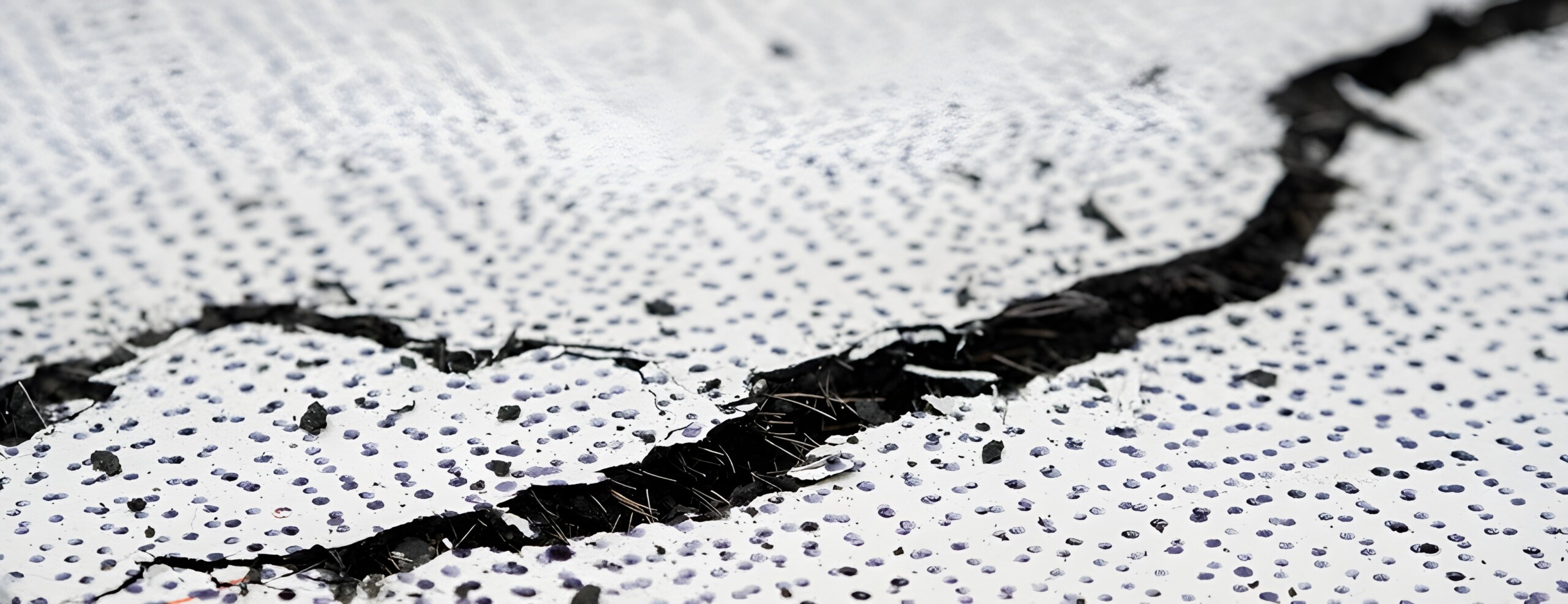
Many reinforced concrete bridges were designed for traffic loads and vehicle weights that are outdated from today’s perspective. At the same time, chlorides, water and frost have been causing problems for the structures for decades. Traditional refurbishments reach their limits where components are already severely cracked or permanently deformed.
This is where the new Empa system comes in. It combines a proven method, the additional layer of ultra-high-strength, fibre-reinforced concrete, with an active reinforcing element that specifically builds up internal prestressing forces. The aim is not only to increase load-bearing capacity, but also to literally rebuild damaged bridge slabs.
UHPFRC meets shape memory steel
Bridges are already being retrofitted with a thin layer of ultra-high performance fibre-reinforced concrete, which is applied directly to the deck slab. The high-performance concrete is very dense, resists water and de-icing salts and can be easily reinforced. A robust “protective armour” with structural added value.
The Empa team led by Angela Sequeira Lemos and Christoph Czaderski is now replacing the conventional steel reinforcement in this layer with bars made of iron-based shape memory steel. After installation, the bars are heated to around 200 degrees Celsius and attempt to contract, but are prevented from doing so by the concrete. The result is an internal prestress that closes cracks, reduces deformations and permanently puts the slab in a more favourable state of tension.
Cracks close visibly
In a first step, the team investigated the bonding effect between UHPFRC and shape memory steel. How well does the bond remain after heating? How reliably can forces be transferred? This was followed by large-scale tests with five concrete slabs, each five metres long, which simulated self-supporting bridge decks.
One slab remained unreinforced, the others were given a UHPFRC layer, either with conventional reinforcement or with Fe-SMA bars. In order to simulate realistic conditions, the slabs were initially loaded until cracking occurred and only then reinforced. After heating the Fe-SMA bars, existing cracks visibly closed and sagging areas lifted up again. Significant improvements in deformation were already evident during this activation phase.
Stiffer, stronger, longer-lasting
The tests were accompanied by a dense measurement concept. Digital cameras observed the crack patterns, while fibre-optic sensors inside the panels recorded strains along the rods. Similar to fibre optic cables in telecommunications, except that here the backscattered light is used to measure deformation.
Both the conventional reinforcement with UHPFRC and the new system with shape memory steel were able to at least double the load-bearing capacity compared to the unreinforced plate. However, under everyday loads, such as normal road traffic, the Fe-SMA variant proved to have a clear advantage. The panel became stiffer, permanent deformations occurred later or disappeared completely and existing cracks could be closed. The system thus acts like a “reactivation” of the existing load-bearing structure.
Fields of application and next steps
Both the ultra-high-strength fibre-reinforced concrete and the shape memory steel are still relatively expensive. The system is therefore most economically attractive where other reinforcement methods are no longer sufficient. For example, in heavily deformed, already damaged bridges or, in particular, sensitive structures with limited intervention space.
The use of the system is not limited to bridges. Applications in building construction are also conceivable, for example in cantilevered balconies, flat roofs or sensitive components where compact reinforcement solutions and a very dense surface are required. The Innosuisse-funded project was developed in collaboration with OST, the Empa spin-off re-fer and cemsuisse. Following the successful trials, the team is now looking for a suitable bridge for the first pilot application. If this step is successful, the “smart” reinforced concrete could develop into an important tool for dealing with the ageing Swiss bridge infrastructure.