Tag: Bürgerbeteiligung

  • Smart City Aarau networked, user-centered and environmentally friendly

    Smart City Aarau networked, user-centered and environmentally friendly

    Aarau is facing complex social and technological developments. In order to respond to this in a future-oriented manner, the city is pursuing a networked, creative and efficient approach with its Smart City strategy. The focus is on concrete benefits for the target groups and environmentally friendly processes. Digital technologies are only used where they create real added value.

    Five basic principles for smart impact
    Based on experience from the first strategy period from 2021 to 2025 and proven models from other cities, Aarau has defined five high-impact approaches.

    Networking: Projects interlock across departments and are implemented collaboratively.

    Meeting needs: Solutions that are actually needed are developed in dialog with the population.

    Testing: Innovation also means trying things out. Pilot tests help to minimize risks and make ideas practicable.

    Environmental protection: Sustainability is a must. All projects take environmental aspects into account and rely on renewable resources.

    Technology as a means to an end: Technology is used in a targeted manner and only if it contributes to the solution.

    Smart City Team as enabler
    The municipal Smart City Team supports employees in the idea and project phase. It helps to identify target groups, hone project ideas and develop testable solutions. Formats such as kick-off meetings, workshops or support for complex projects through to implementation are available. The motto: implement projects with real benefits for Aarau or consciously reject them.

    Targeted support and smart vessels
    The Smart City Team also works in the background. It monitors trends, networks stakeholders and promotes knowledge transfer via formats such as the “Smart City Newsroom”. It also supports projects financially via the Smart City Investment Loan and helps to create participatory vessels.

    Measuring impact and learning
    The strategy is based on the IOOI impact model and measures not only outputs but also outcomes and long-term impacts. The aim is for all municipal specialists to apply user-centered methods, plan their projects in a networked manner, implement them in a resource-efficient way and integrate digital technologies in a meaningful way by 2034.

    Smart City Aarau thinks ahead
    The city of Aarau is reinterpreting Smart City as a method for developing sustainable, liveable urbanity. The focus is on people, not technology. This turns complexity into innovation and ideas into concrete future solutions for Aarau.
  • MFO-West becomes an urban neighbourhood

    MFO-West becomes an urban neighbourhood

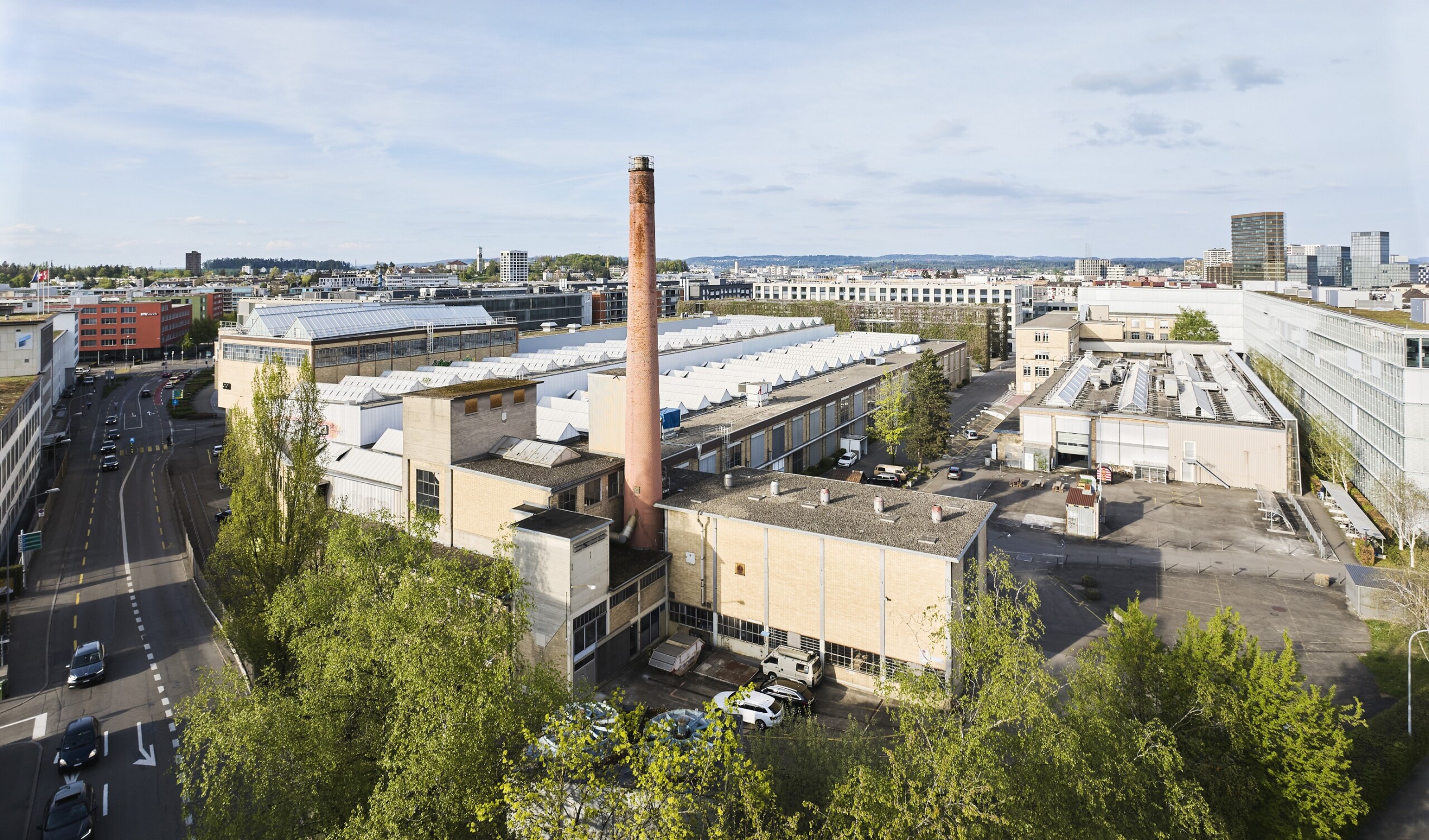
    The purchase of the 25,500 m² ABB site by the City of Zurich for a net CHF 106 million is more than just a land purchase. It is a strategic decision with a long-term impact. Thanks to the urban development contract concluded in 2021 and the special building regulations that come into force in 2025, Zurich can shape the future on a centrally located piece of the city. With high density, mixed uses and consistent citizen participation.

    Transformation through participation
    A key success factor is the early and transparent involvement of residents, associations and neighbourhood organisations. The needs of the neighbourhood were directly incorporated into the participatory strategy process. This turned an industrial site into an urban development concept with a high level of social acceptance. Urban planning thus not only gains space, but also trust.

    Mix of uses as a driver of innovation
    The utilisation concept envisages three new construction zones and three existing areas. A mix of non-profit housing, neighbourhood supply, creative commercial use and publicly accessible open spaces is planned. The House for Culture and Circular Economy is a flagship project for innovative urban utilisation. The combination of culture, sustainability and economic activity makes the site a catalyst for new value creation models in urban areas.

    Temporary use as an impetus for location quality
    Before construction work begins, halls and open spaces are used temporarily in a targeted manner. A strategy that brings life to the neighbourhood, promotes social contacts and creates identity even before construction begins. Interim uses are increasingly recognised as a success factor for the attractiveness of locations and resilience in transformation areas.

    Public-private partnership with a role model function
    ABB remains anchored in Oerlikon with 500 jobs and supports the development. The project shows how forward-looking urban development can work constructively with private owners. A model that can be transferred to other urban conversion sites. The combination of urban management and entrepreneurial willingness to co-operate points the way forward.

    MFO-West is not an isolated case, but an exemplary model for the urban transformation of former industrial sites. Those who invest in such development areas can help shape new urban qualities. From social integration and innovative utilisation concepts to sustainable value creation. In times of housing shortages, climate targets and new forms of mobility, sites like MFO-West are the key to the city of tomorrow.

  • Population supports sustainable electricity production

    Population supports sustainable electricity production

    On 18 August, the voters of Spiringen clearly approved the Sidenplangg solar installation with 68.8 percent. The voter turnout was 55.3 per cent. With their approval, the voters have seized a great opportunity and shown that they are in favour of sustainable electricity production, writes the municipal council in a press release.

    EWA-energieUri is also delighted with the yes vote. He is “grateful that the people of Spiringen are so clearly in favour of our project”, Werner Jauch, CEO of the Uri-based energy producer, is quoted as saying in a separate press release. As the landowner, the Uri Corporation must now approve the project. The planning application can then be submitted.

    The plant is to be built in the Schächental valley on 12 hectares at an altitude of 1,800 to 2,000 metres above sea level in an area that is already used for avalanche barriers. With a capacity of 8 megawatts, around 12.5 gigawatt hours are to be generated annually, up to 45 per cent of which in winter. The investment amounts to around CHF 39 million. The first part of the plant is due to be connected to the grid at the end of 2025.

    In addition to EWA-energieUri and the municipality, aventron AG, a joint venture of Swiss regional utilities based in Münchenstein BL, is also involved in the project.

  • Photovoltaic output increased tenfold in the last seven years

    Photovoltaic output increased tenfold in the last seven years

    Thurplus takes positive stock of PV expansion over the past seven years. Between 2016 and 2023, Frauenfeld’s municipal energy supplier was able to increase its output more than tenfold from 144 to around 1500 kilowatt peak. In 2023 alone, over 700 kilowatt peak were added, according to a press release.

    In total, these solar systems produce around 1.5 million kilowatt hours of electricity per year. This corresponds to the average consumption of around 330 households. Between 2016 and 2023, the number of shareholders in the PV citizen participation models also increased from 50 to 240, according to the press release.

    “By actively shaping and successfully implementing many sustainable PV projects, Thurplus has managed to achieve this”, says Fabrizio Hugentobler, City Councillor and Head of the Thurplus, Leisure and Sport Department. “Thurplus is well positioned with its solar power, SolarInvest, PV contracting and other solutions.”

    According to the municipal PV strategy for Thurplus, an additional 5 per cent of the total electricity consumption of around 150 gigawatt hours is to be added annually by 2027. This corresponds to a total installed PV capacity of 8 megawatt peak or an electricity production of around 7.5 gigawatt hours per year. Thurplus is looking for suitable roofs from companies and institutions. “Together, we want to make progress and do our bit to ensure that the PV expansion targets are achieved,” says Thurplus Managing Director Peter Wieland.

  • Expansion of solar installations in Zurich

    Expansion of solar installations in Zurich

    ewz, the energy supplier to the city of Zurich, is pressing ahead with its expansion of solar installations. As detailed in a press release, the company has published 14 new locations on its website in which citizens can participate. For CHF 250 per square metre, you can acquire a stake in the additional 11,000 square metres. Participants receive 80 kilowatt hours of Zurich solar power per year on their ewz bill. With the areas now connected, ewz now has 55 solar installations in the city of Zurich. The newly added areas are expected to produce 1,246,000 kilowatt hours of electricity per year. This corresponds to the electricity consumption of 500 average households.

    “With the solar strategy, we in the city of Zurich have the ambitious goal of producing more solar power,” said City Councillor Michael Baumer, Head of Industrial Operations, in the press release. “I have therefore taken the opportunity to acquire a solar stake myself. Only together can we make Zurich a solar city – every square metre counts!”

    Ewz also offers homeowners solar solutions for their own roofs. For example, 950 solar modules will be installed on four residential buildings in Guggach by July. The system is expected to produce 423,000 kilowatt hours and supply the 197 households with solar power.

  • Demand for local solar energy has doubled

    Demand for local solar energy has doubled

    According to a press release , the electricity works of the city of Zurich ( ewz ) have sold 7,544 square meters of solar space. This means that the demand for solar energy has doubled compared to the previous year. The increased popularity of sustainably produced electricity is attributed to the commitment to the net zero goal, the solar offensive launched by the city and the consequences of the Ukraine war.

    ewz announces that with the second high-alpine solar system currently under construction in Graubünden with an area of 1795 square meters, it will again rely on the willingness of the public to participate in local solar systems and thus accelerate the energy transition.

    The large-scale photovoltaic system in the high mountains is to be built in the course of the summer on the dam wall of Lago di Lei. According to the company, it has a potential of 1,000 photovoltaic modules that could generate 380 megawatt hours of electricity per year. The dam wall belongs to the power plants Hinterrhein AG, in which ewz has a stake.

    ewz customers in the city of Zurich and in the Mittelbünden supply area now have the opportunity to participate on the ewz website for as little as half a square meter for CHF 280. In return, ewz announces that it will credit 90 kilowatt hours of sustainably produced electricity from renewable energy to the bill every year for 20 years.