Tag: business

  • Business opportunities in the Uri valley floor

    Business opportunities in the Uri valley floor

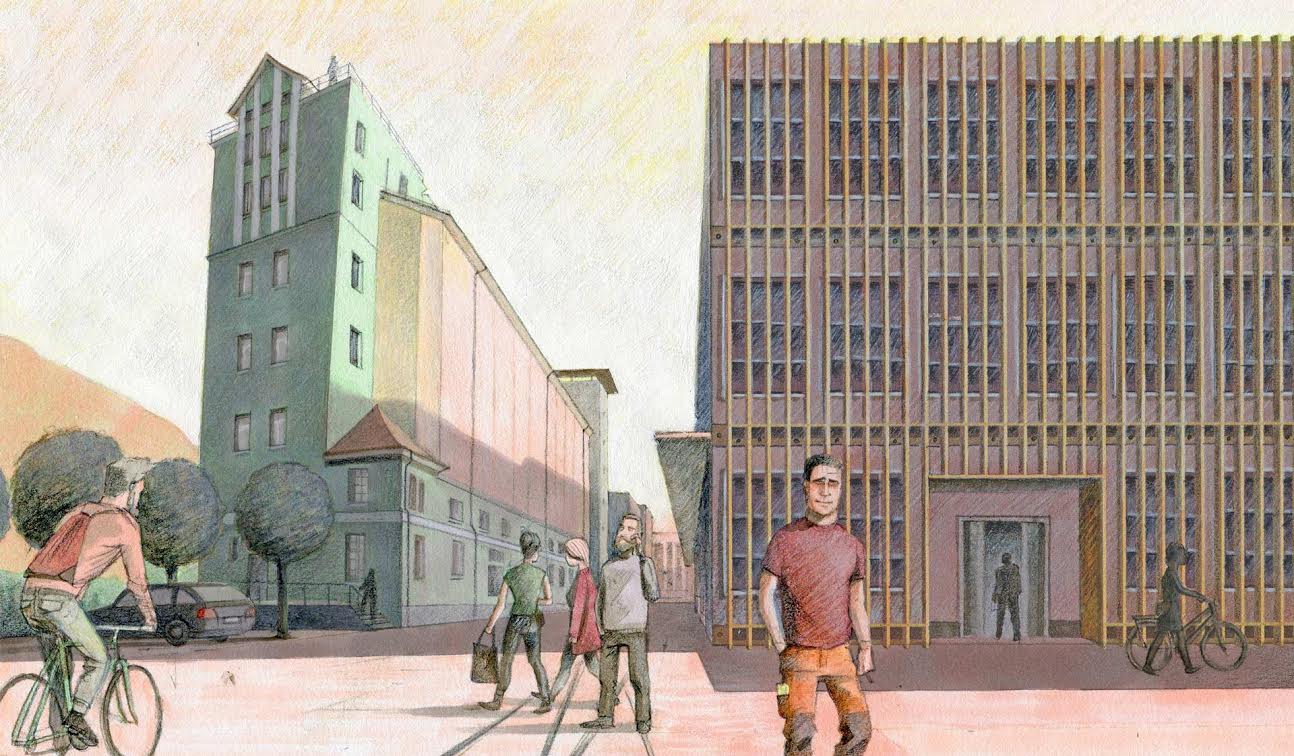
    Werkmatt Uri is one of the last large land reserves in the Uri valley floor. The first industrial uses with a direct railway connection were already established here during the First World War. The listed grain stores designed by architects Eduard Züblin and Robert Maillart in 1912/13 are particularly characteristic. These buildings will be preserved as landmarks and converted into an exhibition centre and art warehouse. The canton is investing in infrastructure to further develop the area between the new Altdorf cantonal railway station and the future Altdorf South motorway junction.

    Optimum location and economic impetus
    Uri is strategically located on the most important European north-south axis with the Gotthard Base Tunnel and the A2 motorway. The immediate proximity to the Altdorf intercity railway station and a modern bus concept promote the accessibility of Werkmatt. The improved accessibility provides impetus for economic and residential projects. With “Vena”, “Cubo” and “Strickermatte”, private investors have realised modern residential developments within walking distance.

    Development with vision
    Kässbohrer Schweiz AG has already recognised the added value of Werkmatt and relocated its headquarters to Altdorf in 2019. The new service building has created 30 qualified jobs in the areas of administration, sales, service, training, final assembly and production of special vehicles, mainly snow groomers. Werkmatt AG is also developing an innovative utilisation concept for building plots 9 and 13. The plans include a multifunctional centre with a business hotel with 80 rooms, co-working spaces, commercial and cultural spaces, restaurants and fitness and recreation areas.

    Targeted planning for sustainable growth
    As the owner, the canton of Uri is striving for a win-win situation with the future owners, users and investors in the area. The plots are to be sold and built on gradually over the next few years. The canton is developing the Werkmatt Uri site in a coordinated manner so that sustainable economic uses are created in the interests of the region as a whole. To this end, it is drawing up guidelines – including those relating to workplace density. The neighbourhood design plan serves as a planning instrument for investors and companies wishing to build on the site, which is binding on the owner and defines the parcel of land. It sets guidelines regarding utilisation, design and infrastructure.

    Success through co-operation
    Werkmatt Uri is an example of coordinated and sustainable site development. Companies benefit from a committed administration, short decision-making processes and needs-orientated solutions. The region expects the project to provide long-term economic impetus and create more than 1,000 jobs.
    Werkmatt Uri is therefore much more than just an industrial area, it is an economic driver and an attractive location for forward-looking companies.

  • Mobile office brings coworking to the countryside and the water

    Mobile office brings coworking to the countryside and the water

    Coworking provider Westhive from Zurich and AMAG are jointly realising an idea for mobile working in modern vintage double-decker buses, according to a press release. These have been converted into express buses and transformed into mobile workstations with a coffee bar, WLAN and power connections.

    Interested parties can book the mobile office via the Airbnb platform. The innovative offer will initially be available in Switzerland and will later be expanded internationally as part of Airbnb’s “global Live & Work Anywhere programme”.

    “Westhive Express brings the office on wheels – mobile, flexible and everywhere where there was previously no coworking offer,” it says. According to Andreas Widmer, co-founder of Westhive, the form of work stands for “freedom and movement”.

    The Westhive Express bridges the gap between classic mobility and modern working culture with a concept that is reminiscent of outdoor cafés. “In front of the bus, small tables with parasols invite you to take a creative break in the countryside – be it on the lakeshore, at a festival or in a rural community,” it says.

    For Philipp Wetzel, Managing Director AMAG Corporate Development, Innovation & Venture LAB, quoted in the press release, mobility, hospitality and productive work are combined as a “logical development of the digital lifestyle”.

    According to the press release, the first Westhive express bus will soon set off on its maiden voyage. Further mobile units are being planned.

  • New CEO takes the helm at indoor climate specialist

    New CEO takes the helm at indoor climate specialist

    The Pfäffikon-based Condair Group has appointed Martin Plüss as its new CEO with immediate effect, according to a press release. In his new role, the experienced manager will drive forward the growth strategies of the company, which specialises in indoor climate.

    Before joining the Condair Group, Martin Plüss was CEO of Gilgen Door Systems AG, an internationally active subsidiary of the Japanese Nabtesco Corporation. Plüss also has over 20 years of experience in international building technology companies.

    “We are delighted to welcome Martin as our new CEO,” said Silvan G.-R. Meier, owner and CEO of Condair, in the press release. “His technological and manufacturing expertise, his strong organisational and team-building skills and his strategic intuition will help us to further expand our market presence and technology leadership.”

    The new CEO is delighted with his new role and is convinced that “we will build on the foundations of the company and forge a successful path into the future”.

  • New career opportunities for career changers in the property industry

    New career opportunities for career changers in the property industry

    A career change opens up exciting opportunities for many career changers. Claudio Kuhn, an experienced business administrator with a Master of Science in Business Administration from HSLU, sees the property industry as his new challenge. Motivated by the prospect of intensive customer contact and diverse marketing activities, he is focusing on a career in property sales, particularly in the Zurich economic area and the Lucerne region.

    Targeted further training for entry
    Despite his extensive specialist knowledge, Kuhn realised that specific basic knowledge was essential for property sales. He therefore decided to enrol on the intensive course for career changers at SVIT Zurich, which he successfully completed. The course provides essential knowledge and skills to gain a foothold in the dynamic property sector.

    Support from SVIT Zurich
    In addition to specialist training, SVIT Zurich offers comprehensive support for professional integration into the property industry. Pascal Stutz, CEO of SVIT Zurich, supports course participants in developing successful job search strategies. As a result, graduates not only acquire in-depth knowledge, but also valuable skills for a successful job application.

    Networking and practical experience
    Kuhn and other course graduates also have the opportunity to present themselves to potential employers via dossiers and personal references such as skills. These documents, which can also be requested by non-SVIT members, enable companies to access qualified candidates directly (mail to: pascal.stutz@svit.ch).

    Outlook for interested lateral entrants
    SVIT Zurich’s current range of courses for lateral entrants in the fields of property management or property sales can be viewed on the svit-bildung.ch website. With targeted programmes and supportive guidance, the SVIT offers ambitious career changers like Claudio Kuhn a solid basis for a successful career start in the real estate sector.

    The intensive training and close support provided by SVIT Zurich offer a promising opportunity to increase the attractiveness of the property industry for career changers and pave the way for a successful career.

  • New Head of Property Development at Swiss Life: Fabian Linke

    New Head of Property Development at Swiss Life: Fabian Linke

    Fabian Linke is moving from Swiss Prime Site Solutions to Swiss Life Asset Managers, where he has worked as Head of Business Development since 2021. Previously, he worked as an expert for property investment products and business development at Global Real Estate at Credit Suisse Asset Management from 2006 to 2015 and from 2018 to 2021. He began his career at Credit Suisse Asset Management in Institutional Sales Switzerland. He holds a degree in Banking and Finance from the Zurich University of Applied Sciences (ZHAW) and a Master’s degree in Real Estate from the University of Zurich. He is also a member of the Royal Institution of Chartered Surveyors (RICS).

    “I am delighted that in Fabian Linke we have been able to recruit a proven and experienced expert to expand our property activities for the third-party investment business in Switzerland. With his profound expertise in property, finance and markets, he will develop convincing investment solutions for our customers”, says Paolo Di Stefano.

    Swiss Life is one of the largest property owners in Switzerland. Assets under management totalled CHF 43.7 billion as at 31 December 2023, of which CHF 12 billion was for third-party clients in Switzerland.

    Fabian Linke reports directly to Paolo Di Stefano, Head Real Estate Switzerland, and will be based in Zurich.

  • Location promotion of the Canton of Zurich gets dual leadership

    Location promotion of the Canton of Zurich gets dual leadership

    The Canton of Zurich is reorganising the Economy and Labour Division as of 1 January 2024. In future, location promotion will be managed by a co-head. According to a press release, Samuel Mösle and Markus Müller will form this dual leadership. The current head of location promotion, Fabian Streiff, will become head of the new Office of Economic Affairs. According to thecantonal press release, the current Office of Economic Affairs and Labour will be transformed into two independent organisational units in 2024: an Office of Economic Affairs (AWI) and an Office of Labour (AFA). Hans Rupp becomes head of the Labour Office.

    According to the press release, 52-year-old Markus Müller gained professional experience in process and product development after completing his studies and subsequent dissertation in materials science at the Swiss Federal Institute of Technology in Zurich. He was Manager Advanced Materials and Technologies in the medical industry. Since 2021, Müller has been a high-tech project manager in the location promotion team and a part-time lecturer at the OST – Ostschweizer Fachhochschule in Rapperswil-Jona SG.

    Regarding the second co-head, Samuel Mösle, the press release states that the 36-year-old completed his Master’s degree in economics at the University of Zurich and worked at a Swiss economic research and consulting institute after graduating. At the beginning of 2016, he worked as a project manager for the Canton of St.Gallen’s location promotion organisation in the area of business relocation and tourism. Since 2019, Samuel Mösle has held the positions of team leader for location development and tourism as well as deputy head of location promotion in the Canton of St.Gallen. His work focuses on projects and tasks in the area of economic policy, such as site development, start-up and innovation promotion as well as regional and intercantonal cooperation.

  • Holcim divests businesses in Uganda and Tanzania

    Holcim divests businesses in Uganda and Tanzania

    Holcim has signed agreements to divest its businesses in Uganda and Tanzania. According to a press release issued by the Zug-based building materials manufacturer, its local subsidiary in Uganda, Hima Cement Ltd, has been sold to the Sarrai Group for an enterprise value of USD 120 million.

    Holcim has also agreed to sell its 65 per cent stake in Mbeya Cement Company Ltd in Tanzania to the Amsons Group for an undisclosed amount. The completion of both transactions is subject to the respective regulatory approvals.

    “These divestments advance our strategy to consolidate our leadership position in core markets as the world’s leading provider of innovative and sustainable building solutions,” said Martin Kriegner, Regional Head Asia, Middle East & Africa. “We are delighted to have found strategic and trusted partners in the Sarrai Group and the Amsons Group, who are ideally positioned to develop these businesses in the long term.”

  • Luzerner Kantonalbank: Simon Kauth becomes a new member of the Executive Board

    Luzerner Kantonalbank: Simon Kauth becomes a new member of the Executive Board

    In January 2022, LUKB announced that it would adapt its organizational structure in order to increase its clout in the areas of IT and digitization. The IT department, which currently reports to CFO Marcel Hurschler, will move to the previous Market Services department on January 1, 2023. At the same time, the asset management area will be moved from the Market Services department to Marcel Hurschler’s responsibility and the area of special advice (financial planning, pension, tax and inheritance law advice) will be reassigned to sales, i.e. to the Corporate Customers & Private Banking department. In the future, the Market Services department will focus even more on IT and digitization and will bear the new name “Technology & Services” from 2023.

    In the course of this reorganization there will also be personnel changes: Leo Grüter, who has been a member of the management board of Luzerner Kantonalbank AG (LUKB) since 2010, will leave the management board at the end of 2022. The successor as Head of Corporate Customers & Private Banking will be Beat Hodel, who will head the previous Market Services department until the end of 2022.

    As of January 1, 2023, Simon Kauth will take over management of the newly structured Department of Technology & Services. Simon Kauth received his doctorate in economics from the University of St. Gallen HSG in 1997. He has many years of professional experience both in banking and on the side of the providers of core banking software (Avaloq and Finnova), most recently at management level. Born in Thurgau, Simon Kauth lives with his family in Zollikon ZH.

    “With his profile and his previous track record, Simon Kauth optimally fulfills our catalog of requirements for the management of the Department of Technology & Services: Strong IT background and profound know-how in banking,” says LUKB CEO Daniel Salzmann, explaining the choice of the new member of the management board. LUKB carried out a multi-stage selection process under the direction of Daniel Salzmann and with the support of external specialists.

  • Wincasa manages properties from real estate funds

    Wincasa manages properties from real estate funds

    As of July 1, Wincasa has the management mandate for more than 130 properties of Immofonds Asset Management AG . It was awarded as part of a tender. With this win, Wincasa is “further expanding its position as Switzerland’s leading real estate service provider,” according to a press release .

    According to the information, the value of the managed portfolio of real estate funds and real estate funds suburban increases to over 78 billion francs. Wincasa in Winterthur will manage two-thirds of these with a full mandate. The remaining third is looked after together with two other companies. The fact that this will happen in Wincasa’s own software environment means “efficient cooperation without media discontinuity” for all parties.

    “Wincasa won us over as part of the strategic realignment of the management mandate,” Gabriela Theus, Managing Director of Immofonds Asset Management AG, is quoted as saying. “In addition to security, an innovative spirit and a Swiss-wide branch network, Wincasa also has comprehensive know-how in many other areas beyond actual management,” for example with regard to sustainability. In addition, the selected mandate structure ensures “that the existing provider remains on board as the technical manager for a sub-portfolio”.

    As Andy Kürsteiner, Head of Business Development at Wincasa, emphasizes, the confidence shown by Immofonds encourages his company to “continue to pursue the path of customer-centric working methods”.

  • Sika presents a strong start to the year

    Sika presents a strong start to the year

    Sika closed the first quarter of 2021 with record sales of almost CHF 2.40 billion, the Zug-based building materials group, which operates worldwide, announced in a press release. In a year-on-year comparison, this corresponds to growth of 20.0 percent. In local currencies, growth of 21.9 percent was realized, writes Sika.

    All of the Group’s market regions contributed to the good development with double-digit growth rates in local currencies. The strongest growth was realized in the Americas region at 36.2 percent. In the region with the highest sales, EMEA (Europe, Middle East, Africa), sales increased by 18.1 percent to CHF 1.04 billion.

    For the year as a whole, Sika is aiming for sales growth of well over 10 percent in local currencies to total sales of more than CHF 10 billion for the first time. The operating result is to be increased disproportionately by at least 15 percent.

    Sika sees the construction sector being shaped “by the megatrend of climate change” and the associated shift to sustainable construction. According to its own statements, the group is well positioned here. “With our environmentally friendly and innovative solutions, we are positioning ourselves as a sustainability champion and, together with our customers, are making an important contribution to climate neutrality in the construction and vehicle industries,” said Group CEO Thomas Hasler in the statement. According to the announcement, the takeover of the former construction chemicals business of the BASF Group (MBCC Group), which was launched in November 2021, should also make Sika a “key player for more sustainability”.

  • Andermatt Swiss Alps is growing at double-digit rates

    Andermatt Swiss Alps is growing at double-digit rates

    In the 2021 financial year, the Andermatt Swiss Alps Group generated sales totaling CHF 201.1 million, according to the company responsible for the development, realization and operation of the holiday destination . In a year-on-year comparison, this corresponds to growth of 30 percent. The operating result at the EBITDA level increased by around CHF 20 million to CHF 25.3 million in the same period. A loss of CHF 8.0 million was reported as a net result. The Andermatt Swiss Alps Group writes that the result from the previous year was improved by CHF 24.4 million.

    “It is very gratifying that we were able to massively increase our sales and profitability in 2021,” said Group CEO Raphael Krucker in the statement. On the one hand, real estate sales worth CHF 122 million, up 58 percent year-on-year, contributed to the positive developments. On the other hand, the two hotels in the group, The Chedi Andermatt and Radisson Blu Reussen, reported a positive operating result for the first time due to the increase in sales and occupancy as well as the reduction in costs.

    The SkiArena Andermatt-Sedrun, on the other hand, continued to suffer from the consequences of the pandemic in the winter season and from the bad weather in the summer, the statement explains further. Specifically, Andermatt-Sedrun Sport AG’s sales of CHF 21.6 million were around 10 percent lower than in the previous year.

  • Investis grows profitably

    Investis grows profitably

    Investis generated total sales of 216 million francs in the 2021 financial year, the Zurich-based real estate group, which specializes in apartments in the mid-price segment in the Lake Geneva region, announced in a press release. In a year-on-year comparison, this corresponds to growth of 21 percent.

    The operating result at EBITDA level before revaluations increased by 18 percent to CHF 54 million in the same period. Operating profit at EBIT level increased by 73 percent to CHF 235 million. This includes a gain from revaluation effects of CHF 184 million.

    At CHF 235 million, net profit was CHF 99 million higher than in 2020. The real estate portfolio was valued at CHF 1.735 billion at the end of 2021. At the end of 2020, 1.490 billion Swiss francs were reported.

    Stéphane Bonvin, CEO of Investis Group, said he was “very proud of everything that has been achieved since our IPO in 2016”. “All of the targets we set for the IPO were exceeded.” According to Bonvin, both the real estate business and the real estate services business contributed to the good developments.

    For the near future, Investis assumes that demand for apartments in the Lake Geneva region will increase and prices will rise as a result. Here the group intends to further optimize its real estate portfolio in the current year. Digitization is to be promoted in the Real Estate Services division.

  • Miele's most successful business year with sales up 7.5%

    Miele's most successful business year with sales up 7.5%

    The business of the Miele Group was characterized by strong contrasting developments in the past year. On the one hand, the historic special boom caused by Corona provided a strong tailwind. On the other hand, Miele is also feeling the effects of the disruptions in the global supply chains, particularly in the case of semiconductors. Nevertheless, more devices were produced and sold in 2021 than ever before in the 123-year history of the premium brand. The order backlog at the start of the new year is also higher than ever, so the signs point to growth for 2022 as well. In order to shorten the sometimes significantly longer delivery times, Miele produces in all plants with the greatest possible capacity.

    On the other hand, the prospects for the further course of the year are shaped by the political and economic effects of the war in the Ukraine, where Miele, like in Russia, is represented with its own sales company. The management and staff of the Miele Group are deeply shocked by the suffering of the people in the war zone and on the escape routes. There is a great wave of willingness to help throughout the group, which starts with protecting the 54 Miele employees in Ukraine and their families, but also goes far beyond that. Due to the geopolitical situation and the resulting imponderables, the Miele Group has completely stopped supplying appliances to Russia with immediate effect and until further notice, in addition to the EU sanctions currently being imposed. Products for medical care are excluded unless they are also subject to sanctions. The company’s own shops (Miele Experience Center) and the web shop have been closed since last week and investments in the store have been frozen. The jobs of the more than 230 employees and their pay will be retained for at least six months.

    Positive development in all regions and product areas
    With the sales growth reported for 2021, the Miele Group has grown significantly faster than the long-term average, with Eastern Europe, China and the USA in particular making disproportionate contributions. In Germany, Miele achieved sales of 1.39 billion euros and thus gained a further 5.1 percent from a very high level. And Switzerland also played its part with the most successful financial year since it was founded. “We are proud that Miele Switzerland was once again placed with great confidence this year. It’s not for nothing that customers have voted us Most Trusted Brand for the fifth time in a row,” reports Rico Fallegger, Managing Director Miele Switzerland.

    Further information at: www.miele.ch

  • Warteck Invest grows profitably

    Warteck Invest grows profitably

    Despite the ongoing pandemic, 2021 was a successful financial year, Warteck Invest wrote in a statement . Specifically, the Basel real estate company increased its net profit by 2.4 percent to CHF 27.4 million. Excluding the gain from the revaluation of properties, growth of 5.6 percent to CHF 17.4 million was realised.

    At CHF 36.9 million, rental income was 0.4 percent up on the previous year. Financial expenses fell year-on-year by 2.6 percent to CHF 5.5 million. The vacancy rate was reduced by 0.6 percentage points to 2.4 percent compared to 2020.

    The market value of Warteck Invest’s real estate portfolio increased by CHF 35.8 million to CHF 874.4 million in the course of the year under review. The increase was not achieved through acquisitions, but through investments in new construction and renovation projects and the resulting revaluations. In the past financial year, the real estate company invested a total of CHF 22.8 million in ongoing projects. A project pipeline with a total volume of over 270 million Swiss francs should generate further growth over the next five to seven years.

  • Madaster wins Integral Baumanagement as a partner

    Madaster wins Integral Baumanagement as a partner

    Madaster wants to strengthen the circular economy in the construction and real estate sector. To this end, it offers digital tools on its platform, such as material passports and indices for recording the economic and circular value of buildings. In addition, companies that are committed to the circular economy in the construction and real estate sector are networked. With Integral Baumanagement AG , the Swiss register for materials has now gained another comrade-in-arms, Madaster Switzerland informs in a statement . The company based in Olten provides overall services in the planning and realization of buildings for builders and real estate owners.

    With the decision to make Integral Baumanagement AG fit for Madaster, “we are investing in a better future and thus making a significant contribution to achieving climate neutrality in construction,” Mauro Giorgini is quoted in the statement. The managing director of Integral Baumanagement AG relies on Madaster to catalog the materials used in the building and to determine their value, suitability for reuse and their impact on the environment. “In this way, we can lay the foundation for a sustainable future and optimal market positioning of your property with our customers.”

    Madaster’s building records record data about the materials used in a building. “We live in a closed system and resources are finite,” explains Marloes Fischer in the statement. For the managing director of Madaster Services Schweiz AG, individual buildings as well as entire areas and cities should be used as “gold mines for material”. “If we write down what’s there now, we’ll make building the future easier.”

  • UBS sells stake in real estate company in Japan

    UBS sells stake in real estate company in Japan

    UBS Asset Management and Mitsubishi Corporation have agreed to sell their Mitsubishi Corp.-UBS Realty Inc. (MC-UBSR) joint venture to American private equity firm KKR & Co. Inc. , UBS Group AG and UBS AG announce in a press release. The transaction, which is still subject to the approval of the relevant authorities, is expected to be completed in the coming month. The sale has “no impact on UBS’s asset management, wealth management and investment banking business in Japan,” explains the major Zurich bank.

    The sale marks the end of a 20-year success story for the joint venture. According to her, MC-UBSR has developed into one of Japan’s largest asset managers in the real estate sector. “We believe KKR is well positioned to continue to grow the business,” Suni Harford, President of UBS Asset Management, said in the statement. For UBS, the sale is expected to generate a gain in asset management and an increase in core capital (CET1) of around $0.9 billion.

    “The Japanese market remains a cornerstone of our Real Estate & Private Markets business in Asia Pacific going forward,” said Harford. Real estate investments in Japan are to be offered to clients through the UBS Japan Advisors unit.

  • Fundamenta Real Estate breaks the billion mark

    Fundamenta Real Estate breaks the billion mark

    According to a statement by Fundamenta Real Estate AG , the Zug real estate company’s portfolio exceeded the billion mark for the first time at the end of the 2021 financial year. Specifically, the value of the real estate portfolio increased from CHF 991.9 million to almost CHF 1.10 billion over the course of the year. Fundamenta Real Estate attributes the growth primarily to the completion and transfer of two new construction projects, the completion of three repositionings and the purchase of four existing properties. Revaluations resulted in an increase in value of CHF 15.3 million.

    The net actual rental income in 2021 was CHF 37.2 million, 11.2 percent above the previous year’s value. In the same period, net profit increased by 8.4 percent to CHF 28.9 million. The real estate company writes that a previous year’s success from the sale of three investment properties was more than compensated for “by an excellent operating result and a higher revaluation effect”. Excluding both effects, net income rose by 14.7 percent year-on-year to CHF 17.7 million. The vacancy rate was reduced from 3.5 “to a historically low 2.5 percent” in a year-on-year comparison.

    “Our residential focus has also proven itself in the second year of the pandemic,” Andreas Spahni, President and Delegate of the Board of Directors of Fundamenta Real Estate AG, is quoted in the statement. “The consistent alignment of the portfolio to market demand as well as the holistic and active asset management have again led to very good results.”

  • TerraRail Modalsplit transports excavated material by rail

    TerraRail Modalsplit transports excavated material by rail

    With the newly founded company TerraRail Modalsplit AG, the transport of excavated material for large construction projects in the canton of Zurich is to be shifted from road to rail. According to a press release by Eberhard Bau, the companies HASTAG (Zürich) AG based in Birmensdorf ZH, Schneider Umweltservice AG in Miles ZH and Eberhard Bau AG in Kloten ZH have merged to form the company. TerraRail Modalsplit is also based in Kloten.

    The reason for the merger of the three companies is a new legal provision in the canton, as the announcement shows. Since July 1, 2021, clean excavation from excavation pits with a volume of over 25,000 cubic meters must be transported away by train in the canton of Zurich.

    With the founding of TerraRail Modalsplit AG, the transport of excavated material and aggregate is offered by rail and truck traffic is shifted to rail. The excavated material can be delivered to the Rümlang, Volketswil, Winterthur and Birmensdorf sites and the aggregates can then be picked up. According to the announcement, the locations – Birmensdorf is still under development – all offer a direct rail connection and can cover the necessary handling capacities. The excavated materials are then transported away by train and deposited or recycled in a material extraction point.

    The new company can “cover the demand triggered by the law, use synergies with the previous construction site transport and relieve the traffic area with the train. We were already able to actively offer the service for the first tenders,” Markus Streckeisen, President of the Board of Directors of TerraRail Modalsplit AG, is quoted as saying.

  • Implenia posts double-digit million profit

    Implenia posts double-digit million profit

    In the 2021 financial year, Implenia generated sales totaling CHF 3.76 billion. In a year-on-year comparison, this corresponds to a decline of 5.6 percent. In a statement , the construction and real estate company from Opfikon informed that it was lower than expected “despite portfolio adjustments and longer project durations”. The order backlog increased by 7.7 percent year-on-year to a high of CHF 6.88 billion at the end of 2021. Implenia attributes the development here to “the strategic focus on large and complex projects”.

    Implenia’s operating result at EBIT level for the year under review was CHF 114.8 million. In the previous year, a loss of CHF 146.8 million was incurred here. The consolidated result increased from a loss of CHF 132.1 million to a profit of CHF 64.0 million from 2020 to 2021. All four of Implenia’s business areas were involved in the positive developments. For the current financial year, Implenia is aiming for an EBIT of more than 120 million francs.

    Following the loss in fiscal 2020, the company initiated a comprehensive transformation process. Implenia explains that this transformation is now well advanced. In the future, the company intends to continue to focus on construction and real estate services in Switzerland and Germany as well as on tunnel construction and related infrastructure projects in other markets.

    “The 24 percent increase in the operating result shows that we are consistently implementing our transformation,” Implenia CEO André Wyss is quoted as saying in the statement. “After portfolio adjustments, with a strategic focus on profitable, complex projects and thanks to Value Assurance, all divisions are well positioned to further increase profitability.”

  • Zürichholz increases share capital

    Zürichholz increases share capital

    Zürichholz issues shares worth 3 million Swiss francs. As the wood marketer writes in a press release , the capital increase creates “a high-yield, sustainable investment opportunity” for qualified investors from the Swiss forest, wood and CO2 industries”. The company, which specializes in logs and energy wood, reached a new growth stage in 2019 after a consolidation phase. With the additional share capital, the company intends to continue growing in the forward-looking business areas of hardwood processing and biochar production.

    Since the groundbreaking ceremony in November 2021, Zürichholz has been building a new operations center in Illnau ZH for around 12 million francs, which is scheduled to go into operation at the end of 2022. This includes a pyrolysis plant for the production of biochar, a garage and workshop for the vehicle fleet, a wood chip hall to increase the capacity of the Aubrugg wood-fired power plant, offices for Zurich wood with rental capacity for third parties and a heating center for the Illnau heating network.

    The increasing demand for wood is reflected in a “very pleasing” balance sheet for the 2021 financial year. The company expects sales to jump from 15 million Swiss francs to 20 million in the medium term.

    The canton and city of Zurich are among the approximately 300 shareholders as large forest owners, which gives the share “additional stability and potential”. The issue price is CHF 1,400 per share with 2 to 1 subscription rights. Trading in subscription rights is excluded. The long-term dividend yield of nominally 5 percent should be maintained.

    Wood is becoming increasingly popular from a climate point of view. This applies to construction and industry, in energy production and as pyrolysis wood in bioenergy. Timber stocks are not only financially worthwhile. An investment in the forest and timber industry also pays off with a view to “climate management and net zero obligations of companies and the public sector,” it says. Due to its high CO2-reducing effect, wood is considered one of the leading negative emission technologies ( NET ) because it can absorb greenhouse gases from the atmosphere and thus minimize them.

  • IWB joins Sympheny

    IWB joins Sympheny

    IWB takes a 30 percent stake in Sympheny . The young company based in Dübendorf has developed software that can compare possible energy solutions for buildings in a matter of seconds. IWB wants to use the knowledge gained from this in its own planning for the climate-friendly conversion of the energy supply.

    “Affordable climate protection requires optimized energy supplies,” IWB introduces a post on LinkedIn about joining Sympheny. According to him, the company for energy, water and telecommunications in the canton of Basel-Stadt wants to support the spin-off of the Federal Materials Testing and Research Institute ( Empa ) with the fresh capital in the further development of their software. IWB writes that they are looking forward to working more closely with Sympheny co-founders Andrew Bollinger, Matthias Sulzer, Boran Morvaj and Julien Marquant.

    According to a report on startupticker.ch, the software from the young company, which was only founded in 2020, has already been used in more than 20 major planning projects. Sympheny’s customers include “energy suppliers and general contractors from all over Switzerland,” it says. The energy planning software developed by Sympheny simulates the energy system to be examined with a digital twin. Algorithms and standardized geographic information data (GIS data) can be used to simulate the production, storage and consumption of energy.

  • PSP Swiss Property grows profitably

    PSP Swiss Property grows profitably

    According to a statement by PSP Swiss Property , the Zug-based real estate company generated property income totaling CHF 309.64 million in the 2021 financial year. Compared to the previous year, this corresponds to growth of 4.5 percent. The operating result (EBITDA) excluding property gains such as valuation differences amounted to CHF 278.76 million in 2021, which is 2.8 percent more than in 2020. PSP Swiss Property attributes the growth primarily to increased rental income year-on-year and higher profits on the sale of development projects and condominium back.

    A net profit of CHF 595.02 million was reported in the year under review, compared to CHF 292.09 million in the previous year. In addition to the factors relevant to the operating result, the appreciation of the portfolio by CHF 464.9 million played a decisive role here. As of the end of 2021, the real estate portfolio of PSP Swiss Property was valued at CHF 9.13 billion.

    In the course of the financial year, the real estate company completed a number of projects and added them to the investment portfolio. The announcement mentions, among other things, the new ATMOS building in Zurich-West with an area of 24,000 square meters. Four investment properties have been reclassified as development projects and a number of properties have been successfully sold, explains PSP Swiss Property. No new investment properties, areas or projects were acquired in 2021.

    For the current financial year, the company anticipates an EBITDA excluding real estate gains of CHF 285 million. The focus will remain unchanged on the modernization of selected properties, our own development projects and leasing. PSP Swiss Property intends to resell non-strategic real estate, while purchases are made dependent on the added value that is expected in the long term.

  • Zehnder Group takes over Canadian ventilation company

    Zehnder Group takes over Canadian ventilation company

    The Zehnder Group will complete the acquisition of the Canadian company Airia Brands Inc. in the next few days. The Aargau expert for ventilation and radiators has now announced this. Nothing was known about the purchase price. Airia designs, manufactures and sells heat recovery ventilation. Their products are sold under the Lifebreath brand in the north of the Americas.

    The company reportedly employs around 150 people. In 2021 it achieved sales of around 38 million euros. The Airia headquarters in London in the province of Ontario will be retained and the workforce including the operational management team will be taken over.

    “The Zehnder Group and Airia – that’s a perfect match for us,” said the CEO of the Zehnder Group, Matthias Huenerwadel. “The Lifebreath brand stands for healthy, energy-efficient and environmentally friendly indoor climate solutions, just like the Zehnder brand. With the acquisition of Airia, we are significantly expanding our market position in North America, and we intend to continue to grow in the future”, in line with the company motto “Growth for ventilation – harvest for radiators”.

    The acquisition of Airia will significantly increase ventilation sales as a percentage of total sales in North America. The Zehnder Group operates in North America from its office in Buffalo, New York. The company develops and manufactures its products in 18 of its own plants worldwide. Of these, three are in North America and another three in China.

  • Sika wants to grow in Africa

    Sika wants to grow in Africa

    Sika is positioning itself for further dynamic growth in Tanzania and the Republic of Ivory Coast. The company has moved into a new location in the East African economic center of Dar es Salaam. There, the Zug-based company now also produces mortar and tile adhesive in addition to concrete additives. This shortens the transport routes, according to a press release from the company.

    In the Republic of Ivory Coast in the west of the continent, Sika has doubled the size of its factory premises. With new areas for storage, offices and laboratories in Abidjan, Sika can double the production capacities for tile adhesive and repair mortar in the medium term and expand storage capacities. The neighboring countries of Burkina Faso, Togo, Benin, Mali and Sierra Leone will also be supplied from there.

    Sika is committed to “sustainable business activities in Africa” in the long term, Regional Manager EMEA, Ivo Schädler, is quoted as saying. “At both locations, we produce high-quality solutions that are used for large infrastructure projects.” As examples, he cites the metro project and the expansion of the seaport in Abidjan, the Standard Gauge Railway and the Julius Nyerere hydroelectric power station in Tanzania.

  • Wüest Partner Germany: Establishment of an ESG team

    Wüest Partner Germany: Establishment of an ESG team

    “I am pleased to be able to support Wüest Partner even more intensively from now on,” says Gerhard Hoffmann, the new Director ESG and Sustainability at Wüest Partner Germany . Reconciling ecology and economy using state-of-the-art technologies has always been the primary goal of his work. At Wüest Partner he has the best prerequisites for this. “Now the task is to form an interdisciplinary and highly motivated team of experienced experts.” Above all, in order to strategically and operationally advance the increasingly important topics on the German market, says Hoffmann.

    Many years of expertise in the sustainability segment
    For more than four decades he has been dedicated to his mission of reducing CO2 emissions by developing sustainable energy concepts in the real estate industry. The graduate engineer and graduate industrial engineer is involved in numerous international research and development projects with a focus on regenerative energy supply. He has developed energy concepts for over 900 buildings and worked on more than 1,400 sustainability projects. The licensed BREEAM auditor sits on the working groups of the ZIA Central Real Estate Committee . He is also a member and senior auditor of the DGNB German Sustainable Building Council .

    «Ideal cast for a highly complex market»
    As an independent consultant, Hoffmann has already successfully accompanied the implementation of the Wüest Climate Tool on the German market. In doing so, he “significantly shaped an important milestone in the company’s history,” writes the company. The new position is the logical continuation of a successful collaboration, says Rüdiger Hornung , partner and managing director of Wüest Partner. This is “the decisive step on the way to a sustainable future in the real estate industry”. Hoffmann is the “ideal person to promote sustainability and energy efficiency in our highly complex market, both professionally and personally”.

    Swiss group represented in four countries
    Wüest Partner (founded in 1985), headquartered in Switzerland, currently has eleven locations in four European countries. The Swiss office locations are in Zurich (headquarters), Bern, Geneva and Lugano. In Germany (market entry: 2007) the group has branches in Berlin, Düsseldorf, Frankfurt/Main, Hamburg and Munich. There are other locations in Paris and Lisbon. The group also owns the two subsidiaries Datahouse and Durable , each with 100 percent ownership.

  • Peach Property posts record pre-tax profit

    Peach Property posts record pre-tax profit

    According to a statement from Peach Property , the Zurich-based real estate company, which specializes in real estate in Germany, posted a pre-tax profit of CHF 258 million in the 2021 financial year. This is the highest pre-tax profit in the company’s history, writes Peach Property. CHF 153 million was realized in the 2020 financial year.

    The value of Peach Property’s real estate portfolio increased year-on-year from CHF 2.1 billion to over CHF 2.6 billion. Rental income increased from CHF 54.7 million in 2020 to around CHF 108 million. With the help of a mandatory convertible bond issued in the year under review, the debt ratio was reduced from 57.8 to around 52 percent.

    In the financial year, Peach Property was also able to improve all external ratings, the press release explains further. Moody’s currently rates the company at Ba2 with a stable outlook, while FitchRatings gave it a BB with a stable outlook. S&P Global Ratings rates Peach Property at BB- with a stable outlook.

    “Our strategy and our business model have also proven to be outstanding in the 2021 financial year and we were able to close another year with very profitable growth,” Thomas Wolfensberger is quoted as saying in the press release. According to the CEO of Peach Property Group AG, the current financial year will primarily focus on “modernizing the residential portfolio and expanding sustainability activities”. Peach Property intends to invest around CHF 70 million in this.

  • Henriette Wendt elected to the CKW Board of Directors

    Henriette Wendt elected to the CKW Board of Directors

    Due to the measures to combat Covid-19, the 128th CKW General Assembly on January 28, 2022 was held in a small group. The shareholders exercised their voting and election rights in writing to the attention of the independent proxy. They approved the annual report, the consolidated financial statements and the annual financial statements for the 2020/21 financial year. The CKW Group closed the past financial year very successfully with an operating profit of CHF 174.5 million.

    Dividend increase and special dividend
    The net financial assets of the CKW Group increased by a further CHF 35 million to CHF 574 million compared to the previous year. This initial situation and the financial planning for the coming years allow the ordinary dividend to be increased from CHF 3 to CHF 6. In addition, with the conclusion of the energy tariff proceedings and the subsequent compensation for the former transmission grid in the past financial year, CKW has obtained legal certainty in two long-term proceedings. The Board of Directors has therefore decided to propose an additional one-off special dividend of CHF 15 per share to the Annual General Meeting. The shareholders followed the suggestion and approved the dividend increase as well as the special dividend.

    New name: CKW AG instead of Centralschweizerische Kraftwerke AG
    They also elected Henriette Wendt, Chief Operating Officer and member of the Executive Board of the Axpo Group, as the new member of the Board of Directors. She succeeds Michael Schmid, who has resigned from the Board of Directors. As COO of Axpo, Henriette Wendt plays an important role in the strategic and cultural development of the Axpo Group nationally and internationally. Before joining Axpo, Wendt worked for Microsoft Switzerland, where she held the role of Chief Marketing & Operations Officer.

    The General Assembly approved the actions of the members of the Board of Directors and confirmed President Christoph Brand, the government councilors Marcel Schwerzmann (Lucerne) and Dimitri Moretti (Uri), Anita Eckardt, Joris Gröflin and Hansueli Sallenbach for another one-year term as members of the Board of Directors. KPMG AG, Lucerne, was elected as auditor for another year.

    CKW has been operating under this name as a uniform brand on the market for around 5 years and enjoys the trust of customers in and outside of Central Switzerland. This strategy is now continued in the official company name. Centralschweizerische Kraftwerke AG becomes CKW AG. The AGM approved the application in terms of simplification and as a sign of modernization.

    The next General Assembly will take place on Friday, January 27, 2023.

  • Swiss Prime Site and Superlab are building laboratory space in Schlieren

    Swiss Prime Site and Superlab are building laboratory space in Schlieren

    Swiss Prime Site Immobilien has entered into a partnership with Superlab Suisse . Superlab is a provider of laboratory and research space. According to the press release , Superlab Suisse provides operational and fully equipped research and laboratory space as well as operational services. It already has such a location in Lausanne. Both partners plan to develop locations in Basel and Schlieren with a total area of more than 10,000 square meters. According to Superlab Suisse, the laboratory in Schlieren will have an area of 5,400 square meters.

    The city on the Limmat is home to facilities of the Swiss Federal Institute of Technology Zurich (ETH), the University of Zurich (UZH) and research centers of numerous national and international pharmaceutical companies. The demand for laboratory space is correspondingly high, it is said. Swiss Prime Site Immobilien is planning a modern new building project on the JED site in Schlieren. In cooperation with Superlab Suisse, research and laboratory areas for start-ups, spin-offs or established companies are to be created on two floors.

    “Due to the direct proximity to the Wagi area in Schlieren and the technology park in Basel, companies from the life sciences sector can benefit from significant synergy effects of these ecosystems,” says Zhang Xi, CEO of Superlab. In Basel, a state-of-the-art building with laboratory and research areas is to be built by Superlab Suisse at the Stücki Park in the next 18 months.

    For Martin Kaleja, CEO of Swiss Prime Site Immobilien, the modern standard of construction, the flexibility of the space and the guarantee of support and services are key success factors. Kaleja is quoted as saying that Swiss Prime Site Immobilien and Superlab Suisse together had the necessary know-how to ensure the space required for laboratory and research areas.

  • REMNEX Investment Foundation plans capital increase

    REMNEX Investment Foundation plans capital increase

    In the financial year that ended in September 2021, the REMNEX investment foundation generated an investment return of 12.5 percent, REMNEX AG informed in a press release. She attributes this success, among other things, to the acquisition of four properties “with an adequate risk/return profile”. REMNEX intends to further expand its Swiss Real Estate Commercial ECO investment group this year.

    The company intends to carry out a capital increase from February 1st to March 4th. It should bring in around 50 million francs for the expansion of the real estate portfolio. “Very attractive acquisition objects” that come into question are already available, writes REMNEX.

    REMNEX has just acquired a first new property, the company informs in a further announcement . Specifically, a commercial property was purchased in the Bernese Lyss. It shows a gross return of around 10 percent and a net return of 4.6 percent, according to the statement. No information is given there about the purchase price for the commercial property.

  • Ina Invest completes acquisition of Ceres Group

    Ina Invest completes acquisition of Ceres Group

    Ina Invest has completely taken over the Ceres Group. The real estate company based in Opfikon is the majority owner of the Ceres Group based in Pratteln, according to a press release .

    The heart of the acquisition is the Buss site at Pratteln station with the Bredella development project. The commercial and industrial park with an area of more than 80,000 square meters is to be converted into a city district with 70 percent residential space and 30 percent commercial space over the next 20 years. Ina Invest wants to build more than 1000 apartments there.

    The transaction was announced on December 16, 2021. Part of the purchase price, about which confidentiality was agreed, was paid by Ina Invest in treasury shares. In addition, 886,656 titles were issued. After completion of the transaction, Ina Invest’s share capital will be around CHF 292,000, divided into 9.75 million registered shares.