Tag: Campus

  • Switzerland Innovation Park Basel Area Main Campus

    Switzerland Innovation Park Basel Area Main Campus

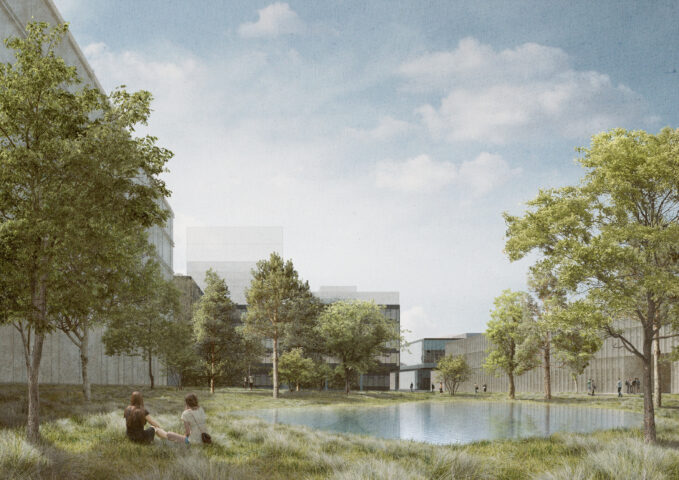
    The site extends over 115,000 square meters, structured around a central park that acts as a social and creative heartbeat, promoting communication and creating encounters. The striking main buildings, Main Campus HQ, HORTUS, ALL, SCALE, HOPE, Swiss TPH, ALBA Haus, Innovation Garage, Holiday Inn Express and the parking garages, create a visionary structure. Each building is more than just space. HORTUS is a prime example of the circular economy and sustainable urban development, ALL combines flexible working and laboratory landscapes in a new architectural idea, SCALE and HOPE are aimed at growing biotech and medtech industries, while Swiss TPH and ALBA Haus combine expertise in public health and research.

    Sustainability and community
    The cluster offers more than just space. Radically sustainable construction, energy recovery from photovoltaics, green roof landscapes and a self-regenerating campus park set new standards for urban development. With coworking, intellectual exchange zones and gastronomy, innovations are created in everyday life. Up to 8,000 workplaces will be created on the site and supplemented with sports, educational and leisure facilities.

    The Botnar Institute of Immune Engineering
    In 2027, the Botnar Institute of Immune Engineering (BIIE) will move into a new building on the campus. Endowed with one billion dollars by the Fondation Botnar, BIIE will focus on international immune-based research and therapies, especially for children and adolescents. As an anchor tenant in the ALL building, the institute will attract up to 300 researchers, putting Basel on the global map for cutting-edge research. The decision in favor of Basel was made against major international applicants from the USA, England, Israel and Singapore and underlines the importance of the research cluster in the region.

    Innovation, networking and prospects
    More than 100 companies, universities and international teams from biotech, digital health and medtech are working here on the challenges of tomorrow. Accelerator programs such as BaseLaunch, open community platforms and physical proximity establish a dynamic workspace in which knowledge transfer is lived directly. One third of the usable space is reserved for start-ups and founders and the link between science and entrepreneurial practice is promoted.

    The Switzerland Innovation Park Basel Area Main Campus brings a new quality of collaboration, spatial concept and scientific excellence. Basel’s vision of becoming a model city for circular innovation and applied research can become a reality here, internationally visible and locally rooted.

  • Campus in Biel/Bienne celebrates laying of foundation stone

    Campus in Biel/Bienne celebrates laying of foundation stone

    On 6 May, the foundation stone was laid for the new Biel/Bienne campus of Bern University of Applied Sciences on the former Feldschlösschen site near Biel railway station. An education and research centre for around 2,350 students and lecturers is to be built here by 2028, the Canton of Bern ‘s Department of Construction and Transport announced in a press release. Together with the federal government and a private partner, the Canton of Bern is raising around CHF 400 million for the construction of the new campus.

    The Bern University of Applied Sciences will unite its Departments of Engineering and Information Technology as well as Architecture, Wood and Construction at the Biel/Bienne campus. According to the press release, the open architecture of the new site will promote interdisciplinary exchange and creative collaboration. The campus is designed as a cloverleaf of three building wings around a common centre.

    “An inspiring environment is being created here that focuses on openness, interdisciplinarity and high standards of infrastructure and quality,” said Cantonal Councillor Christoph Neuhaus, Director of Construction and Transport of the Canton of Bern, in the press release. “The new campus is being built as a modern timber construction – a project that stands for sustainable, climate-friendly construction.” Glenda Gonzalez Bassi, Mayor of Biel/Bienne, sees the future campus “as a central location for the development of our region, for the education of our young generation and for attracting the talent that our economy needs now more than ever.”

  • Suissetec opens new building on the education campus in Lostorf

    Suissetec opens new building on the education campus in Lostorf

    The Swiss-Liechtenstein Building Technology Association suissetec is expanding and modernising its training and further education centre in Lostorf, according to a press release. By the beginning of 2025, a building with workshops, laboratories, training rooms and meeting areas is to be built on around 1,800 square metres. The new building will be presented to the public at an open day on 16 November 2024.

    The infrastructure offers new opportunities for the quality of training and further education in construction professions, according to the statement. Students can learn in a concrete shell at an outdoor workstation just like on a real construction site. Interdisciplinary workshops for plumbers and heating engineers as well as the integration of construction data modelling into the didactic concept would serve as a role model. Müller Wüst AG, which belongs to Debrunner Acifer, has created a digital fabrication model for construction, which is also intended for use in teaching.

    Digital tools allow for flexible, hybrid forms of learning. “Learners will work with real materials, but also practise digitally with virtual reality glasses,” says suissetec Director Christoph Schaer.

    The new two-storey building is the first part of an expansion comprising several buildings. From 2026, the other existing buildings will be renovated in three stages. Suissetec operates the campus as one of three training centres as a “meeting place as well as a place for training and further education” for the construction industry.

    The campus was certified as the country’s first Minergie site in 2023. This means that it fulfils strict energy criteria. The aim is to maximise self-sufficiency with renewable energy, which is generated on the site itself all year round.

  • Optimal exam preparation for prospective property professionals

    Optimal exam preparation for prospective property professionals

    The member organisations SVIT Bern, SVIT Eastern Switzerland, SVIT Central Switzerland and SVIT Zurich are intensively involved in the training of their apprentices. One outstanding example of these endeavours is the three-day “QV-Campus” launched by the SVIT Young Zurich youth commission in 2017. This campus offers apprentices optimal preparation for the company qualification process (final apprenticeship examination).

    The graduates of this year’s campus have just received their exam results. As every year, most of the participants scored above average, which makes the association proud and emphasises the high quality of their training.

    During the QV-Campus, participants were tested in industry-specific lessons without grades in order to specifically identify and close any gaps in their knowledge. The most important exam topics were taught by experienced QV exam experts. The programme also included overcoming exam anxiety and various learning techniques. On request, learners received further support on site or via Zoom until the exam.

    With around 40 third-year learners taking part, the “QV-Campus” can be considered a success. The high level of motivation of all those involved contributed significantly to the positive outcome. “It gave me a wake-up call!” commented one participant, who was now also able to gain new and exciting insights into the subject of “Taxation”. Another participant commented: “I had planned to study intensively for four weeks before the QV, but after the QV-Campus I realise that this is not enough.”

    For many young people, activities such as going out, friends and sport take centre stage, and they often lack the motivation and ambition to prepare for their exams in a timely and structured manner. This is precisely where the QV-Campus comes in, by guiding apprentices to plan properly and showing them that relaxation and proper preparation are crucial for a successful apprenticeship qualification.

    After the Campus is before the Campus.

    Are you in your 3rd year of apprenticeship and want to be optimally prepared for the company qualification process?

    Then register for the QV-Campus 2025 at www.svit-young.ch.

  • Successful completion of the preliminary project for the Horw campus

    Successful completion of the preliminary project for the Horw campus

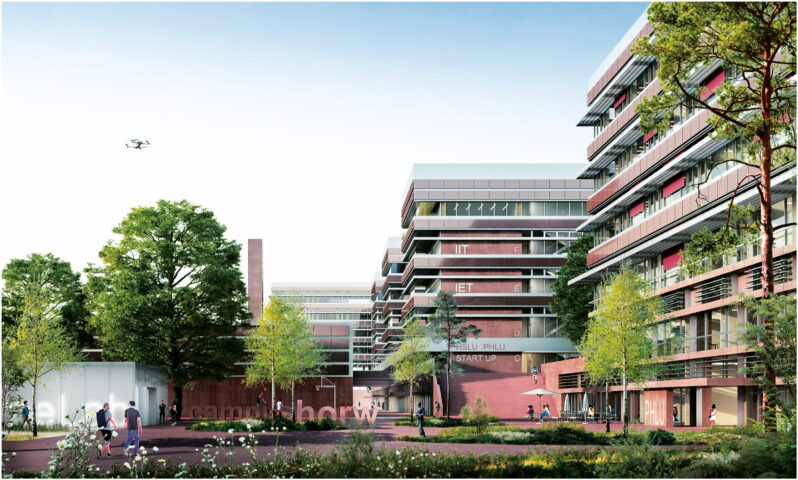
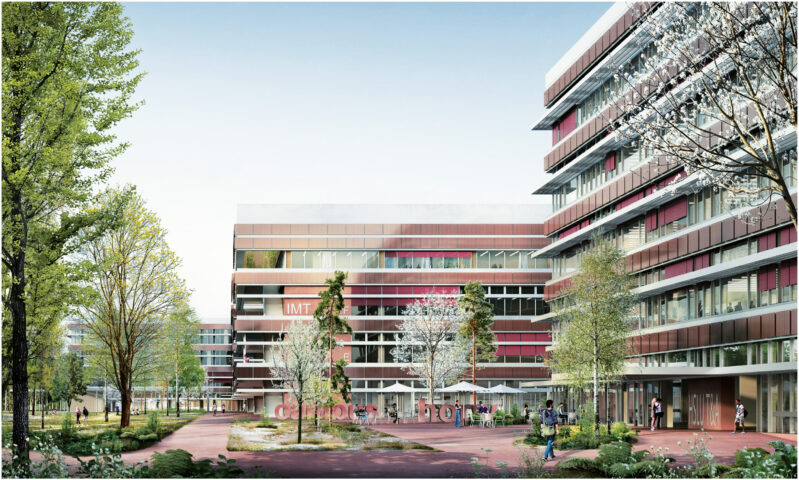
    The successful completion of the preliminary project for the expansion and renovation of the Horw campus brings the vision of a modern educational centre a significant step closer. The purpose of the preliminary project phase was to gain detailed insights into the development and cost structure of the construction project. Despite the expected additional costs due to external factors such as construction costs and sustainability-orientated measures, the original project costs of CHF 365 million have been largely confirmed.

    Cost development and influencing factors
    The analysis has shown that in addition to construction inflation, which accounts for around 18 per cent of the increase in costs, adjustments to VAT also have a significant impact. Further additional costs in the area of sustainability and project development as well as statutory sustainability certifications increase the financial framework. Total expenditure is now expected to amount to CHF 600 million, including reserves of around CHF 78 million. This sum is still in line with comparable projects of a similar scale in Switzerland.

    Relevance for education and the economy
    Government Councillor and Finance Director Reto Wyss emphasise the continuous monitoring and review of cost developments by the responsible real estate department. The project remains continuously within the planned budget and the additional financial requirements are clearly explained by the review results. Project-related decisions and the dissemination of information are kept transparent in order to ensure public confidence.

    The Canton of Lucerne has outsourced the realisation of this major construction project to a non-profit public limited company, “Immobilien Campus Luzern-Horw AG”. This enables efficient and targeted construction in compliance with the referendum and without affecting the special loans that have already been approved.

    Outlook and significance for the region
    Director of Education Armin Hartmann emphasises the supra-regional significance of the project: “The Horw campus will have a lasting impact on the educational landscape and the business location. Its impact will reach far beyond the borders of Lucerne into the whole of Central Switzerland.” The realisation of this visionary project is therefore expressly welcomed and supported.

    The successful completion of the preliminary project has paved the way for the next phase of the construction project. The project management team will promptly initiate the next steps, with the start of construction scheduled for 2026.

  • Further development of the YOND Campus on the Albis site

    Further development of the YOND Campus on the Albis site

    The planned expansion of the YOND Campus to include the YOND.02/03 buildings with a total usable area of around 31,000 m2 takes up the concept of YOND.01 and adapts it more specifically to the requirements of manufacturing companies. The focus is on providing robust and efficient buildings, flexibility through large, divisible areas and optimised logistics. These adaptations include efficient delivery, loading ramps, a logistics-friendly basement and advanced vertical access to the building. In addition, mezzanine floors made of wood enable flexible use of space that can be adapted to the individual needs of the companies.

    At the same time, the historic laboratory and workshop building at 203 Albisriederstrasse is being converted into a centre for small and creative businesses. The planned renovation and extension of one floor are aimed at preserving the history of the site and creating a workspace for the creative industries. The transformation of the boiler house into a vertical garden and the establishment of a bistro on the ground floor emphasise the ambition to create a campus that harmoniously combines quality of life and the world of work.

    The publicly accessible catering facilities along Albisriederstrasse and in the adjacent park will establish the site as an attractive location for businesses and visitors. The use of the ground floor will position the YOND Campus as a place for socialising and contribute to the activation of the space. This extension will create a forward-looking space that supports both the dynamic requirements of modern companies and the need for social interaction and creativity.

  • Switzerland Innovation Park Basel Area receives four new buildings

    Switzerland Innovation Park Basel Area receives four new buildings

    The Switzerland Innovation Park Basel Area in Allschwil will more than double in size in stages by 2028. The private investor Senn Resources from St.Gallen is investing around 350 million Swiss francs in the four new buildings planned. Together with the main building, which opened a year ago, they will form the Main Campus site. The Switzerland Innovation Park Basel Area also has two other sites: the Jura site in Courroux and the Novartis Campus in Basel.

    As with the main building, three of the four new buildings will be designed by architects Herzog & de Meuron, according to a press release from the Innovation Park. The “radically sustainable” Hortus office building is already under construction and is scheduled for completion in 2025. The All and Cloud laboratory and office buildings are in the planning stage. The public-facing Hope building was developed in collaboration with the Swiss Tropical and Public Health Institute. Senn is building it with Basel architects Felippi Wyssen, who won the anonymous competition.

    “It is extremely gratifying that the partnership of a public and private institution has made it possible to build an innovation district of this size,” said Raymond Cron, Managing Director of the national umbrella organisation Switzerland Innovation. “This means that not only the life sciences location of Basel, but also the nationwide network of Switzerland Innovation ‘s six parks is gaining in importance.” “With Senn,” says Christof Klöpper, CEO of Basel Area Business & Innovation and CEO of Switzerland Innovation Park Basel Area, “a private partner is making a major contribution to attracting innovative companies to the region and supporting the objectives of Switzerland Innovation.”

  • Bühler opens Energy Center for employee development

    Bühler opens Energy Center for employee development

    Bühler has inaugurated the Bühler Energy Center. With the newly created location, the technology group completes the Innovation Campus Uzwil and the Cubic, which will open in 2019. According to a media release, Bühler is investing “in a healthy cycle, because if the employees are doing well, the company is also doing well”.

    Against the backdrop of growing demands on companies, the personal well-being of employees is becoming increasingly important. “Positive energy and knowledge are crucial resources and form the basis for well-being, performance and resilience,” it says. To make the company fit for the challenges of the future, the Energy Centre was designed for the future fields of health management, vocational and adult education as well as series production and prototyping.

    The Energy Center offers support for independent learning and personal recreation. According to the motto “Make you fit!”, employees should be equipped with fresh energy to master the “complex and dynamic demands” of the private and working world. The Energy Centre is also open to other groups of people. It is designed “for our employees as well as for the employees of our partners and customers,” Stefan Scheiber, CEO of the Buhler Group, is quoted as saying.

    Construction of the Energy Center began in 2021. “The most resource-conserving and sustainable implementation possible included, for example, the reuse of concrete from the previous building and the use of low-CO2 cement,” Elvis Pidic, architect and Head of Corporate Real Estate Management at Bühler, is quoted as saying.

  • Neuer Campus Horw schafft Synergien

    Neuer Campus Horw schafft Synergien

    Der Kanton Luzern zählt immer mehr Studierende – die bestehende Infrastruktur auf dem jetzigen Campus Horw hat ihre Kapazitätsgrenzen aber bereits erreicht und einige Gebäudeteile sind zudem veraltet. Dank den Erneuerungen und Erweiterungen des Hochschulcampus in Horw sollen nach Fertigstellung ab dem Jahr 2029 rund 4000 Studierende und 1000 Mitarbeitende des HSLU-Departements Technik und Architektur sowie der Pädagogischen Hochschule Luzern Platz finden.

    Die beiden Institutionen bleiben dabei eigenständige Organisationen mit einer je eigenen Identität und mit unterschiedlichen Kulturen. Der Campus lässt diese Diversität zu und ermöglicht eigenständige Auftritte. Trotzdem prägt ihn Gemeinsamkeit nach innen und aussen. Die gemeinsame Nutzung von Räumen und Einrichtungen, überschneidende und komplementäre Lehr-, Forschungs- und Dienstleistungsangebote sowie die zentrale Bewirtschaftung der Campusanlage basieren auf gemeinsamen Abmachungen und bewirken Synergien. Dadurch entsteht für die Pädagogische Hochschule wie auch Technik & Architektur ein qualitativer und ökonomischer Mehrwert.Geplant sind zwei neue Baukörper: Im Norden ein sechsgeschossiges Hauptgebäude der PH Luzern und im Süden ein siebengeschossiger Bau des Departements Technik & Architektur der Hochschule Luzern. Die bestehenden Trakte II, III und IV werden saniert und um ein Geschoss erweitert. Die leicht versetzte Anordnung der neuen Bauvolumen sorgt für eine spannungsvolle Gesamtkomposition auf dem Areal. Den Zuschlag für das Projekt erhielt das Architekturbüro Penzel Valier AG aus Zürich.

    Die neuen Bauvolumen werden leicht versetzt angeordnet.

    Die Architekten haben sich für eine Hybridbauweise aus Beton und Holz entschieden. Für die Erweiterung der Bestandesbauten sowie für die aussenliegenden Raumschichten der Neubauten soll unter anderem heimisches Holz zur Verarbeitung kommen. Dieses verleiht den Unterrichtsräumen eine angenehme und warme Atmosphäre. Die innenliegenden grossen Raumbereiche werden aus Recyclingbeton konstruiert.

    Die Unterrichts- und Büroräume der beiden Neubauten entstehen rund um zentrale Atriumfiguren. Die Räumlichkeiten werden flexibel und an sich verändernde Bedürfnisse anpassbar gebaut. Die Atrien vernetzen die Institute der jeweiligen Schulen untereinander sowie mit den übergeordnet genutzten Sockelgeschossen. Diese sehen gemeinsame Nutzungen für den Gesamtcampus wie Bibliothek, Mensa, Audimax oder Campusaula vor.

    Die rötliche Farbgebung der verschiedenen Fassaden-Elemente setzt die bestehende Tradition und Identität des Campus Horw fort.

    Für die Realisierung des rund 365 Millionen kostenden Projekts sowie für den späteren Betrieb des Campus ist eine eigens dafür gegründete Aktiengesellschaft, die Immobilien Campus Luzern-Horw AG, verantwortlich. Die Realisierung ist ab 2026 vorgesehen. Die etappierte Inbetriebnahme ab 2029.

    Der neue Campus Horw entsteht in Hybridbauweise aus Beton und Holz.
  • Schlössli Schönegg becomes an innovation campus

    Schlössli Schönegg becomes an innovation campus

    The historic Schlössli Schönegg and its chalet on the Wilhelmshöhe in Lucerne have belonged to Stefan Muff, the main shareholder of the Axon Active Group, since 1998. Together with his brother Bruno, Muff renovated the building, which at the time was in great need of renovation, in close consultation with the monument preservation authorities. It then served as the headquarters of Endoxon AG, which developed technologies for digital maps and was sold to Google in 2006. Since 2008, the “Schlössli” has been the headquarters of the Axon Active Group, which is strategically positioned in the field of digital transformation. Axon deals with complex big data solutions for globally operating companies as well as digital ecosystems for diverse industries. Today, the group has over 750 employees at 18 locations around the globe. Currently, 50 people work at the headquarters – and the number is growing rapidly.

    Muff had great visions for the Schönegg castle from the very beginning. He already planned for extensions when he bought the building. Today, the building can no longer meet the future requirements as a centre for providing digital services and for the planned research activities and the newly developed “DeepWorking” operating concept. For this reason, the newly initiated project envisages a supplementary new building as the “Axon Campus”, which is to serve as an innovation laboratory. This is intended to promote the interdisciplinary cooperation of various interest groups and ideas. The campus brings together stakeholders from education, politics, public authorities and business and lets them participate in forward-looking forms of society and business. At the same time, innovations can be experienced and tested in digital ecosystems. The environment is also intended to offer ideal conditions for start-ups, which is why the project has also been reported as the “Silicon Valley of Central Switzerland”.

    Sketch of the planned extension.

    To meet the demands of a modern campus, the future space must be open, flexible and multifunctional. A gross floor area of 1500 square metres is planned with about 150 workplaces. The project also includes a high-quality canteen with a production kitchen and a fully digital and multifunctional auditorium for 120 people with an adjoining bar area. The new building will be adapted to the special local conditions and the resulting hazard situation due to possible landslides and rock falls. Comprehensive slope protection is guaranteed by the new building. The changing mobility requirements are also taken into account: by means of rented parking spaces on the Gibraltarstrasse level and the installation of e-mobility compliant parking and bicycle spaces in the new building, which is estimated at 15 million Swiss francs. The approval process is still underway. Occupation is expected in 2025 at the earliest.

    Thanks to the project by the renowned architectural firm of Daniele Marques from Lucerne, the Wilhelmshöhe place of power will increasingly become a house of encounter and digital transformation. Muff envisions the place developing into a holistic innovation location. A possible opening of the rooms at weekends for educational institutions or other curated events is conceivable.

  • Innovation City opens second life science campus in Reinach

    Innovation City opens second life science campus in Reinach

    The Basel-based association Innovation City(iCity) is opening its second campus in Reinach. According to its own information, life sciences start-ups will be able to push ahead with their scientific progress and the establishment of their company in the Kägen industrial and commercial area.

    The young companies will have access to a “state-of-the-art and optimally equipped life science location” on an area of around 7000 square metres, according to a quote from Melchior Buchs, president of the Reinach municipality.

    On two floors, 3,500 square metres are planned for laboratory facilities – both for flex labs and for shared labs in cooperation with the partners Vebego, Move Consultants AG and UBS Sima. The laboratories are standardised according to Biosafety Level 2. Two further floors offer 3400 square metres of coworking space with areas for meeting and networking as well as offices, seminar and strategy rooms.

    iCity is an initiative that brings together start-ups, investors and researchers from the life science sector. The expansion is iCity’s response to the growing need for “affordable laboratory facilities in the Basel region that can be used at short notice”, it says.

    The family-friendly concept includes daycare places directly on the premises and a dining offer from the Compass Group. The campus is scheduled to open in August 2023.

  • ETH Campus Hönggerberg continues to develop

    ETH Campus Hönggerberg continues to develop

    The core mission of ETH Zurich is teaching and research as well as the transfer of knowledge to the economy and society. A modern infrastructure is a key factor in this. In order to cope with the increasing number of students and researchers and to create the necessary space for new research areas and innovative teaching methods, ETH Zurich is working on the further development of its main locations Zurich Centre and Zurich Hönggerberg. With regard to future space requirements, the Hönggerberg campus plays a central role. As a basis for its further development, ETH Zurich, together with the City and Canton of Zurich, has drawn up the master plan “Campus Hönggerberg 2040”. It describes the long-term spatial development goal. The structural densification and further development of the campus should preserve the current conditions of the site, such as the sensitive embedding in the local recreation area as well as listed buildings and gardens, and only take place in accordance with the emerging demand. In the next few years, a new building for quantum physics, a computer centre and a centre for student and entrepreneurial initiatives will be built, among other things. The central Wolfgang-Pauli-Strasse will also be renovated and upgraded as an important master plan element. Until the campus is fully developed, a conversion, new construction, extension or renovation of around a dozen buildings is planned, including four new high points. Various green areas are to be expanded. With the new master plan, ETH is building on the previous “Science City” master plan from 2005. ETH Zurich wants to develop its campus sustainably on various levels: ecologically, economically and socially. Among other things, it wants to take a big step towards climate neutrality and is focusing on energy supply without fossil fuels. A central element of this is the expansion of the current energy grid. Projects are also planned with regard to sustainable building, local climate, biodiversity as well as retention and drainage. For the further development of the campus, ETH Zurich is in dialogue with internal and external interest groups and involves selected people in a participatory manner on a selective basis.

    Attractive open spaces should ensure a high quality of stay and support biodiversity on the campus.

    In order to protect the surrounding landscape, the campus will be developed inwards and densified within the existing area. A green ring road around the campus symbolises this development and serves as a transition from the campus to the landscape. Attractive open spaces will ensure a high quality of stay and further promote biodiversity on the campus. The campus should be easily accessible by environmentally friendly means of transport such as public transport or bicycle. To relieve the local public transport system, a direct electrically powered bus, the so-called eLink, already runs between the Hönggerberg Campus and the Campus Zentrum for ETH members. Other local services such as bike sharing are available and are being continuously expanded. The current urban district character of the Campus is to be further strengthened. The central Wolfgang-Pauli-Strasse will become a lively and green promenade with versatile ground floor uses for the public. The central “piazza” will also gain in importance in the future and will invite people to meet and exchange ideas.

  • Centurion Tower: Tight as an officer

    Centurion Tower: Tight as an officer

    With its clear volume, the new high-rise integrates itself as a matter of course into the urban structure of the new “Vision Mitte” quarter. It takes up the lines of the surrounding buildings and forms, so to speak, the last piece of the puzzle in the large cluster of buildings of the university of applied sciences and office and industrial buildings on this site. The building was not named after the number of flats, of course, but after the famous Roman excavation site in Windisch (Vindonissa).

    The right type of wall for every use
    The 16 condominiums are located on the top four floors of the tower, the 116 rental flats on the 3rd to 10th floors. On the lowest three floors, the Centurion Towerhotel with 66 flats and rooms meets the needs of many regional businesses as well as the neighbouring technical college. These different uses are reflected not least in the materialisation and design within the building. The tower was raised as a skeleton structure and completely finished with non-load-bearing gypsum drywall systems.

    The (almost) all-rounder
    Hydrophobised Rigips® Habito board plays a central role in the kitchens and wet rooms of the condominiums. It is probably one of the most versatile gypsum boards available and is suitable for residential, office and commercial construction, but also for hotels, hospitals and schools. During development, the focus was on an optimal room climate and easy processing. The revolutionary product was uncompromisingly optimised for these properties and equipped with the best performance data and a wide range of applications. The board is very robust, fire-resistant, sound-insulating, ecologically sustainable and efficient to work with.

    A lot of planning and conversion freedom
    As soon as a brick wall is replaced with the Rigips® Habito system, the advantages multiply. There is no need to measure and install load-reinforcing wall inserts, because force loads such as furniture, pictures or TV screens can be screwed on directly without dowels. For the same reason, there is no need to determine the wall inserts at an early stage, which increases planning freedom. Habito is therefore as stable as a Roman legionnaire or as a conventional solid wall. With all these strengths in terms of building physics and con-
    struction, thanks to planning with gypsum drywall systems, there remains sufficient flexibility for later conversions if the utilisation requirements of individual rooms or even floors should change.

    Gypsum drywall construction has also long been able to keep up at this level.

    ABOUT RIGIPS
    Rigips is a pioneer of dry construction in Europe and part of the Saint-Gobain Group, one of the most traditional and innovative industrial groups in the world. In Switzerland, Rigips AG is the leading producer and supplier of gypsum drywall systems and a reliable supporter in the planning and execution of sophisticated interior design solutions. Plasterboard systems from Rigips AG are developed to successfully and sustainably realise the goals of customers and partners.

    www.rigips.ch


  • New reuse pavilion at the FHNW Campus Muttenz

    New reuse pavilion at the FHNW Campus Muttenz

    In the spirit of the annual theme "Constructive Futures – Beyond Concrete", the students of the third year course of the bachelor's degree in architecture, under the direction of Professors Ursula Hürzeler and Shadi Rahbaran, dealt with the reuse of components. The starting point for this was the floor-to-ceiling wooden ramp, which was attached to the front facade of the Swiss Architecture Museum S AM as an urban intervention as part of the exhibition "Access for All – Architectural Infrastructure Buildings São Paulo" 2021. This ramp was dismantled again after the end of the exhibition and the components should now be used for a new purpose.

    Architectural competition for students
    For this purpose, an architecture competition was held among the students in the 2021 autumn semester. The task was to design a place to stay in the park that was protected from the wind and sun, for use and free use by the university and the district. The winning project "Silvestris" that emerged from the competition was selected for further development and implementation. The students then developed the design idea together and in the spring semester of 2022 went into more detail in an interdisciplinary elective course. At the same time, the structural design, the static dimensioning, the development of the node connections and the execution planning were carried out by the Institute of Civil Engineering under the direction of Prof. Dr. Simon Zweidler, head of the construction laboratory. From the design to the manufacture of all steel nodes, digital fabrication was used in a pioneering way: After the complete 3D modeling, the surfaces required for the fold were calculated by software and the developed surface was cut from the solid sheet by laser; the subsequent three-dimensional bending was also carried out fully automatically.

    Static Challenges
    In the course of this detailed planning, various structural and static challenges had to be mastered. The limits of the reusability of components also became apparent; In this specific case, the old wood did not have the strength required for the new arena and the planned intensive use and duration. This led to the decision to build the statically relevant components with construction wood intended for this purpose with the appropriate strength and to use some of the old wood for secondary components. This resulted in a valuable learning process regarding the complexities and challenges of reusing components. However, the original structure of the ramp is still reflected in the dimensions of the elements and the shape of the new arena.
    The arena created in this way should offer various possible uses. The roof made of light fabric creates a shady place to stay, which can not only be used for teaching and teaching at the university, but also provides space for performances and also invites residents in the neighborhood to use and help shape it. The winning project and all other project proposals developed by the students are also on public display in an exhibition in the porch of the campus building.

  • Allreal starts construction work for the new Rieter campus

    Allreal starts construction work for the new Rieter campus

    According to a press release , Allreal has started construction work on Rieter ‘s new campus in Winterthur. The real estate company from Opfikon is responsible for the project as general contractor. She works with the BDE Architects from Winterthur, among others.

    Rieter is investing around 80 million francs in its new campus. This is to include a customer and technology center and an administration building on an area of 30,000 square meters. The textile machine manufacturer will be able to employ around 700 people there from 2024.

    Rieter relies on renewable energies for the new campus. The heat is to be generated with geothermal probes, for example. In addition, a 1300 square meter photovoltaic system will be installed. According to Allreal, the project is “very complex, especially with regard to the building services”. In product and technology development, different climate zones are required that can be set differently.

  • University of St. Gallen, new campus by Pascal Flammer

    University of St. Gallen, new campus by Pascal Flammer

    The University of St. Gallen is running out of space. A second campus is therefore being built on the Platztor site at Unteren Graben in order to continue to fulfill its core tasks in teaching and research in a high-quality manner. Not only will space be created for research and teaching, but a new piece of the city will also be added. The architectural competition for the design of the new urban building block has been decided.

    The new campus should one day offer enough space for the training of 3,000 students. A large auditorium with space for 400 people is planned for the two basement floors. A spacious park will be created around the building, which, like the building, will be open to the public.

    59 projects were submitted to the open competition. After none of them were unreservedly convincing, the jury decided on an anonymous level of adjustment. In the end, Pascal Flammer's “House in the Park” project prevailed. Flammer's proposal envisages a building eighty meters long and forty meters wide that will stand in the middle of a public park. To do this, the building is set back from the street. The six-story building made of wood, concrete and glass appears light and transparent on the visualizations.

    The public-oriented uses such as the cafeteria are oriented towards St. Gallen's beautiful old town. When developing the campus, Flammer focused on public transport. From the existing campus, you can walk above and below ground to the new building.

    After construction begins in 2025, the building is expected to be operational in 2029. For the urban development of St. Gallen, the project means a big step into the future.

  • International School Rheintal is building in Buchs

    International School Rheintal is building in Buchs

    The International School Rheintal ( ISR ) celebrated the groundbreaking for its new campus in Buchs, according to an article in the “Tagblatt”. Around 150 children between 3 and 18 years from 31 countries who are currently being taught in the international school were also present at the groundbreaking ceremony. The three-story new building next to the current school building, which should be ready for occupancy in 2023, will offer space for up to 300 students.

    The investment costs amount to around 30 million francs, “the project costs will be borne entirely by the Hilti Family Foundation Liechtenstein,” says the article. Michèle Frey-Hilti also took part in the ceremony, “and promised the young people and their teachers a great school with the most modern technical facilities”.

    The new building represents a “milestone” for the ISR, which started operations in 2002 with 19 students, as Heiner Graf, Chair of the Board of ISR, said at the groundbreaking ceremony. But Buchs also benefits from the competition for locations. “We are happy to have this school in our high-tech region,” said Mayor Daniel Gut.

  • Look to the future of construction technology

    Look to the future of construction technology

    It is a long way from the idea to marketable innovation – especially in the construction industry. There is a gap between technologies that work in the laboratory and the market that demands well-engineered and reliable products. The modular research and innovation building NEST of the Swiss research institutes Empa and Eawag aims to close this gap.

    The NEST (Next Evolution in Sustainable Building Technologies) was opened in 2016 and is located on the Empa campus in Dübendorf. The building consists of a building core with three cantilevered platforms. Temporary, thematically different building modules, so-called units, can be installed on it. In this way, research teams, architectural offices and companies from the construction industry can test and develop materials, technologies, products, energy concepts and usage concepts together at NEST. In the sense of a “living lab”, the installed units are actually used living and working environments.
    The “HiLo” unit is currently under construction on the top platform of NEST. Construction started in summer 2019. The unit is intended to demonstrate the possibilities in lightweight construction. In addition to an innovative roof construction, material-saving lightweight floors and an adaptive solar facade are used. During operation, the building technology is to be continuously optimized with the help of machine learning. The unit will officially open on October 6, 2021.

    The two-story “STEP2” unit is also being planned. Business and research partners implement them together in an open innovation approach. After its completion, which is planned for summer 2022, it will serve as an interdisciplinary innovation workshop and office environment. The unit’s central projects include a spiral staircase in the shape of a human spine, a building envelope that adapts to the external conditions, and a floor ceiling made with 3D printing.

  • The foundation stone for the Rieter Campus has been laid

    The foundation stone for the Rieter Campus has been laid

    With its construction project for the Rieter Campus, Rieter is committed to the Winterthur location and to Switzerland as a business location, according to a press release from the textile machine manufacturer. The foundation stone for the new customer and technology center as well as the administration building was laid on Wednesday. The company, which has been based in Winterthur for 225 years, is investing around 80 million francs in this

    From 2024, the Rieter campus is to offer space for around 700 workplaces on a floor area of over 30,000 square meters. To this end, the company developed an open room concept with a specialist in office architecture. With heat generation via geothermal probes and a 1,300 square meter photovoltaic system, Rieter is relying on renewable energies. “The entrepreneurial focus on sustainable and energy-efficient solutions for yarn production is thus reflected in the overall concept of the campus,” CEO Norbert Klapper is quoted as saying.

    In the course of its company history, Rieter has helped shape the city of Winterthur, said Chairman of the Board of Directors Bernhard Jucker. “Now, with the new campus, the foundation is being laid for the future as a leading technology company.”

  • University of St.Gallen gets a house in the park

    University of St.Gallen gets a house in the park

    The University of St.Gallen ( HSG ) needs more space, according to a joint communication from the Canton of St.Gallen , the City of St.Gallen and the HSG. The canton of St.Gallen will therefore have a second campus built for the HSG on the Platztor site in the city of St.Gallen. The project had already been approved by the population of the canton in 2019.

    In the architecture competition organized by the canton, the project House in the Park by Zurich architect Pascal Flammer was able to prevail from among 59 candidates, informs the city administration. The winning project envisages a six-story building surrounded by a park. Large windows and a lot of wood made the building appear light and open, according to the announcement. On around 31,000 square meters, space will be created for around 3,000 students, lecturers and employees. The new building will significantly enhance the area “compared to the current situation”, write the authors.

    In the next step, the canton will now work out the specific construction project. The approval process is then to be started in 2023. Construction is scheduled to start in 2025. The Haus am Park should be ready for use in 2029.

    The communication estimates the cost of the project at CHF 207 million. The canton's population has already given their approval for the CHF 160 million allocated to the canton. The federal government and the HSG will contribute CHF 25 million and CHF 20 million respectively. The city of St.Gallen made a contribution of 2 million francs to the sale of the property.