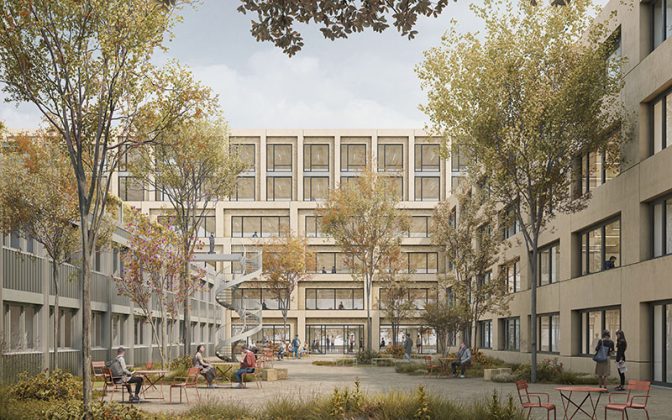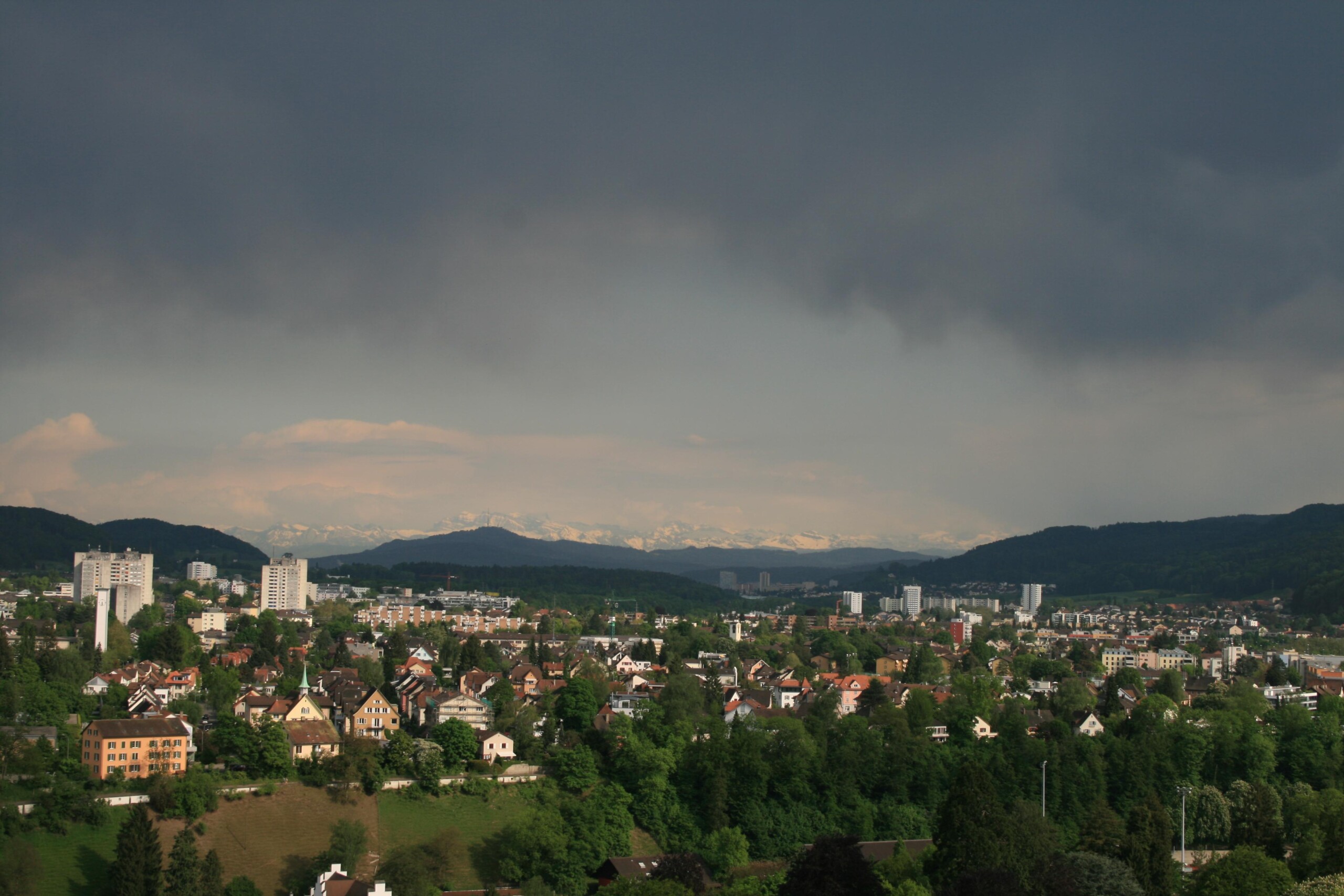
Wettingen has moved to the centre of an economic policy decision. The Aargau cantonal council wants to amend the structure plan in the Tägerhardächer area and thus create the planning conditions for a possible Hitachi Energy campus.
This is a big step. Because it is not just about a single building project. It is about the question of whether Aargau can retain and at the same time expand its industrial substance. In the best-case scenario, around 1000 existing jobs will remain in the canton and up to 2000 new jobs could be created.
Why Tägerhardächer
The location is no coincidence. Hitachi Energy is looking at several options for expanding its capacities and relocating current jobs. The Tägerhardächer area is one of the favoured options.
From a location promotion perspective, there are many arguments in favour of Wettingen. The site is located in the Zurich, Limmattal and Baden area, has good transport links and enables a coherent, expandable campus solution. It is also close to an existing cluster of companies from the energy sector. This increases the appeal of the location far beyond the municipal boundaries.
The price of progress
Wherever development becomes possible, conflicts arise. 10.7 hectares of settlement area would have to be designated for the project. The area is currently located in an agricultural area and is partially overlaid by a settlement separation belt.
This is precisely where the criticism arises. In the consultation process, the loss of cultivated land, the reduction of crop rotation areas, encroachment on the settlement separation belt and traffic issues were criticised in particular. Nevertheless, the cantonal government maintains that the project is appropriate and spatially harmonised from a cantonal perspective. At the same time, attempts should be made to upgrade agricultural land elsewhere so that the loss remains limited.
The region is thinking further ahead than the
factory buildingThedecisive factor now is whether growth and quality of life can go hand in hand. After all, a campus of this size not only has an impact on the labour market. It changes traffic flows, settlement areas and expectations of the infrastructure.
That is why accessibility should not only work for cars. Public transport as well as pedestrian and cycle connections should be designed in such a way that the impact on neighbouring communities remains as low as possible. This is more than just background music. It is a prerequisite for economic dynamism to be accepted regionally.
Nothing has been decided yet
The political will is visible. Wettingen and Baden Regio also support the amendment to the structure plan. However, the company has yet to make a final decision on the location. If it decides against Wettingen, the corresponding resolutions will become null and void.
This is the real message of this dossier. The future does not just fall from the sky. It must be planned, politically supported and regionally balanced. Wettingen now has the chance to prove just that.