Tag: CEO

  • SVIT Switzerland with new management

    SVIT Switzerland with new management

    With the handover of the chairmanship from Andreas Ingold to Michel Molinari, SVIT Switzerland has completed a significant generational change. Molinari, previously Vice President and CEO of BLKB Fund Management AG, is thus assuming responsibility for an association with over 2,600 members. At the same time, Cécile Berger-Meyer and David Zumsteg were elected to the presidency. Their predecessors, Andreas Ingold and Jean-Jacques Morard, were made honorary members for their many years of commitment.

    An association on the move
    2024 was an intensive year, with targeted political positioning, strategic projects such as the DACH cooperation and the tenancy law commentary. The successful new edition of “SVITPedia” and a high demand for training have made SVIT Switzerland a dynamic and adaptable organisation. The “eduQua” certification was renewed and training courses and examinations were successfully organised in all parts of the country.

    Strategic clarity and strong operational
    The positive development of the association over the past eight years is due to clear strategic decisions and the professionalisation of structures. The separation of strategy and operations, the introduction of a CEO model and the reorganisation of the Forum, Campus and Summit platforms have created a stable foundation. A strategic action plan for positioning has been developed and is currently being implemented. The aim is to further increase the visibility and effectiveness of the association.

    Political relevance strengthened
    The 2025 Delegates’ Meeting once again demonstrated the growing political relevance of SVIT Switzerland. The delegates approved a motion to no longer conclude sponsorship agreements with Swiss Marketplace Group AG in future. Current contracts will also be cancelled until they expire. The association is thus sending out a signal in favour of independence and clear representation of the industry’s interests.

    Visible, present, consistent
    With its new leadership and strengthened position, SVIT Switzerland aims to further expand its role as a leading professional and industry association. The three strategic pillars of training, politics and networking form the stable foundation for a future-orientated commitment. The Assembly of Delegates as part of the Swiss Real Estate Forum also provided the right stage for this in 2025, with inspiring impulses from personalities from politics, sport and business.

  • Beatrice Lifart tritt als neue CEO an

    Beatrice Lifart tritt als neue CEO an

    Since joining the company in 2000 as Head of Human Resources, Beatrice Lifart has steadily developed her career. She has filled her most recent position as Deputy CEO with her deep understanding of the organisation and her exceptional management skills. Under her leadership, Human Resources has focused heavily on driving employee development and advancement, which in turn has been the foundation for high customer satisfaction.

    As a member of the Executive Board and in her role as Deputy CEO, Lifart has made a decisive contribution to the company’s success. She has also demonstrated her ability to combine strategic foresight with a strong focus on customer orientation in various interim management positions, including as head of construction management. This experience makes her the ideal manager to continue positioning Livit successfully in a rapidly changing industry.

    Hermann Inglin, Chairman of the Board of Directors, emphasises Lifart’s significant influence on the company’s image: “Beatrice Lifart has made a significant contribution to Livit being perceived today as an innovative and future-oriented company. Her outstanding customer focus and strategic vision have set new standards in the industry.” With Beatrice Lifart at the helm, the Board of Directors is relying on an experienced manager who will ensure stability and quality in the further development of Livit. Her vision for the company, coupled with her commitment to innovation and customer satisfaction, promises a dynamic future for Livit.

  • New CEO Giuseppe Santagada at the Erne Group

    New CEO Giuseppe Santagada at the Erne Group

    A new chapter begins with the appointment of Giuseppe Santagada as Group CEO, who officially took up his role on 1 January 2024. Santagada, an experienced industrial engineer with an MBA from the University of St. Gallen and further studies at Harvard Business School, brings with him an impressive career ladder, most recently as Group COO and Delegate of the Board of Directors at Vebego, where he worked in Switzerland, Germany and Austria.

    As the new CEO, Santagada will play a key role in the further development of the company’s strategy. He plans to work closely with the fourth generation of the ERNE family, the Board of Directors and the Executive Board to strengthen the organisation along the value chain and align it even better with market requirements and customer needs.

    Daniel Erne, Chairman of the Board of Directors, commented favourably on the new appointment: “In Giuseppe Santagada, we have the ideal manager to ensure the continuity, success and strategic growth of our family business.” Santagada’s extensive experience and far-reaching network are seen as fundamental resources for the future development of the Group.

  • Resignation of CEO Raffael Brogna as of 30 June 2023 at Eiffage Suisse AG

    Resignation of CEO Raffael Brogna as of 30 June 2023 at Eiffage Suisse AG

    Raffael Brogna has played a decisive role in shaping the company over the last 12 years, first at Priora AG, and in particular over the last 5 years at Eiffage Suisse AG, and has firmly positioned the company in the Swiss market.

    As of 01 July 2023, the current Chairman of the Board of Directors, Denis Mathern, will now also assume the role of CEO of Eiffage Suisse AG. Raffael Brogna will continue to work for Eiffage Suisse AG as an advisor to the Board of Directors until he steps down at the end of March 2024.

    “On behalf of the Board of Directors, I would like to thank Raffael Brogna for his many years of strong commitment to Eiffage Suisse AG. Together with the Executive Board, he has done an outstanding job and led the company to become a permanent fixture in the construction services industry,” says Denis Mathern, VRP of Eiffage Suisse AG. “We are convinced that we can continue to develop the successful path that Raffael Brogna and the management have taken together, and we are looking to the future with a great deal of determination and optimism. Our goal is to realign ourselves throughout Switzerland, particularly in the area of project development, and to establish ourselves in the general and total contracting business.”

  • CEO Yonas Mulugeta Resignation at the end of September 2023

    CEO Yonas Mulugeta Resignation at the end of September 2023

    CSL Immobilien has already begun the search for a suitable successor to ensure a smooth transition and uninterrupted business operations.

    “On behalf of the Board of Directors, I would already like to thank Yonas Mulugeta for his many years of tireless commitment to CSL Immobilien. He has done an outstanding job together with the management and has made the company a leading player in the real estate industry,” says Markus Schawalder, VRP of CSL Immobilien. “We are confident that we will find a suitable successor who will further develop the company into the next phase on the successful path that Yonas Mulugeta has taken. Our goal is to continue to drive innovation and growth at CSL Properties.”

    Yonas Mulugeta will remain closely connected to the real estate industry after his retirement as an active entrepreneur and will take on new entrepreneurial challenges.

  • CEO leaves Flughafen Zürich AG

    CEO leaves Flughafen Zürich AG

    Flughafen Zürich AG is facing a change in its leadership: CEO Stephan Widrig is stepping down from his post at the end of April after 23 years with the company. According to a media release, he will take over as CEO of Allreal Holding AG from May 1, 2023. During his tenure at Flughafen Zürich AG, Widrig was in charge of real estate management and, as a member of the Executive Board, was responsible for all non-aviation business areas, including real estate. At Allreal, he succeeds Roger Herzog, who announced his resignation earlier in the day, according to a statement.

    “After almost 15 years on the executive board of Flughafen Zürich AG and in my ninth year as CEO, it seems sensible to me to pass on the management baton,” Widrig is quoted as saying. “The timing is favorable as all business units are in stable and competent hands, the pandemic is well overcome and the strategic focus for the next years is clear.”

    As Flughafen AG points out, the company has experienced strong growth phases under Widrig’s leadership. He said he successfully diversified the business model and led the airport “safely and economically independently through the historically unprecedented crisis in aviation caused by the Corona pandemic.”

    Chairman of the Board of Directors Andreas Schmid thanks Widrig for his “great, dedicated and long-standing commitment”. Flughafen AG now intends to initiate the process to identify a successor.

  • Velux Group appoints Lars Petersson as new CEO to succeed David Briggs who is retiring

    Velux Group appoints Lars Petersson as new CEO to succeed David Briggs who is retiring

    Lars Petersson comes from a position as President and CEO at Hempel, a global coatings company based in Denmark. Before Hempel, Lars Petersson held managerial positions at Inwido, a Swedish window and door manufacturer, and the French flooring manufacturer Tarkett. Since 2019, Lars Petersson has been a member of the Board of Directors at Dovista, which, like Velux, is owned by VKR Holding A/S.

    “Lars Petersson brings extensive experience and a strong track record from global manufacturing companies in related industries. Under his leadership, Hempel has successfully launched an ambitious growth strategy with a clear focus on customers and an equally strong commitment to providing leadership in sustainability. I am confident that in Lars Petersson we have found the right person to lead the further development of VELUX», says Jørgen Jensen, CEO of the VELUX Group.

    «I feel honored and happy that I have the opportunity to continue to lead the VELUX Group. Having worked in the building materials industry for two decades, I have always admired Velux for its strong brand and quality. The company has shaped an entire industry while maintaining a strong sense of social responsibility. I am very much looking forward to becoming part of VELUX and helping to achieve the ambitions outlined in the company’s recently launched strategy to grow the company while raising the bar of running a sustainable business,” says Lars Petersson. The future CEO is 53 years old and Swedish. He lives near Copenhagen with his wife Annica, with whom he has two adult children.

    David Briggs says goodbye to Velux and retires
    After five years at the helm of the Velux Group, David Briggs will step down as CEO in September. «David can look back on almost 30 years of successful career at Velux. Under his five-year leadership as CEO, the Velux success story has continued and accelerated. I regret that he is leaving us, but I respect his desire to spend more time with his family,” says VELUX Chairman Jørgen Jensen. “Together with the Board and a strong management team, David has developed an exciting strategy aimed at achieving significant growth by 2030 and becoming a true sustainability leader in the construction sector. We stick to the principles of this strategy», continues Jørgen Jensen.

    “It has been the greatest honor and privilege of my life to lead Velux and to represent this great company and all my excellent colleagues. Since 2018, we’ve achieved results we can all be proud of – results far beyond what many thought possible. And that is thanks to the commitment of my colleagues, but also to our partners, our suppliers and of course our customers,” says CEO David Briggs. “I firmly believe that the best is yet to come for Velux as set out in the corporate strategy that we launched in 2021 and which is already showing strong results. It’s hard to let go of something I love and believe in so much. But I feel the time is right for me and my family. With a strong Board of Directors backed by Velux’s incredibly supportive, long-term shareholders, I have no doubt that Velux will continue to grow and be probably the best building materials company in the world for many years to come.”

  • Gioia Deucher runs the InnHub La Punt

    Gioia Deucher runs the InnHub La Punt

    In the future, the Engadin should be more than an exclusive tourist destination. The InnHub in La Punt wants to enable Swiss and foreign companies to work intensively and creatively with their employees here, on a daily or weekly basis. A mixture of sports, health and educational offers as well as ten second homes should be available for this purpose.

    According to information on the project's website, the initiators expect construction costs of 52 million Swiss francs, half of which they will raise themselves. A quarter of the costs are to be covered by the sale of apartments and parking spaces, with the remainder being financed by banks. Thanks in part to this idea of combining tourism and modern forms of work, the Engadine was voted Digi-Tal 2021/2022 last year.

    With Gioia Deucher, the innovative coworking space has now found an internationally experienced boss, as the innovation diplomat writes on her LinkedIn page . Deucher was previously Head Startup and Innovation Services at Swissnex in San Francisco and thus represented the Swiss innovation landscape in Silicon Valley. She then set up the new Swissnex office in Brazil . Deucher studied international relations at the University of Geneva and at Tufts University in the US state of Massachusetts.

  • Michael Schiltknecht becomes the new CEO of Steiner AG

    Michael Schiltknecht becomes the new CEO of Steiner AG

    The real estate developer Steiner will be managed by Michael Schiltknecht as the new CEO. According to the company's press release , this will continue the transformation process that Steiner AG decided on in February 2011. At that time, Steiner decided to further develop the business model into a leading real estate company with the associated construction expertise. Schiltknecht succeeds Ajay Sirohi, who is leaving Steiner AG.

    In the 2021/22 financial year, which ended on March 31, 2022, the Steiner Group generated sales totaling CHF 763.6 million. According to a press release , operating earnings before interest and taxes reached an exceptionally high figure of CHF 49.7 million. Steiner was also able to acquire new development projects with a forecast market value upon completion totaling around CHF 1.5 billion in the year under review. This has increased the group's development portfolio to a volume of CHF 6.4 billion.

    Founded in 1915, the company is headquartered in Zurich and has branches in Basel, Bern, Lucerne, Tolochenaz VD and Geneva. According to the media release, the portfolio includes a wide range of projects in the areas of living, office, industry and logistics as well as own product innovations such as the brands Werkarena, Manufakt or Steiner Student Hotel. In French-speaking Switzerland, Steiner Construction is the market leader in the realization of real estate using the total/general contractor model. Steiner AG has created two new areas: Steiner Financial Initiatives for new investment solutions and Steiner Digital for digital collaboration platforms.

  • Women's power for the energy transition

    Women's power for the energy transition

    Im Energiesektor ist der Frauenanteil seit jeher gering, in Führungspositionen erst recht. Die Bedingungen sind für Frauen schwieriger als für Männer. Das beginnt schon bei der Ausbildung, denn Frauen trauen sich immer noch zu selten, mathematisch-naturwissenschaftliche oder technische Berufe zu ergreifen. Dabei bringen sie nicht weniger mathematisches oder technisches Verständnis mit, sind aber gleichzeitig stark am Gemeinwohl und an Innovationen interessiert.  

    Klimabewegung in weiblicher Hand 
    Eine gute Nachricht vorweg: Der Frauenanteil im Bereich der erneuerbaren Energien wächst stärker als im konventionellen Energiesektor. Ein möglicher Grund könnte das steigende Bewusstsein für den Klimawandel sein, denn schlussendlich ist weltweit die Klimabewegung weitgehend weiblich. Zudem geben Frauen als Grund für ihre Berufswahl häufig an, mit ihrer Tätigkeit etwas Sinnvolles tun zu wollen. Frauenpower ist also erwünscht: Denn es ist längst erwiesen, dass Unternehmen von einer vielfältigeren Belegschaft und einem gemischten Führungsteam nachhaltig profitieren.

    Doch wie sieht es eigentlich beim Energielösungsunternehmen Helion aus, dass in einer typischerweise Männer dominierten Branche tätig ist. Oder ist dem überhaupt so? Und wo genau sind die Frauen im Unternehmen zu finden? Wir haben nachgefragt: Derzeit machen Frauen nur 12 Prozent der Belegschaft aus und sind vor allem in den Bereichen Marketing, Öffentlichkeitsarbeit und Personalwesen anzutreffen. Aber nicht nur! Weitere Infos auf www.helion.ch News.

  • An important day for the energy transition in the canton of Lucerne

    An important day for the energy transition in the canton of Lucerne

    12 years ago, CKW subsidiary Steiner Energie built the last hydroelectric power station in the canton of Lucerne in Malters. Even then, CKW was intensively involved in the planning of the Waldemme power plant. A lot of water flowed down the Waldemme before the excavators could finally drive up and drive their shovels into the ground.

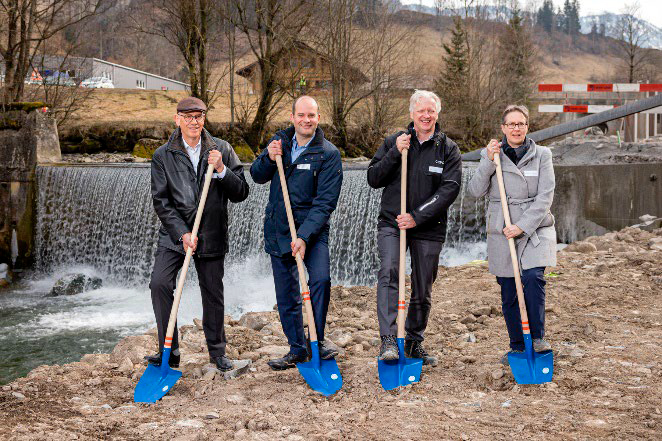
    Within a year, some of this water will be used to produce clean, renewable electricity. At today's ground-breaking ceremony in Flühli, government councilor Fabian Peter, head of the building, environment and economic department, expressed his delight: "With the new construction of this power plant, CKW is making another important contribution to achieving the energy and climate policy goals in the canton of Lucerne. »

    Expansion of renewable energies is urgently needed
    In his speech to more than 70 invited guests, CKW CEO Martin Schwab was primarily pleased that the power plant is finally being built. Because it was a long and rocky road. Schwab positively emphasized the great commitment in Entlebuch. "The region is a pioneer in using its own local energies." At the same time, Schwab warned: “We urgently need to expand the production of renewable energy in Switzerland. The corona pandemic and the war in Ukraine clearly show how dangerous strong dependencies on foreign countries can be, »said Schwab. Today things are progressing much too slowly in Switzerland. “This is primarily due to the long approval process. The Waldemme power plant is the best example of this: it took more than 17 years from the first plans to the groundbreaking.»

    "We want to move forward and make a significant contribution to the energy transition in Switzerland – in hydropower, wind power, solar energy and other renewable technologies. But the resistance is often great. This is paradoxical, as we all want the energy transition and need more renewable energies for it."

    Electricity for 1500 households
    The roughly one-year construction phase begins with the ground-breaking ceremony. The water intake is at the hamlet of Matzenbach in Flühli. From this location, part of the water from the Waldemme is routed via a 2.1-kilometer-long underground pressure line to the power plant headquarters, where ecological electricity is produced. The power plant control center is located directly in front of the Lammschlucht at the Chrutacher Bridge. Immediately afterwards, the water is fed back into the natural course of the Waldemme and flows through the Lamm Gorge. The power plant has an output of 1.4 megawatts and produces an average of 6.5 GWh of electricity. This means that clean electricity can be generated from mid-2023, which will cover the annual needs of around 1,500 average four-person households. CKW is investing CHF 12.4 million in the power plant.

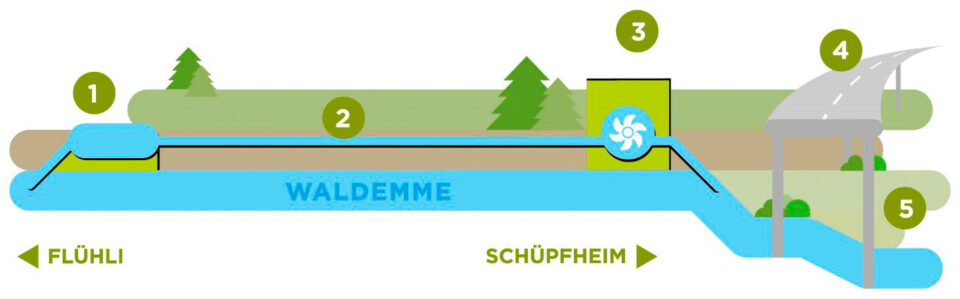
    In the hamlet of Matzenbach, the water intake (1) takes part of the water from the Waldemme. In the approximately two-kilometer-long underground pressure line (2), the water is routed to the power plant center (3) at the Chrutacher Bridge (4), where it drives a turbine and generates electricity. Directly at the headquarters, the water is fed back into the natural course of the Waldemme and flows through the Lamm Gorge (5), which is untouched by the project.
    Breaking ground at the Waldemme: (from left) Hans Lipp, Flühli municipal mayor, Fabian Peter, member of the cantonal government and head of the building, environmental and economic departments of the canton of Lucerne, Martin Schwab, CEO of CKW and Hella Schnider-Kretzmähr, Flühli municipal president.
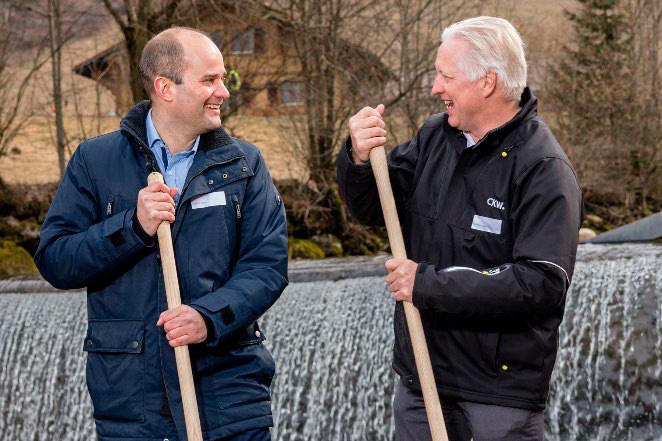
    Happy about the start of construction: Fabian Peter, member of the government and head of the building, environment and economic department of the canton of Lucerne, and Martin Schwab, CEO of CKW.

    About CKW: The CKW Group is a leading Swiss provider of integrated energy and building technology solutions. For more than 125 years, the company has been supplying electricity to over 200,000 end customers in the cantons of Lucerne, Schwyz and Uri. In addition, there are innovative products and services throughout Switzerland in the fields of connectivity & IT infrastructure, electrical engineering, energy technology, IT & communication and security. The CKW Group employs over 2,100 people. With around 350 apprentices in 14 professions, it is the largest private-sector training company in Central Switzerland.
    In the 2020/21 financial year, CKW generated sales of CHF 916 million. With 81 percent of the shares, Axpo Holding AG is the majority shareholder of CKW.
    Further information at www.ckw.ch

  • «When it comes to energy, the construction and real estate industry must reinvent itself»

    «When it comes to energy, the construction and real estate industry must reinvent itself»

    Zur Person
    Pascal Bärtschi,
    Bauingenieur ETH, ist
    Vize-Präsident von
    Entwicklung Schweiz und seit 2015 CEO der Losinger Marazzi AG. Der 52-Jährige leitete zuvor bei Losinger
    Marazzi die Region Mitte (Bern-Freiburg-Basel).

    Wo sieht der Branchenverband Entwicklung Schweiz seine Kernaufgaben?
    Wir vertreten Unternehmen, die in der Lage sind, Gesamtleistungen zu übernehmen. Also solche, die von der Projektentwicklung bis und mit Realisierung alles abdecken können. Unsere Hauptaufgabe sehen wir darin, mit unseren Kunden, Investoren, den zuständigen Behörden wie auch mit politischen Verantwortlichen übergeordnete Themen wie etwa Verdichtung und Raumplanung auf einer entsprechenden Flughöhe zu besprechen. Unsere Mitglieder erhalten so die Möglichkeit, via Entwicklung Schweiz mit den zuständigen Personen in Dialog zu treten. Darüber hinaus haben wir als Verband verschiedene Positionspapiere verfasst – derzeit entsteht zum Beispiel gerade ein Positionspapier zur Frage, was man unter Qualität eines Bauprojekts versteht.

    Von welchen Vorteilen profitieren Ihre Mitglieder?
    Wir organisieren für unsere Mitglieder und assoziierte Partner regelmässig Anlässe, bei denen sie sich mit Stakeholdern wie Politikern oder Investoren austauschen können. Darüber hinaus ist es deutlich einfacher als Verband, Gespräche zu übergeordneten Themen mit Kantonen oder auch Instanzen wie zum Beispiel dem Bundesamt für Bauten und Logistik (BBL) zu führen, als wenn dies jedes Mitglied für sich tun müsste. Gerade bei regulatorischen Themen profitieren unsere Mitglieder von der direkten Schnittstelle zur Politik, die wir dank unserem Präsidenten, Ständerat Martin Schmid (FDP), haben. Er ist Rechtsanwalt und somit nicht in der Branche tätig, was wir als weiteren Vorteil sehen.

    Welchen Einfluss hat der Verband in der Schweiz und insbesondere auch in Bundes-Bern?
    Wir bieten den Ämtern, Investoren und unseren Kunden eine bewährte Schnittstelle. Ich bewerte unseren Einfluss als gut. Wir haben uns als Gesprächspartner der grossen Instanzen sehr gut etablieren können. Die Immobilienbranche ist dezentralisiert aufgestellt. Für uns ist es deshalb wichtig, dass wir nicht nur in Bern Gehör finden, sondern auch bei den Kantonen und Gemeinden. Denn ein Projekt wird von einer Gemeinde oder einem Kanton bewilligt. Dank unserem Präsidenten und den Kontakten der Geschäftsstelle haben wir einen guten Draht zu Bundes-Bern, was natürlich hilft, wenn es um Themen wie etwa das Raumplanungsgesetz geht.

    Braucht es so einen Verband zwingend für eine erfolgreiche Zukunft der Baubranche?
    Ich würde sagen, es ist wichtig und notwendig, dass ein solcher Verband existiert. Die Zahl der Schweizer Gesamtdienstleister in der Immobilienbranche ist überschaubar. Unser Verband kann diese Unternehmen optimal auf den verschiedenen Ebenen vertreten.

    Welche Verantwortung nimmt Entwicklung Schweiz in Bezug auf die Wohn- und Lebensqualität bei Bauprojekten wahr?
    Wir setzen unseren Mitgliedern keine Rahmenbedingungen. Die Wahrnehmung der Wohnqualität ist jedoch auf jeden Fall gegeben, da wir uns als Entwicklung Schweiz mit damit zusammenhängenden Themen wie Lärmschutz, Verdichtung nach innen und Raumplanung intensiv auseinandersetzen. Aber bei uns ist jedes Mitglied selbst dafür verantwortlich, die Projekte entsprechend zu entwickeln und die nötige Qualität zu liefern. Man darf nicht vergessen, dass sich die Mitglieder in einer Wettbewerbssituation befinden.

    «
    CO2-arme
    Baumaterialien, flexiblere
    Umnutzungen
    »

    Welche Bedeutung hat die Energiestrategie 2050 für den Verband?
    Die Energiestrategie hat eine grosse Bedeutung für uns. Wir versuchen, Partner und Kunden dafür zu sensibilisieren. Der CO2-Verbrauch in der Immobilien- und Baubranche ist immer noch relativ hoch. Der eine Teil fällt beim Bau an, der andere während des Lebenszyklus einer Immobilie. Geht man von einem Lebenszyklus einer Liegenschaft von 60 Jahren aus, haben Entscheidungen, die heute für einen Neubau getroffen werden, langfristige Auswirkungen. In diesem Zusammenhang wird sich die Immobilien- und Baubranche neu erfinden müssen.

    Wie meinen Sie das?
    Vor zehn Jahren fielen etwa 50 Prozent der CO2-Emmissionen bei der Herstellung der Baumaterialien sowie in der Bauphase selbst an. Die anderen 50 Prozent fielen auf den Unterhalt einer Liegenschaft. Heute sind wir, was Unterhalt und Betrieb eines Gebäudes betrifft, bei etwa einem Drittel des CO2-Ausstosses; bei der Herstellung der Baumaterialien sowie dem Bau selber bei zwei Dritteln. Wir müssen uns Gedanken machen, wie wir den CO2-Fussbadruck einer Immobilie reduzieren können. Eine Lösung besteht darin, dass man wirklich nur die für ein Gebäude notwendige Fläche bebaut. Ein anderer Ansatz ist die Wahl der Materialien – heute gibt es bereits CO2-armen Beton oder die Möglichkeit des umweltfreundlichen Holzbaus. Ausserdem müssen bestehende Strukturen später umgenutzt werden können. Schauen wir uns die Investitionen in der Immobilienbranche an, fallen 99 Prozent auf Neubauten und nur 1 Prozent geht in Sanierungen. Hier sehen wir Handlungsbedarf.

    Wie hat die Bau- und Immobilienbranche die Pandemie bis jetzt bewältigt?
    Die Baubranche ist relativ gut durchgekommen – es gab wenig Umsatzeinbussen, da die Baustellen mit Ausnahme des Kantons Genf auch während des Lockdowns offengeblieben sind. Etwas schwieriger gestaltete sich die Immobilienentwicklung. Die Entwicklung eines Projekts startet in der Regel mit einem Quartierplan und einer Baubewilligung. Die Pandemie hat vieles ausgebremst. So mussten Gemeindeversammlungen, bei denen beispielsweise über ein Vorhaben abgestimmt werden sollte, häufig verschoben werden. Damit verschiebt sich automatisch auch das Projekt. Bei der Bearbeitung der Baugesuchdossiers hat man die Verlagerung zur Arbeit im Home-Office gespürt: Der Austausch wurde erschwert; es hat alles etwas mehr Zeit in Anspruch genommen, was wiederum zu Verzögerungen geführt hat.

    Zeichnet sich beim Arbeitsleben durch die Pandemie eine Veränderung ab?
    Die Pandemie hat Tendenzen, die sich schon vorher abgezeichnet haben, beschleunigt. Ein Beispiel hierfür ist die pro Person weniger benötigte Bürofläche. Bei der Konzeption von Wohnungen dürfte die Berücksichtigung des immer öfter benötigten Home-Office langfristig Einfluss haben. Wobei dies nicht zwingend in einem zusätzlichen Arbeitszimmer in der Wohnung selber resultieren muss. Ich kann mir gut vorstellen, dass man innerhalb eines Quartiers verschiedene kleine Co-Working-Spaces entwickelt. Diese könnten auch Mischnutzungen aufweisen, also beispielsweise über Mittag als Restaurant fungieren.

    Wohnen die Menschen in der Romandie anders als in der Deutschschweiz?
    Die Nachhaltigkeitsaspekte werden zurzeit in der Romandie noch weniger wahrgenommen als in der Deutschschweiz. Ich vermute, das kommt daher, dass die grünen Tendenzen zunächst aus Deutschland kamen und somit zuerst die Deutschschweiz erreicht haben. Auch im Bereich des Öffentlichen Verkehrs hat die Deutschschweiz einen gewissen Vorsprung – wobei die Romandie hier am Aufholen ist.

    Welche Meilensteine hat Entwicklung Schweiz in den letzten Jahren erreicht?
    Der wichtigste Punkt ist sicher, dass wir heute etablierte Ansprechpartner für übergeordnete Themen auf Stufe Kantone und Bund sind.
  • Anne-Marie Loeillet becomes the new head of Allreal Romandie

    Anne-Marie Loeillet becomes the new head of Allreal Romandie

    Anne-Marie Loeillet (CH, *1961) graduated from the Languedoc-Roussillon University of Applied Sciences and holds a master's degree in urban planning from the University of Stuttgart. She has worked successfully for various large companies and the public sector in Germany, France and Switzerland over the past 20 years.

    Since 2011, as CEO of PCM Opérateur Urbain SA, she has been the driving force behind the development and realization of the Le Quartier de l'Etang residential and business district in Geneva, with an investment volume of around CHF 1.4 billion. Anne-Marie Loeillet takes over the role from Olivier Plan, who sold various real estate companies belonging to Immosynergies Holding Sàrl to Allreal on October 15, 2021. In addition to a first-class portfolio of investment properties with a value of around CHF 500 million and additional development properties with a potential investment volume of more than CHF 700 million, the company also acquired the general contractor Roof SA.

  • Living more beautifully and energy-efficiently

    Living more beautifully and energy-efficiently

    SwissAlp Immobilien AG is a Swiss real estate company based in Buchs SG: “Our thoughts and actions are geared towards identifying and implementing the potential of properties, real estate projects and properties. From this we generate growth: for our investors and for us, ”says Ardian Emini, CEO of SwissAlp Immobilien AG. «Our main activity is value-added portfolio management. We acquire properties with very high quality requirements in selected locations in German-speaking Switzerland. Renovation properties are acquired if their value can be increased significantly through renovation, new construction or renovation. We market, rent and manage our properties ourselves. "

    SwissAlp Immobilien AG has specialized in the development of a solid real estate portfolio: "Thanks to our know-how, our many years of experience and our professionalism, we offer our investors the best possible security to achieve their return targets," says Emini. "Thanks to our professionally managed property portfolios, we enable our investors to participate in all of German-speaking Switzerland."

    A prime example is the new building project by SwissAlp Immobilien AG in a central location in Sargans SG. Within walking distance of the train station, 22 high-quality rental apartments will soon be built: “The apartment building impresses with its modern and exciting architecture, combined with the concept of sustainability. Both a photovoltaic system and efficient energy management are of course part of this concept. The parking garage and bike room are equipped with charging stations for electric cars and bicycles from the start. ”

    The apartment mix of 2.5 to 4.5 room apartments appeals to singles, young couples and families alike. Shops and schools are in the immediate vicinity within walking distance. According to Emini, the apartments are characterized by a high-quality finish and leave nothing to be desired: "Each apartment has a small reduit, and the larger apartments have a master bedroom with its own bathroom." With this project, architects and specialist planners had the opportunity to create a special building: for today, for tomorrow and for eternity!

  • Karsten Hell is leaving the Steiner Group

    Karsten Hell is leaving the Steiner Group

    Steiner AG initiated a company transformation in spring 2021, the Zurich-based general and general contractor explains in a press release . The business model was geared towards the further expansion of the company's own project portfolio and the addition of participation models and investment vehicles such as the Steiner Investment Foundation. In addition, Steiner wants to launch digital products for the real estate market in the future.

    As part of the company's transformation, Karsten Hell offered the board of directors his resignation as CEO, Steiner informs. Hell joined Steiner in 2013 as Chief Operating Officer (COO) and has headed the company as CEO since July 2018. The outgoing CEO will remain with the company as an advisor to the board of directors, writes Steiner.

    Hell's successor will be Ajay Sirohi with immediate effect. The graduate economist and mathematician joined the Steiner Group in 2011 as Chief Financial Officer. Sirohi previously held the same position for various multinational companies.

    With Michael Schiltknecht , Sirohi will also join Steiner AG's previous Head of Real Estate Development as Co-CEO. Schiltknecht joined Steiner in 2007 as head of real estate development. The two new company directors should “continue to pursue the specified strategy and ensure the sustainable development of the company”, says the announcement.

  • Thomas Casata becomes the new CEO of PLAZZA

    Thomas Casata becomes the new CEO of PLAZZA

    Thomas Casata (1965, Swiss citizen) has been CFO for PLAZZA AG since 2016. He studied business administration at the University of Stuttgart and has many years of extensive experience in the financial sector. Among other things, he worked as a partner for EJ Capital AG and for around 13 years was CFO and member of the executive board of ExecuJet Aviation Group in Zurich, Ascom in Bern and Esec in Cham.

    For PLAZZA, the appointment of Thomas Casata as CEO means the continuation of the very successful and proven team of management. As CFO, he quickly familiarized himself with the specifics of the real estate sector, professionally managed the finance department and developed an exemplary basis for decision-making for the management and board of directors. In his new role he will play an even more important role in the further development of PLAZZA.

    Thomas Casata says: “I am delighted with the additional trust that the Board of Directors has placed in my work and in myself. PLAZZA is excellently positioned and has a promising pipeline. In my new leadership role, I would like to consistently pursue this path to success together with my team. "


    Ralph Siegle's tasks in the real estate area will in future be carried out by a real estate / portfolio manager as a member of the three-person management team. This position will be created as of January 1, 2022 as part of the succession plan. The Board of Directors has already initiated the relevant search.