Tag: CO2-Emissionen

  • EMPA wins Building Award 2025

    EMPA wins Building Award 2025

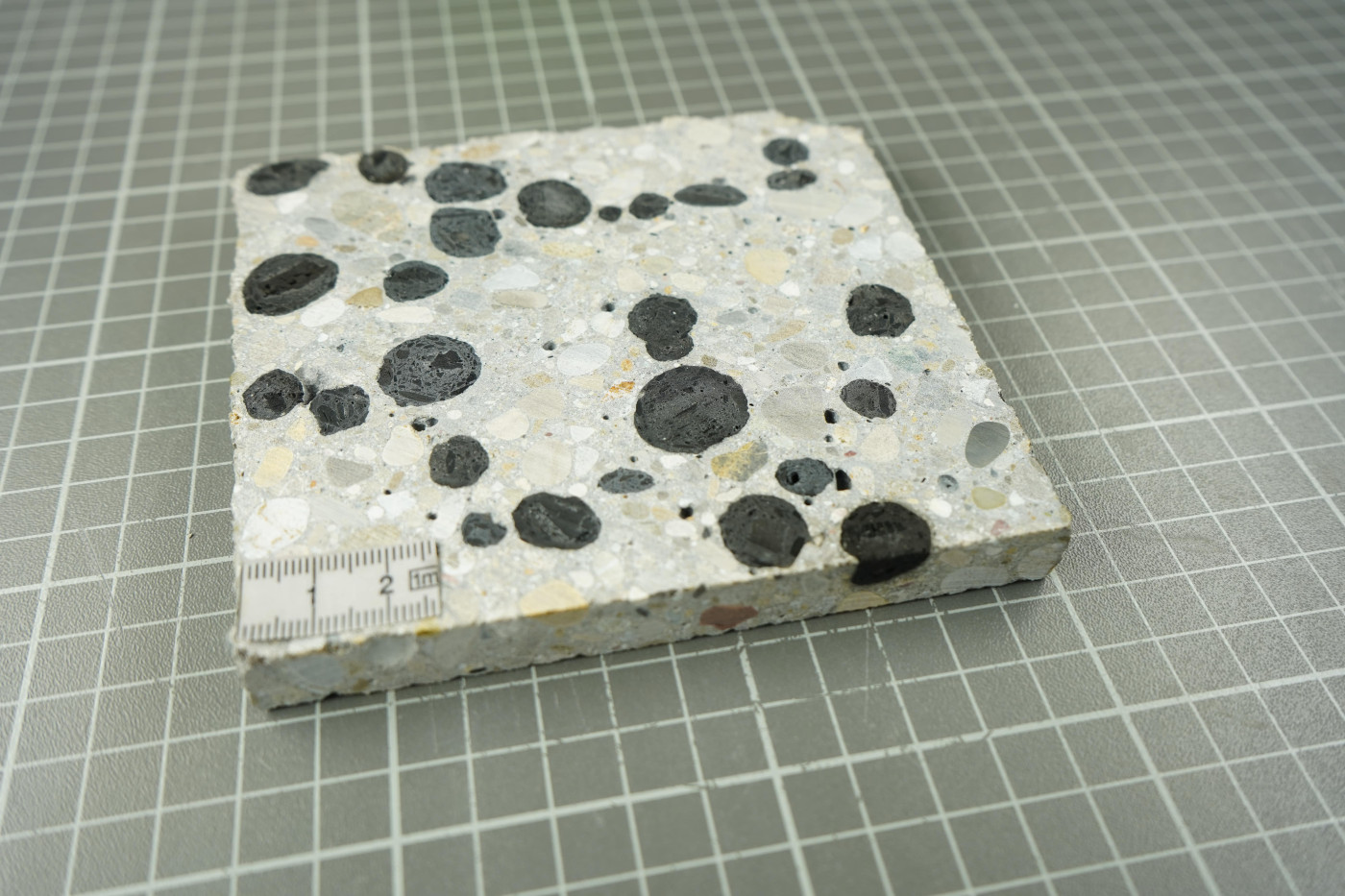
    Cement production accounts for around 8 per cent of global CO₂ emissions, a huge lever for climate protection. This is precisely where Empa comes in. With CO₂-storing concrete, to which specially developed carbon pellets made from biochar are added. These replace part of the conventional aggregate. The trick is that the pellets absorb CO₂ and can act as a permanent carbon sink without negatively affecting the building material properties. This makes the concrete not only climate-neutral, but also potentially CO₂-negative, while remaining suitable for practical use in building and infrastructure construction.

    Outstanding engineering achievement with prospects
    Empa was honoured with the Building Award in the “Research, Development, Start-ups” category for this innovation at the end of June 2025. The most important prize for civil engineering in Switzerland. The award ceremony at the KKL Lucerne honoured outstanding projects that bring science and practice together. Empa impressed the jury with a solution that has the potential to significantly improve the carbon footprint of entire construction projects with a view to industrial feasibility.

    Pilot project already planned
    The Empa team led by Pietro Lura and Mateusz Wyrzykowski is already working with partners to further develop the CO₂-negative pellets for market use. Initial applications are in preparation, including in the NEST unit “Beyond Zero”, a module of the experimental research building of Empa and Eawag. There, CO₂-reduced and CO₂-negative building materials are tested under real conditions, which further emphasises the practical relevance of the research.

    CO₂ as a raw material of the future
    Concrete innovation is part of a broader strategy. With the “Mining the Atmosphere” research initiative, Empa is pursuing a visionary goal of transforming the economy towards a CO₂-based material cycle. The concept is to capture CO₂ directly from the atmosphere and convert it into chemical raw materials such as methane or methanol. These in turn replace fossil raw materials in the production of building materials or energy sources. At the end of their life cycle, the products are to be bound in special storage sites, a long-term storage facility for carbon.

    Foresight for construction, energy and the economy
    The approach extends far beyond the construction industry. In future, synthetic methane could be used to overcome seasonal energy imbalances and replace CO₂-intensive materials. The prerequisite is a close interlinking of materials research, process development and economic scalability. In addition to technological progress, Empa is therefore also calling for regulatory framework conditions that make CO₂ capture economically attractive.

    Innovative strength as a lever for transformation
    Empa’s award marks more than just a scientific success. It symbolises change in the construction industry. CO₂-storing materials are no longer a distant vision, but concrete tools for the construction turnaround. This could transform the industry from a problem creator to part of the solution and help buildings to actively stabilise the climate in the future.

  • Life cycle assessment calculator supports sustainable building

    Life cycle assessment calculator supports sustainable building

    The environmental product declarations (EPD) in accordance with SN EN 15804 make it possible to transparently present the ecological impact of a building material over its entire life cycle. This provides building owners with a sound basis for making decisions on sustainable construction that goes beyond individual environmental parameters and allows a comprehensive assessment.

    Baustoff Kreislauf Schweiz provides its members with independently verified average EPDs for various types of concrete and aggregates. This data forms a reliable basis for sustainable construction projects.

    Life cycle assessment calculator as a digital tool
    An industry-specific life cycle assessment calculator has been developed to calculate CO₂ emissions, energy consumption and other environmental indicators. This verified calculation tool offers the construction industry a practical way to determine and optimise environmental product declarations.

    The online tool at oekobilanz-rechner.ch enables an orientating analysis, but does not replace a complete EPD preparation. On request, the data entered can be further processed to create an officially verified environmental product declaration.

    Transparency and optimisation for the construction industry
    The life cycle assessment calculator provides the construction industry with a valuable tool for making sustainable material decisions based on data. By optimising the recording and evaluation of environmental impacts, the tool contributes to reducing the ecological footprint in the construction industry and supports a resource-conserving circular economy.

  • Climate Charter Zug : Support for SMEs in the canton of Zug

    Climate Charter Zug : Support for SMEs in the canton of Zug

    Around 50% of CO2 emissions in the canton of Zug come from the economy, which emphasises the urgent need for action in this area. The Zug Chamber of Commerce, the WERZ Institute (OST), the Technology Forum Zug and the Switzerland Innovation Park Central have founded the Climate Charter Zug together with the Canton of Zug to support SMEs in particular in implementing climate-friendly and economical measures.

    Consultancy, CO2 footprint and measures
    The advisory services offered by the Climate Charter provide support and tools for recognising and reducing CO2 emissions in your own company. The canton of Zug covers 50% of the consultancy costs and has pledged CHF 1.6 million for this, around 60 per cent of the budget. The remaining funds come from the private sector. The initiative’s office, based at the Zug Environmental Institute WERZ, offers expertise and advice, from energy savings and emission reductions to practical solutions for specific challenges in companies.

    Climate protection as a locational advantage
    Climate protection has long been more than just a trend – it is becoming an important advantage for companies and locations. The Climate Charter Zug supports SMEs in reducing emissions and setting sustainable standards. At the same time, a growing charter community is emerging in which committed Zug companies can exchange experiences and learn from each other. The willingness to invest in climate-friendly innovations strengthens the competitiveness of the company and the canton in the long term.

    Concrete support for SMEs
    Alex Beck, co-leader of the initiative, emphasises: “As a business community, we have a duty,
    to create an intact environment for future generations.” The Climate Charter provides companies that want to reduce their CO2 emissions with customised and practical solutions – from sustainable heating systems to the provision of solar power for e-charging stations.

    Sustainable investments for a climate-friendly future
    As part of the Klima Charta Zug, companies fulfil the increasing requirements in climate protection and position themselves as responsible players. Alex Beck emphasises that the exemplary effect of individual companies creates a “momentum of its own” that has an impact beyond the company itself. The pioneering role in climate protection promotes a culture of commitment that enables sustainable development for the canton of Zug.

  • Sustainable circular economy in the construction industry

    Sustainable circular economy in the construction industry

    One of the key challenges facing the construction industry is the reduction of CO2 emissions. By decarbonising processes and procedures in the gravel, concrete and recycling industry, companies can make an important contribution to sustainability. The autumn event offers an industry roadmap to help companies identify and implement sensible measures to reduce emissions.

    Optimising concrete as a building material for sustainable construction projects
    Concrete is still one of the most widely used building materials in the world. However, sustainability also plays a decisive role here. The autumn event will show how the sustainability properties of concrete can be optimised and used in a targeted manner. At the end of a building project, the question arises as to how materials can be reused. Options such as renovation, refurbishment or recycling offer sustainable solutions, which will be discussed at the event.

    Pollutant control and separation as the basis of the circular economy
    A successful circular economy requires the targeted separation and control of pollutants. This begins with the planning of a construction project and continues with material treatment and disposal. At the autumn event, the key aspects of pollutant separation will be explained, which are essential for achieving sustainable results in dismantling projects.

    Dealing with persistent substances such as PFAS
    Per- and polyfluorinated alkyl compounds (PFAS) are a group of persistent substances that are increasingly becoming the focus of environmental research. These substances are ubiquitous and pose a particular challenge in the circular economy. The autumn event will provide insights into the possibilities and limitations of dealing with PFAS and highlight solutions that can be implemented in practice.

    Innovative decarbonisation projects in practice
    A highlight of the autumn event is the presentation of the world’s largest electric melting furnace for rock wool. This innovative project shows how decarbonisation is implemented in practice and what potential lies in the production of stone wool. Experts will gain practical insights into the technical developments and their contribution to a sustainable circular economy.

  • Greencity Vergé sets new standards in sustainability

    Greencity Vergé sets new standards in sustainability

    Vergé is more than just a residential project, it is a response to the pressing issues of urban coexistence and ecological responsibility. Located in the south of Zurich on a former industrial site, Vergé stands for the transition to a new understanding of housing that both takes into account the needs of its older residents and actively contributes to the quality of urban life.

    Vergé’s design combines modern architecture with ecological sustainability. By using renewable and lightweight materials, the project not only sets design accents, but also makes an important contribution to reducing the ecological footprint. The design of the inner courtyard as a social meeting place and the careful selection of planting promote biodiversity and offer residents a place of retreat in harmony with nature.

    An often underestimated lever lies in the choice of materials for the interior walls. According to Lennart Rogenhofer, Chief Climate Officer at Losinger Marazzi AG, using non-load-bearing interior walls made of lightweight construction instead of concrete can lead to a reduction in CO2 emissions of around 50%. Similar savings can be achieved if a wooden façade is used instead of a concrete and plaster façade. This is in line with the aim of using sustainable and minimally processed raw materials. Losinger Marazzi has also decided to use CO2-reduced concrete in its projects as far as possible. The reduction in grey emissions with a slimmer supporting structure, which minimises the amount of concrete by optimising the slab thicknesses and column grids, is difficult to quantify. Rogenhofer explains: “This is because no ‘non-optimised’ project exists as a comparison.”. Greencity, with the last building site Vergé, impressively demonstrates that the property sector plays a key role in achieving the climate targets. Through the use of heat recovery technologies and integration into the local heating network, the aim is to achieve a largely autonomous energy supply, with certification in accordance with the SNBS Gold Standard.

    By focussing on sustainable and energy-efficient construction, not only can the quality of life of the residents be improved, but a decisive step towards a more sustainable future can also be taken.

    The project is being built by Losinger Marazzi, which has positioned itself as a pioneer in sustainability in the property and construction industry for almost 20 years and is consistently implementing its climate strategy, which follows the strategy of its parent company Bouygues Construction. The company has been SBTi certified since the end of 2023 and remains a leader in sustainability. This certification confirms that the company’s own CO2 reduction targets for direct and indirect corporate emissions (incl. Scope 3) have been calculated in accordance with international standards (GHG Protocol) and are in line with the Paris climate targets. An external, independent auditing company also verifies that the certified companies achieve their targets not through CO2 offsetting, but through actual CO2 reduction. For this reason, a CO2 reduction pathway was already drawn up in 2021 to guide strategic decisions.

  • JURA ECO3 – the visibly sustainable cement

    JURA ECO3 – the visibly sustainable cement

    Clinker is the most important component of cement and consists of ground limestone and marl, which is fired at 1450° Celsius. The carbon from the limestone is released into the atmosphere during the burning process. This accounts for around two thirds of CO2 emissions per tonne of clinker. Some cement manufacturers replace clinker with granulated blast furnace slag or fly ash in order to reduce CO2 emissions. However, these materials are available in reduced quantities or have to be imported.

    “In our latest cement JURA ECO3, we are replacing a significant proportion of the clinker with clay,” explains Emanuel Meyer, Head of the Technical Competence Centre TCC of the JURA Materials Group. “Clay is fired at half the temperature of clinker and generates two thirds less CO2 emissions. We extract the clay from our own clay pit. JURA ECO3 cement also contains the least grey energy compared to all other Swiss cements. If a concrete is produced with JURA ECO3 cement, the total CO2 emissions per m3 of concrete are approx. 20 % lower compared to building construction concretes with Portland limestone cement.

    Certified and tested
    JURA ECO3 is the only CEM II/C-M (Q-LL) cement approved in Switzerland with strength class 42.5 N, externally tested and certified in accordance with
    SN EN 197-5. It is approved for building construction (concrete types A-C). “The product meets the growing demand for sustainable solutions,” explains Ralf Schumann, Commercial Director Cement of the JURA Materials Group, “whether from architects or investors such as cities and municipalities, pension funds and insurance companies, for whom the carbon footprint of a construction project is playing an increasingly important role. Thanks to JURA ECO3, they can significantly improve this.”

    JURA ECO3 cement is certified by ecobau as an eco1 product. It is suitable for Minergie (A-/P-)-ECO projects and fulfils the 1st priority ecoBKP/ecoDevis. With its warm earthy colour, it also sets a visual example for sustainable construction. The JURA ECO3 cement will soon be available in the KBOB* calculator. This can be used to calculate the environmental impact of one m³ of concrete of your choice.

    *KBOB = Coordination Conference of the Construction and Property Bodies of Public Building Owners

    In addition to a small CO2 footprint, concrete made from JURA ECO3 cement with calcined clay has a warmer colour and also sets a visual example for sustainable construction. ECAP construction site, Couvet (zVG)

  • NEST-Projekt setzt auf CO2-Speicherung in Gebäuden

    NEST-Projekt setzt auf CO2-Speicherung in Gebäuden

    In der Schweiz ist der Bausektor für rund 28% der CO2-Emissionen verantwortlich. Angesichts dieses hohen Anteils rückt die Idee, Gebäude als Kohlenstoffsenken zu nutzen, in den Fokus der Forschung. Die neue Empa-Initiative „Mining the Atmosphere“ zielt darauf ab, CO2 aus der Atmosphäre in Baustoffen zu binden und langfristig zu speichern. Das Projekt „Beyond Zero“ im NEST soll bis 2026 demonstrieren, wie solche Gebäude realisiert und betrieben werden können.

    Bestehende Technologien wie emissionsarmer Beton oder kohlenstoffnegative Isolationsmaterialien bieten bereits vielversprechende Ansätze. Reto Largo, Geschäftsführer von NEST, betont jedoch, dass das Ziel über das Erreichen einer Netto-Null-Bilanz hinausgeht. Die Vision ist es, Gebäude als effektive CO2-Senken zu nutzen. Gerade bei mineralischen Baustoffen wie Beton, einem der meistverwendeten Materialien, wird ein enormes Potenzial gesehen.

    Für die Entwicklung und den Einsatz neuer CO2-negativer Baumaterialien ist eine enge Zusammenarbeit verschiedener Experten erforderlich. Neben den Empa-Laboren unter der Leitung von Mateusz Wyrzykowski, Gruppenleiter Betontechnologie, wird das NEST-Team auch vom Architekturbüro OOS unterstützt. Andreas Derrer, Gründungspartner von OOS, hebt die Bedeutung realer Bauvorhaben hervor, die eine ganzheitliche CO2-Bilanzierung und Potentialanalyse ermöglichen. „Beyond Zero“ soll Antworten auf die Frage geben, ob und wie Gebäude zukünftig zur Senkung des CO2-Gehalts in der Atmosphäre beitragen können. Dieses Projekt markiert einen signifikanten Schritt in der Entwicklung nachhaltiger Baukonzepte und könnte weitreichende Implikationen für die Immobilienbranche haben.

  • Ennetsee heating network starts work

    Ennetsee heating network starts work

    With the opening of the transport pipeline between Perlen and Rotkreuz, WWZ has put the first section of its Ennetsee heating network into operation. “From now on, waste heat from the Renergia waste incineration plant (KVA) in Perlen will flow into the Rotkreuz distribution network and supply the first properties in the municipality with regional, environmentally friendly and CO2-neutral energy for heating and hot water,” explains the Zug-based energy, telecommunications and water supplier in a corresponding press release.

    Once completed, the Ennetsee heating network will be able to supply not only Rotkreuz but also the village of Holzhäusern, which belongs to Risch ZG, the Bösch area in the municipality of Hünenberg ZG, Hünenberg See and Cham with waste heat from the Renergia waste incineration plant. WWZ expects that the heat network will then prevent more than 12,000 tonnes of CO2 emissions annually. The company is currently working on further district heating pipelines in Rotkreuz and on the next section of the main transport pipeline from the waste incineration plant to Cham.

  • NEST data center helps with heating

    NEST data center helps with heating

    The ECO-Qube project examines how the electrical and thermal worlds can be brought together with IT infrastructure. For this purpose, the waste heat potential of micro data centers for building heating is to be examined. The field tests are taking place in the newly installed data center in Empa ‘s NEST research building and at two other locations in Turkey and the Netherlands.

    ECO-Qube is designed for three years. After that, the team wants to provide guidelines for planners and operators of buildings. The project is supported by the EU funding program Horizon 2020. It brings together research and industry partners from Switzerland, Turkey, Spain, Germany, Sweden and the Netherlands. “Our goal is to reduce both the energy requirements and the CO2 emissions of small data centers by a fifth,” says Çağatay Yılmaz, Innovation Manager at the Turkish IT solution provider Lande and project manager of ECO-Qube, in an Empa press release quoted.

    With the help of big data structures and artificial intelligence, sensor data from the individual IT components is accumulated and combined with air flow simulations for precise cooling. At the same time, the computing loads would be distributed in such a way that the systems work as energy-efficiently as possible.

    The three data centers will also be integrated into the energy systems of the surrounding districts. If possible, they should be powered by renewable energy. “It is interesting for us to consider the micro data center not just as an electrical consumer, but as a dynamic component in the overall system,” explains Philipp Heer, head of the Energy Hub energy research platform at Empa.

  • Second stage of the Quadrolith activated in Baar

    Second stage of the Quadrolith activated in Baar

    You cannot overlook it: the Quadrolith in Baar immediately catches the eye with its golden facade. The plans of the real estate company Alfred Müller based in Baar envisage two modern commercial buildings with space for 1000 workplaces on 30,000 square meters. The first building alone, which was completed in 2018, takes up 12,600 square meters. From the beginning, the aim was to build it in two stages.

    The remaining 17,250 square meters are currently being built on. The reference date is set for September 30, 2021. Marketing is already in progress. Companies of all sizes should be addressed with a flexible usage concept. The areas can be divided up and expanded individually. The U-shaped new building is then directly adjacent to the headquarters of Alfred Müller AG.
    The office complex has a modular structure and a functional architecture. Thanks to the design, the overall depth of both buildings, each with six floors above ground, could be deliberately kept low. This ensures optimal lighting conditions and space efficiency. Gold-colored, vertical metal strips give the facade its striking color. The overhang of the top two floors creates a futuristic appearance. Numerous trees and two green inner courtyards also characterize the exterior.

    Inside, the stairwells and toilet facilities are made of natural stone. The floors of the terraces on the 3rd and 5th floors are made of porcelain stoneware tiles. The height of the room varies from 2.40 to 2.54 meters depending on the floor. The windows are room high. An environmentally friendly heat pump heating system with energy piles and support from natural gas heating ensures reduced operating costs and reduced CO2 emissions. The concrete energy piles connected to the subsurface are provided with plastic pipes in order to exchange heat or cold with the subsoil. In addition, there are charging stations for electric vehicles in the open air and in the garage.

  • Lidl halves footprint

    Lidl halves footprint

    Lidl has exceeded a self-imposed environmental target. By 2020, the company wanted to reduce its relative CO2 emissions by 35 percent compared to 2013, Lidl Switzerland explains in a press release . Ultimately, however, the CO2 emissions were reduced by 53 percent. Lidl emphasizes a change in its own transport area as a particularly effective measure. Here, the company plans to only use trucks powered by bio-liquefied petroleum gas by 2030.

    Lidl Switzerland has introduced a CO2 management system in which the company’s annual CO2 emissions are recorded, the communication further explains. Building on this, the company derives measures to reduce emissions. The remaining emissions are offset.

    This is the fifth time that Lidl Switzerland has met the conditions for certification with the Swiss Climate Label CO2-neutral, according to the announcement. According to her, Lidl Switzerland is the first company of its kind in Switzerland whose branches and goods distribution centers are all certified according to the ISO 50001 energy efficiency standard.